David Bahn – Reflections

Light from the Word and through the lens

  • Overcoming Delusions of Adequacy

    Now when the south wind blew gently, supposing that they had obtained their purpose, they weighed anchor and sailed along Crete, close to the shore. 14 But soon a tempestuous wind, called the northeaster, struck down from the land. 15 And when the ship was caught and could not face the wind, we gave way to it and were driven along. 16 Running under the lee of a small island called Cauda, we managed with difficulty to secure the ship’s boat. 17 After hoisting it up, they used supports to undergird the ship. Then, fearing that they would run aground on the Syrtis, they lowered the gear, and thus they were driven along. 18 Since we were violently storm-tossed, they began the next day to jettison the cargo. 19 And on the third day they threw the ship’s tackle overboard with their own hands. 20 When neither sun nor stars appeared for many days, and no small tempest lay on us, all hope of our being saved was at last abandoned.

    21 Since they had been without food for a long time, Paul stood up among them and said, “Men, you should have listened to me and not have set sail from Crete and incurred this injury and loss. 22 Yet now I urge you to take heart, for there will be no loss of life among you, but only of the ship. 23 For this very night there stood before me an angel of the God to whom I belong and whom I worship, 24 and he said, ‘Do not be afraid, Paul; you must stand before Caesar. And behold, God has granted you all those who sail with you.’ 25 So take heart, men, for I have faith in God that it will be exactly as I have been told. 26 But we must run aground on some island.”

    Mountain Indian Paintbrush | Glacier National Park, Montana| August 2024

    One of my favorite quotes is from a list of employee evaluation comments. “This employee has delusions of adequacy.” I love it!  A delusion is a false fixed belief that is not open to change – even in light of conflicting evidence. It is not merely a belief based on false or incomplete information, because people with those beliefs are able to repent of their false notions and adjust their beliefs with new evidence. Deluded people are blind to their own blindness.

    It may be too harsh to suggest that the crew of the ship had delusions of adequacy. But they certainly did have to face challenges for which they were ill prepared. I say that because Luke makes two statements in this account that show how bad the situation really was. He says, “we,” twice. “We,” Luke writes, “gave way to [the strong wind] and were driven along.” Then, “we managed with difficulty to secure the ship’s boat.” It seems Luke was pressed into service in the face of the terrifying storm.

    Paul had earlier warned them (Acts 27:10) that the voyage would be dangerous. But the weather seemed favorable and they seem to have become overconfident and set sail – only to face sudden disaster because they encountered a violent storm. The storm even has a name, “Noreaster.” This wind was feared among ancient sailors for its destructive power. They were overconfident in their ability to sail safely.

    This overconfidence led to poor decision-making. They should have known better. The favorable conditions lulled them into a false sense of security. They decided to set sail even though the time for sailing safely had passed. Luke had noted that the Fast was over. This most likely refers to the Day of Atonement. This would be after October 5, the date of the Day of Atonement in A.D. 59. The idea is that as winter approached, the weather became more dangerous for sailing. They decided to head out anyway. Poor decision.

    I can easily fall prey to either of these traps. I don’t think I have delusions of adequacy, but I can too easily underestimate the challenges that may lie ahead in a path of my own choosing. I don’t underestimate the challenges of a hike up a mountain. But I can underestimate how long it may take to complete a job I’ve undertaken. And we’ve all made poor decisions. I certainly have.

    Years ago I had a great idea. I don’t recall exactly what it was, but I do recall sharing the idea with a faithful and dedicated church staff member. She looked at me, squinted her eyes, and with a puzzled look on her face asked, “Have you thought about…” Again, I don’t remember the exact idea or her exact words. But I do recall that my idea was an overreach, and her question helped me reassess my ability to make the plan work.

    Thank God for those who call me to reconsider. Thank God that when we do alter our course, or reassess our own capabilities, he is gracious to receive us in love and does not disqualify us from further more appropriate avenues of service!


  • Please pray these Psalms with me today, on this Lord’s Day

    Psalm 13

    How long, O LORD? Will you forget me forever?
        How long will you hide your face from me?
    How long must I take counsel in my soul
        and have sorrow in my heart all the day?
    How long shall my enemy be exalted over me?

    Consider and answer me, O LORD my God;
        light up my eyes, lest I sleep the sleep of death,
    lest my enemy say, “I have prevailed over him,”
        lest my foes rejoice because I am shaken.

    But I have trusted in your steadfast love;
        my heart shall rejoice in your salvation.
    I will sing to the LORD,
        because he has dealt bountifully with me.

    Psalm 43

    Vindicate me, O God, and defend my cause
        against an ungodly people,
    from the deceitful and unjust man
        deliver me!
    For you are the God in whom I take refuge;
        why have you rejected me?
    Why do I go about mourning
        because of the oppression of the enemy?

    Send out your light and your truth;
        let them lead me;
    let them bring me to your holy hill
        and to your dwelling!
    Then I will go to the altar of God,
        to God my exceeding joy,
    and I will praise you with the lyre,
        O God, my God.

    Why are you cast down, O my soul,
        and why are you in turmoil within me?
    Hope in God; for I shall again praise him,
        my salvation and my God.

    Psalm 73:25-28

    Whom have I in heaven but you?
        And there is nothing on earth that I desire besides you.
    26 My flesh and my heart may fail,
        but God is the strength of my heart and my portion forever.

    27 For behold, those who are far from you shall perish;
        you put an end to everyone who is unfaithful to you.
    28 But for me it is good to be near God;
        I have made the LORD God my refuge,
        that I may tell of all your works.

    Psalm 103

    Bless the LORD, O my soul,
        and all that is within me,
        bless his holy name!
    Bless the LORD, O my soul,
        and forget not all his benefits,
    who forgives all your iniquity,
        who heals all your diseases,
    who redeems your life from the pit,
        who crowns you with steadfast love and mercy,
    who satisfies you with good
        so that your youth is renewed like the eagle’s.

    The LORD works righteousness
        and justice for all who are oppressed.
    He made known his ways to Moses,
        his acts to the people of Israel.
    The LORD is merciful and gracious,
        slow to anger and abounding in steadfast love.
    He will not always chide,
        nor will he keep his anger forever.
    10 He does not deal with us according to our sins,
        nor repay us according to our iniquities.
    11 For as high as the heavens are above the earth,
        so great is his steadfast love toward those who fear him;
    12 as far as the east is from the west,
        so far does he remove our transgressions from us.
    13 As a father shows compassion to his children,
        so the LORD shows compassion to those who fear him.
    14 For he knows our frame;
        he remembers that we are dust.

    15 As for man, his days are like grass;
        he flourishes like a flower of the field;
    16 for the wind passes over it, and it is gone,
        and its place knows it no more.
    17 But the steadfast love of the LORD is from everlasting to everlasting on those who fear him,
        and his righteousness to children’s children,
    18 to those who keep his covenant
        and remember to do his commandments.
    19 The LORD has established his throne in the heavens,
        and his kingdom rules over all.

    20 Bless the LORD, O you his angels,
        you mighty ones who do his word,
        obeying the voice of his word!
    21 Bless the LORD, all his hosts,
        his ministers, who do his will!
    22 Bless the LORD, all his works,
        in all places of his dominion.
    Bless the LORD, O my soul!

    Psalm 133 

    Behold, how good and pleasant it is
        when brothers dwell in unity!
    It is like the precious oil on the head,
        running down on the beard,
    on the beard of Aaron,
        running down on the collar of his robes!
    It is like the dew of Hermon,
        which falls on the mountains of Zion!
    For there the LORD has commanded the blessing,
        life forevermore
    .

    The Holy Bible, English Standard Version.
    ESV® Text Edition: 2016. Copyright © 2001 by
    Crossway Bibles, a publishing ministry of Good News Publishers.

  • Paul’s Voyage: Lessons on Suitability and Survival

    And when it was decided that we should sail for Italy, they delivered Paul and some other prisoners to a centurion of the Augustan Cohort named Julius. And embarking in a ship of Adramyttium, which was about to sail to the ports along the coast of Asia, we put to sea, accompanied by Aristarchus, a Macedonian from Thessalonica. The next day we put in at Sidon. And Julius treated Paul kindly and gave him leave to go to his friends and be cared for. And putting out to sea from there we sailed under the lee of Cyprus, because the winds were against us. And when we had sailed across the open sea along the coast of Cilicia and Pamphylia, we came to Myra in Lycia. There the centurion found a ship of Alexandria sailing for Italy and put us on board. We sailed slowly for a number of days and arrived with difficulty off Cnidus, and as the wind did not allow us to go farther, we sailed under the lee of Crete off Salmone. Coasting along it with difficulty, we came to a place called Fair Havens, near which was the city of Lasea.

    Since much time had passed, and the voyage was now dangerous because even the Fast was already over, Paul advised them, 10 saying, “Sirs, I perceive that the voyage will be with injury and much loss, not only of the cargo and the ship, but also of our lives.” 11 But the centurion paid more attention to the pilot and to the owner of the ship than to what Paul said. 12 And because the harbor was not suitable to spend the winter in, the majority decided to put out to sea from there, on the chance that somehow they could reach Phoenix, a harbor of Crete, facing both southwest and northwest, and spend the winter there.

    American Bistort | Glacier National Park, Montana| August 2024

    We “enjoyed” a picnic lunch today. I say “enjoyed” because it was a bit of a challenge to enjoy it fully. The picnic table was serviceable – after cleaning it off. The shelter was adequate – though we didn’t need it for protection from the sun. The food was great – even though it has been the same for the past 5 or 6 days. The company was delightful – though we all scurried back to the car as soon as we were finished eating. The weather was the challenge. It was a bit on the nippy side: “feels like 43 degrees” our weather app said. We all agreed: it felt like 38 degrees. But it was totally suitable.

    Paul and his traveling companions were looking for a suitable place to spend the winter. Their voyage to Rome had been challenging. They sailed slowly for a number of days and arrived with difficulty off Cnidus, and as the wind did not allow [them] to go farther, [they] sailed under the lee of Crete off Salmone,coasting along it with difficulty.” It was getting too late to continue on through the winter months, so they had to find a suitable place to spend the winter; suitable being the key word. 

    Paul’s definition of suitable was safe and secure. The sailor’s definition was fun and fascinating. The owner of the ship had in mind successful. All three of these definitions were in competition with the others. Each wanted to preempt the other. 

    Recent hurricanes in Florida make finding suitable shelter a much more difficult and challenging quest. This is not a matter of comfort, fun, or enjoyment. Some of the people there are literally looking for a place to live in hopes of surviving the storms. Theirs are not first world problems.

    Sometimes we remind each other that our concerns or frustrations are first world problems.nA cracked phone screen. A dead phone battery. Forgetting your headphones. Feeling like there’s nothing to eat when there is food available. We very seldom worry about surviving the winter. We’ve not had to dodge the one-two punch of one hurricane after another. Suitability has much to do with the urgency of our situation. We’re so sated we worry about the kind of bedding we sleep on. We don’t give a second thought to being able to find a bed. 

    I think of the circumstances Paul and his companions will endure as this trip continues. They are in for quite a bumpy ride. Dangerous. Disastrous. Deadly. Through it all their definition of suitability will change according to their most obvious need.

    Maslow postulated that there is a hierarchy of needs. According to his reckoning we don’t really care about self-actualization if we are worried about self-survival. Yet, at whatever level of needs we find ourselves there is a need for God’s grace, his divine provision, and his eternal salvation. We may be numbed to those needs by our first world comforts. There are no atheists in foxholes. Nor should there should ever be ungrateful people in the pleasant places of life.

    If God has drawn your boundaries in pleasant places (cf. Psalm 16:6) it is suitable, to say the least, for you to praise and thank him, even as we pray for and send whatever aid we are able to those who cannot even find a suitable place of safety from the storm.

  • The Hidden Presence of Jesus in Acts 27

    And when it was decided that we should sail for Italy, they delivered Paul and some other prisoners to a centurion of the Augustan Cohort named Julius. And embarking in a ship of Adramyttium, which was about to sail to the ports along the coast of Asia, we put to sea, accompanied by Aristarchus, a Macedonian from Thessalonica. The next day we put in at Sidon. And Julius treated Paul kindly and gave him leave to go to his friends and be cared for. And putting out to sea from there we sailed under the lee of Cyprus, because the winds were against us. And when we had sailed across the open sea along the coast of Cilicia and Pamphylia, we came to Myra in Lycia. There the centurion found a ship of Alexandria sailing for Italy and put us on board. We sailed slowly for a number of days and arrived with difficulty off Cnidus, and as the wind did not allow us to go farther, we sailed under the lee of Crete off Salmone. Coasting along it with difficulty, we came to a place called Fair Havens, near which was the city of Lasea.

    Since much time had passed, and the voyage was now dangerous because even the Fast was already over, Paul advised them, 10 saying, “Sirs, I perceive that the voyage will be with injury and much loss, not only of the cargo and the ship, but also of our lives.” 11 But the centurion paid more attention to the pilot and to the owner of the ship than to what Paul said. 12 And because the harbor was not suitable to spend the winter in, the majority decided to put out to sea from there, on the chance that somehow they could reach Phoenix, a harbor of Crete, facing both southwest and northwest, and spend the winter there.

    Field of Flowers With a Hidden Critter | Glacier National Park, Montana| August 2024

    Our kids loved the Where’s Waldo books. We would look at page after page in order to find the cute little red and white hatted guy. OK, I’ll be honest: I may have had as much fascination with the quest as they did. And there’s a stupid comic strip I read daily that often hides a triangle, star, crescent, or “x” somewhere in the panel. There will be a “Find It” with the symbol. Sometimes I cannot find it at all – although I don’t spend more than a few seconds in my quest.

    Finding Jesus in the account of Paul’s trials and travels, however, is a much more important quest. And he is not obviously present in these events. He’s not mentioned in Luke’s account here. Paul doesn’t have an opportunity to witness to him even by allusion when he warns the centurion of the impending danger of their voyage.

    But make no mistake. Jesus is present. When Saul was struck down on his way to Damascus, Jesus spoke, “Saul, Saul, why are you persecuting me?” The church is the body of Christ. When Christians are persecuted, Jesus is persecuted. He takes it personally. Jesus promises that when two or three are gathered in his name, he is in their midst. Jesus also speaks of visiting “the least of these” in prison as visiting him. Jesus is very much present in these moments and events of Paul’s travails and travels.

    I’m inclined toward explicitly naming Jesus in my prayers, conversation, and teaching. I want to be sure that I honor his name as clearly as possible. A missionary once shared with me about her and her husband’s work in south Asia. “Jesus is not getting the honor he deserves,” she said. That really captured my heart. I’m all in for honoring Jesus. I want to do that in word and deed. And I can do that also by remembering that he is in every nook and cranny of life – whether he is named or not.

  • And when it was decided that we should sail for Italy, they delivered Paul and some other prisoners to a centurion of the Augustan Cohort named Julius. And embarking in a ship of Adramyttium, which was about to sail to the ports along the coast of Asia, we put to sea, accompanied by Aristarchus, a Macedonian from Thessalonica. The next day we put in at Sidon. And Julius treated Paul kindly and gave him leave to go to his friends and be cared for. And putting out to sea from there we sailed under the lee of Cyprus, because the winds were against us. And when we had sailed across the open sea along the coast of Cilicia and Pamphylia, we came to Myra in Lycia. There the centurion found a ship of Alexandria sailing for Italy and put us on board. We sailed slowly for a number of days and arrived with difficulty off Cnidus, and as the wind did not allow us to go farther, we sailed under the lee of Crete off Salmone. Coasting along it with difficulty, we came to a place called Fair Havens, near which was the city of Lasea.

    Since much time had passed, and the voyage was now dangerous because even the Fast was already over, Paul advised them, 10 saying, “Sirs, I perceive that the voyage will be with injury and much loss, not only of the cargo and the ship, but also of our lives.” 11 But the centurion paid more attention to the pilot and to the owner of the ship than to what Paul said. 12 And because the harbor was not suitable to spend the winter in, the majority decided to put out to sea from there, on the chance that somehow they could reach Phoenix, a harbor of Crete, facing both southwest and northwest, and spend the winter there.

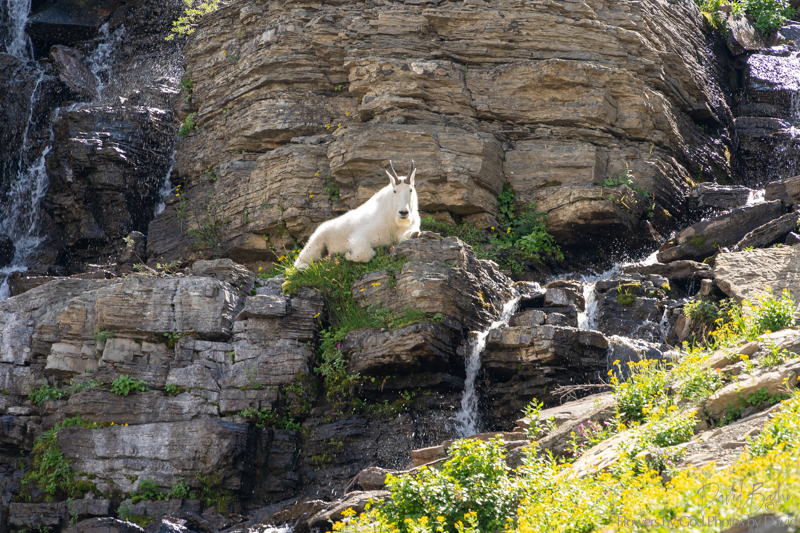
    Mountain Goat | Glacier National Park, Montana| August 2024

    I may have listened to a Youtube video last night while our friends and Diane went over plans for our travel today. It wasn’t a significantly important video. But it is one that I keep up with. And I did play it at 1.5 speed so I wouldn’t be distracted too long. When the conversation (and the video) was over, I re-engaged. No harm no foul. I trust them and am willing to go along with their plans today. I’m writing this very early. We’ll see how the day unfolds!

    Luke reports that when the time came to determine whether they would proceed with the trip to Rome, the Centurion and the pilot of the ship paid more attention to the owner than to Paul. In other words, Paul’s warning of impending behavior went unheeded. They decided to put out to sea “on the chance that somehow they could reach Phoenix, a harbor of Crete, facing both southwest and northwest, and spend the winter there.”

    I wonder about their motives for continuing the voyage. Were they under a deadline pressure to reach Rome? Was a bonus being offered if they reached the next stop by a certain date? Was it less expensive to harbor for the winter in Phoenix? Was it simply the fact that there was a choice of a southwest or northwest-facing harbor there? Or did they just want to get the voyage over sooner? It might also have been that Fair Haven did not live up to its name. It was not a fun place to spend all winter, and the crew of the ship didn’t look forward to months in a small town. One commentator suggests that the local Chamber of Commerce named the place “Fair Havens.”

    Whatever the reason, they decided to sail on. Much challenge lies ahead. They will wish they had stayed in Fair Havens. Paul has already been shipwrecked three times by this point (cf. 2 Corinthians 11:25). Paul knew what he was talking about.

    Peer pressure, prudence, or personal fears can all play a role in our decision making. Prudence is the father of patience. And as Pierce Brown says, “Patience is the better part of valor. And obedience the better part of humanity. Listen to your elders.” Proverbs reminds us that the fear of the LORD is the beginning of wisdom. It is far better to listen to and be guided by God’s word, than to pursue our course in hopes of personal gain. And while we all make bad decisions, it is better to do so out of a desire to please God, or on the basis of wise counsel.

    Decisions made on the basis of godly wisdom may not seem easy, but easy isn’t always best. And God’s ways – though they may be challenging – are always best. When wise and godly people counsel us we do well to listen to them.

  • And when it was decided that we should sail for Italy, they delivered Paul and some other prisoners to a centurion of the Augustan Cohort named Julius. And embarking in a ship of Adramyttium, which was about to sail to the ports along the coast of Asia, we put to sea, accompanied by Aristarchus, a Macedonian from Thessalonica. The next day we put in at Sidon. And Julius treated Paul kindly and gave him leave to go to his friends and be cared for. And putting out to sea from there we sailed under the lee of Cyprus, because the winds were against us. And when we had sailed across the open sea along the coast of Cilicia and Pamphylia, we came to Myra in Lycia. There the centurion found a ship of Alexandria sailing for Italy and put us on board. We sailed slowly for a number of days and arrived with difficulty off Cnidus, and as the wind did not allow us to go farther, we sailed under the lee of Crete off Salmone. Coasting along it with difficulty, we came to a place called Fair Havens, near which was the city of Lasea.

    Since much time had passed, and the voyage was now dangerous because even the Fast was already over, Paul advised them, 10 saying, “Sirs, I perceive that the voyage will be with injury and much loss, not only of the cargo and the ship, but also of our lives.” 11 But the centurion paid more attention to the pilot and to the owner of the ship than to what Paul said. 12 And because the harbor was not suitable to spend the winter in, the majority decided to put out to sea from there, on the chance that somehow they could reach Phoenix, a harbor of Crete, facing both southwest and northwest, and spend the winter there.

    Glacial Valley | Glacier National Park, Montana| August 2024

    Sometimes I can get to the place of journey-enjoying, rather than getting-there accomplishment. Most often, however, I want to get there. See the thing. Experience the event. Finish the race. Be done. Accomplish the goal.

    This morning I took the time to look out our Airbnb bedroom window and enjoy the view. It wasn’t all that spectacular today. There are no astounding fall colors to see. It was also a rainy day. The view was not particularly amazing. But I decided to take in the view such as it was. Rain water dripping from the green leaves. Tree bark made dark by the rain. But it was peaceful and serene. I wanted to take a moment to enjoy it as it was.

    There is another facet of the enjoy-the-journey attitude, beyond the pure joy of the trip or the sights you see along the way. I must ask myself some questions to keep this in mind: Is God doing anything during the journey? Or is he only at work when we arrive at our journey’s end? Am I oblivious to the divine appointments that occur when we are on the way?

    Rome is Paul’s hoped-for destination (cf. Romans 1:11-13). He will have a very challenging journey on his way to Rome. He even warns those in charge that they would face injury and loss of even of life if they continue with their plans. So now the situation is even worse: not only will he have to wait to get to Rome, the journey will be made even longer and more perilous.

    Luke details the ship’s voyage, together with the necessary detours and changes in plans. Weather will force changes along the way. It will not be an easy trip, nor a safe one. But Paul – as always – will redeem the time. He will have opportunity to witness while en route. Even though Rome is his destination’s goal, there are things to do along the way.

    Whether it is a blessing God has in mind for us to receive, or a divine appointment for us to keep, God is in every moment of life’s journeys. Whether we’re on the way to the grocery store or arriving at a beautiful mountain vista, we must be alert to God’s presence and plans for us along the way or at our destination.

  • And when it was decided that we should sail for Italy, they delivered Paul and some other prisoners to a centurion of the Augustan Cohort named Julius. And embarking in a ship of Adramyttium, which was about to sail to the ports along the coast of Asia, we put to sea, accompanied by Aristarchus, a Macedonian from Thessalonica. The next day we put in at Sidon. And Julius treated Paul kindly and gave him leave to go to his friends and be cared for. And putting out to sea from there we sailed under the lee of Cyprus, because the winds were against us. And when we had sailed across the open sea along the coast of Cilicia and Pamphylia, we came to Myra in Lycia. There the centurion found a ship of Alexandria sailing for Italy and put us on board. We sailed slowly for a number of days and arrived with difficulty off Cnidus, and as the wind did not allow us to go farther, we sailed under the lee of Crete off Salmone. Coasting along it with difficulty, we came to a place called Fair Havens, near which was the city of Lasea.

    Since much time had passed, and the voyage was now dangerous because even the Fast[a] was already over, Paul advised them, 10 saying, “Sirs, I perceive that the voyage will be with injury and much loss, not only of the cargo and the ship, but also of our lives.” 11 But the centurion paid more attention to the pilot and to the owner of the ship than to what Paul said. 12 And because the harbor was not suitable to spend the winter in, the majority decided to put out to sea from there, on the chance that somehow they could reach Phoenix, a harbor of Crete, facing both southwest and northwest, and spend the winter there.

    Glacier Park Vista | Glacier National Park, Montana| August 2024

    We are traveling with friends. They have been very kind to us. We’re trying to be kind to them as well. When we’ve traveled with these and other friends we’ve experienced kindness and and sought to be kind as well. Today we met a couple from the area who gave us some good tips: places to see, hikes to take, and things to keep in mind. To receive and give kindness among friends is to be expected. To receive it from total strangers is a double blessing.

    Paul receives kindness from his traveling companions – including Luke (cf. “we” in verse 1). This is to be expected. But I was struck by the kindness of a centurion of the Augustan Cohort. This is significant enough for Luke to mention his name and note his kindness. Aristarchus was with Paul when he delivered the offering for the poor in Jerusalem. He also was with Paul while he was imprisoned in Rome. Julius is named only here in chapter 27. But his kindness is remarkable. Luke will mention him here as one who treated Paul kindly. 

    Jesus teaches, “The one who receives a prophet because he is a prophet will receive a prophet’s reward” (Matthew 10:41). Hebrews says we should not neglect to show hospitality because some have received angels unawares (Hebrews 13:2). Julius’ kindness allowed for others to offer Paul loving care, attending to his needs. Julius furthered the cause of the gospel without even knowing it – as far as we know.

    We may have the opportunity to show hospitality and kindness – which we should do just for kindness’ sake. But God’s agenda includes both the kindness received and the blessings that come with it. Those blessings flow down from person to person so that more and more people can hear of Jesus and believe in him.

    I doubt that Julius realized how he was furthering the message of the gospel by showing kindness to Paul. The same may be true of us as well: we may not realize how our acts of kindness cause ripples of grace to extend from the epicenter of the act far beyond anything we would ever imagine.

  • Please pray these Psalms with me today, on this Lord’s Day

    Psalm 6:1-4

    LORD, rebuke me not in your anger,
        nor discipline me in your wrath.
    Be gracious to me, O LORD, for I am languishing;
        heal me, O LORD, for my bones are troubled.
    My soul also is greatly troubled.
        But you, O LORD—how long?

    Turn, O LORD, deliver my life;
        save me for the sake of your steadfast love.

    Psalm 36:5-9

    Your steadfast love, O LORD, extends to the heavens,
        your faithfulness to the clouds.
    Your righteousness is like the mountains of God;
        your judgments are like the great deep;
        man and beast you save, O LORD.

    How precious is your steadfast love, O God!
        The children of mankind take refuge in the shadow of your wings.
    They feast on the abundance of your house,
        and you give them drink from the river of your delights.
    For with you is the fountain of life;
        in your light do we see light.

    Psalm 66:1-4

    Shout for joy to God, all the earth;
        sing the glory of his name;
        give to him glorious praise!
    Say to God, “How awesome are your deeds!
        So great is your power that your enemies come cringing to you.
    All the earth worships you
        and sings praises to you;
        they sing praises to your name.”

    Psalm 96

    Oh sing to the LORD a new song;
        sing to the LORD, all the earth!
    Sing to the LORD, bless his name;
        tell of his salvation from day to day.
    Declare his glory among the nations,
        his marvelous works among all the peoples!
    For great is the LORD, and greatly to be praised;
        he is to be feared above all gods.
    For all the gods of the peoples are worthless idols,
        but the LORD made the heavens.
    Splendor and majesty are before him;
        strength and beauty are in his sanctuary.

    Ascribe to the LORD, O families of the peoples,
        ascribe to the LORD glory and strength!
    Ascribe to the LORD the glory due his name;
        bring an offering, and come into his courts!
    Worship the Lord in the splendor of holiness;
        tremble before him, all the earth!

    10 Say among the nations, “The LORD reigns!
        Yes, the world is established; it shall never be moved;
        he will judge the peoples with equity.”

    11 Let the heavens be glad, and let the earth rejoice;
        let the sea roar, and all that fills it;
    12     let the field exult, and everything in it!
    Then shall all the trees of the forest sing for joy
    13     before the LORD, for he comes,
        for he comes to judge the earth.
    He will judge the world in righteousness,
        and the peoples in his faithfulness.

    Psalm 126 

    When the LORD restored the fortunes of Zion,
        we were like those who dream.
    Then our mouth was filled with laughter,
        and our tongue with shouts of joy;
    then they said among the nations,
        “The LORD has done great things for them.”
    The LORD has done great things for us;
        we are glad.

    Restore our fortunes, O LORD,
        like streams in the Negeb!
    Those who sow in tears
        shall reap with shouts of joy!
    He who goes out weeping,
        bearing the seed for sowing,
    shall come home with shouts of joy,
        bringing his sheaves with him.

    The Holy Bible, English Standard Version.
    ESV® Text Edition: 2016. Copyright © 2001 by
    Crossway Bibles, a publishing ministry of Good News Publishers.

  • And as he was saying these things in his defense, Festus said with a loud voice, “Paul, you are out of your mind; your great learning is driving you out of your mind.” 25 But Paul said, “I am not out of my mind, most excellent Festus, but I am speaking true and rational words. 26 For the king knows about these things, and to him I speak boldly. For I am persuaded that none of these things has escaped his notice, for this has not been done in a corner. 27 King Agrippa, do you believe the prophets? I know that you believe.” 28 And Agrippa said to Paul, “In a short time would you persuade me to be a Christian?”
    29 And Paul said, “Whether short or long, I would to God that not only you but also all who hear me this day might become such as I am—except for these chains.”

    30 Then the king rose, and the governor and Bernice and those who were sitting with them. 31 And when they had withdrawn, they said to one another, “This man is doing nothing to deserve death or imprisonment.” 32 And Agrippa said to Festus, “This man could have been set free if he had not appealed to Caesar.”

    Unusual Petunia | Glacier National Park, Montana| August 2024

    The Imitation Game is a 2014 American period biographical thriller film based on the 1983 biography Alan Turing: The Enigma by Andrew Hodges. The film stars Benedict Cumberbatch as Turing, who decrypted German intelligence messages for the British government during World War II. I thought of this film as I reflected on Paul’s comment that he wished that those to whom he was speaking, “might become such as I am—except for these chains.” He, of course, was wishing that they would become repentant believers, and followers of Jesus Christ. 

    In his letter to the Corinthians, Paul says, “Be imitators of me, as I am of Christ” (1 Corinthians 11:1). He was holding up his life as worthy to be imitated. Paul echos the same thought in Philippians 3:17. My study Bible note  points us to Christ [who] is always the preeminent example, yet in the day-to-day living of the Christian life, it is also helpful to have someone close at hand as an example and model. 

    I think of men whom I’ve mentioned previously: Robert Lange, my pastor while I was in College and preparing to head off for the seminary. Merle Wagner, a faithful former missionary then serving as the circuit counselor when I was fresh out of the seminary. Michael Newman, our current Texas District President. Jeff Gibbs, a classmate of mine who showed incredible patience and tenacity when he presented at a conference I had helped organize. Each with different gifts. Each with Christ in their hearts. Each living in such a manner that I could see Christ forming their minds and manners.

    It’s a pretty high honor to serve as someone’s mentor, inviting someone to do as we do. It’s not for someone who says, “Do as I say, not as I do.” We are inviting someone to watch us, and learn from us, and see how we navigate difficult decisions, resist temptation, and honor Christ with our witness.

    I’m sure Paul failed from time to time. In fact he shares his struggle with temptation and sin in his letter to the Romans when he says, “The good that I want to do, I do not do” (Romans 7:19-25). So it’s not about never sinning. It is about resisting temptation, repenting when we do sin, and continuing to repent and believe the gospel every day. That’s the one place I’d be happy for people to imitate me: a life of daily repentance and faith, and a renewed desire to serve Christ, loving God and my neighbor.

  • And as he was saying these things in his defense, Festus said with a loud voice, “Paul, you are out of your mind; your great learning is driving you out of your mind.” 25 But Paul said, “I am not out of my mind, most excellent Festus, but I am speaking true and rational words. 26 For the king knows about these things, and to him I speak boldly. For I am persuaded that none of these things has escaped his notice, for this has not been done in a corner. 27 King Agrippa, do you believe the prophets? I know that you believe.” 28 And Agrippa said to Paul, “In a short time would you persuade me to be a Christian?”
    29 And Paul said, “Whether short or long, I would to God that not only you but also all who hear me this day might become such as I am—except for these chains.”

    30 Then the king rose, and the governor and Bernice and those who were sitting with them. 31 And when they had withdrawn, they said to one another, “This man is doing nothing to deserve death or imprisonment.” 32 And Agrippa said to Festus, “This man could have been set free if he had not appealed to Caesar.”

    Hanging Flower Basket Up Close | Glacier National Park, Montana| August 2024

    I’ve been thinking lately about thinking. My tendency is more toward feelings: the heart. I am quick to abandon thoughts that don’t quite add up in favor of having my heart at rest in the love of God. A simple example: the triune nature of God. It doesn’t take too long before the idea of One God, Three Persons hits the logic wall. But my heart is at rest when I abandon the need to understand God and simply trust in him.

    There is, nevertheless, biblical evidence to engage our minds in our walk with Jesus. The mind is not an appendix to be removed when it becomes malignant. Our minds are to be renewed, engaged, made new, taken captive, and set on God.

    • Romans 12: “…the renewing of your minds…”
    • Philippians 4: “…think about these things…”
    • Ephesians 4: “be made new in the attitude of your minds.”
    • 2 Corinthians 10: “take captive every thought…”
    • Isaiah 26: “keep in perfect peace those whose minds are steadfast”

    Paul was accused by Festus of being out of his mind. Paul defends himself: “I am not out of my mind…I am speaking true and rational words.” Paul was definitely no slouch intellectually-speaking. I recall one of my earliest sermon studies on 1 Corinthians 2, and the phrase, “My speech and my preaching were not with persuasive words of wisdom.” In that passage – as far as I was able to discover – Paul uses two words that are not found in Greek literature previous to his use of them. Paul coined a word!

    He took on the philosophers on Mars Hill. He engaged the Jews in the synagogues. He wrote the letter to the Romans, one of the most deeply theological treatises that has shaped the theology of Augustine, Luther, Wesley, and many others.  Paul was a mental heavyweight!

    So I’m thinking about thinking differently and in a new way. I’m thinking about engaging and disengaging is some matters of thought. There are the obvious and ongoing battles of the mind. There are thoughts we must constantly abandon. Think lust, greed, fear, envy, and rage. There are also thoughts I need to renew. Think Bible memory, things listed in Philippians 4, pure, lovely, excellent, and praiseworthy things.

    It might also mean being more mindful: Thinking about where I lay my phone. Not zoning out when I’m talking with someone who might be boring me. Being present in the moment and not trying to do two things at once. That kind of mindfulness pleases God and honors our creator who has made us and given  us our reason and all our senses: our minds.