David Bahn – Reflections

Light from the Word and through the lens

  • And so it was…

    When the fourteenth night had come, as we were being driven across the Adriatic Sea, about midnight the sailors suspected that they were nearing land. 28 So they took a sounding and found twenty fathoms. A little farther on they took a sounding again and found fifteen fathoms. 29 And fearing that we might run on the rocks, they let down four anchors from the stern and prayed for day to come. 30 And as the sailors were seeking to escape from the ship, and had lowered the ship’s boat into the sea under pretense of laying out anchors from the bow, 31 Paul said to the centurion and the soldiers, “Unless these men stay in the ship, you cannot be saved.” 32 Then the soldiers cut away the ropes of the ship’s boat and let it go.

    33 As day was about to dawn, Paul urged them all to take some food, saying, “Today is the fourteenth day that you have continued in suspense and without food, having taken nothing. 34 Therefore I urge you to take some food. For it will give you strength, for not a hair is to perish from the head of any of you.” 35 And when he had said these things, he took bread, and giving thanks to God in the presence of all he broke it and began to eat. 36 Then they all were encouraged and ate some food themselves. 37 (We were in all 276 persons in the ship.) 38 And when they had eaten enough, they lightened the ship, throwing out the wheat into the sea.

    39 Now when it was day, they did not recognize the land, but they noticed a bay with a beach, on which they planned if possible to run the ship ashore. 40 So they cast off the anchors and left them in the sea, at the same time loosening the ropes that tied the rudders. Then hoisting the foresail to the wind they made for the beach. 41 But striking a reef, they ran the vessel aground. The bow stuck and remained immovable, and the stern was being broken up by the surf. 42 The soldiers’ plan was to kill the prisoners, lest any should swim away and escape. 43 But the centurion, wishing to save Paul, kept them from carrying out their plan. He ordered those who could swim to jump overboard first and make for the land, 44 and the rest on planks or on pieces of the ship. And so it was that all were brought safely to land.

    Lake & Mountains in the Waterton-Glacier International Peace Park | Canada/USA | August 2024

    I’ll always remember the day we got the good news of our youngest son’s sweat chloride test. Negative. That was such good news. The sweat chloride test was to determine if he had cystic fibrosis. He didn’t. I was greatly relieved. Diane was happy, but she had never thought he had the dread disease.

    I’ll always remember the day I made the least romantic marriage proposal ever to Diane. She didn’t say yes then, but 9 months later she did! I remember that day as well.

    I’ll always remember the day of my first installation as pastor of Our Saviour and Trinity Lutheran Churches, Vernal, Utah and Rangely, Colorado. I was a washed-out pale fellow, having worried myself sick about what I had gotten Diane, our two kids at that time, and myself into. But I had arrived at my first charge. I was actually a pastor.

    I wonder whether some of the soldiers, sailors, the centurion and the boat owner remember the day when, as Luke records, “And so it was that all were brought safely to land.” My various days of remembrance may not be as dramatic as theirs was, but they shaped my life in so many ways. I wonder whether this deliverance shaped the lives of any of the 275 others on that boat. I know it shaped Paul’s life. And Luke’s. Most likely the Centurion who went out of his way to help Paul. 

    And what about ours? Years ago, I was talking with a woman from the church I was serving at the time. I made the comment that we often learn from our own mistakes. She wisely reminded me, “You don’t have to learn from your own mistakes. You can learn from others’ mistakes as well.”

    The same can be said about learning from our successful navigating the trials that come our way. We learn a lot by experiences as varied as good test results or a rocky start to my first ministry call. I learned a lot through the challenges I experienced there, and in all the churches I’ve served. But I don’t have to learn only from my own experiences.

    Trusting God’s promises, seeing his hand of protection and provision, and watching Paul’s faithful leadership and commitment to God’s mission are fertile grounds for our spiritual growth. I’m reminded of Romans 15:4. Paul had not yet set foot to Rome when he wrote these words: “For whatever was written in earlier times was written for our instruction, so that through perseverance and the encouragement of the Scriptures we might have hope.” Seems pretty clear to me that he took those words to heart. I want to do the same. How about you, dear Reader?

  • Desperation as Faith in Disguise

    When the fourteenth night had come, as we were being driven across the Adriatic Sea, about midnight the sailors suspected that they were nearing land. 28 So they took a sounding and found twenty fathoms. A little farther on they took a sounding again and found fifteen fathoms. 29 And fearing that we might run on the rocks, they let down four anchors from the stern and prayed for day to come. 30 And as the sailors were seeking to escape from the ship, and had lowered the ship’s boat into the sea under pretense of laying out anchors from the bow, 31 Paul said to the centurion and the soldiers, “Unless these men stay in the ship, you cannot be saved.” 32 Then the soldiers cut away the ropes of the ship’s boat and let it go.

    33 As day was about to dawn, Paul urged them all to take some food, saying, “Today is the fourteenth day that you have continued in suspense and without food, having taken nothing. 34 Therefore I urge you to take some food. For it will give you strength, for not a hair is to perish from the head of any of you.” 35 And when he had said these things, he took bread, and giving thanks to God in the presence of all he broke it and began to eat. 36 Then they all were encouraged and ate some food themselves. 37 (We were in all 276 persons in the ship.) 38 And when they had eaten enough, they lightened the ship, throwing out the wheat into the sea.

    39 Now when it was day, they did not recognize the land, but they noticed a bay with a beach, on which they planned if possible to run the ship ashore. 40 So they cast off the anchors and left them in the sea, at the same time loosening the ropes that tied the rudders. Then hoisting the foresail to the wind they made for the beach. 41 But striking a reef, they ran the vessel aground. The bow stuck and remained immovable, and the stern was being broken up by the surf. 42 The soldiers’ plan was to kill the prisoners, lest any should swim away and escape. 43 But the centurion, wishing to save Paul, kept them from carrying out their plan. He ordered those who could swim to jump overboard first and make for the land, 44 and the rest on planks or on pieces of the ship. And so it was that all were brought safely to land.

    Waterton National Park Mountains | Canada | August 2024

    I was desperate. Panicking. Nearly hysterical. I was in the lake, out of my canoe. The Scout goal was to make a flotation device from your shirt by taking it off, tieing off the sleeves and neck opening, and capturing air in it. I had gotten my shirt half-way-off and it got stuck. I couldn’t breath through the water-soaked material. I was worried I was going to drown. A shot of adrenaline shot through my body and I pulled the shirt the rest of the way over my head. Such relief!

    I was driving. On my way to meet a fellow pastor to pray and study together. I had counselled a woman from our church whose marriage was nearly failing. The situation was dire. As I drove, I prayed. And as I prayed, I felt more and more certain that God was hearing my prayer. I knew deep in my soul their marriage was going to be saved. I. Just. Knew. It. And it was.

    The first situation described here is desperation. The second is desperation together with faith. Sometimes there is little difference between the two.

    As the ship gets closer to land, desperation sets in on all sides. The sailors try to escape. The soldiers were going to kill the prisoners. The boat went aground. The bow got stuck. The stern was being broken up by the surf. Dire straits. All this on top of 14 days of relentless storms, sleepless nights, and no food. They are desperate.

    I notice something about their actions. They throw the wheat into the sea. Why the wheat? What’s significant about that? First of all, it would be the last of the essential cargo of the ship, after they had already lightened the ship. Notice the word, “essential.” They realized they were in a struggle for survival.

    I wonder, though, if it wasn’t also an act of faith. They not only knew they needed to lighten the ship. They also knew they wouldn’t need it any more. Perhaps there was a glimmer of hope in Paul’s promise: “not a hair is to perish from the head of any of you.” Sometimes we must grasp the tiniest straw to seek to be saved. And when it comes to God’s promises and his assurance that he will take care of us to the end, that tiny straw is strong enough to save – if we keep our eyes focused on the One who promised it. 

    God has promised we who believe in him, and who seek his kingdom first, that all things will be added to us. He will take care of us. So whether in times of desperation, or just in this moment of awareness, thank God for his daily provision. Thank, praise, serve, and obey him. For not only has he promised to take care of us, he does so every day.

  • The Importance of Physical and Spiritual Health

    When the fourteenth night had come, as we were being driven across the Adriatic Sea, about midnight the sailors suspected that they were nearing land. 28 So they took a sounding and found twenty fathoms. A little farther on they took a sounding again and found fifteen fathoms. 29 And fearing that we might run on the rocks, they let down four anchors from the stern and prayed for day to come. 30 And as the sailors were seeking to escape from the ship, and had lowered the ship’s boat into the sea under pretense of laying out anchors from the bow, 31 Paul said to the centurion and the soldiers, “Unless these men stay in the ship, you cannot be saved.” 32 Then the soldiers cut away the ropes of the ship’s boat and let it go.

    33 As day was about to dawn, Paul urged them all to take some food, saying, “Today is the fourteenth day that you have continued in suspense and without food, having taken nothing. 34 Therefore I urge you to take some food. For it will give you strength, for not a hair is to perish from the head of any of you.” 35 And when he had said these things, he took bread, and giving thanks to God in the presence of all he broke it and began to eat. 36 Then they all were encouraged and ate some food themselves. 37 (We were in all 276 persons in the ship.) 38 And when they had eaten enough, they lightened the ship, throwing out the wheat into the sea.

    39 Now when it was day, they did not recognize the land, but they noticed a bay with a beach, on which they planned if possible to run the ship ashore. 40 So they cast off the anchors and left them in the sea, at the same time loosening the ropes that tied the rudders. Then hoisting the foresail to the wind they made for the beach. 41 But striking a reef, they ran the vessel aground. The bow stuck and remained immovable, and the stern was being broken up by the surf. 42 The soldiers’ plan was to kill the prisoners, lest any should swim away and escape. 43 But the centurion, wishing to save Paul, kept them from carrying out their plan. He ordered those who could swim to jump overboard first and make for the land, 44 and the rest on planks or on pieces of the ship. And so it was that all were brought safely to land.

    Lake Reflection | Prince of Wales Hotel, Watertown National Park, Canada | August 2024

    Martin Luther, Heretic is a 1983 film made to commemorate the 500th anniversary of the birth of Martin Luther. It is my favorite Martin Luther movie, staring Jonathan Pryce as Martin Luther. It was released on 8 November 1983 in the United Kingdom, two days before the 500th jubilee on 10 November. I have seen the film more than a dozen times and love it so much because of the great quotable dialogue in the movie. In one scene, Luther is struggling with his faith and speaking with his father confessor, Johann von Staupitz. He is at hi wits end, not knowing how to find peace with God – no matter how hard he tries. In the throes of his distress he asks Staupitz, “What shall I do?!?” Staupitz’ answer, “Eat more food. Get more rest. Learn more about God.”

    I’m reminded of this not only because we will celebrate Reformation Sunday at Hope Lutheran Church where I am serving as acting senior pastor, but also because Paul urges the people there, “Today is the fourteenth day that you have continued in suspense and without food, having taken nothing. Therefore I urge you to take some food. For it will give you strength.” Paul is speaking of physical strength needed for the ordeal yet to come. They’ve been fighting the storm for 14 days without sustenance. It was time to get some nourishment. 

    There are five capitals Christians can invest for the sake of God’s kingdom. Five different resources we may invest to receive a return for the sake of God’s kingdom. Most often when we think of capital we think of money. Money is a kind of capital we can invest for the sake of God’s kingdom. But it is the least important of the five. Most important is spiritual capital. All things in God’s kingdom stand or fall on the basis of the spiritual realities we encounter. From prayer, to the sacraments, to the Holy Spirit’s work in our lives, spiritual capital has the greatest impact in God’s kingdom economy.

    You might think that physical capital (physical strength, health, and the time and energy we have to invest in God’s kingdom is second to last in importance. But it is third, just behind relational capital. In other words, we need to eat and drink, be strong and energetic to advance God’s kingdom. This is why Paul urges the people to take food.

    Not to mention the hope we have of the resurrection on the Great Last Day. Our bodies are not just soul sacks. We’re more than embodied spirits. We are body and spirit. We do not believe as the Gnostics taught that the physical is evil while the spiritual is good. Our whole being has been redeemed. And in the life of the world to come we will enjoy a completely perfect existance in the New Heaven and New Earth.

    Take care of your body. Eat more (or less???) food. Get more rest. Learn more about God. Good advice – whether Staupitz actually advised Luther to do it. And use the strength you gain to serve Christ more faithfully – not to mention enjoying a foretaste of the eternal rest and the feast to come.

    Click here for the Martin Luther Heretic Movie on YouTube.

  • Turn Around & Live

    When the fourteenth night had come, as we were being driven across the Adriatic Sea, about midnight the sailors suspected that they were nearing land. 28 So they took a sounding and found twenty fathoms. A little farther on they took a sounding again and found fifteen fathoms. 29 And fearing that we might run on the rocks, they let down four anchors from the stern and prayed for day to come. 30 And as the sailors were seeking to escape from the ship, and had lowered the ship’s boat into the sea under pretense of laying out anchors from the bow, 31 Paul said to the centurion and the soldiers, “Unless these men stay in the ship, you cannot be saved.” 32 Then the soldiers cut away the ropes of the ship’s boat and let it go.

    33 As day was about to dawn, Paul urged them all to take some food, saying, “Today is the fourteenth day that you have continued in suspense and without food, having taken nothing. 34 Therefore I urge you to take some food. For it will give you strength, for not a hair is to perish from the head of any of you.” 35 And when he had said these things, he took bread, and giving thanks to God in the presence of all he broke it and began to eat. 36 Then they all were encouraged and ate some food themselves. 37 (We were in all 276 persons in the ship.) 38 And when they had eaten enough, they lightened the ship, throwing out the wheat into the sea.

    39 Now when it was day, they did not recognize the land, but they noticed a bay with a beach, on which they planned if possible to run the ship ashore. 40 So they cast off the anchors and left them in the sea, at the same time loosening the ropes that tied the rudders. Then hoisting the foresail to the wind they made for the beach. 41 But striking a reef, they ran the vessel aground. The bow stuck and remained immovable, and the stern was being broken up by the surf. 42 The soldiers’ plan was to kill the prisoners, lest any should swim away and escape. 43 But the centurion, wishing to save Paul, kept them from carrying out their plan. He ordered those who could swim to jump overboard first and make for the land, 44 and the rest on planks or on pieces of the ship. And so it was that all were brought safely to land.

    Spotted Knapweed | Glacier National Park, Montana | August 2024

    The receiver runs down the field, does a sudden button-hook turn back toward the quarterback, and discovers the ball is right there, ready for him to catch. Completion! First down!

    After taking a photo of a beautiful landscape, the photographer turns around and sees an amazingly beautiful flower. Snap. Process. Print. Enter. Win!

    She’s searching for her mom or dad. She’s lost. She’s in a crowd. She doesn’t know what to do. Then she hears her name. She turns around and there’s her dad. She runs into his arms. Safe. Secure. Tears of relief flow from both.

    The sailors aboard the ship carrying Paul and 275 others seek to escape what they believe is certain doom. Paul sees through their ploy. He warns the centurion and the soldiers. They must turn around. They must not abandon ship. Their escape boat is cut loose. Paul promises that they will be saved.

    The soldiers were going to kill the prisoners so that none would escape. But the centurion, wishing to save Paul, kept them from carrying out their plan. They turn around figuratively-speaking, and at the centurion’s urging let them swim ashore. Lives saved. All 276.

    Jesus’ first sermon recorded in Mark 1:15 is, “The time is fulfilled, and the kingdom of God is at hand; repent and believe in the gospel.” Repent: turn around. Change your mind. Reconsider.

    Repentance is a profound change of heart, turning away from sin and toward God, believing God is good, and trusting in him. This is not driven by fear of punishment, but by a heartfelt belief in God’s grace. It is a response to the Gospel, where one is not only contrite over his or her sins, but trusting in God’s mercy through Christ.

    There are a few specific things in my life for which I am deeply sorry. I know I have done wrong, or failed to do the obvious right thing. There is no way I could ever make up for these things. But I trust God and rely on his mercy, and I believe that Jesus died for my sins, and the sins of the whole world. That includes your sins, dear reader.

    In the case of the shipwreck Paul’s intervention on behalf of the people on the boat, and the centurion’s intervention in behalf of the prisoners both saved lives. All 276 were kept alive and reached land. When we turn around, away from sin, and toward Jesus, our lives are saved for all eternity, and we will reach the eternal Promised Land.

  • You gotta stay in the boat!

    When the fourteenth night had come, as we were being driven across the Adriatic Sea, about midnight the sailors suspected that they were nearing land. 28 So they took a sounding and found twenty fathoms. A little farther on they took a sounding again and found fifteen fathoms. 29 And fearing that we might run on the rocks, they let down four anchors from the stern and prayed for day to come. 30 And as the sailors were seeking to escape from the ship, and had lowered the ship’s boat into the sea under pretense of laying out anchors from the bow, 31 Paul said to the centurion and the soldiers, “Unless these men stay in the ship, you cannot be saved.” 32 Then the soldiers cut away the ropes of the ship’s boat and let it go.

    33 As day was about to dawn, Paul urged them all to take some food, saying, “Today is the fourteenth day that you have continued in suspense and without food, having taken nothing. 34 Therefore I urge you to take some food. For it will give you strength, for not a hair is to perish from the head of any of you.” 35 And when he had said these things, he took bread, and giving thanks to God in the presence of all he broke it and began to eat. 36 Then they all were encouraged and ate some food themselves. 37 (We were in all 276 persons in the ship.) 38 And when they had eaten enough, they lightened the ship, throwing out the wheat into the sea.

    39 Now when it was day, they did not recognize the land, but they noticed a bay with a beach, on which they planned if possible to run the ship ashore. 40 So they cast off the anchors and left them in the sea, at the same time loosening the ropes that tied the rudders. Then hoisting the foresail to the wind they made for the beach. 41 But striking a reef, they ran the vessel aground. The bow stuck and remained immovable, and the stern was being broken up by the surf. 42 The soldiers’ plan was to kill the prisoners, lest any should swim away and escape. 43 But the centurion, wishing to save Paul, kept them from carrying out their plan. He ordered those who could swim to jump overboard first and make for the land, 44 and the rest on planks or on pieces of the ship. And so it was that all were brought safely to land.

    Red Clover | Glacier National Park, Montana | August 2024

    John Ortberg’s book, If You Want to Walk on Water, You’ve Got to Get Out of the Boat, invites us “out on the risky waters of faith, [where] Jesus is waiting to meet you in ways that will change you forever, deepening your character and your trust in God. The experience is terrifying. It’s thrilling beyond belief. It’s everything you’d expect of someone worthy to be called Lord.” It’s an engaging book, both challenging and compelling.

    Paul has gotten out of the boat in so many ways in his missionary journeys. He was willing to bring the gospel to Gentiles. He was committed to carrying the mission forward in the face of imprisonment, beatings, and ridicule. He went to Europe and is on his way now to Rome. In a boat.

    The boat has been storm tossed for many days. It is nearing land, the grave danger of the storm at sea seems nearly past, and now the sailors are seeking to escape from the ship. He warns the centurion and soldiers, “Unless [the sailors] stay in the ship, you cannot be saved.”

    Traditional church architecture includes a “nave,” the place where the congregation stands or sits during the service. The word “nave” comes from the Latin word “navis,” meaning “ship.” This symbolism is important in Christian tradition, where the Church is often compared to a ship, carrying the faithful safely through the trials of life.

    I don’t want to spiritualize this physical encounter. Their experience during the storm has been traumatic. They are facing grave danger. So this encounter is not really about people staying in the church in order to be saved. But I cannot help but think of the blessings we do receive in the church: fellowship, God’s word, the sacraments, and the specific promise of Jesus’ presence “where two or three are gathered in [his] name.”

    Some want to belittle the organized church, saying that Christians and churches turn people off because they get in the way of Jesus. But the church is the body of Christ. And it must take form somehow. A friend of mine likes to say, “You don’t like the organized church? Then come to my church we are highly disorganized!” 

    We may need to get out of the boat to experience the fullness of taking our faith seriously. But we need to stay in the church to nurture our faith and encourage others in their faith in the One who is the original Water Walker.

  • Please pray these Psalms with me today, on this Lord’s Day

    Psalm 20:1-7

    May the LORD answer you in the day of trouble!
        May the name of the God of Jacob protect you!
    May he send you help from the sanctuary
        and give you support from Zion!
    May he remember all your offerings
        and regard with favor your burnt sacrifices! Selah

    May he grant you your heart’s desire
        and fulfill all your plans!
    May we shout for joy over your salvation,
        and in the name of our God set up our banners!
    May the LORD fulfill all your petitions!

    Now I know that the LORD saves his anointed;
        he will answer him from his holy heaven
        with the saving might of his right hand.
    Some trust in chariots and some in horses,
        but we trust in the name of the LORD our God.

    Psalm 50:1-15

    [Note how this challenges us in our practice of religion, and comforts us in our prayers for God’s help.]

    The Mighty One, God the LORD,
        speaks and summons the earth
        from the rising of the sun to its setting.
    Out of Zion, the perfection of beauty,
        God shines forth.

    Our God comes; he does not keep silence;[a]
        before him is a devouring fire,
        around him a mighty tempest.
    He calls to the heavens above
        and to the earth, that he may judge his people:
    “Gather to me my faithful ones,
        who made a covenant with me by sacrifice!”
    The heavens declare his righteousness,
        for God himself is judge! Selah

    “Hear, O my people, and I will speak;
        O Israel, I will testify against you.
        I am God, your God.
    Not for your sacrifices do I rebuke you;
        your burnt offerings are continually before me.
    I will not accept a bull from your house
        or goats from your folds.
    10 For every beast of the forest is mine,
        the cattle on a thousand hills.
    11 I know all the birds of the hills,
        and all that moves in the field is mine.

    12 “If I were hungry, I would not tell you,
        for the world and its fullness are mine.
    13 Do I eat the flesh of bulls
        or drink the blood of goats?
    14 Offer to God a sacrifice of thanksgiving,
        and perform your vows to the Most High,
    15 and call upon me in the day of trouble;
        I will deliver you, and you shall glorify me.”

    Psalm 80:17-19

    But let your hand be on the man of your right hand,
        the son of man whom you have made strong for yourself!
    18 Then we shall not turn back from you;
        give us life, and we will call upon your name!

    19 Restore us, O LORD God of hosts!
        Let your face shine, that we may be saved!

    Psalm 110:1-4

    [Note that Jesus quotes this psalm in Matthew 22:41-45 to prove that he is the Son of God.]

    The LORD says to my Lord:
        “Sit at my right hand,
    until I make your enemies your footstool.”

    The LORD sends forth from Zion
        your mighty scepter.
        Rule in the midst of your enemies!
    Your people will offer themselves freely
        on the day of your power,
        in holy garments;
    from the womb of the morning,
        the dew of your youth will be yours.
    The LORD has sworn
        and will not change his mind,
    “You are a priest forever
        after the order of Melchizedek.”

    Psalm 140:12-13 

    I know that the LORD will maintain the cause of the afflicted,
        and will execute justice for the needy.
    13 Surely the righteous shall give thanks to your name;
        the upright shall dwell in your presence.

    The Holy Bible, English Standard Version.
    ESV® Text Edition: 2016. Copyright © 2001 by
    Crossway Bibles, a publishing ministry of Good News Publishers.

  • “Do not be afraid…God has…”

    Now when the south wind blew gently, supposing that they had obtained their purpose, they weighed anchor and sailed along Crete, close to the shore. 14 But soon a tempestuous wind, called the northeaster, struck down from the land. 15 And when the ship was caught and could not face the wind, we gave way to it and were driven along. 16 Running under the lee of a small island called Cauda, we managed with difficulty to secure the ship’s boat. 17 After hoisting it up, they used supports to undergird the ship. Then, fearing that they would run aground on the Syrtis, they lowered the gear, and thus they were driven along. 18 Since we were violently storm-tossed, they began the next day to jettison the cargo. 19 And on the third day they threw the ship’s tackle overboard with their own hands. 20 When neither sun nor stars appeared for many days, and no small tempest lay on us, all hope of our being saved was at last abandoned.

    21 Since they had been without food for a long time, Paul stood up among them and said, “Men, you should have listened to me and not have set sail from Crete and incurred this injury and loss. 22 Yet now I urge you to take heart, for there will be no loss of life among you, but only of the ship. 23 For this very night there stood before me an angel of the God to whom I belong and whom I worship, 24 and he said, ‘Do not be afraid, Paul; you must stand before Caesar. And behold, God has granted you all those who sail with you.’ 25 So take heart, men, for I have faith in God that it will be exactly as I have been told. 26 But we must run aground on some island.”

    Purple Daisies | Glacier National Park, Montana | August 2024

    Do Not Be Afraid was the title of a Lenten Worship series authored by my seminary homiletics professor, Gerhard Aho. Not only was he a skilled homiletician, and gifted writer, he was a man of noble character. I admired him as one of the best seminary professors I learned under. This particular series of sermon outlines and thought starters was especially edifying to me and to many.

    Don’t be afraid. It was the message shared with Zechariah when he encountered the angel in the Holy of Holies. It was the word of encouragement to Mary when the angel Gabriel appeared to her announcing that the Savior would be born of her. Zechariah, Luke tells us, was troubled at the encounter. Mary was “greatly troubled.” Ninety times in the English translations of the Bible this phrase shows up. Do not be afraid.

    Maybe that’s a good word for us today, for there are many things of which we should be afraid. COVID seems not easily to be giving up its intrusion into our bodies. The elections loom large in many people’s minds – whether from right or left – at the prospect of the other candidate being elected. Inflation, the economy, the moral decline of our nation, and climate change cloud the vision of all sorts and kinds of people.

    I notice something in Luke’s record of these events. He records Paul’s words,

    “For this very night there stood before me an angel of the God to whom I belong and whom I worship, 24 and he said, ‘Do not be afraid, Paul; you must stand before Caesar. And behold, God has granted you all those who sail with you.’ 25 So take heart, men, for I have faith in God that it will be exactly as I have been told. 26 But we must run aground on some island.”

    Boil it down and you have, “Do not be afraid…God has granted you…” Luke’s record of the Gabriel’s appearance to both Zechariah and Mary includes their names: “Do not be afraid, Zechariah. Do not be afraid, Mary.” It is the same here: “Do not be afraid, Paul…” God is at work and he knows us by name.

    Whatever fear looms large in your mind, or paralyzes your heart, know that God knows your name, and is at work in your life. Sometimes we see that more immediately than at other times. But take heart! God has this. He has you. And he is good. He is the one whom we should fear, love, and trust above all things.

  • Leadership and Faith

    Acts 27:13-26 

    Now when the south wind blew gently, supposing that they had obtained their purpose, they weighed anchor and sailed along Crete, close to the shore. 14 But soon a tempestuous wind, called the northeaster, struck down from the land. 15 And when the ship was caught and could not face the wind, we gave way to it and were driven along. 16 Running under the lee of a small island called Cauda, we managed with difficulty to secure the ship’s boat. 17 After hoisting it up, they used supports to undergird the ship. Then, fearing that they would run aground on the Syrtis, they lowered the gear, and thus they were driven along. 18 Since we were violently storm-tossed, they began the next day to jettison the cargo. 19 And on the third day they threw the ship’s tackle overboard with their own hands. 20 When neither sun nor stars appeared for many days, and no small tempest lay on us, all hope of our being saved was at last abandoned.

    21 Since they had been without food for a long time, Paul stood up among them and said, “Men, you should have listened to me and not have set sail from Crete and incurred this injury and loss. 22 Yet now I urge you to take heart, for there will be no loss of life among you, but only of the ship. 23 For this very night there stood before me an angel of the God to whom I belong and whom I worship, 24 and he said, ‘Do not be afraid, Paul; you must stand before Caesar. And behold, God has granted you all those who sail with you.’ 25 So take heart, men, for I have faith in God that it will be exactly as I have been told. 26 But we must run aground on some island.”

    Glacier National Park Mountain | Montana | August 2024

    I attended a conference led by Lyle Schaller, whom Christianity Today called “the dean of church consultants.” The title of the workshop, Pastor as Professional Leader, was intentional and somewhat embarrassing to me at the time (40 years ago). I told my people I was attending a workshop on pastoral leadership. He told us at the conference that he used the term professional, “because most people in your church considered you to be the professional leader.” I learned a lot in that workshop. Leaders lead. Leaders frame the question. Leaders speak first. Since that time, I’ve often said, “I want to have the first word, but not necessarily the last word.”

    I am a leader. I don’t say that as a boast. I didn’t say I’m a good leader or a bad one. Truth is, we’re all leaders of one kind or another. Good, bad, confusing, dictatorial, acquiescing, or conflict-causing. But I take my role seriously. And frankly, in my current vocations, the term sometimes weighs heavily on me. I take it seriously and seek to lead faithfully, and I pray that the Lord judges me to have led faithfully.

    Paul takes a decided leadership role in the face of the dire circumstances he and his shipmates are facing. The seas are dangerously destructive because of the wind and storms they encounter. It’s so bad that they have lost hope of being saved. They jettison cargo and even the ship’s tackle (which might have included the means to steer the ship. They are in grave danger.

    In the face of this Paul stands tall as leader. He takes charge with a word of hope and a witness to God. He reminds them of his previous advice that, had they taken it, would have saved them from this trouble. He tells them of his angelic visitation. He points to the God he serves. He testifies to his faith in God. And he encourages them with the hope of ultimate safety, but does not varnish the truth. They will “run aground on some island.”

    That’s what leaders do. They take an assessment of the current realities – brutal or blessed. They point people toward a better future. They encourage as needed with reminders of the goal and vision to which they are moving. They offer grace to those who are struggling to go along. They spend the necessary time with those who are discouraged, helping them to a place of success and prosperity. The ultimate success is in serving God’s purposes in the world, and experiencing his grace eternally. The fullness of prosperity is the abundant eternal life of the world to come.

    Paul’s ability to offer hope to others demonstrates how faith can foster leadership in dire circumstances.

    Is there someone who needs to hear a word of faith and encouragement? Can you point them toward God’s faithfulness and goodness? That is the best kind of faithful leadership ever.

  • Overcoming Despair and Fear

    Now when the south wind blew gently, supposing that they had obtained their purpose, they weighed anchor and sailed along Crete, close to the shore. 14 But soon a tempestuous wind, called the northeaster, struck down from the land. 15 And when the ship was caught and could not face the wind, we gave way to it and were driven along. 16 Running under the lee of a small island called Cauda, we managed with difficulty to secure the ship’s boat. 17 After hoisting it up, they used supports to undergird the ship. Then, fearing that they would run aground on the Syrtis, they lowered the gear, and thus they were driven along. 18 Since we were violently storm-tossed, they began the next day to jettison the cargo. 19 And on the third day they threw the ship’s tackle overboard with their own hands. 20 When neither sun nor stars appeared for many days, and no small tempest lay on us, all hope of our being saved was at last abandoned.

    21 Since they had been without food for a long time, Paul stood up among them and said, “Men, you should have listened to me and not have set sail from Crete and incurred this injury and loss. 22 Yet now I urge you to take heart, for there will be no loss of life among you, but only of the ship. 23 For this very night there stood before me an angel of the God to whom I belong and whom I worship, 24 and he said, ‘Do not be afraid, Paul; you must stand before Caesar. And behold, God has granted you all those who sail with you.’ 25 So take heart, men, for I have faith in God that it will be exactly as I have been told. 26 But we must run aground on some island.”

    Glacier National Park Mountain | Montana | August 2024

    I seldom struggle with a sense of despair. My hope quotient is mostly well above 50%. Hopefully (no play on words here), that’s not because I have delusions of adequacy. But I do see the world through possibility lenses – rose-colored or otherwise. I tend to see around problems, and look for solutions. I most often take preemptive action. I know nature abhors a vacuum, and so does a difficult situation. It will pull solutions of many kinds into its black hole of possibilities. Some of those solutions will not honor God. Some will be harmful to the Body of Christ. Some will be hurtful to me or those I love. Some may be good, helpful, edifying, and God-honoring.

    Luke tells us that the people aboard the ship “gave up all hope of being saved.” The storm’s relentlessness wears them down mentally and physically. Without any visible sign of salvation, fear and despair set in, making survival seem impossible.

    These two dynamics destroy hope, paralyze us, and quash resourceful and creative thinking. Rather than reflecting on the possibilities and God’s hand in what faces us, we get stuck in the malestom of negativity, doubt, and hopelessness.

    We must learn to face the brutal facts. That’s half of the equation, however. There is another equally-important and necessary thing we must do. We must hold onto hope. This is the essence of the Stockdale Paradox.

    Jim Collins, in his book, Good to Great identified the “Stockdale Paradox,” named after Admiral James Stockdale. Stockdale was one of the most decorated United States Navy officers, who was also awarded the Medal of Honor in the Vietnam War. As a prisoner of war from 1965 to 1973, Stockdale was tortured over 20 times, had no prisoner’s rights, no release date, and no idea of whether he would survive to see his family again. Yet, he survived when many of his co-prisoners didn’t.

    He did so by facing the brutal facts of his situation, but never giving up hope of being freed. But his was not a hope oblivious of his dreadful situation.

    The brutal facts of Paul’s situation – along with his traveling companions – are monstrous: They lost all hope of being saved. But there is yet hope. Paul delivers a message of hope in the face of despair. God’s angel had appeared to him. This was a messenger from the God Paul served and believed in. The message had a solid dose of brutal facts: the ship would be lost. But there was hope: no lives would be lost.

    There is an even greater hope to which Paul refers when he speaks to the people on the ship. Paul will get to Rome and stand before Caesar. He will stand before Caesar and will no doubt testify to the eternal hope we have in Jesus’ resurrection.

    No matter how dire the circumstances may be (brutal facts), there is always hope. Always. The tomb is empty. Our salvation has been won. We will rise with Jesus on the Last Day. That is the kind of hope that withstands even the most dire circumstance and brutal despair.

    Face the brutal facts – whatever they may be in your life; and

    Hold onto hope – in Jesus’ help here and now and in his salvation in the life of the world to come.

  • God’s Power Over All of Nature

    Now when the south wind blew gently, supposing that they had obtained their purpose, they weighed anchor and sailed along Crete, close to the shore. 14 But soon a tempestuous wind, called the northeaster, struck down from the land. 15 And when the ship was caught and could not face the wind, we gave way to it and were driven along. 16 Running under the lee of a small island called Cauda, we managed with difficulty to secure the ship’s boat. 17 After hoisting it up, they used supports to undergird the ship. Then, fearing that they would run aground on the Syrtis, they lowered the gear, and thus they were driven along. 18 Since we were violently storm-tossed, they began the next day to jettison the cargo. 19 And on the third day they threw the ship’s tackle overboard with their own hands. 20 When neither sun nor stars appeared for many days, and no small tempest lay on us, all hope of our being saved was at last abandoned.

    21 Since they had been without food for a long time, Paul stood up among them and said, “Men, you should have listened to me and not have set sail from Crete and incurred this injury and loss. 22 Yet now I urge you to take heart, for there will be no loss of life among you, but only of the ship. 23 For this very night there stood before me an angel of the God to whom I belong and whom I worship, 24 and he said, ‘Do not be afraid, Paul; you must stand before Caesar. And behold, God has granted you all those who sail with you.’ 25 So take heart, men, for I have faith in God that it will be exactly as I have been told. 26 But we must run aground on some island.”

    Mountain Indian Paintbrush | Glacier National Park, Montana| August 2024

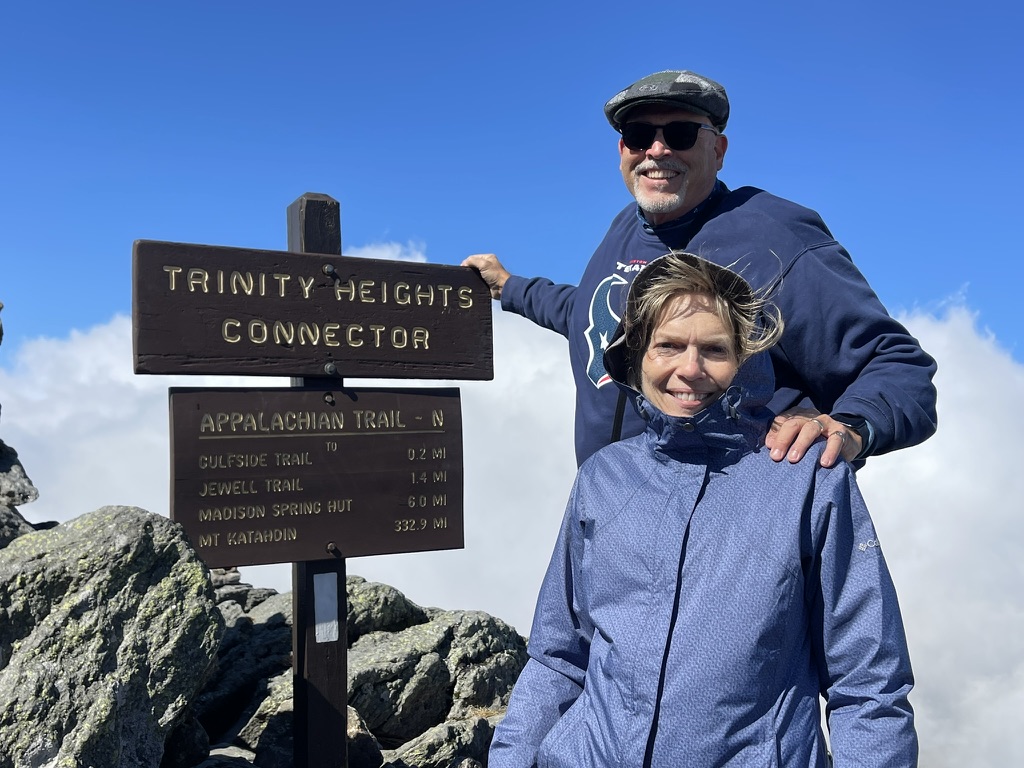
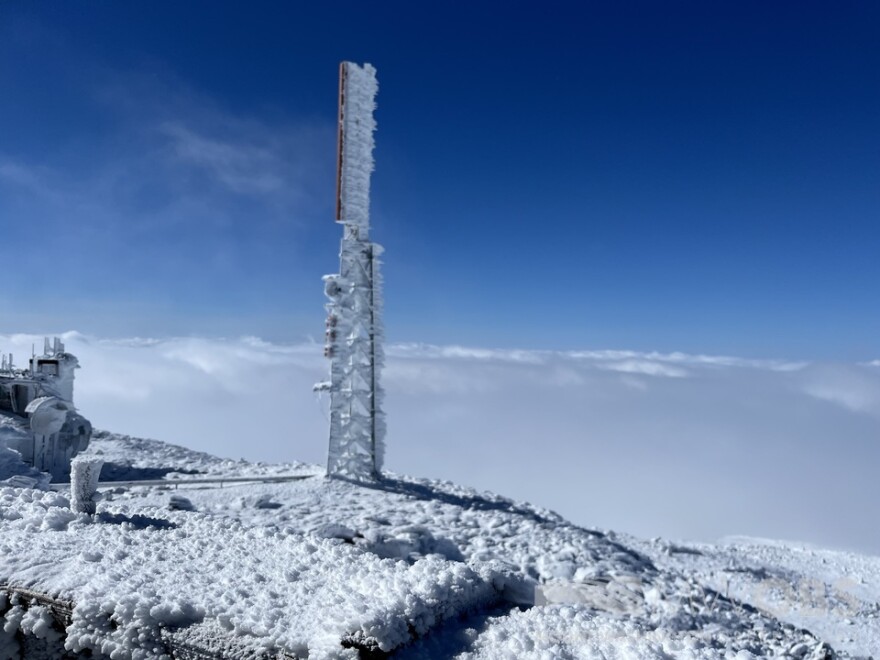
    Just over a week ago we visited Mount Washington in the White Mountains of New Hampshire. Mount Washington, is an ultra-prominent mountain and the highest peak in the Northeastern United States at 6,288.2 ft. It is the most topographically prominent mountain east of the Mississippi River. The mountain is notorious for its erratic weather. Here’s photo showing Diane and me at the summit of the mountain. Even though it was a pleasant day at the foot of the mountain (55 degrees +/-). The windchill on top of the mountain was closer to 35 degrees. But just last Friday the mountain lived up to its notorious reputation for erratic weather. Snow began accumulating the day after we visited, marking the first significant storm of the season. Approximately 2.5 inches was blanketing the summit as of Friday afternoon, capped with a layer of ice. Weather there is not only notoriously erratic, it is also brutal. The highest recorded wind speed at a manned weather station was recorded there: winds in excess of 200 MPH.

    Diane and me at the summit of Mount Washington
    Ice and Snow Atop Mount Washington on October 10, 2024

    It wasn’t a matter of windchill that caused Paul and his shipmates such grave concerns. It was the Northeaster storm that buffeted the boat. Lasting several days, and forcing the crew to throw cargo and even the ship’s tackle overboard to stay afloat, it was a brutal storm! Despite their best efforts, they feel powerless against the fury of nature, eventually losing all hope of being saved (v. 20). Paul will testify to God’s providential care and point them toward God’s promise of a successful journey to Rome – albeit with the loss of the ship and cargo. Thankfully no lives will be lost.

    We are vulnerable to nature’s forces however they may be caused and however they may come. There comes a time when human effort will fail in the face of tumultuous weather. The recent hurricanes hitting Florida testify to that fact.

    Mother Nature isn’t the one in charge of the weather. That’s God’s department. And since the creation of time, the weather has testified to God’s omnipotence and man’s limits. We may not like to face storms of any severity. But when we do we best look to God for help and salvation. Storms may well remind us of our human limitations, and our need to rely on God. We may need to take action to secure our lives and property in these storms, but we can take comfort in knowing that God is over it all.

    How do your actions and reactions to grave danger or tumultuous weather reflect your faith?