David Bahn – Reflections

Light from the Word and through the lens

  • The Hope of Israel and the Kingdom of God

    After three days he called together the local leaders of the Jews, and when they had gathered, he said to them, “Brothers, though I had done nothing against our people or the customs of our fathers, yet I was delivered as a prisoner from Jerusalem into the hands of the Romans. 18 When they had examined me, they wished to set me at liberty, because there was no reason for the death penalty in my case. 19 But because the Jews objected, I was compelled to appeal to Caesar—though I had no charge to bring against my nation. 20 For this reason, therefore, I have asked to see you and speak with you, since it is because of the hope of Israel that I am wearing this chain.” 21 And they said to him, “We have received no letters from Judea about you, and none of the brothers coming here has reported or spoken any evil about you. 22 But we desire to hear from you what your views are, for with regard to this sect we know that everywhere it is spoken against.”

    23 When they had appointed a day for him, they came to him at his lodging in greater numbers. From morning till evening he expounded to them, testifying to the kingdom of God and trying to convince them about Jesus both from the Law of Moses and from the Prophets. 24 And some were convinced by what he said, but others disbelieved. 25 And disagreeing among themselves, they departed after Paul had made one statement: “The Holy Spirit was right in saying to your fathers through Isaiah the prophet:

    26 “‘Go to this people, and say,
    “You will indeed hear but never understand,
        and you will indeed see but never perceive.”
    27 For this people’s heart has grown dull,
        and with their ears they can barely hear,
        and their eyes they have closed;
    lest they should see with their eyes
        and hear with their ears
    and understand with their heart
        and turn, and I would heal them.’

    28 Therefore let it be known to you that this salvation of God has been sent to the Gentiles; they will listen.”

    30 He lived there two whole years at his own expense, and welcomed all who came to him, 31 proclaiming the kingdom of God and teaching about the Lord Jesus Christ with all boldness and without hindrance.

    Candle Larkspur | Waterton National Park, Canada | August 2024

    Somewhere in the last 10 years or so, I stumbled upon a deeper appreciation and understanding of Martin Luther’s explanation to the Second Article of the Apostle’s Creed:

         I believe that Jesus Christ, true God, begotten of the Father from eternity, and also true man, born of the Virgin Mary, is my Lord,

         who has redeemed me, a lost and condemned person, purchased and won me from all sins, from death, and from the power of the devil; not with gold or silver, but with His holy, precious blood and with His innocent suffering and death,

         that I may be His own and live under Him in His kingdom [emphasis mine] and serve Him in everlasting righteousness, innocence, and blessedness,

         just as He is risen from the dead, lives and reigns to all eternity.

         This is most certainly true.

    Learning that the Kingdom of God is best understood as the reign and rule of God rather than an equivalent to an earthly kingdom or nation further illuminated my grasp of this reality. It was then that I also gained a deeper appreciation for the classic Lutheran definition of the Kingdom of God: the gracious reign of Christ in the heart of the believer through faith. God’s kingdom is personal. It is established in the hearts of believers through faith, as the Holy Spirit works to bring people to trust in and follow Christ.

    I recall, also that there are three ways of understanding God’s reign and rule: His kingdom of power, kingdom of grace, and kingdom of glory. All people live under God’s kingdom of power. He reigns and rules over all things. Not one sparrow falls to the ground apart from the Father (cf. Matthew 10:29). God reigns in the hearts of believers by faith in the kingdom of grace. His rule is one of undeserved kindness and mercy. It has been made possible by Jesus’ redemptive work. One glorious day we who believe in Jesus will see the hope of Israel and the fullness of God’s reign and rule realized in heaven – his kingdom of glory. This is the future fulfillment of God’s reign when Christ returns, and God’s rule will be fully realized in the New Heaven and New Earth.

    The kingdom of glory is the true hope of Israel, and the true hope of all believers. Sometimes we hope for that day urgently. Sometimes we forget it. Sometimes we despise that hope. For that reason we rejoice in God’s grace to us. We remember that we belong to Christ, and repent and believe, living under him in his kingdom. He rules over all things, and the glory of his kingdom to come is more glorious than we can ever imagine.


  • Post Church-Culture Realities

    After three days he called together the local leaders of the Jews, and when they had gathered, he said to them, “Brothers, though I had done nothing against our people or the customs of our fathers, yet I was delivered as a prisoner from Jerusalem into the hands of the Romans. 18 When they had examined me, they wished to set me at liberty, because there was no reason for the death penalty in my case. 19 But because the Jews objected, I was compelled to appeal to Caesar—though I had no charge to bring against my nation. 20 For this reason, therefore, I have asked to see you and speak with you, since it is because of the hope of Israel that I am wearing this chain.” 21 And they said to him, “We have received no letters from Judea about you, and none of the brothers coming here has reported or spoken any evil about you. 22 But we desire to hear from you what your views are, for with regard to this sect we know that everywhere it is spoken against.”

    23 When they had appointed a day for him, they came to him at his lodging in greater numbers. From morning till evening he expounded to them, testifying to the kingdom of God and trying to convince them about Jesus both from the Law of Moses and from the Prophets. 24 And some were convinced by what he said, but others disbelieved. 25 And disagreeing among themselves, they departed after Paul had made one statement: “The Holy Spirit was right in saying to your fathers through Isaiah the prophet:

    26 “‘Go to this people, and say,
    “You will indeed hear but never understand,
        and you will indeed see but never perceive.”
    27 For this people’s heart has grown dull,
        and with their ears they can barely hear,
        and their eyes they have closed;
    lest they should see with their eyes
        and hear with their ears
    and understand with their heart
        and turn, and I would heal them.’

    28 Therefore let it be known to you that this salvation of God has been sent to the Gentiles; they will listen.”

    30 He lived there two whole years at his own expense, and welcomed all who came to him, 31 proclaiming the kingdom of God and teaching about the Lord Jesus Christ with all boldness and without hindrance.

    Mountain Peaks | Waterton National Park, Canada | August 2024

    “Elections are a reflection of society, not a shaper of society.” That was the opinion of John Stonestreet on a recent World and Everything In It podcast. I think he is correct. The issues that concern me have to do with extreme pro-abortion policies, LGBTQ++ mainstreaming, and a general anti-Christian bias that our present culture seems to celebrate. We’re a long way from the days of Father Knows Best, or Leave it to Beaver.

    But those days were not perfect, either. For even in those days Christmas was about Rudolph the Red Nosed Reindeer, and angels getting their wings every time a bell rings. These are not as obviously evil and pervasively-immoral as today’s offerings (such as Amazon Prime’s animated 2024 depraved musical set in Hell). That said, notice anything missing from those good old days Christmas specials? Where is Jesus? Where is the Christ Child? Thank God for Charlie Brown’s Christmas special where Linus recites the Christmas story from Luke and tells Charlie, “That’s what Christmas is all about Charlie Brown.”

    Today the Charlie Brown Christmas special is more of a nostalgic curiosity – not a mainstream Christmas staple. All this is to say whatever the results of the election, I don’t see much of the Christian agenda (read “Jesus’ gift of salvation and call to repentance and faith”) coming through. In either case.

    I’m reminded of this in light of the comments of the Jewish leaders, “with regard to this sect [the message of Jesus] we know that everywhere it is spoken against.” This isn’t the first time that the Christian Church and Jesus’ followers have been held in low esteem. There is nothing new under the sun. And whether it’s gay rights, sexual promiscuity, unbridled greed, or discarding of traditional biblical values, we’ve been here before. 

    This does not stop Paul from sharing the Gospel. It did not stop the spread of Christianity. It has not thwarted the message of Jesus being shared around the world. In other words, God’s got this. Our post-Christian Church culture is much like the earliest days of the spread of the Christian faith and growth of the Christian Church. It didn’t stop Paul from witnessing to the hope of Israel fully realized in Jesus Christ.

    While I do pray that our nation turns back to God’s ways and values, I pray even more that the Holy Spirit would be poured out upon the Christian Church today, and that true revival would spring forth and more and more people’s hearts would be turned back to God in repentant faith, and the Kingdom of God would come among us all. God needs no election win. He much more desires to win our hearts.

  • The Truth of the Matter

    After three days he called together the local leaders of the Jews, and when they had gathered, he said to them, “Brothers, though I had done nothing against our people or the customs of our fathers, yet I was delivered as a prisoner from Jerusalem into the hands of the Romans. 18 When they had examined me, they wished to set me at liberty, because there was no reason for the death penalty in my case. 19 But because the Jews objected, I was compelled to appeal to Caesar—though I had no charge to bring against my nation. 20 For this reason, therefore, I have asked to see you and speak with you, since it is because of the hope of Israel that I am wearing this chain.” 21 And they said to him, “We have received no letters from Judea about you, and none of the brothers coming here has reported or spoken any evil about you. 22 But we desire to hear from you what your views are, for with regard to this sect we know that everywhere it is spoken against.”

    23 When they had appointed a day for him, they came to him at his lodging in greater numbers. From morning till evening he expounded to them, testifying to the kingdom of God and trying to convince them about Jesus both from the Law of Moses and from the Prophets. 24 And some were convinced by what he said, but others disbelieved. 25 And disagreeing among themselves, they departed after Paul had made one statement: “The Holy Spirit was right in saying to your fathers through Isaiah the prophet:

    26 “‘Go to this people, and say,
    “You will indeed hear but never understand,
        and you will indeed see but never perceive.”
    27 For this people’s heart has grown dull,
        and with their ears they can barely hear,
        and their eyes they have closed;
    lest they should see with their eyes
        and hear with their ears
    and understand with their heart
        and turn, and I would heal them.’

    28 Therefore let it be known to you that this salvation of God has been sent to the Gentiles; they will listen.”

    30 He lived there two whole years at his own expense, and welcomed all who came to him, 31 proclaiming the kingdom of God and teaching about the Lord Jesus Christ with all boldness and without hindrance.

    Begonia | Waterton National Park, Canada | August 2024

    I’m pretty much ready for the election campaigns to be ended. Especially the ads. I get 50 texts a day from this candidate or that one. Today I even had a voicemail on my phone from one of the candidates. Claims. Counter claims. Accusations fly back and forth. By all counts it’s worse than it’s ever been. More money spent. More ads aired. More noise. I’ve had enough.

    It’s quite another matter in Rome when Paul arrives there and meets with the Jewish leaders. He offers a brief overview of his saga with the Jews in Jerusalem and his appeal to Caesar. He makes no bones about the fact that the Jews in Jerusalem were not pleased with him. He is there and in chains because of the hope of Israel, he says. He will not back away from the message of Jesus. And he wants to share the gospel with these Jewish leaders in Rome.

    Their response is reminiscent of the Jewish people in Berea. They, Luke tells us, “studied the Scriptures daily to see if what Paul was saying was true.” (Acts 17:11) They actually want to hear what Paul has to say before determining how to relate to him. They do say they want to hear from him because, “with regard to this sect we know that everywhere it is spoken against.” He is not starting with a totally clean slate, but neither is he facing a preconceived conclusion of his disfavor. 

    It seems to me that fear is behind much of the political posturing, accusations, and vitriol. It’s not only a matter of fear mongering either. Fear is gripping people on every side of the political spectrum. People believe that if their candidate loses the future of America is at stake. That renders reasonable discourse impossible.

    Of course it takes two. Not only do we need to be ready to listen. Those who speak must be willing to speak the truth. We’ve lost so much of that today. Thank God for those who do listen respectfully and  those who speak truthfully. Best we all seek to get to the truth of the matter. And Jesus is the embodiment of truth.

  • Please pray these Psalms with me today, on this Lord’s Day

    Psalm 3

    LORD, how many are my foes!
        Many are rising against me;
    many are saying of my soul,
        “There is no salvation for him in God.” Selah

    But you, O LORD, are a shield about me,
        my glory, and the lifter of my head.
    I cried aloud to the LORD,
        and he answered me from his holy hill. Selah

    I lay down and slept;
        I woke again, for the LORD sustained me.
    I will not be afraid of many thousands of people
        who have set themselves against me all around.

    Arise, O LORD!
        Save me, O my God!
    For you strike all my enemies on the cheek;
        you break the teeth of the wicked.

    Salvation belongs to the LORD;
        your blessing be on your people! Selah

    Psalm 33:1-5

    Shout for joy in the LORD, O you righteous!
        Praise befits the upright.
    Give thanks to the LORD with the lyre;
        make melody to him with the harp of ten strings!
    Sing to him a new song;
        play skillfully on the strings, with loud shouts.

    For the word of the LORD is upright,
        and all his work is done in faithfulness.
    He loves righteousness and justice;
        the earth is full of the steadfast love of the LORD.

    Psalm 63:1-8

    O God, you are my God; earnestly I seek you;
        my soul thirsts for you;
    my flesh faints for you,
        as in a dry and weary land where there is no water.
    So I have looked upon you in the sanctuary,
        beholding your power and glory.
    Because your steadfast love is better than life,
        my lips will praise you.
    So I will bless you as long as I live;
        in your name I will lift up my hands.

    My soul will be satisfied as with fat and rich food,
        and my mouth will praise you with joyful lips,
    when I remember you upon my bed,
        and meditate on you in the watches of the night;
    for you have been my help,
        and in the shadow of your wings I will sing for joy.
    My soul clings to you;
        your right hand upholds me.

    Psalm 93:1-2

    The LORD reigns; he is robed in majesty;
        the LORD is robed; he has put on strength as his belt.
    Yes, the world is established; it shall never be moved.
    Your throne is established from of old;
        you are from everlasting.

    Psalm 123

    To you I lift up my eyes,
        O you who are enthroned in the heavens!
    Behold, as the eyes of servants
        look to the hand of their master,
    as the eyes of a maidservant
        to the hand of her mistress,
    so our eyes look to the LORD our God,
        till he has mercy upon us.

    Have mercy upon us, O LORD, have mercy upon us,
        for we have had more than enough of contempt.
    Our soul has had more than enough
        of the scorn of those who are at ease,
        of the contempt of the proud.

    The Holy Bible, English Standard Version.
    ESV® Text Edition: 2016. Copyright © 2001 by
    Crossway Bibles, a publishing ministry of Good News Publishers.

  • Don’t lose sight of the goal

    After we were brought safely through, we then learned that the island was called Malta. The native people showed us unusual kindness, for they kindled a fire and welcomed us all, because it had begun to rain and was cold. When Paul had gathered a bundle of sticks and put them on the fire, a viper came out because of the heat and fastened on his hand. When the native people saw the creature hanging from his hand, they said to one another, “No doubt this man is a murderer. Though he has escaped from the sea, Justice has not allowed him to live.” He, however, shook off the creature into the fire and suffered no harm. They were waiting for him to swell up or suddenly fall down dead. But when they had waited a long time and saw no misfortune come to him, they changed their minds and said that he was a god.

    Now in the neighborhood of that place were lands belonging to the chief man of the island, named Publius, who received us and entertained us hospitably for three days. It happened that the father of Publius lay sick with fever and dysentery. And Paul visited him and prayed, and putting his hands on him, healed him. And when this had taken place, the rest of the people on the island who had diseases also came and were cured. 10 They also honored us greatly, and when we were about to sail, they put on board whatever we needed.

    11 After three months we set sail in a ship that had wintered in the island, a ship of Alexandria, with the twin gods as a figurehead. 12 Putting in at Syracuse, we stayed there for three days. 13 And from there we made a circuit and arrived at Rhegium. And after one day a south wind sprang up, and on the second day we came to Puteoli. 14 There we found brothers and were invited to stay with them for seven days. And so we came to Rome. 15 And the brothers there, when they heard about us, came as far as the Forum of Appius and Three Taverns to meet us. On seeing them, Paul thanked God and took courage. 16 And when we came into Rome, Paul was allowed to stay by himself, with the soldier who guarded him.

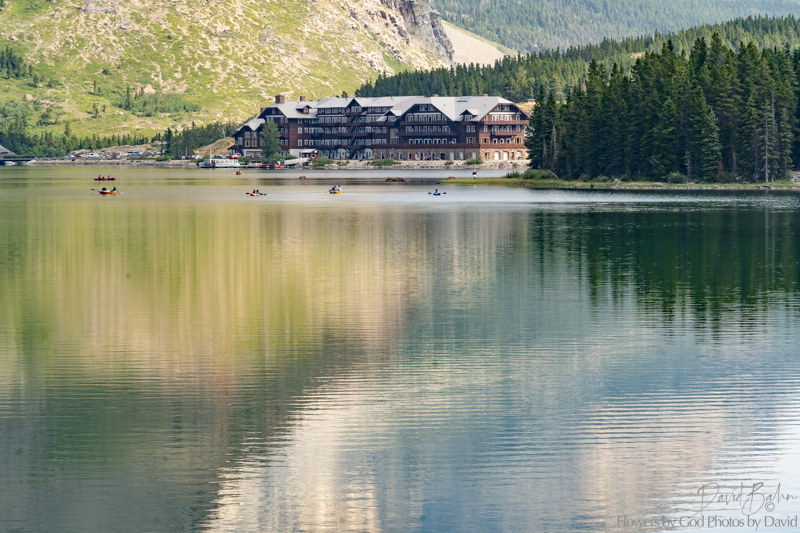
    Prince of Wales Hotel | Waterton National Park, Canada | August 2024
    We hiked to the top of this waterfall

    We were hiking in the mountains around Canmore, Canada. The goal was to reach the top of the waterfall. Steep slopes, slick stones, and high altitude conspired to make it a challenging hike. I don’t think I ever wanted to abandon the hike, even though I was near the limits of my physical abilities. I wanted to reach the top. We did make it. The view was beautiful. And the rest was welcomed. We were even greeted by a cute ground squirrel at the top.

    My goal was to get to the top of the waterfall. I think Diane was more focused on enjoying the hike and the views. We both achieved both goals. It was a challenging and enjoyable hike.

    I think of this and other challenges I’ve undertaken as I consider what is really happening with Paul and Luke as they head for Rome. On the one hand, their goal was certainly to get safely to Rome. Paul expresses his desire and goal to get to Rome in Romans 1:9-12, “For God is my witness, whom I serve with my spirit in the gospel of his Son, that without ceasing I mention you 10 always in my prayers, asking that somehow by God’s will I may now at last succeed in coming to you. 11 For I long to see you, that I may impart to you some spiritual gift to strengthen you— 12 that is, that we may be mutually encouraged by each other’s faith, both yours and mine.”

    So Paul’s goal in getting to Rome was far more than arriving safely there, more than being able to witness to the people there, but to impart spiritual gifts to the people there, to strengthen them, and be mutually encouraged by his and their faith. But that’s not the end of his desire. For he says in Romans 15:24, “I hope to see you in passing as I go to Spain, and to be helped on my journey there by you, once I have enjoyed your company for a while.

    Paul didn’t want only to get to Rome, but to go on to Spain in order to preach the gospel there as well. Paul was singularly gifted and burdened with the mission mandate. He dedicated his life to bringing the Gospel to new lands and places, people and languages. He never lost sight of this mission. Even as he enjoyed the hospitality of Publius, or healed Publius’ father, waited three months before setting sail and arriving in Rome, his goal wasn’t just Rome. It was sharing the gospel. This he did all along the way. And you and I are beneficiaries of his dedication and God’s work through him.

    On this day after Reformation Day, we can thank God for Luther, Luke, and Paul – all of whom proclaimed the reign and rule of Jesus Christ and who have shaped our faith through their witness. They didn’t lose sight of the goal. That goal was set by God whose goal it is that all people be saved and come to the knowledge of the truth. God loved the world so much that he gave his Only Son, that whoever believes in him will not perish, but have eternal life. He continues to send people on mission to share that Good News. That is God’s ultimate goal, and it never changes no matter the path it takes.

  • The Healing Ministry of the Church

    After we were brought safely through, we then learned that the island was called Malta. The native people showed us unusual kindness, for they kindled a fire and welcomed us all, because it had begun to rain and was cold. When Paul had gathered a bundle of sticks and put them on the fire, a viper came out because of the heat and fastened on his hand. When the native people saw the creature hanging from his hand, they said to one another, “No doubt this man is a murderer. Though he has escaped from the sea, Justice has not allowed him to live.” He, however, shook off the creature into the fire and suffered no harm. They were waiting for him to swell up or suddenly fall down dead. But when they had waited a long time and saw no misfortune come to him, they changed their minds and said that he was a god.

    Now in the neighborhood of that place were lands belonging to the chief man of the island, named Publius, who received us and entertained us hospitably for three days. It happened that the father of Publius lay sick with fever and dysentery. And Paul visited him and prayed, and putting his hands on him, healed him. And when this had taken place, the rest of the people on the island who had diseases also came and were cured. 10 They also honored us greatly, and when we were about to sail, they put on board whatever we needed.

    11 After three months we set sail in a ship that had wintered in the island, a ship of Alexandria, with the twin gods as a figurehead. 12 Putting in at Syracuse, we stayed there for three days. 13 And from there we made a circuit and arrived at Rhegium. And after one day a south wind sprang up, and on the second day we came to Puteoli. 14 There we found brothers and were invited to stay with them for seven days. And so we came to Rome. 15 And the brothers there, when they heard about us, came as far as the Forum of Appius and Three Taverns to meet us. On seeing them, Paul thanked God and took courage. 16 And when we came into Rome, Paul was allowed to stay by himself, with the soldier who guarded him.

    Bluebell Bellflower | Waterton National Park, Canada | August 2024

    I was miserable. My first class in my Doctor of Ministry degree and I had laryngitis. If you know me, you know I like to engage in the class discussions. I sit on the front row. I ask questions. I answer questions. I love to engage fully. But I had laryngitis! I couldn’t speak. Frustrated. Disappointed.

    At the break the professor offered to pray for people. So, naturally, I went forward to ask for prayers for my cold. When we spoke with me he inquired about my limp. He saw that I had a noticeable limp. He said, “I’m more concerned about your hip than I am about your head cold.” So was I.

    Before I knew what was happening, he had me sitting in a chair, holding my feet out in front of me, and told me one leg was longer than the other. Then he said – loudly, “Anyone want to see the Lord lengthen a leg?” What was I to do? My feet were in his hands. So as people gathered around I sat – feet out front, resting on his open palms. “In the name of Jesus,” he said, “I command this leg to grow.” And. It. Did.

    I felt my leg grow and saw my foot move outward. I believe it was a lesson from God about his power, and the healing ministry of the church.

    The first hospitals were opened by Christians. Early Christians took newborn children who had been abandoned in the streets into their homes. Paul and the other Apostles healed people. Jesus’ ministry was one of healing diseases, casting out demons, and freeing guilty consciences.

    When Paul visited Publius’ father and healed him, he was carrying on Jesus’ ministry and setting the compass for all of Jesus’ followers. We may not be able to heal in the same way Paul did, but we can lay hands on people, praying for them, asking God to heal them. James writes that this ministry of the church is to be exercised by the elders by anointing with oil, confessing sins, and offering prayer (cf. James 5:13-17).

    Two things I have learned as I’ve studied this important ministry. We don’t have to say, “If it be your will,” when we pray for someone to be healed.. It is God’s will to heal all people. Some will be healed miraculously and immediately. Some medically over time. Some mercifully on the day of the resurrection of all flesh. And when you pray for someone and they are healed immediately it is a glorious moment for them and for the Kingdom. But even if it’s not immediate, people are blessed by the loving care and appropriate touch of a brother or sister in Christ.

    Next time you have the opportunity to pray for someone to be healed, leave the timing up to God and do so with the confidence of his good will to heal. He’s really good at it.

  • The Milk of Human Kindness

    After we were brought safely through, we then learned that the island was called Malta. The native people showed us unusual kindness, for they kindled a fire and welcomed us all, because it had begun to rain and was cold. When Paul had gathered a bundle of sticks and put them on the fire, a viper came out because of the heat and fastened on his hand. When the native people saw the creature hanging from his hand, they said to one another, “No doubt this man is a murderer. Though he has escaped from the sea, Justice has not allowed him to live.” He, however, shook off the creature into the fire and suffered no harm. They were waiting for him to swell up or suddenly fall down dead. But when they had waited a long time and saw no misfortune come to him, they changed their minds and said that he was a god.

    Now in the neighborhood of that place were lands belonging to the chief man of the island, named Publius, who received us and entertained us hospitably for three days. It happened that the father of Publius lay sick with fever and dysentery. And Paul visited him and prayed, and putting his hands on him, healed him. And when this had taken place, the rest of the people on the island who had diseases also came and were cured. 10 They also honored us greatly, and when we were about to sail, they put on board whatever we needed.

    11 After three months we set sail in a ship that had wintered in the island, a ship of Alexandria, with the twin gods as a figurehead. 12 Putting in at Syracuse, we stayed there for three days. 13 And from there we made a circuit and arrived at Rhegium. And after one day a south wind sprang up, and on the second day we came to Puteoli. 14 There we found brothers and were invited to stay with them for seven days. And so we came to Rome. 15 And the brothers there, when they heard about us, came as far as the Forum of Appius and Three Taverns to meet us. On seeing them, Paul thanked God and took courage. 16 And when we came into Rome, Paul was allowed to stay by himself, with the soldier who guarded him.

    Fireweed-II | Waterton National Park, Canada | August 2024

    Lady McBeth frets in William Shakespeare’s play, McBeth, that her husband, MacBeth, is “too full o’ the milk of human kindness” to take the ruthless actions needed to seize the throne. In these days of vicious political attacks, we can certainly understand her perceived need for ruthless tactics. I, for one, can imagine powerful politicians, CEOs, administrators, or generals feel the need for ruthless resolve. Some would call it just being decisive. It seems rare, though, that the milk of human kindness would flow from such high-powered men or women.

    I’m not certain Paul would be known for this attribute. But Publius certainly would. He seems to be predisposed to kindness. He received [them] and entertained [them] hospitably for three days, Luke recordsThe “us” refers to Luke for certain, but also implies a far-flung kindness, and hospitality toward several if not all 276 people from the shipwreck. 

    I’ve certainly experienced kindness on many occasions, and many fronts. From the offer of an apartment when I stay in Friendswood as I serve the church there, to hospitality from friends who opened their home to us when we had a several-day conference near them, to a friend who invited me to have lunch once a week, and asked if we could be friends. These acts of kindness are blessings that reach far beyond the act itself.

    In the case of Paul, Publius’ kindness extended to providing provisions for his ongoing trip to Rome. And that, I’m sure, also made an impression on those who accompanied him and Luke. People see these acts of kindness.

    This is what Jesus means when he says, “let your light shine before others, so that they may see your good works and give glory to your Father who is in heaven.” (Matthew 5:16) It’s what Paul gets at when he writes to the church in Corinth saying, “If I speak in the tongues of men or of angels, but do not have love, I am only a resounding gong or a clanging cymbal.” (1 Corinthians 13:1) It’s what God called for through the prophet Micah, “Do justice, love mercy, and walk humbly with your God.” (Micah 6:8)

    It’s not clear that Publius was a believer. But he certainly did things in line with one who confesses faith in Jesus. If we are known more for our ruthlessness than our kindness, we must repent, and seek to know the love of God.

    Jeremiah wrote, “The steadfast love of the LORD never ceases; his mercies never come to an end; they are new every morning; great is your faithfulness.” (Lamentations 3:22-23) If the King of the Universe is kind and tender, certainly those who bear his name should reflect his mercies, kindness, and love.

  • Divine Appointments

    After we were brought safely through, we then learned that the island was called Malta. The native people showed us unusual kindness, for they kindled a fire and welcomed us all, because it had begun to rain and was cold. When Paul had gathered a bundle of sticks and put them on the fire, a viper came out because of the heat and fastened on his hand. When the native people saw the creature hanging from his hand, they said to one another, “No doubt this man is a murderer. Though he has escaped from the sea, Justice has not allowed him to live.” He, however, shook off the creature into the fire and suffered no harm. They were waiting for him to swell up or suddenly fall down dead. But when they had waited a long time and saw no misfortune come to him, they changed their minds and said that he was a god.

    Now in the neighborhood of that place were lands belonging to the chief man of the island, named Publius, who received us and entertained us hospitably for three days. It happened that the father of Publius lay sick with fever and dysentery. And Paul visited him and prayed, and putting his hands on him, healed him. And when this had taken place, the rest of the people on the island who had diseases also came and were cured. 10 They also honored us greatly, and when we were about to sail, they put on board whatever we needed.

    11 After three months we set sail in a ship that had wintered in the island, a ship of Alexandria, with the twin gods as a figurehead. 12 Putting in at Syracuse, we stayed there for three days. 13 And from there we made a circuit and arrived at Rhegium. And after one day a south wind sprang up, and on the second day we came to Puteoli. 14 There we found brothers and were invited to stay with them for seven days. And so we came to Rome. 15 And the brothers there, when they heard about us, came as far as the Forum of Appius and Three Taverns to meet us. On seeing them, Paul thanked God and took courage. 16 And when we came into Rome, Paul was allowed to stay by himself, with the soldier who guarded him.

    Three Drops of Water | Waterton National Park, Canada | August 2024

    The door in the hall outside my first period chemistry class opened, and Jerry (I didn’t really know his name at the time) poked his head out. “Want to come in and sit down?” I was on crutches, so having a place to sit while we waited for class to begin sounded good to me. So I crutched across the hall and sat down – in a photography darkroom. Not only a love for photography was kindled, but a deep friendship as well, and what would become a push toward the Lutheran Church and ultimately to becoming a pastor. That was a divine appointment. That little ripple in time blossomed into a tsunami of life-change.

    The power had gone out so my date and Jerry and his date went to the basement of the Lutheran Campus Center to finish boiling the crawdads we had gathered for the first and only crawdad supper to be held there. This was several years later. I remained up stairs peeling the crawdads (we didn’t know how you are supposed to do this crawdad supper thing). In walked a young woman who was a biology major. Unlike everyone else around the kitchen, she was not put off by the prospect of shelling crawdads. It wasn’t love at first sight, but there was a spark in that moment that grew into a flame that would not go out. Diane and I were married three years later. Another divine appointment.

    Divine appointments. Defining moments. Pivotal encounters. Kairos moments. We all have them. Some we do not recognize, until maybe later. But these life-changing moments do in fact change our lives.

    I think of that when I read of Paul’s encounter with Publius. I’m not sure it changed Paul’s life, but it certainly might have. I’m not sure it changed Publius’ life. But it likely did. After all, Luke records his name. He would be known by whoever read Luke’s account as a man who helped Paul along the way. Publius’ father certainly had a divine appointment. He was healed by God through Paul.

    And what about Paul? While he seems to be the one who was encountered, I can imagine how this encounter may have had ripples beyond the moments there on Malta. I can imagine how Publius’ kindness and provision for Paul’s continued journey made a great difference in how Paul was treated on the final leg of his travels to Rome. Maybe even in the way the soldier guarded Paul while he was under house arrest there.

    These God moments come at God’s pleasure. We may, sadly, sometimes miss them. But we should never pass up the opportunity to do good, offer kindness, or receive help when we are in need. Who knows how the spark might ignite into a flame? Who knows how far the ripples will spread? If God has set the appointment, surely we must not limit its impact.

  • Conclusions

    After we were brought safely through, we then learned that the island was called Malta. The native people showed us unusual kindness, for they kindled a fire and welcomed us all, because it had begun to rain and was cold. When Paul had gathered a bundle of sticks and put them on the fire, a viper came out because of the heat and fastened on his hand. When the native people saw the creature hanging from his hand, they said to one another, “No doubt this man is a murderer. Though he has escaped from the sea, Justice has not allowed him to live.” He, however, shook off the creature into the fire and suffered no harm. They were waiting for him to swell up or suddenly fall down dead. But when they had waited a long time and saw no misfortune come to him, they changed their minds and said that he was a god.

    Now in the neighborhood of that place were lands belonging to the chief man of the island, named Publius, who received us and entertained us hospitably for three days. It happened that the father of Publius lay sick with fever and dysentery. And Paul visited him and prayed, and putting his hands on him, healed him. And when this had taken place, the rest of the people on the island who had diseases also came and were cured. 10 They also honored us greatly, and when we were about to sail, they put on board whatever we needed.

    11 After three months we set sail in a ship that had wintered in the island, a ship of Alexandria, with the twin gods as a figurehead. 12 Putting in at Syracuse, we stayed there for three days. 13 And from there we made a circuit and arrived at Rhegium. And after one day a south wind sprang up, and on the second day we came to Puteoli. 14 There we found brothers and were invited to stay with them for seven days. And so we came to Rome. 15 And the brothers there, when they heard about us, came as far as the Forum of Appius and Three Taverns to meet us. On seeing them, Paul thanked God and took courage. 16 And when we came into Rome, Paul was allowed to stay by himself, with the soldier who guarded him.

    Fireweed | Waterton National Park, Canada | August 2024

    He never seems to smile. Once in a while I am able to get behind his severe facade, but most often he seems angry and bitter. I wonder what his story is. Maybe one day I’ll be able to hear it. But for now I mostly wait. He seems not to want to engage on any personal level.

    He is friendly and gregarious. He always has a good word for me. Once in a while he’ll share an insight or offer advice – but always with respect and the caveat that I don’t have to take his word for it. I’ve had the opportunity to hear a bit of his story. A good bit of pain. No small amount of struggle.

    I don’t know why one seems bitter and brittle while the other is open and friendly. But I do know we all  have stories. Experiences along the way have shaped us. We draw conclusions about others based on our experiences. Sometimes we’re right. Other times, we miss the mark.

    When Paul and his boat-mates arrive in Malta, the people there draw conclusions about him. Two drastically different conclusions to be precise. On first brush they conclude that he is a murderer. When Paul was bitten by the snake, they concluded that although he had escaped from the shipwreck at sea, now “Justice” has caught up with him. The Greek, “δίκη” (dikē) seems possibly to refer to the Greek goddess of justice. How wrong they were. Paul was not being punished by their goddess. She is no true god. Then, when Paul doesn’t swell up and die, they conclude that he was a god! Wrong again. Paul is no god. He is a servant of the Most High God, and his Son, Jesus Christ.

    What wrong conclusion have we drawn? About a cranky neighbor? About an uncooperative co-worker? About a constantly-happy friend? About a smug church member? About a stern pastor? We may or may not be right about their anger, fear, bitterness, joy or arrogance.

    But let’s remember this absolute truth: God sees through every mask and veil. He knows us for who we are. And he loves us. Truly. Ne also loves that cranky neighbor, uncooperative co-worker, constantly-happy friend, and even that stern pastor. He loves you. Let’s keep that in mind as we relate to those we meet today.

  • In 1517 Martin Luther challenged the practices and doctrines of the Roman Catholic Church, particularly the sale of indulgences and the authority of the Pope. Luther’s “95 Theses” sparked widespread debate and led to his excommunication, pushing him to advocate for a return to the true teachings of Scripture. Central to the Reformation were principles like justification by faith alone and sola scriptura (Scripture alone as the authority). Martin Luther’s most famous hymn, A Mighty Fortress, is based on Psalm 46. Luther loved music and said, “Next to the Word of God, the noble art of music is the greatest treasure in the world.”

    I have included three versions of this great hymn below the Psalm. Enjoy. Sing! Pray!

    Psalm 46

    God is our refuge and strength,
        a very present help in trouble.
    Therefore we will not fear though the earth gives way,
        though the mountains be moved into the heart of the sea,
    though its waters roar and foam,
        though the mountains tremble at its swelling. Selah

    There is a river whose streams make glad the city of God,
        the holy habitation of the Most High.
    God is in the midst of her; she shall not be moved;
        God will help her when morning dawns.
    The nations rage, the kingdoms totter;
        he utters his voice, the earth melts.
    The Lord of hosts is with us;
        the God of Jacob is our fortress. Selah

    Come, behold the works of the Lord,
        how he has brought desolations on the earth.
    He makes wars cease to the end of the earth;
        he breaks the bow and shatters the spear;
        he burns the chariots with fire.
    10 “Be still, and know that I am God.
        I will be exalted among the nations,
        I will be exalted in the earth!”
    11 The Lord of hosts is with us;
        the God of Jacob is our fortress. Selah