In 1968 Jerry Snell opened a door in the hallway outside our first hour chemistry class. He invited me into what I discovered was a darkroom. Soon I was on the school newspaper and annual staff as a photographer. Later I learned that Jerry was a Lutheran who was planning to become a pastor. A few years later I was not only a Lutheran, but I was heading off to seminary to become a Lutheran pastor, too. Jerry followed a year later and served as a pastor in Missouri until his untimely heart attack and death. I thank God for Jerry and enjoy photography still today – not to mention rejoicing in having served as a Lutheran pastor in congregations in Utah, Colorado, Arkansas and Texas. I’ve retired now and serve part time as a Congregational Support Specialist for the Texas District of the LCMS. I also provide coaching and leadership training through various PLI cohorts and with individual congregations and organizations.
David Bahn is a follower of Jesus Christ, husband to Diane, father and grandfather. He is an avid amateur photographer. His photo website is “Flowers by God Photos by David” He also publishes a devotional blog DavidBahn-Reflections.com.
He and Diane live in Cypress Texas and enjoy visiting their grandchildren who live in the United States and Germany.
He graduated from Concordia Theological Seminary in 1979, and earned a Doctor of Ministry degree from Fuller Theological Seminary in 1991.
Diane, his wife, is now retired from PLI (PLIleadership.org). They have offered presentations on Marriage and Ministry Partnership, Leadership, Changing Your Congregation’s Culture, and Missional Living. They look are working with PLI International training pastors and wives of the ELVD Diocese of the Lutheran Church of Tanzania.
David’s personal mission statement is “Leading people to realize Jesus’ calling and plans for their lives.”
As the Father has loved me, so have I loved you. Abide in my love.10 If you keep my commandments, you will abide in my love, just as I have kept my Father’s commandments and abide in his love.11 These things I have spoken to you, that my joy may be in you, and that your joy may be full.
Jesus expresses his love for the disciples as akin to the Father’s love for him. That is some comfort. After all, the Father expressed his love to Jesus in a number of ways.
The Father expressed his love for Jesus, saying out loud, “This is my beloved Son…” (Mark 1:11)
The Father showed his love for Jesus by hearing his prayers and displaying his glory through Jesus’ miracles (John 11:41-42)
The Father showed his love most dramatically by raising Jesus from the dead, and exalting him above all others (Philippians 2:10-11)
BUT…what about that whole death thing? Is that love? Isaiah says, “It was God’s will to crust him…”
Sometimes we think love is only sweet and happy. Sometimes we believe love has no edge or challenge. Sometimes we believe love requires no sacrifice. But the love of God is an edgy, roaring, and fiery confluence of mercy, kindness, gentleness, and grace. That’s quite a combination – and an oxymoron! But it’s true, and we could say it the other way: God’s love is a gracious, comforting, merciful and kind confluence of harsh reality, strength, truth and focus that urges toward better things.
Having said all that, however, God’s love for Jesus saw him through the most horrific human experience possible. And when it was over, Jesus sat down on the right hand of God and as the lamb who was slain now receives honor, and glory, and might, and power, and dominion, and praise, and worship forever and ever!
What do you make of the fact that Jesus loves us the same way the Father loves him? Is there not a bit of challenge in that fact? Might abiding in that love result in a splendor and glory that is otherwise unimaginable and unattainable? Is that worth thinking about and praying about today?
I received the following from a member of our St. John prayer team. Worthy thoughts and invitation:
I wanted to let you all know you are on my heart this am. I wanted to share a great devotion from Jesus Calling. I know some of you read this daily, some may do a catch up when you can, but the lesson from July 17th really touched me and helped me appreciate even more the time of abiding.
“Come away with Me for awhile. The world, with its nonstop demands, can be put on hold. Most people put Me on hold, rationalizing that someday they will find time to focus on ME. But the longer people put Me into the background of their lives, the harder it is for them to find Me. You live among people who glorify busyness; they have made time a tyrant that controls their lives. Even those who know Me as Savior tend to march to the tempo of the world. They have bought into the illusion that more is always better: more meetings, more programs, more activity. I have called you to follow Me on a solitary path, making time alone with Me your highest priority and deepest Joy. It is a pathway largely unappreciated and often despised. However, you have chosen the better thing, which will never be taken away from you. Moreover, as you walk close to Me, I can bless others through you.”
“The fig tree forms its early fruit; the blossoming vines spread their fragrance. Arise, come, my darling; my beautiful one, come with me.” Song of Songs 2:13 “But only one thing is needed. Mary has chosen what is better, and it will not be taken away from her.” Luke 10:42
May God bless our time of abiding and our fruitfulness! Debbie
“I am the true vine, and my Father is the vinedresser.2 Every branch in me that does not bear fruit he [lifts up], and every branch that does bear fruit he prunes, that it may bear more fruit.3 Already you are clean because of the word that I have spoken to you.4 Abide in me, and I in you. As the branch cannot bear fruit by itself, unless it abides in the vine, neither can you, unless you abide in me.5 I am the vine; you are the branches. Whoever abides in me and I in him, he it is that bears much fruit, for apart from me you can do nothing.6 If anyone does not abide in me he is thrown away like a branch and withers; and the branches are gathered, thrown into the fire, and burned.7 If you abide in me, and my words abide in you, ask whatever you wish, and it will be done for you.8 By this my Father is glorified, that you bear much fruit and so prove to be my disciples.9 As the Father has loved me, so have I loved you. Abide in my love.10 If you keep my commandments, you will abide in my love, just as I have kept my Father’s commandments and abide in his love.11 These things I have spoken to you, that my joy may be in you, and that your joy may be full.
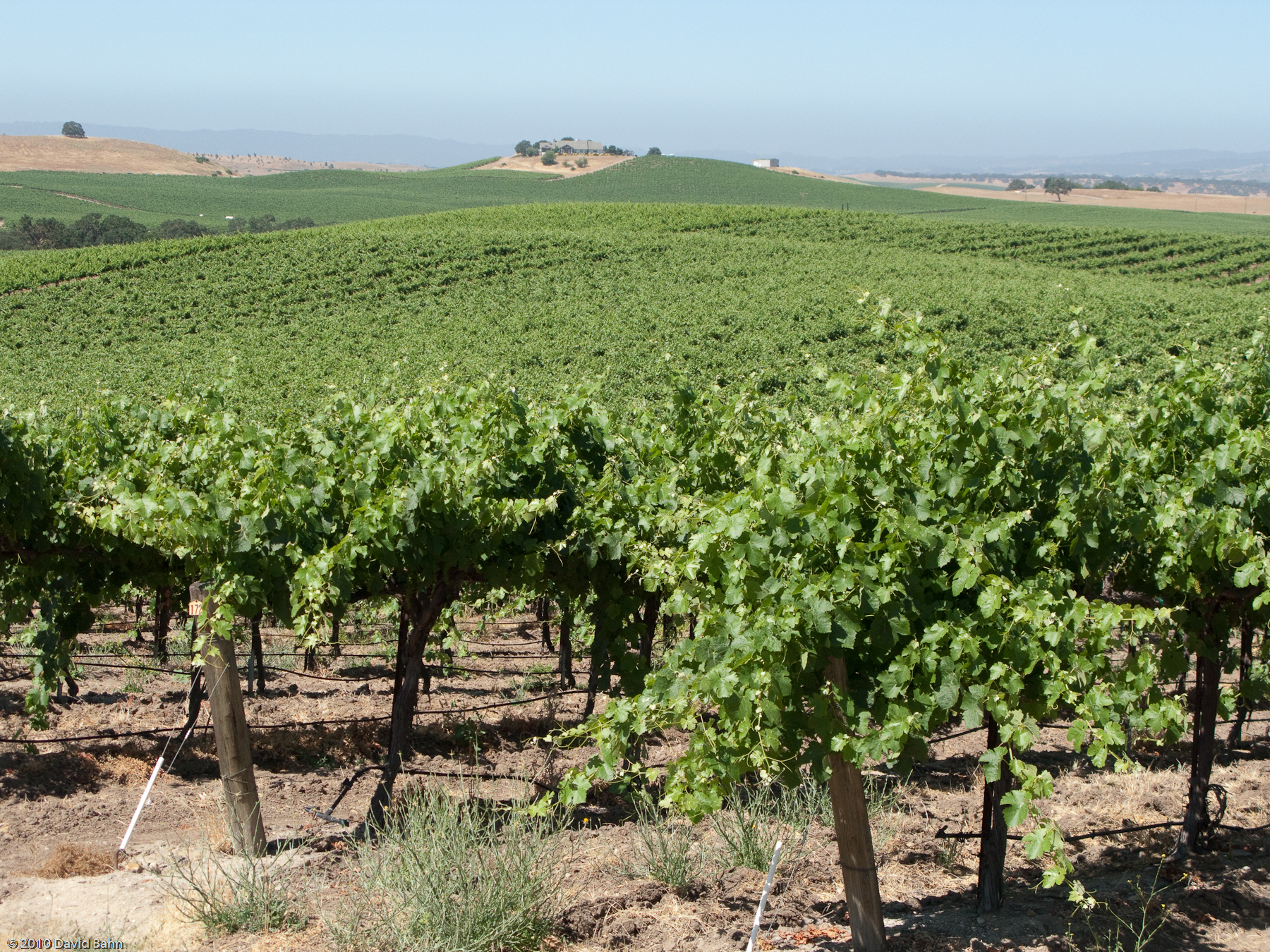
This cluster of grapes is just beginning to form on the branches of the vine. It holds out great potential for fruitfulness. But if every branch were loaded with clusters this size, the branches would not sufficiently sustain such a harvest. If too much fruit allowed to come to maturity, the harvest will be disappointing.
In his book, Good to Great, Jim Collins observes that “good is the enemy of great.” If we’re constantly satisfied with “good enough,” we’ll never get to great. Sometimes we have to set aside the good in order to attain that which is great. Sometimes that is letting go of something we like in order to attain something better. Sometimes it is embracing a time of rest so that we may be more productive in the times of future fruitfulness.
Sometimes we also need to be pruned in order that we do not take on too much attempted fruitfulness. If our schedules are filled with one thing after another, one project on top of another, and one meeting after another, we will not be as fruitful in the long-run as we would be if we focused our efforts on the most truly important. If we are constantly being led from one fire to another by the tyranny of the urgent, we will soon burn out ourselves. If, however, we lop off the unessential projects, meetings, and distractions, our margins become wider and there is more opportunity to bear fruit that will last.
We may not like the idea of being pruned. We may associate it with a painful lesson or a stressful experience. In reality, pruning is done to relieve stress. It may be a challenge to allow yourself to be pruned, but that is a self-imposed challenge. Many times pruning can be self-administered by simply looking at your schedule to consider what is truly important and essential to your walk with Jesus, then letting go of those things that are not essential to your life as his follower.
In his book, Secrets of the Vine, Bruce Wilkerson observes that there are four kinds of fruitfulness described by Jesus. Each brings a different response by the vine dresser. They are:
No Fruit (v. 2) – He lifts those branches up which are connected to the vine and yet are not bearing fruit.
Some Fruit (v.2) – He prunes those branches which are bearing fruit so that they don’t over-burden themselves in excessive growth.
More Fruit (v. 2) – That is the subject for tomorrow
Much Fruit (v. 5,8) – This we will deal with the day after tomorrow.
Abiding Time is an invitation. Jesus invites his followers to “abide” in him (John 15). This is an invitation to connect deeply with his love, grace, goodness, truth, and calling. This is not a law. This is not an imposition of a rule or commandment that we must keep. Abiding Time is a calling to give attention to God’s word, to be fed on his word and sacraments. Abiding Time is an invitation to draw near to God, to refresh ourselves and receive the nurture of God, leaning into him, his word and promise, in anticipation of a season of fruitfulness.
[Jesus says,] “I am the true vine, and my Father is the vinedresser.2 Every branch in me that does not bear fruit he [lifts up], and every branch that does bear fruit he prunes, that it may bear more fruit.3 Already you are clean because of the word that I have spoken to you.4 Abide in me, and I in you. As the branch cannot bear fruit by itself, unless it abides in the vine, neither can you, unless you abide in me.5 I am the vine; you are the branches. Whoever abides in me and I in him, he it is that bears much fruit, for apart from me you can do nothing.6 If anyone does not abide in me he is thrown away like a branch and withers; and the branches are gathered, thrown into the fire, and burned.7 If you abide in me, and my words abide in you, ask whatever you wish, and it will be done for you.8 By this my Father is glorified, that you bear much fruit and so prove to be my disciples.9 As the Father has loved me, so have I loved you. Abide in my love.10 If you keep my commandments, you will abide in my love, just as I have kept my Father’s commandments and abide in his love.11 These things I have spoken to you, that my joy may be in you, and that your joy may be full.
The grape-bearing branches are those which are lifted up and off the ground, and attached to the vine (the large vine growing up from the ground).
In his book, Secrets of the Vine, Bruce Wilkerson observes that there are four kinds of fruitfulness described by Jesus here. They are:
No Fruit (v. 2)
Some Fruit (v.2)
More Fruit (v. 2)
Much Fruit (v. 5,8)
Wilkerson observes that the Greek in verse 2 describes a process that is best understood not as “taking away” those branches that do not bear fruit, but as “lifting up” those branches in him that bear no fruit. This is important when taken in the context of the verse itself, and in the context of actual practice of cultivating grape vines. In the context of actual practice of cultivating grape vines, those branches connected with the vine that do not produce fruit are often in the dirt, or not well positioned to receive sun and nourishment to bear fruit. They are therefore lifted up out of the dirt and cleaned off and positioned in such a way that they are able to produce fruit. That’s the actual practice. Notice, also the verse itself. Those branches connected to Jesus (he says, “in me”) are being spoken about here. Jesus won’t cut off those branches that are connected to him. If we are in him and are not producing fruit we need to be repositioned and lifted up so that we may produce fruit.
That may be very encouraging if you are in a place of fruitlessness at this time in your life. Jesus will surely lift you up so that you may produce fruit. You need not fear being cut off if you’re connected to the Vine. If you are connected with him you will surely produce fruit. Jesus will see to that.
Abiding Time is an invitation for all God’s people to rest in God’s presence, for the sake of fruitful living. We see it as a gift from God that requires a certain amount of discipline, and embrace it because it is important.
[Jesus says,] “I am the true grapevine, and my Father is the gardener.2 He cuts off every branch of mine that doesn’t produce fruit, and he prunes the branches that do bear fruit so they will produce even more.3 You have already been pruned and purified by the message I have given you.4 Remain in me, and I will remain in you. For a branch cannot produce fruit if it is severed from the vine, and you cannot be fruitful unless you remain in me.
5 “Yes, I am the vine; you are the branches. Those who remain in me, and I in them, will produce much fruit. For apart from me you can do nothing.6 Anyone who does not remain in me is thrown away like a useless branch and withers. Such branches are gathered into a pile to be burned.7 But if you remain in me and my words remain in you, you may ask for anything you want, and it will be granted!8 When you produce much fruit, you are my true disciples. This brings great glory to my Father.
9 “I have loved you even as the Father has loved me. Remain in my love.10 When you obey my commandments, you remain in my love, just as I obey my Father’s commandments and remain in his love.11 I have told you these things so that you will be filled with my joy. Yes, your joy will overflow!12 This is my commandment: Love each other in the same way I have loved you.13 There is no greater love than to lay down one’s life for one’s friends.14 You are my friends if you do what I command.15 I no longer call you slaves, because a master doesn’t confide in his slaves. Now you are my friends, since I have told you everything the Father told me.16 You didn’t choose me. I chose you. I appointed you to go and produce lasting fruit, so that the Father will give you whatever you ask for, using my name.17 This is my command: Love each other.
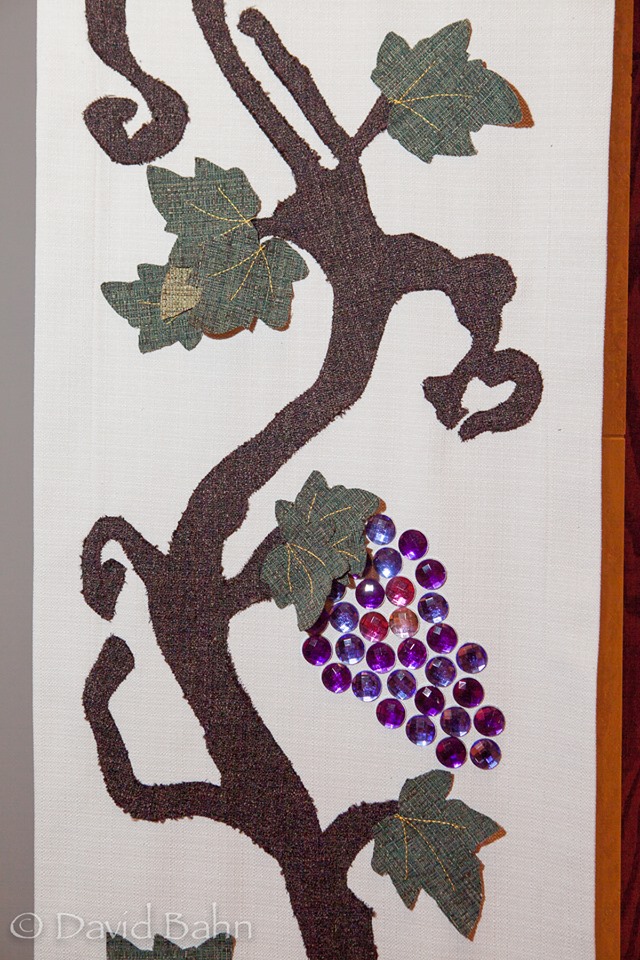
The Altar Guild at St. John made two 18-foot long banners (~18 inches wide) for our Abiding Time emphasis.
At St. John, we observe a time of abiding each summer. Abiding Timea period of four weeks mid-July to mid-August during which we invite the people of God at St. John – especially our leaders – to slow down, rest, and seek renewal in a deeper connection with Jesus. We have no regularly scheduled meetings outside of Sunday morning worship. We allow our Sunday School Teachers and leadership to rest. We invite others to join us making this a time for rest in anticipation of the coming season of fruitfulness and intense activity. Staff maintains regular office hours and staff meetings. The entire church campus, however, is less used and therefore we have opportunity to attend to maintenance and other issues as well during this time.
Here is a delightful paraphrase of Psalm 23:1-6 by Japanese poet Toki Miyashina. It catches the spirit of abiding quite well.
The Lord is my Pacesetter, I shall not rush.
He makes me stop and rest for quiet intervals. He provides me with images of stillness which restore my serenity.
He leads me in ways of efficiency, through calmness of mind, and His guidance is peace.
Even though I have a great many things to accomplish this day, I will not fret, for His presence is here. His timelessness, His all-importance, will keep me in balance.
He prepares refreshment and renewal in the midst of my activity by anointing my head with the oil of tranquility.
My cup of joyous energy overflows.
Surely harmony and effectiveness shall be the fruits of my hours, for I shall walk in the place of my Lord, and dwell in His house forever.
I hope to come to you soon, but I am writing these things to you so that,15 if I delay, you may know how one ought to behave in the household of God, which is the church of the living God, a pillar and buttress of the truth.16 Great indeed, we confess, is the mystery of godliness:
He was manifested in the flesh, vindicated by the Spirit, seen by angels, proclaimed among the nations, believed on in the world, taken up in glory.
When our boys were young they acted as though they had the run of the church building. They would “boldly go” where no one would think they should. They thought of it as their turf; after all their dad was the pastor. Years later I learned of some of their antics, and while I was amused, I also had to shake my head…that’s not the way to behave in a church building!
But notice the word “building” in the above paragraph. Paul’s instruction to Timothy and to us has to do with much more than proper architectural decorum. It has to do with being part of oikos of God. Oikos is the Greek word that we translate “household.” It refers to an extended family living together – often under one roof. The word refers not to the house, but to the family. As such our concerns for good behavior go beyond the house, to how we are to relate to one another as part of the family of God.
The main foundation, given in these verses regarding our behavior is Christ’s manifestation, and the eternal and cosmic truth that God has come into the world in the flesh, died, been raised, and now reigns again at the right hand of God. This truth that the church expresses and supports is our moral, spiritual, and intellectual compass to the True North of all of life.
Next time you are weighing a decision, do so in light of this simple, but profound earliest of Christian creeds. Rejoice that there are gatherings of people who make up the Church, the pillar and buttress of this truth, and behave accordingly!
The saying is trustworthy: If anyone aspires to the office of overseer, he desires a noble task.2 Therefore an overseer must be above reproach, the husband of one wife, sober-minded, self-controlled, respectable,hospitable, able to teach,3 not a drunkard, not violent but gentle, not quarrelsome, not a lover of money.4 He must manage his own household well, with all dignity keeping his children submissive,5 for if someone does not know how to manage his own household, how will he care for God’s church?6 He must not be a recent convert, or he may become puffed up with conceit and fall into the condemnation of the devil.7 Moreover, he must be well thought of byoutsiders, so that he may not fall into disgrace, into a snare of the devil.
A family was moving to a new community. When they visited a local park, they saw some children playing on the playground equipment – and that those children were of a different nationality/ethnicity. The new-to-the community child said, “Only those boys with blond hair, blue eyes, and light skin can play on this playground equipment!” Their father was furious, and a bit embarrassed, and even somewhat afraid. Was there about to be a sudden and drastic rise in racial tension because of his son’s comment?!? Upon further reflection he discovered, however, that his son was not racially-motivated at all. The stipulations his son had put on those who could play on the playground equipment ruled out his own brother (who had brown eyes and dark hair)!
To some extent, many feel that way who take on the mantle of serving as an overseer (pastor, shepherd, presbyter, bishop; they’re all essentially the same office). The list of qualifications for serving as an overseer is long, detailed, and challenging to say the least: The husband of one wife, sober minded, self-controlled, hospitable, able to teach, not a drunkard, not violent but gentle, not quarrelsome,…and the list continues on! In fact there are 20 characteristics that are listed in 1 & 2 Timothy and Titus. These twenty qualities properly apply to all Christian men, and therefore especially to those who have roles of responsibility in the church:
Spiritual maturity (implied)
Respectable
Not quick-tempered
Manages his own household well
Above reproach
Hospitable
Not pugnacious
Loving what is good
The husband of but one wife
Able to teach
Gentle
Just
Temperate
Not addicted to wine
Peaceable
Devout
Prudent
Not self-willed
Free from the love of money
Self-controlled
This list is not exhaustive nor is it intended to be a list of requirements as though we or anyone could ever fully satisfy all of these characteristics. Our righteousness is in Christ. This calls for us to be constantly repentant. On the other hand, if one is to serve well as a leader in the church these character issues are vitally important for effective ministry. They are the stuff of the first of 5 “C’s” for which one looks when seeking partners in the Mission of God. Those five “C’s” are (on order of importance):
Character
Calling
Chemistry (How does this person relate to others in the Body of Christ and on the ministry team?)
Capacity
Competency
Thanks be to God for his grace which moves us ever closer to living out our true identity in Christ. For in him, we aspire to all these qualities, and through the power of his Holy Spirit we display then in lives of humble discipleship and faithful service.
I desire then that in every place the men should pray, lifting holy hands without anger or quarreling;9 likewise also that women should adorn themselves in respectable apparel, with modesty and self-control, not with braided hair and gold or pearls or costly attire,10 but with what is proper for women who profess godliness—with good works.
I recall with some clarity the challenges Diane and I faced early on in our marriage. For me, there was a lot of angst and concern about being the head of the house. Sometimes I overplayed that – at least in my frame of reference toward how our relationship should look if I were truly the head. We eventually worked that out and have a mutually-respectful and mutually-submissive relationship under Christ. A lot of that has to do with the understanding of the word “submission.” Literally it means under the mission, and as partners in Christ’s mission we are submitting to him first and foremost, and then she to me.
One thing, however, that we are solid on and have never found ourselves to be in conflict with each other about is that of the importance of prayer and godliness. Paul speaks of the specific roles of men and women in these verses. Men are to pray. Women are to adorn themselves with godliness. Men ought to raise their hands not to strike out against one another, but to offer praise to God in humility toward one another. Women’s most beautiful adornment is not that of gold or pearls or costly attire, but of an attitude of godly modesty.
Such a value system is hardly championed in the world today. Heroes on TV and movie screen are the ones who wield swords, 9mm guns or cunning corporate maneuvers. Beautiful women are Barbie Doll figured, provocatively dressed, and superior to men in every way. Such are the men and women of Hollywood and Broadway.
Men and women of God desire to be known for inner beauty and genuine faithfulness in prayer. I wonder if that should mark my life more completely. I’m thankful that my wife’s beauty starts on the inside.
First of all, then, I urge that supplications, prayers, intercessions, and thanksgivings be made for all people,2 for kings and all who are in high positions, that we may lead a peaceful and quiet life, godly and dignified in every way.3 This is good, and it is pleasing in the sight of God our Savior,4 who desires all people to be saved and to come to the knowledge of the truth.5 For there is one God, and there is one mediator between God and men, the man Christ Jesus,6 who gave himself as a ransom for all, which is the testimony given at the proper time.7 For this I was appointed a preacher and an apostle (I am telling the truth, I am not lying), a teacher of the Gentiles in faith and truth.
When in doubt, pray. When in trouble, pray. When thankful, praise. When you wake up, pray. When you go to bed, pray. Naturally there may be other things we are to do when we are in trouble, facing challenges, or doubts, the end or beginning of the day. But Paul’s words to Timothy, “First of all…” challenge our propensity to use prayer more often as a last resort, than a first response. Then comes the additional challenge of “prayers, intercessions, and thanksgivings.”
These prayers of various sorts, and the occasions and focus of them are not, however, to be scattered and fragmented. Their focus is toward the ultimate desire and purpose of God: the salvation of his people. In fact God’s desire is for the salvation of all people, and kings and those in authority get special prayer attention because their actions can make a great difference in the advancement of the Gospel. Paul knew this first hand. On more than one occasion he was saved from death, or allowed to continue to proclaim the Gospel because of the laws of the Roman world, the intervention of a Roman governor (Felix or Festus, for example).
All this is predicated on the foundational truth of God’s salvation coming through Jesus Christ, who is the one means by whom we may be saved, and through whom our faith is vindicated.
Thanks be to God for faithful rulers and leaders! Grant wisdom and true knowledge to those who govern. Be with those who seek to do the right thing in the halls of justice. Guide us all to live in peaceful and quite lives, godly and dignified in every way, for this is clearly your will, O God; through Jesus Christ our Lord. Amen.
I thank him who has given me strength, Christ Jesus our Lord, because he judged me faithful, appointing me to his service,13 though formerly I was a blasphemer, persecutor, and insolent opponent. But I received mercy because I had acted ignorantly in unbelief,14 and the grace of our Lord overflowed for me with the faith and love that are in Christ Jesus.15 The saying is trustworthy and deserving of full acceptance, that Christ Jesus came into the world to save sinners, of whom I am the foremost.16 But I received mercy for this reason, that in me, as the foremost, Jesus Christ might display his perfect patience as an example to those who were to believe in him for eternal life.17 To the King of the ages,immortal, invisible, the only God, be honor and glory forever and ever. Amen.
I remember one sadly self-deluded person from my college days. He thought of himself as God’s gift to women. He had somehow managed to gather a group of girls around himself, and he would offer advice, insight, and the gift of his presence to them – or so he thought. But it seemed from my perspective to be a very unhealthy relational dynamic. To think that you’re doing a favor to someone by being their friend or listening to their problems has a certain “yucky-ness factor” to my way of thinking.
Whether or not that is true, it is certainly true that we do God no favor by anything we might do for the sake of his glory or kingdom. God has things well in hand quite well without us. We do no favor to God by giving the largest offering, by sacrificing the greatest amount of time or energy, or by offering the greatest and most eloquent prayers. The truth is that God does us the supreme favor of allowing us to honor, serve, worship, and pray to him.
Paul realized this. He was keenly aware of this because of the dramatic turn-around in his life. From being a violent persecutor of the people of God, to becoming the greatest missionary of the Early Church, Paul’s conversion changed the landscape of his priorities and bragging rights. Rather than celebrating in his Jewish roots and zealous service to God, he boasts in God’s remarkable grace and love of God in Christ. Even his standing as one who had received grace was not so that he could brag in how great was his turn-around. It was so that Jesus Christ might display his perfect patience for others.
Rather than thinking that we are ever doing God a favor, we best remember that it is a privilege and honor to serve and worship him. He not only forgives our sins, and calls us into mission and ministry, but gives us the strength to do great things for the glory of his name. That should lead us to praise God as Paul does here: To the King of the ages,immortal, invisible, the only God, be honor and glory forever and ever. Amen.








 David Bahn - Reflections