David Bahn – Reflections

Light from the Word and through the lens

  • Revelation 14:13

    And I heard a voice from heaven saying, “Write this: Blessed are the dead who die in the Lord from now on.” “Blessed indeed,” says the Spirit, “that they may rest from their labors, for their deeds follow them!”
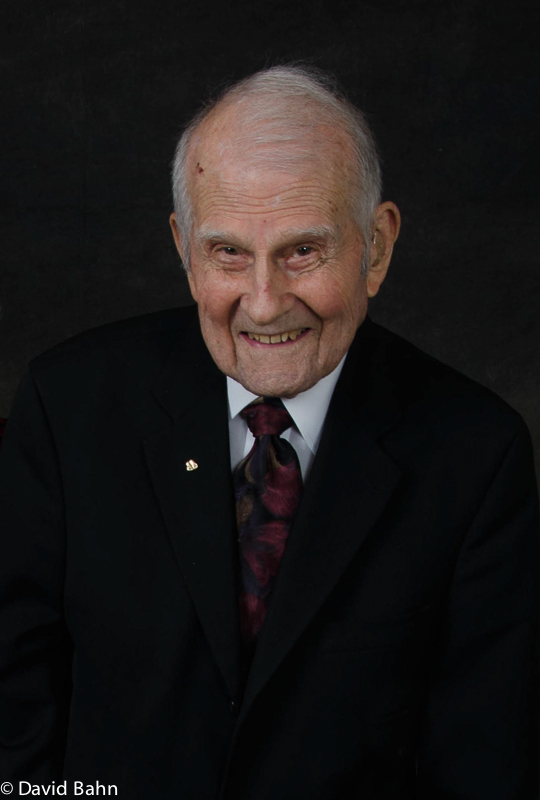
    Rev. Harold Heckmann September 9, 1920 - July 22, 2014
    Rev. Harold Heckmann
    September 9, 1920 – July 22, 2014

    I had the privilege, last Sunday, of offering the message for the Victory Celebration Service of a true Soldier of the Cross, Rev. Harold Heckmann. I consider it a high honor to lead the team at St. John in planning and hosting this celebration Pastor and Mrs. Heckmann have been members here only a short time. We entertained at least 300 people for the meal following the service itself. The people of St. John responded wonderfully, graciously, and with a level of hospitality and compassion that was palpable. Thanks be to God!

    Pastor Heckmann had provided an outline for the service, a list of 12 hymns – some of which we sang as a pre-service hymn-sing, and then following that, a wonderful, inspiring service with Scripture readings and even the outline of the message provided to me. Here is the online he provided me for the message that day:

    • Hard days – Keep your eye on Jesus – Hebrews 11
    • Victory Days – Something better is promised – Hebrews 12, 1 Corinthians 15:54-58; John 14:1-6; Psalm 23.

    I took the ball and ran with it, noting among other things that in particular the second point of his outline took me somewhere I had not expected. I would have said, “Victory Days – Thank God!” When good things happen; when someone “gets it”; when the church is flourishing; when a soul is saved. It seems to me that would be a good time to thank God. I believe brother Heckmann would agree about thanking God. But he took a different turn, and I am truly thankful for his insight.

    His thought was that on those victory days we should remember that there is something better promised. Indeed there is! Consider these words:

    Hebrews 12:22-24

    …you have come to Mount Zion and to the city of the living God, the heavenly Jerusalem, and to innumerable angels in festal gathering, 23 and to the assembly of the firstborn who are enrolled in heaven, and to God, the judge of all, and to the spirits of the righteous made perfect, 24 and to Jesus, the mediator of a new covenant, and to the sprinkled blood that speaks a better word than the blood of Abel.

    Just before the message we sang the hymn, Rejoice, O Pilgrim Throng. The final stanza of that hymn goes:

    Praise Him who reigns on high,
    The Lord whom we adore:
    The Father, Son, and Holy Ghost,
    One God forevermore.
    Rejoice! Rejoice! Rejoice, give thanks, and sing!

    I was nearly overcome in those moments – catching a glimpse of the splendor and glory of heaven. Somehow that idea really grabbed my heart, and I want to embrace it well: In those days when things go well, and you see the victory of righteousness, mercy, grace, and truth, remember: something better is promised. It is the eternal glory of heaven which we and all believers in Christ will enjoy on the Great Last Day, when Christ returns and takes his people to himself. In the mean time, we will experience hard times: keep your eyes on Jesus. And when the joyful times come, remember that something better is promised to those who are in Christ.


  • John 15:12-17

    This is my commandment, that you love one another as I have loved you. Greater love has no one than this, that someone lay down his life for his friends. You are my friends if you do what I command you. No longer do I call you servants, for the servant does not know what his master is doing; but I have called you friends, for all that I have heard from my Father I have made known to you. You did not choose me, but I chose you and appointed you that you should go and bear fruit and that your fruit should abide, so that whatever you ask the Father in my name, he may give it to you. These things I command you, so that you will love one another.

    20140731-101705-37025997.jpg

    Two easily overlooked Old Testament allusions are found in these few words of Jesus. The first is in the word friends. Jesus calls his disciples friends. From the standpoint of friendship alone this is important. But consider that only Abraham, and Moses (and he only by implication) are called friends of God in the Old Testament. Imagine being put into the same category of the father of the Jewish nation, and the hero of the exodus from Egypt! That’s just what Jesus did when he called them his friends.
    The twelve apostles went on to take their place in the story of God as the foundation of the New Testament church. We read about their lives and are shaped by their writings and teachings even today.
    The other allusion is to the appointment of Abraham (Gn 17:5; cp. Rm 4:17), the ordination of Levites (Nm 8:10), and Moses’ commissioning of Joshua (Nm 27:18). These guys are being set aside for some important work. Being linked with Abraham is a major honor. But it also implies a focus of work and a specific task. They are not just hanging out together with Jesus. He has a calling for them to take a role in the shaping of the New Testament Church.
    We may quickly dismiss any claim to be on the same level as the twelve (we’re not called to establish the church or shape her witness). We must not, however, ignore Jesus’ call to bear fruit, dismiss Jesus’ identification of us as his friends, or lose sight of Jesus’ purposes in calling us to faith. We are in good company with all who follow Jesus and have important appointments to keep.

  • John 15:9-11

    “This is my commandment, that you love one another as I have loved you. Greater love has no one than this, that someone lay down his life for his friends. You are my friends if you do what I command you. No longer do I call you servants, for the servant does not know what his master is doing; but I have called you friends, for all that I have heard from my Father I have made known to you. You did not choose me, but I chose you and appointed you that you should go and bear fruit and that your fruit should abide, so that whatever you ask the Father in my name, he may give it to you. These things I command you, so that you will love one another.”

    20140730-213743-77863822.jpg

    There can be little doubt that Jesus desires his followers to love one another. This short paragraph begins and ends with his command that we love one another. And just so we’re sure of it, Jesus also stipulates this as a command. It’s not an option. It’s not a suggestion. It’s not just a nice idea. It is a command.
    That being the case, however, it is important also to understand the huge difference between Jesus’ command and the commandments and laws that the people of his day were used to. The rabbis and scribes had come up with some 600 plus laws that were intended to help(!) prevent the people from breaking the 10 Commandments. Laws abound about Sabbath keeping, the use (or in most cases non-use) of God’s name, the temple rituals and sacrifices and such. The idea was – to use but one example – that if you didn’t walk more than 1500 paces on a Sabbath, you weren’t going to dishonor the sabbath law. In one manner or another Jesus set aside all of these laws in favor of the law of love. Jesus’ commands were and are not about certain religious observances and rituals, but about treating your brother or sister in Christ with respect and kindness. Rather than telling the disciples how many pieces of wood they may carry legally on the sabbath, he told them to go with a brother two miles if he asked for a one-mile escort, and to give him your cloak and jacket if he asked for only one.
    On the one hand this is even more challenging than the ritual laws about sabbath keeping and temple worship. But on the other hand, while the calling is more challenging, it is a higher calling. It brings out a higher response that flows from a heart that has experienced God’s love. From such a heart the call to love one another is beautifully realized. We offer the gifts of love from the cross rather than toward it. Because we have been loved by God, redeemed and forgiven, we will love one another. That is our calling. If we could just keep that in mind each day our interactions with each other would be more graceful and loving. That is at the heart of Jesus’ command.

  • John 15:12-17

    [Jesus says,] “This is my commandment, that you love one another as I have loved you. 13 Greater love has no one than this, that someone lay down his life for his friends. 14 You are my friends if you do what I command you. 15 No longer do I call you servants, for the servant does not know what his master is doing; but I have called you friends, for all that I have heard from my Father I have made known to you. 16 You did not choose me, but I chose you and appointed you that you should go and bear fruit and that your fruit should abide, so that whatever you ask the Father in my name, he may give it to you. 17 These things I command you, so that you will love one another.”

    Flowers on our Lunch Table

    It is apparently a new experiment in a handful of other retail establishments: you pay whatever you believe the product is worth. According to Wikipedia, “In some cases, a minimum (floor) price may be set, and/or a suggested price may be indicated as guidance for the buyer. The buyer can also select an amount higher than the standard price for the commodity.” I heard that even some Starbucks stores have experimented with the concept. I doubt it will catch on widely; too many people would likely take untoward advantage of the opportunity to get something for nothing.

    Jesus seems to promise such an open-ended opportunity when he says that “the Father will give you whatever you ask for, using my name.” The promise is quite generous: “whatever” is a wide-open word. There is a significant phrase attached to this promise. The promise is for those who ask in Jesus’ name. The importance of those words are beyond a sort of magic incantation that we tag onto the end of our prayers. TO pray in Jesus’ name is to pray as though he himself is praying. That would certainly shape our words and desires.

    Just as one would be disinclined to take advantage of a restaurant owner whom we respect and whose food is well prepared and tasty; so would anyone embraced by Jesus’ love and who embraces Jesus’ promises be unwilling to take advantage of Jesus’ blank-check promise regarding answered prayer. It’s a promise of a loving God who has been taken advantage of already from the earliest of time. But he is the God who has redeemed us and changes the hearts of those who have spurned his gifts and sought to take advantage of his grace.

    If your best friend handed you a blank check and told you that you could use it however you wish how would you respond? Our calling is to use God’s gifts and Jesus’ promises to bring glory to him. How does that shape your prayers and your desires which you ask God to provide?

  • John 15:12-17

     This is my commandment: Love each other in the same way I have loved you. 13 There is no greater love than to lay down one’s life for one’s friends. 14 You are my friends if you do what I command. 15 I no longer call you slaves, because a master doesn’t confide in his slaves. Now you are my friends, since I have told you everything the Father told me. 16 You didn’t choose me. I chose you. I appointed you to go and produce lasting fruit, so that the Father will give you whatever you ask for, using my name. 17 This is my command: Love each other.

    St. Paul's Cathedral

    Why this command: “Love one another”? Why does Jesus repeat it so many times? Don’t God’s people automatically have a kind disposition toward one another? Don’t we all seek the others’ good, and overlook offenses, and bear one another’s burdens? Why would Jesus stress this so?

    Certainly we must conclude that this is an important command. It’s not peripheral, nor is it optional on our part. This is no trivial matter. Perhaps that should soak in for a minute or two: loving one another within the body of Christ is important, not trivial, urgent, not optional. Not only so, but love is not our natural disposition toward God or our neighbor. Our natural disposition is toward taking care of ourselves, figuring out our own ways, and making certain our nest is feathered. And that’s not a matter of put-on-you-own-oxygen-mask-bofore-you-try-to-help-others kind of self-care. Jesus is calling us away from a self-consumed, self-serving, self-righteous, and generally selfish way of life, to a life of love, mercy, kindness, and selflessness.

    There are many things about which we Christians can get exercised. Immoral sexual lifestyles, illegal drug use, the breakdown of the family, the decay of our culture. In fact sometimes we are known more for what we’re against than who we’re for. But our greatest appeal and impact in the world will be made when we live in such a way that people comment about us (just as they did in the early church), “See how they love each other!” I, for one, would be happy for that tag.

  • John 15:12-17

     This is my commandment: Love each other in the same way I have loved you. 13 There is no greater love than to lay down one’s life for one’s friends. 14 You are my friends if you do what I command. 15 I no longer call you slaves, because a master doesn’t confide in his slaves. Now you are my friends, since I have told you everything the Father told me. 16 You didn’t choose me. I chose you. I appointed you to go and produce lasting fruit, so that the Father will give you whatever you ask for, using my name. 17 This is my command: Love each other.

    20140214-2512

    Friends – true friends – do at least three things other people will not do. They will give you “the last 10%” – the “you’ve got broccoli in your teeth,” or “you can’t really do that and expect to get a promotion” messages we all need to hear from time to time. A friend will let you into his life; she will be real with you and let you know what is really on her heart. A friend will stick up for you and stick with you when the chips are down, or when others are piling on against you. A friend will stick by you in the hardest of times. Friends may do other things, but these are certainly among the most important.

    Jesus says he is the disciples’ friend, and as such has confided in them the purposes and plans of the Father. Jesus’ friendship with his followers opens to us an awareness of eternal significance. We have the inside scoop on the cosmic end of all things. We know who really is in control. And we have seen in the most remarkable manner possible – in Jesus’ death and resurrection – that God is faithful to his promises and perfectly capable of causing all things to work out for his purposes.

    One of our sons was once threatened while in junior high school. His simple defense? He asked, “Do you know my friend Cedric?” The bullies turned away and left him alone. Cedric was a no nonsense football type who could crush them under his thumb. While we don’t need to invoke Jesus’ name in quite that manner, it is good to remember that he is our friend, and as such a source of great courage, comfort, and perspective.

  • Psalm 27:13-14

    I believe that I shall look upon the goodness of the Lord
        in the land of the living!
    14 Wait for the Lord;
        be strong, and let your heart take courage;
        wait for the Lord!

    I was able to share this Psalm with two families this past weekend. Both were facing challenging health issues. Both need a ray of hope in the face of the struggles before them. My heart goes out to both families. When I read this psalm, those words above struck me joyfully. These are good words to those who face trials and struggles. They are good reminders also for us who enjoy the goodness of God here and now. This is a gift of God. Give thanks to him!

    Psalm 27

    The Lord is my light and my salvation;
        whom shall I fear?
    The Lord is the stronghold of my life;
        of whom shall I be afraid?

    When evildoers assail me
        to eat up my flesh,
    my adversaries and foes,
        it is they who stumble and fall.

    Though an army encamp against me,
        my heart shall not fear;
    though war arise against me,
        yet I will be confident.

    One thing have I asked of the Lord,
        that will I seek after:
    that I may dwell in the house of the Lord
        all the days of my life,
    to gaze upon the beauty of the Lord
        and to inquire in his temple.

    For he will hide me in his shelter
        in the day of trouble;
    he will conceal me under the cover of his tent;
        he will lift me high upon a rock.

    And now my head shall be lifted up
        above my enemies all around me,
    and I will offer in his tent
        sacrifices with shouts of joy;
    I will sing and make melody to the Lord.

    Hear, O Lord, when I cry aloud;
        be gracious to me and answer me!
    You have said, “Seek my face.”
    My heart says to you,
        “Your face, Lord, do I seek.”
        Hide not your face from me.
    Turn not your servant away in anger,
        O you who have been my help.
    Cast me not off; forsake me not,
        O God of my salvation!
    10 For my father and my mother have forsaken me,
        but the Lord will take me in.

    11 Teach me your way, O Lord,
        and lead me on a level path
        because of my enemies.
    12 Give me not up to the will of my adversaries;
        for false witnesses have risen against me,
        and they breathe out violence.

    13 I believe that I shall look upon the goodness of the Lord
        in the land of the living!
    14 Wait for the Lord;
        be strong, and let your heart take courage;
        wait for the Lord!

  • John 15:9-11

    “I have loved you the same way the Father has loved me. So live in my love. 10 If you obey my commandments, you will live in my love. I have obeyed my Father’s commandments, and in that way I live in his love. 11 I have told you this so that you will be as joyful as I am, and your joy will be complete. 

    20100902-_MG_0298

    The Johnny Lee song says it well:

    I was lookin’ for love in all the wrong places
    Lookin’ for love in too many faces
    Searchin’ their eyes, lookin’ for traces
    Of what I’m dreamin’ of
    Hopin’ to find a friend and a lover
    I’ll bless the day I discover,
    Another heart-lookin’ for love.

    It might be that we look for joy in all the wrong places as well. We look for it in possessions and find that they not only rust and decay, but too soon lose their magic luster. We may find a bit of joy in personal accomplishments, and success, only to find another hill to climb and that the brass ring is still beyond our grasp.

    True and full joy is found in the context of Jesus’ love. It is in the context of his love for God, for us, and for all people. True joy is never only my joy. It is never apart from our love for God and desire for his glory. True joy is patient. It is kind. It keeps no record of wrongs, does not envy or boast. True joy draws from the same well from which God’s love flows.

    Joy that is reserved only for those times of personal happiness, success, or wellbeing, is neither full nor free. Joy that finds its expression in the midst of others’ wellbeing and happiness, and in the context of God’s love for us and our love for him, is true joy. That’s the kind of true joy that is full and lasting.

  • John 15:9-11

    [Jesus says,] “I have loved you the same way the Father has loved me. So live in my love. 10 If you obey my commandments, you will live in my love. I have obeyed my Father’s commandments, and in that way I live in his love. 11 I have told you this so that you will be as joyful as I am, and your joy will be complete.”

     20100616-IMG_8702

    “When in Rome,” as they say, “do as the Romans do.” Sometimes that is spoken as a sort of acquiescence to a looser morality, or abandonment of sensibilities and inhibitions. There is, however, another manner in which this ought to be understood – especially as it relates to being and remaining in Jesus’ love. For to remain in Jesus’ love is to embrace his love for us. It also means that we embrace his love for the Father. That love is shown in obedience to the Father’s commandments. If we remain in Jesus’ love for us and for the father (for that is the fullness of Jesus’ love), we will embrace the joy of being loved and the joy of obeying God’s commandments.

    Sometimes faith can be thought of assenting to a certain corpus of belief: Jesus is the Son of God. Jesus is true God and true man. Jesus died on the cross for the sins of the world. Jesus rose from the dead. All these are beautifully summarized in the words of the Apostles and Nicene Creeds. Faith, however, goes beyond mere ascent to these truths. Satan and the demons know who Jesus is. They and all flesh – even those who disavow, reject, and deny Christ – will acknowledge the truth of all of those assertions in the end.

    The believer, however, acknowledges all these things and more. He or she will acknowledge that Jesus’ ways are good, that his obedience to the Father is the path of life, and that his love for us and his love for the Father are a wellspring of eternal joy. To remain in Jesus’ love is to rejoice in the favor and tender mercy of Jesus toward us. It is also to embrace his love for the Father – and to show all that by lives of faithful obedience. To think of Jesus’ love as a one-way flow of grace and kindness toward us is a flat and too-soon-depleted supply of joy spiritual junket, rather than a wellspring of life flowing to and from hearts made new by Christ’s love and expressing his love to God and neighbor.

  • John 15:9-11

    As the Father has loved me, so have I loved you. Abide in my love. 10 If you keep my commandments, you will abide in my love, just as I have kept my Father’s commandments and abide in his love. 11 These things I have spoken to you, that my joy may be in you, and that your joy may be full.

    20100616-IMG_8767

    Some of our friends have chosen to move to a new and different house, but not a different city; they still live in the area, but have chosen to up-scale or down-scale their homes. While I’m sure there were some in Jesus’ day who could make such choices, the idea of such a move would likely have been far from the minds of most of the people with whom Jesus spoke and lived. It likely wasn’t even possible for them. They, however, could and did travel. To stop along the way, and remain in a place for a time would be an invitation they could embrace. So when Jesus says, “Abide in my love,” they would recognize that as an invitation to stop in their life’s journey, and to rest in the embrace of Jesus’ love.

    Some people live in a state of confusion, others in a state of panic, or in the rat race, or the endless quest for more money, power, excitement, or fame. Rather than thinking in such terms, or even terms of city, state, community, or career, Jesus invites us to embrace his love for us and rest in that love. Jesus invites us remain in the embrace of his love with a promise of his purpose: that we may be filled with his joy: a full, rich, abiding joy.

    I’m certain that when people have moved to new homes, or gotten the corner office, or been able to inhabit a desired community, there is at least some joy for a while. Such joy can quickly fade when the water pipes break, the business pressures mount, or the community experiences decline. Such is not the case of Jesus’ joy. This full and abiding joy awaits us whenever we abide in Jesus’ love.