David Bahn – Reflections

Light from the Word and through the lens

  • 1 Timothy 1:6-11

    Certain persons, by swerving from these, have wandered away into vain discussion,desiring to be teachers of the law, without understanding either what they are saying or the things about which they make confident assertions.

    Now we know that the law is good, if one uses it lawfully, understanding this, that the law is not laid down for the just but for the lawless and disobedient, for the ungodly and sinners, for the unholy and profane, for those who strike their fathers and mothers, for murderers, 10 the sexually immoral, men who practice homosexuality, enslavers, liars, perjurers, and whatever else is contrary to sound doctrine, 11 in accordance with the gospel of the glory of the blessed God with which I have been entrusted.

    20130703-0310

    When it comes to issues of morality fingers quickly point back and forth. Some will point out the immorality of greed and trampling of the poor. Others will point out the ungodly nature of sexual sin. Both of these, however, are equally at odds with the gospel of Jesus Christ. And there’s the rub. Our stance toward any immoral behavior must not be a matter of pointing out others’ failures.

    We are not justified by pointing out  others’ sinfulness, nor are we justified by our own righteousness. Neither of these avail before God, and neither align with the gospel of God. Recently I have had an opportunity to talk with two different people, and be talked at by a third. In one case the conversation was about behavior that is not in keeping with the gospel, and person showed an attitude of humility and repentance. That is in perfect keeping with the gospel of God. In another case I was talked at (not to) by someone who is simply angry and bitter, accused of things that are not becoming one who has been entrusted with the gospel. Although the comment was hurtful and unkind, I took to heart the bit of truth expressed and made an appropriate change in behavior. I would hope such would be in accordance with the gospel. In the third case the conversation was thwarted by the other person’s blame of everyone else, and refusal to acknowledge sin. Such is not in keeping with the gospel of God.

    The gospel of God is that for the sake of Jesus, our sins are forgiven. We have been called sons and daughters of God. We have been made servants of the King of all creation. This is all God’s doing. It is his gift to us by his grace. To live in light of that reality means we avoid immorality of every kind. It means we trust God for all things – especially forgiveness – and not ourselves or our righteousness. That calls us to faith in him, and not a reliance on our relative righteousness or any lifestyle that takes us farther from God.

    God is always calling us to recognize his reign in our lives, to repent and to believe the gospel. That is a precious treasure with which we have been entrusted, and to which we must commit ourselves as God’s sacred trust.

  • 1 Timothy 1:1-5

    Paul, an apostle of Christ Jesus by command of God our Savior and of Christ Jesus our hope,

    To Timothy, my true child in the faith:

    Grace, mercy, and peace from God the Father and Christ Jesus our Lord.

    As I urged you when I was going to Macedonia, remain at Ephesus so that you may charge certain persons not to teach any different doctrine, nor to devote themselves to myths and endless genealogies, which promote speculations rather than the stewardship from God that is by faith. The aim of our charge is love that issues from a pure heart and a good conscience and a sincere faith.

    This is the building of the first church I served from 1979-1983. They were most gracious to us and our young family.
    This is the building of the first church I served from 1979-1983. They were most gracious to us and our young family.
    The dual parish I served was in Vernal, Utah and Rangely, Colorado - 51 miles apart. I don't think many people thought that Rangely was a great place to live. Most people tried to get out of town whenever they could.
    The dual parish I served was in Vernal, Utah and Rangely, Colorado – 51 miles apart. I don’t think many people thought that Rangely was a great place to live. Most people tried to get out of town whenever they could.

    Diane reminded me that I was ordained 35 years ago on June 10. The service took place at the Lutheran Chapel of Hope at SEMO University in Cape Girardeau, Missouri. Pastor Robert Lange preached my ordination sermon, based on the text he had chosen for me when I was confirmed there several years before:

    Matthew 11:28-30

    [Jesus says,] “Come to me, all who labor and are heavy laden, and I will give you rest. 29 Take my yoke upon you, and learn from me, for I am gentle and lowly in heart, and you will find rest for your souls. 30 For my yoke is easy, and my burden is light.”

    I was privileged to be invited back there last year at the celebration of the campus ministry’s anniversary. That was, for me, a great honor and joy-filled celebration. I shared a message about hope, based on the theme verse for the chapel:

    Hebrews 6:19

    “Which hope we have as an anchor of the soul, both sure and steadfast.”

    I like Paul’s reminder to Timothy in the opening verses of his pastoral letter to his young protege. There is a goal for the work of a pastor, and a purpose for which we strive as we lead. Paul states, “The aim of our charge is love that issues from a pure heart and a good conscience and a sincere faith.”

    I am thankful to have served six churches as their full-time pastor over these last 35 years – the first three of them in the first four years of my ministry (a dual then a three-point parish). I can point to certain human accomplishments for which I thank God to have been a part.

    But if I were to leave behind a church whose members love one another, whose hearts and motives are pure, and express a sincere faith and hold to a good conscience, I would be deeply satisfied. I am thankful for the opportunities God has placed in my path, and I look forward to experiencing and sharing the message of grace, mercy, and peace that is a gift from God the Father through Christ Jesus our Lord.

  • Romans 16:25-27

    Now to him who is able to strengthen you according to my gospel and the preaching of Jesus Christ, according to the revelation of the mystery that was kept secret for long ages 26 but has now been disclosed and through the prophetic writings has been made known to all nations, according to the command of the eternal God, to bring about the obedience of faith— 27 to the only wise God be glory forevermore through Jesus Christ! Amen.

    One of the "Big Rocks" of Garden of the Gods near Colorado Springs, Colorado
    One of the “Big Rocks” of Garden of the Gods near Colorado Springs, Colorado

    Silly question: Can God create a rock so big that he cannot move it? Or is it a silly question? A little research revealed that this is known as the Omnipotence Paradox, “an argument that dates at least to the 12th century, addressed by Averroës (1126–1198) and later by Thomas AquinasPseudo-Dionysius the Areopagite (before 532) has a predecessor version of the paradox, asking whether it is possible for God to ‘deny himself.’” (Wikipedia)

    A more satisfying answer to this question is offered by the Therefore, God Exists blog:

    …if God can do anything, even that which is logically absurd, he would create the rock… and then, he would lift it. We have removed the constraints of logic by saying that God is not limited by them, so there is nothing to hold him back from lifting a rock that is too heavy for himself to lift.

    Perhaps such questions are important to some. But they are often distractions – especially to what Paul leaves us with in regard to the glory and power of God. Here we are reminded that God’s power is well used to strengthen us in our faith in the Gospel and message of Jesus Christ. He is intent on revealing the grace and truth that is for all peoples, tribes, nations, and tongues. He delights in the obedience of faith. His purposes are eternal.

    That means that we embrace the message of Christ in repentance and faith. It calls for us to acknowledge the reign of God and believe in the Good News of his reign in our hearts. The Gospel, which is the power of salvation to everyone who believes, empowers us to obey God’s commands (the true outcome of faith). When we are strengthened in that faith, and live in faithful obedience, God is eternally glorified through Jesus Christ. That is anything but silly.

  • Romans 16:17-23

    I appeal to you, brothers, to watch out for those who cause divisions and create obstacles contrary to the doctrine that you have been taught; avoid them. 18 For such persons do not serve our Lord Christ, but their own appetites, and by smooth talk and flattery they deceive the hearts of the naive. 19 For your obedience is known to all, so that I rejoice over you, but I want you to be wise as to what is good and innocent as to what is evil. 20 The God of peace will soon crush Satan under your feet. The grace of our Lord Jesus Christ be with you.

    21 Timothy, my fellow worker, greets you; so do Lucius and Jason and Sosipater, my kinsmen.

    22 I Tertius, who wrote this letter, greet you in the Lord.

    23 Gaius, who is host to me and to the whole church, greets you. Erastus, the city treasurer, and our brother Quartus, greet you.

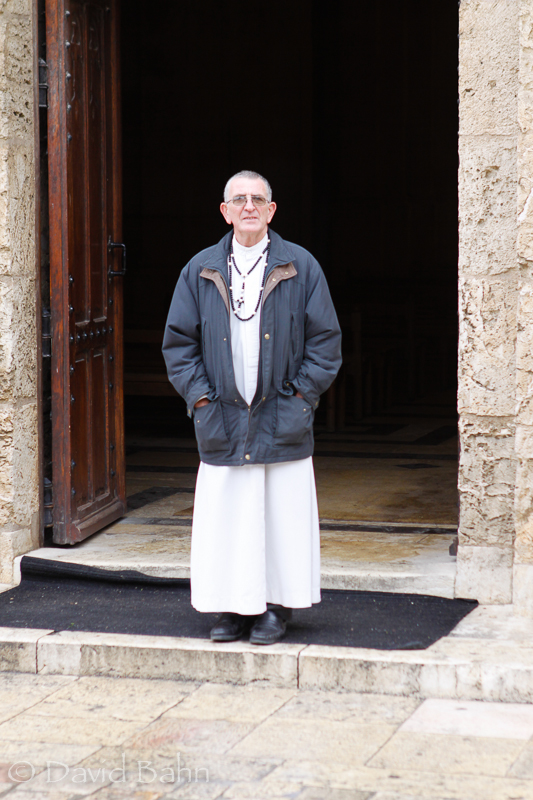
    This kind priest welcomed us when we visited the pool of Bethesda. He expressed love and hospitality as a brother in Christ.
    This kind priest welcomed us when we visited the pool of Bethesda in Jerusalem. He expressed love and hospitality as a brother in Christ.

    Unity in the church is such a great blessing that anything that undercuts or disturbs it must be recognized for what it is and avoided. In fact, sadly, those people who cause division are to be avoided. This is a stark statement. But the warning goes out from Paul – who sought to bring the Gospel message to all people everywhere – that those who cause divisions or place unnecessary hurdles in the way of the faithful do not serve Christ but their own causes, desires, and purposes. They will even resort to flattery and smooth talk to cause people to abandon the true Gospel of Jesus Christ!

    It is sad to say that such people exist even today. Some will criticize the church or its leaders in an effort to discredit or undercut the church’s ministry. Others will blatantly oppose the Christian message of repentance and forgiveness through the death, resurrection, reign and second coming of our Lord Jesus Christ. Our calling is to believe in Jesus and follow where he leads. Such is the way of good and the path which God lays out for his people. Those who abandon that path, or those who put obstacles in the way of those who are on that path will be destroyed.

    Thanks be to God, however, for those precious people who are the strong allies of the Gospel message. Paul mentions Timothy, Lucius, Jason, and Sosipater. Tertius inserts himself as one who is a dedicated servant of Paul: his scribe. Then Gaius, Erastus, and Quartus are also mentioned. Such is the band of brothers in Christ in Corinth (probably) who are co-workers and partners in the Gospel ministry to which Paul is dedicated. They, with Paul live and rejoice in the grace of our Lord Jesus Christ.

    When you have a unified body of believers, and a sense of shared purpose under the Gospel, the blessings of that unity is not to be taken for granted. It is sweet and salutary and to be valued and protected. For such unity and shared purpose I am thankful. How about you?

  • Romans 16:1-15

    I commend to you our sister Phoebe, a servant of the church at Cenchreae, that you may welcome her in the Lord in a way worthy of the saints, and help her in whatever she may need from you, for she has been a patron of many and of myself as well.

    Greet Prisca and Aquila, my fellow workers in Christ Jesus, who risked their necks for my life, to whom not only I give thanks but all the churches of the Gentiles give thanks as well. Greet also the church in their house. Greet my beloved Epaenetus, who was the first convert to Christ in Asia. Greet Mary, who has worked hard for you. Greet Andronicus and Junia, my kinsmen and my fellow prisoners. They are well known to the apostles, and they were in Christ before me.Greet Ampliatus, my beloved in the Lord. Greet Urbanus, our fellow worker in Christ, and my beloved Stachys. 10 Greet Apelles, who is approved in Christ. Greet those who belong to the family of Aristobulus. 11 Greet my kinsman Herodion. Greet those in the Lord who belong to the family of Narcissus. 12 Greet those workers in the Lord, Tryphaena and Tryphosa. Greet the beloved Persis, who has worked hard in the Lord. 13 Greet Rufus, chosen in the Lord; also his mother, who has been a mother to me as well. 14 Greet Asyncritus, Phlegon, Hermes, Patrobas, Hermas, and the brothers who are with them. 15 Greet Philologus, Julia, Nereus and his sister, and Olympas, and all the saints who are with them. 16 Greet one another with a holy kiss. All the churches of Christ greet you.

    20140509-3470

    Chapter 16 of Romans is a listing of names of people Paul names and greets as a closing to this letter. It makes clear that the process of mission is not an impersonal project, but a highly relational experience. Paul’s list of people begins with Phoebe (a woman), whom he calls, “a servant of the church.” Paul mentions Prisca, Mary, and Rufus’ mother – all of whom are not only people who made it into the Bible, but who are known and loved by Paul.

    I was taught that the Bible prohibits women from serving as pastors, and I have held to that understanding for my 35 years of ministry. I am not ready to abandon that understanding, but neither am I as adamant about what that means, and how it is to be applied in the context of mission today – or how it was practiced in Paul’s day either. What I do know is that many people serve in many different ways for the cause of the kingdom of God and the advancement of the Gospel.

    This chapter certainly does not establish the role of women as pastors in the church. But it does testify to how vital these women were to the cause of the gospel in Paul’s day. That is certainly true, also today. Beyond that, we are called into a fellowship within the Body of Christ. We need each other: men and women, high and low born. The greetings and good will among brothers and sisters in Christ propel us forward in the mission of God. The importance of that fact ought not be lost on us.

  • Romans 15:22-33

    This is the reason why I have so often been hindered from coming to you. 23 But now, since I no longer have any room for work in these regions, and since I have longed for many years to come to you, 24 I hope to see you in passing as I goto Spain, and to be helped on my journey there by you, once I have enjoyed your company for a while. 25 At present, however, I am going to Jerusalem bringing aid to the saints. 26 For Macedonia and Achaia have been pleased to make some contribution for the poor among the saints at Jerusalem. 27 For they were pleased to do it, and indeed they owe it to them. For if the Gentiles have come to share in their spiritual blessings, they ought also to be of service to them in material blessings. 28 When therefore I have completed this and have delivered to them what has been collected, I will leave for Spain by way of you. 29 I know that when I come to you I will come in the fullness of the blessing of Christ.

    30 I appeal to you, brothers, by our Lord Jesus Christ and by the love of the Spirit, to strive together with me in your prayers to God on my behalf, 31 that I may be delivered from the unbelievers in Judea, and that my service for Jerusalem may be acceptable to the saints, 32 so that by God’s will I may come to you with joy and be refreshed in your company.33 May the God of peace be with you all. Amen.

    20140509-3462

    When I was 11 years old, I invited a friend to my “house” to swim. The house was actually the Sands Motel, which my parents had built over the years. One of true building projects was a swimming pool, which I enjoyed greatly. I was looking forward to having my friend visit. Unfortunately, however, he was unable to come at the last minute, and I was very disappointed. My dad offered a consolation: “Maybe it was for the best. If he had come there might have been an accident.” It was some, albeit small, consolation.

    We don’t always know the fullest implications of our plans or desires. We sometimes have such a short view of life and our own desires that we lose sight of our own limited understanding and perspective. We don’t understand the difference between what and how or when. But the difference is an important one.

    Paul wishes to come to Rome, to be refreshed by the company of the believers there. He wishes for the opportunity to encourage and be encouraged together in Christ. But not only so; he wishes to go on to Spain, having experienced the sweet fellowship of the Christians in Rome. His desire was for the experience of Jesus’ high priestly prayer being answered. ““I do not ask for these only, but also for those who will believe in me through their word, 21 that they may all be one, just as you, Father, are in me, and I in you, that they also may be in us, so that the world may believe that you have sent me” (John 17:20-21). 

    The unity of God’s people in Rome would propel Paul on to Spain. The gospel would be spread. The world would know that Jesus was sent by God. God’s kingdom would come among and through them all. In the mean time, however, he was compelled to go to Jerusalem. The road to Rome, and beyond – if that is to be – will be through Jerusalem, imprisonment, treachery, and shipwreck.

    There is no doubt that God would see his people in perfect unity, and the world brought to faith in Jesus as the Son of God and Savior of the world. The question of his will is not what, but how and when. Our part in that may involve joy or disappointment. But it’s end is better by far than escaping a far worse possibility. Such is the stuff of true peace.

  • Romans 15:14-21

    I myself am satisfied about you, my brothers, that you yourselves are full of goodness, filled with all knowledge and able to instruct one another. 15 But on some points I have written to you very boldly by way of reminder, because of the grace given me by God 16 to be a minister of Christ Jesus to the Gentiles in the priestly service of the gospel of God, so that the offering of the Gentiles may be acceptable, sanctified by the Holy Spirit. 17 In Christ Jesus, then, I have reason to be proud of my work for God. 18 For I will not venture to speak of anything except what Christ has accomplished through me to bring the Gentiles to obedience—by word and deed, 19 by the power of signs and wonders, by the power of the Spirit of God—so that from Jerusalem and all the way around to Illyricum I have fulfilled the ministry of the gospel of Christ; 20 and thus I make it my ambition to preach the gospel, not where Christ has already been named, lest I build on someone else’s foundation, 21 but as it is written,

    “Those who have never been told of him will see,
        and those who have never heard will understand.”

    20140529-4218

    The idea that Jesus is the only way to salvation is not only a politically-incorrect idea, it is a profoundly great challenge to human sensibilities. We all want choices. We want to keep our options open. We would wish to have different paths to take to wherever we are going. We want to be able to choose whatever path we want. Alternatives are important to us; we don’t want to put all our eggs in the same basket. What if we’re wrong? What if this is all for naught?

    That thought never enters the mind of Paul. He realizes that apart from Jesus there is no hope. There is no salvation, no access to God, no hope of acceptance without Jesus. More than that, he realizes that Jesus is the only hope for all people. There is none who is beyond God’s grace in Jesus. There is none who has no need for Christ’s mercy. There is none to whom Christ’s mercy does not reach.

    Some have never heard this Good News. Some are surrounded by a greater darkness than the deepest midnight. To those Paul has gone.He realizes that the Gospel is not only for all people, but that those who are without Christ are in a darkness that only Christ may lift.

    Perhaps there are those whom you know who are yet to hear of Jesus, and know of his saving love. If that is the case, surely the Good News of Jesus’ love and salvation is what they need to hear. Frankly, however, many today have heard of Jesus (or perhaps only a caricature of Jesus). Many have rejected his claims. But he is the only one to whom we must all one day give an account. Perhaps that bad news about Jesus will prepare someone you or I know to hear the Good News of Jesus love and mercy.

  • Romans 15:8-13

    For I tell you that Christ became a servant to the circumcised to show God’s truthfulness, in order to confirm the promises given to the patriarchs, and in order that the Gentiles might glorify God for his mercy. As it is written,

    “Therefore I will praise you among the Gentiles,
        and sing to your name.”

    10 And again it is said,

    “Rejoice, O Gentiles, with his people.”

    11 And again,

    “Praise the Lord, all you Gentiles,
        and let all the peoples extol him.”

    12 And again Isaiah says,

    “The root of Jesse will come,
        even he who arises to rule the Gentiles;
    in him will the Gentiles hope.”

    13 May the God of hope fill you with all joy and peace in believing, so that by the power of the Holy Spirit you may abound in hope.

    20140529-4221

    God urges us toward hope and the future. He is not content with having us rest on our laurels. He is not willing to allow us to bide our time waiting out the end or simply getting by. He urges us toward something more. Some say that this is evidenced by the god-shaped hole in our hearts that only he can fill; that we’re restless apart from him and not satisfied until he fills us with his fullness in Christ.

    That may be true, but if you consider these few verses in Romans 15, you get the idea that God urges toward the future by means of the promises of his word. When I see this list of Old Testament promises and prophecies, I am struck by how God again and again spoke of something that was yet to be. I am convinced that the truest urging toward hope is through the promises of God’s word.

    We do well to fill the God-shaped hole in our hearts with Christ. We do well to recognize that we don’t live for just today. We do even better when we listen to the promises in God’s word – both Old and New Testaments – and seek to apply those promises to our lives and let them shape our souls.

    Here Paul focuses on the fact that these promises apply to the Gentiles. This Good News is not for a select few. It is for everyone. God would urge everyone to have an eye toward the future; to embrace hope founded in the resurrection and the life of the world to come. Abounding in such hope will keep us well-focused in the face of any struggle or in the times where patience is also needed. It may even shape our hearts and lives when we are content with where we are and don’t even realize we still need hope.

  • Romans 15:1-8

    We who are strong have an obligation to bear with the failings of the weak, and not to please ourselves. Let each of us please his neighbor for his good, to build him up. For Christ did not please himself, but as it is written, “The reproaches of those who reproached you fell on me.” For whatever was written in former days was written for ourinstruction, that through endurance and through the encouragement of the Scriptures we might have hope. May the God of endurance and encouragement grant you to live in such harmony with one another, in accord with Christ Jesus, that together you may with one voice glorify the God and Father of our Lord Jesus Christ. Therefore welcome one another as Christ has welcomed you, for the glory of God.

    For I tell you that Christ became a servant to the circumcised to show God’s truthfulness, in order to confirm the promises given to the patriarchs, and in order that the Gentiles might glorify God for his mercy.

    20140522-3885

    The old Campbell’s soup commercial proclaimed, “Soup and sandwich go together; you can’t have one without the other.” As Paul moves toward the end of the most profoundly theological and doctrinal letters in the New Testament, he cannot leave aside the significant practical and everyday life application of the doctrine he has laid out. He speaks of relationships among in the fellowship of Christ. Weak persons must be honored. Harmony must mark the relationships within the body of Christ. Each is to serve the other.

    Why this? Because Christ set the example. God gives encouragement and hope to sustain us along the way. Christ has welcomed us. The actions, attitude, and person of Christ join together to provide motivation and example of the Christian walk. You can’t have one without the other.

    One way this is expressed is by the concepts of Covenant and Kingdom. Covenant is about relationship and identity: We are brothers and sisters in Christ. Kingdom is about representation: We represent the King’s purposes and will in our relationships and daily living. Covenant is about faith. Kingdom is about life. These two concepts must not be segregated; they are intertwined as surely as the twin strands of the DNA molecule.

    For this reason, it is essential that we live in humility and mutual encouragement; just as it is essential to connect that humility and encouragement to Christ. For we do not live to gain our relationship with God; that’s a given. Nor do we simply sit in a corner having embraced our identity as sons and daughters of the King.

    Paul’s immediate application of all this was that Gentile believers bring glory to God – just as surely as Jewish believers had done for centuries. That’s not just a theological fact; it is a calling that we must all embrace. And as we do so, we will also discover that it is essential that we each embrace one another; for none of us has the right to become children of God apart from Jesus Christ, and none of us who are sons and daughters of God have any right to deny the other.

  • Romans 14:13-19

    Therefore let us not pass judgment on one another any longer, but rather decide never to put a stumbling block or hindrance in the way of a brother. 14 I know and am persuaded in the Lord Jesus that nothing is unclean in itself, but it is unclean for anyone who thinks it unclean. 15 For if your brother is grieved by what you eat, you are no longer walking in love. By what you eat, do not destroy the one for whom Christ died. 16 So do not let what you regard as good be spoken of as evil. 17 For the kingdom of God is not a matter of eating and drinking but of righteousness and peace and joy in the Holy Spirit. 18 Whoever thus serves Christ is acceptable to God and approved by men. 19 So then let us pursue what makes for peace and for mutual upbuilding.

     20140526-4117

    Gordon Fee tells the story of a Sunday school teacher who did not realize how the parable of the Pharisee and tax collector sneaked up on him. This teacher wanted to present the historical situation of this parable in which a Pharisee conspicuously prayed, “I thank you, God, that I am not like other people, robbers, evildoers, adulterers or even like this tax collector.” For a whole hour this teacher waxed eloquent in his exhaustive description of all the things that the Pharisees of the first century were doing wrong. He ended the hour by praying, “Thank you, Lord, that we are not like the Pharisee in this story.” Our response is, of course, to laugh at this unsuspecting Sunday school teacher who was caught by the parable he taught. Or perhaps we respond with our own prayer: “Thank God that we are not like this Sunday school teacher!”*

    Ughh! Subtle, but straight to the heart. A friend of mine once accused his mother of being closed-minded in her open-mindedness. It all too easily happens that we judge others and end up putting stumbling blocks in the way of a brother or sister. Paul speaks here of eating and drinking. Such matters were of importance to people of his day. So, too, was the matter of judging others or causing others to question their faith because of a practice we may embrace or from which we may refrain. 

    Jon Ortberg asks the question, “If we can’t be holy, shouldn’t we at least be weird?” (The Life You’ve Always Wanted). In fact we are called to be different by means of our love for one another. We are called to overlook an offense. Jesus says forgive seventy times seven.

    That may present more of a challenge than we might wish to admit. Honestly, if a dirty, smelly, man with unkempt hair, bad breath, and soiled clothing came into your church and sat next to you, would you be just a little uncomfortable? We might well call on him not to offend our sensibilities. But then again, we might need to remember the lesson of the Sunday School teacher and look for ways to build others up, rather than trying to figure out how to make ourselves comfortable or ignoring the pain and brokenness all around us.

    That’s pretty much what Jesus did, and we are the better for it.

    * Fee, Gordon D. and Douglas Stuart. How to Read the Bible for All Its Worth. Grand Rapids: Zondervan, 1982, p. 134.)