David Bahn – Reflections

Light from the Word and through the lens

  • Joshua 6:2-5

    Then the Lord said to Joshua, “See, I have delivered Jericho into your hands, along with its king and its fighting men. March around the city once with all the armed men. Do this for six days. Have seven priests carry trumpets of rams’ horns in front of the ark. On the seventh day, march around the city seven times, with the priests blowing the trumpets. When you hear them sound a long blast on the trumpets, have the whole army give a loud shout; then the wall of the city will collapse and the army will go up, everyone straight in.”
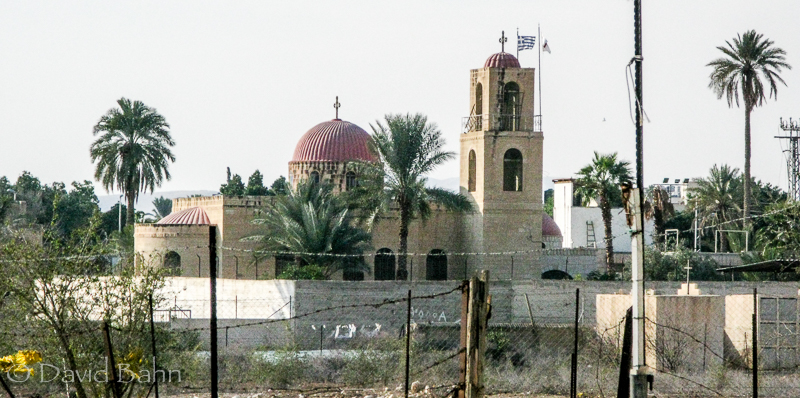
    Jericho as it appears in 2012
    Jericho as it appeared in 2012

    If every battle was as easy as the battle of Jericho, we might be less worried when entering into battle. And while the “Shock and Awe” approach of the first Gulf War made for a decisive victory for the coalition forces to expel Iraqi troops from Kuwait. The shock and awe of the battle of Jericho was a march around the the walls of the city for seven days, culminating in the walls of the city coming down and the army of Israel taking the city.

    But Achan’s sin and the follow-up foray into Ai was a debacle. And when Israel did conquer Ai, the battle was not only brutal, but the extreme violence would gain an “R” rating for any film that would accurately portray the events of Joshua’s victory there – as well as other battles and conquests as the children of Israel took the land that God had promised to them.

    On the one hand, we must realize that those were dramatically different times. Violence, scheming, and a general lack of stable governments and social justice were the order of the day. In the second place God is doing something very dramatic to establish his chosen people in their land. Israel is becoming a nation. There will be a great price to pay in this conquest – both by Israel’s enemies as well as by Israel itself.

    Today our battles are different. We don’t fight against flesh and blood (cf. Ephesians 6:10-12). Some have suggested that – secondary to preparing the way for the Messiah to come into the world – the Old Testament is a giant object lesson on what won’t work. In this case the conquest of the Promised Land, and the establishment of a chosen nation on earth never really worked. Read on through the Old Testament; you will see many examples of failure on the part of God’s chosen people. Their abandonment of the ways of God lead them to become weak and vulnerable to the point that God withdraws his protective hand from time to time and they are even conquered by foreign enemies (the Babylonians and the Assyrians, to name just two).

    But the battle is always for the hearts of God’s people. And God wins our hearts by the power of his love and the work of the Holy Spirit. We are called to go to war against every power that would undercut God’s reign in our lives and communities. That will bring a more complete victory than even the battle of Jericho.

  • Joshua 4:4-7

    Joshua called together the twelve men he had appointed from the Israelites, one from each tribe, and said to them, “Go over before the ark of the Lord your God into the middle of the Jordan. Each of you is to take up a stone on his shoulder, according to the number of the tribes of the Israelites, to serve as a sign among you. In the future, when your children ask you, ‘What do these stones mean?’tell them that the flow of the Jordan was cut off before the ark of the covenant of the Lord. When it crossed the Jordan, the waters of the Jordan were cut off. These stones are to be a memorial to the people of Israel forever.”

    20140603-4271
    Part of one of the stone walls at St. John Lutheran Church in Cypress, Texas

    I have two bricks in my office. They remind me of the 1.2 million bricks I handled when I worked in a brick factory between college graduation and entering the seminary. They remind me and anyone who lets me tell the story about seven months of hard work, and even served at least on one occasion as an impetus for rededication to the task at hand.

    Israel had to cross the Jordan if they were going to enter the Promised Land. That was no small challenge in the days before long-span bridges. Admittedly, this was only the first step in their conquest of the Promised Land. Nonetheless, Joshua sees this is so significant that it should be commemorated with the twelve stone memorial. He realized that God had provided for their safe passage and successful crossing. That was to be memorialized. He looked forward to telling that to his children and grandchildren.

    We have 18 stones by our back yard water garden. They remind us of our children and grandchildren. One of those stones is separate from the others in memory of Nici who died of cancer in 2009. They are a reminder of the blessings of God in our lives.  Any job that we complete or any milestone we reach is an occasion to thank God, to remember his faithfulness and goodness in our lives. We look forward to sharing stories with our children and grandchildren about God’s provision, about new births and even lost loved-ones.

  • Joshua 2:1

    Then Joshua son of Nun secretly sent two spies from Shittim. “Go, look over the land,” he said, “especially Jericho.” So they went and entered the house of a prostitute named Rahab and stayed there.

    A tour of four painted churches near Schulenburg, Texas yielded these images.

    The accounts in Joshua (THE STORY, chapter 7), range from the impressive events surrounding the crossing of the Jordan River, to the dramatic tumbling walls of Jericho, to the conquering of various cities and kings in the Promised Land. The level of violence and brutality recounted in these pages are off-putting for many. Impaling the body of the king of Ai, or completely destroying whole cities doesn’t make for light reading to be sure.

    Certainly this points up how real are the accounts of the Scriptures. God pulls no punches regarding the real violence and terror of war. He is not interested in a sanitized version of this conquest. These are serious times and serious events are ensuing.

    In the face of these terrifying events the account of Rahab offers a counterpoint of even more significance. The Reformation Study Bible observes:

    The narrative does not say why they chose Rahab’s house. She is remembered in the New Testament as an ancestor of Christ (Matt. 1:5), and as an example of faith (Heb. 11:31) and good works (James 2:25).

    [Rahab] will be spared from the coming judgment (6:22, 23) and find a place among the people of God (6:25). The chapter testifies to the grace of God in bringing such a woman to seek and find His mercy. The story of Rahab supplies an important perspective on the judgments of God that will occupy much of this book.

    Whenever the cruelty, violence and terror of the world overwhelms us, it is a great blessing to have a reminder of the grace and faithfulness of God such as we see in the life of Rahab. In the end the grace of God is the only thing that soothes the troubled soul. May God be gloriously praised on account of his grace!

  • Joshua 1:1-9

    After the death of Moses the servant of the Lord, the Lord said to Joshua son of Nun, Moses’ aide: “Moses my servant is dead. Now then, you and all these people, get ready to cross the Jordan River into the land I am about to give to them—to the Israelites. I will give you every place where you set your foot, as I promised Moses. Your territory will extend from the desert to Lebanon, and from the great river, the Euphrates—all the Hittite country—to the Mediterranean Sea in the west. No one will be able to stand against you all the days of your life. As I was with Moses, so I will be with you; I will never leave you nor forsake you. Be strong and courageous, because you will lead these people to inherit the land I swore to their ancestors to give them.

    “Be strong and very courageous. Be careful to obey all the law my servant Moses gave you; do not turn from it to the right or to the left, that you may be successful wherever you go. Keep this Book of the Law always on your lips; meditate on it day and night, so that you may be careful to do everything written in it. Then you will be prosperous and successful. Have I not commanded you? Be strong and courageous. Do not be afraid; do not be discouraged, for the Lord your God will be with you wherever you go.”

    A tour of four painted churches near Schulenburg, Texas yielded these images.

    We live in a time and place such that courage is seldom really necessary. We have learned how to blend in. We have learned not to put ourselves in harm’s way. We seldom dear to do dangerous things for God. We like our comfort zones.

    Such was not the case for Joshua. The opening paragraphs of Joshua (chapter 7 of THE STORY), the exhortation, “be strong and courageous,” is urged no less than three times. There is good reason for this.

    Moses is dead. He who was the greatest deliverer and leader of God’s people is no more at the helm. No more will Israel have his wisdom, dedication, and direct connection to God. No more will he stand in the gap in their behalf. Joshua is now the man, and all the burden of leading the people of God is on him. This will require courage and strength of character.

    There is great territory and land to be taken and occupied. This was no little exploration project. There is land to be occupied, as is delineated by God to Joshua. New territory was to be conquered, settled, and occupied. This would require strength and courage.

    He is charged with impressing the Law of God on the hearts of the people. He is to keep it on his lips and in his own heart. That may not seem to require strength and courage, but it actually would require the courage to remain true to God in the face of temptation and pressure from those around them.

    Is God calling you to be strong and courageous for some special pursuit? Is God urging you out of your comfort zone for the sake of his kingdom?

  • Numbers 27:15-23

    Moses said to the Lord, 16 “May the Lord, the God who gives breath to all living things, appoint someone over this community 17 to go out and come in before them, one who will lead them out and bring them in, so the Lord’s people will not be like sheep without a shepherd.”

    18 So the Lord said to Moses, “Take Joshua son of Nun, a man in whom is the spirit of leadership, and lay your hand on him. 19 Have him stand before Eleazar the priest and the entire assembly and commission him in their presence. 20 Give him some of your authority so the whole Israelite community will obey him. 21 He is to stand before Eleazar the priest, who will obtain decisions for him by inquiring of the Urim before the Lord. At his command he and the entire community of the Israelites will go out, and at his command they will come in.”

    22 Moses did as the Lord commanded him. He took Joshua and had him stand before Eleazar the priest and the whole assembly. 23 Then he laid his hands on him and commissioned him, as the Lord instructed through Moses.

    20140920-5224

    Moses has been told that he will not lead the children of Israel into the Promised Land. He had disqualified himself by failing to honor the LORD as holy before the people. He realized that someone would need to lead them into the new land the LORD was giving them. The people, without a leader, would wonder aimlessly and be susceptible to predators, enemies, and their own group foolishness. People need leaders.

    Two other significant insights occur to me as I consider this episode in the life of Israel’s wilderness wanderings. First of all, those who lead best are those who have been tested and shown themselves to be full of faith. Joshua was one such full-of-faith man. He had brought the good report regarding the land, and asserted that they could surely go in and take the land because the LORD had given it to them. Joshua saw things from God’s perspective as a default orientation.

    Secondly, leaders need good and godly advice. There would be times when decisions need to be made that require greater insight than human wisdom can provide. Sometimes decisions will need to be made that defy logic. Godly advice will be given through Eleazar the priest. The LORD makes that clear, with the clear implication that Joshua would not only need that advice, but would willingly seek it.

    Many years ago I attended a workshop on pastoral leadership led by Lyle Schaller. He put it this way:

    • Leaders lead.
    • Leaders frame the question.
    • Leaders speak first.

    While I’m certain he said much more, and offered invaluable insights on leadership in the church, those three things stuck with me, from a human standpoint on effective leadership.

    Here we learn – from this leadership baton-passing event in THE STORY of God’s people – three spiritually foundational truths:

    • People need a leader
    • The best leaders are faith-filled leaders
    • The best faith-filled leaders need godly advice, and will certainly seek it out.

    While each of these are worthy of further illumination, they form what I would consider the foundation for leadership: Leadership 101.

  • Numbers 25:6-9

    Then an Israelite man brought into the camp a Midianite woman right before the eyes of Moses and the whole assembly of Israel while they were weeping at the entrance to the tent of meeting. When Phinehas son of Eleazar, the son of Aaron, the priest, saw this, he left the assembly, took a spear in his hand and followed the Israelite into the tent. He drove the spear into both of them, right through the Israelite man and into the woman’s stomach. Then the plague against the Israelites was stopped; but those who died in the plague numbered 24,000.

    20140920-5085

    The final days of Israel’s wilderness wanderings are marked by a sad refrain of complaint, rebellious sin, and strong judgment. They moved from place to place, prevented from entering the Promised Land, and having experienced testing and triumph. Whether it was water from a rock, or the infestation of fiery serpents, God was constantly shaping them by means of favor or punishment.

    The stakes were high, and the judgments were severe. On one occasion 3000 people died, on another people were put to death by the swords of the priests. On this occasion (above) 24,000 people died. I shake my head as this saga of sin and judgment, repentance and grace. On this occasion, however, the true level of sin and rebellion becomes clear: the action of the Israelite man is so open and defiant that action must be taken. Phinehas exacts ruthless, immediate, and the ultimate judgment against this flagrant sin.

    I am tempted to gloss over these extreme examples of immediate retribution on God’s part. They are so far from our current experience and challenge our more refined sensibilities. In fact, we are inclined to consider these incidents as wrong on God’s part. We recoil at the idea that God could be so severe in his judgment and extreme in his punishment. The Israelites may have been wrong in their actions, but not so wrong that God should kill them.

    To be sure those were different times. The world was a far more severe place. The stakes were much higher. But more importantly, we must understand the grave danger of sin and rebellion against God and his ways. This might well be a time for us to gulp in recognition that disobedience, and grumbling, defiance and sin bring grave consequences. While we know that Jesus has taken on our punishment in his death on the cross, his bitter and brutal suffering ought not be lost on us. The honest recognition of our own rebellion and need for God’s mercy and forgiveness would serve us well. For, “these things happened to them as examples and were written down as warnings for us, on whom the culmination of the ages has come. 12 So, if you think you are standing firm, be careful that you don’t fall!” (1 Corinthians 10:11-12)

  • Numbers 14:11-16

    The Lord said to Moses, “How long will these people treat me with contempt? How long will they refuse to believe in me, in spite of all the signs I have performed among them? 12 I will strike them down with a plague and destroy them, but I will make you into a nationgreater and stronger than they.”

    13 Moses said to the Lord, “Then the Egyptians will hear about it! By your power you brought these people up from among them. 14 And they will tell the inhabitants of this land about it. They have already heard that you, Lord, are with these people and that you, Lord, have been seen face to face,that your cloud stays over them, and that you go before them in a pillar of cloud by day and a pillar of fire by night. 15 If you put all these people to death, leaving none alive, the nations who have heard this report about you will say, 16 ‘The Lord was not able to bring these people into the land he promised them on oath, so he slaughtered them in the wilderness.’

    A tour of four painted churches near Schulenburg, Texas yielded these images.

    A friend of mine once said, “When you come to the communion rail, you don’t expect to receive rusty washers and motor oil.” His point was that God instituted the Lord’s Supper and conveyed his body and blood through bread and wine, and that we do not expect anything less from him and his servants as we celebrate this meal.

    Moses has a similar approach to God when he learns that the LORD was going to wipe out all the people of Israel in his anger and disappointment over their feeble faith and failure to follow in his ways. Moses calls up images of Egyptians laughing and deriding not Israel, but the LORD if God were to put them to death. God’s name had been attached to them. God’s presence had gone with them. God had rescued them and guided them. Where were they being led? To their death? Surely the LORD’s reputation would be ruined if he did not see them through.

    We know better than to try to make a name for ourselves in service to God – at least we ought to. We know better than to demand the glory that is due only to God (cf. Acts 12:23!). But the flip side of that truth is also important. God’s glory is displayed in his faithfulness to his people. If we pray as though nothing will come of it, we are robbing God of the glory he deserves – the glory that is his.

    Next time you pray, think of how God will be glorified in answering your prayers. Consider how you might rob God of glory if you pray half-heartedly, or in a way that is contrary to his will. Consider, also how God will be glorified as people see his work in your life and recognize his favor toward you because you trust in him, and are seeking his kingdom’s graces in your life.

  • The Story, Chapter 6

    “Tell the people: ‘Consecrate yourselves in preparation for tomorrow, when you will eat meat. The LORD heard you when you wailed, “If only we had meat to eat! We were better off in Egypt!” Now the LORD will give you meat, and you will eat it. You will not eat it for just one day, or two days, or five, ten or twenty days, but for a whole month — until it comes out of your nostrils and you loathe it — because you have rejected the LORD, who is among you, and have wailed before him, saying, “Why did we ever leave Egypt?”’

    ” But Moses said, “Here I am among six hundred thousand men on foot, and you say, ‘I will give them meat to eat for a whole month!’ Would they have enough if flocks and herds were slaughtered for them? Would they have enough if all the fish in the sea were caught for them?

    The Lord answered Moses, “Is the LORD’s arm too short? Now you will see whether or not what I say will come true for you.”

    A tour of four painted churches near Schulenburg, Texas yielded these images.

    How often we see things completely apart from God’s perspective? Admittedly, there is good reason to be realistic in the face of the challenges of life. If we don’t act in response to the needs and opportunities all around us we should not expect to experience the blessings of those actions – given or received. The Bible is clear about this: Whoever does not work shall not eat.” And “What good is it if you see a brother in need and simply say, ‘Go, be well fed…’”  Most times we do need to lift a shovel if we are to move a mountain. We have to mash the grapes and ferment the juice if we want to make wine.

    But when God speaks into our lives about serving him and advancing his kingdom, promising that he will sustain and bless us in that process, we can be sure he will do it. That’s true no matter how seemingly difficult it may be to see God’s word come true.

    Admittedly God does not often make promises like these in Numbers 10 & following (the basis for this part of THE STORY). But he had just told Moses that they would have meat tomorrow. Moses saw only the great challenge of feeding 600,000 men. There’s no way he could see that happening.

    God reminds him, with the challenging rhetorical question: “Is the LORD’s arm too short?” Is God not able to reach as far as necessary to accomplish his work in the world? I’m not big on name it and claim it theology. But it would not wise to assume that God cannot reach into the darkest and most challenging situations we face and work deliverance for us. His arm is not too short, nor is his heart to hard toward us. He loves us, and will see to it that his will is accomplished – all within the realm of his mighty power and the blessing of his love.

  • The Story – Chapter 5 (New Commands and a New Covenant) – Exodus 33

    Moses said to the LORD, “You have been telling me, ‘Lead these people,’ but you have not let me know whom you will send with me. You have said, ‘I know you by name and you have found favor with me.’ If you are pleased with me, teach me your ways so I may know you and continue to find favor with you. Remember that this nation is your people.

    The LORD replied, “My Presence will go with you, and I will give you rest.” Then Moses said to him, “If your Presence does not go with us, do not send us up from here. How will anyone know that you are pleased with me and with your people unless you go with us? What else will distinguish me and your people from all the other people on the face of the earth?” And the LORD said to Moses, “I will do the very thing you have asked, because I am pleased with you and I know you by name.” Then Moses said, “Now show me your glory.” And the LORD said, “I will cause all my goodness to pass in front of you, and I will proclaim my name, the LORD, in your presence. I will have mercy on whom I will have mercy, and I will have compassion on whom I will have compassion. But,” he said, “you cannot see my face, for no one may see me and live.” Then the LORD said, “There is a place near me where you may stand on a rock. When my glory passes by, I will put you in a cleft in the rock and cover you with my hand until I have passed by. Then I will remove my hand and you will see my back; but my face must not be seen.

    20070224-2075
    Exodus 33:20

    The idea of God revealing himself to Moses – but only his backside – has always intrigued me. There is the matter of the significant anthropomorphism (Does God really have a backside?). There is also the idea that God could pass by – or at least God’s glory could pass by – and that God would allow himself to be seen by Moses. I realize that we cannot see God’s face and live; and that is to me a fascinating and important thought.

    More significant than these things is that God realizes that in order for Moses to do the work he is to do, he will need an especially significant encounter with God. Moses, for his part, realizes that without God’s presence the work to which God had called him would be futile. He also realizes that he is serving God’s cause, and not pursuing his own agenda. The two go together.

    It is easy to lose sight of the reality that the mission, the church, the success, the impact of the Kingdom of God is God’s work and doing. I regularly seek to express that idea. I speak of the Mission of God. I talk and pray about being part of God’s kingdom’s coming into the heart of people – beginning with my own heart. I seek consciously and intentionally to bring glory to God by pursuing his goal. I truly believe that nobody can make a wave; that’s God’s job. We may be able to ride a wave, but God makes them.

    So whenever God does allow his glory to be seen we can truly rejoice, and seek to run on that strength for forty days (cf. 1 Kings 19:8). We see the fullest picture of God’s glory when we see his grace reach into a heart of someone and bring them to faith. We see his glory when enemies are reconciled. We see God’s glory when the arrogant become repentant. We see God’s glory when we are moved to love the unlovable. We see God’s glory when a lost person finds joy in Christ. Whenever we see God’s glory in these ways, we have tasted but a morsel of the goodness of God, and seen only the faintest reflection of God’s ultimate glory. And realizing that we must reflect that same glory so that others may see even just the backside of God.

  • Exodus 20:18-20

    “When the people saw the thunder and lightning and heard the trumpet and saw the mountain in smoke, they trembled with fear. They stayed at a distance and said to Moses, “Speak to us yourself and we will listen. But do not have God speak to us or we will die.” Moses said to the people, “Do not be afraid. God has come to test you, so that the fear of God will be with you to keep you from sinning.”

    20140606-0873

    As I have begun reading Chapter 5 of THE STORY, I have discovered, once again, that the encounter with God at Mount Sinai was not a nonchalant saunter into the presence of God. Not only is there thunder and lightening, smoke and trumpet, but there was very clear indication that a close encounter with God under the wrong circumstances could lead to death.

    On the one hand it seems a bit much: we’re much more casual in our worship. We encounter God through Jesus, the merciful and gracious Savior. God clothed himself in human flesh in order that he would save us. There were major upheavals at the time of Jesus’ death. But he described himself as one who was humble and meek in heart (Matthew 11:29).

    Here, however, God shows himself to be a consuming fire (Hebrews 12:29). Here we see One who is properly to be feared. Perhaps our nonchalance needs to be challenged. Perhaps we should actually, “fear, love, and trust in God above all things.” If that attitude would keep us from sinning, it would be a very good thing indeed.