David Bahn – Reflections

Light from the Word and through the lens

  • Zechariah 8:12

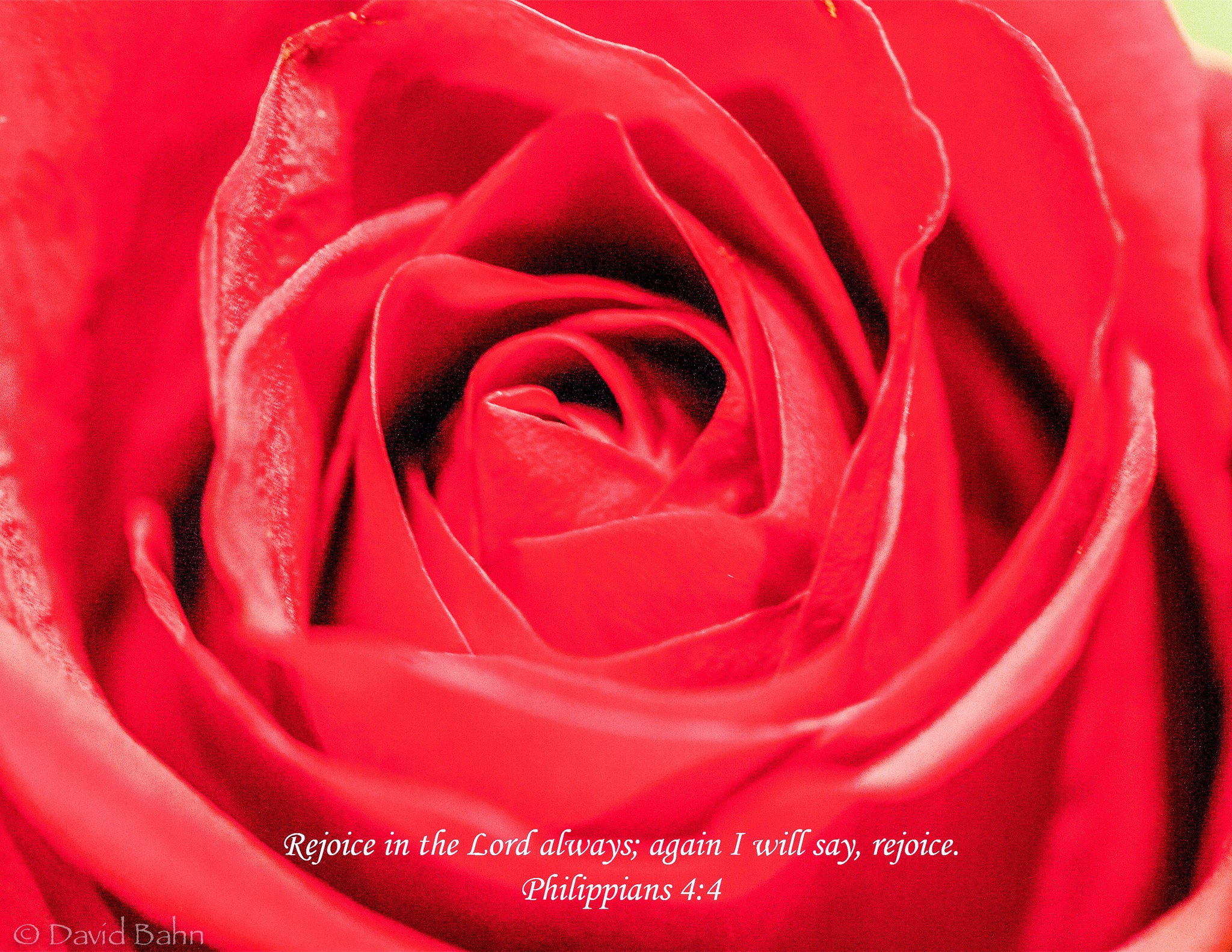
    “The seed will grow well, the vine will yield its fruit, the ground will produce its crops, and the heavens will drop their dew. I will give all these things as an inheritance to the remnant of this people.”
    IMG_0973.JPG
    We are reading THE STORY at St. John, and using the chapters from this book of excerpts from the Bible as a 31 session series of Bible studies and messages. Today as I read chapter 19, The Return Home, these words caught my eye. They are part of a promise of God’s blessings upon the people who were in exile and who would return to their land. They evoke images of productivity, fruitfulness, and God’s visible favor on the people of Israel. As exiles, surely these words would ring deeply in the hearts of God’s people. What a hope! What a future!
    But these words remind me of Habakkuk 3:17-18:

    Though the fig tree does not bud and there are no grapes on the vines, though the olive crop fails and the fields produce no food, though there are no sheep in the pen and no cattle in the stalls, yet I will rejoice in the LORD, I will be joyful in God my Savior.

    Habakkuk had prophesied among God’s people 100 years prior to the time of Zechariah and the return of the exiles from Babylonia. His words are poignant in the face of disaster or discouragement. They represent a call to look to and trust God in the face of every circumstance.
    Now, however, is a time for rejoicing and celebration. God has promised to display his favor toward his people. They have hope and a future. It is a time for thanks and praise, joy and thanksgiving.
    Truth be told, however, whether the storehouse is full or empty, the calling of God’s people is to give praise and thanks to God and rejoice in his salvation!

  • The Northwest Houston Photo Club has an annual Christmas party at which I have been asked to offer the prayer for the past several years. It’s been my privilege to do so, and this year I added a song. The song is light and secular. The prayer is light and spiritual. My purpose in offering the prayer is to bring the name of Jesus to a secular organization’s annual Christmas celebration. I hope you enjoy the song and the prayer.

    Deck the Halls for Picture Taking – David Bahn, 2014

    Deck the halls for picture taking!
    Fa-la-la-la-la, la-la-la-la!

    Tis the season for-memories making
    Fa-la-la-la-la, la-la-la-la!

    Grab we now our best equipment!
    Fa-la-la-la-la, la-la-la-la!

    Nikon, Canon, Fuji, Sony
    Fa-la-la-la-la, la-la-la-la!

    We need all those megapixels
    Fa-la-la-la-la, la-la-la-la!

    So we can get lots of photos
    Fa-la-la-la-la, la-la-la-la!

    Santas, gifts, and decorations
    Fa-la-la-la-la, la-la-la-la!

    All call out for our attention
    Fa-la-la-la-la, la-la-la-la!

    Bear and Pam our host and hostess
    Fa-la-la-la-la, la-la-la-la!

    Surely do deserve our toast-es!
    Fa-la-la-la-la, la-la-la-la!

    So we now all raise our glasses
    Fa-la-la-la-la, la-la-la-la!

    Thanking them again this Christmas
    Fa-la-la-la-la, la-la-la-la!

    NWHPC Christmas Prayer

    It’s Christmas time at Bear and Pam’s
    And once again this year
    We find ourselves in festive mood
    All filled with joy and cheer

    For we proud members of this club
    Enjoy both feast and friend
    Whether Canonite or Nikonian
    We’re tight through thick and thin.

    So bow we now our heads and pray
    To God who gave his Son
    This holy season reminding us
    God loves us – everyone!

    To share and bless as we’ve been blessed
    Seems right this time of year
    You’ve been so good; we praise your name
    And offer you this prayer:

    Thank you now for food and friend
    And hosts who are so kind
    For children’s happy faces
    And joys that fill our minds

    Bless this food, this house, these guests
    And let your love and grace,
    Fill our hearts with joy tonight
    And move us all to praise:

    I ask all this in Jesus’ name
    Whose birth we mark again,
    And those who wish may join with me
    And say a grateful…Amen!

  • 2 Chronicles 6:12-21

    Then Solomon stood before the altar of the Lord in front of the whole assembly of Israel, spread out his hands toward heaven and said: “Lord, the God of Israel, there is no God like you in heaven above or on earth below you who keep your covenant of love with your servants who continue wholeheartedly in your way. You have kept your promise to your servant David my father; with your mouth you have promised and with your hand you have fulfilled it as it is today.

    “But will God really dwell on earth? The heavens, even the highest heaven, cannot contain you. How much less this temple I have built! Yet give attention to your servant’s prayer and his plea for mercy, Lord my God. Hear the cry and the prayer that your servant is praying in your presence this day. May your eyes be open toward this temple night and day, this place of which you said, ‘My Name shall be there,’ so that you will hear the prayer your servant prays toward this place. Hear the supplication of your servant and of your people Israel when they pray toward this place. Hear from heaven, your dwelling place, and when you hear, forgive.

    20141103-5936 20141103-5975 20141110-6691

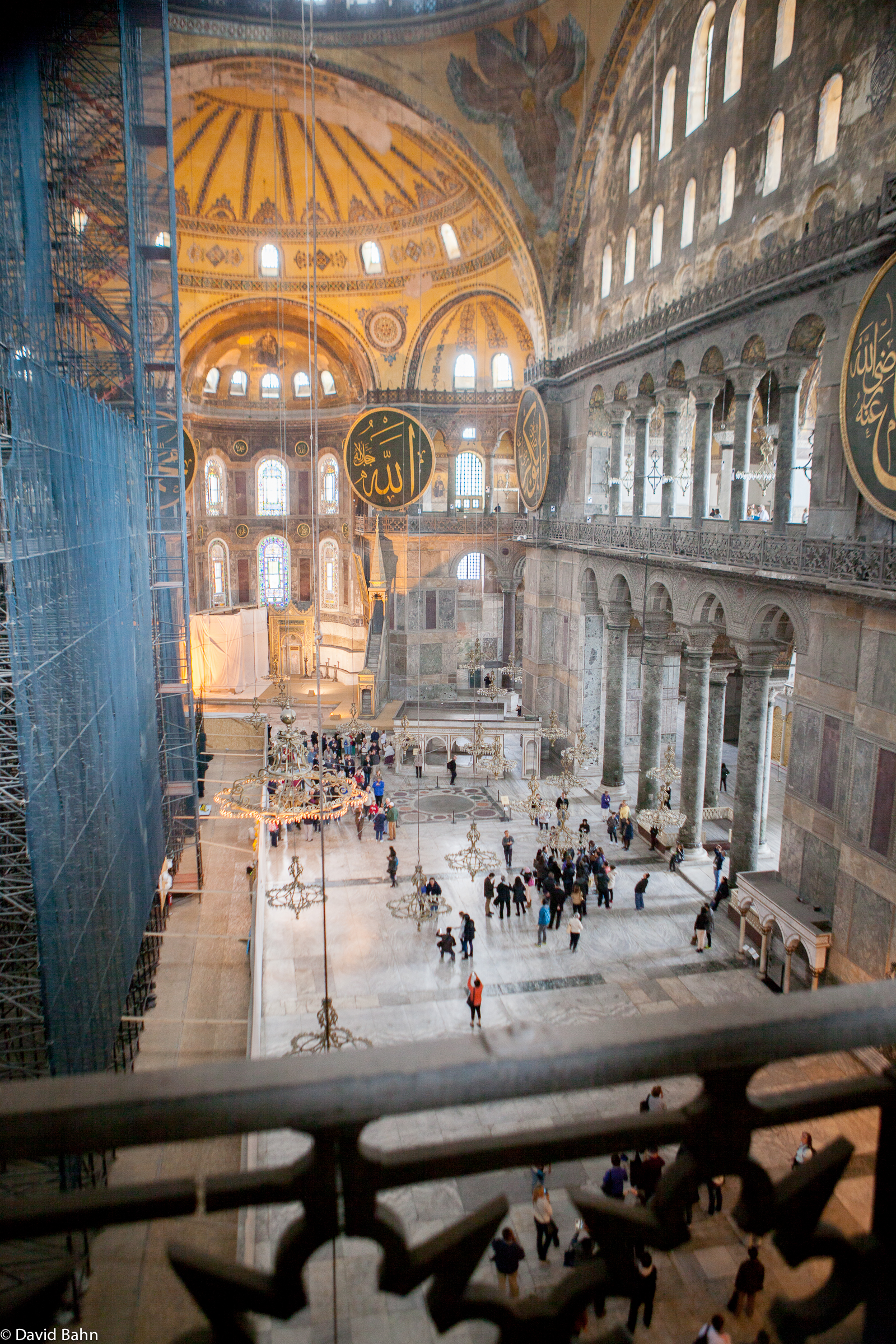
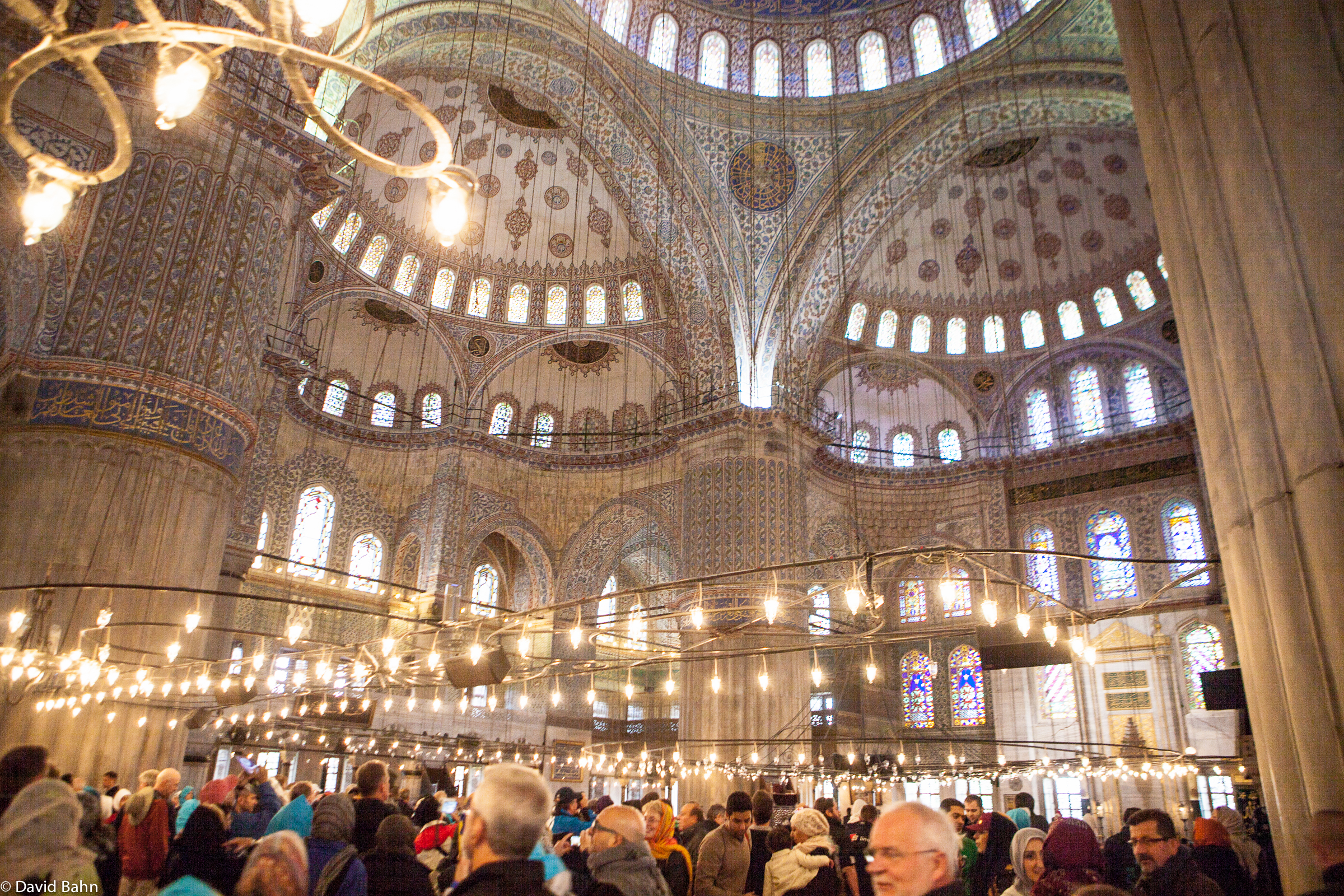
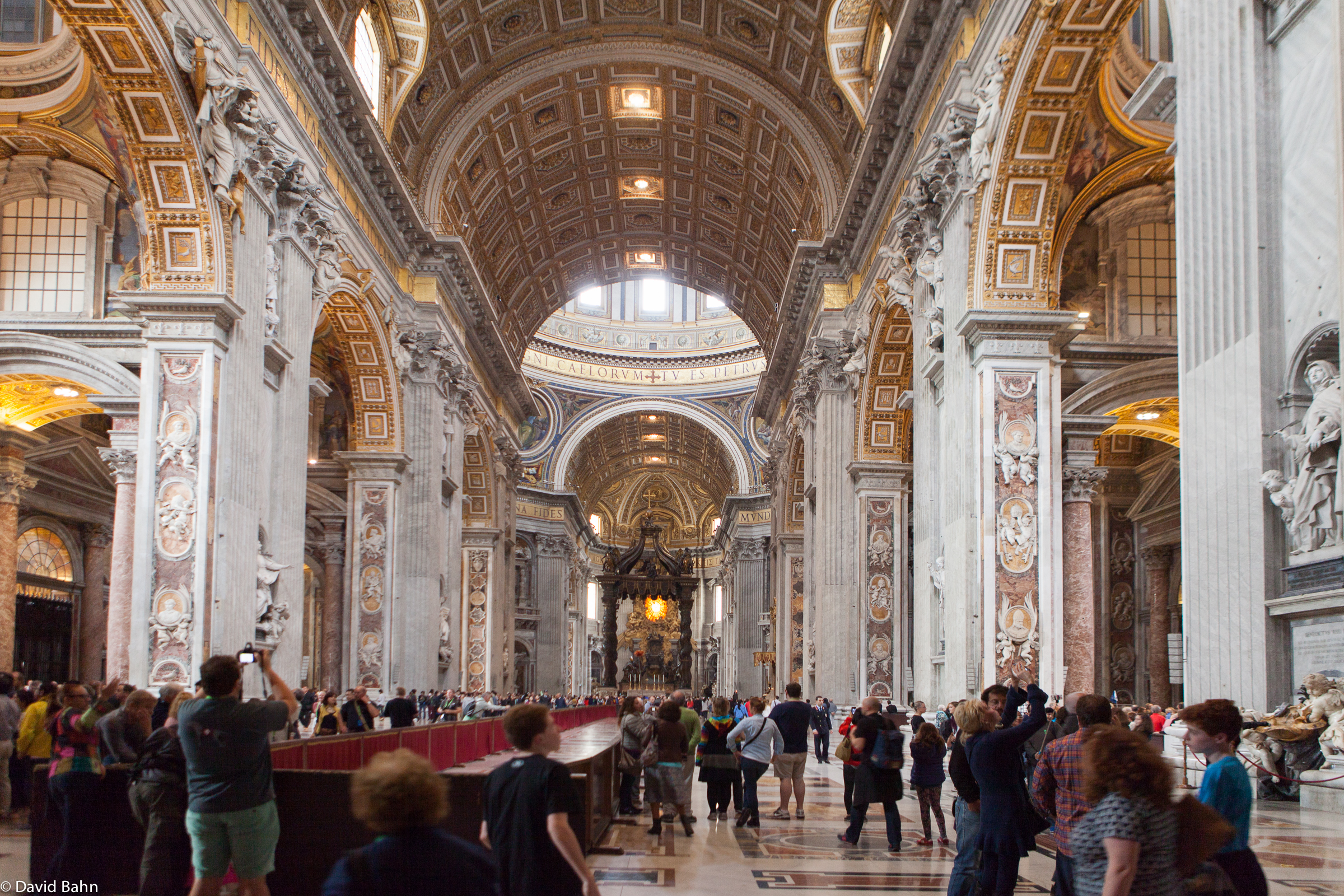
    These three photos are of large and impressive buildings given to religious purposes. One is a museum. One is a mosque. One is the largest church in the world, St. Peter’s Basilica. But God does not dwell in temples built by human hands – even the most beautiful and ornate ones. It is sad when a church becomes a museum. It is sadder even still when people tie their faith to any building. God’s Holy Spirit sustains us in the faith – no matter where we may gather with others for worship. Gather we must (it’s vital to gather to reorient our moral and spiritual compass to the true north of God’s word and to receive God’s blessings of word and sacrament). Thank God we do have  beautiful place in which we may gather! Thank God that he dwelt with us in the human temple of Jesus’ body, and invites us to dwell with him forever in his kingdom of light, life, joy, and salvation!

  • Revelation 2:12-17

    “And to the angel of the church in Pergamum write: ‘The words of him who has the sharp two-edged sword.

    13 “‘I know where you dwell, where Satan’s throne is. Yet you hold fast my name, and you did not deny my faith even in the days of Antipas my faithful witness, who was killed among you, where Satan dwells. 14 But I have a few things against you: you have some there who hold the teaching of Balaam, who taught Balak to put a stumbling block before the sons of Israel, so that they might eat food sacrificed to idols and practice sexual immorality. 15 So also you have some who hold the teaching of the Nicolaitans. 16 Therefore repent. If not, I will come to you soon and war against them with the sword of my mouth. 17 He who has an ear, let him hear what the Spirit says to the churches. To the one who conquers I will give some of the hidden manna, and I will give him a white stone, with a new name written on the stone that no one knows except the one who receives it.’

    The seven churches of Revelation offer a broad spectrum of challenges and blessings. They hear words of encouragement and approval. But they also hear words of challenge and a call to repentance. We who follow Jesus each also must hear the words of approval and a call to repentance. There is need for us all to stand strong in the faith to which we have been called. We can be thankful that God sees our hearts through the cross of Jesus. But we can also rejoice that God is always calling us forward, and that our need to repent is less about a need to feel guilty, than it is a calling to a better life of faithfulness to God.

  • Acts 16:11-15

    From Troas we put out to sea and sailed straight for Samothrace, and the next day we went on to Neapolis. 12 From there we traveled to Philippi, a Roman colony and the leading city of that district of Macedonia. And we stayed there several days.

    13 On the Sabbath we went outside the city gate to the river, where we expected to find a place of prayer. We sat down and began to speak to the women who had gathered there. 14 One of those listening was a woman from the city of Thyatira named Lydia, a dealer in purple cloth. She was a worshiper of God. The Lord opened her heart to respond to Paul’s message. 15 When she and the members of her household were baptized, she invited us to her home. “If you consider me a believer in the Lord,” she said, “come and stay at my house.” And she persuaded us.

    What a joy to learn how God opens people’s hearts to believe his message and support those who bring that message to them and others. Lydia is one such person whose gift of hospitality is a fresh breath of air and a source of great encouragement to Paul and Luke and their traveling companions. Although Paul seems never to be dissuaded by opposition, surely he was greatly encouraged by this act of hospitality. We can offer our resources for those who are on the front lines of the Mission of God as well. This is both a privilege for us and a blessing for them.

  • Acts 17:1-9

    When Paul and his companions had passed through Amphipolis and Apollonia, they came to Thessalonica, where there was a Jewish synagogue. As was his custom, Paul went into the synagogue, and on three Sabbath days he reasoned with them from the Scriptures, explaining and proving that the Messiah had to suffer and rise from the dead. “This Jesus I am proclaiming to you is the Messiah,” he said. Some of the Jews were persuaded and joined Paul and Silas, as did a large number of God-fearing Greeks and quite a few prominent women.

    But other Jews were jealous; so they rounded up some bad characters from the marketplace, formed a mob and started a riot in the city. They rushed to Jason’s house in search of Paul and Silas in order to bring them out to the crowd. But when they did not find them, they dragged Jason and some other believers before the city officials, shouting: “These men who have caused trouble all over the world have now come here, and Jason has welcomed them into his house. They are all defying Caesar’s decrees, saying that there is another king, one called Jesus.” When they heard this, the crowd and the city officials were thrown into turmoil. Then they made Jason and the others post bond and let them go.

    The charge here against Paul was that his allegiance was to another king (Jesus) rather than Caesar. Was their fear was that such allegiance would be forced upon them? Was it that Jesus’ reign would have far-reaching implications that would undercut their freedom? Luke tells us that they were jealous. Their influence was being undercut. They wanted to get rid of Paul and Silas so that their lives could go on as before – untouched and unchanged by this Jesus. Sadly, many people today prefer to remain unchanged by Jesus. They are missing the gift of God, the hope of the resurrection, and the promise of eternal life that comes only through Jesus. Paul knew that. He also knew that God wanted everyone to know of, believe in, and love and serve this King for all eternity.

    On this All Saints Day, we rejoice that Paul and many others have embraced this King by faith, and even now experience the eternal salvation that comes through faith in Jesus Christ.

  • Acts 18:1-18a

    After this, Paul left Athens and went to Corinth. There he met a Jew named Aquila, a native of Pontus, who had recently come from Italy with his wife Priscilla, because Claudius had ordered all Jews to leave Rome. Paul went to see them, and because he was a tentmaker as they were, he stayed and worked with them. Every Sabbath he reasoned in the synagogue, trying to persuade Jews and Greeks.

    When Silas and Timothy came from Macedonia, Paul devoted himself exclusively to preaching, testifying to the Jews that Jesus was the Messiah. But when they opposed Paul and became abusive, he shook out his clothes in protest and said to them, “Your blood be on your own heads! I am innocent of it. From now on I will go to the Gentiles.”

    Then Paul left the synagogue and went next door to the house of Titius Justus, a worshiper of God.Crispus, the synagogue leader, and his entire household believed in the Lord; and many of the Corinthians who heard Paul believed and were baptized.

    One night the Lord spoke to Paul in a vision: “Do not be afraid; keep on speaking, do not be silent.10 For I am with you, and no one is going to attack and harm you, because I have many people in this city.” 11 So Paul stayed in Corinth for a year and a half, teaching them the word of God.

    12 While Gallio was proconsul of Achaia, the Jews of Corinth made a united attack on Paul and brought him to the place of judgment. 13 “This man,” they charged, “is persuading the people to worship God in ways contrary to the law.”

    14 Just as Paul was about to speak, Gallio said to them, “If you Jews were making a complaint about some misdemeanor or serious crime, it would be reasonable for me to listen to you. 15 But since it involves questions about words and names and your own law—settle the matter yourselves. I will not be a judge of such things.” 16 So he drove them off. 17 Then the crowd there turned on Sosthenes the synagogue leader and beat him in front of the proconsul; and Gallio showed no concern whatever.

    18 Paul stayed on in Corinth for some time. Then he left the brothers and sisters and sailed for Syria,accompanied by Priscilla and Aquila.

    The place of judgment in worldly terms is before a judge. In England they call it “the dock.” We call it the bench in the USA. It is a location, however, that has great and consequential implications. As we see the place in Corinth at which Paul stood we might recall how Paul remained faithful in the face of false accusation. We may be impressed and thankful that Paul stood strong for the Gospel when threatened. We may regret and shake our heads at the sad reality that people actively oppose the Gospel message. But we must surely be thankful that when we face the great Last Day – before the ultimate place of judgment, through faith in Jesus we will hear words of acquittal. The reality of God’s love will fill our hearts and minds for all eternity.

  • I Samuel 1:16-18

    Do not regard your servant as a worthless woman, for all along I have been speaking out of my great anxiety and vexation.” Then Eli answered, “Go in peace, and the God of Israel grant your petition that you have made to him.” And she said, “Let your servant find favor in your eyes.” Then the woman went her way and ate, and her face was no longer sad.

    IMG_0923.JPG

    Hannah’s heart was broken both by means of the failure to conceive a child as well as by the ugly treatment of Elkanah’s other wife and Eli’s poor estimation of her. When confronted by Eli her response showed the difference between brokenness and resentment. Both spring from the same well; both spring from pain.
    Brokenness, however, is a much different response than resentment or cynicism. Brokenness opens our hearts to God’s love. It allows us to pray with a searching heart. It places us in a position to receive God’s grace. Cynicism requires proof. Resentment requires repayment. Brokenness allows love to heal.
    When Hannah answers Eli, she is speaking out of brokenness. Eli’s answer offers her hope, and something wonderful occurs. Hannah’s attitude changes as soon as she hears Eli’s answer.

    Prayer from a broken heart, spoken in faith, allows God’s grace to speak. In Hannah’s attitude changes before her circumstances change. This is a lesson for me. It be a lesson for others as well.

  • 1 Samuel 1:12-18

    As she continued praying before the Lord, Eli observed her mouth. 13 Hannah was speaking in her heart; only her lips moved, and her voice was not heard. Therefore Eli took her to be a drunken woman. 14 And Eli said to her, “How long will you go on being drunk? Put your wine away from you.”15 But Hannah answered, “No, my lord, I am a woman troubled in spirit. I have drunk neither wine nor strong drink, but I have been pouring out my soul before the Lord. 16 Do not regard your servant as a worthless woman, for all along I have been speaking out of my great anxiety and vexation.” 17 Then Eli answered, “Go in peace, and the God of Israel grant your petition that you have made to him.” 18 And she said, “Let your servant find favor in your eyes.” Then the woman went her way and ate, and her face was no longer sad.

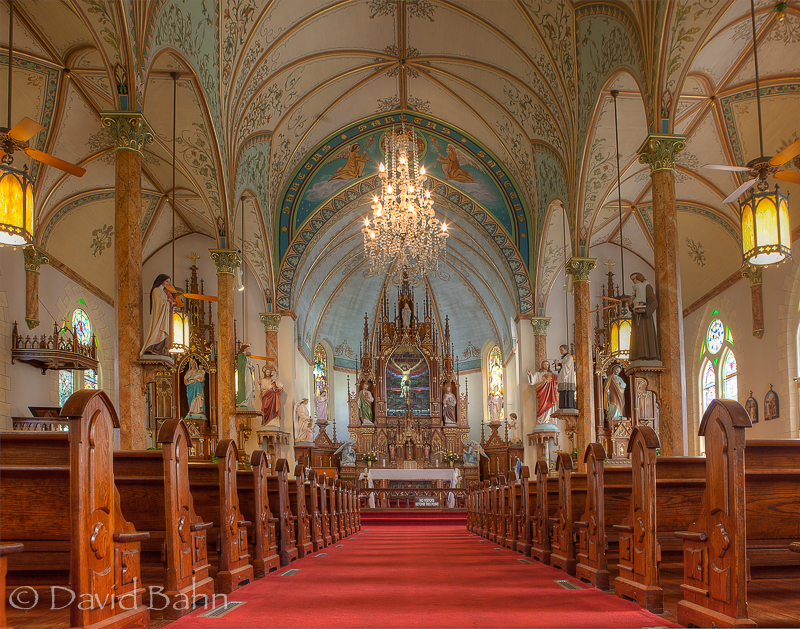
    Painted Church  near Schulenburg, Texas
    Painted Church near Schulenburg, Texas

    Perhaps you have poured out your heart to God like Hannah did on this occasion. She was a woman “troubled in spirit” speaking out of her “great anxiety.” She desired to have a child. She spoke only in her heart, without sound, but with moving lips. Eli thought she was drunk. He thought she was blaspheming. This leads me to realize that some people don’t understand us when we pray. They don’t understand our motives. They don’t understand our situation. They don’t understand our practice.

    If you bow your head before you eat your lunch, it might be awkward for you and your co-workers. If you breathe a little prayer before you take an important test, those around you might not understand. If you spend time in prayer even in your home your own family may not understand. Even Eil, the priest, didn’t understand that Hannah was praying.

    But here’s the good news: God understands. He not only understands, he listens and promises to answer our prayers. In the case of Hannah, her prayers will be answered and she will have a son. That, however, is a whole other story. For now, I am thankful that God understands my prayers, hears me, and answers me when I call.

  • Galatians 6:14

    May I never boast except in the cross of my Lord Jesus Christ.

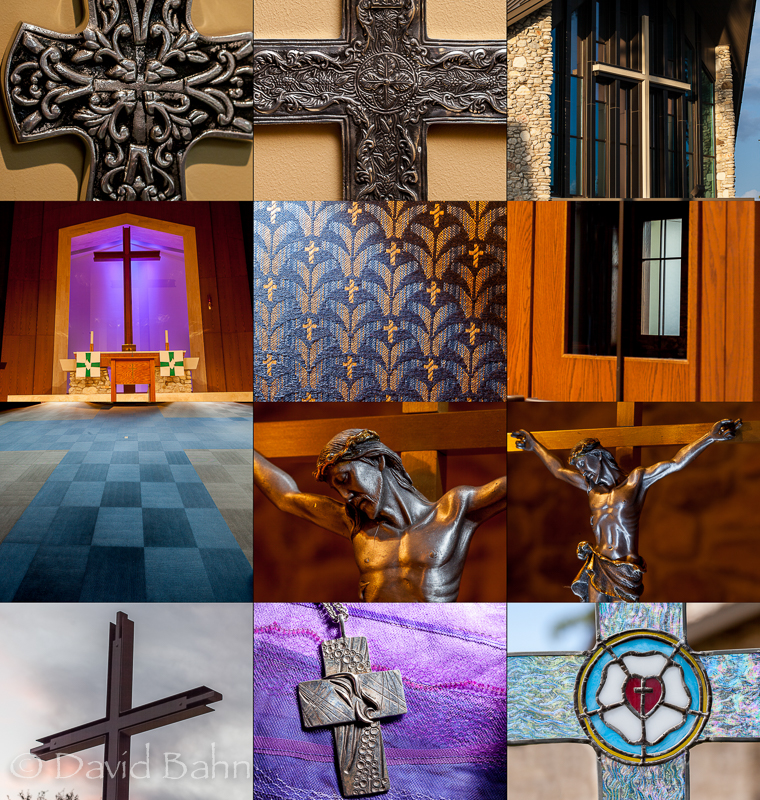
    2014 Portfolio Review @ NWHPC
    For individual photos see http://fbgpbd.smugmug.com/Photography/2014-NWHPC-Portfolio-Review/

    The cross is sometimes a piece of jewelry, sometimes a grave marker, and sometimes a deeply meaningful religious symbol. But in ancient times the cross was an instrument of execution, a cruel and horrific instrument of torture. Crucifixion was an ancient form of execution in which a person was either tied or nailed to a wooden cross and left to hang there until dead. Death would be slow and excruciatingly painful.

    In Christianity the cross is the intersection of God’s love and his justice. Christians believe, teach and confess that Jesus of Nazareth was without sin before God and man. But the religious leaders of his day were so offended and threatened by him and his teaching that they conspired with the Roman governing authorities to have Jesus killed by crucifixion. God even withdrew his presence from Jesus while on the cross. We believe, however, that this instrument of torture became a means of salvation. For Jesus’ sake God forgives the sin of the world so that, “whoever believes in him will not perish, but have eternal life.” Because of Jesus’ resurrection from the grave, the instrument of death has become a symbol of salvation and life.

    For that reason many churches have crosses that adorn their buildings, altars, liturgical vestments and walls. Whether with the corpus (a “crucifix”), or without, the cross in the Christian faith is central to what we believe.

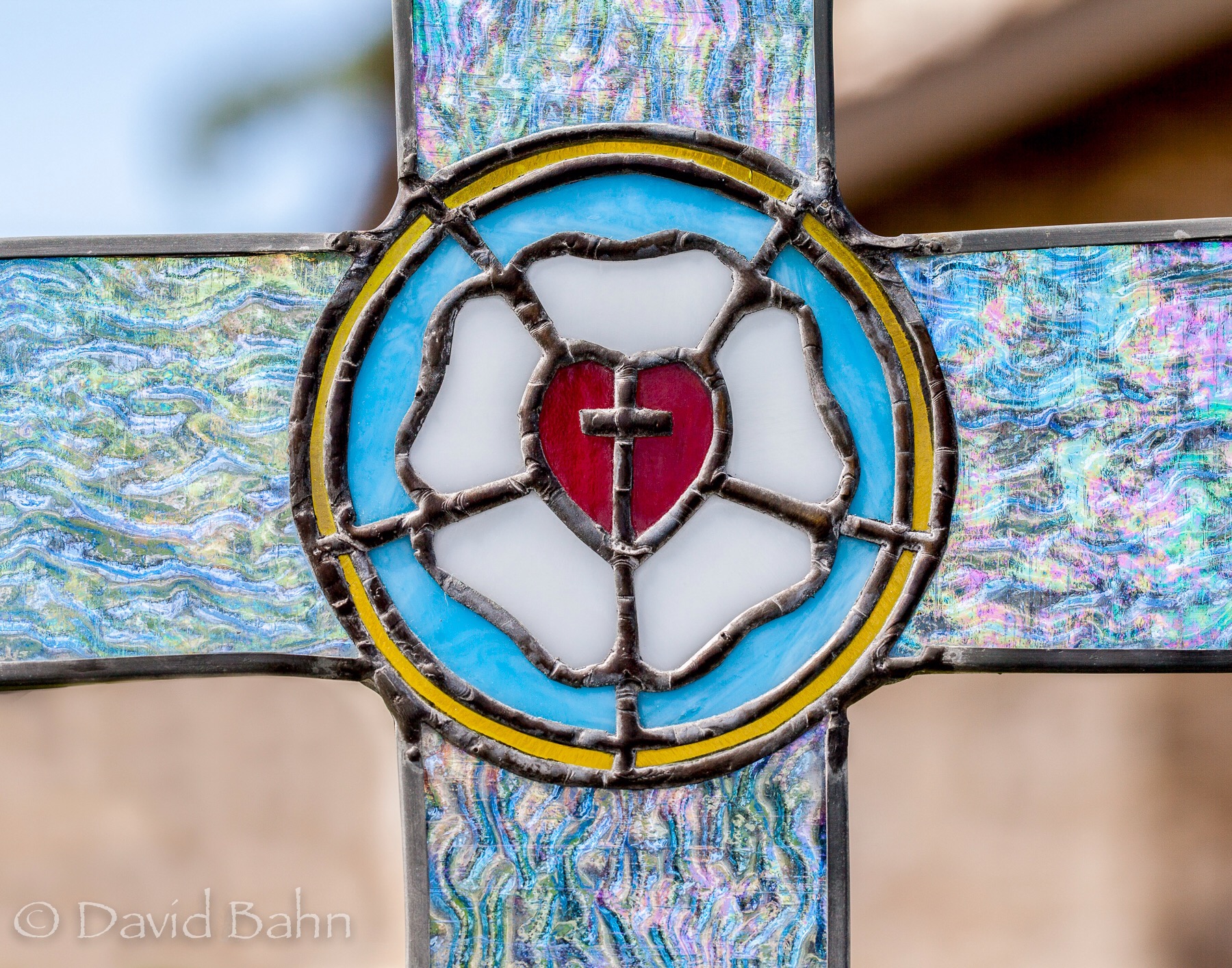
    There are crosses all across the campus of St. John Lutheran Church in Cypress, Texas. Even though I serve as pastor there, I easily overlook many of them. In fact since going public with this portfolio project I have had suggestions from various members for photos of crosses that I missed.

    I hope the viewer experiences the various forms, colors, iterations, adornments, and placements of the cross by means of this portfolio, and reflects on its meaning for him or her.