David Bahn – Reflections

Light from the Word and through the lens

  • Exodus 14:21-25

    Then Moses stretched out his hand over the sea, and the Lord drove the sea back by a strong east wind all night and made the sea dry land, and the waters were divided. 22 And the people of Israel went into the midst of the sea on dry ground, the waters being a wall to them on their right hand and on their left. 23 The Egyptians pursued and went in after them into the midst of the sea, all Pharaoh’s horses, his chariots, and his horsemen. 24 And in the morning watch the Lord in the pillar of fire and of cloud looked down on the Egyptian forces and threw the Egyptian forces into a panic, 25 clogging their chariot wheels so that they drove heavily. And the Egyptians said, “Let us flee from before Israel, for the Lord fights for them against the Egyptians.”

    20140510-3564

    The great salvation event of the Old Testament is the Exodus. From the final plague of the angel of death who passed over the houses and families of the Hebrews who had the blood of the passover lamb on the door posts and lintels of their houses, to the crossing of the Red Sea, the mighty hand of God was unhidden. The deliverance was decisive, clear-cut, and the defining moment of Old Testament history. The people of God looked back on that great deliverance event as testimony to God’s love, power, calling, and their special place in his heart and in the world.

    Today, as we remember the horrific attack on the people of the United States in 2001, the Grand Deliverance of God was in a much more far-reaching manner. It didn’t look decisive. It didn’t appear powerful. His Son of God hanging on the cross doesn’t appear decisive, but it was decisive. In that moment the most grave tyranny was defeated. Satan and sin were overcome. And just as the Israelites’ safe passage through the Red Sea, signaled the success of God’s Passover plan, so the resurrection of Jesus shows Jesus to be the fulfillment of all hopes and promises of God. 

    As the Israelites looked back on the Passover, so we look back on the cross and empty tomb. We must not only look back, however, at what God has done, but look with anticipation toward the future and ultimate deliverance of all things at the End of Time when Jesus returns and we will experience the fullness of God’s Great Deliverance…shown in the Exodus and centered in Jesus’ death and resurrection.

  • Exodus 1:8-10

    Now there arose a new king over Egypt, who did not know Joseph. And he said to his people, “Behold, the people of Israel are too many and too mighty for us. 10 Come, let us deal shrewdly with them, lest they multiply, and, if war breaks out, they join our enemies and fight against us and escape from the land.” 11 Therefore they set taskmasters over them to afflict them with heavy burdens. They built for Pharaoh store cities, Pithom and Raamses. 12 But the more they were oppressed, the more they multiplied and the more they spread abroad. And the Egyptians were in dread of the people of Israel. 13 So they ruthlessly made the people of Israel work as slaves 14 and made their lives bitter with hard service, in mortar and brick, and in all kinds of work in the field. In all their work they ruthlessly made them work as slaves.

    20140522-3892

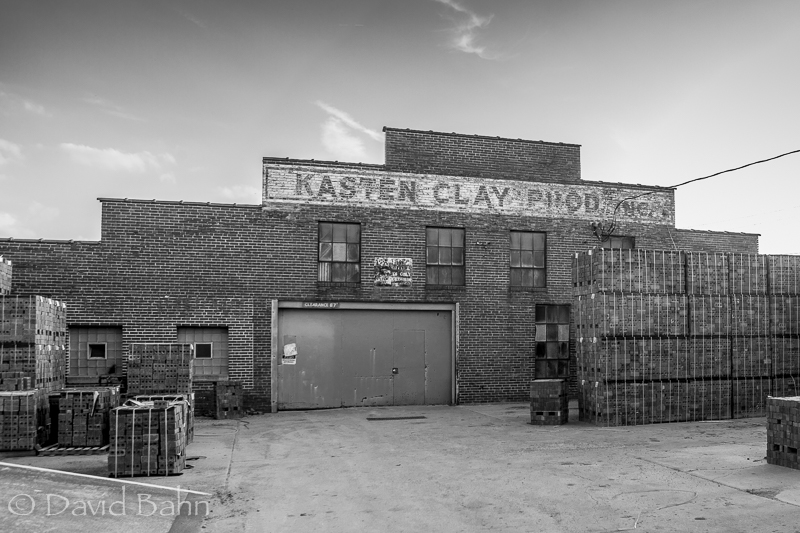
    I’ve done some hard work in my life. I worked in construction, from carrying bundles of shingles up a ladder onto the roof, then nailing them down, to pouring and finishing concrete – complete with wind-sprints with wheel barrels full of concrete, to carrying railroad ties (heavy, sticky, stinky!). But the most difficult work I’ve ever done was working for 7 months in a brick factory: Hot, hard, heavy, hot, hard, heavy, hot, hard, heavy… Did I say, “Hot”? There was a 1500 degree kiln that ran the length of the factory in which we worked: Great on a cold February morning, but July: oh my! I figured I handled about 1.2 million bricks during my stint there, and still have some souvenir bricks as reminders of those days (and once as motivation to get back to studying while at the seminary).

    When I read of Pharaoh making life difficult for the Jewish people in Egypt, making them work in mortar and brick, my heart goes out to them! That’s hard work! And only the first volley has been fired. The king is going to make life difficult for the people of Israel to push them down. But God has other plans. He will make them stronger through this time of difficulty and testing. 

    When I finished my stint at the brickyard, I was in the best shape I’ve ever been in. Sadly my lifestyle has changed since those days, so that I have to import physical activity into my life in order to have any hope of being in better physical shape. 


    Exodus 1:1-14

    These are the names of the sons of Israel who came to Egypt with Jacob, each with his household:Reuben, Simeon, Levi, and Judah, Issachar, Zebulun, and Benjamin, Dan and Naphtali, Gad and Asher. All the descendants of Jacob were seventy persons; Joseph was already in Egypt. ThenJoseph died, and all his brothers and all that generation. But the people of Israel were fruitful and increased greatly; they multiplied and grew exceedingly strong, so that the land was filled with them.

    Now there arose a new king over Egypt, who did not know Joseph. And he said to his people, “Behold, the people of Israel are too many and too mighty for us. 10 Come, let us deal shrewdly with them, lest they multiply, and, if war breaks out, they join our enemies and fight against us and escape from the land.” 11 Therefore they set taskmasters over them to afflict them with heavy burdens. They built for Pharaoh store cities, Pithom and Raamses. 12 But the more they were oppressed, the more they multiplied and the more they spread abroad. And the Egyptians were in dread of the people of Israel. 13 So they ruthlessly made the people of Israel work as slaves 14 and made their lives bitter with hard service, in mortar and brick, and in all kinds of work in the field. In all their work they ruthlessly made them work as slaves.

  • Genesis 39:20b-23

    But while Joseph was there in the prison, 21 the Lord was with him; he showed him kindness and granted him favor in the eyes of the prison warden. 22 So the warden put Joseph in charge of all those held in the prison, and he was made responsible for all that was done there. 23 The warden paid no attention to anything under Joseph’s care, because the Lord was with Joseph and gave him success in whatever he did.

    20140123-2365

    We’ve seen it a thousand times: a sports star with talents and gifts beyond all reason shows himself to be bereft of the character needed to sustain himself. He crashes and burns in some colossal moral failure, drug abuse scandal, or even felonious outburst. Sad and too often repeated: their character is not sufficient to sustain their gifts and opportunities.

    Very seldom do we see character displayed as it is in the case of Joseph. When he is thrown into prison he excels. Just as he did when Potiphar had put him in charge of all his affairs, the warden puts Joseph in charge of the prison. There is no hint of conniving or conspiring to gain the system. He is simply given a favorable place of authority by the warden.

    There is, however, something more at play in this play of events. We are told that the Lord showed kindness to Joseph and granted him favor with the warden. God surely knew how Joseph would handle things. But more than that he had a plan in the making that would save the entire family of Jacob – the whole Jewish nation – through Joseph.

    To do that Joseph’s character would have to be tested, proven, strengthened, refined, and probed. There would be countless opportunities ahead for Joseph to be put in compromising situations. There would be many ways in which his character would come into play as Pharaoh’s number one in command. But for now Joseph’s character is being refined like gold in the furnace (cf. 1 Peter 1:6-7). It will prove true and God will do great things through this man whose character goes beyond his gifting. 

    Certainly this is a calling for us to make certain that our character remains strong in the face of either success or trial. 

  • Genesis 39:11-12

    One day [Joseph] went into the house to attend to his duties, and none of the household servants was inside. 12 She caught him by his cloak and said, “Come to bed with me!” But he left his cloak in her hand and ran out of the house.

    20140123-2359

    Perhaps you’ve been in a situation from which you simply had to flee. The temptation was just too strong, the stakes were just too high, the dangers were just too great for you to stick around. Maybe it was a job that took more from you than you had to give, and you had to flee. Perhaps it was an encroaching wildfire: you had to flee. Maybe you chose to “get out of Dodge” as a hurricane was approaching. Maybe even it was a situation in which you were being tempted as Joseph was, and you simply had to leave quickly.

    There is usually a price to pay when we flee: we lose valuables in our homes. We lose face because we are thought to be cowardly. We lose pay because we simply had to leave. We may even be falsely accused as Joseph was when he fled Potiphar’s wife and left his cloak in her hand. The fuller story of this incident is below, and found in chapter 3 of THE STORY.

    We would like to think that by doing good, good will always come. We’ll be protected. We will be vindicated. But though Joseph’s life ends with him fully vindicated, it certainly doesn’t bear this out in the short term. The immediate result of his refusal to sin was to be thrown into prison, to be forgotten by those he helped while in prison, before he is finally vindicated. His commitment to doing the right thing, no matter the cost, cost him dearly.

    I wonder how often we fail to do the right thing because we see all to clearly the near-term cost of our actions. Perhaps if we were to look beyond this moment, and into the future of God’s favor and the full manifestation of his goodness, we would be more bold to pay the near-term price for our actions that honor him and his ways. 

    Sometimes we do have to flee. And sometimes when we do we lose things that are valuable to us. But the goodness, faithfulness, grace and justice of God is our clarion call to flee when necessary, believing that we will experience the goodness of the Lord in the land of the living (cf. Psalm 27:13).


    Genesis 39:11-20

    One day he went into the house to attend to his duties, and none of the household servants was inside. 12 She caught him by his cloak and said, “Come to bed with me!” But he left his cloak in her hand and ran out of the house.

    13 When she saw that he had left his cloak in her hand and had run out of the house, 14 she called her household servants. “Look,” she said to them, “this Hebrew has been brought to us to make sport of us! He came in here to sleep with me, but I screamed. 15 When he heard me scream for help, he left his cloak beside me and ran out of the house.”

    16 She kept his cloak beside her until his master came home. 17 Then she told him this story: “That Hebrew slave you brought us came to me to make sport of me. 18 But as soon as I screamed for help, he left his cloak beside me and ran out of the house.”

    19 When his master heard the story his wife told him, saying, “This is how your slave treated me,” he burned with anger. 20 Joseph’s master took him and put him in prison, the place where the king’s prisoners were confined.

  • Genesis 37:18-20

    18 They saw him from afar, and before he came near to them they conspired against him to kill him.19 They said to one another, “Here comes this dreamer. 20 Come now, let us kill him and throw him into one of the pits. Then we will say that a fierce animal has devoured him, and we will see what will become of his dreams.”

    20140730-0929

    The pastor who preached at my dad’s funeral used the last part of v. 19 as his text: “Here comes this dreamer.” He meant it as a complement. My dad always had ideas, dreams, hopes and suggestions for ministry projects, or solutions to problems. He was right. Dad always had a thought for me, an idea to share, or a way to grow the church or succeed in business. So the pastor spoke of dad’s ideas and dreams as a testimony to his faith. 

    Sadly, however, Joseph’s brothers had no positive thoughts about their younger brother. They didn’t like his cocky way of parading himself around showing off his coat of many colors, or telling them about his dreams. It seems that Joseph not only had dreams, but also an attitude to go with them. Their assessment of his dreams were not only non-complementary, but quickly dismissed as self-serving hubris. They thought that they could allay his dreams because they did not know those dreams were actually of God.

    If, however, a dream is of God it will not be set aside by mere mortals. You can’t bury them in a pit in the ground. And while it may appear that the intervention has come from human agents – like Reuben intervening in Joseph’s behalf – the truth is that God will see that his dreams are realized. It might be that one’s attitude needs to be refined or humbled. It might be that the path to the dream’s fulfillment will be torturous and challenging. But be sure of this: God will see to it that those who lay hold of his dreams and visions will see the faithfulness of God. They will be a part of an adventure of faith and a testimony to God’s goodness and faithfulness. Watch as the story unfolds. 


    Genesis 37:1-34

    Jacob lived in the land of his father’s sojournings, in the land of Canaan.

    These are the generations of Jacob.

    Joseph, being seventeen years old, was pasturing the flock with his brothers. He was a boy with the sons of Bilhah and Zilpah, his father’s wives. And Joseph brought a bad report of them to their father.Now Israel loved Joseph more than any other of his sons, because he was the son of his old age. And he made him a robe of many colors. But when his brothers saw that their father loved him more than all his brothers, they hated him and could not speak peacefully to him.

    Now Joseph had a dream, and when he told it to his brothers they hated him even more. He said to them, “Hear this dream that I have dreamed: Behold, we were binding sheaves in the field, and behold, my sheaf arose and stood upright. And behold, your sheaves gathered around it and bowed down to my sheaf.” His brothers said to him, “Are you indeed to reign over us? Or are you indeed to rule over us?” So they hated him even more for his dreams and for his words.

    Then he dreamed another dream and told it to his brothers and said, “Behold, I have dreamed another dream. Behold, the sun, the moon, and eleven stars were bowing down to me.” 10 But when he told it to his father and to his brothers, his father rebuked him and said to him, “What is this dream that you have dreamed? Shall I and your mother and your brothers indeed come to bow ourselves to the ground before you?” 11 And his brothers were jealous of him, but his father kept the saying in mind.

    12 Now his brothers went to pasture their father’s flock near Shechem. 13 And Israel said to Joseph, “Are not your brothers pasturing the flock at Shechem? Come, I will send you to them.” And he said to him, “Here I am.” 14 So he said to him, “Go now, see if it is well with your brothers and with the flock, and bring me word.” So he sent him from the Valley of Hebron, and he came to Shechem.15 And a man found him wandering in the fields. And the man asked him, “What are you seeking?”16 “I am seeking my brothers,” he said. “Tell me, please, where they are pasturing the flock.” 17 And the man said, “They have gone away, for I heard them say, ‘Let us go to Dothan.’” So Joseph went after his brothers and found them at Dothan.

    18 They saw him from afar, and before he came near to them they conspired against him to kill him.19 They said to one another, “Here comes this dreamer. 20 Come now, let us kill him and throw him into one of the pits. Then we will say that a fierce animal has devoured him, and we will see what will become of his dreams.” 21 But when Reuben heard it, he rescued him out of their hands, saying, “Let us not take his life.” 22 And Reuben said to them, “Shed no blood; throw him into this pit here in the wilderness, but do not lay a hand on him”—that he might rescue him out of their hand to restore him to his father. 23 So when Joseph came to his brothers, they stripped him of his robe, the robe of many colors that he wore. 24 And they took him and threw him into a pit. The pit was empty; there was no water in it.

  • Genesis 15:17-20

    After his return from the defeat of Chedorlaomer and the kings who were with him, the king of Sodom went out to meet him at the Valley of Shaveh (that is, the King’s Valley). 18 And Melchizedek king of Salem brought out bread and wine. (He was priest of God Most High.) 19 And he blessed him and said,

    “Blessed be Abram by God Most High,
        Possessor of heaven and earth;
    20 and blessed be God Most High,
        who has delivered your enemies into your hand!”

    And Abram gave him a tenth of everything. 

    20140704-4465

    A friend recently asked me, “What do you do with people who don’t pay at your church?” The question took me completely by surprise. I had never thought in those terms. We do monitor peoples’ giving, but do so mostly for the sake of being able to supply receipts for tax purposes. But the idea that people had to pay for church never occurred to me. We do have to pay the bills. We do want people to be generous, but we don’t charge admission. And when we have a suggested donation it is truly suggested. We tell people that if they can’t afford to pay not to worry. Recently, for example, we made THE STORY available for a $10 suggested donation. This abridged Bible arranged in chronological order is the focus of our church’s preaching and teaching for the next 6-1/2 months, and we wanted it available to all more than we worried about having everyone pay for it. We also told people simply to take one if they could not afford it. The answer regarding what we do with people who don’t pay is, “nothing,” or better yet, “help yourself.” 

    Giving is a response to God’s goodness, not a payment for services rendered. Giving is an outflow of the blessings we have already received, not a means to attain more and better blessings. Although the practice of paying a tenth to a king or to a god was widespread in the ancient Near East, Abraham’s gift to Melchizedek was probably not the payment of the “king’s tithe” (cf. 1 Sam. 8:1517), but rather was an offering that reflected Abram’s regard for Melchizedek (the name means king of righteousness) as a priest of the true God (thanks to Ligonier Ministries, and their Reformation Study Bible notes).

    People “who don’t pay” will always be with us. The greatest need of those folks, is to recognize the great blessings of the God of Abram, the Father of our Lord Jesus Christ who has poured out his Holy Spirit on his people, and whose gifts truly motivate generosity and God-honoring gifts. Their gifts then become offerings, not payments, and God is truly honored.


  • Genesis 13:14-18

    The Lord said to Abram, after Lot had separated from him, “Lift up your eyes and look from the place where you are, northward and southward and eastward and westward, 15 for all the land that you see I will give to you and to your offspring forever. 16 I will make your offspring as the dust of the earth, so that if one can count the dust of the earth, your offspring also can be counted. 17 Arise, walk through the length and the breadth of the land, for I will give it to you.” 18 So Abram moved his tent and came and settled by the oaks of Mamre, which are at Hebron, and there he built an altar to the Lord.

    20140704-4454

    There are those who question opulent and excessive-to-their-tastes buildings and church furnishings. St. Peter’s Basilica, the Crystal Cathedral, as well as some of the medieval cathedrals are targets of such questioning. The old saw, “why wasn’t that money spent on the poor” or “on missions,” is trotted out. When you can build a church in a third-world country for $30,000,  (as is done by International Cooperative Ministries, for one example) it may be reason to question spending $30 million on a church building in the United States.

    The issue, however, is seldom an either-or proposition. Too often those who cry foul about spending too much on a local building, would never spend as much on a mission project or social welfare relief efforts. Too often the question is much more about one’s willingness to give, period. While some may want to re-direct funds from buildings to missions, truth be told many have such a meager giving record, that the world mission or poverty project would not gain from redirecting their funds. 

    We may wonder why some are willing to offer great sums for the sake of a church building – beyond our ability to match their gifts. But here is precedent for such undertakings in the opening chapters of Genesis. Abram builds an altar to the Lord after he settles near the oaks of Mamre at Hebron. It may not have been extravagant. It may have amounted to little more than a pile of stones. But it was noteworthy enough to be mentioned in the Bible. So it was significant on some level.

    There is something about having a place to go, an altar at which to worship, a visible expression of our dedication to the God of our life and salvation. It may not need to be a $30 Million cathedral. It may not even need to be a $30,000 church building. But when those who build such structures do so, it would be appropriate to appreciate the fact that they are willing to provide a gathering place for God’s people to come together, hear the Word, and rejoice in his gifts, and from that place go into the world to seek God’s kingdom and share the gifts he has given. The building becomes, in that case, a reminder, a gathering place, and a sending place for God’s kingdom and mission. 

  • Genesis 12:1-5

    The Lord had said to Abram, “Go from your country, your people and your father’s household to the land I will show you.

    “I will make you into a great nation,
        and I will bless you;
    I will make your name great,
        and you will be a blessing.
    I will bless those who bless you,
        and whoever curses you I will curse;
    and all peoples on earth
        will be blessed through you.”

    So Abram went, as the Lord had told him; and Lot went with him. Abram was seventy-five years old when he set out from Harran. He took his wife Sarai, his nephew Lot, all the possessions they had accumulated and the people they had acquired in Harran, and they set out for the land of Canaan, and they arrived there.

    Downtown Houston Photo Excursion with Andy Bulgerin

    When God calls Abram, he offers three promises which hold up a command and compel Abram’s obedience. The promises are that God will make Abram into a great nation, that he will bless him, and through him bless “all the peoples on earth.” Those are powerful words and far-reaching promises. Abram will be led to a new place. He would also be the father of many. God’s blessings were not only for Abram, but for all the nations on earth. 

    It is one thing to be blessed and promised to be the focus of God’s favor. It is quite another to be promised to be a blessing to others. This is a singular privilege and high honor. This is a greatness beyond personal wealth or success. This is a greatness born of God’s choosing and far-reaching grace and love. Not content merely to make Abram a wealthy and success man, God determines to elevate Abram from “blessed” to “blesser.” 

    As God’s instrument of blessing, Abram sets out. If he is to fulfill his greatest destiny, he must go to far reaches to the land God will show him. If he does not set out he will not realize God’s full intent for his life or the full potential of his place as the blessing of God to others. 

    What promises has God revealed to you? Where is he calling you to go? You will not only be blessed, but a channel of God’s blessings to others as you go where he calls you, trusting in his promises.

  • Genesis 15:1-6

    After this, the word of the Lord came to Abram in a vision:

    “Do not be afraid, Abram.
        I am your shield,
        your very great reward.”

    But Abram said, “Sovereign Lord, what can you give me since I remain childless and the one who will inherit my estate is Eliezer of Damascus?” And Abram said, “You have given me no children; so a servant in my household will be my heir.”

    Then the word of the Lord came to him: “This man will not be your heir, but a son who is your own flesh and blood will be your heir.” He took him outside and said, “Look up at the sky and count the stars—if indeed you can count them.” Then he said to him, “So shall your offspring be.”

    Abram believed the Lord, and he credited it to him as righteousness.

    Downtown Houston Photo Excursion with Andy Bulgerin

    The word which we translate “righteousness” is a word rich in meaning. “Tsadiq” or “tsadaq” depending on what reference you use, means right, just, to be righteous, justified, or declared righteous. The idea of being declared righteous by faith is not merely a New Testament idea. We see it here in the account of Abram. God has made the promise to him prior to this time, and Abram has now grown weary of ever seeing it come to pass. God, however, takes the opportunity to renew the promise (first given in Genesis 12) and promises, also that he – God himself – would be his shield and then promises that Abram’s offspring would be as many as the stars Abram could count in the night sky. 

    For some reason Abram believed the Lord. The Holy Spirit moved him to put himself under the promise and word that God had spoken and align himself with that promise from his heart. In that moment he was in a right relationship with God: believing God’s promise and living toward that promised future. 

    Faith is much more than grasping facts. Abram knew that God had promised him a son. Faith embraces the truth of God’s word and looks at all of life through the word and promise of God.

    What word and promise of God do you need to embrace today? How might you – by the Holy Spirit’s power – believe God’s promise, trust his word, and enjoy the favor of God’s declaration? You are in a right relationship with God and declared to be so by his Word for Jesus’ sake whose perfect faith and trust in God is our righteousness. 

  • Genesis 3:1-6

    Now the serpent was more crafty than any other beast of the field that the Lord God had made.

    He said to the woman, “Did God actually say, ‘You shall not eat of any tree in the garden’?” And the woman said to the serpent, “We may eat of the fruit of the trees in the garden, but God said, ‘You shall not eat of the fruit of the tree that is in the midst of the garden, neither shall you touch it, lest you die.’” But the serpent said to the woman, “You will not surely die. For God knows that when you eat of it your eyes will be opened, and you will be like God, knowing good and evil.” So when the woman saw that the tree was good for food, and that it was a delight to the eyes, and that the tree was to be desired to make one wise, she took of its fruit and ate, and she also gave some to her husband who was with her, and he ate.

    20100614-IMG_2708

    A few days ago a friend who had returned from a fishing trip to Alaska gave us several salmon fillets. What a treat! We love to grill salmon on the barbecue and consider this gift most generous. We are looking forward to the fresh wild caught Pacific salmon! We will invite our friends to join us when we grill these.

    Just this evening several of us who are part of the discipleship huddle at St. John went on a missional service project to the home of a single mom. We raked leaves and brush, cleaned out gutters, power washed, trimmed trees, cut off branches that were on the roof of the house. 14 man hours later we had made a significant dent in the neglected care and upkeep of this house. We hope she receives the blessing with thanks to God.

    Our friend gave us the salmon not because we need food, or even because we cannot afford salmon (though it is not inexpensive!). He gave it out of the goodness of his heart; because he respects me as his pastor and friend. We gave the ministry of lawn care and exterior house maintenance also out of the goodness of our hearts. But there is another wrinkle to our gift: the wrinkle of sin. She is no longer married to the father of her children. He is not in her life or providing for the care of their house. There is no fault implied in regard to that, just an observation. But the reality of broken relationships – especially marriage – and broken homes and needy women is a fault of life in a broken and fallen world.

    When Adam and Eve ate of the forbidden fruit more than just nakedness and shame ensued. Sin entered the world, and death because of sin. We see it everywhere we turn. Our desire as followers of Jesus was to shed the light of his redeeming love wherever we can. We don’t know whether she will recognize it as such. But we do know that there was a need that we were able to fill.

    While we were working there several neighbors passed by on the street. None asked what we were doing. None offered to help. That’s sad, but yet more evidence of the fallen nature of this world: neighbors and communities do not always respond to others needs as they should. Thank God he responded to our need by sending his Son to be our Savior. The blessing of his forgiveness and abundant and eternal life is the greatest blessing of all.