David Bahn – Reflections

Light from the Word and through the lens

  • Job 29:1-5a

    And Job again took up his discourse, and said:

    “Oh, that I were as in the months of old,
        as in the days when God watched over me,
    when his lamp shone upon my head,
        and by his light I walked through darkness,
    as I was in my prime,
        when the friendship of God was upon my tent,
    when the Almighty was yet with me,

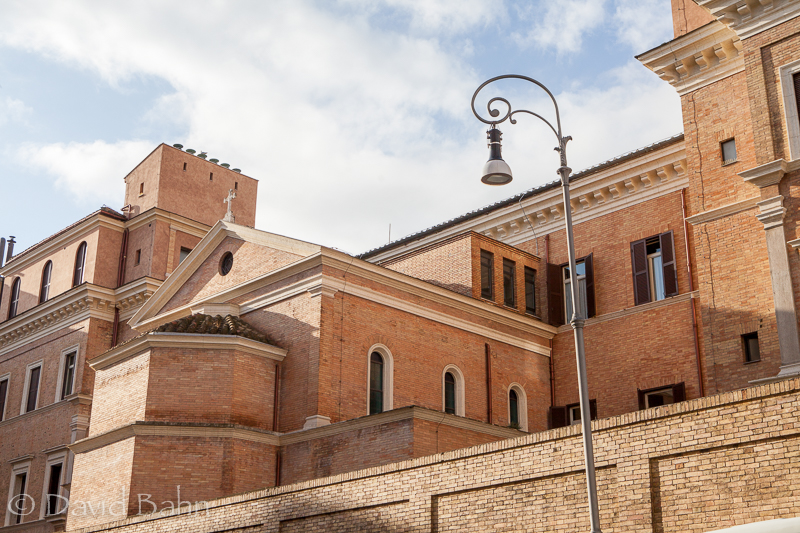
    I'm not certain why I like this photo, but it seems to say something about the glory of man. (Rome, 2014)
    I’m not certain why I like this photo, but it seems to say something about the glory of man. (Rome, 2014)

    Job’s description of the glory days is instructive: he helped the poor, stood up for the cause of the oppressed, cared for the widows, actively relieving the distress of the lame, weak and needy (see the rest of the chapter below). As I read this (even though I know the whole story) my heart goes out to Job. He yearns for the ability to be a blessing – though in his pain and trials he is unable to do so.

    Job’s problem, we will learn, is that he and God just wasn’t enough. To be favored to be a son of God is high favor. To know God and be known by him is a rich blessing. But that is seldom enough for us. A closer look at Job’s lament reveals a sinister delight that arises from a corrupted heart. He was seen by others in his goodness and acts of righteousness. People honored him. Young men rose when he came in the room. Old men gave him their attention. He cut a wide swath and was known, publicly recognized, and honored because of all the good he did.

    This is where I must confess my Job-likeness. All too deeply I want to be recognized, honored, known, and appreciated. It’s not something I’m proud of, but it is true. Sometimes I am so crippled by that desire that I must retreat into the inner sanctum of God’s grace and mercy, in repentance and humility before him, praying for God’s help and salvation.

    Truth is: life is not all about me, or Job, or you, dear reader. Somehow we must all reorient our understanding of our own identity, purpose, needs, and calling. Jesus himself taught this:

    [Jesus says,] “Beware of practicing your righteousness before other people in order to be seen by them, for then you will have no reward from your Father who is in heaven.“Thus, when you give to the needy, sound no trumpet before you, as the hypocrites do in the synagogues and in the streets, that they may be praised by others. Truly, I say to you, they have received their reward. But when you give to the needy, do not let your left hand know what your right hand is doing, so that your giving may be in secret. And your Father who sees in secret will reward you.“And when you pray, you must not be like the hypocrites. For they love to stand and pray in the synagogues and at the street corners, that they may be seen by others. Truly, I say to you, they have received their reward. But when you pray, go into your room and shut the door and pray to your Father who is in secret. And your Father who sees in secret will reward you. (Matthew 6:2-6)

    Job will learn this lesson in the stunning un-doing conversation with God himself (cf. Job 38:1-40:2). I need to learn that as well, and embrace the deeply freeing truth that it is enough to be known, loved, redeemed, forgiven and saved by God is enough: God and me is enough. Perhaps I will also learn that the glory days are not past, but before us.

    Job 29:5b-25

        when my children were all around me,
    when my steps were washed with butter,
        and the rock poured out for me streams of oil!
    When I went out to the gate of the city,
        when I prepared my seat in the square,
    the young men saw me and withdrew,
        and the aged rose and stood;
    the princes refrained from talking
        and laid their hand on their mouth;
    10 the voice of the nobles was hushed,
        and their tongue stuck to the roof of their mouth.
    11 When the ear heard, it called me blessed,
        and when the eye saw, it approved,
    12 because I delivered the poor who cried for help,
        and the fatherless who had none to help him.
    13 The blessing of him who was about to perish came upon me,
        and I caused the widow’s heart to sing for joy.
    14 I put on righteousness, and it clothed me;
        my justice was like a robe and a turban.
    15 I was eyes to the blind
        and feet to the lame.
    16 I was a father to the needy,
        and I searched out the cause of him whom I did not know.
    17 I broke the fangs of the unrighteous
        and made him drop his prey from his teeth.
    18 Then I thought, ‘I shall die in my nest,
        and I shall multiply my days as the sand,
    19 my roots spread out to the waters,
        with the dew all night on my branches,
    20 my glory fresh with me,
        and my bow ever new in my hand.’

    21 “Men listened to me and waited
        and kept silence for my counsel.
    22 After I spoke they did not speak again,
        and my word dropped upon them.
    23 They waited for me as for the rain,
        and they opened their mouths as for the spring rain.
    24 I smiled on them when they had no confidence,
        and the light of my face they did not cast down.
    25 I chose their way and sat as chief,
        and I lived like a king among his troops,
        like one who comforts mourners.
  • John 10:11-19

    I am the good shepherd. The good shepherd lays down his life for the sheep. 12 He who is a hired hand and not a shepherd, who does not own the sheep, sees the wolf coming and leaves the sheep and flees, and the wolf snatches them and scatters them. 13 He flees because he is a hired hand and cares nothing for the sheep. 14 I am the good shepherd. I know my own and my own know me, 15 just as the Father knows me and I know the Father; and I lay down my life for the sheep. 16 And I have other sheep that are not of this fold. I must bring them also, and they will listen to my voice. So there will be one flock, one shepherd. 17 For this reason the Father loves me, because I lay down my life that I may take it up again. 18 No one takes it from me, but I lay it down of my own accord. I have authority to lay it down, and I have authority to take it up again. This charge I have received from my Father.”

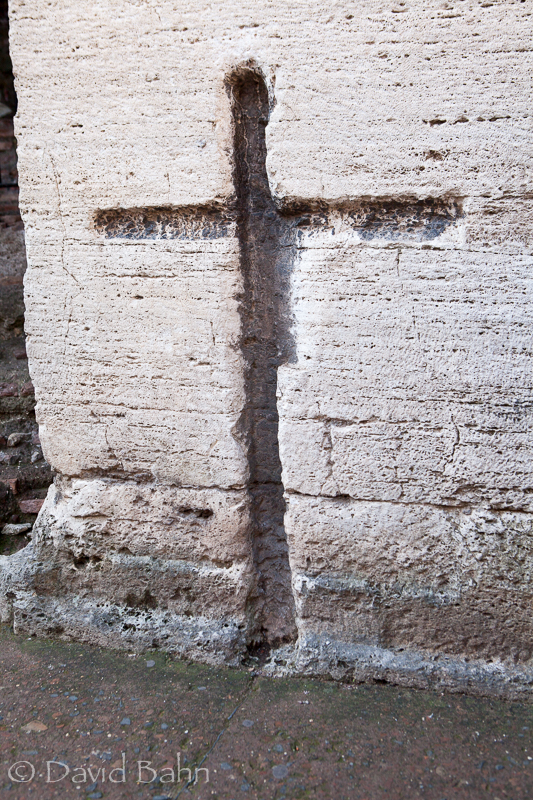
    20141109-6564

    I had a very interesting experience on a large (100,000 acre) ranch in Wyoming in the spring of 1978. The day included “cutting” and branding calfs, watching sheep being sheered, and meeting a real shepherd, and watching sheep being herded. The day left me exhausted, sore, and enriched in many ways. The sheering process was accomplished remarkably quickly with large bundles of wool gathered from each sheep. The cutting and branding less apparently painful than you might imagine. The shepherd was quite a different kind of fellow – living alone out on the range with the comforts that only a conestoga wagon could afford.

    But the herding of the sheep was most interesting to me. Getting the sheep to go in one direction was not difficult. Getting them to the specific location they needed to go (so they could be sheered) was easily accomplished. The challenge proved to be getting the sheep to go inside a barn to protect them from a coming storm (and to keep their wooly fleeces dry in anticipation of the sheering that would happen later that day.

    The sheep ended up at the doorway of the barn that was in the inside corner of two wings of the barn that formed an “L”. The door was in the center of the corner. Sides of the barn formed a right angle. We were behind the sheep trying to get them to go in. But the barn was dark, and the flock refused to enter the door.

    They told me that once one of the sheep entered the barn the whole flock would go in. But no sheep was going in so I took it upon myself to go and try to drag, push, or otherwise “encourage” a sheep to go into the barn. I was immediately and strongly warned away from my foolish attempt. I soon discovered why. Finally one of the sheep went into the barn and within 15 seconds the whole flock of 100 sheep were inside the barn. Had I been in that doorway I would have been trampled by 100 sheep!

    Many lessons may be taken from my experience, least of which the idea of being one of Jesus’ sheep is not necessarily a complement. Sheep are dumb! They are vulnerable, ignorant, dangerous, and easily led astray.

    But one lesson is comforting here. A good shepherd takes good care of his sheep. Whatever else we may know about sheep and shepherding, it is good to remember that Jesus is the good shepherd, who loves his sheep, cares for his sheep, dies for his sheep (but not foolishly, for he takes his life back up again after defeating the greatest enemy we sheep have), and calls his sheep to follow him. I wonder if he ever marvels at how apt his own analogy truly is!

  • Luke 24:44

    Then he said to them, “These are my words that I spoke to you while I was still with you, that everything written about me in the Law of Moses and the Prophets and the Psalms must be fulfilled.”

    20150211-6955

    If the current trajectory of godlessness, immorality, and indecency continues unchanged the future of the Christian Church in the USA looks precarious at best. That is not to say that the Christian Church will ever cease to exist; Jesus promise that he would build his church, and that the gates of hell would not prevail against it (Matthew 16:18). But that is to say the world in which the church will continue to exist will certainly be much more hostile tomorrow than today.

    We face uncertainties on the political scene, middle-east unrest, questions about the future of traditional understandings of human sexuality, marriage, and religious freedom itself. The world is a cauldron of uncertainty and noxious anxiety-producing unrest. Perhaps you think this is overly dramatic. But Isis, Israeli-Iranian-Palestinian relationships testify to the dangers before us. And if not us, our children and grandchildren.

    Perhaps the international realities were not as well-known by the disciples who met Jesus on that first Easter. But their personal future was certainly in turmoil. When Jesus joined them to point them to a better hope and future. They were confused, distressed, and deeply disappointed, and all seemed lost. But what they saw as defeat and distress was actually God at work.

    They would need some convincing even in the face of Jesus’ resurrection appearance. He provides that in part by eating a bit of fish in their presence (he is no apparition or ghost). But the greater convincing comes when Jesus opens the scripture to their minds and hearts. He makes the clear point that this was God’s plan, and that it is still unfolding.

    If we think we are in uncertain times, here is a reminder of God’s faithfulness and love. In him we have hope and a future. So now we wait for his plan to unfold. We hope in his faithful goodness. We trust his promises.

    As you face the future where especially is God calling you: Waiting; Hoping; or Trusting? In any case God has a plan of which he invites us to be a part.

    Luke 24:36-49

    As they were talking about these things, Jesus himself stood among them, and said to them, “Peace to you!” 37 But they were startled and frightened and thought they saw a spirit. 38 And he said to them, “Why are you troubled, and why do doubts arise in your hearts? 39 See my hands and my feet, that it is I myself. Touch me, and see. For a spirit does not have flesh and bones as you see that I have.” 40 And when he had said this, he showed them his hands and his feet. 41 And while they still disbelieved for joy and were marveling, he said to them, “Have you anything here to eat?” 42 They gave him a piece of broiled fish, 43 and he took it and ate before them.

    44 Then he said to them, “These are my words that I spoke to you while I was still with you, that everything written about me in the Law of Moses and the Prophets and the Psalms must be fulfilled.” 45 Then he opened their minds to understand the Scriptures,46 and said to them, “Thus it is written, that the Christ should suffer and on the third day rise from the dead, 47 and that repentance and forgiveness of sins should be proclaimed in his name to all nations, beginning from Jerusalem. 48 You are witnesses of these things.49 And behold, I am sending the promise of my Father upon you. But stay in the city until you are clothed with power from on high.”

  • Acts 2:42-27

    And they devoted themselves to the apostles’ teaching and the fellowship, to the breaking of bread and the prayers. 43 And awe came upon every soul, and many wonders and signs were being done through the apostles. 44 And all who believed were together and had all things in common. 45 And they were selling their possessions and belongings and distributing the proceeds to all, as any had need. 46 And day by day,attending the temple together and breaking bread in their homes, they received their food with glad and generous hearts, 47 praising God and having favor with all the people. And the Lord added to their number day by day those who were being saved.

    A few of the family of God from among the elders and staff of St. John Lutheran Church
    A few of the family of God from among the elders and staff of St. John Lutheran Church

    The earliest description of the life of new believers paints an idyllic picture. The new believers’ lives are marked by peace, harmony, focus, generosity, dedication, faithfulness, and humility. There is a sense of awe as they see remarkable displays of God’s power mediated through the apostles. But Luke’s description here ends with a telling comment; God is not content with only their faithfulness, but desires that others experience his grace and the fellowship of the saved. He will continue to add to the fellowship of the saved day by day. That’s good for you and me…and for those yet to believe in Jesus.

    The rest of the book of Acts is testimony to God’s desire for more and more people to embrace this Good News of Jesus Christ’s death and resurrection, and the invitation into the family of God. Notice how the description Luke offers is not merely an idyllic picture of the best church ever, it is truly a picture of the best family gathering you can imagine. People sharing their possessions, breaking bread in their homes, enjoying food together: this sounds like a wonderful Thanksgiving gathering.

    Luke will record how the disciples of Jesus are active with Paul and his missionary band in support and encouragement of God’s mission. But after the book of Acts is written, the word disciple is not found in the rest of the New Testament. What Luke describes here (an extended family) becomes the building blocks of the New Testament Church. Families gather – large and extended families, together with others who are now part of God’s family – and God keeps adding to the family.

    There is only one way this can happen in our modern day world. That is for people to re-prioritize their lives to make room for the extended family members who are part of God’s family, and do life together. Building relationships with those who are part of the family of God, and seeking to live out those relationships day by day. This is a huge challenge! But the blessings of being part of God’s family and actually living that out are many. It is also literally the best seat in the house to watch God at work.

  • Acts 2:36-41

    Let all the house of Israel therefore know for certain that God has made him both Lord and Christ, this Jesus whom you crucified.”

    37 Now when they heard this they were cut to the heart, and said to Peter and the rest of the apostles, “Brothers, what shall we do?” 38 And Peter said to them, “Repent and be baptized every one of you in the name of Jesus Christ for the forgiveness of your sins, and you will receive the gift of the Holy Spirit. 39 For the promise is for you and for your children and for all who are far off, everyone whom the Lord our God calls to himself.”40 And with many other words he bore witness and continued to exhort them, saying,“Save yourselves from this crooked generation.” 41 So those who received his word were baptized, and there were added that day about three thousand souls.

    20150211-6931

    I’m not certain I need to be cut to the heart, but I am certain that it is not a common experience for me. Of course we did not crucify Jesus, as had those people gathered there. Nor have we accused those who are God’s messengers of being filled with new wine; some had done that as well.

    But an honest self assessment will yield plenty of reasons to stand with these people and acknowledge a deep need for God’s mercy. The most wonderful part of this is that when we do acknowledge our need, God pours out his grace in abundance: forgiveness, the gift of the Holy Spirit, a sure promise for you and your children. What a blessing awaits those who acknowledge their need for God’s forgiveness and believe his promise of grace in Jesus.

  • Acts 2:9-12

    Parthians and Medes and Elamites and residents of Mesopotamia, Judea and Cappadocia, Pontus and Asia, 10 Phrygia and Pamphylia, Egypt and the parts of Libya belonging to Cyrene, and visitors from Rome,11 both Jews and proselytes, Cretans and Arabians—we hear them telling in our own tongues the mighty works of God.” 12 And all were amazed and perplexed, saying to one another, “What does this mean?” 13 But others mocking said, “They are filled with new wine.”

    "Rejoice and be glad!"
    “Rejoice and be glad!”

    No one I know well likes to be ridiculed. Denials about the power of words to hurt us (“sticks and stones…”) testify to the need to insulate ourselves from others’ unkindness and hurtful verbiage. So when I read Edwin Friedman’s assertion to the effect that leaders must hear criticism as applause, I struggled to embrace that idea fully. That I could understand that others’ ill will and desire for my failure to be a sign of success is a difficult idea to embrace emotionally.

    Jesus had prepared his disciples for such derision. He warned them, “If they persecuted me, they will also persecute you” (John 15:20). He also promised blessing to those who are persecuted for righteousness’ sake (Matthew 5:10-12), So on this occasion, when the disciples are accused of being “filled with new wine,” Peter will not let that dismissal stand. He will dismiss this distraction and provide the true explanation for what is happening as all these people were hearing the Good News in their own languages. Never mind that the accusation makes no sense at all. He realizes that God is up to something good, and desires that the people embrace it.

    Not all ridicule is reason for rejoicing. Sometimes it is cause for deep personal self-assessment: Am I wrong here? Have I misstated what I wanted to convey? Do I need to repent? After all, Jesus’ first message was a call to repent and believe the Good News (Mark 1:15). A hallmark of Christian character is that of humility.

    Ridicule in the face of righteousness, however, is evidence of the fact that righteousness is making an impact in someone’s life. That someone may not want to conform to a life of righteousness, godliness, humility and faith. He or she may not understand fully what is at stake or even the basic concept of truth and grace that is the foundation of righteousness.

    There is no need to stir every hornets nest in order to experience ridicule or persecution; that is nothing but contentiousness. Neither ought we, however, to cower and be distressed when even our best ideas are met with skepticism or contempt. It may not feel like applause, but the devil’s hatred is sure evidence of God’s work in and through us. And that’s cause for great joy. That’s what Jesus said: ““Blessed are you when others revile you and persecute you and utter all kinds of evil against you falsely on my account. Rejoice and be glad, for your reward is great in heaven” (Matthew 5:11-12).

  • Acts 2:1-8

    When the day of Pentecost arrived, they were all together in one place. And suddenly there came from heaven a sound like a mighty rushing wind, and it filled the entire house where they were sitting. And divided tongues as of fire appeared to them and rested[a] on each one of them. And they were all filled with the Holy Spirit and began to speak in other tongues as the Spirit gave them utterance.

    Now there were dwelling in Jerusalem Jews, devout men from every nation under heaven. And at this sound the multitude came together, and they were bewildered, because each one was hearing them speak in his own language. And they were amazed and astonished, saying, “Are not all these who are speaking Galileans? And how is it that we hear, each of us in his own native language?

    A common scene in rural Kenya: people buying and selling charcoal, produce, and other commodities
    A common scene in rural Kenya: people buying and selling charcoal, produce, and other commodities

    I love to ask questions, and have sought to hone that skill. Good questions can engage us; they set the frame of the discussion, and can serve to challenge our preconceived notions, presumptuous ideas, and untested beliefs. I believe those are good things to challenge. Good questions can also bring needed information, help in our understanding, and give us insight into deeper truths.

    In the case of the outpouring of the Holy Spirit on Pentecost, the questions of the multitude show that they realize something important was happening, and that they wanted to know more. Two questions work in tandem. The thought is: these are Galileans. They don’t know all these languages we are hearing. What is going on here? How is this seeming contradiction to be explained.

    As the events unfold, we learn that God has poured out the Holy Spirit as he had promised through the prophet Joel. God was continuing his work begun in Jesus of Nazareth, crucified and buried, but now raised from the dead and ascended into heaven. A time of great importance was unfolding before their eyes. God was at work; that was the simple answer to these peoples’ questions.

    An important question for us, however, was not asked and begs for us to engage it: Why is this happening? Not only what is God up to, but why is it unfolding this way?

    God wants to get our attention. He wants to speak into our hearts. He is calling us to repentance and faith. He delights in restoring people to a right relationship to himself. He desires to reign in our hearts by faith. He will do remarkable things to make that happen.

    Is God seeking to get your attention today? Is your heart open to his word? Will you repent and believe the Good News of Jesus? Will you embrace those questions embrace today?

  • Acts 1:12-14

    Then they returned to Jerusalem from the mount called Olivet, which is near Jerusalem, a Sabbath day’s journey away. 13 And when they had entered, they went up to the upper room, where they were staying, Peter and John and James and Andrew, Philip and Thomas, Bartholomew and Matthew, James the son of Alphaeus and Simonthe Zealot and Judas the son of James. 14 All these with one accord were devoting themselves to prayer, together with the women and Mary the mother of Jesus, and his brothers.

    A church building in Kenya is used by the cows for shelter during the week. Note the wooden benches and crude lectern.
    A church building in Kenya is used by the cows for shelter during the week. Note the wooden benches and crude lectern.

    What shall we do in the face of the recent outcry against Indiana’s Religious Freedom Restoration Act by the likes of Apple and Angie’s List, the Huffington Post, and many others, coupled with recent cultural events such as the mass gay wedding in Miami, gay rights parades, and other cultural earthquakes? Certainly the shut-down by gay-rights advocates of the Indiana Pizzeria because of their unwillingness to cater a gay wedding was offset by the incredible groundswell of support (including a nearly $900,000 fund-raising effort) for that business. While the fund-raising effort was both successful and effective in blunting the pizzeria’s shutdown, the story is not finished. Nor is this one case the whole story.

    It is noteworthy that as the early church disciples waited in Jerusalem (at Jesus’ command to be sure), they prayed. Actually, they devoted themselves to prayer. Two things come to my mind in regard to their actions. First, of course, is their example. Whether theirs was like a Brooklyn Tabernacle prayer meeting, or a Sunday worship time of prayer, or something entirely different, the fact is their faith life at that time was described as being devoted to prayer.

    As I observe the cultural landscape today, it appears that we are in the midst of a massive earthquake. This is true not only in terms of political hot-button issues like religious freedom laws, but cultural norms, racial tensions, international worries, and ethical questions of all kinds. The ability to call any behavior a sin – especially in the realm of sexual behaviors – is challenged by the new moral imperative, “Judge not, lest you be judged.” Never mind that we may say we hate the sin, but love the sinner; it’s not OK to call a sin by its name any more – at least in the context of our post-modern culture.

    I wish I had a clearer sense of what to do in the face of this upheaval. I would be “preaching to the choir” in the context of the church I serve if I were to speak out in favor of religious freedoms. But we can pray. And we can wait until the dust settles over this moral/cultural/social landscape, and when there are no answers, we can offer what is needed most in post-earthquake contexts. We can offer compassionate love, safe shelter, and a very old and reliable moral compass. Until the earthquake is over, however, we must simply pray. Lord, have mercy upon us all!

  • Acts 1:6-11

    So when they had come together, they asked him, “Lord, will you at this time restore the kingdom to Israel?” He said to them, “It is not for you to know times or seasons that the Father has fixed by his own authority. But you will receive power when the Holy Spirit has come upon you, and you will be my witnesses in Jerusalem and in all Judea and Samaria, and to the end of the earth.” And when he had said these things, as they were looking on, he was lifted up, and a cloud took him out of their sight. 10 And while they were gazing into heaven as he went, behold, two men stood by them in white robes,11 and said, “Men of Galilee, why do you stand looking into heaven? This Jesus, who was taken up from you into heaven, will come in the same way as you saw him go into heaven.”

    Kenyan Church building that was built by Italian POW's during WWII
    Kenyan Church building that was built by Italian POW’s during WWII

    This passage is one of my favorites because of the question asked by the angels on the occasion of Jesus’ resurrection. The apostles stand gawking at the clouds into which Jesus has ascended. The angels ask, “Why do you stand looking into heaven?” Of course they don’t give these men of Galilee an opportunity to answer their question, but had they, and had I been there, I could have answered them easily. “Because we’ve never seen anything like this before in our lives; this is truly amazing, incredible, really something.”

    Jesus had been with them for 3 years. He had performed miracles, taught them about the kingdom of God, given them authority over demons, and done life with them for some time. He had also been arrested, tried, sentenced to death and been crucified. Then three days later – true to his word – he had been raised from the dead. He had shown them many proofs of his resurrection, and given them the Great Commission. Those last events having taken place over a period of less than two months. Now he was rising into the sky, taken up into the clouds, removed from their sight. My head is spinning even writing about it today – and I wasn’t even there!

    But what was unusual, odd, and remarkably difficult to understand for these men was a return to normalcy in the eyes of the angels. They had spent the past 33 years looking into the realm of space and time on earth with amazement and confusion. The King of the Universe had taken on human flesh, lived a humble life among sinful men and women. The One through whom the creation came into being hung on a cross and died. From their perspective the world was upside down. With Jesus’ ascension it was right side up again.

    Because of Jesus’ life, death, resurrection, and ascension to the right hand of the Father the world and all of creation – the whole universe is right side up again. From our perspective Jesus has won our salvation, shown what true faith is (none of us have faith so pure and true; that’s why we have a Savior by the way), and now reigns above all, even interceding for us before the throne of God’s grace.

    It may not seem so today; so many things are running amuck in the world around us. But all’s right when Christ reigns in our hearts by faith (faltering as it may be). We have a Savior. He has done what we could not do. He will come again at the end of time and take those who are his own to be with him in eternal glory, bliss, beauty, and joy. The tomb is empty and Jesus reigns. Whatever we must face between now and the time of his return will certainly be put right – even as he was vindicated by his resurrection and exalted by his ascension. In the mean time our calling is to represent Christ to the world which desperately needs to see the reality and blessedness of his reign.

  • Luke 24:36-43

    As they were talking about these things, Jesus himself stood among them, and said to them, “Peace to you!” 37 But they were startled and frightened and thought they saw a spirit. 38 And he said to them, “Why are you troubled, and why do doubts arise in your hearts? 39 See my hands and my feet, that it is I myself. Touch me, and see. For a spirit does not have flesh and bones as you see that I have.” 40 And when he had said this, he showed them his hands and his feet. 41 And while they still disbelieved for joy and were marveling, he said to them, “Have you anything here to eat?” 42 They gave him a piece of broiled fish, 43 and he took it and ate before them.

    On the road to Kilgoris -a Landscape from Kenya
    On the road to Kilgoris -a Landscape from Kenya

    One of my favorite movies is Independence Day. I watch it every year on July 4; it’s a tradition with me. In that movie, Randy Quaid’s character, Russell Case says, “I’ve been sayin’ it. I’ve been sayin’ it for ten … years. Ain’t I been sayin’ it, Miguel? Yeah, I’ve been sayin’ it.” This happens when Case is vindicated about having been abducted by aliens 10 years earlier. Vindicated, now he is making his point about having been right all these years, but no one believed him. I get that.

    But not Jesus; when he greets his disciples with a word of kindness, “Peace to you!” Jesus has a message to convey, but it’s not combative or petty. If Jesus spoke Aramaic his greeting would be similar to the Hebrew, “Shalom!.” It is like that but so much more. “Shalom” is a powerful word, rich in meaning, and filled with good will, conveying a desire for wholeness, favor, and blessing. It can be used simply as a greeting, so that it is like an Aggie saying, “Howdy!” or a New Yorker saying, “How ya doin’!

    But context is everything. Jesus was dead, but is now alive. These people had hoped so much in him, but their hopes – so they thought – were so dead. Jesus had won their salvation. All was right with God. All that was needed – and still all that is needed today – is faith. In this case, Jesus’ greeting, “Peace to you!” was an invitation to faith. It requires nothing from them or us, except that we believe. Through faith that peace becomes ours.

    Perhaps there is a place in your life where that greeting of peace would be most welcome. Maybe you know where you need the peace of God most fully. Truth be told we all need that peace somewhere. And here Jesus is, offering it to us in a word. I hope to let that wash over me today in a rich and refreshing way. How about you?