In 1968 Jerry Snell opened a door in the hallway outside our first hour chemistry class. He invited me into what I discovered was a darkroom. Soon I was on the school newspaper and annual staff as a photographer. Later I learned that Jerry was a Lutheran who was planning to become a pastor. A few years later I was not only a Lutheran, but I was heading off to seminary to become a Lutheran pastor, too. Jerry followed a year later and served as a pastor in Missouri until his untimely heart attack and death. I thank God for Jerry and enjoy photography still today – not to mention rejoicing in having served as a Lutheran pastor in congregations in Utah, Colorado, Arkansas and Texas. I’ve retired now and serve part time as a Congregational Support Specialist for the Texas District of the LCMS. I also provide coaching and leadership training through various PLI cohorts and with individual congregations and organizations.
David Bahn is a follower of Jesus Christ, husband to Diane, father and grandfather. He is an avid amateur photographer. His photo website is “Flowers by God Photos by David” He also publishes a devotional blog DavidBahn-Reflections.com.
He and Diane live in Cypress Texas and enjoy visiting their grandchildren who live in the United States and Germany.
He graduated from Concordia Theological Seminary in 1979, and earned a Doctor of Ministry degree from Fuller Theological Seminary in 1991.
Diane, his wife, is now retired from PLI (PLIleadership.org). They have offered presentations on Marriage and Ministry Partnership, Leadership, Changing Your Congregation’s Culture, and Missional Living. They look are working with PLI International training pastors and wives of the ELVD Diocese of the Lutheran Church of Tanzania.
David’s personal mission statement is “Leading people to realize Jesus’ calling and plans for their lives.”
A son honors his father. If then I am a father, where is the honor due me? says the Lord.
Philippians 2:11
Every tongue should confess that Jesus Christ is Lord, to the glory of God the Father.
A proud papa moment for me as my son, a newly-commissioned US Navy ensign receives his first salute (part of the formal commissioning ceremony) from his younger US Army brother.
They say that my sons look just like me. Whether or not that’s good or bad, I am happy to claim them as mine, and I hope they are proud of their dad. Certainly we each have our flaws, but as followers of Jesus Christ and men who bear the same last name, we have a bond that is not unimportant. My father gave me the last name and a strong sense of integrity and Christian ethos. I could have rejected his name and values, and denied my identity as his son. But I did not. Rather I took those and shaped them in my own unique way. I believe my sons are doing the same.
Such it is for all of us with regard to our heavenly Father. He gives us his name in baptism, “Father, Son, and Holy Spirit.” He calls us to follow his Son and even to bear Jesus’ name as key to our identity. As sons and daughters of the heavenly Father we express our identity in obedience to his commandments and alignment with his will. But this is key: we do not gain our identity by obedience and alignment. We gain our identity as a gift of God. We embrace that and express it by faithful obedience. We honor our heavenly Father whenever we believe his word, follow his Son, and declare his glory to the world.
Do not withhold good from those to whom
it is due, when it is in your power to do it.
Luke3:11
John the Baptist said, “Whoever has two coats must share with anyone who has none; and whoever has food must do likewise.”
Whenever Christmas rolls around (yes, I know, it’s 6 months away!), there appears a plethera of opportunities to do good. From Salvation Army Red Kettle drives, to Feed the Children, to Toys for Tots, to any number of local social agency drives (CAM, Helping Hands, Teen Life Center, just to name a few), opportunities to do good abound. Peoples’ purse strings and hearts open up. Blessings and charity abound together with the opportunities.
These verses, however, suggest that such an open purse-string and open-heart policy ought to be in play constantly; we are to do good when it is in our power, not just when we see touching human-interest stories, or bell-ringers at the local Walmart.
Paul says in 2 Corinthians 9 that we will be made rich so that we may be generous on every occasion, with the ultimate result that God is praised. That adds one more facet to our do-gooding: we are to do it so that God receives the credit and the praise. That’s quite a challenge. But it is also alway appropriate to honor God, for he is the original good-doer. When it was within Jesus’ power to forego doing good, he took the cross, and brought the fullness of God’s grace to bear on us for our eternal well-being.
I am astonished that you are so quickly deserting him who called you in the grace of Christ and are turning to a different gospel—7 not that there is another one, but there are some who trouble you and want to distort the gospel of Christ.8 But even if we or an angel from heaven should preach to you a gospel contrary to the one we preached to you,let him be accursed.9 As we have said before, so now I say again: If anyone is preaching to you a gospel contrary to the one you received, let him be accursed.
10 For am I now seeking the approval of man, or of God? Or am I trying to please man? If I were still trying to please man, I would not be a servant of Christ.
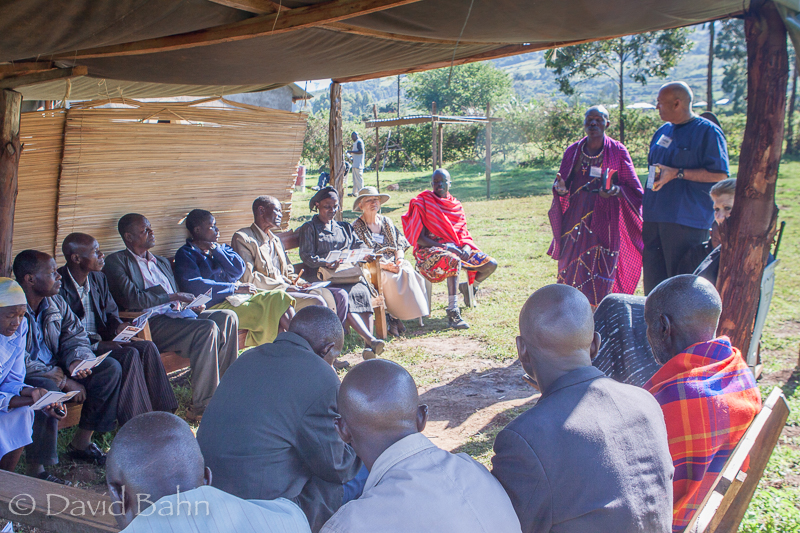
I had the privilege of sharing the Good News of Jesus Christ at our vision clinic in Kenya. During the week we shared the gospel with more than 1000 people, using an “Evangecube” which offers an overview of the gospel story through pictures on an unfolding cube: simple but profoundly true. Following the group presentation, each person was also seen individually for a “second touch” and opportunity to hear the message of Jesus one-on-one.
There are only two religions in the world: God’s religion, and man’s religion. God has revealed himself, the truth about our origin and the world’s beginning, the sad story of man’s fall, and the glorious story of God’s redemption through the death and resurrection of Jesus Christ. Jesus’ death, resurrection, ascension to the right hand of the Father, and the hope of his glorious return are at the center of the gospel that Paul preached. Through Jesus Christ we have life and salvation.
Through faith in Jesus Christ, trusting in his atoning death and repenting from our sins, we are saved. Anything that would undercut that truth is opposed to God’s religion. Any way that we would add to God’s religion makes it man’s religion. Mans’ religion will never save us; only Jesus can do that. For that reason, Paul calls the Galatian Christians back to the gospel they had forsaken, and anathematizes those who would teach something other than God’s religion.
When we lived in Utah, we encountered a different gospel, contrary to that which centered in Jesus Christ. Despite their insistence that the name of Jesus is part of their church name, the Mormons actually center their faith in a man, Joseph Smith. Through an angel, Joseph is reportedly to have heard a new revelation that would establish the church anew. Such a preacher is to be accursed.
There are plenty of ways in which the church today is corrupted, ineffectual, erring, and in need of reform. There are plenty of preachers who don’t get it right when it comes to the finer points of the faith. But those who center their faith and teaching in Jesus Christ, and return to that center again and again, offer the true gospel that is our only hope. We don’t need new revelations or additional rituals. We need a Savior. Thank God we have one. His name is Jesus, and he has saved us from eternal anathema. I don’t want to forsake that Good News!
Paul, an apostle—not from men nor through man, but through Jesus Christ and God the Father, who raised him from the dead—2 and all the brothers who are with me,
To the churches of Galatia:
3 Grace to you and peace from God our Father and the Lord Jesus Christ,4 who gave himself for our sins to deliver us from the present evil age, according to the will of our God and Father,5 to whom be the glory forever and ever. Amen.
In the Lord’s Prayer, Jesus teaches us to pray, “Deliver us from evil.” Sometimes such a prayer is easily said. Recent flooding here has placed many people in dire circumstances – some life-threatening. As the waters rise it’s easy to say, “deliver us from evil!” Terror and violence in the streets of major US cities and around the world are clear manifestations of evil.
But when life is going well, or when some desire lays hold of our soul, it is challenging to identify the evil from which we are to be delivered. Or if we do identify it, it is difficult to pray, “deliver us…” with great sincerity.
Paul’s salutation – a common beginning for each of his letters – lays out what he will deal with in this letter to the church in Galatia. He will defend his apostolic calling, point the people to God’s grace in Jesus Christ, and help them to identify the evil from which Christ has delivered them.
Perhaps you are feeling the tug of evil in your life…pulling you into the toxic atmosphere of Satan’s wiles. Maybe you see evil writ large right before your eyes on your way to work or on television or in Hollywood’s offerings. Likely, however, the deception of Satan is difficult fully to perceive. He is the father of the lie, and the deceiver after all.
Jesus Christ has delivered us from the present evil age through the forgiveness of our sins. It’s not only the sins of others, or Satan’s evil intent from which we have been delivered. As soon as we are able to identify our sins for what they are, confess them, and lay them at the cross, we will begin to experience the fullness of Jesus’ deliverance. Then we will delight in Christ’s deliverance and give God the glory that is rightfully his.
So if there is any encouragement in Christ, any comfort from love, any participation in the Spirit, any affection and sympathy,2 complete my joy by being of the same mind, having the same love, being in full accord and of one mind.3 Do nothing from selfish ambition or conceit, but in humility count others more significant than yourselves.4 Let each of you look not only to his own interests, but also to the interests of others.5 Have this mind among yourselves, which is yours in Christ Jesus,6 who, though he was in the form of God, did not count equality with God a thing to be grasped,7 but emptied himself, by taking the form of a servant, being born in the likeness of men.8 And being found in human form, he humbled himself by becoming obedient to the point of death, even death on a cross.9 Therefore God has highly exalted him and bestowed on him the name that is above every name,10 so that at the name of Jesus every knee should bow, in heaven and on earth and under the earth,11 and every tongue confess that Jesus Christ is Lord, to the glory of God the Father.
Street Scene in Kenya
I recently read a blog post by Ed Stetzer describing the challenges he faced as he “led a church of 35 senior adults during a brief stint teaching at a seminary.” They had expressed a desire to reach younger people and he set about helping them to do that. He writes:
They wanted to love their neighbors and engage the community around them. And that all-white congregation got out from behind their church walls and began effectively reaching their multi-cultural, lower-middle to poor working-class neighborhood.
The church grew from 35 to 175 under his leadership. He describes the end of his experience this way:
On my last day at the church, Harold, the over 80-year-old deacon chairman poked me in the chest, and said, “Preacher, I still don’t like the music. And the kids are breaking everything.”
And he was right. The more activity you have in a church, the more likely things are going to be broken.
Any disconnected church that seeks to reengage with their community will find the experience to be messy. There may be mud on the carpet, smudges on the walls, dirty bathrooms, or broken vases.
The way of church life to which your people had grown accustomed will suddenly change.
So there we were, Harold with his finger in my chest and me looking at him trying to figure out this confrontation. Still making eye contact, he teared up and said, “I still don’t like the music, and the kids are breaking everything, but it was worth it all.”
Perhaps this will help me the next time I am confronted with the confused and distressed elderly woman who recently cornered me about the goings-on at her church. It seems that they had opened their church building up to an ethnic ministry and the challenges and disappointments significantly out-weighed the benefits or successes they were experiencing in the process. She was hurt and angry at how the church had (not) been cared for, and how the group that was using the building had no respect for them.
Sadly, this seemed also to prove to be a launching pad for yet another diatribe against some more unusual manifestations of Lutheran churches which, seeking to reach new people, looked nothing like what she had experienced over the years. She said, “You used to be able to go to any Lutheran Church and it was the same order of worship, same Biblical texts, and same overall experience. It was part of the Lutheran experience that she had come to expect.
Churches that seek to reach into changing neighborhoods, or new demographics will often not look like the churches that have not been reaching those people and neighborhoods. Somehow we might expect that to be the case. But most of us – myself included – want to see things change for the better as we define it. And this is not true only of Lutheran people; the same would be true of any long-time denominationally-loyal people.
I am actually looking forward to a conversation with this woman who seems to seek me out when our social engagements lead us together. I think I’ll tell her this story, and then perhaps even challenge her with this thought. How difficult was it for Jesus to redeem us? What price did he put on our salvation? How far did he go? He calls us to follow him, not to bring him inside our churches to protect our sensibilities or even our church property.
OK, maybe that would be too challenging. Perhaps I’ll just start by telling the story of Harold and ask her if perhaps his attitude is worth having.
“But when the Helper comes, whom I will send to you from the Father, the Spirit of truth, who proceeds from the Father, he will bear witness about me.27 And you also will bear witness, because you have been with me from the beginning.
Painted Church ceiling near Schulenburg, Texas
When I first encountered the words his explanation to the third article of the Apostles Creed in Martin Luther’s Small Catechism, I was deeply touched. It is enough that God sent his Son to die for the sins of the world. But that would not be all that God would do. He would send his Holy Spirit to us so that we may “believe in Jesus Christ…and come to him” in faith. We could never do that on our own. The Bible teaches that clearly in 1 Corinthians 12:3: “…no one can say ‘Jesus is Lord’ without the Holy Spirit.” How gracious is our God!
Yet there is another aspect of the work of God’s Holy Spirit. We are emboldened to witness to Christ and spread his word also by the work of the Holy Spirit. I have overlooked this for some time – since it is such a blessing that the Holy Spirit brings us to faith, by which we are saved. But it is truly the work of the Holy Spirit to embolden our witness as well.
Jesus tells his disciples that they would testify about him once he sends the Holy Spirit. And so it goes…after a period of 50 days following Jesus’ resurrection, the Holy Spirit is poured out, and the witness to the Good News of Jesus is unleashed. While the apostles were singularly involved in this promise, we too need the Holy Spirit if we are to witness to Jesus Christ.
Thank God that he has called me to faith by the power of the Holy Spirit! Thank God also that the Holy Spirit has moved others to share the Good news with us today. Might you be one in whom the Holy Spirit works to testify to Jesus and through whom others are brought to faith? What a blessing that would be!
[Jesus] said to his disciples, “The harvest is plentiful, but the laborers are few;38 therefore pray earnestly to the Lord of the harvest to send out laborers into his harvest.”
Chartres Cathedral Stained Glass Window
In USA Today opinion piece, Ed Stelzer, executive director of LifeWay Research, offers a careful analysis of a recently-released Pew Research survey, saying:
A new Pew Research Center survey found the Christian share of the American population declined almost 8 percentage points from 2007 to 2014. Drawing from this point, many continued their breathless claims that the Christian sky is falling.
He notes, however, that
Rather than predict the impending doom of the church in America, this latest study affirms what many researchers have said before. Christianity isn’t collapsing; it’s being clarified. Churches aren’t emptying; rather, those who were Christian in name only are now categorically identifying their lack of Christian conviction and engagement.
The editorial is worth the read. Ed Stelzer is one of the bright lights on the Christian horizon of church research and assessment. And even though he does not say so in this piece, I suspect that he would agree with me that this is no time for complacency. Whatever else may be true about the growth or decline of the Christian church in America, we still face the impending encroachment of more and more secular thinking, the relentless onslaught of moral confusion and anti-religious bias. And frankly, the reports of this nature don’t paint the fullest picture.
I urgently desire the people gather for worship. We continue to see growth in worship attendance at St. John. Peoples’ lives are being changed. We’re actually beginning to see people who were truly outside the Christian faith begin to embrace the Christian walk, and repent and believe the Good News about Jesus. Adult baptisms are occurring with more frequency than they used to. But we have a long way to go. And there is a bigger story.
Just last week Diane and I drove around looking a new houses, and new developments in northwest Harris County. I was stunned to see as many new developments, andto learn about the existence of fully-built out developments of which I was not aware – all within 10 miles of our church. To some extent, we should be seeing growth just be having our doors open and a friendly face or two welcoming people when they come. That’s just on the basis of the number of people moving into our area alone.
I’m not convinced, however, that we’re keeping up. I believe that the rumors of the demise of the Christian church are greatly exaggerated. I also believe, however, that Jesus’ prayer example and command are more urgently needed now than ever before.
Lord of the living harvest, send laborers into your harvest fields. If those laborers include me, give me courage and boldness to go…whether around the world or around the block. Let your reign come into my heart, O God, and allow me the privilege of manifesting your reign in my world today. In Jesus’ name; Amen.
We came across this (now slightly edited) version of a Mother’s Day prayer. Written by a non-mom, it speaks volumes about how easy it is to overlook the various kinds of women who were in worship today. The full article may be found here. We pray that all women would be blessed by at least one of these prayers.
To those who gave birth this year to their first child—we celebrate with you
To those who are in the trenches with little ones every day and wear the badge of food stains – we appreciate you
To those who experienced loss through miscarriage, failed adoptions, or running away—we mourn with you
To those who walk the hard path of infertility, fraught with pokes, prods, tears, and disappointment – we walk with you. Forgive us when we say foolish things. We don’t mean to make this harder than it is.
To those who are foster moms, mentor moms, and spiritual momsith you
To those who have disappowe celebrate with you
To those who have disappowe celebrate with you
To those who have disappointment, heartache, and distance with your children – we sit with you
To those who lost their mothers this year – we grieve with you
To those who experienced abuse at the hands of your own mother – we pray for God’s healing grace
To those who lived through driving tests, medical tests, and the overall testing of motherhood – we are better for having you in our midst
To those who will have emptier nests in the upcoming year – we grieve and rejoice with you
To those who placed children up for adoption — we commend you for your selflessness and remember how you hold that child in your heart
To those who took the wrong path and live with the guilt of that tragic choice — we forgive you and pray that God will heal your heart
And to those who are pregnant with new life, both expected and surprising –we anticipate with you
This Mother’s Day, we walk with you. Mothering is not for the faint of heart. We have real warriors in our midst. We remember you.
As the Father has loved me, so have I loved you. Abide in my love.10 If you keep my commandments, you will abide in my love, just as I have kept my Father’s commandments and abide in his love.11 These things I have spoken to you, that my joy may be in you, and that your joy may be full.
12 “This is my commandment, that you love one another as I have loved you.13 Greater love has no one than this, that someone lay down his life for his friends.14 You are my friends if you do what I command you.15 No longer do I call you servants, for the servant does not know what his master is doing; but I have called you friends, for all that I have heard from my Father I have made known to you.16 You did not choose me, but I chose you and appointed you that you should go and bear fruit and that your fruit should abide, so that whatever you ask the Father in my name, he may give it to you.17 These things I command you, so that you will love one another.
“Love is a feeling you feel you’re gonna get when you feel like you’re gonna feel like you’ve never felt before.” That little bit of wisdom accurately describes what many people consider love to be: a feeling. But Jesus speaks of something that is far more than a feeling. His teaching here is about abiding in God’s love, loving one another, bearing fruit, and praying with confidence. These practices are not driven by feelings, but by intentional acts of the will, and a spiritual connection to the true vine (cf. John 15:1). They are also connected to Jesus’ commands (cf. v. 7).
Jesus’ intent (v. 7) is that his followers would see love for one another as the true north of their moral, spiritual, ethical, and religious compass. His intent is not to build a new religious expression or a different mode of worship. The love that Jesus describes is sacrificial to the point of death. His love moved him toward these men who had no inclination toward him. His love allowed their relationship to move from followers, to acquaintances, to friends. His love compelled them to love one another, to bear fruit, and to experience joy.
If we are to embrace Jesus’ teachings fully we will be led to an intentional attitude of compassion, care, sacrifice, and a God-honoring lifestyle that is not driven by feelings, but by the incredible love of God in which we abide. We will offer ourselves to one another as far, and deep, and wide, and long, as necessary with motives as high as heaven is above the earth.
I want to keep that in mind today – no matter how I might feel. How about you?
Now Peter and John were going up to the temple at the hour of prayer, the ninth hour. 2 And a man lame from birth was being carried, whom they laid daily at the gate of the temple that is called the Beautiful Gate to ask alms of those entering the temple.3 Seeing Peter and John about to go into the temple, he asked to receive alms.4 And Peter directed his gaze at him, as did John, and said, “Look at us.”5 And he fixed his attention on them, expecting to receive something from them.6 But Peter said, “I have no silver and gold, but what I do have I give to you. In the name of Jesus Christ of Nazareth, rise up and walk!”7 And he took him by the right hand and raised him up, and immediately his feet and ankles were made strong.8 And leaping up he stood and began to walk, and entered the temple with them, walking and leaping and praising God.9 And all the people saw him walking and praising God,10 and recognized him as the one who sat at the Beautiful Gate of the temple, asking for alms. And they were filled with wonder and amazement at what had happened to him.
This sandwich was part of a meal provided by a homeless relief ministry in downtown Houston.
There is a homeless man who frequents an intersection near our home. He has a bicycle, a beard, and a happy demeanor. I have given him money on more than one occasion. I’ve even asked him his name, and had a more significant conversation with him. It seems he wants to live outdoors. “I get sick every time I try to live in a house,” he told me. More recently I learned that he doesn’t need money; he apparently uses any money he is given for liquor. I was told that by a person who works with homeless people, providing food, clothing, and toiletries to them – including “Clarence”.
Clarence needs something I don’t have, and that troubles me. In fact, moreover, he needs something he seems unwilling to embrace, and that troubles me even more: why would anyone want to live a homeless lifestyle? Why is his way of life so appealing to him? Not only does he not want to live in doors (for health reasons, he claims), but why, also does he want to live by taking hand-outs from the local homeless ministry and passers-by at the intersection?
More important, what do I have that he really needs? Peter had the authority and power of Jesus Christ to heal the lame beggar at the entrance to the temple. He had the ability to look him in the eye and request that the man do the same to him. Through that his life was radically changed. Jesus was honored, and people were amazed.
We’ve seen all too many things to be amazed anymore. We’ve seen too many homeless people to engage them one-on-one. We have too much money to say we don’t have silver and gold. What we don’t seem to have is the time and energy to enter into their lives and make a difference. I’m wondering today about what I do have. I’m reflecting today about what how I might purposefully invest myself into Clarence’s life. If I am to do this, I will need better margins in my own life, more patience to see what I actually have that Clarence truly needs, and the courage and boldness that comes from the Holy Spirit’s work in my heart and life.









 David Bahn - Reflections