David Bahn – Reflections

Light from the Word and through the lens

  • For I consider that the sufferings of this present time are not worth comparing with the glory that is to be revealed to us. 19 For the creation waits with eager longing for the revealing of the sons of God. 20 For the creation was subjected to futility, not willingly, but because of him who subjected it, in hope 21 that the creation itself will be set free from its bondage to corruption and obtain the freedom of the glory of the children of God. 22 For we know that the whole creation has been groaning together in the pains of childbirth until now. 23 And not only the creation, but we ourselves, who have the firstfruits of the Spirit, groan inwardly as we wait eagerly for adoption as sons, the redemption of our bodies. 24 For in this hope we were saved. Now hope that is seen is not hope. For who hopes for what he sees? 25 But if we hope for what we do not see, we wait for it with patience.

    26 Likewise the Spirit helps us in our weakness. For we do not know what to pray for as we ought, but the Spirit himself intercedes for us with groanings too deep for words. 27 And he who searches hearts knows what is the mind of the Spirit, becausethe Spirit intercedes for the saints according to the will of God. 28 And we know that for those who love God all things work together for good, for those who are called according to his purpose. – Romans 8:18-28
    20170831-20170831-DSC07205
    Volunteers prepare to go out and help in the once-flooded homes of our area. August 2017

    Some people will wonder in these days following the recent hurricane and tropical storm Harvey’s destruction: “How could God allow such a thing to happen?” Others will offer another viewpoint: “God didn’t cause this. God didn’t send this.” I am not willing to make the latter pronouncement, nor am I willing to try to answer the former question.

    The first question attempts to probe the mind of God while assuming the dangerous point of view that God somehow must answer to us about his ways and reasons. We have no standing to call God to account – except to hold him accountable to his own word. We have no moral foundation to bring a charge against God. He rules over all.

    The One who rules over all, rules over the wind and the waves. That makes it difficult for me to tell anyone what God can or cannot do; or what he has or has not done. We do not, in fact, have the mind of God. I’m not ready to presume anything about what God does or does not do, and why he does it or not – except where he has revealed his intent and purpose in his word.

    That is why these words from Romans 8 are so helpful. Creation is groaning in travail. It is not as it was from they beginning – now subject to futility and corruption. God, however, is at work in this fallen world to set it free and reveal the glory of God’s redemption in the resurrection and the life of the world to come.

    In the mean time, God is working for the good of those who love him. Not all that happens is good. We certainly don’t always understand the ways of God. Truly, however, answering the question of why is never fully satisfying. God offers a better focus, and a look into his heart, rather than his mind. His heart is set on us and he promises that in all things he is working for our good.

    As we struggle even to pray in these troubling days, it’s good to know that the Holy Spirit helps us in our weakness, and God is working for our good. These are truths upon which we can depend and which will sustain our faith. We may not understand what God is doing, or how he could possibly allow things to happen as he did in our lives. But we know from this passage that he is working for our good, and from the rest of Scripture that he deeply desires that in every situation we turn to him in repentance and faith. The object of that faith is Jesus, who – out of the most horrific experience of injustice – stayed true to God, entrusting himself to the Father, won eternal salvation for all, and has been exalted to the right hand of God where he intercedes for his people.
  • I say this not as a command, but to prove by the earnestness of others that your love also is genuine. For you know the grace of our Lord Jesus Christ, that though he was rich, yet for your sake he became poor, so that you by his poverty might become rich. 10 And in this matter I give my judgment: this benefits you, who a year ago started not only to do this work but also to desire to do it. 11 So now finish doing it as well, so that your readiness in desiring it may be matched by your completing it out of what you have. 12 For if the readiness is there, it is acceptable according to what a person has, not according to what he does not have.  – 2 Corinthians 8:8-12

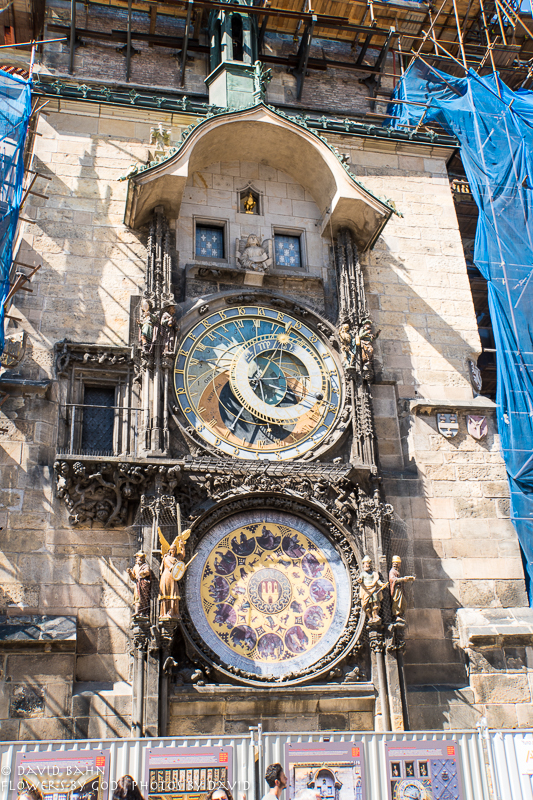
    20170815-DSC06861
    The Astronomical Clock is a marvel of 15th century engineering genius. The clock was first installed in 1410, making it the third-oldest astronomical clock in the world and the oldest one still operating. Prague, Czech Republic | August 2017

    “Gentlemen, the world needs a Savior, and you are not him.” So says my friend and seminary classmate – now seminary professor – regularly to his students. Good advice. There is only one Jesus. We may well be his hands and feet in the world today. We may have one opportunity after another to do good in his name. We may offer love, care, compassion, kindness, and mercy in Jesus’ name – and well we should. But we won’t save anyone; that’s Jesus’ job. And it’s been accomplished. That’s what Paul refers to in these powerful words:

    For you know the grace of our Lord Jesus Christ, that though he was rich, yet for your sake he became poor, so that you by his poverty might become rich. (v. 9)

    The One who had it all, gave it all up for us. His sacrifice atoned for our sins, and made a way for us to access the love of the Father for us and experience his goodness for all eternity.

    Then comes the call for the fruits of faith. We have been saved, now we are commanded to love God and love our neighbor. We will never do these commandments perfectly, but the words here by Paul really do help:

    For if the readiness is there, it is acceptable according to what a person has, not according to what he does not have. (v. 12)

    We may be tempted to do nothing at all because we cannot do it all. We may say we can’t do anything because we can’t do everything. We may think that if we can’t do something perfectly, we shouldn’t do anything. Someone once said, “If it’s worth doing, it’s worth doing poorly.” In other words, if we believe we must have everything completely lined up before we try to take a step at all, we’ll never take the essential first step.

    The gift is acceptable according to what a person has, not according to what he does not have. In other words, God is delighted if we just show up in someone’s life and give what we’ve got. Perhaps someone you know – or even someone you don’t know – is ready for you to give your little, imperfect, start-up gift. It may be the catalyst for God’s grace to leverage great things for the glory of his name. In fact that may well be the key to Jesus’ command:

    Let your light shine before others, so that they may see your good works and give glory to your Father who is in heaven. – Matthew 5:16

  • Now may the God of peace who brought again from the dead our Lord Jesus, the great shepherd of the sheep, by the blood of the eternal covenant, 21 equip you with everything good that you may do his will, working in us that which is pleasing in his sight, through Jesus Christ, to whom be glory forever and ever. Amen. – Hebrews 13:20-21

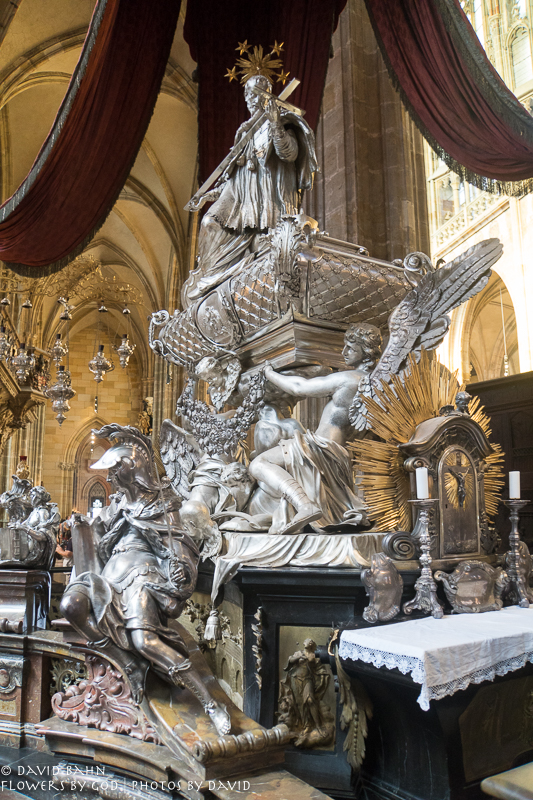
    Silver tomb of St. John of Nepomuk in St. Vitus Cathedral
    Silver tomb of St. John of Nepomuk in St. Vitus Cathedral: John did not violate the confidentiality of the confessional and was martyred for it. | August 2017

    These have been tumultuous times lately here in Houston and northwest Harris County! Hurricane turned Tropical Storm Harvey has dumped as much as 5 of 6 feet of water on our community! Reports have been that 30% of Harris County is under water. The destruction is all around. People are helping one another in various ways – from providing snacks, water, food, and other needed items, to cleaning out homes and tearing out drywall. The challenges are daunting, but there are many people who want to help, and are in the trenches.

    At the other end of that spectrum, however, are those who are devastated. They have lost everything. They have no insurance. They are alone. They are afraid, alone, and anxious. The do not need to hear that everything is OK. For them it is decidedly not OK. To say so is like putting a bandaid on a broken arm. I am reminded of the prophet Jeremiah’s words:

    They have healed the wound of my people lightly,
        saying, ‘Peace, peace,’
        when there is no peace. – Jeremiah 8:11

    There are those who want to minimize the tragedy of others. “Oh, it’s only things, physical possessions,” they say. “Don’t worry about that family photo album, those prize doll dresses, the ruined books or keepsakes. They’re not all that important.”

    Certainly worldly possessions are not the most important things. They can be replaced – minus any sentimental value we might attach to them. But the Seventh Commandment says, “You shall not steal.” And by that God recognizes and validates the value of our possessions.

    The Stockdale Paradox is an insight arrived at by James Stockdale, during his terrible experience of being a prisoner of war in Vietnam. He realized that those who made it through that terrible experience did two important things: They didn’t give up hope, nor did they deny the brutal facts. Those who ignored the brutal facts, together with those who gave up hope did not survive. Stockdale says it this way: “This is a very important lesson. You must never confuse faith that you will prevail in the end – which you can never afford to lose – with the discipline to confront the most brutal facts of your current reality, whatever they might be.”

    True peace is founded in an honest assessment of our situation, connected with faith in God’s goodness, power, justice, and grace. The brutal fact is that flooding and recovery efforts are difficult, daunting, and draining. The hope we cling to is that our God is a God of peace, grace, love, and power. Our peace has been won by means of the violent, brutal death of our Lord Jesus Christ and his resurrection from the grave. Talk about facing the brutal facts with the confidence of God’s goodness and love! Jesus is our Champion and the object of our faith. He is our peace. Thanks be to God!

  • Do you not know?
        Have you not heard?
    The Lord is the everlasting God,
        the Creator of the ends of the earth.
    He will not grow tired or weary,
        and his understanding no one can fathom.
    29 He gives strength to the weary
        and increases the power of the weak.
    30 Even youths grow tired and weary,
        and young men stumble and fall;
    31 but those who hope in the Lord
        will renew their strength.
    They will soar on wings like eagles;
        they will run and not grow weary,
        they will walk and not be faint. – Isaiah 40:28-31

    Let us not become weary in doing good, for at the proper time we will reap a harvest if we do not give up.10 Therefore, as we have opportunity, let us do good to all people, especially to those who belong to the family of believers. – Galatians 6:9-10

    20170829-DSC07196
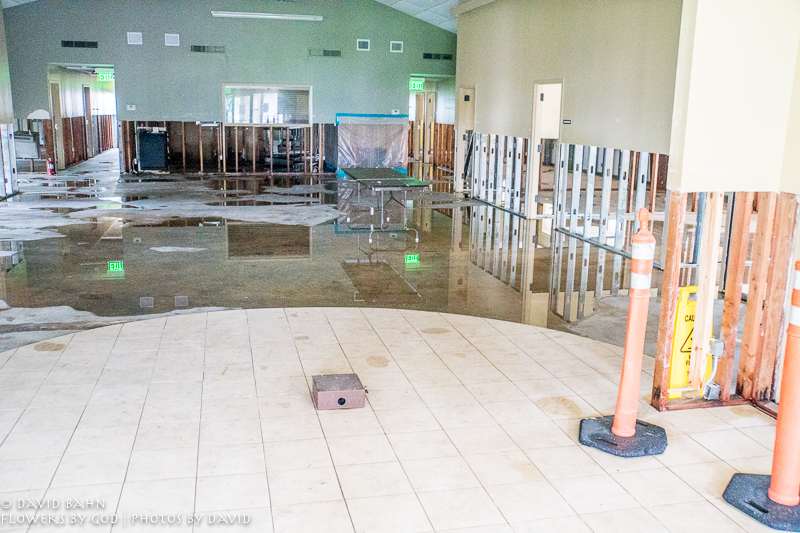
    This view might be familiar to some. It is the administration center building of the St. John Church campus. It has looked much like this for 15 months, and was scheduled to have been under renovations at the time of TS Harvey. God’s providence prevented the start of renovation work, however, so we don’t have to start all over – a silver lining to the many dark clouds of the storm. August 2017

    It’s really quite too early to talk about compassion fatigue. That’s the phenomenon that occurs in the hearts of people who, upon seeing one catastrophe after another, hearing one appeal after another, or being asked one day after another for help, just run out of compassion. Perhaps the most common sort is that which we experience when we see the TV ads featuring starving children with swollen bellies, flies crawling on their faces, and vacant looks in their eyes. After a while we feel so guilty that we just tune it out; they become just pixels on the screen.

    So let me offer myself some preemptive compassion fatigue antidotes. I have a feeling I’m going to need them! Here’s my reminder to myself…

    • Don’t turn off the heart and mind just because you can’t take another minute of TV coverage or listen to another newscast, or read another Facebook post. Do not harden your heart; let God’s mercy, love and grace sustain you and keep your heart open to the needs of others!
    • Pray. Really pray. Say the words. Get down on your knees. Use the Psalms. Read your prayer book. Sing hymns and spiritual songs. Let your heart be softened and sustained by God’s mercies which are new every morning, and which are accessed by means of God’s word and prayer.
    • Do what you can. This is for me. I have some physical limitations – even though I don’t want to admit it. I can’t muck out houses or haul out sheet rock. But I can help with some hands-on efforts. I can help carry out trash. I can offer food and water to those who are helping. I can do something. So – and I’m preaching to myself here – do what you can. Listen. Pray. Do something…in Jesus’ name.
    • Remember the good news: God does not grow weary. God’s compassion and mercies are new every morning. Great is his faithfulness. Lean into God. Trust him. Learn from him. Rely on the Holy Spirit. Thank God for Jesus’ redemption. Rejoice in your loving Father.
    • Take it one day at a time. This is my challenge: I look down the road at all that will be necessary to do all that needs to be done, and it overwhelms me. I’m guessing that may be true of others as well. If that’s the case, perhaps (?!?) Jesus’ words are most apropos…

    But seek first his kingdom and his righteousness, and all these things will be given to you as well. 34 Therefore do not worry about tomorrow, for tomorrow will worry about itself. Each day has enough trouble of its own. –Matthew 6:33-34

  • But now, this is what the Lord says—
        he who created you, Jacob,
        he who formed you, Israel:
    “Do not fear, for I have redeemed you;
        I have summoned you by name; you are mine.
    When you pass through the waters,
        I will be with you;
    and when you pass through the rivers,
        they will not sweep over you.
    When you walk through the fire,
        you will not be burned;
        the flames will not set you ablaze.
    For I am the Lord your God,
        the Holy One of Israel, your Savior;
    I give Egypt for your ransom,
        Cush and Seba in your stead.
    Since you are precious and honored in my sight,
        and because I love you… – Isaiah 43:1-4

    20170807-DSC00840
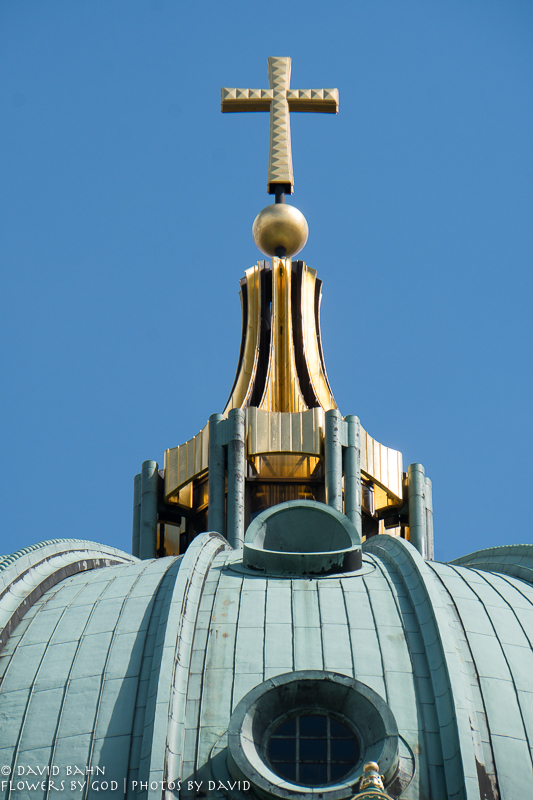
    The beautiful golden cross atop the Berliner Dom is a reminder of the presence of God in Jesus Christ, and the assurance of God’s love. Berlin | August 2017

    We were at a church conference at which Pastor John Ortberg offered a message at the beginning of which he had us write down the words from Isaiah 43:4, “You are precious and honored in my sight, and I love you.” The experience – some 20 years ago – is still fresh on my mind. Such a powerful and important word from God assuring us that we are precious and loved by him. It anchors the heart and enlivens the soul to hear this and gives life, hope, and salvation to those who believe it. 

    As the flood waters rise the challenges of recovering from the devastation wrought by Hurricane and now Tropical Storm Harvey loom large. The words that set the stage for this testimony of God’s love seem especially apropos: “When you pass through the waters I will be with you.”

    During these difficult days, there must be something that sustains our spirits, and keeps us going. One part of that equation has to do with the inimitable spirit of the human being. There is, to be sure, something within us all that wants to move forward, to overcome adversity, and to make our way through life with a sense of meaning and purpose.

    For the follower of Jesus Christ, however, there is another facet of our being that goes beyond simply living a fulfilled life. Make no mistake: we will not be spared the waters and the fires. We are living in that reality even now. God’s presence in the life of a follower of Jesus directs, sustains, and enlightens us along the way.

    There are certain people who simply – by their presence – bring you up or drag your spirits down. When we bring God with us into relationships and encounters we have the potential to offer hope and comfort that is so greatly need in these days. His very presence helps us to do that. God moves us to look beyond our own necessary self-preservation because he has us in his loving care. He is with us, and that being the case we not only have confidence and courage in the face of the challenges of life, but a foundation upon which to build a life of service and love to others.

  • Paul and his companions traveled throughout the region of Phrygia and Galatia,having been kept by the Holy Spirit from preaching the word in the province of Asia.When they came to the border of Mysia, they tried to enter Bithynia, but the Spirit of Jesus would not allow them to. So they passed by Mysia and went down to Troas.During the night Paul had a vision of a man of Macedonia standing and begging him, “Come over to Macedonia and help us.” 10 After Paul had seen the vision, we got ready at once to leave for Macedonia, concluding that God had called us to preach the gospel to them. – Acts 16:6-10

    20170806-DSC00773
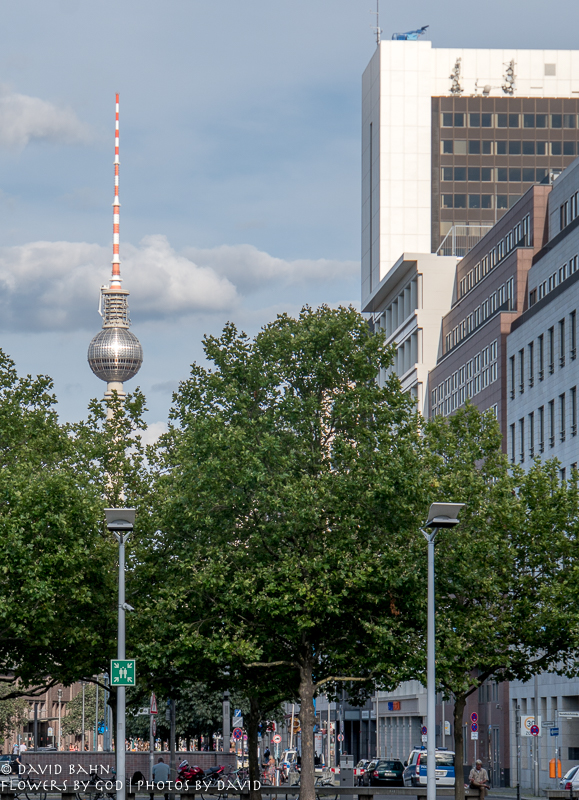
    TV Tower in Berlin, Germany | During the time of the Communist control of East Berlin, the authorities tried to find a way to get rid of the cross-like reflection from this tower…to no avail. Anytime the sun shines on this sphere, the cross is reflected in the rays of the sun.

    As I reflected on my most recent offering on this blog, it occurred to me that I was missing a much more direct, contemporary, and regionally-universal (is that an oxymoron or what?!?!) application: Hurricane Harvey. This massive storm sits off the Texas coast in the Gulf of Mexico, apparently gathering strength and verve prior to landfall that is expected to take place late tonight.

    The reports on the various news sources are universal: this is going to be a storm of major impact; not by category size, but by it’s lingering water pumping impact. Some places are expected to receive up to 20 inches of rain over the next few days, perhaps even more. There could be a 7-foot storm surge.

    Plans for our church’s Early Childhood Center Open House Friday night were cancelled. We have worked through and continue to refine our own contingency plans for worship and other activities this Sunday. It becomes ever more clear: “Man proposes. God disposes.” And God is disposing us toward a much different Celebration Sunday Event than we had proposed.

    As of now, we are planning for our two regular worship services at St. John: 8:15 a.m. Majestic Grace, and 11 a.m. NewSong. God will be praised. We hope that will happen on our regular schedule this Sunday. But it will happen. God’s people will praise his name. In fact, it might well be that there will be other options for praising God and serving our neighbor that come out of this storm.

    The question to ask in the face of any of these events is, What is God calling me to do in light of the realities of today? For Paul and his companions being prevented from going into Asia offered them the opportunity to learn of Paul’s vision of the man fromMacedonia who said, “Come on over and help us.” You and I may not have a vision, but we certainly may hear of or see an opportunity to do God’s work that we otherwise would never have seen had our plans not been interrupted by hurricane Harvey.

    God’s great desire and our calling is to spread the word of God throughout the world. Whether it is a hurricane or any other unexpected change in plans, it is always our privilege to participate in that mission of salvation and grace.


  • Paul and his companions traveled throughout the region of Phrygia and Galatia,having been kept by the Holy Spirit from preaching the word in the province of Asia.When they came to the border of Mysia, they tried to enter Bithynia, but the Spirit of Jesus would not allow them to. So they passed by Mysia and went down to Troas.During the night Paul had a vision of a man of Macedonia standing and begging him, “Come over to Macedonia and help us.” 10 After Paul had seen the vision, wegot ready at once to leave for Macedonia, concluding that God had called us to preach the gospel to them. – Acts 16:6-10

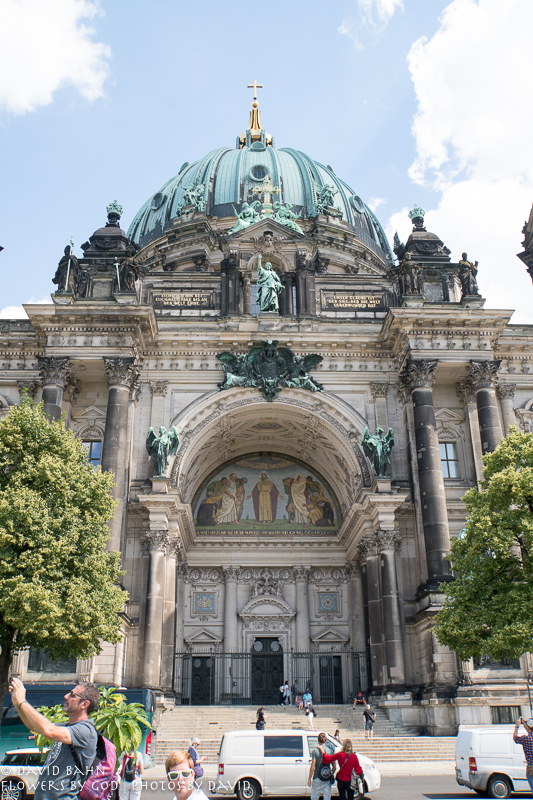
    Berlin Dom, a Protestant Churh, and one of the largest churches in Berlin
    The main entry to the Berlin Dom, a Protestant Churh, and one of the largest churches in Berlin

    I’m not certain it was a clear and direct as Paul and his companions experienced, but I certainly have been guided by closed doors. The most obvious to me is when I was in college, determining a course of study. I had tried several different paths – none of which were working. The straw that broke the camel’s back was when I entered a pre-med path and in one semester earned 8 hours of D’s and 6 hours of F’s. It may even have been the other way around.

    I left college and tried the real estate business. The watershed event was when I had listed two houses, sold both of them in the same week, only to have both deals fall through on the same day a week later. On top of that one listing (which is the bread and butter of a real estate company, which I ran), for which I had really hoped, went to another firm. Doors were closing right and left.

    One night my friend told me, “Dave, I think you would be a better pastor than a real estate broker.” An open window! It would require some work – college study with determination and focus. Better grades. Successful graduation from college and acceptance into seminary. But it was a window. I realized that this was what God was calling me to do.

    Sometimes we think that closed doors – like failure to get the plumb job, or not being able to complete an item on our bucket list – are only dead ends. They may, however, be ways in which God is guiding us down a path of discipleship and faith. These closed doors are for our good and our neighbor’s blessing. This will be true for Paul and the people of Macedonia. It may be true, also for you.

  • Paul came to Derbe and then to Lystra, where a disciple named Timothy lived, whose mother was Jewish and a believer but whose father was a Greek. The believers at Lystra and Iconium spoke well of him. Paul wanted to take him along on the journey, so he circumcised him because of the Jews who lived in that area, for they all knew that his father was a Greek. As they traveled from town to town, they delivered the decisions reached by the apostles and elders in Jerusalem for the people to obey. So the churches were strengthened in the faith and grew daily in numbers. – Acts 16:1-5

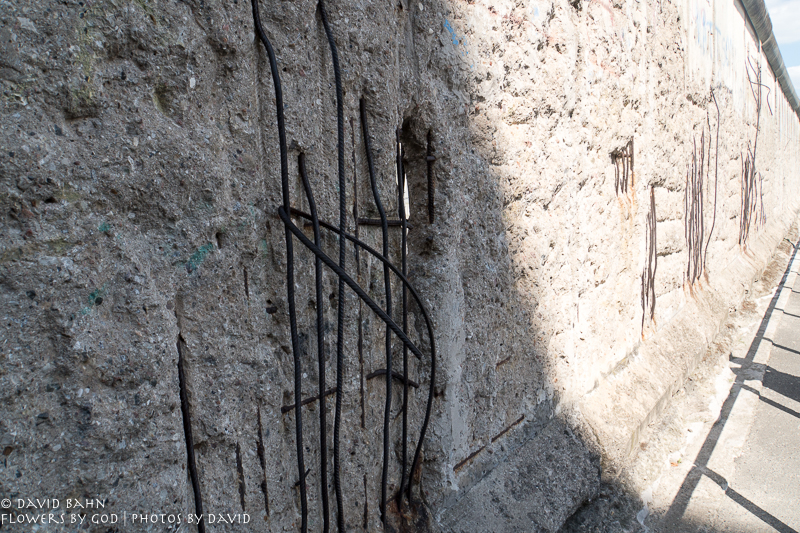
    The rebar shows in the concrete of the Berlin Wall
    This remnant of the Berlin Wall testifies to the perceived danger of people maintaining relationships with one another on the part of the East German Communist rulers. The stark shadow is also a symbol of the dawn of a new day when the Wall came down.

    They say it’s not what you know but who you know that opens doors and provides opportunities in life. Sometimes that’s a real challenge – especially when you’re looking in from the outside. And it’s quite welcome when you are the beneficiary of relationships  and connections that provide you with the inside track.

    There is yet another way to assay the realities of relational capital that has little to do with one’s own personal benefit, or advantage over another. That has to do with the way we may leverage the relationships we have for the cause of God’s kingdom.

    Relational capital is even more important than financial capital in the cause of the rule and reign of God. For God has all the silver and all the gold. He can provide those resources when and where he wills. But relational capital is lived out between people, and we have the sad capacity to undercut the blessings of God’s grace that is meant not only to be received, but also to be shared. What’s more, it is through relational capital that both our spiritual capital and financial capital are leveraged.

    Consider the people mentioned in these verses. Timothy, his mother, and father provide entrance into new places and open the kingdom to new believers. Even though Paul and Silas are on a journey to re-visit the places they had previously shared the Gospel, their presence and the prior relationships they have enjoyed will bring the message of the Gospel into more people’s lives. The church will be strengthened, encouraged, and grow in the number of people who call Jesus Lord.

    Certainly it is only God who causes the church to grow. But God works through people and people who leverage their relationships for the cause of his kingdom are part of something very special. They are stewards of a treasure (relational capital) for which there is no substitute.

  • Some time later Paul said to Barnabas, “Let us go back and visit the believers in all the towns where we preached the word of the Lord and see how they are doing.” 37 Barnabas wanted to take John, also called Mark, with them, 38 but Paul did not think it wise to take him, because he had deserted them in Pamphylia and had not continued with them in the work. 39 They had such a sharp disagreement that they parted company. Barnabas took Mark and sailed for Cyprus, 40 but Paul chose Silas and left, commended by the believers to the grace of the Lord. 41 He went through Syria and Cilicia, strengthening the churches. – Acts 15:36-41

    20170815-DSC06858
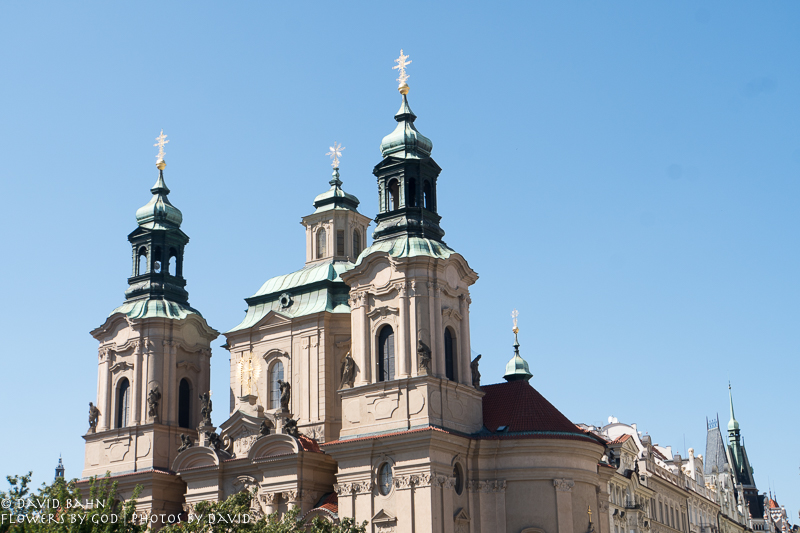
    The beautiful spires of St. Nicholas Church in Prague, Czech Republic

    I’ve heard it many times: If you are doing the Lord’s will, all will go well. Tell that to Jesus as he faces the cross. Tell that to Job in the midst of his troubles. Tell that to Paul and Barnabas as they successfully conclude a major effort to validate their mission to the Gentiles only to discover irreconcilable differences between the two of them. The rift was so severe that Paul and Barnabas split company. One goes one way. One goes another.

    Let’s remember who these two are: Paul was blinded on the road to Damascus and brought low so that he would learn “how much he must suffer for the sake of my name” (Acts 9:15). Barnabas was the one who introduced Paul to the Apostles, vouched for him, and – original son of encouragement that he was (that’s what his name actually means) – provided support for God’s continuing work in and through Paul. These two were like Laurel and Hardy, Ben and Jerry, or, well…Paul and Barnabas!

    If ever there is evidence of the fact that honorable men can disagree on certain matters and not ruin the fellowship of the redeemed. It is noteworthy that at the end of Acts Paul and Barnabas are reconciled, and united in friendship as well as faith. But anyone who has been around the church for any number of years will testify that not all people agree with each other all the time. There are always inevitable conflicts and challenges when sinners relate to one another – inside the church or out.

    Bonhoeffer wrote a book, Life Together, in which he offered the premise that the only way two people can relate honestly with each other is through the cross of Jesus. I need forgiveness, and I must look at you as one who has been forgiven through Jesus cross. That’s how we relate within the body of Christ.

    Mission means that we who belong to Jesus look at everyone through the cross of Jesus – whether it is reciprocated or not. And when it is no longer possible to be at peace with a brother or sister in Christ we do our part and commend the other person to the grace of God (cf. Romans 12:18).

    I was at a meeting sometime ago where there was discussion about coordinating mission efforts in an attempt to keep things tidy (and under “proper control”). Not to coordinate our efforts, it was said, would result in chaos. On the other hand to get so caught up in coordination of efforts that we put ourselves into gridlock is not a better alternative. I said to the group, “When it comes to mission work, I prefer chaos to gridlock.”

    Mission work is messy. Thank God Jesus was willing to get completely messy for the sake of his mission to save the world from their sins. Thank God for those mission partners who are difficult to work with, and who run too fast, or seem to want always to slow us down. We need them all…messy as that may be!

  • Then the apostles and elders, with the whole church, decided to choose some of their own men and send them to Antioch with Paul and Barnabas. They chose Judas (called Barsabbas) and Silas, men who were leaders among the believers.23 With them they sent the following letter:

    The apostles and elders, your brothers,

    To the Gentile believers in Antioch, Syria and Cilicia:

    Greetings.

    24 We have heard that some went out from us without our authorization and disturbed you, troubling your minds by what they said. 25 So we all agreed to choose some men and send them to you with our dear friends Barnabas and Paul— 26 men who have risked their lives for the name of our Lord Jesus Christ.27 Therefore we are sending Judas and Silas to confirm by word of mouth what we are writing. 28 It seemed good to the Holy Spirit and to us not to burden you with anything beyond the following requirements: 29 You are to abstain from food sacrificed to idols, from blood, from the meat of strangled animals and from sexual immorality. You will do well to avoid these things.

    Farewell.

    30 So the men were sent off and went down to Antioch, where they gathered the church together and delivered the letter. 31 The people read it and were glad for its encouraging message. 32 Judas and Silas, who themselves were prophets, said much to encourage and strengthen the believers. 33 After spending some time there, they were sent off by the believers with the blessing of peace to return to those who had sent them. [34]  35 But Paul and Barnabas remained in Antioch, where they and many others taught and preached the word of the Lord. – Acts 15:22-35

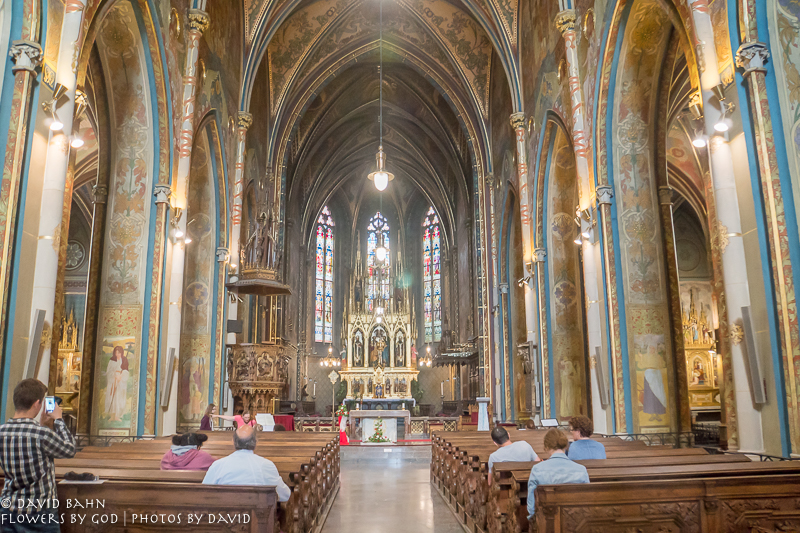
    Interior of the Basilica of St. Peter and Paul at Vyšehrad fortress
    Interior of the Basilica of St. Peter and Paul at Vyšehrad fortress

    Diane and I just returned from an extended time in Germany and the Czech Republic. We visited our son and his family in Martensöhe, Germany (southwest of Frankfurt), were in Berlin for a few days, before heading toward Prague, stopping in Wittenberg and Dresden along the way. During our travels we saw many beautiful church buildings. We did not see many churches; that is we did not see many gatherings of believers around word and sacrament.

    Certainly there are several reasons for this. The Communists took pains to dismantle the churches in the eastern block. Prior to that there were wars of various kinds – bishops vying for their turf, protestants, Huguenots, Hapsburgs, Lutherans, Roman Catholics – each with their own challenges and efforts. One prince would declare the people of his fiefdom to be Lutheran, while another would proclaim the Roman Catholic faith.

    Religion became something other than faith or relationship with God and other believers. It became nothing more than an alignment with the ruling group and their religion. There were few letters like the one above to a new group of believers. There were many declarations, power plays, and efforts to control.

    The need to keep the faith pure and true to God’s word is unending. We must never relegate the truth of God to an optional ornament like so much Baroque bric-a-brac:  beautiful but not truly necessary. God’s truth is the foundation of his grace and the launching pad of his mission.

    But mission is messy. If it is successful it will bring us into contact with all kinds of people: different races, ethnic groups, of varying languages, eating habits, smells, clothing, and mannerisms. That was the case that brought about the large church gathering recorded by Luke in Acts 15. The question was, “What to do with the new non-Jewish believers?”. The answer was to proscribe just a few behaviors that would especially offend the Jewish people – since the roots of the Christian faith are deeply sunk into the ground of the Jewish nation.

    Had the Jerusalem Council determined that they needed to exercise more control over these new believers, requiring them to conform to their own (Jewish) sensibilities, we might never have seen the church grow to what it is today – a multitude of people from every tribe and language under the sun, all singing praise to the Lamb that was slain and who now reigns in heaven above.

    To the extent that we are faithful to God’s mission we will look less and less like those ornate cathedrals in Germany and the Czech Republic. There may be fewer museums and concert halls. But there may be more followers of Jesus and more true churches where people worship God, love each other, and share the Good News with more and more people each day.