David Bahn – Reflections

Light from the Word and through the lens

  • Being then God’s offspring, we ought not to think that the divine being is like gold or silver or stone, an image formed by the art and imagination of man. 30 The times of ignorance God overlooked, but now he commands all people everywhere to repent,31 because he has fixed a day on which he will judge the world in righteousness by a man whom he has appointed; and of this he has given assurance to all by raising him from the dead.”

    32 Now when they heard of the resurrection of the dead, some mocked. But others said, “We will hear you again about this.” 33 So Paul went out from their midst. 34 But some men joined him and believed, among whom also were Dionysius the Areopagite and a woman named Damaris and others with them. – Acts 17:29-34
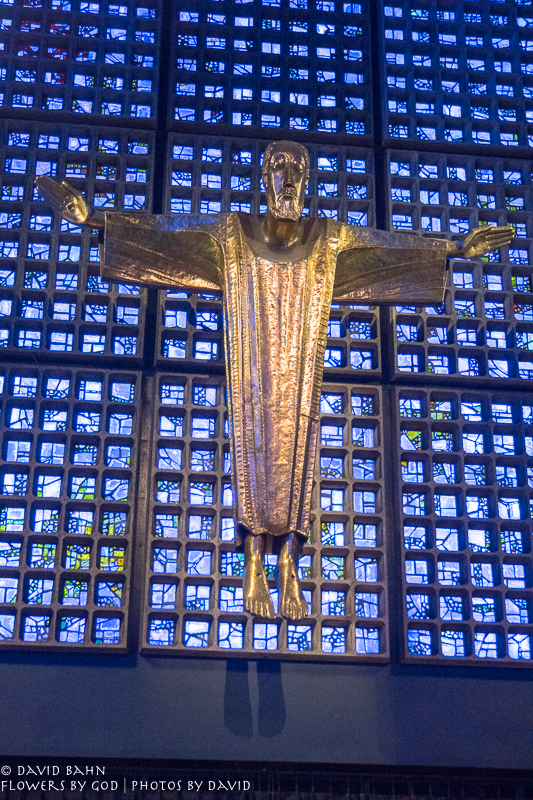
    The large Christ Figure inside the new sanctuary of the Kaiser Wilhelm Church
    The large Christ Figure inside the new sanctuary of the Kaiser Wilhelm Church | Berlin 2017

    I had a conversation recently with someone who was wondering how to answer people who ask, “What do you believe?” She was encouraged by a magazine article on the Apostle’s Creed, that the creed was an excellent summary to use to describe the substance of her faith. This is a great insight, and it highlights two great truths that Paul speaks of here in this encounter on Mars Hill in Athens. The first is that we are his creatures, his creation. The second: After Jesus died for the sins of the world, he rose from the dead. Creation and resurrection shape our faith and life as God’s people.

    While some may wish to make creation a matter of scientific investigation, I much prefer to make it a matter of faith. I believe that God created the world and everything in it by his word, evening and morning, day after day. I am convinced that there are scientific realities that attend that truth. More important, however, is that as God’s creatures we bear the imprint of his being.

    We belong to God; we are a reflection of his identity and creative artistry. That identifies us and tells us something about God. He is not a mute idol, a lump of clay, carving of stone, or an impersonal ideal or theological concept. God is our creator. He is real, powerful, mighty, creative, and gracious.

    God’s grace is seen in the resurrection of Jesus. This unique event sets Jesus apart from all other gods. He embraced not only our life and way on this planet, but also our sins, taking our sins to the cross and dying for us there. Then when he rose from the dead, he did not simply justify himself, and make the point that he was right in all he did – which in fact he was! Jesus went to his disciples with the message of peace. He did not chide them for their unbelief. He offered them peace and gave them a mission to pursue.

    As God’s creation we are precious to him who is the source of all of life. As his redeemed, we look forward to our own resurrection. We can have the confidence that no matter what we must endure along life’s way, we will prevail. By the power of the Holy Spirit we can hold to this truth even as we seek to give witness to our faith.

  • So Paul, standing in the midst of the Areopagus, said: “Men of Athens, I perceive that in every way you are very religious. 23 For as I passed along and observed the objects of your worship, I found also an altar with this inscription: ‘To the unknown god.’ What therefore you worship as unknown, this I proclaim to you. 24 The God who made the world and everything in it, being Lord of heaven and earth, does not live in temples made by man, 25 nor is he served by human hands, as though he needed anything, since he himself gives to all mankind life and breath and everything. 26 And he made from one man every nation of mankind to live on all the face of the earth, having determined allotted periods and the boundaries of their dwelling place, 27 that they should seek God, and perhaps feel their way toward him and find him. Yet he is actually not far from each one of us, 28 for

    “‘In him we live and move and have our being’;

    as even some of your own poets have said,

    “‘For we are indeed his offspring.’Acts 17:22-28

    20170816-DSC06927-Edit
    Beautiful hybiscus flower growing in front of one of the outdoor restaurants in Prague | August 2017

    We are living in the throes of amazing expansion and growth. Houses are going up all around our community. Roads are being expanded and built. More and more people are moving into the community. Some would say, “Enough! We don’t need any more people!”

    But this is all of God’s doing and providential will. He, says Paul, “made from one man every nation of mankind to live on all the face of the earth, having determined allotted periods and the boundaries of their dwelling place” (v. 26). Your new neighbor is God’s gift to you, and all part of God’s plan. 

    More than that, however, God has placed people where he wills, and in the times he determined for a purpose other than raising our tax base, clogging our roads, or requiring another school bond to build yet another school. These people have been placed in our midst as a sacred trust – that they may seek God, and somehow find him. That’s where you and I come in. We may be our neighbor’s neighbor so that we can help him find God, learn of his grace and truth in Jesus, and enjoy his eternal blessings.

    You might not think of that extra car on the freeway, additional student in your child’s classroom, or another family on your street as gifts of God – or better yet – sacred trusts from him. But that’s exactly what they are. It might give you a new way to think of your fellow commuters in the next traffic snarl you endure.

  • Now while Paul was waiting for them at Athens, his spirit was provoked within him as he saw that the city was full of idols. 17 So he reasoned in the synagogue with the Jews and the devout persons, and in the marketplace every day with those who happened to be there. 18 Some of the Epicurean and Stoic philosophers also conversed with him. And some said, “What does this babbler wish to say?” Others said, “He seems to be a preacher of foreign divinities”—because he was preaching Jesus and the resurrection. 19 And they took him and brought him to the Areopagus, saying, “May we know what this new teaching is that you are presenting? 20 For you bring some strange things to our ears. We wish to know therefore what these things mean.” 21 Now all the Athenians and the foreigners who lived there would spend their time in nothing except telling or hearing something new. – Acts 17:16-21

    a7_MarsHill_8_DSC01977 (2)
    A view of Mars Hill as seen from the Parthenon in Athens, Greece | Photo by David Steele | November 2014

    All she really wanted was to ride my bike. I wanted to ride her horses, so I went to her house down the road from where we lived. She lived with her family in a run-down shack. I think they were a kind-of 20th century indentured servants. They took care of the farmland around their house. And I was led to believe that she had access to the horses in the barn there. Alas it wasn’t to be. She had no access – except to my bike. She thoroughly enjoyed riding it, and I finally discerned her ploy. I got my bike back and went home. Burned and bummed. Duped and without the equine thrill for which I had hoped.

    The people of Athens feigned interest in Paul’s teaching there on Mars Hill. They invited him to tell them more, and he will. That is yet to come (tomorrow’s post). For now, however, let’s consider what makes a person willing to risk being taken advantage of, and even deceived or at least misled in their effort to share the Gospel.

    As Paul walks around the city of Athens he is troubled by all the false gods and idols. He was an educated man, capable of holding his own in speaking with the Stoic and Epicurean philosophers. He was, after all, trained by Gamaliel. One website said it this way: 

    Paul was said to be one of the most brilliant men of his day and not just by the early church leaders and historians. He was a fierce apologist, as evidenced by his witnessing to the Jews and the Greeks (or Gentiles). Paul said, “I am a Jew, born in Tarsus in Cilicia, but brought up in this city, educated at the feet of Gamaliel according to the strict manner of the law of our fathers, being zealous for God as all of you are this day” (Acts 22:3)

    In one of his letters Paul even seems to have coined a combination of two Greek words that show up in the Greek literature after it is found in his letter, but not before. He will not rely on  “superiority of speech” (Greek ὑπεροχὴν λόγου – 1 Corinthians 2:2). He was no lightweight in the theological or philosophical world of thought.

    It seems, however, that Paul may have learned something here when this encounter is all played out. His uneasy or troubled spirit was a sign of a godlessness that would require major heart-breaking to penetrate. He will do what he can to debate these supposedly-wise thinkers. [Spoiler Alert!] In the end, however, he does not get very far with them.

    We may need to be distressed at the godlessness all around us – sometimes even in our own families and friends. We might well take them on and seek to shine the light of God’s love in Jesus into their lives and hearts. We may also need to be aware that the Deceiver is the one who will feign most anything to lure us away from our mission and even from faith in Jesus who rose from the dead: a stumbling block to the piously-religious and foolishness to the wise philosophers of our day.

    This Jesus and his resurrection is the centerpiece of our faith. He was never deceived – not even by Satan himself. And just when Satan thought he had silenced this wisdom from God, Jesus rose from the dead in conquering might. Thank God for that! When we rely on Jesus’ grace and truth we will be able to discern and avoid the deceptive wiles of the Evil One.

  • The brothers immediately sent Paul and Silas away by night to Berea, and when they arrived they went into the Jewish synagogue. 11 Now these Jews were more noble than those in Thessalonica; they received the word with all eagerness, examining the Scriptures daily to see if these things were so. 12 Many of them therefore believed, with not a few Greek women of high standing as well as men.13 But when the Jews from Thessalonica learned that the word of God was proclaimed by Paul at Berea also, they came there too, agitating and stirring up the crowds. 14 Then the brothers immediately sent Paul off on his way to the sea, but Silas and Timothy remained there. 15 Those who conducted Paul brought him as far as Athens, and after receiving a command for Silas and Timothy to come to him as soon as possible, they departed. – Acts 17:10-15

    One of the many blossoms growing in the Saxony Switzerland national park.
    One of the many blossoms growing in the Saxony Switzerland national park. August 2017

    The brilliant comedian and movie actor W. C. Fields led an unrestrained showbiz life displaying a fondness for alcohol and mistresses. He was not known as a religious man, but as his death approached he began to peruse the Bible. When a friend asked him about this behavior he humorously explained that he was, “looking for loopholes.”

    That is decidedly not the case of the Berean Jews who heard the message of Paul and Silas and set out to determine if what he said was true by studying the Scriptures. They were “more noble” than the people from Thessalonica. It seems all the Thessalonian Jews wanted to do was to discredit Paul and Silas and the message centered in Jesus of Nazareth. He was nothing but a trouble-maker in their minds. Anything they could do to get rid of these two was fair game. They investigated things in order to discredit, not to find truth. They used Scripture to find justification for their preconceived notions, not to shape their hearts and consciences. 

    The Jews from Berea were a different sort of investigators. They knew that the claims that Paul and Silas were making were turn-the-world-upside-down claims. They realized that if Jesus was the messiah, the Son of God, the Savior of the world, he would change their world. So much was at stake. Was this really true? How to determine this? Study the Old Testament Scriptures.

    Study the Old Testament with a Holy-Spirit-opened-heart and you will discover some profound truths. You will see that nothing worked that the Jewish people tried in their walk with God and efforts to be his people. God walking with Adam and Even in the cool of the day didn’t work. God speaking to them through his one prophet, Moses, didn’t work. God delivering his people to the Promised Land didn’t work. God raising up kings for them didn’t work. God providing prophets to call his people back didn’t work. By that I mean that though these things may have worked for a brief time; there was no lasting effect. They killed the prophets. They crowned evil and corrupt kings. They ate the forbidden fruit. With one exception: Abraham, who believed in the Lord, and he credited it to him as righteousness” (cf. Genesis 15:6).

    Believing in God, and studying the Word will lead us to the “author and perfecter of our faith, who for the joy set before him, endured the cross, despising its shame and sat down at the right hand of God” (Hebrews 12:2). Reading the Word in order to center our hearts and minds in the truth is an honorable pursuit. We must not be to quick to shake our heads at W. C. Fields before we make certain that we don’t read Scripture in order to find our favorite hobby horse, and confirm our own narrow (or overly-broad) beliefs. God’s word is the only fully-reliable rule and norm for faith and life. We act honorably when we look to Scripture to inform our faith and let God’s word shape our hearts and minds, bringing us to Jesus and honoring him as we should.

  • Now when they had passed through Amphipolis and Apollonia, they came to Thessalonica, where there was a synagogue of the Jews. And Paul went in, as was his custom, and on three Sabbath days he reasoned with them from the Scriptures, explaining and proving that it was necessary for the Christ to suffer and to rise from the dead, and saying, “This Jesus, whom I proclaim to you, is the Christ.” And some of them were persuaded and joined Paul and Silas, as did a great many of the devout Greeks and not a few of the leading women. But the Jews were jealous, and taking some wicked men of the rabble, they formed a mob, set the city in an uproar, and attacked the house of Jason, seeking to bring them out to the crowd. And when they could not find them, they dragged Jason and some of the brothers before the city authorities, shouting, “These men who have turned the world upside down have come here also, and Jason has received them, and they are all acting against the decrees of Caesar, saying that there is another king, Jesus.” And the people and the city authorities were disturbed when they heard these things. And when they had taken money as security from Jason and the rest, they let them go. – Acts 17:1-9


    20170731-dsc00453
    Credit to Diane, who took this photo in Worms, Germany, where Martin Luther made his famous, “Here I stand” confession and commitment to the truth of the Word of God.

    It is disturbing to learn that many of the people at Black Lives Matter, Antifa, or Altright demonstrations are outside agitators, brought in by some group or consortium to cause trouble. But in light of what the Jews in Thessalonica did on this occasion, outside agitation is nothing new. Inciting others to cause trouble for one’s opponents is apparently at least as old as the first century Roman Empire.

    What moved them to go so strongly toward this path? It was their perception that the followers of Jesus had turned the world upside down by their teaching and preaching and evangelizing. Not only that, but they will even name a co-conspirator (Jason) as culpable and worthy of severe punishment when they fail to find Paul and Silas.

    All this happened because Paul and Silas were proclaiming that Jesus is the Messiah – the Christ. They were making a strong case for a new king: Jesus. The Jews were now in danger, they realized, of losing their place of prominence in the Jewish synagogue. They were worried that Jesus would change everything they held dear. In this case it must have been power, security, prestige, and influence in the synagogue and the city. When they spoke people listened. Now Jesus was supplanting that – taking away their prerogative and positions of honor.

    Jesus does that. He threatens those who are secure in themselves. He upsets those who want to trust their own bank accounts, power plays, places in society, and efforts to make a life for themselves. He threatens those who live for themselves and want to make a life for themselves apart from God.

    To live totally for Jesus requires radical faith – world-turned-upside-down-faith. Dethroning myself and placing Jesus where he belongs – or better yet, placing myself under Jesus’ rule and reign is an act of repentance and faith. He earned my salvation so that, “I may live under him in his kingdom and serve him” (cf. Luther’s Small Catechism, Creed, 2nd Article). Sadly not everyone acknowledges this. Some will even seek to thwart his reign.

    Not every follower of Jesus will incite such a strong negative reaction. But followers of Jesus need to be wise to the ploys of the Evil One, and remember who the real king is.

  • But when it was day, the magistrates sent the police, saying, “Let those men go.” 36 And the jailer reported these words to Paul, saying, “The magistrates have sent to let you go. Therefore come out now and go in peace.” 37 But Paul said to them, “They have beaten us publicly, uncondemned, men who are Roman citizens, and have thrown us into prison; and do they now throw us out secretly? No! Let them come themselves and take us out.” 38 The police reported these words to the magistrates, and they were afraid when they heard that they were Roman citizens. 39 So they came and apologized to them. And they took them out and asked them to leave the city. 40 So they went out of the prison and visited Lydia. And when they had seen the brothers, they encouraged them and departed. – Acts 16:35-40

    20170814-DSC06688
    The pillar on the wall of the town jail in Litoměřice, Czech Republic is a remnant of the post that was used to tie up persons who were shamed publically for their misdeeds.

    My sister’s father-in-law was a Lutheran pastor who served a vacancy in a congregation to which I was subsequently called. He told me of some of the bad behavior of certain members of the church and advised “solicitous falicitude” (the second word is not in any dictionary to which I have access, but does crop up in a google search for the term). I understood that to mean that I was to be gracious almost to a fault in listening to and asking for people’s thoughts and ideas. But that wasn’t all that he advised. He also said, “But when you hit back, hit back hard.

    I never got that kind of advice in any pastoral care classes at the seminary, and I do not tend to function in that manner. But it sure seems Paul may have written the book on such an approach. When the leaders of the city wanted to get rid of their problem child, they thought that they could do so quietly and without any public admission of guilt. Paul was not to go along with that approach. He would demand an apology, to hear it from the city officials themselves, and no less.

    The issue wasn’t one of ego, pettiness, or resentful comeuppance. This was a matter of the spread of the Gospel itself. Paul will undergo many hardships and troubles in his efforts to bring the message of Jesus to more and more people. He will see to it that by whatever means the message is spread. He will go to great lengths to take the Gospel to more and more places. To do so will require a strong commitment and a willingness to stand for justice and truth. Paul is not interested in opting out of suffering by denying the faith he is preaching. He is willing, however, to use the benefits and powers of his citizenship to leverage his evangelistic efforts. In fact, he will leverage his Roman citizenship to get him to  Rome – a place he longed to visit in order to bring the Gospel there.

    Too often we are worried about having our rights infringed upon. We demand that we be treated fairly because we want respect; we don’t want to be taken advantage of. While it may be appropriate to speak up against injustice toward ourselves and others, it is even more important that we entrust ourselves to God in the face of any unjust treatment. And when we speak up, and seek justice, we do well to remember the fullness of God’s call to, “seek justice, love mercy, and walk humbly with” him (cf. Micah 6:8).

  • About midnight Paul and Silas were praying and singing hymns to God, and the prisoners were listening to them, 26 and suddenly there was a great earthquake, so that the foundations of the prison were shaken. And immediately all the doors were opened, and everyone’s bonds were unfastened. 27 When the jailer woke and saw that the prison doors were open, he drew his sword and was about to kill himself, supposing that the prisoners had escaped. 28 But Paul cried with a loud voice, “Do not harm yourself, for we are all here.” 29 And the jailer called for lights and rushed in, and trembling with fear he fell down before Paul and Silas. 30 Then he brought them out and said, “Sirs, what must I do to be saved?” 31 And they said, “Believe in the Lord Jesus, and you will be saved, you and your household.” 32 And they spoke the word of the Lord to him and to all who were in his house. 33 And he took them the same hour of the night and washed their wounds; and he was baptized at once, he and all his family. 34 Then he brought them up into his house and set food before them. And he rejoiced along with his entire household that he had believed in God. – Acts 16:25-34

    20170815-DSC06802
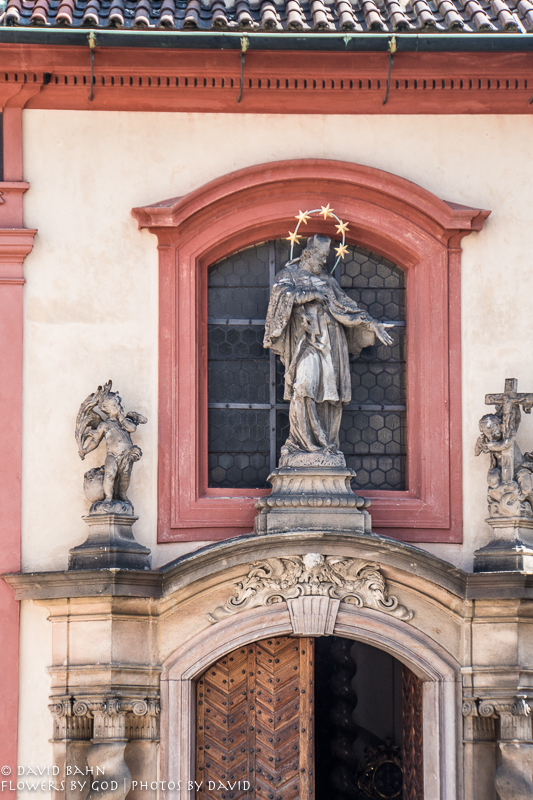
    A statue of John of Nepomuk who did not violate the confidentiality of the confessional, and saved a young woman from unjust shame.

    When I was at Boy Scout camp one year, I took a canoeing merit badge class. One of the things I had to do was turn over the canoe, take off my shirt, and turn it into a flotation device by filling it with air. During that process, I managed to get the shirt stuck over my face. I was literally in a panic for a few seconds, afraid that I would not be able to get it off and that I would drown. Thankfully, however, I was able to extricate myself, and successfully completed the exercise. Whew! I was spared. I was saved.

    Apart from close calls: auto accidents, falls, near misses, and other extreme cases we seldom feel a sense of anxiety or fear of not being saved. In fact the whole idea of being saved seems to have become rather passé over the years. Ask someone if they’re saved, and they’re likely to call you a religious freak.

    Not so with the Philippian jailer. He was fearful for his life and wellbeing when he thought the prisoners had escaped. But he became even more afraid of the God who Paul praised when he discovered they were all safe. Think of it: Fear for his life at the prospect of having lost the prisoners turns to fear of God when he encounters someone who takes God so seriously that he sings hymns in prison and stays put when he could have fled. He no longer feared the hand of the king, but feared the King of kings, and sought to be saved from his wrath.

    To believe in the Lord Jesus Christ is to believe that his way of faithfulness is the true way; that his gift of life through his atoning sacrifice and resurrection from the grave is the true life and gateway to eternal life; that his truth from God’s word and the counsel of God is true truth: solid, unchanging, freeing, and good.

    When we discover the fullness of God’s salvation we will be led to acts of mercy, kindness, love, and honor. We will deeply desire to be saved, to live as one who is saved, and seek to bring all in our realm of influence into that same saving relationship with God.

    This is a gift of God, worth celebrating. This is true whether we have been delivered from the raging waters of a flood, the terrific onslaught of a hurricane, the raging flames of a forest fire, the heavy burden of a guilty conscience, or the despair of a hopeless future. God saves us from all those things, and even more: from his own judgment against sin, having judged Jesus in our place and raised him for our salvation.

  • As we were going to the place of prayer, we were met by a slave girl who had a spirit of divination and brought her owners much gain by fortune-telling. 17 She followed Paul and us, crying out, “These men are servants of the Most High God, who proclaim to you the way of salvation.” 18 And this she kept doing for many days. Paul, having become greatly annoyed, turned and said to the spirit, “I command you in the name of Jesus Christ to come out of her.” And it came out that very hour.

    19 But when her owners saw that their hope of gain was gone, they seized Paul and Silas and dragged them into the marketplace before the rulers. 20 And when they had brought them to the magistrates, they said, “These men are Jews, and they are disturbing our city. 21 They advocate customs that are not lawful for us as Romans to accept or practice.” 22 The crowd joined in attacking them, and the magistrates tore the garments off them and gave orders to beat them with rods. 23 And when they had inflicted many blows upon them, they threw them into prison, ordering the jailer to keep them safely. 24 Having received this order, he put them into the inner prison and fastened their feet in the stocks. – Acts 16:16-24

    20170817-DSC07018
    This pink building was immediately across from our hotel in Prague. It serves as the Communist Headquarters to this day, as I understand it. August 2017

    You would think that when God preempts your efforts, you might decide to stand down. Not so. On so many levels. Paul and Silas are met by a slave girl who was demon-possessed, and who used her dark magic to tell fortunes. She – led by the evil spirit – hounds and mocks Paul in an effort to discredit the work of God through these two servants. When Paul turns on her and orders the evil spirit to come out of her, she is freed from this possession. But her owners are also bereft of the income she brought to them.

    Perhaps it is understandable: you take one’s source of income – especially ill-gotten gain – and he will fight you all the way. He won’t give up. Evil will serve ungodly lucre. Mammon is a powerful and seductive god. People do not easily lay it aside.

    Are we so different? Too often and too easily we keep hold of our pet sins, our little peccadilloes. We even excuse them as minor vices against the backdrop of more heinous crimes and evil acts. Sin does not easily let go, nor do we easily let go of sin. In fact, as long as we are in this world we will battle against the sinful desires of the flesh. We are simil justis et pecatur – at the same time saint and sinner.

    One thing to keep in mind, however, is that the purposes of God will not be thwarted. Not only does he desire to bring us closer to him and make us more like Jesus, he desires to spread his rule and reign into the hearts of more and more people. So while Paul and Silas are led off to prison, and Lydia and the others in that area no doubt wonder and worry about what the next days will bring, God is preparing an earthquake! Paul and Silas will continue to trust in God and sing his praises. There will be a strategic move of the gospel message. The Word of the Lord will grow.

    In the mean time, however, Paul and Silas will be led to the inner prison. Their feet will be put into stocks. Evil will not relent. ButGod’s will is not to be thwarted. This ought never give us excuse to sin. But it should give us courage whenever we face persistent evil as we pursue God’s purposes and plans in our lives.

  • So, setting sail from Troas, we made a direct voyage to Samothrace, and the following day to Neapolis, 12 and from there to Philippi, which is a leading city of thedistrict of Macedonia and a Roman colony. We remained in this city some days.13 And on the Sabbath day we went outside the gate to the riverside, where we supposed there was a place of prayer, and we sat down and spoke to the women who had come together. 14 One who heard us was a woman named Lydia, from the city of Thyatira, a seller of purple goods, who was a worshiper of God. The Lord opened her heart to pay attention to what was said by Paul. 15 And after she was baptized, and her household as well, she urged us, saying, “If you have judged me to be faithful to the Lord, come to my house and stay.” And she prevailed upon us. – Acts 16:11-15

    20170814-DSC06726
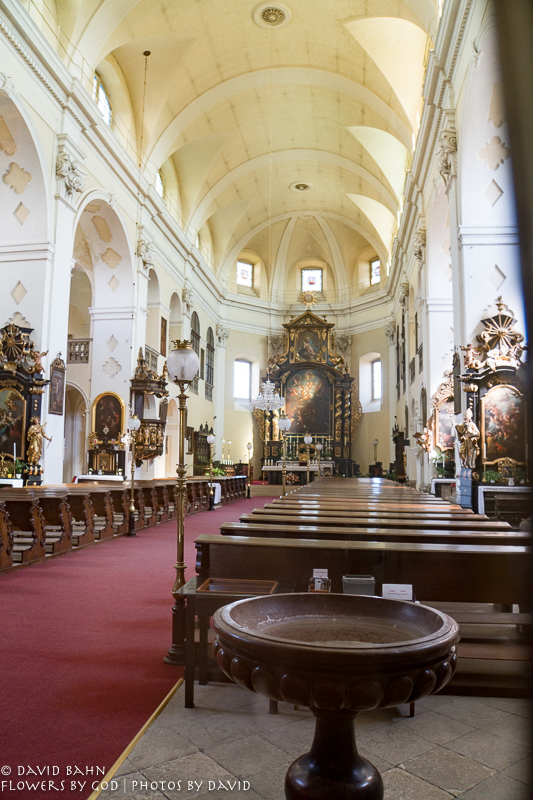
    Baptismal font in the entryway of the St. Stephen Cathedral in Litoměřice, Czech Republic | August 2017

    We – as are many people in our community – are in the midst of discovering and settling into the new normal. This comes after the unprecedented flooding and destruction in the greater Houston area due to Hurricane turned Tropical Storm Harvey. Harvey is a name we will not easily forget for many years to come. Many homes were flooded. Many people lost all of their worldly possessions. Many people have no place to live, no car to get to work, no way of carrying on apart from the kindness of neighbors, friends, churches and others who help – along with governmental and other non-profit agencies.

    I am glad to say that there was almost a competition among churches to outdo one another in bringing relief to flood victims and clean-up volunteers (cf. Romans 10:12). This was a once-in-a-lifetime opportunity to be Jesus’ hands and feet in the community. And church after church lined up to help in Jesus’ name. May his name be praised!

    There comes, after all is said and done, a new normal. For Paul and his team it was heading off from Troas toward Philippi. There, God had planned an encounter with a person of peace who would provide a foothold on European soil for the spread of the Gospel. Lydia becomes the first European convert and with her resources a foundation for continuing the Good News imperative to make disciples of all nations. The old plans that Paul had for heading into Asia Minor have now become new plans of God’s choosing and direction to bring the Gospel to Rome, Spain, and beyond.

    The truth is that there really isn’t an old normal; any parking on the practices of the past is doomed to thwart the mission of God, and God will fulfill his mission. He will see to it that his lost children are found. He will see that his rule and reign is spread throughout the world. Those whose plans are changed, and who embrace that change in grace, faith,  and faithfulness will see great things happen in their lives and the lives of others.

    In fact, Lydia’s story is the first of many that will spring from this area of the world. There will be the jailer who is converted in the middle of the night. There will be the example of the Macedonian Christians held up by Paul in responding to the needs of the church in Jerusalem (cf. 2 Corinthians 8 & 9 for the full story there). But for now, Paul will encounter this woman who prevails upon him and offers her home as a place of rest and refreshment.

    What is the new normal in your life these days? Might it be an opportunity to be part of something very special in the lives of your friends, neighbors, and brothers and sisters in Christ? Might you prevail upon someone to allow you to serve them in their time of need? That’s exactly what Jesus did for you and me 2000 years ago. His example and service itself must have touched Lydia’s heart deeply. What a great first move of a new convert to faith in Jesus!

  • Come to me, all who labor and are heavy laden, and I will give you rest.29 Take my yoke upon you, and learn from me, for I am gentle and lowly in heart, and you will find rest for your souls. 30 For my yoke is easy, and my burden is light.” – Matthew 11:28-30

    St John Lutheran Church - Harvey Recovery Crews
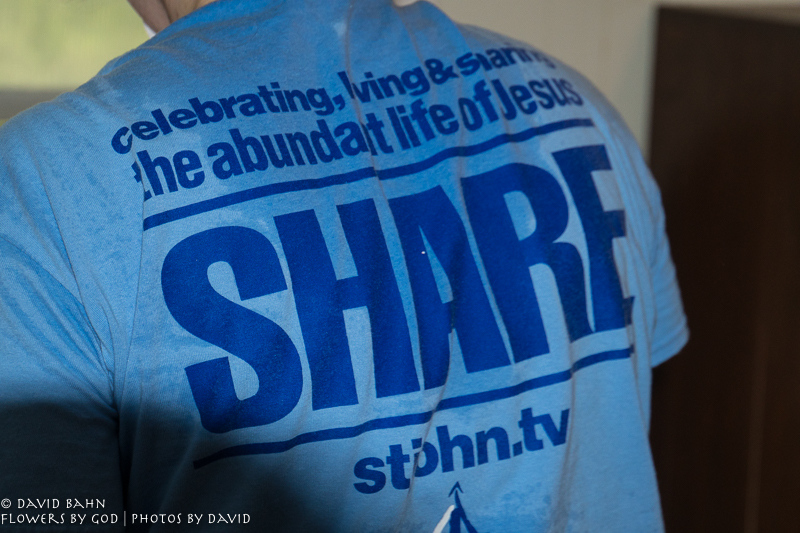
    St John Lutheran Church – Harvey recovery crew member shares the love of Jesus in action. | September 2017

    Diane and I spent most of Labor Day helping with the continuing clean-up processes in the Cypress community. The challenging task of ripping up very-well-glued-down vinyl flooring proved to be a blister-inducing and back-aching process. We graduated from there to delivering items from a local assistance ministry to our church as a temporary warehousing solution. After that we learned about moping up remaining flood remnants with a bleach-based solution. By the time the day was over we were both tired. It was, however, a great Labor Day for us; we don’t often do physical work of that kind.

    Nor are we alone in this effort. Once again we had a large crew of people at St. John mustering in the morning for various houses and work-sites. People have mopped, scraped, sorted, vacuumed, mucked-out, cleaned, and worked in many different ways and places. The day was a Labor Day of a different sort for many people in our community.

    There is, however, another side to these stories – the side of the suffering, the flood victims, and those who have lost their homes, possessions, dignity, and courage in the face of these floods. While we who worked may need physical rest, those whose homes we visited have not only the physical exhaustion, but the emotional, mental, and spiritual exhaustion as well. They truly are weary and heavy ladened.

    The offer of Jesus of rest requires that we come to him, and that we take the yoke of his love and compassion as our own. We learn from him about grace, kindness, sacrifice, and love. We also learn faith. Jesus had perfect faith – something we do not have. We waver and doubt. Jesus never took his eyes or heart off his Father’s goodness, faithfulness, justice, love, and promises.

    But if we have a spark of faith – a bruised-reed allotment, a smoldering flax portion – we can find rest in Jesus. Even the spark of faith is a gift of the Holy Spirit. And even a spark can give us the clear conscience that affords a good night’s sleep. A flicker of faith can provide the peace of heart that allows us to lay our worries aside and with them the need to plan, scheme, and contingency-plan our way through life: an exhausting process!

    We will likely sleep well tonight, as long as we are not too achy. But the greater rest, which we all need is the rest for our souls that Jesus provides. Join him in a life of love, faith, mercy, grace, and truth. Sometimes such a path is difficult and burdensome. Those are especially good times for us to come to Jesus.

    PS: This happens to be my confirmation verse, and the verse that the pastor who preached at my ordination used for the message that day. – DLB