David Bahn – Reflections

Light from the Word and through the lens

  • For everything there is a season, and a time for every matter under heaven:

    a time to be born, and a time to die;

    a time to plant, and a time to pluck up what is planted;

    a time to kill, and a time to heal;

    a time to break down, and a time to build up;

    a time to weep, and a time to laugh;

    a time to mourn, and a time to dance;

    a time to cast away stones, and a time to gather stones together;

    a time to embrace, and a time to refrain from embracing;

    a time to seek, and a time to lose;

    a time to keep, and a time to cast away;

    a time to tear, and a time to sew;

    a time to keep silence, and a time to speak;

    a time to love, and a time to hate;

    a time for war, and a time for peace. – Ecclesiastes 3:1-8

    During our men’s Saturday morning Bible study we tend to chase rabbits and make pronouncements. Most of the time those theological rabbit trails are edifying. Sometimes our pronouncements are right on. Sometimes, though, they’re not. Just last week one of the guys turned to the wrong book of the Bible, going to Job 34 rather than Psalm 34. He thought it was serindipitious to discover a verse in Job that echoed the thoughts from the psalm we were reading.

    The verse, however, was taken out of context and really didn’t speak to the issue at hand. It sounded like it did. But it did not. At that point one of Job’s self-righteous friends was pontificating about how God acts. On one level he was right. But on the other hand, he was totally wrong.

    Elihu was saying true things about God that didn’t really apply to the situation. They were true words, but not aptly-applied: words not filly spoken.

    Sometimes we need to speak God’s word of confrontation, challenge, and exhortation. People may need to hear that they are dangerously wrong. Sometimes we need to defend God’s righteousness. Sometimes people need to be set straight. Wounds of a friend may be trusted. Enemies multiply kisses (Proverbs 27:6).

    There are other times, however, when God’s people need mercy, grace, assurance, and comfort. They need to know that they are loved. They need to be assured of God’s grace and forgiveness. They need to be comforted by his loving kindness.

    Wise is the one who knows what he really needs. An example: I ate too much tonight. The steak and potatoes were wonderful. The wine was a nice complement. I really didn’t need dessert, but I indulged in that as well. I feel bad in two ways. I feel bad that I ate too much, not taking good care of my body. I also feel bad physically. My stomach is too full. I have a touch of indigestion.

    The question comes: Ought I feel bad about this? This might actually be a time to feel bad about feeling bad. If my only regret is feeling bad about the discomfort I’m in because I overate, it would be a time to feel bad about feeling bad. I ought to feel that way. It’s not that God doesn’t love me, or that he won’t forgive me. It’s not that I am forever going to suffer for this culinary extravagance. There are consequences to our actions. And I’m living out one of them now.

    I look forward to tomorrow, and a new opportunity to experience God’s blessings and grace. I hope somehow to conquer this propensity toward excess food or drink. And I thank God (!) for the bad feelings I have now because they may just help me win my battle for healthier eating habits.


    Guatemala Flora | September 2018
  • I was stunned, or at least significantly shaken. You couldn’t have knocked me down with a feather, but you could have knocked me down with a small pillow! “Dave, we need to talk.”

    “Yes?” It sounded serious, but I was on pretty solid ground I thought. “What’s up?”

    “You know when you were talking to your sister about our marriage?”

    “Yes.”

    “Well, you said that we have a great marriage, and when you said that I got this feeling in my heart, ‘How come it doesn’t feel so good to me?’

    Perhaps you’ve been there before. You’re thinking you’re really on solid ground. You’re really right. You are on high moral ground. It might be an argument where you’re sure she’s wrong, or a conviction that he just doesn’t understand. It might be a day-to-day conviction that is not actually serving you well because you don’t see the issues you need to face. But at some point in the fray you discover, “Ugh! I’m really the one who is wrong. Very wrong. Very wrong, indeed.”

    These words are appropriate for us at all times:

    Therefore let anyone who thinks that he stands take heed lest he fall. – 1 Corinthians 10:12

    Or recall this encounter:

    And when they had sung a hymn, they went out to the Mount of Olives. 31 Then Jesus said to them, “You will all fall away because of me this night. For it is written, ‘I will strike the shepherd, and the sheep of the flock will be scattered.’ 32 But after I am raised up, I will go before you to Galilee.” 33 Peter answered him, “Though they all fall away because of you, I will never fall away.”34 Jesus said to him, “Truly, I tell you, this very night, before the rooster crows, you will deny me three times.”35 Peter said to him, “Even if I must die with you, I will not deny you!” And all the disciples said the same. – Matthew 26:30-35

    No one wants to feel bad. We all want to be happy, hopeful; a hail-fellow-well-met. No one likes a sour puss. We shun the pessimistic glooms-day prophets. Let’s hear happy news!

    If we do not take our lost and broken state to heart we will not experience the fullness of God’s grace. Jesus was the Word-made-flesh, full of grace and truth. Grace without truth is a sham and no grace at all. Truth without grace is a master of misery. We need both. Desperately.

    Fortunately for me, Diane’s comments reached my heart in a Holy-Spirit-inspired moment of humility. I listened and we talked. I learned much from that conversation, not the least of which is that my need for Jesus’ mercy and forgiveness – and that of Diane’s as well – is not just a theory. And the experience of that is a rich blessing of life and hope.

    20180906-DSC09944
    Guatemala Flora | September 2018
  • “I don’t want to go swimming in those waters,” I said. I spoke those words with some quiet determination born of a mixture of great respect for the one who asked, and a genuine aversion to revisiting some of the painful experiences of my past.

    “You might think of it this way. It’s not so much choosing to swim in those waters as it is to acknowledge that they are there.” I thought about that and eventually determined to do as he asked. A couple of weeks later I brought the written account of those dirty waters and shared them with this godly and wise-beyond-his-years counselor. When he read them outloud I winced at some of the words I had written. It wasn’t the same as experiencing the pain for the first time. But it was not pleasant.

    Though unpleasant it was a step toward healing. I tend to pretend that troubles don’t exist; or at least that they will soon go away if I ignore them long enough. This does not always serve me well, and this was a moment facing the brutal facts.

    As we talked, Bruce asked me, “Did you dad talk to you about your feelings when that happened?” He was talking about the death of my sister, his daughter. “No. We didn’t do that,” back then.

    “Still,” he said, “wouldn’t that have been helpful?”

    “Yeah, but no one knew to do that. It would be like asking someone why they didn’t wear Zirckon (a made-up name) space suits when they went into outer space. They didn’t exist and no one knew we needed them.” I was proving my point, I thought.

    “Yes,” he said, “but wouldn’t it have been helpful? Wouldn’t it have been a good thing to help you sort through your feelings?”

    “I don’t want to blame my parents for that stuff,” I offered.

    “I’m not talking about blame. Wouldn’t it have been helpful to have learned how to process pain in a more healthy manner than just pretending it doesn’t exist? It’s not your parents’ fault, but the pain was still there.” He had asked the question a third time.

    One another occasion someone asked a question three times. Like peeling an onion. Layer after layer comes off until you get to the center.

    When they had finished breakfast, Jesus said to Simon Peter, “Simon, son of John, do you love me more than these?” He said to him, “Yes, Lord; you know that I love you.” He said to him, “Feed my lambs.”  

    He said to him a second time, “Simon, son of John, do you love me?” He said to him, “Yes, Lord; you know that I love you.” He said to him, “Tend my sheep.” 

    He said to him the third time, “Simon, son of John, do you love me?” Peter was grieved because he said to him the third time, “Do you love me?” and he said to him, “Lord, you know everything; you know that I love you.” Jesus said to him, “Feed my sheep. – John 21:15-17

    “What do you think Diane is feeling right now?”

    The question caught me off guard. “I feel like a kid in school caught daydreaming. I’m sorry.”

    “No problem,” he said, and he went on talking with Diane. A few minutes later he asked, again, “What do you think Diane is feeling right now?”

    This time I was ready! “I think she’s feeling kind of frustrated, maybe a little bit hurt, and…” He cut me off with a kind but mildly-dismissive shake of the head and wave of his hand.

    A few minutes he asked again, “What do you think Diane is feeling right now?”

    “I have no idea,” I said – not defiantly or dismissively. That was the moment, however, when I became more real and out from behind the walls of denial I had built. That’s what Diane said, “I feel like the walls just came down.”

    For years I thought she was talking about her walls, and that she was now more willing to make herself available to me. How wrong I was! She saw my walls coming down. I had no answers, only myself – broken as we were.

    Blame is simply the other side of the denial coin. In either case we are not dealing with the real issues. If we can blame others, it’s not our fault. It’s theirs to deal with and fix. If we refuse to admit there is a big problem we do not know how to solve, we chain ourselves to the problem we say is not actually there.

    When Jesus asked Peter those three times about his love for him, he was helping Peter see more clearly his need for Jesus’ mercy and his higher calling to bring grace and love to others. What questions might Jesus be asking you?

    20180906-DSC09931-Edit
    Fuchsia | Guatemala | September 2018
  • I’m not certain what possessed me to pick a fight with him.We’ll call him Peter Drake. He had almost every advantage on me. He was taller than I, and stood uphill from where I stood. He was older, and a better fighter than I was. I should have known this, because he was a known bully at school. But he was on our property and I felt that he should not be allowed to stay.

    “Get off our property,” I commanded. My command was not particularly commanding. I may have been all of 9 years old.

    “Who’s gonna make me?” His reply was defiant. He stood with arms on his hips.

    “I am.” I had a weapon of sorts; a broken gooseneck lamp slung over my shoulder with a nylon belt. It would have made a formidable impact. “You want to fight?”

    “I’m not going to fight someone with a thing like that slung over his shoulder.”

    Foolish me: I dropped my makeshift weapon. His reaction was swift and on target. He landed a one-two punch right on my nose. I ran home crying. I don’t know how long Peter remained on our property.

    Later that day, my dad tried to teach me to fight. He put up a makeshift punching bag and urged me, “Hit it!” I took a weak swipe. “Harder! Harder! Harder!!” I never really got into that. It’s never been my style.

    Perhaps, however, that is a place where I should feel a bit bad. There is a battle raging all around you and me. St. Paul puts it this way:

    Finally, be strong in the Lord and in the strength of his might.11 Put on the whole armor of God, that you may be able to stand against the schemes of the devil.12 For we do not wrestle against flesh and blood, but against the rulers, against the authorities, against the cosmic powers over this present darkness, against the spiritual forces of evil in the heavenly places. – Ephesians 6:10-12

    I would much rather believe that we can all just get along. I’d rather hold to the idea that we can be friends, and that I need not take on intruders, forces of evil, and deal with fiery darts and stinging assaults of the enemy.

    There is a legitimate need to feel bad about our sins. The term we use for such bad feelings is contrition. Contrition is sadness of the heart over our sins. We are feel bad that we have disobeyed God’s commands. We are sad that we have hurt our neighbor. We feel bad because we have damaged our relationship with God.

    We ought to feel bad about failing to enter the fight against evil. But we need not fight without weapons of the Spirit. The helmet of salvation, shield of faith, breastplate of righteousness, belt of truth, and sandals of the gospel all offer protection from Satan’s ploys. The one offensive weapon we have is the sword of the Spirit, the word of God.

    You might think that we should feel bad, perhaps, that we don’t know or use the word of God as skillfully as we should. Either we neglect to use it in times of temptation, or neglect to apply it when we are alone or afraid. Perhaps we even drop it in the face of those who belittle the word and dismisses this weapon as unworthy of our conversation. We too easily fail to bring the Word of God into a discussion of even significant moral issues. This is cause for contrition.

    But that’s not the only move we need to make in regard to our sin. Contrition is a start, but it’s only a start. The fuller expression comes when we add faith to our bad feelings, and begin to act on what we confess. If God’s word is not in its proper place in our lives we must repent and believe the Good News. God forgives sins and has treasures of grace and truth in his Word for us to “read, mark, learn, and inwardly digest” (cf. Collect for the Word, below).

    Don’t feel bad about feeling bad about your sin. Feel bad, then confess them, forsake them and follow Jesus.

    20180906-DSC09926
    This miniature pineapple blossom was growing on the top of a plant at a coffee plantation we visited in Guatemala. It is perhaps 1 inch tall. September 2018

    Collect for the Word

    Blessed Lord, who hast caused all Holy Scriptures to be written for our learning, grant that we may in such wise hear them, read, mark, learn, and inwardly digest them, that by patience and comfort of Thy holy Word we may embrace, and ever hold fast, the blessed hope of everlasting life, which Thou hast given us in our Savior Jesus Christ, who liveth and reigneth with Thee and the Holy Ghost, ever one God, world without end. Amen. – The Lutheran Hymnal, p. 14

  • I was 19 years old and still living at my parents’ home, attending college in that same town. I had no idea on that Friday afternoon what I would discover to my horror. Barbara, the oldest of my three younger sisters, stayed home from school that day.

    Our sister Kathy, the middle of the three younger sisters had come home and was playing in the basement. According to Barbara. Only she wasn’t playing when I discovered her body at the bottom of the stairs. No need for details here, but it is apparent to me – these many years later – that she had been playing on the banister with a belt around her neck and had fallen off, strangling herself. It takes my breath away to say that even these 57 years later.

    “Kathy!” I was yelling as I ran down the stairs into the dark basement of the home my dad’s family had built when he was 18 months old. “Kathy!”

    “Barbara! Call the police! Call the ambulance!” I took Kathy’s body upstairs and laid her on the floor of our entry hall. I gave her mouth-to-mouth resuscitation. Barbara was in a panic and didn’t know what to say, so I got on the phone to direct the ambulance to our house. It seemed like they were there in seconds. That was a most memorable day. Stunning. Shocking. Devastating. Sad.

    There were also memorable days that followed. Family and friends descended upon our house and family. People cried with our parents. They brought food. They visited. They shared stories. Most of all they came and walked with us through those dark hours and days. My image, even today, was that these people with whom my parents had built years of relationships, from church to local motel owners, to bridge club members, to supper club friends, to Sunday school class members, together with our extended family as well as my friends, and friends of my sister Barbara – these people en masse picked us up and carried us through those grief-stricken days.

    My mom, much like the mom of the 18-month-old who drowned, was nearly inconsolable. Decades later, whenever we would mention Kathy, she would tear up. Much like Rachel of the Old Testament, there was a hole that no one could fill.

    Thus says the Lord: “A voice is heard in Ramah, lamentation and bitter weeping. Rachel is weeping for her children; she refuses to be comforted for her children, because they are no more.” – Jeremiah 31:15

    This was a time to feel bad. This was a true, tragic, and terrible loss. There is no sugar-coating it. A child, not quite 7 years old was taken from us.

    Forty years later Diane and I were on our way home from a meeting at our church. As we turned a corner near our home, we saw a woman, who looked to be 40 or 50 years old. She was on the street half-heartedly begging for money. I had already driven past her, but I couldn’t just keep going. It was starting to rain. I turned the car around and went back to see how we could help.

    When we drove up to her, we asked. She said, “I need some money for food for my dog.” Not what we expected by a long shot. I asked her name. “Kathy.” That’s when it hit me hard: that could have been my sister! We gave her $5.00 – not much for a woman braving the elements with only her dog. But she insisted. She did not need anything else.

    There is a strong parallel between my sister on the Friday and this 50-year-old Kathy on that rainy night. They were both alone. Kathy in the basement. Kathy on the street with her dog.

    This is no blame game. That is only an exercise in futility. Blame never heals wounds. I never charts a new course. It never provides hope. Think of it, though. If Kathy had been playing with friends. If Kathy had a community of people around her to help her make her way in a better way. What different outcomes might there have been. We’ll never know.

    Last week Diane and I were in Chicago where we led a group of church leaders through a leadership training process that centered in discovering one’s core (identity), capabilities, and context, then seeking to leverage those for the cause of Christ’s kingdom: Leadership from Within. We made one vital point in the process: We most often see leaders fail when they go it alone. Another way of saying that is community can keep us on the rails of leadership and of life itself.

    We experienced a vital corollary to the danger of lone-ranger leadership or living. During the beginning moments of the experience several participants were very timid in claiming their space, embracing their identity, admitting to their competencies, and looking for the intersection of those with their context. They were not courageous.

    During the days that followed, they forged some new relationships. They began to share with one another. Bit by bit at first, but then more and more. Soon the time came for people to share with the whole group. One by one, even the most timid and tentative ones began to share. Soon new courage emerged. New courage grew stronger. People began to show up. They began to tell their stories. The community was strengthened in the process.

    Courage is cultivated in community. It may be forged in the heat of battle, but it is the confidence that one is not alone that allows courage to raise its head.

    Don’t feel bad about feeling bad.Lean into that group of women who will walk with you to higher ground and help you see new horizons of hope. Get connected with others who will be your band of merry men who will stand shoulder-to-shoulder with you in the battle for your souls and the rule and reign of Jesus.

    You don’t get over feeling bad by denying the reality that is causing the pain. But you don’t have to go it alone. There is one preemptive thing you can do that can help you rise above depression and dark moments of trouble, tragedy, and terror when those days come: you can begin now to live in community. Build relationships. Deepen connections. Embrace sisters and brothers in grace and truth.

    20180906-DSC00028
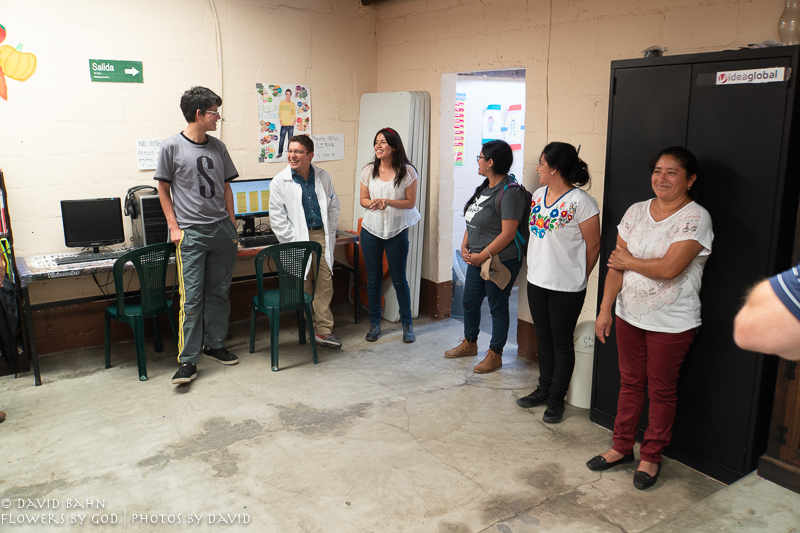
    The ministry team at the community center we visited in Antiqua, Guatemala. September 2018
  • She was inconsolable, even hysterical, with grief. “My baby boy! My baby boy! He’s…” In a terrible tragedy the couple’s 18-month-old boy had fallen into a backyard swimming pool and drowned. They had called me from the hospital, and I wasn’t even sure who they were – though they said they had visited the church I was serving. When I got to the hospital, she told me again and again, “Tell me he’s in heaven. Tell me he’s not in hell.” This was the non-stop plea of this mother who had lost her son.

    Decades before this, I had discovered my own 8-year-old sister who had died in an accident in our home. She had been playing and somehow had hung herself. That death rocked our world. At least with Kathy, however, we knew she believed in Jesus. She said as much, even asking to be baptized. My mom and dad spoke with our Baptist pastor and determined that it was too early for her to be baptized. But we never really doubted her simple childlike faith. It’s not the lack of baptism, but the lack of faith and refusal of this gift that condemns.

    An 18-month-old cannot as easily make a confession of faith in Jesus. He had not asked to be baptized. Nor had his parents brought him to be baptized. This was partly at the root of this distraught, hysterical, inconsolable, and distressed mother.

    “Whoever believes and is baptized will be saved, but whoever does not believe will be condemned.” – Mark 16:16

    These words bring great comfort. Baptism is the means by which God’s promises are sealed to a person. In baptism, God puts his name on the one being baptized, and the one being baptized is taking on a new identity as a child of God. This is an amazing gift and blessing, which we receive by faith.

    When our youngest son was born he weighed 3 pounds- 12.5 ounces. He was a very little baby. Three days later (though he had been given an 8 on the 10 point apgar scale of newborn health) the doctor asked Diane to speak with us both. It was a Sunday morning and I was already at church, preparing for Bible class and worship. When she called, Diane said, “The doctor wants to see us.”

    “Now?” I asked.

    “Yes, now,” she said. “But you don’t have to hurry.”

    How do you take in that information? Now, but don’t hurry. About your newborn son, or worse yet, about your wife? “I’ll be right there.”

    I went into the Bible class room and asked one of the elders to take the Bible study that morning, and drove the 10 minute trip to the hospital in 5 minutes (You don’t have to worry…yeah sure.).

    Once there the doctor told us that he wanted to send our son to Arkansas Children’s Hospital – a 40-mile trip in what he called “a mobile intensive care unit.” I called it a truck.

    “Can I baptize him first?” the earnest and concerned father asks.

    “Sure,” replied the kind and understanding doctor.

    Diane and went to the Neonatal ICU, got a styrofoam cup with water and as I poured the water on his head, I said, “Stephen Paul Bahn, I baptize you in the name of the Father and of the Son and of the Holy Spirit.”

    “Amen” Diane joined me.

    From that moment on, I knew that certain promises of God applied to Stephen that before that simple act did not directly apply. For a partial list of these Bible promises, see below.

    The moment he was baptized, I was at peace. I gave him and Diane a kiss, handed him to her, and went on back to the church where I led the service and left afterwards to go see him at the hospital. I knew there were promises attached to him, and I was a peace.

    The woman who was on the phone that day, and who for months afterwards had continued to plead, “Tell me my son is in heaven. He is, isn’t he?”

    I gave her the only hope any of us really has in the face of death – for we cannot see into someone else’s heart. “God wants all people to be saved. We entrust our loved-ones into the hands of a loving and merciful God, ‘who takes no pleasure in the death of the wicked’ but desires that everyone looks to Jesus Christ and be saved.”

    This is not specifically about the baptism of children and infants. It is about finding a place of hope and peace in the face of death, tragedy, and loss of any kind. There is no silver bullet or magic word that would comfort that woman. I suspect her anxiety was much more about her own guilt for reasons beyond the child’s death.

    I feel sorry for that woman for many reasons – not the least of which is the loss of her son. Our hope, comfort, courage, and confidence in the face of death is based on God’s goodness, faithfulness, love, and grace. It is nurtured by God’s word. It is made ever more sure in community. It is a gift of the Holy Spirit.

    20180906-DSC00074
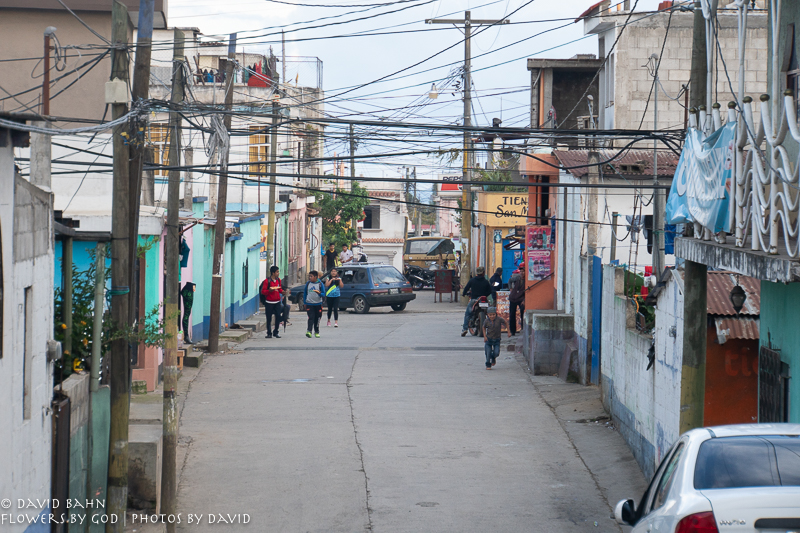
    Guatemala Street Scene | September 2018

    Bible Verses About Baptism’s Blessings

    • For as many of you as were baptized into Christ have put on Christ. – Galatians 3:27
    • Do you not know that all of us who have been baptized into Christ Jesus were baptized into his death? We were buried therefore with him by baptism into death, in order that, just as Christ was raised from the dead by the glory of the Father, we too might walk in newness of life. – Romans 6:2-4
    • And Peter said to them, “Repent and be baptized every one of you in the name of Jesus Christ for the forgiveness of your sins, and you will receive the gift of the Holy Spirit. For the promise is for you and for your children and for all who are far off, everyone whom the Lord our God calls to himself.” – Acts 2:38-39
    • He saved us, not because of works done by us in righteousness, but according to his own mercy, by the washing of regeneration and renewal of the Holy Spirit, whom he poured out on us richly through Jesus Christ our Savior, – Titus 3:4-6
    • Baptism, which corresponds to this, now saves you, not as a removal of dirt from the body but as an appeal to God for a good conscience, through the resurrection of Jesus Christ, – 1 Peter 3:21
  • She sat in my office in significant spiritual distress. “I’m not sure I have faith,” she cried. I’m not sure I really believe.” This was a spiritual struggle not unknown to any sincere Christian. These crises of faith come to anyone who deeply cares about God and his or her standing at the final judgment.

    The question, however, is a ploy of Satan. Do you really believe? Do you really trust Jesus? Is your faith strong enough? These are his seemingly legitimate questions. That’s what Satan does: he accuses. And he’s good at it. He has a way of finding our weak spot and probing to see where such innuendo and insinuation can weaken our soul and destroy our confidence before God.

    Satan knows that we know we will give an account to God. He knows that sincere Christians want to give a good account. He also knows that we have given into his tricks and ploys. His schemes have unfolded around the unsuspecting and innocent in ways that cause us to fall. He has shown us the fruit that is good for food, desirable for wisdom and pleasing to the eye. And we’ve taken it and eaten it. That fruit always hides a sharp barb that we discover only after we’ve tasted its sweetness.

    So when Satan accuses, he has a leg to stand on. All have sinned and fallen short of the glory of God. All of us have missed the mark. We’ve all turned aside. We’ve ignored God’s voice and abandoned his ways. If we think otherwise Satan has already blinded our hearts to the essential first step in answering the deep and challenging questions about faith.

    The answer to whether our faith is good enough or not, or whether we have saving faith, or any faith at all is to confess, “I have failed God and sinned so greatly that if I am to be saved it will only be by God’s grace.” Notice the intentional wording of that declaration. It’s not about our faith but about God’s grace. Any

    Our faith is not perfect. We waver and doubt. Even the first disciples – even after Jesus’ resurrection and proof-giving 50 days of post-resurrection appearances – struggled. You doubt this? Take a closer look at Matthew 28:16-17 “Now the eleven disciples went to Galilee, to the mountain to which Jesus had directed them.  And when they saw him they worshiped him, but some doubted” (Emphasis added).

    These are the men who are going to turn the world upside down. They would all one day, except for John, die the martyr’s death. They would become the hingepoint of the dramatic opening of countless hearts throughout the world to the Good News of Jesus. They would be imprisoned, tortured, beaten, burned alive, skinned alive, crucified (upside down) and otherwise abused for the sake of the name of Jesus.

    This was not a matter of atoning for their own sins. Their distress was not to make up for their earlier doubts. Their distress was because they believed that Jesus’ message and the resurrection was more important than life itself. Their doubts had turned to faith.

    Jesus did on occasion challenge the disciples’ faith. “Oh you of little faith,” Jesus laments as he stood in the boat and rebuked the raging sea (Matthew 8:26). “O you of little faith, why are you discussing among yourselves the fact that you have no bread?” he asks, right before feeding the multitude. “O foolish ones, and slow of heart to believe all that the prophets have spoken!” Jesus asks the disciples on the way to Emaus (Luke 24:25).

    The answer to questions about one’s faith is not to focus on faith, but to look at the One in whom we are to believe. The strength of faith is not the faith, per se, but the object of that faith. Have I sinned? Yes. Do I have doubts? Certainly. Do I have perfect faith? No way. But I have a perfect Savior. I have one who said, “Reach your hand here. See my hands and side” (John 20:27). Do I have perfect faith? No. But I have a Savior who in perfect faith entrusted himself to his Father and has sat down at the right hand of God.

    Satan wants us to focus on our faith. Faith focuses not on itself, but on our Savior.

    20180905-DSC09738
    This combination of artificial and natural flowers was a common sight in Guatemala. September 2018
  • Peter Wagner was teaching a class at Fuller Theological Seminary in Pasadena, California. He is somewhat famously known for his teaching on Church Growth, and the roll of signs and wonders in that phenomenon. He even brought John Wimber into our class for one session. Wimber is well known as a strong advocate for the miraculous and dramatic workings of the Holy Spirit. He was, until his death in 1997, a leader in the Charismatic Movement within the Christian Church.

    During a break in one of our class sessions I asked for prayer. I was suffering from a severe sinus infection and could barely speak. He had offered to pray for people during the breaks and I was ready to be healed. When I told him my prayer concern, he asked me about my limp. That was such a constant in my life, I wasn’t even aware of it most of the time.

    I explained that I had degenerative arthritis in my left hip and that it would lead eventually to a total hip replacement. He said, “I’m more concerned for your hip and leg than your cold.”

    “I agree,” I said.

    He sat me down and lifted my feet out in front of me, and asked, “Did you know one of your legs is shorter than the other?” When I acknowledged that I did, he called out to the people still in the room, “Anyone want to see the Lord lengthen a leg?”

    I was in no position to refuse since he was holding my feet out in front of me. A group of people gathered around. “In the name of Jesus, I command this leg to grow!”

    I don’t know how to explain it but I do know that I felt a sensation in my right thigh, and my right leg moved out about an inch. Wimber (who was not there at the time) would say that was an act of faith on Wagner’s part. “You can’t minister in doubt. You have to have faith,” he said on another occasion.

    The lengthening of my leg did not prevent further degeneration, and I eventually had my left hip replaced. But his act of faith and prayer for healing was a powerful experience. I felt loved and cared for, and I witnessed the power of God to do incredible things that day.

    God gives all Christians faith. “No one can say, ‘Jesus is Lord,’ except by the Holy Spirit” (1 Corinthians 12:3). Some, however, display faith in an extraordinary way. They heal diseases. They cast out demons. They do remarkable feats of faith in ways that create joy and encouragement for others.

    Such faith is not an extra measure of salvation. It is not something given only to super Christians (the best of the best of the best). Nor is this extraordinary faith something we achieve because we have worked harder than others to impress God.

    I say all this because we sometimes think of the victory of faith as something only dealing with healings, miracles, or super-heroic acts. For most Christians the victory of faith is much simpler, but no less far-reaching.

    • A father takes time to pray with his children before bed because he believes that God hears our prayers and that the kingdom of heaven does indeed belong to little ones. That child grows up to believe in God and honor him his whole life.
    • A high school girl remains sexually pure because she believes her body is a dwelling of the Holy Spirit, and she wants to honor God with her body (cf. 1 Corinthians 6:18-21). She goes on to become a mother and Sunday School teacher.
    • A single mom refuses the advances of her boss because she values her integrity more than a potential pay raise. She is able to give a powerful witness to others in her workplace about staying true to yourself.
    • A school teacher offers to pray for a child who is struggling with math because she values the child more than she fears potential repercussions from the school district. That child goes on to be a teacher herself and has a deeply kind heart toward all her students – especially those who struggle with math.
    • An older couple gives a first-fruits portion of their fixed income to the Lord through their offerings at their church, because they believe that God has provided for all their needs and he will not fail them. They inspire others to be generous and the work of the Church is able to go forward.
    • A sinner who has failed to do one or more of these things turns to God in repentance, believing that God is merciful and true to his word to forgive us when we confess our sins (1 John 1:8-9). We are able to encourage others to seek God’s mercy when they fail.
    • A group of men bring their friend to Jesus on a pallet because he cannot walk (cf. Luke 5:17-26). Jesus shows his glory as God in the flesh.
    • A woman touches the hem of Jesus’ garment in hopes that she would be healed…and she is healed (cf. Matthew 9:20-22).
    • A young couple sponsors children through a foreign mission agency because they believe that giving even a cup of water to a little one is an act of kindness to Jesus (Matthew 25:31-46).

    The victory of faith is not only those heroic acts of extraordinary faithfulness on the one hand, nor merely holding a true conviction about God in one’s heart on the other hand. The victory of faith is seen when our faith takes on flesh in acts of kindness and love for others.

    20180905-DSC09740
    Guatemalan Bougainvillia | September 2018
  • The conquering power that brings the world to its knees is our faith. – 1 John 5:4 The Message)

    I’ve experienced it only one time. I vividly recall the occasion and the feelings around it. A woman in the church I was serving was struggling in her marriage. She and her husband were constantly struggling in their marriage. She came to talk with me one afternoon, pouring out her heart to me. We prayed for her and her husband. I had a meeting that afternoon in a town about 40 miles away.

    While I was traveling to that meeting, I began praying. “Dear God, I ask you to be with Brenda and Charles. Help them to make up. Help him to see how he is hurting Brenda. Help her to gain a better attitude and more respect for Charles. Thank you, Lord, for doing this! I just sense that good things are happening in their marriage right now. I commend them to you in Jesus’ name!” 

    The next day I got a phone call from Brenda. I asked her, “So how are things between you and Charles?” “You wouldn’t believe it,” she said. “We’re way better.” “Yes I would,” I said. I was praying for you.

    “Abram believed in God, and he counted it to him as righteousness.” – Genesis 12:6

    God’s victory over Satan was secured before the foundation of time when he chose his Son to redeem the world, rescuing it from Satan’s clutches. Two events, however, loom large in the salvation saga.

    The first takes place in the garden of Gethsemane. Today there are eight ancient olive trees there, near the foot of the Mount of Olives. These date back as far as 900 years ago. Two thousand years ago Jesus went there to pray. There, as Jesus poured out his heart and soul to God sweat fell from his forehead as drops of blood. The condition is known as hematohidrosis, which may be brought on by extreme stress.

    Three times Jesus asked that he be spared the death he was about to endure. Three times Jesus ended his prayer, “Not my will, but your will be done.” This is faith in its truest form. Against all odds, with no apparent hope for earthly deliverance, and in the struggle where life and death hangs in the balance, to say, “Thy will be done,” is a profound expression of faith. He is “the source and goal of our faith. He saw the joy ahead of him, so he endured death on the cross and ignored the disgrace it brought him. Now he holds the honored position—the one next to God the Father on the heavenly throne” (Hebrews 12:3). He is the one who “continued entrusting himself to him who judges justly” (1 Peter 2:23).

    When Jesus was on the cross he cried out in agony, “My God, my God why have you forsaken me!” (Matthew 28:46). This was the moment of Satan’s defeat. When God forsook Jesus, Jesus did not forsake God. Note well: Jesus called God his God. He asked, “Why have you forsaken me?” He still yearned for a deep and loving relationship with his heavenly Father even though his heavenly Father had forsaken him.

    This was the moment of Satan’s defeat. Satan may not have known it. But it was the moment of victory. When we suffer, and long for God’s help and it seems far away, faith in God wins the battle. Satan’s goal is to tear you away from God. God’s goal is to bring you ever closer to him.

    What does that victory look like? How do we embrace this faith and victory of God. We’ll leave that thought till next time.

    20180904-DSC09684
    Colorful Old Tires | Guatemala City | September 2018
  • Three young men were out for the night. One of the three rode in the back seat. The other had already claimed shotgun.” It would be a great night. On many levels, however, it was not. One of the guys had gotten ahold of some marijuana. “Hey you guys! Look what I have! Want to smoke some weed?”

    He was too afraid to say what he felt. He was actually scared. He didn’t want to get into trouble. He didn’t want to look like a chicken in front of his friends. He didn’t want to lose his chance to have some fun with his buddies that night. He said nothing. They went to a remote park and the two front-seat mates lit up. “Here you go. This is pretty good stuff.” Their conversation was a bit more colorful than that actually. There were grunts and sighs, groans and sniffs. There were colorful words describing the “stuff.” You get my drift.

    Still nothing from rider number 3. Somehow he wasn’t put on the spot. They didn’t force it on him. But after a while his curiosity got the better of him. He asked, “So let me have some.” They obliged. He coughed on the first drag. They laughed at him. He did better on the second try. They all laughed. Satan smiled.

    Make no mistake. This was not a first step into the deep chasm of drug addiction. It wasn’t really even a foray that would continue long. It was the essential first element of Satan’s design. It was a matrix of lies woven carefully into a beautiful blanket of blinding deception.

    When Satan tempted Eve, it wasn’t only about a fruit that was good for food, desirable for gaining wisdom, and pleasing to the eye. It was the web of lies Satan never even spoke directly – he is a deceptive and slick one!

    • “Did God really say…” The lie: God is unreasonable. He would actually try to curtail your enjoyment and tell you what to do!
    • “You will surely not die.” This was a blatant lie, but the hook had already been set. Rather than God being merely unreasonable, God is lying to you. He’s not told you the truth. 
    • “He knows you will become like him, knowing good and evil.” Not truly like him, but knowing good and evil; innocence lost. The greater lie: God is holding out on you. He is keeping something from you that you really do deserve. 

    Rider number 3 never really saw the greater harm of that moment. Satan smiled because he knew he had taken someone’s innocence, and undercut his trust in God and good.

    The story is not totally fabricated. I was rider #3. There was a temptation offered; though not exactly that one. Let that suffice. But know this well: any time Satan is able to deceive someone he is delighted. Any time we are led to distrust God, to Satan’s lead rather than seeking God’s ways, he has weakened the hold of faith and severed a thread of love. Add those up over time and – without intervention – he’s won the battle.

    Ah yes. Intervention. There is that guilt thing. There are those bad feelings of shame or even a headache, a broken relationship, job loss, or even physical illness. Sometimes God uses the just deserts of our sin to wake us up. Sometimes we do become aware of Satan’s designs and rebuke him to his face. Even that may be painful.

    We need never feel bad about doing the right thing – even when it hurts. Sometimes that’s the only way we can reveal Satan’s plans and designs to be what they are: a trap of deception, accusation, hopelessness, despair, godlessness, and death.

    20180904-DSC09670
    These boys were working on they large decoration for the coming Guatemala Independence Day celebration. September 2018