David Bahn – Reflections

Light from the Word and through the lens

  • Acts 24:22-27

    But Felix, having a rather accurate knowledge of the Way, put them off, saying, “When Lysias the tribune comes down, I will decide your case.” 23 Then he gave orders to the centurion that he should be kept in custody but have some liberty, and that none of his friends should be prevented from attending to his needs.

    24 After some days Felix came with his wife Drusilla, who was Jewish, and he sent for Paul and heard him speak about faith in Christ Jesus. 25 And as he reasoned about righteousness and self-control and the coming judgment, Felix was alarmed and said, “Go away for the present. When I get an opportunity I will summon you.” 26 At the same time he hoped that money would be given him by Paul. So he sent for him often and conversed with him.27 When two years had elapsed, Felix was succeeded by Porcius Festus. And desiring to do the Jews a favor, Felix left Paul in prison.

    20140123-2475

    The fullness of that faith is expressed in a life of faithfulness. Paul is living that life and Felix is being challenged by it.

    Felix appears to be a decent man. Even though he secretly hopes for a bribe (v. 26), he is not willing to let Paul’s accusers have their way at Paul’s expense. He knows enough to keep Paul in custody, but still allows him to have some liberty. He is willing to listen to Paul, and is even shaken by the challenging message of Paul about righteousness, self-control, and the coming judgment.

    We too often – and the world helps with this idea – relegate faith to embracing a series of philosophical truths and theological doctrines. We know them and believe them to be true. It is on that basis that the world challenges us with the faulty conclusion that people are saved just because they name God correctly or have the right religion. But faith in Christ compels us to act. Faith is manifest in a life of faithfulness.

    Faith is a relationship of fear, love, and trust, centered in the life, death, and resurrection of Jesus. Felix had the fear part down. He was intrigued, apparently, by the message of Christ and Paul’s preaching. But fear consumed him and prevented him from embracing Christ – at least as far as we can tell.

    While we cannot look into the heart of Felix, we can examine our own hearts in regard to the fullness of faith in our lives. Do we fear, love, and trust in God above all things? Do we love God, love our neighbor, and seek his kingdom? Do we embrace righteousness, self-control, and look to the coming judgment? If we are simply checking-off our understanding or assent to these truths, we are not expressing the fullness of faith. We will never do these things perfectly; that’s why we have a Savior. That’s why faith alone saves us, for faith receives the perfect righteousness of Jesus. Such faith, however, will move us to fear, love, and trust in God above all things.


  • Acts 24:1-19

    And after five days the high priest Ananias came down with some elders and a spokesman, one Tertullus. They laid before the governor their case against Paul. 2 And when he had been summoned, Tertullus began to accuse him, saying:

    “Since through you we enjoy much peace, and since by your foresight, most excellent Felix, reforms are being made for this nation, 3 in every way and everywhere we accept this with all gratitude. 4 But, to detain you no further, I beg you in your kindness to hear us briefly. 5 For we have found this man a plague, one who stirs up riots among all the Jews throughout the world and is a ringleader of the sect of the Nazarenes. 6 He even tried to profane the temple, but we seized him. 8 By examining him yourself you will be able to find out from him about everything of which we accuse him.”

    9 The Jews also joined in the charge, affirming that all these things were so.

    10 And when the governor had nodded to him to speak, Paul replied:

    “Knowing that for many years you have been a judge over this nation, I cheerfully make my defense. 11 You can verify that it is not more than twelve days since I went up to worship in Jerusalem, 12 and they did not find me disputing with anyone or stirring up a crowd, either in the temple or in the synagogues or in the city. 13 Neither can they prove to you what they now bring up against me. 14 But this I confess to you, that according to the Way, which they call a sect, I worship the God of our fathers, believing everything laid down by the Law and written in the Prophets, 15 having a hope in God, which these men themselves accept, that there will be a resurrection of both the just and the unjust. 16 So I always take pains to have a clear conscience toward both God and man. 17 Now after several years I came to bring alms to my nation and to present offerings. 18 While I was doing this, they found me purified in the temple, without any crowd or tumult. But some Jews from Asia—19 they ought to be here before you and to make an accusation, should they have anything against me. 20 Or else let these men themselves say what wrongdoing they found when I stood before the council, 21 other than this one thing that I cried out while standing among them: ‘It is with respect to the resurrection of the dead that I am on trial before you this day.’”

    20131121-0064

    I recall an interchange during a presentation done by a colleague of mine, classmate from our seminary days and now professor at Concordia Seminary in St. Louis. It took place at a pastor’s conference when a few younger and more earnest and vigilant brothers challenged what the professor was saying. Dr. Jeffrey Gibbs very patiently listened to their concerned then politely and firmly disagreed with their criticism. He was more patient than I would have been, I think, and I commended him for it.

    Accusations fly against Paul, but their bluster is far greater than their substance. The charge against him is three-fold. He is a plague who stirs up riots, a ringleader of a troublesome Jewish sect, and he tried to profane the temple. None of these are true charges, and seem much like charging someone today with not loving baseball, and apple pie: difficult to prove to say the least.

    Paul’s defense is far more substantive on two fronts. He denies the charge that he stirred up riots and protests the charge of profaning the temple. He shows his respect for the faith of his fathers and respect toward God and the temple as well as his peaceful ways. He even reminds them of the fact that they found him purified in the temple. The one thing he does admit: he used the controversial issue of the resurrection to his advantage, in effect turning his accusers against themselves since they were divided in regard to this profound teaching.

    I’m not certain I would have had the patience of Paul in this same situation. Once you’ve been down the path with your detractors more than once (this is Paul’s second hearing and defense), patience can grow thin. Of course, however, our example ought not be only Paul, but the Lord whom he served. Jesus had saved him with a gracious patience difficult to imagine, reaching far into his life and granting him mercy in copious amounts.

    Maybe there is someone who doesn’t understand you, someone who falsely accuses you, or someone who seems to undercut your every move or question your every motive. Our calling as those who follow Jesus Christ is to show the same kind of long-suffering (an apt synonym for patience!) that Christ has shown us. Patience is a gift well received when reflected toward others.

  • Acts 23:23-35

    Then he called two of the centurions and said, “Get ready two hundred soldiers, with seventy horsemen and two hundred spearmen to go as far as Caesarea at the third hour of the night. Also provide mounts for Paul to ride and bring him safely to Felix the governor.” And he wrote a letter to this effect:
    “Claudius Lysias, to his Excellency the governor Felix, greetings. This man was seized by the Jews and was about to be killed by them when I came upon them with the soldiers and rescued him, having learned that he was a Roman citizen. And desiring to know the charge for which they were accusing him, I brought him down to their council. I found that he was being accused about questions of their law, but charged with nothing deserving death or imprisonment. And when it was disclosed to me that there would be a plot against the man, I sent him to you at once, ordering his accusers also to state before you what they have against him.”
    So the soldiers, according to their instructions, took Paul and brought him by night to Antipatris. And on the next day they returned to the barracks, letting the horsemen go on with him. When they had come to Caesarea and delivered the letter to the governor, they presented Paul also before him. On reading the letter, he asked what province he was from. And when he learned that he was from Cilicia, he said, “I will give you a hearing when your accusers arrive.” And he commanded him to be guarded in Herod’s praetorium.

    20140131-062012.jpg

    Matthew Henry’s Commentary says, about these verses, simply:

    God has instruments for every work. The natural abilities and moral virtues of the heathens often have been employed to protect his persecuted servants. Even the men of the world can discern between the conscientious conduct of upright believers, and the zeal of false professors, though they disregard or understand not their doctrinal principles. All hearts are in God’s hand, and those are blessed who put their trust in him, and commit their ways unto him.

    Others point out that Felix could have sent Paul to the governor of Syria, but that Felix wanted to deal with this issue that seemed to him to be simple: quick and easy and on to other things. All this, however, sets the stage for two important things to come. First Paul will share his testimony of how he was converted, seeking to persuade Felix to come to faith in Christ. Second, Paul will appeal to Caesar and be sent to Rome. In this process, however, Paul will speak before Festus, Agrippa, Bernice, and many other important Roman officials and Jewish leaders. He will use every opportunity to share the gospel with these people.

    Sometimes we may get bogged down in the twists and turns of life. Seldom is the line from one chapter of life to another simple and straight. We might think that those twists are little more than irritants and unproductive doldrums, or even worse as setbacks. If, however, we are following Christ, we can be certain that God is at work at such times just as much as he is when our prayers are being answered and the path forward is clear and straight.

    We can also rejoice that God is at work not only through those who follow him, but also through those who simply do the right thing outwardly. The law enforcement person who justly follows the law – be he pagan, Christian, or Muslim, is doing the work of God outwardly. Even the cruel boss or vindictive co-worker may be a tool of God insofar as he or she does what is right – even with a bad attitude.

    The greater joy is that God is at work in all these things ultimately to seek and save the lost. We may have the privilege of being part of his work in the lives of others directly sharing the Good News of Jesus. That is a singular joy. But we are no less doing the work of God when we do our duty, obey the law, protect the innocent, and serve for the good order of all. That might be a good thing to keep in mind today as you end your week and plan your weekend.

  • Acts 23:1-11

    And looking intently at the council, Paul said, “Brothers, I have lived my life before God in all good conscience up to this day.” And the high priest Ananias commanded those who stood by him to strike him on the mouth. Then Paul said to him, “God is going to strike you, you whitewashed wall! Are you sitting to judge me according to the law, and yet contrary to the law you order me to be struck?” Those who stood by said, “Would you revile God’s high priest?” And Paul said, “I did not know, brothers, that he was the high priest, for it is written, ‘You shall not speak evil of a ruler of your people.’”

    Now when Paul perceived that one part were Sadducees and the other Pharisees, he cried out in the council, “Brothers, I am a Pharisee, a son of Pharisees. It is with respect to the hope and the resurrection of the dead that I am on trial.” And when he had said this, a dissension arose between the Pharisees and the Sadducees, and the assembly was divided. For the Sadducees say that there is no resurrection, nor angel, nor spirit, but the Pharisees acknowledge them all. Then a great clamor arose, and some of the scribes of the Pharisees’ party stood up and contended sharply, “We find nothing wrong in this man. What if a spirit or an angel spoke to him?” 10 And when the dissension became violent, the tribune, afraid that Paul would be torn to pieces by them, commanded the soldiers to go down and take him away from among them by force and bring him into the barracks.

    11 The following night the Lord stood by him and said, “Take courage, for as you have testified to the facts about me in Jerusalem, so you must testify also in Rome.”

    20120422-130-XL

    Osama bin Laden is reported to have said of the American solders: We have religion, we have Islam. The American soldier may have the best weapons in the world, but on the inside, he is spiritually empty – a paper tiger. According to Wikipedia, a

    Paper tiger is a literal English translation of the Chinese phrase zhǐlǎohǔ (simplified Chinese: 纸老虎; traditional Chinese: 紙老虎), meaning something that seems as threatening as a tiger, but does not withstand challenge.

    Paul’s response to the threats of the chief priests, Sadducees and Pharisees shows him to be no paper tiger. The difference is remarkable; the key to true courage is good conscience. Paul shows himself to be courageous on this occasion, but his courage is founded on a higher strength than his own. He is in service to God and committed to being faithful in his service to Christ. His conscience is clear which is why he can be truly courageous.

    Paul’s claim to a good conscience is simple and clear: “Brothers, I have lived my life before God in all good conscience up to this day.” His willingness to stand up to the crowd and speak in the face of threat and eminent physical harm is testimony to his courage. These two are a powerful combination.

    Need courage? Follow where God leads. Need a good conscience? Confess and forsake your sin. That may take you far in the face of paper tigers or real threats. The would needs people of good conscience and courage. Those who embrace these qualities have profound kingdom impact.

  • Acts 22:22-30

    Up to this word they listened to [Paul]. Then they raised their voices and said, “Away with such a fellow from the earth! For he should not be allowed to live.” 23 And as they were shouting and throwing off their cloaks and flinging dust into the air, 24 the tribune ordered him to be brought into the barracks, saying that he should be examined by flogging, to find out why they were shouting against him like this. 25 But when they had stretched him out for the whips, Paul said to the centurion who was standing by, “Is it lawful for you to flog a man who is a Roman citizen and uncondemned?”26 When the centurion heard this, he went to the tribune and said to him, “What are you about to do? For this man is a Roman citizen.” 27 So the tribune came and said to him, “Tell me, are you a Roman citizen?” And he said, “Yes.” 28 The tribune answered, “I bought this citizenship for a large sum.” Paul said, “But I am a citizen by birth.” 29 So those who were about to examine him withdrew from him immediately, and the tribune also was afraid, for he realized that Paul was a Roman citizen and that he had bound him.

    30 But on the next day, desiring to know the real reason why he was being accused by the Jews, he unbound him and commanded the chief priests and all the council to meet, and he brought Paul down and set him before them.

    20120602-9367-3

    I am reminded of the line from the movie Men in Black: “You have no idea who you are dealing with Son.” I recall an occasion when my son asked a would-be bully, “Do you know my friend Mike?” Mike was big and bad, and his name saved my son from a lot of trouble. It was one of those moments on this occasion where Paul seemingly casually asks the centurion, “Is it lawful for you to flog a man who is a Roman citizen and uncondemned?” Oops! Let’s rewind that tape!

    The prospect of being “examined by flogging” is something I would never wish to face. But it is but a footnote to the larger story of Paul’s witness and preaching of the Gospel. This is not a treatise against unjust brutality toward prisoners. Luke mentions only that Paul asks the question and the centurion quickly withdrew. Even the tribune was afraid; it was his job to protect the ordinary citizens from unjust treatment and apparently he nearly failed to do his duty on this occasion.
    All this unfolds as prelude to the next day’s session with Paul and the chief priests and council. Paul will have an opportunity to declare the gospel once again. He could decide to play up his unjust treatment and threaten trouble for those who falsely accuse him. He will not do that, however. As we will see Paul is not above using political and even theological controversies to his advantage. But make no mistake, his main objective is not to get out of jail. His objective is to proclaim Jesus as Lord.
    The question that begs for answer here is, Why are these people so utterly intent on bringing down Paul? What danger does he pose? It is the same question I would ask about Kenneth Bae, the American missionary being held in North Korea: What threat does he pose to the North Korean government or people? It is the question I would also pose to the vociferous people who mock and ridicule Pro-Life proponents.
    On this 41st anniversary of the Roe v Wade Supreme Court decision legalizing abortion in all 50 states, I have another question: What protection does the unborn child have in the face of this violent act? What danger do those children pose?
    Thank God that Paul’s off-hand question allowed him to live to preach the gospel another day. What question might you ask that would give opportunity for the gospel to be heard – by one yet unborn, or by a neighbor, coworker, or friend?

  • Acts 22:12-21

    “And one Ananias, a devout man according to the law, well spoken of by all the Jews who lived there, 13 came to me, and standing by me said to me, ‘Brother Saul, receive your sight.’ And at that very hour I received my sight and saw him. 14 And he said, ‘The God of our fathers appointed you to know his will, to see the Righteous One and to hear a voice from his mouth; 15 for you will be a witness for him to everyone of what you have seen and heard. 16 And now why do you wait? Rise and be baptized and wash away your sins, calling on his name.’

    17 “When I had returned to Jerusalem and was praying in the temple, I fell into a trance 18 and saw him saying to me, ‘Make haste and get out of Jerusalem quickly, because they will not accept your testimony about me.’ 19 And I said, ‘Lord, they themselves know that in one synagogue after another I imprisoned and beat those who believed in you. 20 And when the blood of Stephen your witness was being shed, I myself was standing by and approving and watching over the garments of those who killed him.’ 21 And he said to me, ‘Go, for I will send you far away to the Gentiles.’”

    20120602-9361
    Not what you would expect to see in a blog post about God’s missionary work through Paul: Unexpected

    When it comes to the unexpected, God’s ways are beyond compare. Who would think that a Jewish man, taught by a leading rabbi, once keen on destroying the church, and even watching and approving the death of the first Christian martyr would be a Christian missionary? And as if that’s not enough, he ends up being the premier missionary to the Gentiles?!? Inconceivable! But that’s exactly how God changed Paul’s life, turning him from a Jew’s Jew into the greatest Gentile missionary ever. We might expect to be used by God to do things in keeping with our upbringing and life experiences. Often that is the case. But once in a while God will pull a Crazy Ivan, and recalibrate the course of a life in ways never imagined. A German monk from an obscure village in Germany becomes the center of a religious and cultural revolution. A group of Lutheran Christians in Ethiopia become the hotspot for the growth of the Lutheran expression of the Christian faith in the world. An obscure woman gives birth to a baby in a small village and he – through his shameful death, no less – becomes the center of all history. Paul might well have expected that he could speak to the Jewish people in Jerusalem to convince them to follow Jesus. He knew the way they thought. But God had other plans and would send him far away to the Gentiles. You and I are blessed by that sending. It doesn’t happen often to be sure. Most of us can rest easy in that regard. But it does happen. And when it does, great things happen for the sake of his kingdom. How might God’s plans for your life be dramatically different from what you expect? Is there someone completely unlike you who will cross your path today who will benefit from your witness?

  • Acts 22:1-5

    “Brothers and fathers, hear the defense that I now make before you.”

    2 And when they heard that he was addressing them in the Hebrew language, they became even more quiet. And he said:

    3 “I am a Jew, born in Tarsus in Cilicia, but brought up in this city, educated at the feet of Gamaliel according to the strict manner of the law of our fathers, being zealous for God as all of you are this day. 4 I persecuted this Way to the death, binding and delivering to prison both men and women, 5 as the high priest and the whole council of elders can bear me witness. From them I received letters to the brothers, and I journeyed toward Damascus to take those also who were there and bring them in bonds to Jerusalem to be punished. [The remainder of this account may be found below]

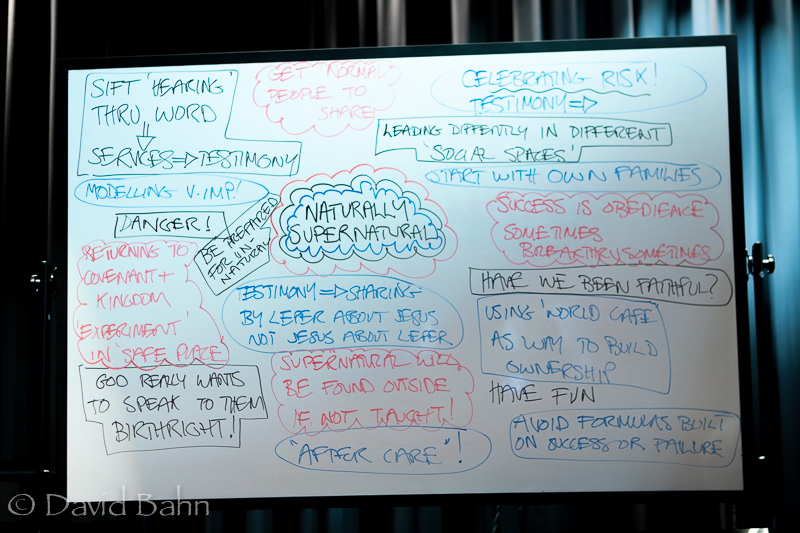
    Story Board from a Large Group Discussion about God's Work in our Lives
    Story Board from a Large Group Discussion about God’s Work in our Lives

    After the terrorist attacks on September 11, 2001 a Lutheran Social Services counselor went to Ground Zero, put up a sign that read, “Tell Me Your Story”, and had people lined up from morning to evening simply telling the story of their experiences during and after the attacks. Everyone has a story: even those who say they have no story have a story to share. It may not be as traumatic as those of the 9/11 attacks, or as dramatic as Paul’s conversion. But sit with someone over time and you will certainly soon hear his or her story.

    Luke tells of Paul’s conversion three times in his book of Acts. First in chapter 9 he traces the events surrounding the persecution of the early church, climaxing with Saul’s trip to Damascus and conversion along the way. Now, here in Acts 22, Paul tells the story himself, as he will, again, before King Agrippa as recorded in chapter 26. On this occasion Paul is speaking to a Jewish audience, and in the opening verses he lays out his Jewish credentials, and sets up the events that surrounded his dramatic conversion.

    The rest of the story is testimony to the far-reaching grace of God. For the Lord reached not only to Paul, but through him, “far away to the Gentiles.” In reaching to Paul, it was necessary to humble him, so he was blinded on the road to Damascus, and put into a situation of helplessness. He was led by the hand to a place where Ananias told him:

    “Brother Saul, receive your sight.” And at that very hour I received my sight and saw him. 14 And he said, “The God of our fathers appointed you to know his will, to see the Righteous One and to hear a voice from his mouth; 15 for you will be a witness for him to everyone of what you have seen and heard. 16 And now why do you wait? Rise and be baptized and wash away your sins, calling on his name.”

    Paul’s forced encounter with humility was a prelude to the happy experience of God’s grace. Restoration of sight, forgiveness of sins, and faith now centered in the name of Jesus are the deep and rich wells from which the water of life will flow. Jesus’ had promised, “Whoever believes in me, as the Scripture has said, ‘Out of his heart will flow rivers of living water’” (John 7:38). Paul is living out that promise as he shares the gospel message with people far and near. God’s grace also reaches through Paul to others.

    We may think that our story is either too dull (most of our stories are quite mundane), or too painful (some of our stories we would rather forget). But God works in the midst of everyday life just as he does through drama and turmoil. Often, furthermore, in the times of pain and difficulty our witness to God’s presence and grace rings with sweet clarity.

    When we learn to see God’s presence, far-reaching grace, and providential care for us in all of life, we are best prepared to bear witness to others. People love stories. Who needs to hear your story today?

    Acts 22:6-20

    6 “As I was on my way and drew near to Damascus, about noon a great light from heaven suddenly shone around me. 7 And I fell to the ground and heard a voice saying to me, ‘Saul, Saul, why are you persecuting me?’ 8 And I answered, ‘Who are you, Lord?’ And he said to me, ‘I am Jesus of Nazareth, whom you are persecuting.’ 9 Now those who were with me saw the light but did not understand the voice of the one who was speaking to me. 10 And I said, ‘What shall I do, Lord?’ And the Lord said to me, ‘Rise, and go into Damascus, and there you will be told all that is appointed for you to do.’ 11 And since I could not see because of the brightness of that light, I was led by the hand by those who were with me, and came into Damascus.

    12 “And one Ananias, a devout man according to the law, well spoken of by all the Jews who lived there, 13 came to me, and standing by me said to me, ‘Brother Saul, receive your sight.’ And at that very hour I received my sight and saw him. 14 And he said, ‘The God of our fathers appointed you to know his will, to see the Righteous One and to hear a voice from his mouth; 15 for you will be a witness for him to everyone of what you have seen and heard. 16 And now why do you wait? Rise and be baptized and wash away your sins, calling on his name.’

    17 “When I had returned to Jerusalem and was praying in the temple, I fell into a trance 18 and saw him saying to me, ‘Make haste and get out of Jerusalem quickly, because they will not accept your testimony about me.’ 19 And I said, ‘Lord, they themselves know that in one synagogue after another I imprisoned and beat those who believed in you. 20 And when the blood of Stephen your witness was being shed, I myself was standing by and approving and watching over the garments of those who killed him.’ 21 And he said to me, ‘Go, for I will send you far away to the Gentiles.’”

  • Acts 21:27-36

    When the seven days were almost completed, the Jews from Asia, seeing him in the temple, stirred up the whole crowd and laid hands on him, 28 crying out, “Men of Israel, help! This is the man who is teaching everyone everywhere against the people and the law and this place. Moreover, he even brought Greeks into the temple and has defiled this holy place.” 29 For they had previously seen Trophimus the Ephesian with him in the city, and they supposed that Paul had brought him into the temple. 30 Then all the city was stirred up, and the people ran together. They seized Paul and dragged him out of the temple, and at once the gates were shut. 31 And as they were seeking to kill him, word came to the tribune of the cohort that all Jerusalem was in confusion. 32 He at once took soldiers and centurions and ran down to them. And when they saw the tribune and the soldiers, they stopped beating Paul. 33 Then the tribune came up and arrested him and ordered him to be bound with two chains. He inquired who he was and what he had done. 34 Some in the crowd were shouting one thing, some another. And as he could not learn the facts because of the uproar, he ordered him to be brought into the barracks. 35 And when he came to the steps, he was actually carried by the soldiers because of the violence of the crowd, 36 for the mob of the people followed, crying out, “Away with him!”

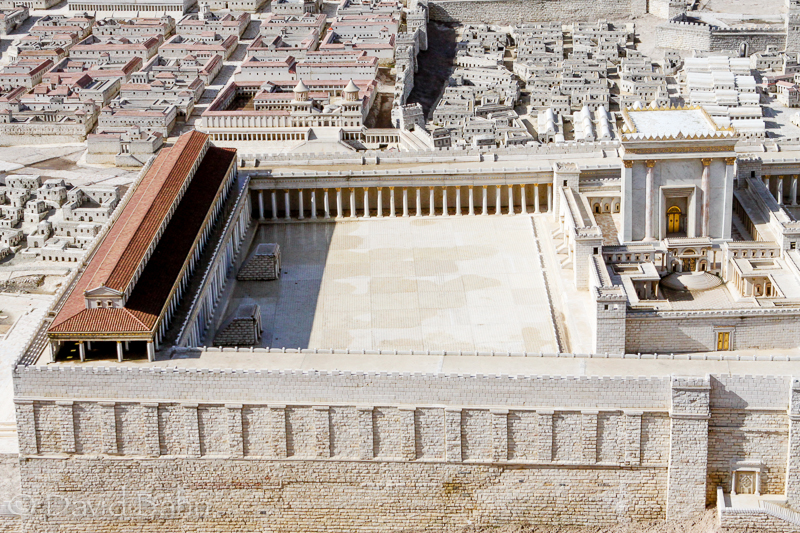
    The outer courts of the Jewish temple. Gentiles were allowed only in the most far away courts - beyond the court of the women.
    The outer courts of the Jewish temple. Gentiles were allowed only in the most far away courts – beyond the court of the women.

    The cartoon shows a pastor at his desk talking on the telephone. The caption: “Did Mr. Jones give $100,000 to our church last year? Give me 10 minutes and I’ll make certain he did.” As a pastor I got it: the pastor would call Mr. Jones and get the money from Mr. Jones since apparently he had not given it already. It’s like being asked if you did a good deed that you didn’t do: you wish you had done so.

    The Jews from Asia had supposed that Paul had brought Trophimus (a Gentile) into the temple. This was a scandalous offense. According to Josephus there was an inscription, written in Greek and Latin on the wall that enclosed the inner court of the temple, It is a capital crime for strangers to enter. The accusation that Paul had done so caused an uproarious riot. Things were so out of hand that soldiers and centurions came to quash the outbreak and discover what was happening.

    Luke does not say that Paul had or had not defiled the inner court of the temple in this manner, but the clear implication is that this was a false accusation. Although Paul was a Jew’s Jew, I can’t help but wonder if Paul wished he had done so. When Jesus died the curtain in the inner-inner part of the temple was torn in two, destroying the physical barrier separating even the priests from gaining access to the Holy Seat and presence of God. Paul had seen the Holy Spirit poured out on Gentile believers in visible demonstration of God’s favor. It was clear that there was no more distinction on God’s part between Jew and Gentile. Might Paul have wanted to show Trophimus (and the Jews) that all people should have access to the inner courts of the temple?

    There is no way to know the inner state of Paul’s mind, so we cannot say whether or not the idea even entered his mind. But we can say this, entrance into the Jewish temple – even the inner courts and the Holy of Holies – would soon be a non-issue. In less than two decades the temple will be destroyed by the Roman emperor Titus. Access to God is gained through Jesus Christ, and the message of the Gospel had already been spread among the Gentiles.

    On the one hand I might wish that I had done what Paul was charged with doing, but such a stunt would not serve the true Gospel message. And even though one might wish to have made the point – and to that extent be guilty as charged – the greater hope and desire of Paul is to share the Gospel message with all people. We will see that unfold in the coming events. Paul will use this riot and arrest as an opportunity to share the Gospel.

    If the charge against Paul is that he never stops looking for an opportunity to proclaim the Good News of Jesus, he would be happy to be guilty as charged. What charge might I wish to stand guilty for? How about you?

  • Acts 21:17b-26

    When we had come to Jerusalem, the brothers received us gladly. 18 On the following day Paul went in with us to James, and all the elders were present. 19 After greeting them, he related one by one the things that God had done among the Gentiles through his ministry. 20 And when they heard it, they glorified God. And they said to him, “You see, brother, how many thousands there are among the Jews of those who have believed. They are all zealous for the law, 21 and they have been told about you that you teach all the Jews who are among the Gentiles to forsake Moses, telling them not to circumcise their children or walk according to our customs. 22 What then is to be done? They will certainly hear that you have come. 23 Do therefore what we tell you. We have four men who are under a vow; 24 take these men and purify yourself along with them and pay their expenses, so that they may shave their heads. Thus all will know that there is nothing in what they have been told about you, but that you yourself also live in observance of the law. 25 But as for the Gentiles who have believed, we have sent a letter with our judgment that they should abstain from what has been sacrificed to idols, and from blood, and from what has been strangled, and from sexual immorality.” 26 Then Paul took the men, and the next day he purified himself along with them and went into the temple, giving notice when the days of purification would be fulfilled and the offering presented for each one of them.

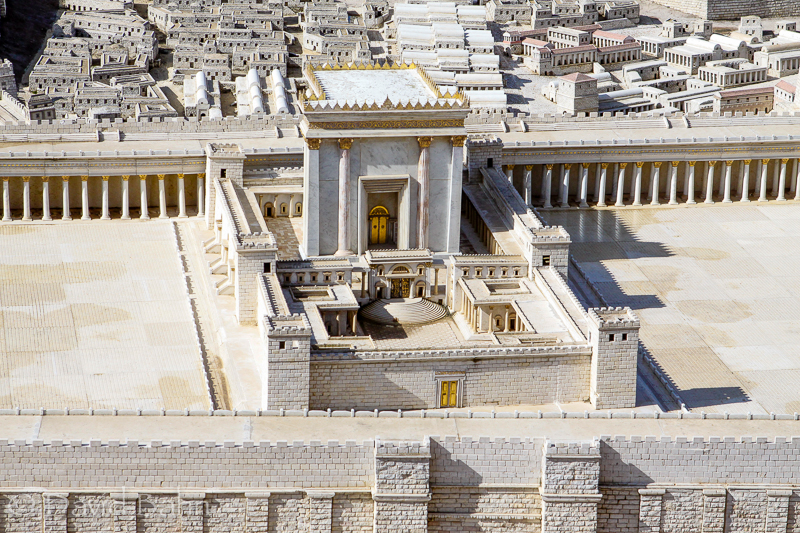
    A 1:50 scale model of the Jewish Temple as it would have looked at the time of Jesus and Paul.
    A 1:50 scale model of the Jewish Temple as it would have looked at the time of Jesus and Paul.

    When I was in Utah, and among the Mormons I made appoint of drinking coffee in public. It was my own little demonstration of freedom in Christ. I was showing that the Mormon “Word of Wisdom” that prevented them from drinking coffee did not apply to me. I’m not certain I was right in that practice; it may well have felt to them like a poke in the eye. On the other hand, when we made a point of dressing modestly and abstaining from alcohol among the Christians in Kenya I am certain that was the right thing to do. We didn’t want to offend them by our manner of dress or behavior.

    I 1 Corinthians 9, Paul writes, “To the Jews I became as a Jew, in order to win Jews. To those under the law I became as one under the law (though not being myself under the law) that I might win those under the law.” On this occasion, he is doing what he describes there: he was agreeing to show his respect for and observance of the Jewish Law. Why here  and why now? On another occasion Paul had circumcised Timothy. Prior to that, however, he had refused to circumcise Titus. Now he observes the Law. But in Galatians Paul makes a point of saying, “For all who rely on works of the law are under a curse; for it is written, ‘Cursed be everyone who does notabide by all things written in the Book of the Law, and do them.’ Now it is evident that no one is justified before God by the law, for ‘The righteous shall live by faith’” (Galatians 3:10-11).

    Matthew Henry’s commentary notes: “Those that are weak in the faith are to be borne with, when those that undermine the faith must be opposed.” On this occasion Paul agrees to the plan of the leaders of the church in Jerusalem. He will undertake a Jewish ceremonial observance to show that he lived in observance of the law. This plan did not work as they had hoped; the next day the Jews from Asia will incite a riot and the mob will try to kill Paul (cf. the rest of the Acts 21).

    But Paul didn’t do this in order that the plan would work. He had come to Jerusalem against all advice, knowing that people there would seek to kill him. He knew what it was like, also, to be zealous for the Law. He was willing to forsake the Jewish Law in his pursuit of the Mission of God among the Gentiles. He was willing to agree to this plan so as not to undercut his work with the Gentiles. But all this had less to do with Jews and Gentiles than it had to do with Christ. He knew that we are all saved by grace through faith. He knew the observance of the Law would not save him or anyone else. He knew Christ had done that perfectly, and sought at all costs to bring the gospel to people and people to the gospel.

    When I think of going the extra mile with one person or another, my ultimate motive is to honor Christ. That means my actions of restraint or long-suffering are less tied to my assessment of a person’s worth, and related more to Christ’s love for all people and his desire that all people be saved. If by refusing to drink coffee I could actually have a better chance of bring a Mormon to faith, I would refuse. If I need to show respect the traditions of long-time church members so as not to undercut my unconventional ministry to a group of non-conformists, I would do it. The key for me is understanding that I am doing all this for Christ.

    How far? And for whom? If I am following Jesus, the answer is: the whole path of my life, wherever he leads me. And when I fall off the path, I thank God that he picks me up and puts me back on the path and we continue to walk together in mission, and in the confidence of Christ’s salvation.

  • Acts 21:1-2 (see 3-15 below)

    And when we had parted from them and set sail, we came by a straight course to Cos, and the next day to Rhodes, and from there to Patara. 2 And having found a ship crossing to Phoenicia, we went aboard and set sail.

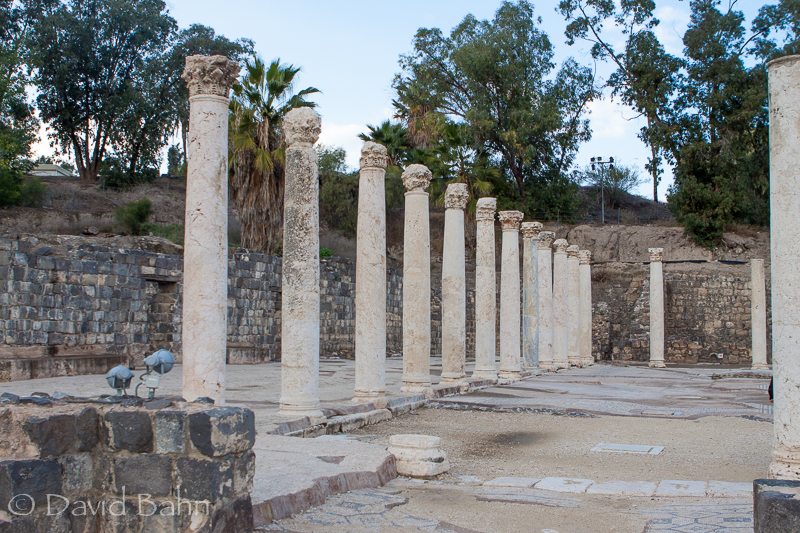
    Bet She'an - site of an extensive ancient ruin dating from the time of the Egyptians, Saul & David, and the Romans who developed a large Roman city here.
    Bet She’an – site of an extensive ancient ruin dating from the time of the Egyptians, Saul & David. The Romans also developed a large Roman city here.

    I have had the great fortune of learning history from two really great history professors. Sadly for me, they were the exception, not the rule in my personal experience. When I was first in college, I took a summer school history class that met at 7 a.m. Bad choice times two. First it was at 7 a.m.: what ever possessed me to think that was even a possibility? Second, the professor was simply boring, and I mean every caricature of the word you could imagine: monotone voice, lecture style, a list of dates, no sense of story or context that I needed in order to learn.

    But then along came Mr. Green. He was a graduate assistant, teaching at the university I attended. He was great: engaging, putting the meat of story and intrigue on the bones of dates and times. It didn’t hurt that the class was at a more respectable hour (10 a.m.). As a graduate assistant, however, he was neither tenured, nor exempt from the draft. When he got called up to active duty in the military, guess who took over his class?!? Sadly for me: Mr. 7 a.m. Monotone. It didn’t take long for my decent “B” to turn into a barely OK “C”. Ugh.

    When I was at the seminary, one particular history professor there was excellent. I still remember the day he used the whole class period to draw a chart on the chalk board showing the genesis and life cycle of the various Lutheran church bodies in the United States. The chart was a great visual for me, and he managed to make the history behind the lines, circles, and squiggles come alive as he told about mergers, falling-outs, and personalities along the way. History came alive for me through the teaching of that professor.

    If you read this section of Acts in a monotone voice, with little attempt at putting it in the larger context of the mission of God and the plot-thickening events that would ultimately send Paul to Rome, you will have little more than a travelogue. It will be a list of places in the order in which they were visited. But read the list in light of the dangers that await Paul, and the warnings he receives along his way, as he heads back toward Jerusalem, and the travelogue becomes an engaging story of God’s mission through Paul and in those various places. Add to that the fact that these are real places, not contrived Neverland creations. God’s mission is being lived out in real time in real places. Imagine what it was like to receive him in one of those places, and wonder: Why are you heading to Jerusalem, Paul?!? They want to kill you there! Stay here. Hunker down. Be safe. 

    But there is a bigger story. Paul will go to Jerusalem. There will be a plot to kill him. He will escape, and ultimately get to Rome. But all that is part of an even greater story. It is the story of the Mission of God being played out in the lives of Paul, his companions, and those he met along his way. It is the story that now involves you and me, for the Gospel has been spread all over the world. The Holy Spirit has compelled the witness of the Gospel to be shared, and we have heard it and believed it. Frankly, if it had not been Paul, it would have been someone else, for God will see to it that the lost are found and the elect are saved. But what a blessing to be part of his story of redemption and love for all people in Jesus Christ. What a great story we have to tell – whether it is this travelogue section of Acts, or the twists and turns that take Paul to Rome recorded in the coming chapters of Acts.

    This travelogue is more than a travelogue because it is part of the story of God’s salvation coming to people throughout the whole world. We now rejoice together in that salvation and give praise and glory to God for his salvation and discover that we are also part of the story of God that will end on the great last day.

    Acts 21:3-15

    3 When we had come in sight of Cyprus, leaving it on the left we sailed to Syria and landed at Tyre, for there the ship was to unload its cargo. 4 And having sought out the disciples, we stayed there for seven days. And through the Spirit they were telling Paul not to go on to Jerusalem. 5 When our days there were ended, we departed and went on our journey, and they all, with wives and children, accompanied us until we were outside the city. And kneeling down on the beach, we prayed 6 and said farewell to one another. Then we went on board the ship, and they returned home.

    7 When we had finished the voyage from Tyre, we arrived at Ptolemais, and we greeted the brothers and stayed with them for one day. 8 On the next day we departed and came to Caesarea, and we entered the house of Philip the evangelist, who was one of the seven, and stayed with him. 9 He had four unmarried daughters, who prophesied. 10 While we were staying for many days, a prophet named Agabus came down from Judea. 11 And coming to us, he took Paul’s belt and bound his own feet and hands and said, “Thus says the Holy Spirit, ‘This is how the Jews[c] at Jerusalem will bind the man who owns this belt and deliver him into the hands of the Gentiles.’” 12 When we heard this, we and the people there urged him not to go up to Jerusalem. 13 Then Paul answered, “What are you doing, weeping and breaking my heart? For I am ready not only to be imprisoned but even to die in Jerusalem for the name of the Lord Jesus.” 14 And since he would not be persuaded, we ceased and said, “Let the will of the Lord be done.”

    15 After these days we got ready and went up to Jerusalem. 16 And some of the disciples from Caesarea went with us, bringing us to the house of Mnason of Cyprus, an early disciple, with whom we should lodge.