David Bahn – Reflections

Light from the Word and through the lens

  • Psalm 23

    I’m telling you. This is my witness to those who are near me; anyone who will hear me:

    The Lord is my shepherd; I shall not want.
    2     He makes me lie down in green pastures.
    He leads me beside still waters.
    3     He restores my soul.
    He leads me in paths of righteousness
    for his name’s sake.

    I’m telling Him. Dear Lord my God, I’m telling you how thankful I am for your faithfulness and goodness. I will lean into you in the most difficult of times.

    4 Even though I walk through the valley of the shadow of death,
    I will fear no evil,
    for you are with me;
    your rod and your staff,
    they comfort me.

    5 You prepare a table before me
        in the presence of my enemies;
    you anoint my head with oil;
    my cup overflows.

    I’m reminding myself. God is faithful and will follow with me wherever I go. My whole life is a journey to the eternal house of God. I will be in his presence forever. That is really good. Amen.

    6 Surely goodness and mercy shall follow me
    all the days of my life,
    and I shall dwell in the house of the Lord
    forever.

  • Romans 1:8-17

    First, I thank my God through Jesus Christ for all of you, because your faith is proclaimed in all the world. 9 For God is my witness, whom I serve with my spirit in the gospel of his Son, that without ceasing I mention you 10 always in my prayers, asking that somehow by God’s will I may now at last succeed in coming to you. 11 For I long to see you, that I may impart to you some spiritual gift to strengthen you— 12 that is, that we may be mutually encouraged by each other’s faith, both yours and mine. 13 I do not want you to be unaware, brothers, that I have often intended to come to you (but thus far have been prevented), in order that I may reap some harvest among you as well as among the rest of the Gentiles. 14 I am under obligation both to Greeks and to barbarians, both to the wise and to the foolish. 15 So I am eager to preach the gospel to you also who are in Rome.

    16 For I am not ashamed of the gospel, for it is the power of God for salvation to everyone who believes, to the Jew first and also to the Greek. 17 For in it the righteousness of God is revealed from faith for faith, as it is written, “The righteous shall live by faith.”

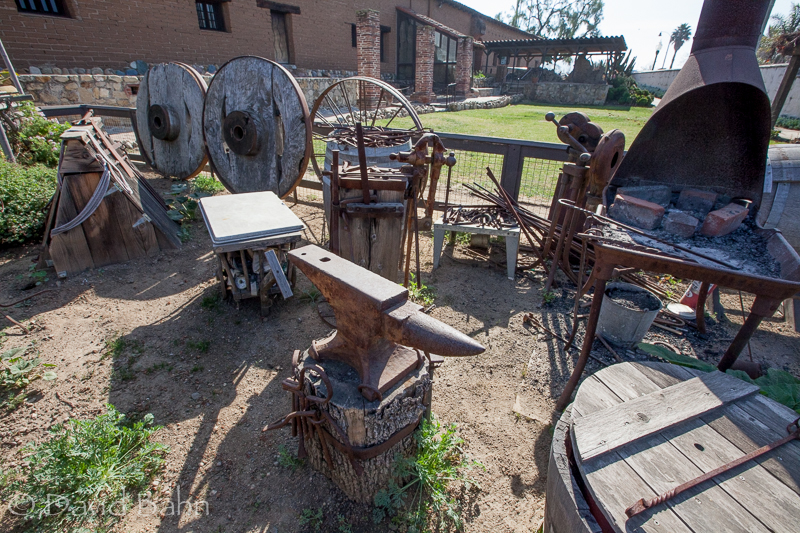
    Serra Chapel in the San Juan Capistrano mission
    Serra Chapel in the San Juan Capistrano mission

    Tom didn’t want anyone to know he was a Christian when he visited a “massage parlor,” so he took the cross off his lapel before entering. Mary was embarrassed about being a Christian so she told the guy she had just met that she wore it to keep vampires away. Maybe you cannot relate to these examples, but there are other ways we show that we are ashamed of the gospel. Keeping quiet when the issue of God comes up at the office, or avoiding faith conversations at all costs shows we are ashamed of the gospel. Denying our sin essentially sets aside the gospel: isn’t that a kind of shame? Isn’t refusing to forgive someone also a means by which we shame the gospel? Refusing to be broken – stiff upper lip and all – is yet another.

    Paul declares that he is not ashamed of the gospel. The Reformation Study Bible notes that, “Although the gospel is folly to the cultured, Paul sees his message as divine wisdom (1 Cor. 1:22–25, 30), and is not embarrassed by God’s way of salvation.” This Good News message, says Paul, is the power of God, revealing the righteousness of God for, through, from, and to faith.

    Martin Luther was deeply fearful of the righteousness of God. He saw it as demanding justice, and judgment against his sin. He greatly feared God’s judgment. But when he discovered – through deep and prolonged study of the Word of God – that the righteousness of God is God’s gift of righteousness to those who believe, he experienced his “tower conversion experience.” He wrote of it this way:

    I meditated night and day on those words until at last, by the mercy of God, I paid attention to their context: “The justice of God is revealed in it, as it is written: ‘The just person lives by faith.’” I began to understand that in this verse the justice of God is that by which the just person lives by a gift of God, that is by faith. I began to understand that this verse means that the justice of God is revealed through the Gospel, but it is a passive justice, i.e. that by which the merciful God justifies us by faith, as it is written: “The just person lives by faith.” All at once I felt that I had been born again and entered into paradise itself through open gates. Immediately I saw the whole of Scripture in a different light. I ran through the Scriptures from memory and found that other terms had analogous meanings, e.g., the work of God, that is, what God works in us; the power of God, by which he makes us powerful; the wisdom of God, by which he makes us wise; the strength of God, the salvation of God, the glory of God. [1]

    The gospel had been long-obscured by the Church in Luther’s day. Today that is not so obviously the case. So we may not struggle as Luther did with issues of the justice of God or the righteousness of faith. Surely, however, we can lean into this truth: the righteous shall live by faith. We are not only saved by faith, we live by faith. The righteous (read “justified”) live by faith; they embrace faith 24/7. They connect Jesus with everything they do.

    Faith is not an adornment, hanging around their neck like a cross or pendant. It is not a compartment in which Jesus is kept for religious occasions only. Faith is at attitude of life, a world-view that flows from the Holy Spirit within the believer into the streets and towns, markets and offices, the homes and playgrounds of life. Faith is a way of life for the righteous. I want to learn more about what this means. How about you?

    ________________________

    [1] An Excerpt From: Preface to the Complete Edition of Luther’s Latin Works (1545) by Dr. Martin Luther, 1483-1546 Translated by Bro. Andrew Thornton, OSB from the “Vorrede zu Band I der Opera Latina der Wittenberger Ausgabe. 1545” in vol. 4 of Luthers Werke in Auswahl, ed. Otto Clemen, 6th ed., (Berlin: de Gruyter. 1967). pp. 421-428. (c)1983 by Saint Anselm Abbey. Courtesy of Project Wittenberg.

  • Romans 1:1-7

    Paul, a servant of Christ Jesus, called to be an apostle, set apart for the gospel of God, 2 which he promised beforehand through his prophets in the holy Scriptures, 3 concerning his Son, who was descended from David  according to the flesh 4 and was declared to be the Son of God in power according to the Spirit of holiness by his resurrection from the dead, Jesus Christ our Lord, 5 through whom we have received grace and apostleship to bring about the obedience of faith for the sake of his name among all the nations, 6 including you who are called to belong to Jesus Christ,

    7 To all those in Rome who are loved by God and called to be saints:

    Grace to you and peace from God our Father and the Lord Jesus Christ.

    20140123-2429

    I remember the day vividly. We went to Little Rock for a sweat chloride test for our youngest son. He had been born 8 weeks early and after three days was thought to have symptoms consistent with those of Cystic Fibrosis. This terrible genetic disease brought with it many troubling implications for both him and our whole family. The definitive test, however, was the test he was having that day. The results would be available to us six hours later that day. So we spent the day shopping, and hanging out…waiting.

    When the results came in, “negative” I felt as though the weight of the world had been lifted from my shoulders. Hours of prayer and petitions of many had been offered to God. Even today, I am struck with how favored we were in regard to this health threat. Our son is strong and healthy, with two children of his own – two of our five granddaughters, and 3 grandsons. That was a day of good news.

    The Good News (“gospel”) of God to which Paul refers is even better news than what we learned that day. It is the basis for the entire letter he is writing to the people of God in Rome. It was promised many years previous through the prophets of the Old Testament. It centers in Jesus Christ, Son of God, descendent of David. It holds the hope of the resurrection from the dead. It is grounded in the Trinity. It overflows with God’s grace. It compels people (like Paul) to go great distances to proclaim. It is received by faith. It brings glory to God. It is a gift that brings peace. Those who embrace this Good News in faith are saints.

    This “gospel of God” is both from God and about God. God is the source of this good news. He was moved by his love for the world to send his Son to redeem the world. He was at work when Jesus died and when he was raised from the dead. The Holy Spirit declares this Good News by means of Jesus’ resurrection. The message itself is all about God’s good will for us who belong to Christ.

    Some will not see this as Good News. There are those who are both disobedient and unfaithful. Even we who believe sometimes lose sight of just how good this Good News actually is. But the constancy of God’s grace and peace centers our hearts whenever we pause to remember. Just as I did today, thanking God as I recall the the good news of the sweat chloride test results, we can all thank God as we reflect on the Good News he brings to us in his great love and salvation. It is the substance of grace and the source of true peace.

  • Acts 28:23-31

    When they had appointed a day for him, they came to him at his lodging in greater numbers. From morning till evening he expounded to them, testifying to the kingdom of God and trying to convince them about Jesus both from the Law of Moses and from the Prophets. 24 And some were convinced by what he said, but others disbelieved. 25 And disagreeing among themselves, they departed after Paul had made one statement: “The Holy Spirit was right in saying to your fathers through Isaiah the prophet:

    26 “‘Go to this people, and say,
    “You will indeed hear but never understand,
    and you will indeed see but never perceive.”
    27 For this people’s heart has grown dull,
    and with their ears they can barely hear,
    and their eyes they have closed;
    lest they should see with their eyes
    and hear with their ears
    and understand with their heart
    and turn, and I would heal them.’

    28 Therefore let it be known to you that this salvation of God has been sent to the Gentiles; they will listen.”

    30 He lived there two whole years at his own expense, and welcomed all who came to him, 31 proclaiming the kingdom of God and teaching about the Lord Jesus Christ with all boldness and without hindrance.

    20140214-2499

    It always amazes me that in the same neighborhood there will be a thriving Christian congregation along side a struggling Christian church. To some extent this may be laid at the feet of the pastor – for good or for ill. But in any case – struggling or thriving – it is not the pastor alone who bears the blame or receives the credit. For the people of the church together with the pastor form a congregation, which much like a family grows, struggles and succeeds over time. Sad to say, there are those who resist the gospel message and refuse to believe.

    Such was the experience of Paul in Rome. Although some of the Jewish leaders there believed that Jesus was the Christ, and the author of salvation, some did not. Refusing to believe, they proved God’s judgment right as Paul says in quoting from Isaiah 6. In the end, and certainly seeking to use even the jealousy of the Jews over against the Gentiles, Paul announces that the message of God’s salvation has been sent to the Gentiles who will listen and believe.

    And so it has gone: The message of this Jewish man from Galilee has circumvented the world, and nation after nation of non-Jewish people has embraced Jesus of Nazareth as Savior and Lord. The message of the gospel is, sadly, a two-edged sword, for there are those who will not embrace it – Good News as it may be. But it has pleased God to call many to faith by the power and working of the Holy Spirit. The message of the Kingdom of God and the Lord Jesus Christ continues to grow. God uses bold witnesses to convey that message to others.

    Thank God for those faithful, bold, and courageous witnesses to the message of the Kingdom of God and Jesus Christ!

    *The Word of the Lord Grows is the title of a 1972 New Testament commentary on Acts, by Martin Franzmann. It is also a phrase found in Acts 12 and 19.

  • Acts 28:11-22

    After three months we set sail in a ship that had wintered in the island, a ship of Alexandria, with the twin gods as a figurehead. 12 Putting in at Syracuse, we stayed there for three days. 13 And from there we made a circuit and arrived at Rhegium. And after one day a south wind sprang up, and on the second day we came to Puteoli. 14 There we found brothers and were invited to stay with them for seven days. And so we came to Rome. 15 And the brothers there, when they heard about us, came as far as the Forum of Appius and Three Taverns to meet us. On seeing them, Paul thanked God and took courage. 16 And when we came into Rome, Paul was allowed to stay by himself, with the soldier who guarded him.

    17 After three days he called together the local leaders of the Jews, and when they had gathered, he said to them, “Brothers, though I had done nothing against our people or the customs of our fathers, yet I was delivered as a prisoner from Jerusalem into the hands of the Romans. 18 When they had examined me, they wished to set me at liberty, because there was no reason for the death penalty in my case. 19 But because the Jews objected, I was compelled to appeal to Caesar—though I had no charge to bring against my nation. 20 For this reason, therefore, I have asked to see you and speak with you, since it is because of the hope of Israel that I am wearing this chain.” 21 And they said to him, “We have received no letters from Judea about you, and none of the brothers coming here has reported or spoken any evil about you. 22 But we desire to hear from you what your views are, for with regard to this sect we know that everywhere it is spoken against.”

    20140214-2528

    When my eight-year-old sister died in a tragic accident  in our home I recall – more than the pain and sadness – the kindness and love expressed to our family by people who came to our home and walked with us for those days. Some brought food. Others simply came and visited with us. Even my friends from college came to be with me and just hung out. It was as if we were picked up by this surge of people coming into our lives and carried across the raging torrent of grief and sadness that was flowing through our hearts. Now, more than 40 years later I recall with great thanksgiving how these people came into our lives.

    In times of grief and sadness, or times of stress and fear, the presence of friends and family can bring great comfort. Some of those present came because of their faith which we shared: a hope in Jesus, and a conviction about the goodness of God and his salvation. They knew the pain of grief, but also held to the hope of salvation. They wanted to help us embrace both of those well.

    As Paul is heading for Rome, and his trial before Caesar, having experienced storms at sea, shipwreck, and threats to his life, he is met by brothers in the faith who encourage him. Luke tells us, “Paul thanked God and took courage” (v. 15). He seeks the support and understanding of the local Jewish leaders as well. This great and intrepid missionary, having experienced scourging, shipwreck, beatings, and opposition of every kind was thankful for the encouragement his God brought him through these people.

    Perhaps you or I will never be put on trial for our faith. But we may know others who are hard pressed and would be greatly blessed by our encouragement and presence in their lives. What a blessing to be able to stand by others’ side, to offer courage, hope, and comfort. That opportunity may come this week or next month. When it does, we do well to stand with those who are suffering – whether for the cause of the gospel or in the face of any personal pain or loss. This is the blessing of the mutual conversation and consolation of the saints.

  • Sunday, February 16, I will be sharing a message based on Ephesians 3:14-21. Titled, What If…Family is a Blessed Blessing?, we will unpack this beautiful prayer for families, and in light of the Great Commission help families understand that God’s intent is to bless the world through his people gathered in families.

    In addition, Diane and I will be presenting at the Best Practices Conference in Phoenix, AZ. The presentation is about building a missional marriage and family, and is much the same as we have done for PLI and for past Best Practices conferences. One tool to help you in the process of building a missional marriage and family is to use a tool we have developed to write a Family Mission Statement. That document may be found here:

    Developing a Family Mission Statement

  • Acts 28:1-10

    After we were brought safely through, we then learned that the island was called Malta. 2 The native people showed us unusual kindness, for they kindled a fire and welcomed us all, because it had begun to rain and was cold. 3 When Paul had gathered a bundle of sticks and put them on the fire, a viper came out because of the heat and fastened on his hand. 4 When the native people saw the creature hanging from his hand, they said to one another, “No doubt this man is a murderer. Though he has escaped from the sea, Justice has not allowed him to live.” 5 He, however, shook off the creature into the fire and suffered no harm. 6 They were waiting for him to swell up or suddenly fall down dead. But when they had waited a long time and saw no misfortune come to him, they changed their minds and said that he was a god.

    7 Now in the neighborhood of that place were lands belonging to the chief man of the island, named Publius, who received us and entertained us hospitably for three days. 8 It happened that the father of Publius lay sick with fever and dysentery. And Paul visited him and prayed, and putting his hands on him healed him. 9 And when this had taken place, the rest of the people on the island who had diseases also came and were cured. 10 They also honored us greatly, and when we were about to sail, they put on board whatever we needed.

    20140123-2449

    The woman driving the black Jaguar or the man in the $3,000 suit: vixen or soccer mom? Businessman or drug lord? And when the Jaguar is sideswiped by a semi-truck or the suit is stained with a glass of red wine, what conclusions do you draw? Are you sad or smug? Do you worry about the unfortunate person or secretly delight that somehow justice has been served?

    Paul is seen, in these few verses, as murderer, god, and hero. It’s not absolutely clear that those whom he healed thought of him as a missionary, or to what extent they remained faithful, or even were converted to faith in Christ. But it is clear that the prisoner is in charge of the whole expedition. He visits a sick man and heals him. He is the focus of peoples’ speculations. He is the one now responsible for the resupply of their ship. He will go to Rome to see Caesar; but he is on a mission from God.

    Such a clear sense of purpose changes things – no matter what outward circumstances we may face along the way. If we have a clear sense of God’s calling, of his purposes, of his kingdom’s end, and the part we play in that, our lives become large. Great and mighty powers bow to the work of God in and through us.

    It takes the eyes of faith to see this: God’s work in the face of upheaval and the world’s tumult. When headlines are all about gay marriage, potential drafts, and anti-religious fervor at home and abroad, it may seem as though God isn’t in control at all. But shipwrecks, snake bites, and travails along the way to prison do not stop the spread of the Word of the Lord.

    God is good, gracious, true, and mighty. He established his kingdom from a cross and reigns from on high after triumphing over death three days later. That Good News compels us to faith in Christ and us to his mission. The kingdom is at hand whenever God’s people keep Christ on the throne of their hearts. That’s what Paul was doing even on this trip to prison in Rome. That is our calling as well: letting Christ reign in our hearts by faith.

  • Acts 27:21-25

    Since they had been without food for a long time, Paul stood up among them and said, “Men, you should have listened to me and not have set sail from Crete and incurred this injury and loss. 22 Yet now I urge you to take heart, for there will be no loss of life among you, but only of the ship. 23 For this very night there stood before me an angel of the God to whom I belong and whom I worship, 24 and he said, ‘Do not be afraid, Paul; you must stand before Caesar. And behold, God has granted you all those who sail with you.’ 25 So take heart, men, for I have faith in God that it will be exactly as I have been told. 26 But we must run aground on some island.”

    20140123-2460

    In a recent Bible class a young woman asked a very insightful and probing question: “How do I really believe this stuff? It’s almost like believing in unicorns, and sometimes I just don’t know how to get there.” Sometimes I have the same reaction to those who talk about God speaking to them directly, revealing some secret or future event. It truly is like believing in unicorns. It doesn’t hurt if someone does believe in unicorns, but I will certainly be skeptical of that person’s advise.

    Then along comes this occasion of God speaking to Paul regarding their future in the face of what must have been a frightful storm at sea. God spoke to Paul through an angel telling him that he and all those who traveled with him would be kept safe. There is also the particular fact that they “must run aground on some island.” (The full account of the lead-up to this moment in Acts 27 is worth the read.)

    I have not had any first hand experience with such revelation, though I have experienced what must be God’s hand of guidance and the Holy Spirit’s clear direction in my life. But far from unicorns or overly-active imaginations, God’s wisdom and knowledge is a treasure for which we must give thanks. As we learn to discern his voice, or receive the message of his angels we will likely be directed to places where we would not otherwise go. It may start with a change of attitude. It may bring personal clarity of purpose.

    In the mean time, we must be sure to serve and worship God alone: “…there stood before me an angel of the God to whom I belong and whom I worship…” We don’t worship unicorns, nor do we belong to our cravings for special revelation. We belong to God and serve and worship him alone. What’s more, the means by which we test any spirit is by the word of God alone. God’s word will never lead us astray.

  • Acts 26:1 (See the full account of Paul’s defense to King Agrippa below)

    So Agrippa said to Paul, “You have permission to speak for yourself.” Then Paul stretched out his hand and made his defense:

    20140123-2433

    Three times in the book of Acts the account of Paul’s conversion is recorded. Twice Luke records Paul’s own words and description of the events. The first time (Acts 9) Luke simply records the events as he learned them. Each time we see a particular aspect of the words of Jesus to Ananias at the time of Saul’s conversion: But the Lord said to him, “Go, for he is a chosen instrument of mine to carry my name before the Gentiles and kings and the children of Israel. For I will show him how much he must suffer for the sake of my name.” (Acts 9:15-16). Here he stands before the King Agrippa, not willing simply to make his defense, but calling even the king to repentance and faith in Jesus.

    Just so we see this clearly, Paul now includes this message from Jesus: But rise and stand upon your feet, for I have appeared to you for this purpose, to appoint you as a servant and witness to the things in which you have seen me and to those in which I will appear to you, 17 delivering you from your people and from the Gentiles—to whom I am sending you 18 to open their eyes, so that they may turn from darkness to light and from the power of Satan to God, that they may receive forgiveness of sins and a place among those who are sanctified by faith in me.’ (Acts 26:16-18)

    Agrippa’s response was to dismiss Paul: And Agrippa said to Paul, “In a short time would you persuade me to be a Christian?” 29 And Paul said, “Whether short or long, I would to God that not only you but also all who hear me this day might become such as I am—except for these chains.” (Acts 26:28-29)

    Paul’s desire for King Agrippa is the same desire God has for each of us: That we would turn from darkness to light and from the power of Satan to God, and receive forgiveness of sins and a place among those who are sanctified by faith in Christ. Our place in the heart and kingdom of God has been secured by Christ’s sacrificial death and triumphant resurrection. By the power and work of the Holy Spirit we may fully embrace that gift and life.

    Acts 26:1-32

    So Agrippa said to Paul, “You have permission to speak for yourself.” Then Paul stretched out his hand and made his defense:

    2 “I consider myself fortunate that it is before you, King Agrippa, I am going to make my defense today against all the accusations of the Jews, 3 especially because you are familiar with all the customs and controversies of the Jews. Therefore I beg you to listen to me patiently.

    4 “My manner of life from my youth, spent from the beginning among my own nation and in Jerusalem, is known by all the Jews. 5 They have known for a long time, if they are willing to testify, that according to the strictestparty of our religion I have lived as a Pharisee. 6 And now I stand here on trial because of my hope in the promise made by God to our fathers, 7 to which our twelve tribes hope to attain, as they earnestly worship night and day. And for this hope I am accused by Jews, O king! 8 Why is it thought incredible by any of you that God raises the dead?

    9 “I myself was convinced that I ought to do many things in opposing the name of Jesus of Nazareth. 10 And I did so in Jerusalem. I not only locked up many of the saints in prison after receiving authority from the chief priests, but when they were put to death I cast my vote against them. 11 And I punished them often in all the synagogues and tried to make them blaspheme, and in raging fury against them I persecuted them even to foreign cities.

    12 “In this connection I journeyed to Damascus with the authority and commission of the chief priests. 13 At midday, O king, I saw on the way a light from heaven, brighter than the sun, that shone around me and those who journeyed with me. 14 And when we had all fallen to the ground, I heard a voice saying to me in the Hebrew language, ‘Saul, Saul, why are you persecuting me? It is hard for you to kick against the goads.’ 15 And I said, ‘Who are you, Lord?’ And the Lord said, ‘I am Jesus whom you are persecuting. 16 But rise and stand upon your feet, for I have appeared to you for this purpose, to appoint you as a servant and witness to the things in which you have seen me and to those in which I will appear to you, 17 delivering you from your people and from the Gentiles—to whom I am sending you 18 to open their eyes, so that they may turn from darkness to light and from the power of Satan to God, that they may receive forgiveness of sins and a place among those who are sanctified by faith in me.’

    19 “Therefore, O King Agrippa, I was not disobedient to the heavenly vision, 20 but declared first to those in Damascus, then in Jerusalem and throughout all the region of Judea, and also to the Gentiles, that they shouldrepent and turn to God, performing deeds in keeping with their repentance. 21 For this reason the Jews seized me in the temple and tried to kill me. 22 To this day I have had the help that comes from God, and so I stand here testifying both to small and great, saying nothing but what the prophets and Moses said would come to pass:23 that the Christ must suffer and that, by being the first to rise from the dead, he would proclaim light both to our people and to the Gentiles.”

    24 And as he was saying these things in his defense, Festus said with a loud voice, “Paul, you are out of your mind; your great learning is driving you out of your mind.” 25 But Paul said, “I am not out of my mind, most excellent Festus, but I am speaking true and rational words. 26 For the king knows about these things, and to him I speak boldly. For I am persuaded that none of these things has escaped his notice, for this has not been done in a corner. 27 King Agrippa, do you believe the prophets? I know that you believe.” 28 And Agrippa said to Paul, “In a short time would you persuade me to be a Christian?” 29 And Paul said, “Whether short or long, I would to God that not only you but also all who hear me this day might become such as I am—except for these chains.”

    30 Then the king rose, and the governor and Bernice and those who were sitting with them. 31 And when they had withdrawn, they said to one another, “This man is doing nothing to deserve death or imprisonment.” 32 And Agrippa said to Festus, “This man could have been set free if he had not appealed to Caesar.”

  • Acts 25:1-12

    Now three days after Festus had arrived in the province, he went up to Jerusalem from Caesarea. 2 And the chief priests and the principal men of the Jews laid out their case against Paul, and they urged him, 3 asking as a favor against Paul that he summon him to Jerusalem—because they were planning an ambush to kill him on the way. 4 Festus replied that Paul was being kept at Caesarea and that he himself intended to go there shortly. 5 “So,” said he, “let the men of authority among you go down with me, and if there is anything wrong about the man, let them bring charges against him.”

    6 After he stayed among them not more than eight or ten days, he went down to Caesarea. And the next day he took his seat on the tribunal and ordered Paul to be brought. 7 When he had arrived, the Jews who had come down from Jerusalem stood around him, bringing many and serious charges against him that they could not prove. 8 Paul argued in his defense, “Neither against the law of the Jews, nor against the temple, nor against Caesar have I committed any offense.” 9 But Festus, wishing to do the Jews a favor, said to Paul, “Do you wish to go up to Jerusalem and there be tried on these charges before me?” 10 But Paul said, “I am standing before Caesar’s tribunal, where I ought to be tried. To the Jews I have done no wrong, as you yourself know very well. 11 If then I am a wrongdoer and have committed anything for which I deserve to die, I do not seek to escape death. But if there is nothing to their charges against me, no one can give me up to them. I appeal to Caesar.”12 Then Festus, when he had conferred with his council, answered, “To Caesar you have appealed; to Caesar you shall go.”

    20140123-2472

    There comes a time when you simply have to move forward. Sometimes it’s because it’s too dangerous to stay in place (like those who had to leave their homes because of raging wild fires a couple of years ago). Other times it’s because there is great hope and anticipation of good (as when a family leaves for vacation in the mountains). But sometimes it is because opportunity and desire align. Such seems to be the case with Paul after two years in prison in Caesarea. It was time to go. Paul’s missionary travels had been brought to a halt. He yearned to go to Rome (cf. Romans 1:15).

    Rather than give himself up to the evil desires of his enemies in Jerusalem, Paul seeks justice at the hands of Caesar. He will go to Rome, but not as a free man. He would not be able to stop along the way to visit the churches he had planted. He would not be free to change his plans according to the prompting of the Holy Spirit. But he would go to Rome. And he would be safe.

    Two years of conversations, limited access, visits from friends, witnessing to guards and others no doubt, are coming to an end. Paul will go to Rome. And with him will go the Gospel message of salvation. The thoughts and desires he expresses in his letter to the Romans are beginning to come true:

    First, I thank my God through Jesus Christ for all of you, because your faith is proclaimed in all the world. 9 For God is my witness, whom I serve with my spirit in the gospel of his Son, that without ceasing I mention you10 always in my prayers, asking that somehow by God’s will I may now at last succeed in coming to you. 11 For I long to see you, that I may impart to you some spiritual gift to strengthen you— 12 that is, that we may be mutually encouraged by each other’s faith, both yours and mine. 13 I do not want you to be unaware, brothers, that I have often intended to come to you (but thus far have been prevented), in order that I may reap some harvest among you as well as among the rest of the Gentiles. 14 I am under obligation both to Greeks and to barbarians, both to the wise and to the foolish. 15 So I am eager to preach the gospel to you also who are in Rome. (Romans 1:8-15)

    It is a beautiful thing when a godly desire is given opportunity to be fulfilled.