David Bahn – Reflections

Light from the Word and through the lens

  • For a brief moment I abandoned you, but with great compassion I will gather you. Isaiah 54:7

    God, who is rich in mercy, out of the great love with which he loved us even when we were dead through our trespasses, made us alive together with Christ. Ephesians 2:4–5

    20160728-Denali-02260
    These berries may have been currants (which we sampled) or they may be poisonous (which bears are able to eat, but which we did not). Photo taken at the Princess McKinley Lodge near Mount Denali, Alaska.

    A human being can go 3 minutes without air, 3 days without water, or 3 weeks without food – give or take a minute, day, or week or two. I’m not certain we can go even a second without God. So the revelation that God had abandoned his people – even for a brief moment – is stunning and difficult to fathom. Who would want to endure God’s abandonment for even a brief moment?

    The message here, however, is a comparison between God’s judgment, punishment, and discipline to his gracious compassion and saving mercy. Israel had been abandoned by God for a brief moment. There had been a time of God’s judgment during the Babylonian Captivity. But now God was gathering his people once again; and that with great compassion.

    So too with our salvation. God’s judgment against sin is clear: “The soul that sins shall die” (Ezekiel 18:4). That is what Jesus endured for us and our salvation. He was forsaken by God on the cross, but he remained faithful to the end. He is now exalted to God’s right hand. And God in his grace credits Christ’s righteousness to those who believe in him.

    God is rich in mercy, and powerful in grace. He reaches into our lives when we have wandered from his ways and brings us back to himself and to life. Perhaps you feel abandoned by God. Maybe you have wandered far from his ways. Take heart and hear his call to return, and rejoice in God’s goodness and mercy, love and grace. Rejoice in his gracious redemption in Christ Jesus our Lord.


  • And he said, “Go out and stand on the mount before the Lord.” And behold, the Lord passed by, and a great and strong wind tore the mountains and broke in pieces the rocks before the Lord, but the Lord was not in the wind. And after the wind an earthquake, but the Lord was not in the earthquake. 12 And after the earthquake a fire, but the Lord was not in the fire. And after the fire the sound of a low whisper. 1 Kings 19:11-12

    Now the Lord is the Spirit, and where the Spirit of the Lord is, there is freedom. 1 Corinthians 3:17

    20160728-Denali-02258
    This tiny Alaska flower caught my eye mostly because it was so small in comparison with the others nearby, and because it persisted against whatever had taken the lower leaves and blooms away.

    Walk more slowly. Talk less. Look more carefully. Listen more closely. Because the world is loud, and God whispers. This advice was shared with me a few years ago before we left for a trip to the Holy Land. It was good advice then. It is good advice today as well; for the world is still loud, and too often we think of God’s presence and reign as boisterous and intrusive. But that is not the way of God.

    Nor is God’s reign over the world today what we wish it would be in others’ lives. For we would like God to prevent others from doing evil, punishing, smiting, and intruding into the lives of those who would do evil, while letting us go our merry way, pursuing our own pleasures and peccadillos.

    God’s reign, however, is not most fully advanced in tornadoes or hurricanes. It is not when earthquakes or fires encroach that his most powerful work is done. These may shake our core, challenge our sense of security, and send us to our knees in fear. But they do not bring us to God. Nor do they establish his most complete rule on earth.

    When a sinner hears the Good News of God’s love in Jesus, and realizes that God’s intentions are entirely good – as is his entire being – then repents and believes; then the fullness of God’s rule and reign begins. When people repent and believe the Good News (cf. Mark 1:14-15), a powerful influence of God unfolds. God whispers his love into our hearts by the Holy Spirit. The presence of the Holy Spirit moves us to love God and neighbor. There is a delightful freedom with the Spirit’s presence.

    God’s most profound expression of power and reign is not loud, obnoxious, or intrusive. It is in the still small whisper of his grace and love, forgiveness, and salvation; and it points us toward a freedom nowhere else to be found.

  • Give generously to your needy brother and do so without a grudging heart. Deuteronomy 15:10 (NIV)

    If anyone gives even a cup of cold water to one of these little ones who is my disciple, truly I tell you, that person will certainly not lose their reward. Matthew 10:42 (NIV)

    20160726-Anchorage, Alaska-02108
    One of many hundreds of beautiful blossoms growing in various gardens in Anchorage, Alaska

    Imagine you have a daughter in college. She’s far from home, just getting her bearings around campus and around town. She hasn’t connected with any other students, isn’t interested in a sorority or other extra-curricular group. She’s not being very communicative with you, and what little you hear betrays a degree of depression that makes you want to get in the car to go see her yourself.

    Then you hear that a good friend was passing through the college town on a business trip and made a point of looking up your daughter. She took her to lunch, spent some time with her, and shared an idea about making a friend. And the idea seems to have caught on. You are greatly relieved, hopeful for your daughter, and deeply thankful to your friend.

    This is the picture of God’s heart when one person gives another a heart-felt gift of compassion. Our acts of kindness do not go unnoticed. When we refresh the souls of others, God notices. When we help the needy God is pleased.

    To do this without a grudging heart may be more difficult than we imagine. It’s too easy to keep score, and somehow expect a return of some sort of another. But we can do good, keeping in mind that the true pay-off is the blessing we give, and the difference we make in the lives of others.

    Perhaps knowing that God is pleased with our acts of mercy will help. Remembering, however, that the first act of mercy was God’s move toward us through his Son. He rescued us from a fate worse than any worldly distress – and in many ways also from worldly troubles by moving others to come to our aid. God’s love is the primary inspiration for any act of kindness to others. He is pleased whenever we reflect that love to one another.

  • The Lord made us, and we are his; we are his people, and the sheep of his pasture. Psalm 100:3

    Once you were not a people, but now you are God’s people. 1 Peter 2:10

    This lovely columbine flower was growing in the front yard garden of a house in Anchorage, Alaska.
    This lovely columbine flower was growing in the front yard garden of a house in Anchorage, Alaska.

    Photographers who are serious about their craft will develop a style. Look at a photo by Ansel Adams, and you see the beautiful use of black and white tones. Avedon was noted for his fashion photography. Dorothea Lange captured powerfully-moving images of depression-era families. They each put their thumbprint on their work. All these – whether they know it or not, and whether or not they acknowledge God – echo the creative nature of God.

    God’s work is even more recognizable than the most famous photographer or painter. Who but God can create a flower? The vision of the Milky Way Galaxy gives witness to the majesty of God’s being. God’s handprints are all over the created world and order. And when it comes to man, God shapes and forms from dust a being so unique that he leaves not just a handprint; he puts his thumbprint on man and woman, breathing into them the breath of life. We people are God’s creation. We belong to him. He created us. He cares for us.

    This is doubly true in regard to our relationship with God, for God not only created us, he redeemed us from the eternally bad consequences of sin, iniquity and transgression. For our rebellion put us outside the pale of God’s family, and destroyed our identity as his people. Our sin, rebellion, iniquity, and transgressions did not, however, put us outside the scope of God’s love and grace. He reached out to us in his Son, and sacrificed him in our place, and exalted him as the perfect expression of loving faithfulness, and now the source of our redemption and righteousness. God’s thumbprint on us has been restored, and added to that is the nail-scarred handprint of God’s salvation.

    We are God’s people twice over. Once by means of his creation, and secondly by means of his redemption. He made us, and he redeemed us. God’s handiwork is all over us: thumbprints and nail-scarred handprints too.

  • Out of the mouths of babes and infants you have founded a bulwark. Psalm 8:2

    Let the little children come to me; do not stop them; for it is to such as these that the kingdom of God belongs. Mark 10:14

    20160726-Anchorage, Alaska-02085
    A day lily unfolds in the morning sun Anchorage, Alaska.

    Imagine a gathering of a dozen or so people who have been invited to hear a proposal from the Prime Minister of Israel. The security is tight. The occasion very somber and the proposal of vital importance. He will be offering a very well-thought-out plan to bring peace to that troubled part of the world – taking into account issues surrounding Iran, North Korea, Syria, and Isis.

    Into this meeting wanders a child. Five or six years old, and needing help finding his parents who just happen to be in the same building. The child walks up to the Prime Minister and asks, “Can you help me find my mom and dad?” She isn’t worried about security, protocol, or anything other than her need to find her parents. She is bold, unashamed, and in need. She goes to the person in the room who just happens to have great power, many resources, and incredible authority. She may not know all that, but nonetheless, she goes, seeking and asking. I could imagine such a scene. Except for the the security guards who would surely intervene this is an entirely believable scenario.

    No wonder Jesus praises little children as heroes of faith. They are unashamed, unassuming, bold, completely aware of their need, and willing to ask anyone for help: President, Prime Minister, or next door neighbor. If we are honest, we are no different. We have great needs. We need God’s help.

    In faith – because of Jesus’ forgiveness and mercy – we can go unashamedly and boldly to God for help. Jesus’ security team tried to keep the children from gaining access to him, but he received them, took them into his arms and blessed them, and made the point that the kingdom of God belongs to such as them.

    We have a God who welcomes us with open arms, hears our prayers, and blesses us by his grace. When he answers our prayers we can do the child’s happy dance of joy – praising God for his goodness, mercy, help and love.

  • Out of the ground the Lord God formed every animal of the field and every bird of the air, and brought them to the man. The man gave names to all. Genesis 2: 19,20

    Are not five sparrows sold for two pennies? Yet not one of them is forgotten in God’s sight. Luke 12: 6

    20080314-untitled1
    This beautiful egret takes flight at High Island Rookery, about 30 miles east of Galveston.

    God’s creative work is a remarkably beautiful thing. Note how it is described: “God formed every animal of the field and every bird of the air.” The manner in which this act of creation itself is portrayed should cause us to pause. Creation is not the result of a fist-full of cosmic mud flung into space, and a happy result of nature’s impulsive, convenient, and propitious nexus with opportunity and chance. These sparrows, cardinals, eagles, finches, swallows, doves, geese, and parrots are the creative work of God. He made everyone of them. And he brought them to Adam that he might name them.

    We still have these works of art, and can see them every day. Whether it is the sparrow in our bird feeder, the hummingbirds coming to the bottlebrush plant in our back yard, the ducks at the nearby park, or the egrets, cranes, and other waterfowl at High Island: God’s handiwork is constantly on display.

    And it doesn’t stop there, according to Jesus. Not only has God created us and all creatures, and given us our eyes, ears, our reason and all our senses, he still takes care of them. God didn’t just make the world and let it go. He preserves, protects, provides for, and watches over all that he has made. Not even a sparrow is lost from his sight.

    It is one thing to acknowledge that God is the Creator of all that exists. There are even logical reasons to believe this. Faith, however, sees even beyond that to God’s ongoing care for his creation. The next step I take will be possible because God designed the human body as he did and provided laws of nature that allow us to live and move and have our being.

    All this says nothing of the ruin of creation by man’s sin, or the redemption of creation by Jesus’ life, death, and resurrection. Even now, the whole creation groans in travail awaiting the restoration of all things to their pristine glory (cf. Romans 8:21-23). In the mean time, as we wait, we do well to remember with great joy God’s creation and keeping of it. Martin Luther said, 500 years ago, that because of all this it is our duty to “thank and praise, serve and obey him.” This is most certainly true.

  • You shall not be partial to the poor or defer to the great. Leviticus 19:15

    My brothers, show no partiality as you hold the faith in our Lord Jesus Christ,the Lord of glory. James 2:1

    20160726-Anchorage, Alaska-02107

    I had never thought of showing partiality or being unjust as a  bondage from which we need to be set free. But the hymn verse that the Moravians shared with this text reads:

    So brothers, sisters, praise his name
    who died to set us free
    from sin, division, hate, and shame,
    from spite and enmity!

    Think about it though: showing partiality seems to be a matter of putting other people into a bind, and refusing to give them freedom in our hearts and lives to be thought well of, to succeed, or to gain access to our hearts. That seems to put them in bondage.

    When we put others in such bondage, however, we actually bind ourselves and put ourselves in a place we do not really want to be. The example comes to mind of part of the book, The Shack. It is described this way:

    Jesus directs Mack to a cave like entrance, which Mack unsteadily enters into. He comes to a chair sitting in the middle of an open space which he sits in. A beautiful Latina woman appears, and begins a barrage of questioning that intentionally lead Mack down a path of his judgment.

    Mack’s judgment, however, is not the judgement on him, but his judgement on others. He quickly discovers he is not fit to judge; he cannot draw the conclusions he was ready to draw when the time comes.

    If wonder if we were to encounter the true depths of our prejudice and partiality, we would experience the same thing and come to the same conclusion. We cannot sit in judgement of others. We cannot deny one person one then and give the same to another. It puts us in bondage to a transactional love and score-keeping the boundaries of which will ever tighten around our hearts.

    Only God’s unconditional love frees from such bondage. For he loves us and our neighbor. And if we are to claim his love for our own we cannot withhold it from our neighbor. Jesus has shown no partiality toward or against us. His love for us is the perfect pattern for loving others.

  • Psalm 23

    The Lord is my shepherd; I shall not want.
        He makes me lie down in green pastures.
    He leads me beside still waters.
        He restores my soul.
    He leads me in paths of righteousness
        for his name’s sake.

    Even though I walk through the valley of the shadow of death,
        I will fear no evil,
    for you are with me;
        your rod and your staff,
        they comfort me.

    You prepare a table before me
        in the presence of my enemies;
    you anoint my head with oil;
        my cup overflows.
    Surely goodness and mercy shall follow me
        all the days of my life,
    and I shall dwell in the house of the Lord
        forever.

    20160726-Anchorage, Alaska-02106
    This fierce blossom was one of many beautiful flowers in Anchorage, Alaska.

    I was asked to provide some of the specifics from today’s message about God’s protection, based on Psalm 23. So here are those thoughts…

    Erin Brownback was a guest on James Dobson’s radio program carried on the AFR network last Thursday (8/25/2016). Her commentary was so powerful that I decided to follow up and find the specifics of what she said. I discovered the article, Decline of a Nation by Kerby Anderson.

    A summary of Anderson’s article includes these thoughts:
    Each of the great civilizations in the world passed through a series of stages from their birth to their decline to their death. Historians have listed these in ten stages.

    1. From bondage to spiritual faith;
    2. From spiritual faith to great courage;
    3. From great courage to liberty;
    4. From liberty to abundance;
    5. From abundance to selfishness;
    6. From selfishness to complacency;
    7. From complacency to apathy;
    8. From apathy to moral decay;
    9. From moral decay to dependence;
    10. From dependence to bondage.

    The other step might be somewhere between selfishness and bondage. It is political correctness and hyper-tolerance, which leads to a sort of forced anarchy which requires people to accept anyone who says anything, does anything without censure because of a misapplied sense of freedom. No one can judge anyone ese. Nothing is wrong. It is the stench of moral decay, which will inevitably give way to dependence (think “Big Brother), and bondage.

    God calls us to repent and believe the Good News of Jesus Christ. God has also revealed to us his presence and help in Psalm 23 where his protective presence becomes a cause for talking to God (“you are with me…”), and recognizing how God’s abundance is cause for worship and joy in anticipation of his eternal presence and favor (“I will dwell in the house of the Lord forever”).

    http://www.drjamesdobson.org/Broadcasts/Broadcast?i=72ad3f86-03ef-4471-a0fa-89751b249c0b

    http://www.leaderu.com/orgs/probe/docs/decline.html


  • My lips will shout for joy when I sing praises to you; my soul also, which you have rescued. Psalm 71:23

    Rejoice that your names are written in heaven. Luke 10:20

    20160726-Anchorage, Alaska-02102
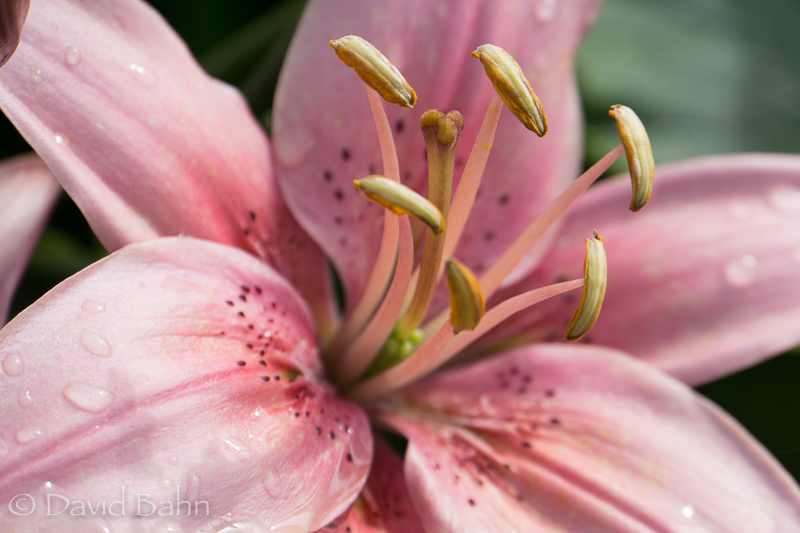
    This beautiful pink lily was one of many growing in a street-side flower garden in Anchorage, Alaska.

    There will be many many people this weekend here in Texas shouting for joy when their local high school football team takes the field, makes a touchdown, or wins a game. Parents, grandparents, friends, and fellow students will stand and yell. Unashamed. Unbridled. Outloud. Some will join the cheerleaders cheers. Some will even sing the fight song. It never ceases to amaze me how caught up we can get in the outcome of a football game – or any sporting event for that matter.

    When it comes to God, however, most of us are a bit more reserved. We don’t get too carried away. The story goes that a man visited a Lutheran church. Being from another denomination, at one point in the service he shouted out, “Praise the Lord!” A nearby worshiper said, “We don’t do that in the Lutheran Church.” A quick reply from two pews back, “Oh yes we do! It’s on page 158.”

    Orchestrated, rubric-inspired, or spontaneous it is good and right to shout for joy, rejoice before God. Sing (not sin!) boldly, and celebrate in open and whole-body form. Whether it is a matter of “lifting up holy hands (1 Timothy 2:8), clapping your hands (Psalm 47:1, and many others), singing (as indicated above), or kneeling in humble adoration, our all-in worship of God can never fully reflect the glory of his gifts to us, or the extravagance of his loving grace shown to us in Jesus Christ.

  • Sow with a view to righteousness, reap in accordance with kindness. Hosea 10:12 (NASB)

    Admonish the idlers, encourage the fainthearted, help the weak, be patient with all of them. See that none of you repays evil for evil, but always seek to do good to one another and to all. 1 Thessalonians 5:14–15

    20160726-Anchorage, Alaska-02102
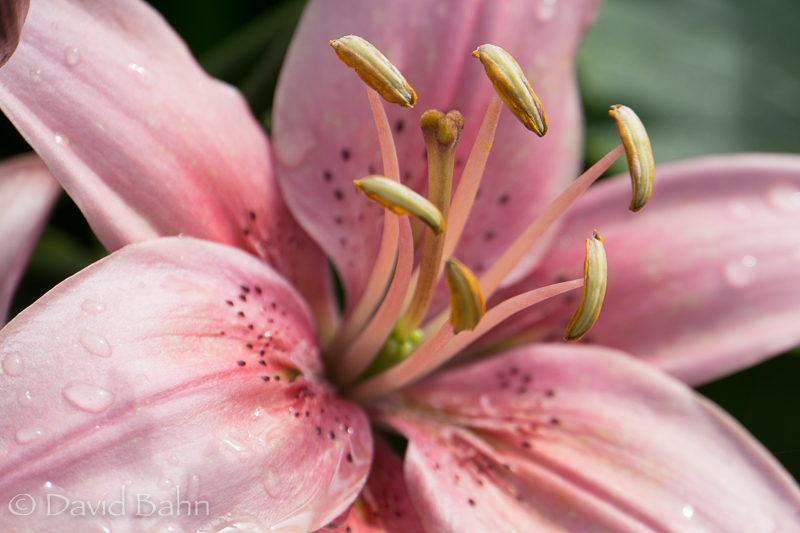
    This beautiful lily was growing in Anchorage, Alaska.

    When I was about 10 years old, I bought my sister a set of checkers for her birthday. She wasn’t impressed. But I was excited: I would now have an opportunity to play checkers with her (and hopefully beat her) because she had a set of checkers. I gave that gift I wanted to receive. But my plan didn’t work very well; she didn’t like to play checkers. I just thankful she was a forgiving person.

    More often our sowing is much more subtle. We make our investments so that we will receive a return. We invest time in a relationship so that we will be able to leverage a business deal. We go to a certain school so that we can get a better shot at a top-shelf job. We raise our children to do well so that they don’t give us a bad name. None of those things are bad in and of themselves. But they would certainly qualify as secondary or even tertiary purposes. Surely there is a better purpose in life than simply getting a good job, or the next deal, or having our children uphold our good name.

    Our calling in Christ is to seek good for others, to do good to others, to reflect the righteousness of God. Righteousness, goodness, kindness, patience, and encouragement are on dramatic display in the life and ministry of Jesus. When we believe in him, we not only embrace those good things toward us, but acknowledge that that is the way we should embrace others. That goes for the people in our family, the person next door, and the flood victims two states away.