David Bahn – Reflections

Light from the Word and through the lens

  • After this Jesus revealed himself again to the disciples by the Sea of Tiberias, and he revealed himself in this way. Simon Peter, Thomas (called the Twin), Nathanael of Cana in Galilee, the sons of Zebedee, and two others of his disciples were together. Simon Peter said to them, “I am going fishing.” They said to him, “We will go with you.” They went out and got into the boat, but that night they caught nothing.

    Just as day was breaking, Jesus stood on the shore; yet the disciples did not know that it was Jesus. Jesus said to them, “Children, do you have any fish?” They answered him, “No.” He said to them, “Cast the net on the right side of the boat, and you will find some.” So they cast it, and now they were not able to haul it in, because of the quantity of fish. That disciple whom Jesus loved therefore said to Peter, “It is the Lord!” When Simon Peter heard that it was the Lord, he put on his outer garment, for he was stripped for work, and threw himself into the sea. The other disciples came in the boat, dragging the net full of fish, for they were not far from the land, but about a hundred yards off.

    When they got out on land, they saw a charcoal fire in place, with fish laid out on it, and bread. 10 Jesus said to them, “Bring some of the fish that you have just caught.” 11 So Simon Peter went aboard and hauled the net ashore, full of large fish, 153 of them. And although there were so many, the net was not torn. 12 Jesus said to them, “Come and have breakfast.” Now none of the disciples dared ask him, “Who are you?” They knew it was the Lord. 13 Jesus came and took the bread and gave it to them, and so with the fish.14 This was now the third time that Jesus was revealed to the disciples after he was raised from the dead. – John 21:1-14

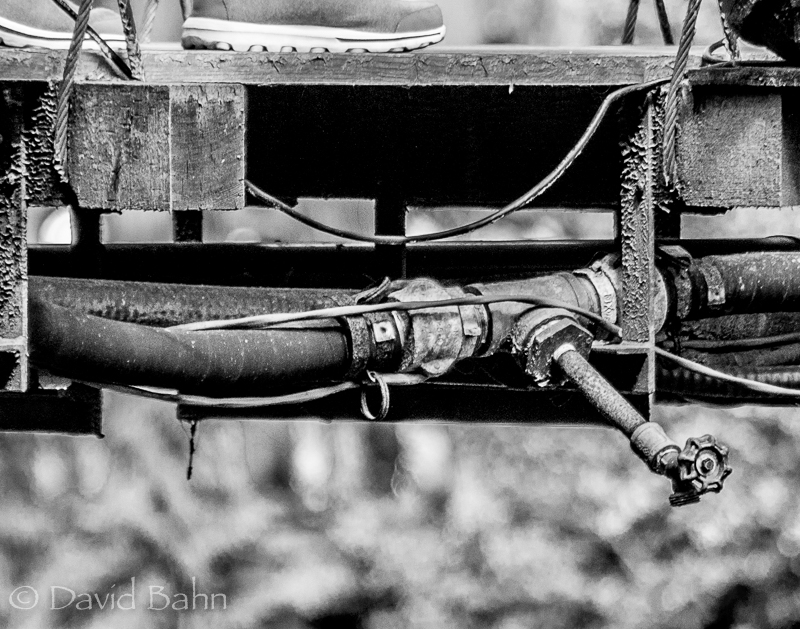
    20160806-unsung-heroes-03363
    An image from my 2016 Portfolio “Unsung Heroes: A Visual Parable” These images remind us that just as many things are working behind the scenes, and without our notice, so God is holding all things together through the word of his power. We often take his presence and protection for granted.

    Sometimes we need a loud and obnoxious wake-up call. We set a reminder on a particularly irksome alarm tone so that we are jarred to consciousness: Time to act! That seems to be the nature of the empty tomb. Something has happened. Things are different now. We’re not sure just what it means, but we are now fully alert.

    I have an alarm on my phone, however, that is much more subtle and polite. It plays a beautiful song that gently awakens me from my slumber. Such is this third time that Jesus is revealed to his disciples. No shock therapy here. Not a sudden and rude claxon intruding into their rest. Jesus just appears on the lake shore as morning dawns.

    It is in this gentle appearing and the simple questions of Jesus to Peter that things begin to fall more fully into place. Peter realizes it is Jesus. The disciples figure out it is him. John even tells us that no one dared ask him who he was, for they knew it was the Lord. Jesus feeds them breakfast. He will then (again gently) confront Peter.

    My take-aways from this chapter:

    • Jesus does not need to prove anything for himself. The reality of his being stands on its own.
    • The resurrection of Jesus is a mystery beyond the empty tomb and Jesus’ appearing. Jesus reveals himself here. The disciples know it’s Jesus, but they don’t “dare” ask him who he is.
    • This isn’t just history; though it is historically true. Jesus rose from the dead. Those words mean far more than the facts of the matter.
    • Embracing the resurrection of Jesus means doing things differently sometimes (like casting your net on the other side of the boat).
    • The ultimate application of the resurrection to daily life is to follow Jesus.

    This ends the 21 Day Challenge by which we have been reading through the Gospel of John, one chapter a day. I will move on to other personal reflections in the days ahead. I do this blog for me; it is my spiritual discipline. It’s how I start my day. If you are edified by this, that is a bonus for which we may both thank God.


  • Now on the first day of the week Mary Magdalene came to the tomb early, while it was still dark, and saw that the stone had been taken away from the tomb. So she ran and went to Simon Peter and the other disciple, the one whom Jesus loved, and said to them, “They have taken the Lord out of the tomb, and we do not know where they have laid him.” So Peter went out with the other disciple, and they were going toward the tomb. Both of them were running together, but the other disciple outran Peter and reached the tomb first. And stooping to look in, he saw the linen cloths lying there, but he did not go in. Then Simon Peter came, following him, and went into the tomb. He saw the linen cloths lying there, and the face cloth, which had been on Jesus’ head, not lying with the linen cloths but folded up in a place by itself. Then the other disciple, who had reached the tomb first, also went in, and he saw and believed; for as yet they did not understand the Scripture, that he must rise from the dead. 10 Then the disciples went back to their homes. – John 20:1-10

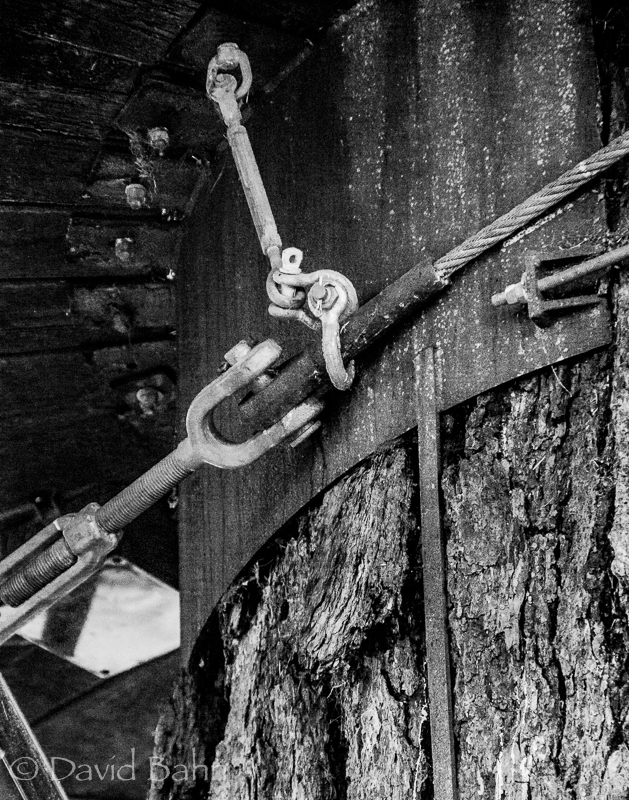
    20160806-unsung-heroes-03368
    An image from my 2016 Portfolio “Unsung Heroes: A Visual Parable” These images remind us that just as many things are working behind the scenes, and without our notice, so God is holding all things together through the word of his power. We often take his presence and protection for granted.

    Several years ago I attended a conference together with some other members of the church I served. The speaker was laying out a series of principles and ideas that really caught my attention. It came at a time when I needed to clarify and redefine my approach to ministry. It was a kairos (see below) moment. Sometimes the synapses fire quickly in my brain. I get it. I see the connections. I understand the implications.

    Other times, however, I don’t get it. I can’t see the lines connecting the dots. I am puzzled, out of context, and struggling to understand what works or doesn’t, and how it all fits together.

    It seems the disciples were in that second mode early on the first Easter. Upon seeing the open and empty tomb the disciples simply go home. What else are they to do? How are they to deal with this sudden and dramatic change of reality? Jesus had died a horrible death on a Roman cross. He had been buried in a borrowed tomb. But now that tomb was empty. John reports that he saw and believed and says nothing about Peter – except that they both did not understand the Scripture that he must rise from the dead.

    Then they go home. Seems to me that they didn’t know how to live in that new reality. Seems to me that they had to let it sink in. Seems to me that they didn’t know what to do other than go home.

    We may sometimes be in a place of confusion, lack of clarity, misunderstanding, and  doubt. We may not know what to do in a given situation. The light has not gone on for us. This is the good news in this and every situation: Jesus has risen from the dead. Whether or not we understand it, know it, believe it, can figure out what to do in light of it, Jesus has risen. He has conquered the devil. He has overcome death. He is alive. He will show up. He will clarify our thinking. He will set an agenda. He will define our calling.

    I may not always get it quickly. It may need to sink in. But Jesus is alive. He has saved us. We are his. Let’s let that soak in.


    The New Testament and Old Testament describes significant moments in time as “kairos” moments. At the time of Jesus, there were two common words to denote time in the ancient Greek language: kairos and chronosKairos is used to highlight an extremely significant event in time, while chronos, from which the world chronology is related, describes a span of time—boring waiting in line sort of time.

  • Then Pilate took Jesus and flogged him. And the soldiers twisted together a crown of thorns and put it on his head and arrayed him in a purple robe. They came up to him, saying, “Hail, King of the Jews!” and struck him with their hands. Pilate went out again and said to them, “See, I am bringing him out to you that you may know that I find no guilt in him.” So Jesus came out, wearing the crown of thorns and the purple robe. Pilate said to them, “Behold the man!” When the chief priests and the officers saw him, they cried out, “Crucify him, crucify him!” Pilate said to them, “Take him yourselves and crucify him, for I find no guilt in him.” The Jews answered him, “We have a law, and according to that law he ought to die because he has made himself the Son of God.” When Pilate heard this statement, he was even more afraid. He entered his headquarters again and said to Jesus, “Where are you from?” But Jesus gave him no answer. 10 So Pilate said to him, “You will not speak to me? Do you not know that I have authority to release you and authority to crucify you?” 11 Jesus answered him, “You would have no authority over me at all unless it had been given you from above. Therefore he who delivered me over to you has the greater sin.” -John 19:1-11

    20160808-unsung-heroes-03586
    An image from my 2016 Portfolio “Unsung Heroes: A Visual Parable” These images remind us that just as many things are working behind the scenes, and without our notice, so God is holding all things together through the word of his power. We often take his presence and protection for granted.

    I have been paralyzed before the audacity of others: unable to speak in the face of an outrageous comment, unwilling to stick my neck out when someone needed to act. Perhaps you have too. Sad. Shameful. Sinful.

    This is the place of Pilate here. He was the governor, however, and could have spoken more clearly than, “I find not guilt in him.” That could have been his last word and it would have been enough. Because it wasn’t his last word, Jesus died at the hands of the Roman authorities.

    But this is no failure of nerve that caused Jesus’ death. It was not just because Pilate would not stand up to the Jewish leaders. It was because God was running the events of those days in a very specific manner: Jesus was going to die at the hands of the Romans, all according to the plans of God.

    It’s a good thing he did: for there are too many of us who do not act when we should or could. There are too many of us who fail to speak when we ought to. There are too many of us who fail. In fact, for most Christians, our most grievous sins are sins of omissions. Thank God Jesus did not fail to speak or to act. Thank God that he acted for our redemption. Thank God that though good men fail God’s goodness never fails. Thanks be to God indeed, for I need a Savior. And so do you. His name is Jesus and he has acted definitively in our behalf.

  • Then they led Jesus from the house of Caiaphas to the governor’s headquarters. It was early morning. They themselves did not enter the governor’s headquarters, so that they would not be defiled, but could eat the Passover. 29 So Pilate went outside to them and said, “What accusation do you bring against this man?” 30 They answered him, “If this man were not doing evil, we would not have delivered him over to you.” 31 Pilate said to them,“Take him yourselves and judge him by your own law.” The Jews said to him, “It is not lawful for us to put anyone to death.” 32 This was to fulfill the word that Jesus had spoken to show by what kind of death he was going to die. – John 18:28-32

    20160806-unsung-heroes-03332
    An image from my 2016 Portfolio “Unsung Heroes: A Visual Parable” These images remind us that just as many things are working behind the scenes, and without our notice, so God is holding all things together through the word of his power. Too often we take his presence and protection for granted.

    When is it OK to break a law? If your family is starving to death is it OK to steal a loaf of bread? If you know someone is really corrupt is it really wrong to betray a confidence? If, if, if… The world is filled with ifs. We all want to set a scenario that allows us to mark our own boundaries. She is cheating the system, so… He is a liar, so…

    In the case of the Jewish leaders and even the religious leaders of Jesus’ day, their selective law-keeping is remarkable. They will falsely accuse Jesus, but they won’t defile themselves by entering the governor’s headquarters. They will gather false-witnesses in order to have Jesus declared guilty and sentenced to death. But they won’t do the deed themselves because, “it is not lawful for us to put anyone to death.”

    Too often we look to the Bible to justify our actions one way or another. Too often we profess our faith and theology correctly and ignore God’s command to be gentle, patient, long-suffering, and forgiving – especially when it comes to dealing with a brother or sister in Christ with whom we do not agree. Sometimes the degree of rancor is even justified by the higher good of truth!

    God’s ways are pure altogether. Jesus never played off one law against the other in his life and faith. He did not engage in selective law-keeping. As his followers, and as those who believe in him, our best expression of that faithful following is to live like that. It may put us in difficult places. But faithfulness means that we believe in Jesus and in how he lived. Faithfulness also means that when we realize we have failed, we turn again from our sin and to our Savior, with gratitude and humility that we have a Savior who refused to cut any corner and paid the ultimate price for it: dying on the cross for our sins.

  • When Jesus had spoken these words, he lifted up his eyes to heaven, and said,“Father, the hour has come; glorify your Son that the Son may glorify you, since you have given him authority over all flesh, to give eternal life to all whom you have given him. And this is eternal life, that they know you, the only true God, and Jesus Christ whom you have sent. I glorified you on earth, having accomplished the work that you gave me to do.And now, Father, glorify me in your own presence with the glory that I had with you before the world existed. – John 17:1-5

    20160806-unsung-heroes-03290
    An image from my 2016 Portfolio “Unsung Heroes: A Visual Parable” These images remind us that just as many things are working behind the scenes, and without our notice, so God is holding all things together through the word of his power. We often take his presence and protection for granted.

    Along the path of my studies at Fuller Seminary, I had the occasion to stay in an apartment with several other students. One of the students was a man from a foreign country who was deeply dedicated to prayer. Each night we could hear him praying. It was a powerful and emotive expression on his part of petitions and supplications expressed from deep in his heart. It was a humbling experience. Few of us pray like that. His level of dedication and anticipation of God’s intervention and help were inspiring.

    When I hear Jesus praying, recorded here in John 17, it is much the same; this is a humbling, inspiring, and edifying prayer.

    Jesus prays that the Father would glorify him so that he could glorify the Father. This is no quid pro quo exchange offering. Jesus is not making a deal with God that accrues to their mutual benefit. He is expressing a reality that fully engaged faith is the stuff of true godliness and glory. Faith glorifies God, for it imputes righteousness, faithfulness, goodness, holiness, and love to God’s being and character. Faith is not in the end about anything other than the nature of God and his word and promise. Jesus will glorify God when on the cross he entrusts himself to the Father. This, too is Jesus’ glory: he is a man of perfect faith.

    Humbling: I do not have perfect faith. Thankfully, however, I have a perfect God and Savior. Inspiring: this just lifts my heart to see Jesus’ love and dedication, and true glory. This is also edifying: Jesus gives us a picture of his eternal nature as the Word Become Flesh. He existed in pure glory before the world began. He was in the presence of the Father. He was returning to the Father. But for now he was in this world, facing a very real challenge, and a horrific encounter with the forces of evil, not to mention his own death. He will return to his rightful place with the Father in heaven. In the meantime he will need his Father’s help and presence to accomplish his task.

    All this he did so that you and I and all who believe in him will have eternal life. He has come to redeem us. He has left his heavenly throne and will return these so that we can one day we can be in the realm of his glorious, redemptive love. Thus he prays, “Father, the hour has come…”

  •  “I have said these things to you in figures of speech. The hour is coming when I will no longer speak to you in figures of speech but will tell you plainly about the Father. 26 In that day you will ask in my name, and I do not say to you that I will ask the Father on your behalf; 27 for the Father himself loves you, because you have loved me and have believed that I came from God. 28 I came from the Father and have come into the world, and now I am leaving the world and going to the Father.”

    29 His disciples said, “Ah, now you are speaking plainly and not using figurative speech! 30 Now we know that you know all things and do not need anyone to question you; this is why we believe that you came from God.” 31 Jesus answered them, “Do you now believe? 32 Behold, the hour is coming, indeed it has come, when you will be scattered, each to his own home, and will leave me alone. Yet I am not alone, for the Father is with me. 33 I have said these things to you, that in me you may have peace. In the world you will have tribulation. But take heart; I have overcome the world.” – John 16:25-33

    20160808-unsung-heroes-03583
    An image from my 2016 Portfolio “Unsung Heroes: A Visual Parable” These images remind us that just as many things are working behind the scenes, and without our notice, so God is holding all things together through the word of his power. We often take his presence and protection for granted.

    Three times in the conversation between Jesus and his disciples (recorded in the verses immediately prior to these above) Jesus’ words are quoted:  “A little while, and you will see me no longer; and again a little while, and you will see me” (John 16:16, 17, 19). As Jesus explains these words to the disciples the scales began to fall from their eyes. “Ah, now you are speaking plainly…,” they say (v. 29). Little did they know. The events set to unfold in the next few days would shake their faith to the core. So, too, Jesus’ victory will solidify their resolve to serve him.

    Jesus had forewarned them. They understood. But they had so much to learn. It’s one of those moments when you experience something of which you have been told, and realize the experience is far more than words could possibly ever convey. You have to live it.

    For the disciples the tribulation (v. 33) would be Jesus’ arrest, suffering, and death. It would continue to unfold in the resurrection, the launch of the church (Acts 2), the persecutions they would experience, and the joy of being part of the advance of God’s kingdom in ways they could never have imagined.

    Both the tribulation and the victory shaped their character and their faith. They were living what they had heard of. They were wise to Satan’s ploys, and confident of Jesus’ power.

    We may know trouble will come our way; but it may come in forms we would never have imagined. But the same is true of Jesus’ victory in our lives. Whether in Jesus’ intervention in a marriage relationship, a hospital room, your personal finances, or job, we can be confident of Jesus’ presence at all times, and certain of the ultimate victory in Christ.

    Sometimes it’s only by means of walking through troubles and tribulations that we see the fullness of Christ’s power, and develop the character to serve him more faithfully.

  • “By this my Father is glorified, that you bear much fruit and so prove to be my disciples. As the Father has loved me, so have I loved you. Abide in my love. 10 If you keep my commandments, you will abide in my love, just as I have kept my Father’s commandments and abide in his love. 11 These things I have spoken to you, that my joy may be in you, and that your joy may be full.” – John 15:8-11

    “You did not choose me, but I chose you and appointed you that you should go and bear fruit and that your fruit should abide, so that whatever you ask the Father in my name, he may give it to you. 17 These things I command you, so that you will love one another.” -John 15:16-27

    “But when the Helper comes, whom I will send to you from the Father, the Spirit of truth, who proceeds from the Father, he will bear witness about me. 27 And you also will bear witness, because you have been with me from the beginning.” – John 15:26-27

    20160806-unsung-heroes-03289

    Some will occasionally say, “There’s a method to my madness.” They mean that what may appear to be random, or nonsensical is actually purposeful; there is a reason for what appears to be unreasonable. Whether or not Jesus’ words and actions appear unreasonable, he is clear on the purpose of his life and teaching. He spells out two purposes here in John 15. Jesus wants his followers to have the fullness of his joy. He intends that his followers love one another.

    On a human level it is not apparent that Jesus’ actions are reasonable. He is facing imminent betrayal, horrific suffering, and cruel death. He appears, nevertheless, calm and at peace; fully devoted to teaching his disciples and preparing them (not himself!) for what is to come. But his speech and commandment are purposeful; and his demeanor is founded upon a power greater than that which will take his life.

    Jesus directs us to love one another, and abide in his love. He connects that with being filled with joy, and bearing fruit. Then he offers a foundational power for all of this. Just as God spoke the world into being, the Spirit of Truth (The Holy Spirit) will sustain the disciples in their witness, love, and joy.

    What appears random and does not make sense will be enlightened by the Holy Spirit. The truth will come out. Jesus is the Word become flesh. His teachings, life, ministry, suffering and death, are the makings of the world’s redemption. Jesus’ death itself was actually a victory. He has conquered Satan and death.

    The disciples have been with Jesus from the beginning. The whole puzzle snaps together before their eyes. They can bear a powerful witness sustained by the truth which the Holy Spirit embodies and of which he convicts them. Our witness is likewise emboldened. For we who know the whole story, and have the witness of the Scriptures, also are convinced of the truth of who Jesus is and what he has done. There is no greater witnessing power than presence of the Spirit of Truth in our lives.

  • “These things I have spoken to you while I am still with you. But the Helper, the Holy Spirit, whom the Father will send in my name, he will teach you all things and bring to your remembrance all that I have said to you. Peace I leave with you; my peace I give to you. Not as the world gives do I give to you. Let not your hearts be troubled, neither let them be afraid. You heard me say to you, I am going away, and I will come to you.’ If you loved me, you would have rejoiced, because I am going to the Father, for the Father is greater than I. And now I have told you before it takes place, so that when it does take place you may believe. I will no longer talk much with you, for the ruler of this world is coming. He has no claim on me, but I do as the Father has commanded me, so that the world may know that I love the Father. Rise, let us go from here.” – John 14:25-31

    20160728-dianes-alaska-photos6279
    Diane captured this big sky/beautiful cloud image with her iPhone when we were in Alaska.

    At the sight of a horrific automobile accident some will run to those in need. Others will turn away in distress and revulsion. When a wayward nephew is arrested for drug possession for the third time, some will not only let him rot in jail, but refuse to open their hearts to him. The cost of love is more than some can bear to pay. Some harden their hearts rather than feel the emotions, pains, and distress that come from seeing someone they love follow a path of destruction and ruin. Still others cannot look beyond their own horizons to see the needs of others; all they see are their own losses and inconveniences. Some are paralyzed with fear.

    Jesus knew his followers would not be able to express their love to Jesus fully in the face of the events that were soon to unfold. He realized that their sense of loss at his death would cloud their understanding of its meaning, and he told them so. They would see only their loss, perhaps also the horror of Jesus’ pain, maybe the agony of Jesus’ mother. But their horizons were too small; they wouldn’t see how Jesus’ death would benefit them at all.

    Jesus, however, has it all covered. He knows what lies before him. He promises the gift of the Holy Spirit who will anchor their souls with hope, and bring the great “aha!” of all that Jesus did and said sharply into focus and clearly to their minds. He tells them what is to happen before it does so that they are prepared, and so that they will believe.

    Jesus loves his father. His horizons are not limited to these twelve, or even the 5000 he fed in the Galilean countryside. His love for his father and for all of us moved him to lift up his eyes and approach the coming vortex of anger, self-righteousness, unbelief, ridicule, shame, and bitter hatred, with the eyes of faith and a heart of love for the Father and for all people. That’s why he did it. Now we know. Now we are called to widen the horizons of our love, leaving behind troubled hearts, embracing the peace of Christ, and rejoicing in his redeeming love.

  •  When he had gone out, Jesus said, “Now is the Son of Man glorified, and God is glorified in him. 32 If God is glorified in him, God will also glorify him in himself, and glorify him at once. 33 Little children, yet a little while I am with you. You will seek me, and just as I said to the Jews, so now I also say to you, ‘Where I am going you cannot come.’ 34 A new commandment I give to you, that you love one another: just as I have loved you, you also are to love one another. 35 By this all people will know that you are my disciples, if you have love for one another.”

    36 Simon Peter said to him, “Lord, where are you going?” Jesus answered him,“Where I am going you cannot follow me now, but you will follow afterward.”37 Peter said to him, “Lord, why can I not follow you now? I will lay down my life for you.” 38 Jesus answered, “Will you lay down your life for me? Truly, truly, I say to you, the rooster will not crow till you have denied me three times. –John 13:31-38

    2014 Portfolio Review @ NWHPC
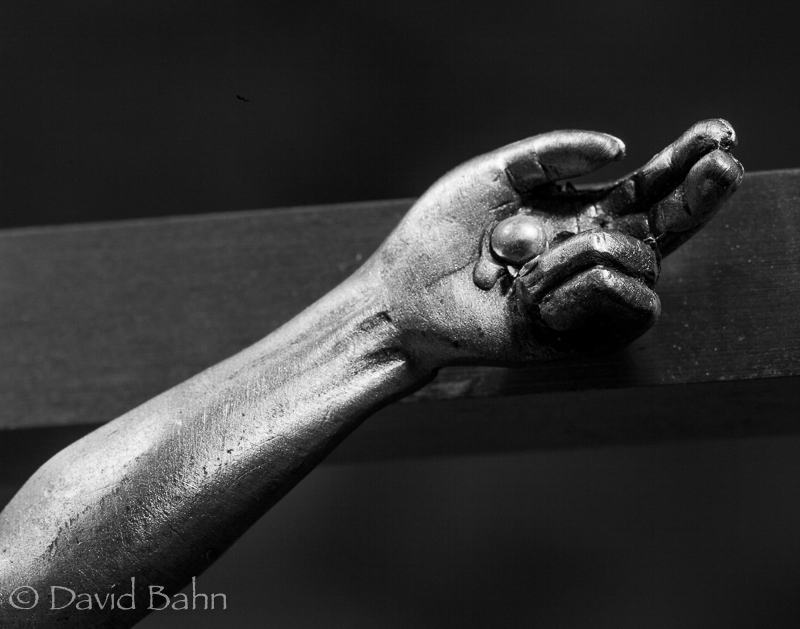
    A close-up detail of the hands of the crucifix which is in the chapel at St. John Lutheran Church, in Cypress, Texas

    Perhaps you know someone who is “all in” – as a sports fan, a golfer, a photographer, a seamstress, gardener, or quilter. He has all the gadgets. She has all the supplies. In fact, I recall seeing where a friend designed a sewing/quilting area for his wife with a level of organization and supply that made me want to take up the craft! People give their hearts and lives to things that entertain, refresh, or enlighten others.

    Jesus was all in for the glory of God. He knew what it would take for him to bring ultimate glory to God, and he sought to prepare his disciples for that as well. Part of that glory would be his obedience to the Father’s will that he would offer himself as the atoning sacrifice for the sins of the world. Another part of that glory would be that his disciples would obey his command to love one another.

    Certainly this was on Peter’s mind when he offered to be all in for Jesus, even to the point of laying down his life for Jesus. Peter, himself, was all in for Jesus as far as he was concerned. He would be willing to go the ultimate distance to show his allegiance. When he offered his bravado-inspired assurance of his “all in” bona fides, Jesus brings him up short. He wouldn’t make it through the night without denying Jesus three times.

    Of course we know the story. Peter will deny Jesus three times. The rooster will crow. Peter will weep. But this will not deter Jesus. Nor will it even remove Peter from the realm of Jesus’ love and redemption. Peter will have to be restored; we will see that in John 21. For a time, Peter is singled out, when the time comes to announce Jesus’ resurrection to his disciples: “Go tell his disciples and Peter” (Mark 16:7).

    But Jesus died for all people, precisely because we are not all in for him. We all fail at one point or another in our lives. We may have all the accoutrements of a solid Christian walk: Bibles and journals at the ready, a curriculum vitae that lists one accomplishment after another of kingdom wins and accomplishments. But we also have those dark places where fear, selfishness, willfulness, or rebellion took us out of the “all in” category. That’s why we have a Savior, for we have a God who is all in for us and for our forgiveness, redemption, and salvation. Thanks be to God!

  • Six days before the Passover, Jesus therefore came to Bethany, where Lazarus was, whom Jesus had raised from the dead. So they gave a dinner for him there. Martha served, and Lazarus was one of those reclining with him at table. Mary therefore took a pound of expensive ointment made from pure nard, and anointed the feet of Jesus and wiped his feet with her hair. The house was filled with the fragrance of the perfume. But Judas Iscariot, one of his disciples (he who was about to betray him), said, “Why was this ointment not sold for three hundred denarii and given to the poor?” He said this, not because he cared about the poor, but because he was a thief, and having charge of the moneybag he used to help himself to what was put into it. Jesus said, “Leave her alone, so that she may keep it for the day of my burial. For the poor you always have with you, but you do not always have me.”

    When the large crowd of the Jews learned that Jesus was there, they came, not only on account of him but also to see Lazarus, whom he had raised from the dead. 10 So the chief priests made plans to put Lazarus to death as well,11 because on account of him many of the Jews were going away and believing in Jesus. – John 12:1-11

    20160929-03959
    A misplaced smudge pot sits on the steps that had previously led to the entryway into a home along the Amite River outside of Baton Rouge, LA. The house is completely moved off its foundation, and the stairs lead nowhere.

    I don’t want to believe that people are that evil, mean-spirited, wrongly-motivated, and ill-willed. I don’t want to believe that people, even if they knew Jesus perfectly, would want to do away with him. Jews, disciples, chief priests(!): all will conspire to kill Jesus…and Lazarus, Jesus’ friend, having once been raised from the dead. You’d think they would learn; at least that’s what I think.

    I don’t want to believe that a person would send an email that is intentionally hurtful, accusatory, and inflammatory. I don’t want to believe that there are people in churches who want to see their pastor fail (although I served in such a church many years ago). I don’t want to believe that a co-worker will talk badly about a colleague in order to gain a better place in line for promotion. I don’t want to believe that a whole automobile company would deliberately hide the truth about some car’s shortcomings – even if those shortcomings are really significant. I don’t want to believe that a bank would have people at the very highest levels who conspire to open accounts for their own customers – even without their permission or knowledge, and to their detriment and the benefit of the bank. I don’t want to believe that people are really that evil.

    But there are truly evil people in the world. They conspired against Jesus. They brought him down…and then up on a cross, and then to the grave. I have received insulting emails. I have heard of pastors being hounded out of their churches. I have heard of pastors lording it over their people, and being unrealistic in their expectations. A major automobile company is paying multi-million dollar fines for faking emissions tests. A monster-mega-bank is under scrutiny for abusing their own customers, and their CEO has had to forfeit $42M of his bonus money so far.

    Thankfully, evil people did not thwart Jesus’ purpose and plans when they conspired to kill him. He knew what they were up to, faced his own death with unwavering faith, and ultimately triumphed over his foes in the resurrection that first Easter Sunday morning.

    The world needs a redeemer. God has provided Him for us. In the face of every evil, we believe in Jesus. Lord deliver us from evil!