David Bahn – Reflections

Light from the Word and through the lens

  • And one of the scribes came up and heard them disputing with one another, and seeing that he answered them well, asked him, “Which commandment is the most important of all?” 29 Jesus answered, “The most important is, ‘Hear, O Israel: The Lord our God, the Lord is one. 30 And you shall love the Lord your God with all your heart and with all your soul and with all your mind and with all your strength.’ 31 The second is this: ‘You shall love your neighbor as yourself.’ There is no other commandment greater than these.” 32 And the scribe said to him, “You are right, Teacher. You have truly said that he is one, and there is no other besides him. 33 And to love him with all the heart and with all the understanding and with all the strength, and to love one’s neighbor as oneself, is much more than all whole burnt offerings and sacrifices.” 34 And when Jesus saw that he answered wisely, he said to him, “You are not far from the kingdom of God.”And after that no one dared to ask him any more questions. – Mark 12:28-34



    20170126-DLB-04860
    Re-cropped image (as suggested by photo club comments and feedback) from Desert Botanical Gardens in Phoenix, AZ. Photo taken January 2017

    I’ve been thinking a lot lately about what it means to be in the kingdom of God; what it means when I pray, “Thy kingdom come.” I’ve been using the phrase, “rule and reign” of God lately in an attempt more accurately to convey the meaning of the term kingdom. But that’s only part of the story. What does it mean to be in God’s rule and reign?

    I love Martin Luther’s explanation of the Lord’s Prayer when he says,

    “The kingdom of God comes indeed without our prayer, of itself; but we pray in this petition that it may come unto us also.

    How is this done?–Answer.

    “When our heavenly Father gives us His Holy Spirit, so that by His grace we believe His holy Word and lead a godly life here in time and yonder in eternity.”

    So what does it mean to be “not far” from the kingdom of God? Certainly part of it is knowing what is most important to God: That we love him first and most, and that we love our neighbor as ourselves. To be “not far” from the kingdom of God is a move from knowledge to faith. It has to do with faith in Jesus that expresses itself in love for others. To be “not far” is a matter of being invited to invest oneself in Jesus’ promises, and give oneself to acts of kindness and love.

    Being “not far” from the rule and reign of God is certainly better than being far from God. But it is not enough to be “not far” from God. He desires that we be close, and under his gracious rule. He desires that we embrace Jesus’ call to “repent and believe the Good News.” He desires that we take our knowledge about God and let it work itself out in love and good works.

    Jesus has purchased and won us by his holy and precious blood, and his innocent suffering and death. We are now his: Forgiven. Redeemed. Saved. Set apart. Jesus is inviting me to live under him in his kingdom and serve him eternally. That sounds like a very up close relationship, better by far than “not far.”


     

  • And they sent to Jesus some of the Pharisees and some of the Herodians, to trap him in his talk. 14 And they came and said to him, “Teacher, we know that you are true and do not care about anyone’s opinion. For you are not swayed by appearances, but truly teach the way of God. Is it lawful to pay taxes to Caesar, or not? Should we pay them, or should we not?”15 But, knowing their hypocrisy, he said to them, “Why put me to the test? Bring me a denarius and let me look at it.” 16 And they brought one. And he said to them, “Whose likeness and inscription is this?” They said to him, “Caesar’s.” 17 Jesus said to them, “Render to Caesar the things that are Caesar’s, and to God the things that are God’s.” And they marveled at him.

    18 And Sadducees came to him, who say that there is no resurrection. And they asked him a question, saying,19 “Teacher, Moses wrote for us that if a man’s brother dies and leaves a wife, but leaves no child, the man must take the widow and raise up offspring for his brother.20 There were seven brothers; the first took a wife, and when he died left no offspring.21 And the second took her, and died, leaving no offspring. And the third likewise. 22 And the seven left no offspring. Last of all the woman also died. 23 In the resurrection, when they rise again, whose wife will she be? For the seven had her as wife.”

    24 Jesus said to them, “Is this not the reason you are wrong, because you know neither the Scriptures nor the power of God? 25 For when they rise from the dead, they neither marry nor are given in marriage, but are like angels in heaven. 26 And as for the dead being raised, have you not read in the book of Moses, in the passage about the bush, how God spoke to him, saying, ‘I am the God of Abraham, and the God of Isaac, and the God of Jacob’? 27 He is not God of the dead, but of the living. You are quite wrong.” – Mark 12:13-27

    20170318-DSC05484
    Photo Taken March 2017 | NW Harris County

    Have you ever had an “Ugh!” moment? Has the truth of your error, your wrong-headedness, or wrong-heartedness ever hit you between the eyes and utterly silenced you?It has happened to me more often than I would like to ad mit or even to have experienced. More than once it has happened to me toward the end of a long argument with the treasure of my life – my wife. I’m carrying on so certain that I have the high moral ground. I am right. She is wrong. Then i see around the corner, and I discover I was not just seeing only part of the picture, but I was looking the wrong way.

    I don’t know why I couldn’t believe her sooner; why I had to carry on longer and longer before I came to that conclusion, but alas…that’s just the way it is for some of us.

    I wonder if I would reserve my admission so long if Jesus had said to me, “You are quite wrong.” That seems to be a game changer. At least it should have been. Another translation has, “You err greatly.” Those words from Jesus would seem to put sensible people on their heads.

    It is interesting to me that Jesus is willing to speak to the heart of truth to foe and friend alike. He will tell Peter, “Get behind me Satan…” He will tell these posers, “You err greatly.” His concern seems to be only with the truth. But in reality it is not only in the truth; Jesus is keen on all people knowing and embracing the truth.

    Jesus wants us to know and embrace the truth because he is truth incarnate. He has incredible blessings in store for those who seek and follow him. He is gracious and merciful to all. It’s not a matter of getting it all right ourselves; it’s a matter of getting him who is right and righteousness in the flesh. If he says, “You err greatly,” it is so that we can save ourselves an eternity of regret – or maybe even just a few moments of that regrettable hubris before we suffer the punch-in-the-gut “Ugh” that comes with discovering the depth of our sin.

    The God of the living welcomes those who come to him in Jesus’ name. When we do that, we will experience not an “Ugh” of regret, but a “Ahhh!” of delight in his glorious grace. That sounds most inviting to me. How about you?

  • And Jesus began to speak to them in parables. “A man planted a vineyard and put a fence around it and dug a pit for the winepress and built a tower, and leased it to tenants and went into another country.When the season came, he sent a servant to the tenants to get from them some of the fruit of the vineyard. And they took him and beat him and sent him away empty-handed. Again he sent to them another servant, and they struck him on the head and treated him shamefully.And he sent another, and him they killed. And so with many others: some they beat, and some they killed. He had still one other, a beloved son. Finally he sent him to them, saying, ‘They will respect my son.’ But those tenants said to one another, ‘This is the heir. Come, let us kill him, and the inheritance will be ours.’And they took him and killed him and threw him out of the vineyard. What will the owner of the vineyard do? He will come and destroy the tenants and give the vineyard to others. 10 Have you not read this Scripture:

    “‘The stone that the builders rejected
        has become the cornerstone;
    11 this was the Lord’s doing,
        and it is marvelous in our eyes’?”

    12 And they were seeking to arrest him but feared the people, for they perceived that he had told the parable against them. So they left him and went away. – Mark 12:1-12

    20170318-DSC05508
    “Cross & Flower” | Photo taken March, 2017 in Cypress, Texas

    Watching the NCAA men’s basketball tournament I am struck by how some players will push and push their point with the ref right up to the limit. Others are less combative. Sometimes a fellow player will step in and try to calm his teammate. Sometimes he pushes too far. Then comes the Technical Foul. Sometimes, even after the point has been pressed the player or coach doesn’t give up. But it seldom or ever does any good; in fact it more often is counterproductive.

    What is your I’ve-pressed-my-point-far-enough point? Is there a place when you realize you cannot pursue your point any longer? Do you know the fine line between commitment to a cause and stubbornness in the face of evidence to the contrary?

    Apparently the Jewish leaders didn’t know that line, and ended up rejecting the cornerstone of God, only to discover that he was not to be set aside. They rejected Jesus, putting him to death, only to discover the dire error of their ways.

    The stakes are not that high for most of us. A technical foul in a basketball game probably won’t tilt the balance of the universe. A stubborn refusal to bend at work may result in a job loss, but even that is recoverable – if we learn our lesson. But even those small setbacks can be opportunities to learn the secret of being “calm, cool, and correctable.

    St. Paul was thrown to the ground, blinded, and asked, “How long are you going to kick against the goads?” He realized it was time to stop persecuting the followers of Jesus, and repent of his rejection of the message of Jesus.

    God’s ultimate purpose in establishing his cornerstone is not simply to prove his point, but to redeem even wayward and rebellious people. His purpose in establishing Jesus as the chief cornerstone of faith is to bless his people and provide for our salvation. That is marvelous in the eyes of those who are willing to examine their own motives and have a humble spirit.

  • And they came again to Jerusalem. And as he was walking in the temple, the chief priests and the scribes and the elders came to him,28 and they said to him, “By what authority are you doing these things, or who gave you this authority to do them?”29 Jesus said to them, “I will ask you one question; answer me, and I will tell you by what authority I do these things.30 Was the baptism of John from heaven or from man? Answer me.” 31 And they discussed it with one another, saying, “If we say, ‘From heaven,’ he will say, ‘Why then did you not believe him?’32 But shall we say, ‘From man’?”—they were afraid of the people, for they all held that John really was a prophet. 33 So they answered Jesus, “We do not know.” And Jesus said to them, “Neither will I tell you by what authority I do these things.” – Mark 11:27-33

    “Humility” © 2008 David Bahn flowersbygodphotosbydavid.com
    “Humility” Taken at Fort Worth Botanical Garden | 2008

    I’ll admit: I would rather not have to take a stand when two opposing parties vie for my approval or support. One child wants pizza for supper. The other wants McDonalds. OK, I admit; those arguments and opposing sides were pretty easy to land on. But what if you’re forced to choose between spending Christmas at your in-law’s house or your wife’s in-laws house? What if you have to choose between offending your c0-worker or your God?

    Before we’re too hard on the chief priests, scribes, and elders, we need to be careful that we’ve got our own Sophie’s Choices well in hand. Sometimes the stakes are high, and the choices we must make peel away any pretense of having an undivided heart.

    The scribes, chief priests, and elders refuse to make a choice about who will rule and reign in their hearts, how they will live, and the values for which they will live or die. They will not admit that John’s baptism is from God, nor will they deny it. They fear the people’s reaction if they reject John’s ministry, for everyone thought him to be a prophet. If, however, they allow that he is a prophet of God they would have to acknowledge the One to whom John had pointed: Jesus, the lamb of God who takes away the sins of the world.

    The issue for followers of Jesus is seldom so bold and obvious. But there do come times when we must make an enemy of someone close to us in order to follow Jesus and remain true to our values. We need not become a martyr in the process. It need not be an ugly moment. But it is even more ugly when we abandon the way, truth, and life of God for the sake of our own supposed safety and security.

    Truth be told, we often bring ourselves to these difficult choices by our attempts to build our own kingdoms. To call Jesus “Lord” is to recognize that he has redeemed us, that we are his – bought with a price – and that we live under him in his kingdom, and serve him for all eternity. Faith sees that as a very good thing. Fear stymies faith, and refuses to embrace the gracious rule and reign of Christ. He rules the hearts of his people by grace. He has all authority in heaven and on earth, and commissions his followers to invite others to embrace his gracious reign and rule.

  • As they passed by in the morning, they saw the fig tree withered away to its roots.21 And Peter remembered and said to him, “Rabbi, look! The fig tree that you cursed has withered.” 22 And Jesus answered them, “Have faith in God. 23 Truly, I say to you, whoever says to this mountain, ‘Be taken up and thrown into the sea,’ and does not doubt in his heart, but believes that what he says will come to pass, it will be done for him. 24 Therefore I tell you, whatever you ask in prayer, believe that you have received it, and it will be yours. 25 And whenever you stand praying, forgive, if you have anything against anyone, so that your Father also who is in heaven may forgive you your trespasses.” – Mark 11:20-25

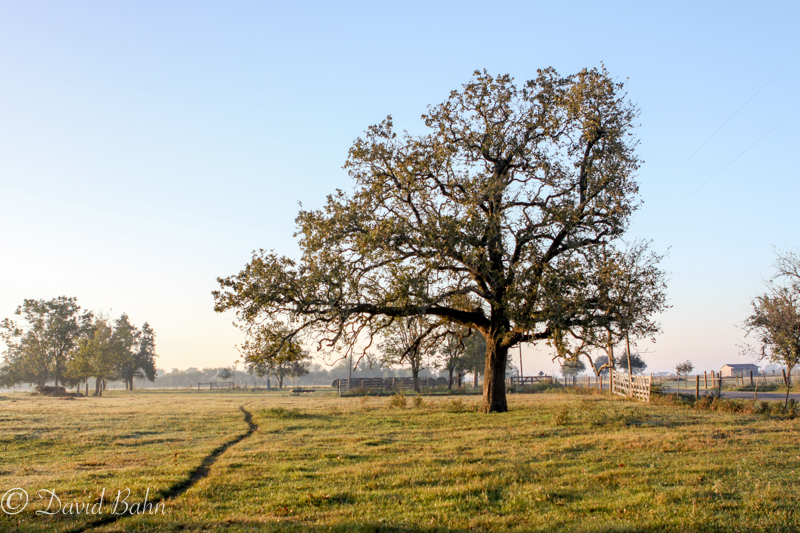
    Tree Portfolio 2008-03
    From my “Tree” Portfolio for the 2008 NWHPC Portfolio Review.

    Martin Luther said, “A god is that to which we look as the highest good in life.” That being the case, it may be the TV – especially during March Madness – or our investment portfolio, family, car, computer, or even our reflection in the mirror. All of these things can become our highest good in life. But none are able to save us. None will call us to account. None will hear and answer our prayers. None will forgive our sins.

    The encounter with the withered fig tree, together with Jesus’ teaching about prayer and forgiveness provide us with a reminder of God’s true power and our need to conform to his standards. He is not something that can be turned on or off. He is not merely a source of financial gain or loss. God is not domesticated: someone we order around, ignore or attend to on our schedule, or use when we please. Our God is not an insurance policy, a curiosity, or a source of distraction and entertainment.

    Jesus urges faith in God: the true God, the Creator of the universe, the One to whom we will give an account, the One who answers prayer, the One forgives and demands that we forgive others, the One to whom the clay does not say, “Why did you form me this way?” 

    Our God does, however, hear us when we pray. He forgives sins: yours, mine, and our neighbors’. Our God has come to earth to show us fully what he is like. He has done that in Jesus who cursed the fig tree, taught about prayer and forgiveness, healed, forgave sinners, challenged saints, walked on water, raised the dead, then went to the cross for us, tasting death and swallowed it up in victory. We dare not try to judge him, for he will come again and judge the living and the dead.

    Jesus cursed a fig tree and the next day it is withered. Like or understand it or not, that’s what happened. Jesus didn’t ask for permission to curse the fig tree. He doesn’t answer to anyone for his actions. He simply acts. And he teaches. In this case Jesus makes the point of the power of faith, the confidence we can have in prayer, and the need to forgive.

    I am struck at Jesus’ teaching here on forgiveness. It is essential to our relationship with God and with all people. Having faith in God means that we embrace his forgiveness, pray with confidence in his goodness and faithfulness, and realize that his goodness, faithfulness, and forgiveness is available to all people. We dare not withhold it from anyone, or presume that we are not in need of him and his salvation.

  • On the following day, when they came from Bethany, Jesus was hungry. 13 And seeing in the distance a fig tree in leaf, he went to see if he could find anything on it. When he came to it, he found nothing but leaves, for it was not the season for figs. 14 And he said to it, “May no one ever eat fruit from you again.” And his disciples heard it.

    15 And they came to Jerusalem. And he entered the temple and began to drive out those who sold and those who bought in the temple, and he overturned the tables of the money-changers and the seats of those who sold pigeons. 16 And he would not allow anyone to carry anything through the temple.17 And he was teaching them and saying to them, “Is it not written, ‘My house shall be called a house of prayer for all the nations’? But you have made it a den of robbers.”18 And the chief priests and the scribes heard it and were seeking a way to destroy him, for they feared him, because all the crowd was astonished at his teaching. 19 And when evening came they went out of the city. – Mark 11:12-19

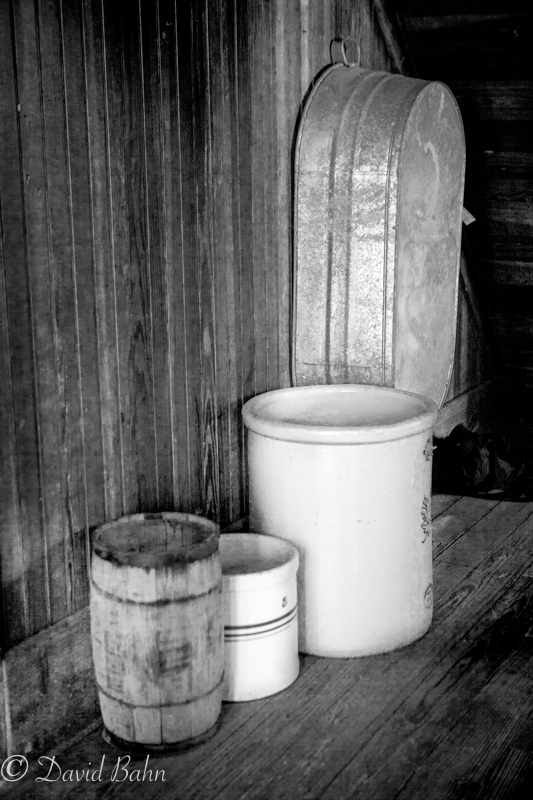
    20160924-Kleb-Woods-9994
    Three crocks and a wash tub hang out in the hall of the Kleb house at Kleb Woods. Photo taken September 2016.

    Perhaps you’ve seen the hilariously-funny British comedy, Keeping Up Appearances. The main character is Hyacinth Bucket (pronounced by her at every opportunity “bouquet”!). Hyacinth is deeply worried about how other people see her, she will make a point of mentioning that she is serving tea in her hand-painted china. When she received a wrong number telephone call she insisted: “This is not the Chinese restaurant. This is a residential number and you are speaking to the lady of the house on a white, slim line telephone with last number redial facility.” Hyacinth is obsessed with looking good in the eyes of others.

    So was the fig tree Jesus encounters in Jerusalem before heading to the temple and after his arrival on Palm Sunday. The tree was showing good outward signs of life (green leaves) which would also suggest the presence of figs – even if many would be only partially ripe. But the tree had no figs. It was all good appearance from afar, but no fruit was there.

    The same was the case at the temple when Jesus walks in. Lots of activity; people coming and going. Merchants selling their wares. But activity does not equate life. Just because lots of people are gathering and much is going on in any church does not mean that people are drawing near to God or that true life is in abundance.

    Jesus does not care if we look busy or seem active – unless such business and activity is expressing true faith. The activities in the temple courts were doing the opposite of that. Not only were they preventing God’s house from being a house of prayer for all nations, they were taking advantage of their own people. By selling pigeons and changing money at exorbitant prices and rates they were defrauding their fellow Jews as well as keeping people from offering their prayers to God. Their activities may have had the appearance of godliness, but they were anything else.

    Hyacinth’s posturing grows old quickly; I start laughing, but soon begin shaking my head in pity for one so worried about making a good impression. God’s solution to our need to impress was to lay aside all appearance of deity and grant access to himself through the life, suffering, death and resurrection of Jesus. His appearance was nothing that would attract attention, but his message and ministry has changed the course of eternity for all who believe in him.

  • Now when they drew near to Jerusalem, to Bethphage and Bethany, at the Mount of Olives, Jesus sent two of his disciples and said to them, “Go into the village in front of you, and immediately as you enter it you will find a colt tied, on which no one has ever sat. Untie it and bring it. If anyone says to you, ‘Why are you doing this?’ say, ‘The Lord has need of it and will send it back here immediately.’” And they went away and found a colt tied at a door outside in the street, and they untied it.And some of those standing there said to them, “What are you doing, untying the colt?”And they told them what Jesus had said, and they let them go. And they brought the colt to Jesus and threw their cloaks on it, and he sat on it. And many spread their cloaks on the road, and others spread leafy branches that they had cut from the fields.And those who went before and those who followed were shouting, “Hosanna! Blessed is he who comes in the name of the Lord! 10 Blessed is the coming kingdom of our father David! Hosanna in the highest!”

    11 And he entered Jerusalem and went into the temple. And when he had looked around at everything, as it was already late, he went out to Bethany with the twelve. – Mark 11:1-11

    The people on Palm Sunday are shouting Jesus’ praise. Many have gathered, and they shout, “Hosanna!” which means “save now!” They are seeking Jesus’ attention and singing his praises. They realize who Jesus is and seek his redeeming grace. They properly worship him because he is majestic and worthy of praise – even when seated on a donkey. His is a majesty that is like no other.

    That they would recognize Jesus for who he is as he rides in on a donkey is important to their cries. I believe they saw in Jesus a fulfillment of God’s promises, the power of which is the meekness and humility with which Jesus rides into Jerusalem.

    This is the power of an identity fully grounded in God. Jesus has nothing to prove. He needs no accolades. He is not worried about being overlooked or ignored. He knows what lies ahead. Yet he is fully willing to receive their praises, and listen to their cries for salvation.

    Jesus didn’t go just to the bottom 25% to seek and save the lost people of the world; he went all the way to the cross. His ride into Jerusalem is a display of meekness and majesty that will be more fully revealed on a cross on Friday, and vindicated by an empty tomb on Easter Sunday.

    I have had occasion to see major shows of power and might. These leave an impression to be sure. But I have been more deeply and profoundly touched by kindness, grace, love, and humility. This is the essence of Jesus, and an encounter with his meekness and majesty makes all the difference for all eternity.

  • And they came to Jericho. And as Jesus was leaving Jericho with his disciples and a great crowd, Bartimaeus, a blind beggar, the son of Timaeus, was sitting by the roadside.47 And when he heard that it was Jesus of Nazareth, he began to cry out and say, “Jesus, Son of David, have mercy on me!” 48 And many rebuked him, telling him to be silent. But he cried out all the more, “Son of David, have mercy on me!” 49 And Jesus stopped and said, “Call him.” And they called the blind man, saying to him, “Take heart. Get up; he is calling you.”50 And throwing off his cloak, he sprang up and came to Jesus. 51 And Jesus said to him, “What do you want me to do for you?” And the blind man said to him, “Rabbi, let me recover my sight.” 52 And Jesus said to him, “Go your way; your faith has made you well.” And immediately he recovered his sight and followed him on the way. – Mark 10:46-52

    20160924-Kleb-Woods-9988
    Sunlight highlights a German New Testament and Psalms – the light to our paths. Photo taken at Kleb Woods, September 2016.

    Have you ever had to compete for someone’s attention? Perhaps you were a student who knew the answer, and you waved your hand so that the teacher would call on you. Maybe you needed to get a taxi and you waved down a cab. You might have been a suitor vying for the attention and affections of a lover. This is the first part of faith that avails before God for extraordinary attention.

    Saving faith receives the gifts of God promised to all who believe: Forgiveness of sins, eternal life, and salvation. Such faith is a gift of the Holy Spirit. It can be active, reflective, and conscious, or passive, receptive and inherent – such as the faith in which we go to sleep at the end of the day.

    Then there is this other kind of faith which moves us in prayer for God’s intervention in our lives, and seeks his help in times of trouble. It is active, purposeful, intentional, and urgent. This is the faith of the blind man in this encounter with Jesus and the crowd of people around him.

    Not only does the man call out urgently and insistently: Jesus, son of David! Have mercy on me! He is vying for Jesus’ attention, help, and intervention in his life. I notice also that he calls Jesus by name and by title. He realizes that Jesus of Nazareth is also David’s son – King and Savior. He will not be dissuaded.

    Such faith is not necessary to salvation, but it does occasionally adorn saving faith. It is a beautiful thing to behold. Think of that next time you are seeking someone’s attention. Rejoice that Jesus does take note and promises to hear us when we call to him.

  • And James and John, the sons of Zebedee, came up to Jesus and said to him, “Teacher, we want you to do for us whatever we ask of you.”36 And he said to them, “What do you want me to do for you?” 37 And they said to him, “Grant us to sit, one at your right hand and one at your left, in your glory.” 38 Jesus said to them, “You do not know what you are asking. Are you able to drink the cup that I drink, or to be baptized with the baptism with which I am baptized?” 39 And they said to him, “We are able.” And Jesus said to them, “The cup that I drink you will drink, and with the baptism with which I am baptized, you will be baptized, 40 but to sit at my right hand or at my left is not mine to grant, but it is for those for whom it has been prepared.” 41 And when the ten heard it, they began to be indignant at James and John.42 And Jesus called them to him and said to them, “You know that those who are considered rulers of the Gentiles lord it over them, and their great ones exercise authority over them. 43 But it shall not be so among you. But whoever would be great among you must be your servant, 44 and whoever would be first among you must be slave of all. 45 For even the Son of Man came not to be served but to serve, and to give his life as a ransom for many.” – Mark 10:35-34

    20160929-03972
    A discarded love seat outside of a flooded home near Baton Rouge, LA. Notice that the house is on stilts, but was still flooded. Photo taken June 2016

    Where is your seat of honor? Everyone has one, though few of us would be so bold as James and John, the sons of Zebedee. It may be the judgment seat; finally meting out justice as it is truly due, and gaining revenge for some injustice you have endured. It may be the seat of honor at the banquet, where people see just how good and faithful you have been. It might be the preacher’s seat, able to clarify once and for all what everyone needs to hear. It may be the driver’s seat in a primo ride, on the road that you own, where everyone yields to your need to get to where you’re going. It might be the movie director’s chair which allows you to set the stage and move the players in and out of your life, performing on cue, actors in your life’s play.

    There are literally thousands of chairs in which we want to sit: To make a difference. To have a say. To set things right. To get our due. To fulfill our fantasies. To teach a lesson. But to sit at the right or left hand of God would be the ultimate seat. Most of us would not presume to sit there. In fact we are very much like the disciples: indignant, and perhaps a bit anxious.

    Note how Jesus gathers “them” to himself and teaches them about greatness. Is the “them” James and John, or does it include also the rest of the disciples? The language is not definitive in this regard, though it is safe to say that Jesus wanted not only James and John to know this, but certainly the rest of the disciples as well.

    That Mark records this would also indicate that we might be edified by this teaching of Jesus. He wants us to know that the path to greatness is through the servant’s quarters. He wants us to realize that if we are always serving ourselves, we are short-circuiting the blessings of God and undercutting our own well-being. Jesus is going to die and by doing so will be given the name that is above every name. He will serve so fully that he will spend his lifeblood to save us, and through that will be given eternal life.

    I have a long way to go in applying this lesson to my life. I believe it wholeheartedly. I want to live for others, and serve people to God’s glory. I just so often fail, and take the chair of honor rather than servant’s bench. Thank God that Jesus is my righteousness! I hope to reflect that today in my dealings with everyone in my life.

  • And they were on the road, going up to Jerusalem, and Jesus was walking ahead of them. And they were amazed, and those who followed were afraid. And taking the twelve again, he began to tell them what was to happen to him,33 saying, “See, we are going up to Jerusalem, and the Son of Man will be delivered over to the chief priests and the scribes, and they will condemn him to death and deliver him over to the Gentiles. 34 And they will mock him and spit on him, and flog him and kill him. And after three days he will rise.” –Mark 10:32-34

    DLB-Phoenix-Desert-Botanical-Garden-04860
    A slightly different version of a previously-posted image from the Desert Botanical Gardens in Phoenix, AZ | January 2017

    I once had a very unfortunate email exchange regarding some church business. It was unfortunate – and hurtful to a third person – for two reasons. First, I hit the Reply to All button, and failed to omit some commentary very early in the email string that spoke about one of the Reply to All recipients. Secondly, my comments about that other person were based on my own lack of understanding of what he was proposing. I said, in that email string, “I just don’t think Rich gets it.” That may have been true. Later, however, when I heard from Rich, I realized that I didn’t really understand him.

    Before we criticize people for their views and convictions it is best that we make certain that we understand what they are actually saying. Great harm can be done to relationships when we fail to do so. Rich and I are not close as we once were. I hurt him by my comments.

    When we read these words of Jesus and put them in the context of James and John’s desire to sit at Jesus’ right and left hand in his glory (in the immediatly-following verses), we think, James and John just don’t get it. How can they be so crass and insensitive? Don’t they realize what Jesus has just told them? He’s going to die – and rise again to be sure – and the only thing they can think about is where they will sit in his glory?  

    Previously, when Jesus had spoken about his death and resurrection Mark has told us that the disciples did not understand what he was saying. But before we get too harsh with our judgment of the disciples, perhaps we ought to be certain we understand what they were thinking. Perhaps we don’t really understand what was going on in their heads at this time.

    Even more important, we ought to be certain we understand what the death and resurrection of Jesus means, instead of assuming that we have a better grasp of these things than we actually do. We know the history: Jesus died a cruel and painful death on a Roman instrument of torture. He was in the tomb for three days. Then he rose from the grave. Do we grasp the significance of that history?

    Before we are too quick to judge the hearts and minds of others – especially regarding this essential Christian truth – we might take care to do two things: see to it that we understand it deeply and with all humility, realizing that our understanding of it is a gift of the Holy Spirit; and seek to understand the hearts and minds of those who seem not to get it. Only God can judge the heart. And when we seek to discern what others think and believe, we must do so with humility. For we need a Savior just as much as the person who seems not to understand.