David Bahn – Reflections

Light from the Word and through the lens

  • Because of this the king was angry and very furious, and commanded that all the wise men of Babylon be destroyed. 13 So the decree went out, and the wise men were about to be killed; and they sought Daniel and his companions, to kill them. 14 Then Daniel replied with prudence and discretion to Arioch, the captain of the king’s guard, who had gone out to kill the wise men of Babylon. 15 He declared to Arioch, the king’s captain, “Why is the decree of the king so urgent?” Then Arioch made the matter known to Daniel. 16 And Daniel went in and requested the king to appoint him a time, that he might show the interpretation to the king. – Daniel 2:12-16

    “Please move off the scale.”
    I’m just weighing in.
    “That’s not the issue. I asked you to move off the scale.”
    Why should I do that?
    It doesn’t matter why, except that it’s for clients only.
    I’m a client here.
    No you’re not. It clearly says FOR CLIENT USE ONLY. Now get off the scale.
    I’m a client here. You can’t make me get off the scale.
    You don’t seem to understand. This scale is for clients only. You are not a client. Now get off the scale. That is a $3,000 scale, and I’m telling you to get off.
    That’s not a $3,000 scale. No way.
    He moves closer and says, “This is not your scale. Now get off.”
    Well, I’m telling them about this ….

    20141103-5999
    Budding Plant | Istanbul, Turkey | November 2014

    That’s how the encounter with a scale interloper was told. In my mind it would have been more helpful to have explained that “CLIENTS” referred to the clients of the trainer and not of the business with whom the building was shared. I think a quicker explanation and a kinder tone would have gone farther than a continual: Get off. I won’t get off. Mutually-assured-disrespect barrage of words.

    Compare that with the interaction between the king and his enchanters, and the exchange between Daniel and those who sought to take them into custody and kill them. The king’s magicians argued about the unreasonableness of the king’s request. Daniel asked for a time so that he might interpret the dream to the king.

    How he got access to the king so quickly, and how he was able to gain the king’s agreement to this gambit is not clear. It might have been that by now the king was looking for an excuse not to do what he had threatened to do. It could also be that Daniel’s approach was so different that the king was willing to accede to his request. It might have been the combination of the two.

    Certainly Daniel’s approach was different from the king’s wisemen. There is yet another element of Daniel’s manner before the king. That is the manner of Daniel’s faith. He certainly must have believed that God would provide the necessary knowledge to give answer to the king. Faith such as that provides a powerful combination of humility and conviction.

    This combination is all to rare in todays world. Perhaps that is because there is so much up for grabs. Oprah urges us to “speak your truth,” as the most powerful thing in the world. Tell that to the woman who is deceived by the “truth” foisted on her by an overly-aggressive boss. Tell that to the young man who was led down the garden path by the seductress. No, it’s not just sincerity, or even humility. It’s a guileless combination of humility and confidence born of a conviction from God himself.

    There may be moments when we can speak in such a manner. Most often for me those moments have come when I speak of the truth of God’s mercy, grace, and love. What better thing to offer: Grace grounded in the truth of God’s word, and a humble reliance on God to make good on his promise. Those are always words fitly spoken.


  • In the second year of the reign of Nebuchadnezzar, Nebuchadnezzar had dreams; his spirit was troubled, and his sleep left him. Then the king commanded that the magicians, the enchanters, the sorcerers, and the Chaldeans be summoned to tell the king his dreams. So they came in and stood before the king.And the king said to them, “I had a dream, and my spirit is troubled to know the dream.” Then the Chaldeans said to the king in Aramaic,[a] “O king, live forever! Tell your servants the dream, and we will show the interpretation.” The king answered and said to the Chaldeans, “The word from me is firm: if you do not make known to me the dream and its interpretation, you shall be torn limb from limb, and your houses shall be laid in ruins. But if you show the dream and its interpretation, you shall receive from me gifts and rewards and great honor. Therefore show me the dream and its interpretation.”  – Daniel 2:1-6

    20141105-6208
    Bougainvillea | Pergamum, Turkey | November 2014

    In every self-improvement project there is the what, the how, the when, the where, the who, and the why. Often the why determines how successfully one pursues the other elements of the plan. From losing weight to getting a better grasp on your finances to improving your grades at school the why is what keep a person going – pursuing the plan.

    Sometimes the why is the threat of imminent trouble triggers a high level urgency toward an improvement plan. You get a letter from the dean, telling you that if your grades don’t improve, you’ll be out. Your doctor tells you that you have diabetes. You get a text from your bank: INSUFFICIENT FUNDS. IMPERATIVE THAT YOU MAKE A $100 DEPOSIT IMMEDIATELY.

    Sometimes you need to act or else. But fear and duress seldom make for good long-term motivation. Nebuchadnezzar, however, has not only the possibility of doom if they fail, but also the promise of favor if these enchanters, magicians, and sorcerers deliver the good. 

    No matter how much his servants fear his punishment or yearn for his rewards, however, they come up short and realize that they are in an impossible situation. Plea as they will, however, the king continues his threats. Threats, in the end, will be the only way he can get what he wants.

    There is great danger in ignoring the commandments of God, or living as though we are a god unto ourselves. Sometimes the threats of God’s wrath compel us to resist temptation or do good to someone. But God’s greatest motivation is his love. It moved him to redeem us. I moved him to sacrifice his Son for us. It moved him to promise to hear us when we pray. It moved us to give us the gift of abundant eternal life.

    The spirit of fear held the hearts of the king’s servants in terror and dread. The Holy Spirit of God inspires his people to do good and honor God. The Holy Spirit is our true and great why for all of that which is true life.

  • In the second year of the reign of Nebuchadnezzar, Nebuchadnezzar had dreams; his spirit was troubled, and his sleep left him. Then the king commanded that the magicians, the enchanters, the sorcerers, and the Chaldeans be summoned to tell the king his dreams. So they came in and stood before the king. And the king said to them, “I had a dream, and my spirit is troubled to know the dream.” Then the Chaldeans said to the king in Aramaic, “O king, live forever! Tell your servants the dream, and we will show the interpretation.” The king answered and said to the Chaldeans, “The word from me is firm: if you do not make known to me the dream and its interpretation, you shall be torn limb from limb, and your houses shall be laid in ruins. But if you show the dream and its interpretation, you shall receive from me gifts and rewards and great honor. Therefore show me the dream and its interpretation.” They answered a second time and said, “Let the king tell his servants the dream, and we will show its interpretation.” The king answered and said, “I know with certainty that you are trying to gain time, because you see that the word from me is firm— if you do not make the dream known to me, there is but one sentence for you. You have agreed to speak lying and corrupt words before me till the times change. Therefore tell me the dream, and I shall know that you can show me its interpretation.” 10 The Chaldeans answered the king and said, “There is not a man on earth who can meet the king’s demand, for no great and powerful king has asked such a thing of any magician or enchanter or Chaldean. 11 The thing that the king asks is difficult, and no one can show it to the king except the gods, whose dwelling is not with flesh.” – Daniel 2:1-11

    20141105-6204
    Lantana | Pergamum, Turkey | November 2014

    I’ve been having some weird dreams lately: the kind you have when you take cold medication before going to bed. Most of them have to do with family members in totally unlikely situations: our grown son riding a tricycle down the road, our house suddenly being turned upside down. Just weird – as I said! As far as I know our sons don’t ride tricycles, and our house is properly on his foundations.

    Nebuchadnezzar’s dream was apparently much more troubling than a cough-medicine-induced hallucination. So troubling it was that the king puts his magicians, enchanters, seers, and diviners on notice: Tell me the dream and its meaning…or else. 

    The king is coming off a major victory. But those always come at a price. You don’t conquer a nation, carry off their temple treasures, and set up a government training program without using a lot of capital. Money, favors, obedience, victory: all have a price attached to them. Now the king is focusing on keeping the power he has gained.

    Then comes a dream – a troubling dream. It is not clear whether the king himself couldn’t remember it, or whether he was so terrified by it that made him make a completely unreasonable request. The request was, nonetheless, unreasonable. Who could not only interpret a dream, but also know what dream was to be interpreted? The enchanters were right about one thing: the request was difficult and no one could show it to the king except (well, they were almost right) the gods.

    Daniel will show how wrong these magicians actually were. The gods not be able to show the king his dream – they are no gods at all. In addition God does dwell with his people. The curious turn of phrase would also point us to the time when God would take on human flesh and dwell among us. If only they knew.

    We do know, and have the witness of Scripture to focus our hearts, hopes, and longings on God’s willingness to dwell with flesh provided to us a Savior. These men need a savior to be sure. Thank God we know who The Savior is, and can be assured of his dwelling with people such as we.

  • As for these four youths, God gave them learning and skill in all literature and wisdom, and Daniel had understanding in all visions and dreams. 18 At the end of the time, when the king had commanded that they should be brought in, the chief of the eunuchs brought them in before Nebuchadnezzar. 19 And the king spoke with them, and among all of them none was found like Daniel, Hananiah, Mishael, and Azariah. Therefore they stood before the king. 20 And in every matter of wisdom and understanding about which the king inquired of them, he found them ten times better than all the magicians and enchanters that were in all his kingdom. 21 And Daniel was there until the first year of King Cyrus. – Daniel 1:17-21

    Nairobi-7312
    Bottle Brush | Nairobi, Kenya | March 2015

    Daniel and his friends had knowledge and understanding, and chose to employ that knowledge and understanding only within the bounds of godly wisdom. They chose to keep a deep and reverent fear of God as the primary filter for all their decisions and actions they take. The fear of the Lord, a love for him and trust in his goodness, faithfulness, and love will be the sine qua non for every facet of their life – even in a foreign land and under a pagan king.

    Add to that God’s gift of understanding of dreams and visions. That will come in handy in the later developments of this story. But none of what is to come will be possible if Daniel and his friends do not remain faithful to God and put fear of him in the forefront of the very earliest of their decisions.

    We Lutherans are sometimes almost obsessive about the grace of God being the only means by which we are saved. We go to great lengths to point out that nothing we do saves us; it’s only through God’s grace received by faith that we are saved. This is most certainly true.

    It is also true that God’s work in this world is aided by people who believe in God’s promises and align their actions, decisions, and words to that truth. People who take God seriously, and trust his word implicitly are those who will be part of God’s work – sometimes in amazing way. In the meantime, Daniel and his friends will take small steps without really knowing how they will be tested, and how God will intervene.

    If we want to make an impact for God’s rule and reign in the world, we must dedicate ourselves to obedience in the smaller matters of faithfulness. God will see to it that we fulfill our purpose and live into our destiny if we start in the simple and early acts of faithfulness – where we are today.

  • Then Daniel said to the steward whom the chief of the eunuchs had assigned over Daniel, Hananiah, Mishael, and Azariah, 12 “Test your servants for ten days; let us be given vegetables to eat and water to drink. 13 Then let our appearance and the appearance of the youths who eat the king’s food be observed by you, and deal with your servants according to what you see.” 14 So he listened to them in this matter, and tested them for ten days. 15 At the end of ten days it was seen that they were better in appearance and fatter in flesh than all the youths who ate the king’s food. 16 So the steward took away their food and the wine they were to drink, and gave them vegetables. – Daniel 1:11-16

    20160905-untitled03910
    Purple Berries | Houston Zoo | September 2016

    When I was in junior high school a friend and I partnered on a science project. We subjected some mice and some pea seeds to various doses of X-ray radiation. We then logged the growth or decline of each against a control group of mice and pea seeds. The results were predictable, but the project was so well received that we were told that we would win a prize if we would present it under one name – mine or my friend’s. While the idea and access to the X-ray was mine, I didn’t want to take the glory for something that my friend also helped with. So we agreed: we would forego the prize and continue to keep it as a joint entry.

    I’m not certain how significant that choice was all these years later. But I do know that it was a moment of truth for both of us. And there certainly was an “even if” reality: we would not enter it under one name, even if it would disqualify us for a prize in the regional science fair.

    Daniel and his friends were also in an even if situation. It’s not stated explicitly, but implicitly we must gather that if their food experiment didn’t work in their favor there would be a significant price to pay. Heads could roll. In fact Daniel says that if it doesn’t go well, the chief of the eunuchs should deal with them according to his will. So, even though they propose a 10 day test, and it does come out in their favor, there might have been a different outcome. What would happen if it didn’t turn out to their favor?

    The answer will be delivered later in the book of Daniel. In a brave and courageous expression of trust in God they will say – quite explicitly – “even if” God does not come to their aid they will remain faithful.

    It might be instructive for us to consider our personal response to large and little tests of faithfulness that come our way. Some examples:

    • God promises that we will be blessed if we give. Will we give even if we do not see those blessings as quickly as we might wish?
    • God tells us that the Kingdom of God belongs to children. Will we become childlike in our trust – even if every sense of God’s outward favor seems to evaporate before our eyes>
    • God says that if we pray in faith and unity with others, he will grant our requests. Will we continue to pray if the answer seems to slip farther and farther from our grasp?
    • Jesus tells us to forgive our brother or sister seventy times seven. Will we forgive even seventy times six, if we continue to be duped and played-the-fool by our errant brother or sister in Christ?
    • God declares that he loves us with an everlasting love. Will we embrace that love even if it looks as though we have been abandoned and forgotten by God?

    There may be smaller even if scenarios which we can imagine. It would be a good start to consider those and determine to be faithful here and now in the face of smaller losses, so that when the weightier choices must be made we can stand strong in confidence and hope. The ability to do that is a gift of the Holy Spirit in any case, so our first move should be to our knees, as we repent and believe and ask the Holy Spirit to strengthen our faith!

  • But Daniel resolved that he would not defile himself with the king’s food, or with the wine that he drank. Therefore he asked the chief of the eunuchs to allow him not to defile himself. And God gave Daniel favor and compassion in the sight of the chief of the eunuchs, 10 and the chief of the eunuchs said to Daniel, “I fear my lord the king, who assigned your food and your drink; for why should he see that you were in worse condition than the youths who are of your own age? So you would endanger my head with the king.” – Daniel 1:8-10

    img_1924
    Flower in Memorial Park | September 2016

    I’ve been in the position of needing favor in the eyes of those in authority. Sometimes those favors have been dramatically significant. Other times it may be a matter of little importance. One time, for example, was when in college I was in a difficult spot and needed the favor of a professor to give me a pass so to speak. Actually, it was to give me an “A” in the philosophy class in which I was enrolled. I had not been able to participate to the level I had in previous classes with this particular professor, but I had still done good work. I could tell that he was on the fence about my grade; it was totally subjective on his part. I entreated him for some grace in my grade, and was granted favor. I got the “A”!

    The stakes with Daniel are much higher in this case. He is resolved to remain true to the dietary laws of the Hebrew faith. He would not eat pork or other meats that were declared to be unclean by the Levitical Law. This was not a moral issue; but a faith issue nonetheless. The wine he might be offered would likely have been offered to the pagan gods of the Babylonians. He refused to partake of that as well.

    If this was to go well for him, however, he would need the favor of the chief of the eunuchs. His instructions were to give a prescribed diet to the young men serving in the king’s court so that they would be strong and handsome. Whether this was simply to project a good image to any outsider or maintain the appearance of success and discipline for those in the king’s retinue, or even for more base reasons the fact remained: failure on the part of the chief of the eunuchs to provide strong, sleek and handsome young men for the king’s service would be a failure with severe repercussions.

    We may think that our tact, diplomatic posturing, and wise ways make all the difference with people whose favor we need. This passage alerts the careful reader to appreciate that favor ultimately comes from God. While the ways and wiles of men and women may turn the heads of men, “the king’s heart is a stream of water in the hand of the Lord” (Proverbs 21:3).

    We could use some favor of those in authority right now at St. John. If the Lord would turn the hearts of those who provide building permits, and incline them to approve our project, it would be a source of great delight. So my prayer is that: provide favor to us, O God, for we know it comes from you in the end. Thankfully we have the full favor of God for all of eternity which also makes our waiting a bit more palpable in these times.

  • But Daniel resolved that he would not defile himself with the king’s food, or with the wine that he drank. Therefore he asked the chief of the eunuchs to allow him not to defile himself. And God gave Daniel favor and compassion in the sight of the chief of the eunuchs, 10 and the chief of the eunuchs said to Daniel, “I fear my lord the king, who assigned your food and your drink; for why should he see that you were in worse condition than the youths who are of your own age? So you would endanger my head with the king.” 11 Then Daniel said to the steward whom the chief of the eunuchs had assigned over Daniel, Hananiah, Mishael, and Azariah, 12 “Test your servants for ten days; let us be given vegetables to eat and water to drink. 13 Then let our appearance and the appearance of the youths who eat the king’s food be observed by you, and deal with your servants according to what you see.” 14 So he listened to them in this matter, and tested them for ten days. 15 At the end of ten days it was seen that they were better in appearance and fatter in flesh than all the youths who ate the king’s food. 16 So the steward took away their food and the wine they were to drink, and gave them vegetables. – Daniel 1:8-16


    20180101-DSC07777
    The Reality of Life & Decay: Bird of Paradise Past its Prime | California | January 2018

    Daniel and his friends are under the care of the king’s Eunuch, being groomed for special service to the king. They were to be fed a special diet to promote their appearance and physical wellbeing. They opted, however, to forego non-kosher foods (possibly horseflesh and pork and wine offered to Babylonian gods) in order to obey the Old Testament dietary laws against such foods. This was not a matter of nutrition, but a matter of obeying the dietary laws of Israel, and a manner in which they resolved to maintain their identity in the face of strong pressure to do otherwise.

    Their resolute decision to refuse the king’s food was at no little risk. In fact the eunuch who saw to their care and wellbeing could lose his head if this plan resulted in Daniel’s poor appearance and physical weakness. But, sure enough, their diet works; they appear better in appearance than the others who ate the king’s food.

    I’m not certain we can draw much dietary wisdom from this approach – though I’m certain there are those who would do so. But I am certain that Daniel’s plan worked. Daniel believed God had favored him with a noble identity and true purpose. He will live that out in the pages to come.

    Sometimes we must simply forego short-term pleasures in order to achieve long-term success. Sometimes we honor God by our conscientious temperance – not necessarily in our dietary choices, but in our generosity, use of time, refusal to bear a grudge, or willingness to forgive. These acts of spiritual temperance mark us as God’s people and set us up to give glory to God and express the reality of God’s rule and reign of grace in our hearts.

  • In the third year of the reign of Jehoiakim king of Judah, Nebuchadnezzar king of Babylon came to Jerusalem and besieged it. And the Lord gave Jehoiakim king of Judah into his hand, with some of the vessels of the house of God. And he brought them to the land of Shinar, to the house of his god, and placed the vessels in the treasury of his god. Then the king commanded Ashpenaz, his chief eunuch, to bring some of the people of Israel, both of the royal family and of the nobility, youths without blemish, of good appearance and skillful in all wisdom, endowed with knowledge, understanding learning, and competent to stand in the king’s palace, and to teach them the literature and language of the Chaldeans.The king assigned them a daily portion of the food that the king ate, and of the wine that he drank. They were to be educated for three years, and at the end of that time they were to stand before the king. Among these were Daniel, Hananiah, Mishael, and Azariah of the tribe of Judah. And the chief of the eunuchs gave them names: Daniel he called Belteshazzar, Hananiah he called Shadrach, Mishael he called Meshach, and Azariah he called Abednego. – Daniel 1:1-7

    20180101-DSC07776
    Bird of Paradise | California | January 2018

    I will be walking through the book of Daniel for the next several weeks. I believe Daniel offers me an opportunity to consider how I might be more resistant to just going with the flow of the world. In some ways I am not tempted to go along with the flow of the world. I don’t have it in me to win at all costs. I do not want to cause others harm in order to succeed. I have no desire to impose my will on others at the cost of friendships or respect. The world doesn’t seem to have those qualms.

    On the other hand, it’s very easy for me to blend in, to refuse to speak up about my Savior, or to be willing to make a point of my faith. People may know that I’m a pastor of St. John Lutheran Church. But I’m not certain they know that I’m seeking to be a dedicated follower of Jesus. And that’s the rub.

    Daniel and his friends will quickly be faced with a challenge to their faithfulness. Will they eat the food that the king offers, or will they make a point of being faithful to God – at the very real danger of alienating themselves from the king and perhaps even losing their lives?

    This is the situation: Daniel and his friends are in a foreign land, under the absolute control of a king who is making a point of showing his absolute sovereignty. He has taken vessels from the Lord’s house, together with whomever he pleased to Babylon. In addition Nebuchadnezzar changed these men’s names, removing any identity by which their names reflected God.

    How will they fare? What will be their challenge? Will we be able to learn anything from their example? I look forward to doing so.

  • Read Matthew 2:1-12

    When Herod the king heard this, he was troubled, and all Jerusalem with him; and assembling all the chief priests and scribes of the people, he inquired of them where the Christ was to be born. They told him, “In Bethlehem of Judea, for so it is written by the prophet:

    “‘And you, O Bethlehem, in the land of Judah,
        are by no means least among the rulers of Judah;
    for from you shall come a ruler
        who will shepherd my people Israel.’” – Matthew 2:3-5


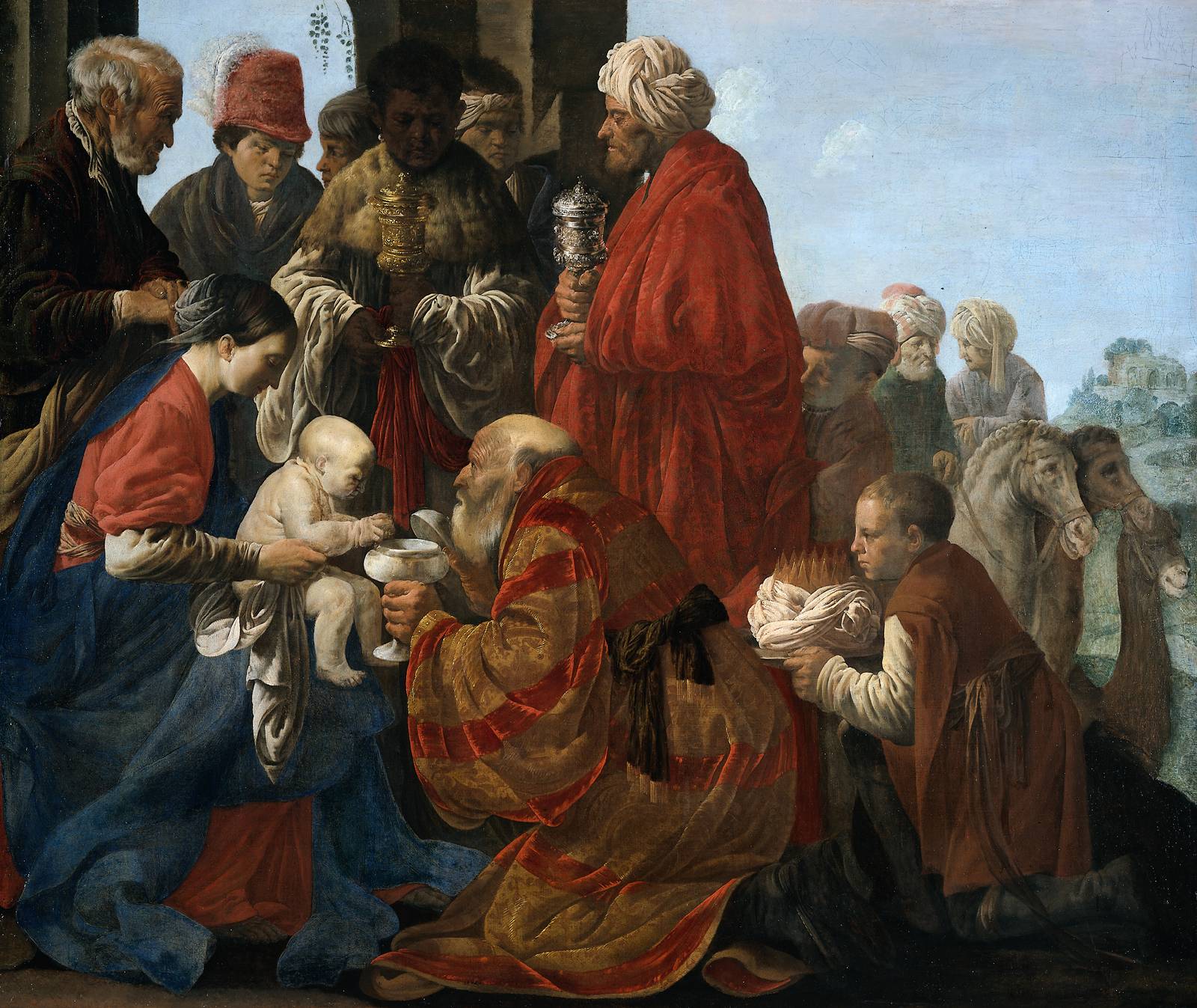
    Hendrik_ter_Brugghen_-_De_aanbidding_der_koningen
    “The Visit of the Three Kings” by Hendrik ter Brugghen (1619)

    I like Luther’s comments on this passage:

    From this text we learn that the wise men were not kings nor princes, but common, honest people, like the learned and the clergy. Herod does not treat them as belonging to royalty, but sends them to Bethlehem, tells them to attend to their mission, and, as if they were his subjects, commands them to bring him word again. He would not have done this if they had been kings or lords; he would have invited them to his palace, accompanied them on their journey, and treated them with great honor. For all historians agree that Herod was a pompous man, who knew how to treat people royally after the way of the world, and wished to be admired by the people.

    As, however, he calls the men privately and without display and parade they must have been of much lower rank than he was.

    But why does he call them privately, since the land was his and in his full control? He did it for this reason. He knew quite well that the Jews were his sworn enemies and wished to be rid of him. He was afraid, therefore, that if he called the men publicly and the Jews became aware of it, they would go to the wise men and enjoin them not to acquaint Herod with the true state of affairs, so that the new king may live before his eyes.

    Whatever the reason Herod called the wisemen aside privately, his urging was to no avail. He who was troubled would trouble many people. His intentions were not good; hence he hid them from all the people. His evil plans would unfold in a vile and cruel manner. Whatever the cost, Jesus must not be allowed to take his throne.

    Herod has long died. He is a footnote in history. Jesus, however, would assume his  throne, but it would be in the shape of a cross and be placed on a hill outside Jerusalem. Jesus’ throne was his cross. But in taking that throne he would die. In dying he would redeem the world and become King of all. Jesus is the real king: Not Herod. Not even the wisemen. One day he will be acknowledged as such, and will receive all honor and praise, forever and ever.

  • Now after Jesus was born in Bethlehem of Judea in the days of Herod the king, behold, wise men from the east came to Jerusalem, saying, “Where is he who has been born king of the Jews? For we saw his star when it rose and have come to worship him.” When Herod the king heard this, he was troubled, and all Jerusalem with him; and assembling all the chief priests and scribes of the people, he inquired of them where the Christ was to be born. They told him, “In Bethlehem of Judea, for so it is written by the prophet:

    “‘And you, O Bethlehem, in the land of Judah,
        are by no means least among the rulers of Judah;
    for from you shall come a ruler
        who will shepherd my people Israel.’”

    – Matthew 2:1-6

    20180101-DSC07770-Edit
    Bird of Paradise – a flower of remarkable and elegant design | January 2018 | Chula Vista, CA

    Scripture testifies to the fact that the heavens declare God’s glory, and that their testimony is heard throughout the universe:

    The heavens declare the glory of God,
        and the sky above proclaims his handiwork.
    Day to day pours out speech,
        and night to night reveals knowledge.
    There is no speech, nor are there words,
        whose voice is not heard.  – Psalm 19:1-3

    Paul says that the very creation testifies to the existence of God and even his invisible attributes:

    For God’s invisible attributes, namely, his eternal power and divine nature, have been clearly perceived, ever since the creation of the world, in the things that have been made. So they are without excuse. – Romans 1:20

    But the wisemen couldn’t make it to Jesus apart from the testimony of Scripture. They were able to follow the star to Jerusalem (the presumed birthplace of the King of the Jews). But they needed the testimony of Scripture to guide them to Bethlehem and to the child in the manger.

    Reason and experience can teach us much about God. That’s called the natural knowledge of God. But only through the revelation of God through the Scripture – which testifies to Jesus Christ, the Word made flesh – do we come to a saving knowledge of God.

    Jesus offers this promise to those who engage in and remain engaged in his Word: “You will know the Truth, and the Truth will set you free.” That’s quite a blessing to those who attend to the Word of God!