David Bahn – Reflections

Light from the Word and through the lens

  •  In the six hundred and first year, in the first month, the first day of the month, the waters were dried from off the earth. And Noah removed the covering of the ark and looked, and behold, the face of the ground was dry. 14 In the second month, on the twenty-seventh day of the month, the earth had dried out.15 Then God said to Noah, 16 “Go out from the ark, you and your wife, and your sons and your sons’ wives with you. 17 Bring out with you every living thing that is with you of all flesh—birds and animals and every creeping thing that creeps on the earth—that they may swarm on the earth, and be fruitful and multiply on the earth.” 18 So Noah went out, and his sons and his wife and his sons’ wives with him. 19 Every beast, every creeping thing, and every bird, everything that moves on the earth, went out by families from the ark.

    20 Then Noah built an altar to the Lord and took some of every clean animal and some of every clean bird and offered burnt offerings on the altar. 21 And when the Lord smelled the pleasing aroma, the Lord said in his heart, “I will never again curse the ground because of man, for the intention of man’s heart is evil from his youth. Neither will I ever again strike down every living creature as I have done. 22 While the earth remains, seedtime and harvest, cold and heat, summer and winter, day and night, shall not cease.” – Genesis 8:14-22
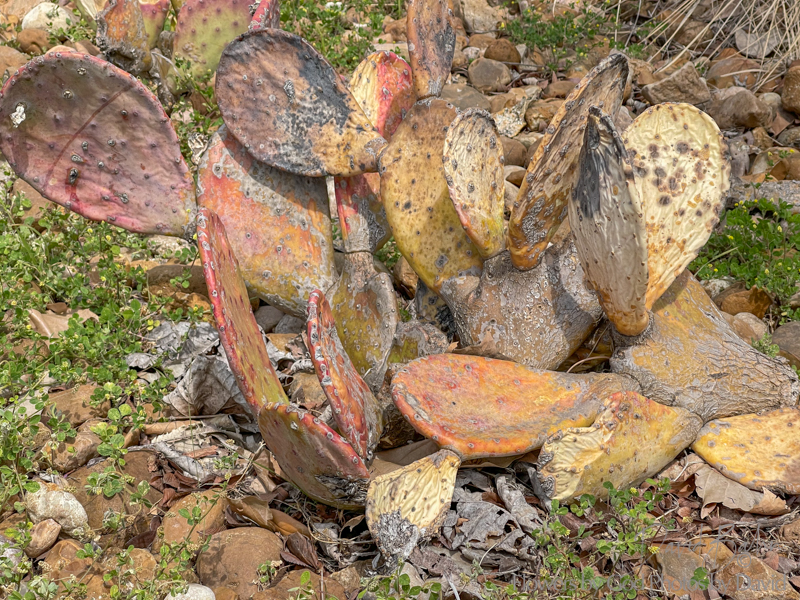
    Cactus After a Hard Freeze | Fredericksburg, Texas | April 2021

    We’ve been enjoying some extra time with our grandchildren these days. We’ve gone bowling, and spent an afternoon at a miniature golf place. Plans are for other excursions and experiences. We’ve played chess, Pandemic, checkers, and Pictionary. We also enjoyed gathering for worship with them.

    But there’s one thing we will not do. We will not build a monument to our children or grandchildren. Proud as we are of them all, they are not worthy of our worship. I don’t mean to be harsh or unloving. In fact we love them deeply, and have them in our hearts and prayers regularly. But as sweet, adorable, and special as they may be, they – nor any human being – are not worthy of our worship. 

    God alone deserves our worship. 

    When the flood waters subside and Noah, his family, and the animals are led from the ark, Noah provides a worthy example. He built an altar and worshipped God. 

    Worship does something in the heart of those who are worshipped. Watch the young athletes who become sports stars. Unless they are incredibly well-grounded, too quickly they spiral out of control into self-indulgent and selfish egotism. Remember John Lennon’s infamous statement? Christianity will go. It will vanish and shrink. I needn’t argue about that; I’m right and I’ll be proved right. We’re more popular than Jesus. Dangerous blasphemy to say the least. 

    Noah did not build a monument to his own honor. Nor did he even hint at a see,-I-told-you-so moment following the flood. He honored God. For centuries now we’ve remembered Noah, but we’ve honored and worshipped the Lord God whom Noah served. 

    God’s response to Noah’s worship is to promise, “I will never again curse the ground because of man, for the intention of man’s heart is evil from his youth. Neither will I ever again strike down every living creature as I have done. While the earth remains, seedtime and harvest, cold and heat, summer and winter, day and night, shall not cease” (Genesis 8:21-22). God’s heart was moved toward kindness and mercy by Noah’s act of worship.

    I would never say we should worship God so that he will bless us. That’s pagan religiosity. That’s not worship. Worship is a response to God’s faithfulness, mercy, love, and salvation. Noah had seen that in bold relief. He and his family had lived it out. His worship came because he had experienced God’s love. God’s love moved him further toward Noah and the world he had made. 

    May we never seek to manipulate God by our worship. But may God’s mercy be ever toward those who call on his name.

    Click here or on the podcast player below to listen to an audio version of this blog post.

  • For your personal meditation and edification on this Lord’s Day

    Psalm 9:1-2

    I will give thanks to the Lord with my whole heart;
        I will recount all of your wonderful deeds.
    I will be glad and exult in you;
        I will sing praise to your name, O Most High.

    Psalm 39:7-8

    And now, O Lord, for what do I wait?
        My hope is in you.
    Deliver me from all my transgressions.
        Do not make me the scorn of the fool!

    Psalm 69:6; 30-33

    Let not those who hope in you be put to shame through me,
        O Lord God of hosts;
    let not those who seek you be brought to dishonor through me,
        O God of Israel.

    30 I will praise the name of God with a song;
        I will magnify him with thanksgiving.
    31 This will please the Lord more than an ox
        or a bull with horns and hoofs.
    32 When the humble see it they will be glad;
        you who seek God, let your hearts revive.
    33 For the Lord hears the needy
        and does not despise his own people who are prisoners.

    Psalm 99:1-5

    The Lord reigns; let the peoples tremble!
        He sits enthroned upon the cherubim; let the earth quake!
    The Lord is great in Zion;
        he is exalted over all the peoples.
    Let them praise your great and awesome name!
        Holy is he!
    The King in his might loves justice.[a]
        You have established equity;
    you have executed justice
        and righteousness in Jacob.
    Exalt the Lord our God;
        worship at his footstool!
        Holy is he!

    Psalm 129:1-4

    “Greatly[a] have they afflicted me from my youth”—
        let Israel now say—
    “Greatly have they afflicted me from my youth,
        yet they have not prevailed against me.
    The plowers plowed upon my back;
        they made long their furrows.”
    The Lord is righteous;
        he has cut the cords of the wicked.

  • Noah was now 601 years old. On the first day of the new year, ten and a half months after the flood began, the floodwaters had almost dried up from the earth. Noah lifted back the covering of the boat and saw that the surface of the ground was drying. 14 Two more months went by, and at last the earth was dry!

    15 Then God said to Noah, 16 “Leave the boat, all of you—you and your wife, and your sons and their wives. 17 Release all the animals—the birds, the livestock, and the small animals that scurry along the ground—so they can be fruitful and multiply throughout the earth.”

    18 So Noah, his wife, and his sons and their wives left the boat. 19 And all of the large and small animals and birds came out of the boat, pair by pair. – Genesis 8:13-19

    Prairie Verbena-2 | Fredericksburg, Texas | April 2021

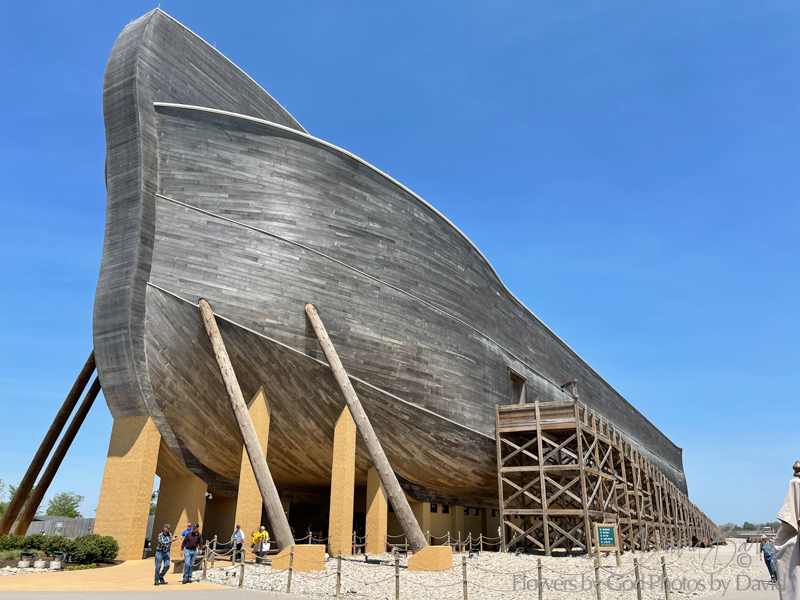
    We recently returned from a 3000 mile road trip. We had a great time. Saw many beautiful sights: The Smoky Mountains, the Biltmore Estates, gardens, tourist sights, and friends. Friends and family topped the list of experiences that filled our souls. The mountains were beautiful. The Biltmore quite interesting. The gardens were exquisitely beautiful. The Ark Encounter was impressive.

    But we were glad to roll into town last Saturday. It was time to be done with our trip. Time to unpack. Go through the mail. Water the plants. Work on the photos. Sit in my favorite chair. Catch up on being at home. 

    We knew why we went on our trip. It was a choice we were glad to make. We had people to see, sights to enjoy, experiences to encounter, photos to take. Noah knew, also, why he was taking his trip on the ark. But it wasn’t really a choice – at least not like the road trip vacation was our choice. And when it was ended, and he and his family and all the animals came out of the ark, they were not coming home. There was no inventory to take. They didn’t need to water the plants: that’s for sure. They wouldn’t wanted to have taken souvenir photos or bring gifts back to their friends and family. 

    The would, however, have things to do. There would be households to set up. There would be a new life to begin. They would need to mark out new boundaries. I’m guessing they might simply have enjoyed the wide-open spaces of life outside of the boat. 

    And there is the matter of thanksgiving. Just as we were thankful to God for safe travel and wonderful experiences, so Noah and his family were no doubt thankful for their deliverance. It had been about a year since they first boarded the ark. I suspect it felt good to leave it behind. 

    Maybe you’re on an ark. Perhaps it’s been longer than a year even. But God has a future for us that is beautiful and good. He has provided a means of salvation. And in fact, the Bible connects the ark with Christian Baptism (cf. 1 Peter 3:19-21). We’re living on the other side of the flood. For that deliverance we must thank God. And when the days wear on, and we yearn for a more perfect experience of God’s deliverance, we do well to remember Noah, and our own wanderings before the flood, before the rescue, before the door is opened. Now, having experienced that rescue, we’re experiencing a foretaste of the deliverance, rescue, and open door that is yet to come. 

    Click here, or on the podcast player below to listen to an audio version of this podcast. 

  • After another forty days, Noah opened the window he had made in the boatand released a raven. The bird flew back and forth until the floodwaters on the earth had dried up. He also released a dove to see if the water had receded and it could find dry ground.But the dove could find no place to land because the water still covered the ground. So it returned to the boat, and Noah held out his hand and drew the dove back inside. 10 After waiting another seven days, Noah released the dove again.11 This time the dove returned to him in the evening with a fresh olive leaf in its beak. Then Noah knew that the floodwaters were almost gone. 12 He waited another seven days and then released the dove again. This time it did not come back. – Genesis 8:6-12

    Prairie Verbena | Fredericksburg, Texas | April 2021

    I was introduced to the rock band Chicago (Chicago Transit Authority) when I was in college. I was talking with someone about the band, Blood, Sweat, and Tears, and he said Chicago was much like them. They became my go-to rock band. I have several favorites: Saturday in the Park, Color my World, You’re the Inspiration, and Make me Smile to name just a few. Two of their songs might offer a good question for us today: Does Anybody Really Know What Time It Is? or Twenty-five or Six to Four. Admittedly there may be references in these and other lyrics that would point one to illegal drugs, illicit sex, or other godless pursuits. I haven’t delved into that very deeply.

    But the question remains: Do you know what time it is? And I’m not speaking of whether it’s 25 till 4 or 26 before 4 am or pm. I’m speaking of God’s time. What time is it in the story of God as it intersects your story and times?

    At at recent PLI immersion, we offered a Discover your Story experience. Looking back over the years for highs and lows, events and milestones, one begins to see themes emerging. Successes and failures will be part of everyone’s timeline. Chapters become apparent. Heroes become obvious. Lies you believed are unmasked. Your heritage begins to become evident.

    Just as Noah was part of God’s story in a big way, each of us has a story, and God’s story intersects with ours in many ways. One is wise to discover how that is so. It may not be spectacular. It might seem today to be quite mundane. But history turns often on a very small hinge. And our story may intersect with God’s story in ways far beyond our wildest dreams.

    Noah sent out a dove, seeking to learn if the land was habitable yet. He had to wait until the dove returned with the olive sprig before he knew it was OK to leave the ark. And even then, he waits for God to call him to leave. 

    Sometimes we may need to send out our dove, to determine the timing of our next move. But listening for God’s invitation will prove most blessed for us and all with whom our story intersects; no matter what time it is.

    Click here, or on the podcast player below to listen to an audio version of this blog post.
  • After 150 days, exactly five months from the time the flood began, the boat came to rest on the mountains of Ararat. Two and a half months later, as the waters continued to go down, other mountain peaks became visible.

    After another forty days, Noah opened the window he had made in the boat and released a raven. The bird flew back and forth until the floodwaters on the earth had dried up. He also released a dove to see if the water had receded and it could find dry ground. But the dove could find no place to land because the water still covered the ground. So it returned to the boat, and Noah held out his hand and drew the dove back inside. – Genesis 8:3-9

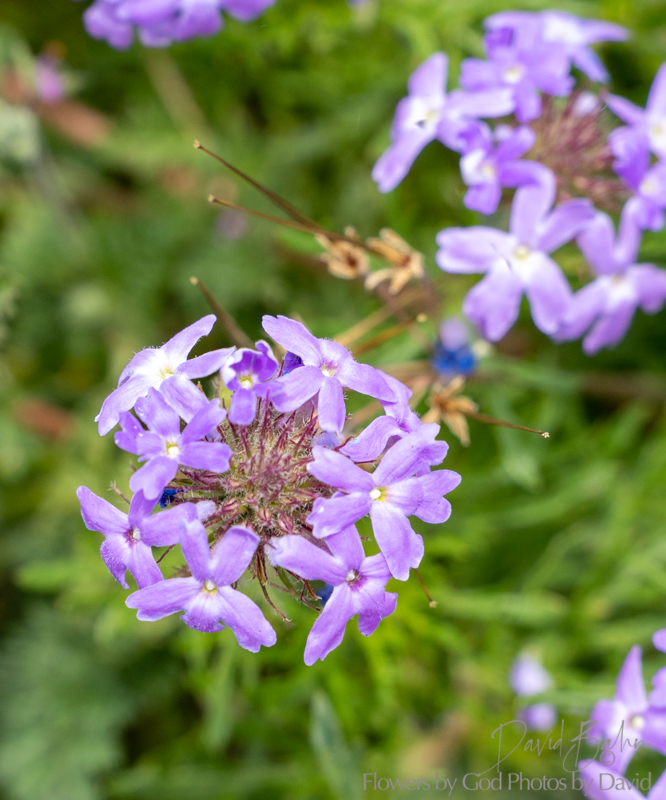
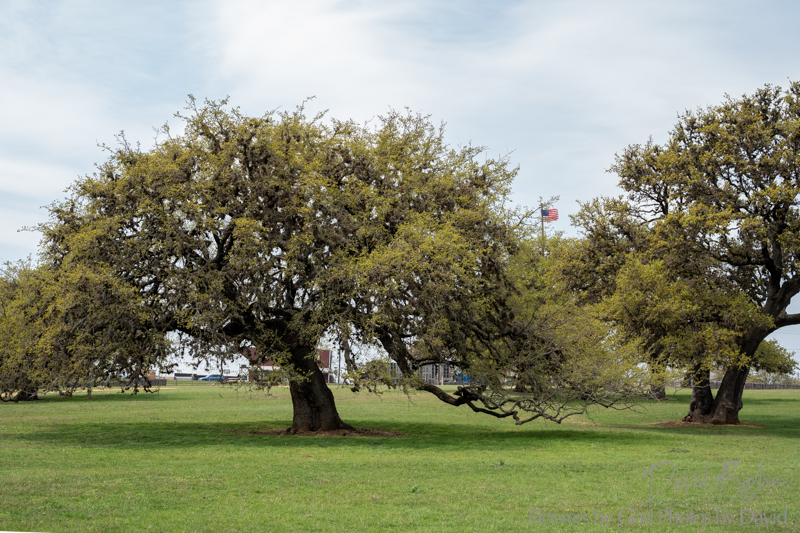
    Live Oak at Fort Martin Scott | Fredericksburg, Texas | April 2021

    I’m not good at waiting. Perhaps that has a bit to do with my get-in-the-car-and-go approach to life. But even more, I am committed to getting things done. Hence, I multi-task. Waiting for Diane, I can be frustrated and spend time tapping my foot. Or I can check my email, catch up on a Words with Friends game. Time well spent, I say. But in those moments when I do choose to power down and wait patiently, there is simply more room in my heart and mind for God. 

    Walk a little slower. Speak a little softer. Listen a little harder. For the world is loud, and God whispers. 

    Noah isn’t put forward as a hero of patience. But certainly he was a patient man. He sends out a raven and a dove, and he waits. And even before that he has had to wait for five months, two-and-a-half months, and another 40 days. 

    Admittedly he is trapped in a boat with water all around. He has no choice but than to wait. It doesn’t matter whether or not he’s bored. The animals may be restless. His family may be wearing on each other. He may have a headache, or a toothache, or just a bad day. But there’s no TV to watch. Maybe he has a book to read, or a story to tell. But there was work to be done. There are animals to feed, waste to dispose of, and the general management of the ark must be considered. 

    Perhaps our problem (or mine!) is that there are so many distractions. I must sometimes be reminded when complaining, that I am dealing with first-world problems. The need to get things done: The pressure of the rat race: The press of opportunities that are sure to go away: All these distract me from waiting for God’s next move. 

    Jesus reminds us that we cannot add a moment of time to our life’s span. We have much less control over things than we imagine. And while we are not stuck in a large boat surrounded by water and waiting for dry ground to appear, we are in a world where things happen that are completely beyond our control. Any illusion of the contrary is only an illusion. 

    I’m not advocating that we just do nothing. I would not be the one to suggest that at all. In fact, I do believe in moving forward when the path is clear and the call of God is obvious. Noah had to move forward in building the ark and readying it for the deluge. But I will try today to be much more patient as I wait – whatever the cause for the delay. And as I wait, I’ll remember Noah’s 150 days, his additional 2-½ months, and his 40 more days. And the dove. And the sprig of the olive tree that the dove will bring. I’m believing that the wait will be well worth it. 

    Click here, or on the podcast player below to listen to an audio version of this blog post.
  • But God remembered Noah and all the wild animals and livestock with him in the boat. He sent a wind to blow across the earth, and the floodwaters began to recede. The underground waters stopped flowing, and the torrential rains from the sky were stopped. So the floodwaters gradually receded from the earth. After 150 days, exactly five months from the time the flood began, the boat came to rest on the mountains of Ararat. Two and a half months later, as the waters continued to go down, other mountain peaks became visible. – Genesis 8:1-5

    Biltmore Estate Gardens | Asheville, NC | April 2021

    I’m a get-there kind of guy. When it’s time to go, I’m ready to get in the car. Never mind that I may have to go back to retrieve something I forgot. I’m going. Now. And if we’re walking around a beautiful garden (like the one above at the Biltmore Estate in Asheville, NC), I’m thinking about our next way point. I may stop for a moment or two and take a photo, but I’m thinking of getting to the next stop. 

    You can miss a lot of things living that way. Of course you can get to some places as well. It’s not a total bust. 

    But sometimes you have no control, and you must simply deal with the limitations of space and time. Such is life these days for believers. We are living in the days following Jesus’ death for our sins (time time of the flood), and his resurrection from the grave (the end of the flood), but before Jesus’ triumphant return and the Great Last Day (which is far greater than mere deliverance from the ark onto the newly-dry ground).

    But there is a parallel here. Just like Noah on day 152 we’re living in expectation of a more complete deliverance. It will be weeks before Noah is actually able to exit the ark with all the animals. Only then will the fullness of his deliverance become his new reality. And we’ve been delivered from our sins, and are waiting for the consummation of our redemption.

    So what do we do in the mean time? I’m not sure there is a great lesson to learn from Noah here. We don’t have much information about how he and his family passed the time with the animals as they waited for the waters to recede and the dry ground to appear. We do know, however, that he waited. And as the waters receded more and more he sent out a raven and a dove. Would they find a place to land? Would it be safe to venture from the ark?

    This is where the analogy breaks down. We don’t have to discern whether or not it is safe to go from the ark. We are called to go into all the world. We’re not to be of the world. But we are to be in the world. We’re in the world as victors through Jesus’ redemption. We’re not bullet proof. We can still be harassed, ridiculed, and even persecuted for our faithful witness and life.

    But it is day 152. The waters have subsided. The rains have stopped. The ark has settled. It’s just a matter of time. We may have to wait. But we wait in hope, and in the confidence of God’s faithfulness. He will bring to completion that which he has started through Jesus. Just as Noah was certain one day to set his foot on dry ground, we are certain to stand with all believers in the fullness of God’s redemption. And as we wait, we don’t lose hope!

    Click here, or on the podcast player below to listen to an audio version of this blog post.

  • But God remembered Noah and all the wild animals and livestock with him in the boat. He sent a wind to blow across the earth, and the floodwaters began to recede. The underground waters stopped flowing, and the torrential rains from the sky were stopped. So the floodwaters gradually receded from the earth. After 150 days, exactly five months from the time the flood began, the boat came to rest on the mountains of Ararat. Two and a half months later, as the waters continued to go down, other mountain peaks became visible.

    After another forty days, Noah opened the window he had made in the boat and released a raven. The bird flew back and forth until the floodwaters on the earth had dried up. He also released a dove to see if the water had receded and it could find dry ground. But the dove could find no place to land because the water still covered the ground. So it returned to the boat, and Noah held out his hand and drew the dove back inside. 10 After waiting another seven days, Noah released the dove again.11 This time the dove returned to him in the evening with a fresh olive leaf in its beak. Then Noah knew that the floodwaters were almost gone. 12 He waited another seven days and then released the dove again. This time it did not come back. – Genesis 8:1-12

    Full Size Replica of Noah’s Ark | The Ark Encounter in Williamstown, KY | April 2021

    Our kids say it was 2 or 3 miles. I say we didn’t even get out of the parking lot. I suspect the truth is somewhere in between – though far less than 2 or 3 miles. We all agree that on one family vacation, we forgot our youngest child. Stephen was 8 or 9 years old at the time, and had dawdled in the restroom as we loaded the van and got back on the road. Aaron was in the back seat, sitting in the middle with his arms spread to the right and left. He could do that because his little brother was not in the seat with him. “Hey! Where’s Stephen?!?” someone yelled. 

    Stop the van. Go back to the gas station. Pull up to the restroom area. And there’s Stephen with a cute little half-grin half-frown. He took it in good stride. We all laughed – mostly because he was not left that far behind. But we did forget him. 

    Soldiers have a code that says, Leave no one behind. In fact the Military Times, cites two creeds: The Airman’s Creed, “I will never leave an airman behind.” And the Soldier’s Creed, “I will never leave a fallen comrade.” 

    Rudyard Kipling’s poem, Recessionalhas the refrain, “Lest we forget–Lest we forget.” It is a prayer for God’s mercy and a reminder that we cannot live without his aid. Power and might do not save us. This we must not forget. 

    Thankfully God does not forget us. He doesn’t drive out of the parking lot without us. He is attentive to our every need. Not one sparrow falls to the ground apart from his knowledge. He knows us well. And he will not forget us. He will forget our sins. He will remove our iniquities from us as far as east is from west. But he will not forget his own.

    I don’t know if Noah and his family worried about being abandoned by God. Forgotten. Forsaken. Deserted. I can imagine 150 dark nights and landless days dragging on and one. After 100 days, I might wonder if God is still there. And 150 days? Well, thankfully on day 151 the boat runs aground. God has remembered Noah, his family, and the animals. God has not forgotten.

    Maybe you’re in a seemingly God-forsaken place. Perhaps it’s day 149 of hopeless struggle and sleepless nights. You might be ready to give up. But let this verse anchor your soul: God remembered Noah and all the wild animals and livestock with him in the boat. He will remember you, too. For he has saved you. He loves you. Maybe tomorrow will be your day 151.

    Click here or click on the podcast player below to listen to an audio version of this blog post.
  • For your personal reflection and edification on this Lord’s Day

    Psalm 122:1
    I was glad when they said to me,
    “Let us go to the house of the LORD!”

    Psalm 2
    Why do the nations rage
    and the peoples plot in vain?
    The kings of the earth set themselves,
    and the rulers take counsel together,
    against the LORD and against his Anointed, saying,
    “Let us burst their bonds apart
    and cast away their cords from us.”
    He who sits in the heavens laughs;
    the Lord holds them in derision.
    Then he will speak to them in his wrath,
    and terrify them in his fury, saying,
    “As for me, I have set my King
    on Zion, my holy hill.”
    I will tell of the decree:
    The LORD said to me, “You are my Son;
    today I have begotten you.
    Ask of me, and I will make the nations your heritage,
    and the ends of the earth your possession.
    You shall break them with a rod of iron
    and dash them in pieces like a potter’s vessel.”
    Now therefore, O kings, be wise;
    be warned, O rulers of the earth.
    Serve the LORD with fear,
    and rejoice with trembling.
    Kiss the Son,
    lest he be angry, and you perish in the way,
    for his wrath is quickly kindled.
    Blessed are all who take refuge in him.

    Psalm 32:1-5
    Blessed is the one whose transgression is forgiven,
    whose sin is covered.
    Blessed is the man against whom the LORD counts no iniquity,
    and in whose spirit there is no deceit.
    For when I kept silent, my bones wasted away
    through my groaning all day long.
    For day and night your hand was heavy upon me;
    my strength was dried up as by the heat of summer. Selah
    I acknowledged my sin to you,
    and I did not cover my iniquity;
    I said, “I will confess my transgressions to the LORD,”
    and you forgave the iniquity of my sin. Selah

    Psalm 62:5-8
    For God alone, O my soul, wait in silence,
    for my hope is from him.
    He only is my rock and my salvation,
    my fortress; I shall not be shaken.
    On God rests my salvation and my glory;
    my mighty rock, my refuge is God.
    Trust in him at all times, O people;
    pour out your heart before him;
    God is a refuge for us. Selah

    Psalm 92:1-4
    It is good to give thanks to the LORD,
    to sing praises to your name, O Most High;
    to declare your steadfast love in the morning,
    and your faithfulness by night,
    to the music of the lute and the harp,
    to the melody of the lyre.
    For you, O LORD, have made me glad by your work;
    at the works of your hands I sing for joy.

  • The flood continued forty days on the earth. The waters increased and bore up the ark, and it rose high above the earth. The waters prevailed and increased greatly on the earth, and the ark floated on the face of the waters. And the waters prevailed so mightily on the earth that all the high mountains under the whole heaven were covered. The waters prevailed above the mountains, covering them fifteen cubits deep. And all flesh died that moved on the earth, birds, livestock, beasts, all swarming creatures that swarm on the earth, and all mankind. Everything on the dry land in whose nostrils was the breath of life died. He blotted out every living thing that was on the face of the ground, man and animals and creeping things and birds of the heavens. They were blotted out from the earth. Only Noah was left, and those who were with him in the ark. And the waters prevailed on the earth 150 days.

    Genesis 7:17-24
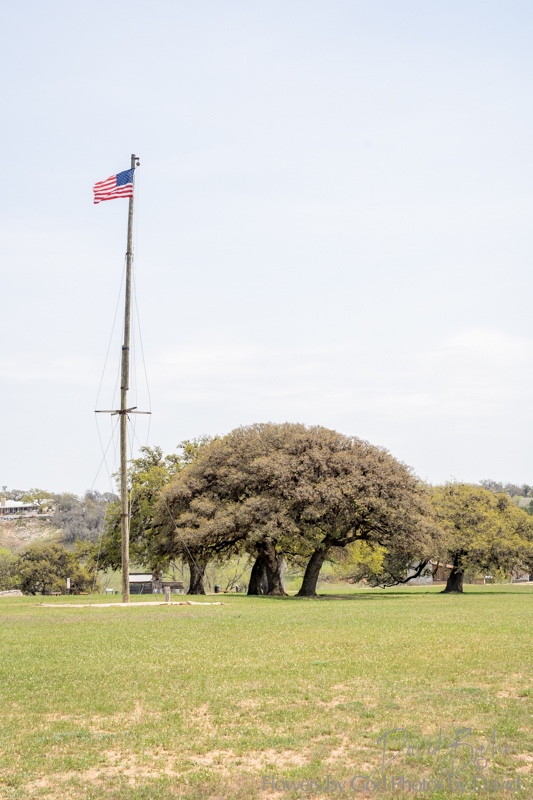
    Fort Martin Scott | Fredericksburg, TX | April 2021

    I don’t have a stomach for ruthless and brutal movies. Although you could well argue that Mel Gibson’s Passion of the Christ was true to the brutal treatment Jesus received at the hands of soldiers and scribes, I do not find such depictions edifying. I did watch that movie, but I couldn’t watch Mel Gibson’s Braveheart. I had to stop watching shortly after the film’s start. When it comes to Bible films, The Chosen tops my list. I also really liked Chariots of Fire, though strictly speaking it wasn’t a Bible movie.

    Then comes the movie, Noah. Starring Russel Crowe and directed by Darren Aronofsky, it is a dark and ugly movie. Aronofsky takes significant liberties from the biblical account in his depictions of these events. But he does manage to depict the darkness of a world in rebellion against God. The brutal nature of flood waters, and the fighting of people who are trying to get aboard seemed real to me.

    We have a cute and cuddly soft Noah’s ark, replete with cute animals: a giraffe, lion, and elephant, and rhinoceros. There is even a Mr & Mrs Noah. There are numerous children’s books about Noah and how he saved the animals. All these are safe and sanitized versions of this saga. And while the Bible’s account is not graphic, it is clear. There is evil everywhere on earth. Violence and rebellion, lawlessness and greed abound.

    Jewish rabbis instructed their families that their children should not read Song of Solomon until they are 30 years old. Other stories of the Old Testament are often and appropriately sanitized for younger years and hearts. David and Bathsheba comes to mind, as does the account of Tamar and Amnon.

    There comes a time when our Sunday School sanitizing of these biblical events needs to be set aside in favor of a more honest reading. That’s when biblical characters become more than flannel-graph cutouts. And that’s when our faith becomes more precious. You don’t have to be a sanitized version of churchyness to be part of God’s story of redemption.

    This is no excuse or invitation for us to abandon any self-control, or propriety in our speech or actions. We do well to act graciously and politely, and speak graciously and circumspectly (cf. Proverbs 25:11-13; Ephesians 4:29). But if we see someone who violates our sensibilities about piety and godly demeanor we ought not quickly dismiss him or her. Sometimes that which we abhor in others is actually a reflection of our own faults and shortcomings.

    God has revealed that his people are all sinners. That’s not an excuse for a willful abandoning of God’s ways. But it is a good reminder that the Good News of God’s love for sinners is not only good, but something we desperately need. Let’s be real and honest about God’s people and the world’s need for mercy, grace, and salvation.

    Click here, or on the podcast player below for an audio version of this blog post.
  • For forty days the flood kept coming on the earth, and as the waters increased they lifted the ark high above the earth. 18 The waters rose and increased greatly on the earth, and the ark floated on the surface of the water. 19 They rose greatly on the earth, and all the high mountains under the entire heavens were covered. 20 The waters rose and covered the mountains to a depth of more than fifteen cubits. 21 Every living thing that moved on land perished—birds, livestock, wild animals, all the creatures that swarm over the earth, and all mankind. 22 Everything on dry land that had the breath of life in its nostrils died.23 Every living thing on the face of the earth was wiped out; people and animals and the creatures that move along the ground and the birds were wiped from the earth. Only Noah was left, and those with him in the ark. – Genesis 7:17-23

    Fort Martin Scott | Fredericksburg, Texas | April 2021

    I’ve been accused by those who love me of regularly (over)using a phrase: “The real question is…” And it’s difficulty to deny: I do love to ask questions. I also love to ferret out the foundational issues we are facing. I don’t tend toward simple surface answers. I want to get to the heart of the matter. So when I imagine I’ve discovered it, I’ll say, “The real question isn’t whether it’s going to rain today, it is whether or not the weather will ruin our day.” Bad example, but you get the drift. 

    One of the real and big questions in regard to this account of Noah and the Ark has to do with God’s punishment of the whole human race and the earth itself in such a dramatic fashion. Martin Luther offers a thought here:

    “It was not easy to believe that the entire human race would perish. The world regarded Noah as exceedingly stupid for believing such things; it derided him and without a doubt also made his structure (the ark) the object of ridicule. In order to encourage him in trying circumstances, God speaks with him several times and reminds him of the covenant…that [Noah] firmly believe that Christ will be born from his descendants and that God, in His great wrath will let a seedbed of the church remain…[That little church] will be saved not only from the violence of the water but also from eternal death and damnation.” (Thanks to Rev. Paul Doellinger for this quote)

    Indeed, if you want to be dismissed today, simply convey a word of judgment on anyone for any reason. People will accuse you of hate speech, judgmentalism, and a view of God that is loveless. God would never do that! So it is thought. We prefer a domesticated god. We want to keep God in the dock. We believe he must conform to our sensibilities. We’re not ready to let God be judge.

    I don’t particularly struggle with this idea. I’m pretty well convinced that God is God. We answer to him. We creatures will give an account to him, the Creator. We cannot require God to give an account to us. 

    But let us never lose sight of the fact that the judgment has already taken place! Two thousand years ago, Jesus of Nazareth stepped into our world, took on our sins, and stood in the dock for us. He who knew no sin was made to be sin for us. The judgment was brutal. Excruciating. Humiliating. Deadly. And if I want to understand how vile sin really is, and how serious God is about justice, I will look beyond Noah and the flood to Jesus and the cross.

    The real question is, therefore, Am I willing to believe God’s words of grace and truth shown ultimately in Jesus? God put Jesus in the dock for us, and by his loving grace offers salvation to all who believe in him. The real question is whether or not I see this as the anchor for my soul. Do you?

    Sorry…no audio version today. Technical difficulties. Maybe next week.