David Bahn – Reflections

Light from the Word and through the lens

  • Then God said to Noah and to his sons with him,“Behold, I establish my covenant with you and your offspring after you, 10 and with every living creature that is with you, the birds, the livestock, and every beast of the earth with you, as many as came out of the ark; it is for every beast of the earth. 11 I establish my covenant with you, that never again shall all flesh be cut off by the waters of the flood, and never again shall there be a flood to destroy the earth.” 12 And God said, “This is the sign of the covenant that I make between me and you and every living creature that is with you, for all future generations:13 I have set my bow in the cloud, and it shall be a sign of the covenant between me and the earth.14 When I bring clouds over the earth and the bow is seen in the clouds, 15 I will remember my covenant that is between me and you and every living creature of all flesh. And the waters shall never again become a flood to destroy all flesh. 16 When the bow is in the clouds, I will see it and remember the everlasting covenant between God and every living creature of all flesh that is on the earth.” 17 God said to Noah, “This is the sign of the covenant that I have established between me and all flesh that is on the earth.” – Genesis 9:8-17

    Two Deer Outside our Cabin | Fredericksburg, Texas | April 2021

    Gertie was a wonderful dog…most of the time. She was a mostly-German Shepherd dog birthday gift to me and I managed to train her to some degree. But I couldn’t get her to stop barking…until one fateful morning. My history teacher lived next door to us and had complained to me more than once. “Your dog woke me up very early again this morning. Too early.”

    Sometime later I heard Gertie barking. My bedroom was on the second floor with a small balcony that was right over Gertie’s doghouse. I opened the door and yelled, “Gertie! Shut up.” She was quiet for a moment or two. I went back to bed only to hear her barking again. I opened the door – after grabbing a shoe – and yelled, again, “Gertie, shut up!” At the very time I yelled, I threw the shoe toward the entrance to Gertie’s doghouse. Gertie’s entrance and my shoe were perfectly timed. It hit her on the rear just as she went in. Her yelp was the final early morning disturbance we had to deal with. 

    Gertie was a wonderful dog. JoJo was not. JoJo was dumb. And afraid of storms. Those were the only two dogs that I have had any extended ownership experience. There have, however, been granddogs: Mobie, Gus, Max, Leah, Lillie, Peyton, and -each with their own personalities and lovability quotient. Dog lovers can be a very special breed themselves. And when their pet dies, it can be traumatic. 

    Children have asked me over the years, “Will my pet be in heaven?” 

    I don’t have an absolute answer to that question. But I do have an absolute and strong opinion. I believe dogs, cats (yikes!), and all manner of animals will be part of the new heaven and the new earth. And the basis for this opinion is partly founded on the phrase in this passage. God says, “Behold, I establish my covenant with you and your offspring after you, and with every living creature that is with you, the birds, the livestock, and every beast of the earth with you, as many as came out of the ark; it is for every beast of the earth.” And so it is that God makes a covenant not only with Noah and his family, and all future generations, but he includes in that covenant also every living creature of all flesh

    In other places there is reference to animals in heaven. “The lion will lie down with the lamb,” says Isaiah (Isaiah 11:6–10; Romans 8:18-22). God saved the world from an animal-less existence. And while I do not wish to bind anyone’s faith by this opinion, I do hold it strongly. Imagine a perfectly balanced creation. No sin. No death. No predators. No prey. Just beautiful symmetry. Synergy in all of creation and for all of creation. Only perfect equanimity. Imagine the heart of God as large enough to include animals. Then remember that his heart is large enough to include you as well.

    Click here or on the podcast player below to listen to an audio version of this blog post. 

  • Then God said to Noah and to his sons with him,“Behold, I establish my covenant with you and your offspring after you, 10 and with every living creature that is with you, the birds, the livestock, and every beast of the earth with you, as many as came out of the ark; it is for every beast of the earth. 11 I establish my covenant with you, that never again shall all flesh be cut off by the waters of the flood, and never again shall there be a flood to destroy the earth.” 12 And God said, “This is the sign of the covenant that I make between me and you and every living creature that is with you, for all future generations:13 I have set my bow in the cloud, and it shall be a sign of the covenant between me and the earth.14 When I bring clouds over the earth and the bow is seen in the clouds, 15 I will remember my covenant that is between me and you and every living creature of all flesh. And the waters shall never again become a flood to destroy all flesh. 16 When the bow is in the clouds, I will see it and remember the everlasting covenant between God and every living creature of all flesh that is on the earth.” 17 God said to Noah, “This is the sign of the covenant that I have established between me and all flesh that is on the earth.” – Genesis 9:8-17

    Early Flowers of Pink Dogwood | Biltmore Estate Gardens, Asheville, SC | April 2021

    She seemed so sincere. “You bring your bike so I can ride it and I’ll let you ride my horse.” She didn’t say, “I promise,” but I don’t think it would have made a difference. She was part of a very poor family, living on a nearby farm, and in a shack without indoor plumbing. She didn’t have any right to offer me a ride on “her horse.” It wasn’t hers to begin with. All she wanted was to ride my bike. I went home later that afternoon without bitterness, but with some degree of disappointment. I was really looking forward to riding that horse!

    Maybe you’ve made a promise you intended to keep, but didn’t. Maybe life got in the way and you weren’t able to get to the ballgame. Or you ran out of money before you could repay a debt. Perhaps you wanted to deliver but time ran out before you could. Sometimes the promise goes unclaimed and you’re left holding a gift you can and would give but which is simply not wanted. 

    If ever God’s promises are not received it is only because of that last reason. Too many people despise the gifts of God. He has the blessings of forgiveness, life, salvation, and eternal joy to give. But too many people refuse his offer. They don’t think they need it. They don’t want to come under his authority to receive it. They don’t recognize how precious it truly is. They consider the Giver to be evil or at best an uninvited guest into their lives. Little do they know: the invitation is from the Creator of the Universe, the One to whom they will give an account. They are being invited into life that is life from God.

    God promises the blessings of forgiveness, life, salvation, and eternal joy. But he does more than promise them. He makes a covenant with Noah – and all who will believe. But God goes beyond a mere promise. He makes a covenant with Noah and every living creature that is with [him], for all future generations. Covenants may be much like peace treaties when they are between two equal parties. But this is no equal party treaty. God is making a promise that is between himself and Noah and all creatures for all future generations. 

    In other words this is not simply a promise. It is a promise to be lived out in relationship. God promises blessings to us and we receive those promises in a relationship of faith. God’s promises – his word – is immutable. It will never pass away. It will accomplish his purposes. It will do as he says. (cf. Matthew 24:35; 1 Peter 1:22-25; Isaiah 55:10-11)

    Better than even a promise of God is a promise of God believed, trusted, and lived-out. It’s one thing to know God’s promises. It’s another thing to believe God’s promises. But when we actually trust God’s promises and live them out is the best thing of all. 

    Click here, or on the podcast player below to listen to an audio version of today’s blog post.


  • Then God said to Noah and to his sons with him,“Behold, I establish my covenant with you and your offspring after you, 10 and with every living creature that is with you, the birds, the livestock, and every beast of the earth with you, as many as came out of the ark; it is for every beast of the earth. 11 I establish my covenant with you, that never again shall all flesh be cut off by the waters of the flood, and never again shall there be a flood to destroy the earth.” 12 And God said, “This is the sign of the covenant that I make between me and you and every living creature that is with you, for all future generations:13 I have set my bow in the cloud, and it shall be a sign of the covenant between me and the earth.14 When I bring clouds over the earth and the bow is seen in the clouds, 15 I will remember my covenant that is between me and you and every living creature of all flesh. And the waters shall never again become a flood to destroy all flesh. 16 When the bow is in the clouds, I will see it and remember the everlasting covenant between God and every living creature of all flesh that is on the earth.” 17 God said to Noah, “This is the sign of the covenant that I have established between me and all flesh that is on the earth.” – Genesis 9:8-17

    Japanese Maple | Biltmore Estate Gardens, Asheville, SC | April 2021

    I set an alarm today. It’s a reminder to start our grandfather clock which has been stopped while we’ve been gone for the past few days. Since it rings on the hour and half-hour, starting it too soon would require waiting for many chimes as it catches up with the current hour. I’ve also set a reminder on my calendar of a meeting I have for June 1. And, oh yes! There is that reminder for our coaches huddle later today, and we may be traveling again soon. A reminder for our flights. 

    I use reminders most often to keep me from missing an appointment. But I need them for far more important reasons. And so do you. 

    Feeling anxious? Be reminded of God’s faithfulness, love, and providential care. Are you hurting? Be reminded that God’s healing touch will come, and pray that it will come soon. Are you facing temptation? Remember Jesus’ encounter with Satan after 40 days of fasting and his use of the Bible to ward off the devil’s attacks. Are you sad? Angry? Distracted? Envious? Dissatisfied? In the face of each of these, we have reminders in the Bible of God’s goodness, love, faithfulness, reliability, mercy, and justice. Sometimes it’s a story. Occasionally a warning needs to be heeded. Most often it is a promise that secures our souls.

    God has provided all of these for our edification and wellbeing. There is the warning in the account of the flood. There is the account of the release of the raven and the dove after the waters had begun to recede. Now there is the reminder of God’s covenant promise by means of the rainbow. It is a reminder of God’s promise, and a call back to faith in God.

    We look for these reminders in times of turmoil. Sometimes the storms are actual rain and wind, lightening and thunder. Sometimes they are the storms of life. Cataclysmic weather brings fear of physical harm. Struggles with temptation, worry, fear, and envy bring their own kinds of threats. Both are real. We need the assurance of God’s lovingkindness, care, mercy, faithfulness, and love in the face of both.

    God provides Noah with a reminder of his promise by means of the rainbow. But he adds a significant caveat: The rainbow will serve as a reminder to God himself of his promise! What?!? Does God need a reminder? Might God forget? Is he really a kindly grandfather who needs his memory jostled on occasion? Or might he get so angry that he he needs a cool-off reminder for himself?

    Remembering in the Old Testament, however, is far different than it is for us today. We think of remembering as accessing data, like finding the right bytes and bits on the computer hard drive. The disk spins until the data is found and voila!

    But the Old Testament concept of remembering is different. Remembering in the Old Testament has to do with putting yourself back into the moment of the past, not bringing the past to mind. God is saying here that he will put himself back into the time following the flood and into the moment of his promise. He will remember it in terms of keeping his promise. He won’t forget. That is, he won’t abandon his promise. 

    We all need reminders. God won’t forget his promises. We can count on that. And whether it’s a rainbow or Bible verse, or a memory of God’s grace to you through an answered prayer, the promises of God in baptism, or the blessed remembrance of Jesus’ suffering and death in the Lord’s Supper, these are precious memories. And that’s worth remembering.

    Click here, or on the podcast player below to listen to an audio version of this blog post.

     

  • And God blessed Noah and his sons and said to them, “Be fruitful and multiply and fill the earth. The fear of you and the dread of you shall be upon every beast of the earth and upon every bird of the heavens, upon everything that creeps on the ground and all the fish of the sea. Into your hand they are delivered. Every moving thing that lives shall be food for you. And as I gave you the green plants, I give you everything. But you shall not eat flesh with its life, that is, its blood. And for your lifeblood I will require a reckoning: from every beast I will require it and from man. From his fellow man I will require a reckoning for the life of man.

    Genesis 9:1-7
    Azalea | Biltmore Gardens, Asheville, NC | April 2021

    Have you ever wanted a do-over? You meet someone for the first time and unwittingly insult her. Time for a do-over. You are in a bad mood when you wake up and offend your wife right off the bat. Time for a do-over! You buy a car way beyond your means and can’t make the payments. Time for a do-over!

    I’ve done all those things. Sadly, I’ve done even worse. Perhaps you have too. And in the case of all the above, we rely on the grace of God and others to start over. It’s a good thing when people around us reflect the grace of God to us. We must be ready to do the same for them.

    God has a do-over with Noah. But in this case, he needs no grace. In fact his do-over itself is an act of grace. God would not have had to save Noah and his family from the flood. But he did. God would not have had to save the animals from the flood. But he did. God would not have had to make the promise never to destroy the world again by flood. But he did. God would not have had to give us the reminder of his covenant by way of the rainbow. But he did. God’s do-over is an act of grace on his part.

    Notice here two facets of this do-over. It echoes, first of all, the command given to Adam and Eve at the dawn of creation: “Be fruitful and multiply.” God’s do-over on this occasion is a replay of the earliest command from God.

    Notice, also, the issue of eating. Here is the difference. There is no longer the prohibition against eating from the tree of the knowledge of good and evil. That has been done. The fruit of that eating has been seen all too clearly in the evil the world had seen prior to the flood. Now, however, the prohibition against eating that fruit is replaced by a provision of plants and animals for food. The one prohibition? But you shall not eat flesh with its life, that is, its blood.

    Against the backdrop of provision for all kinds of food is the reminder of God’s value for life. In fact, there is a further declaration: Made in God’s image, man’s life is sacred. So sacred that God sentences those who take another’s life to having his life taken from him.

    And herein lies the difference. This do-over is not so that God can finally get it right with his world and all that is in it. Sin has entered the world. There will be murder. There will be other failures.

    God has something else in mind. And it starts with our daily do-over with him. I love Martin Luther’s first of his 95 thesis: “When our Lord and Master Jesus Christ said, ‘Repent’ (Matthew 4:17), he willed the entire life of believers to be one of repentance.” If we’re serious about our relationship with God, we will repent daily, because we sin daily in thought, word, and deed.

    God knew this. And his do-over was part of a greater story of redemption than even Noah and the flood. Many more will be saved. The salvation is eternal. When it is finally complete, it will be fully complete. There will be no more need for repentance. All results and consequences of sin will be banished. The only do-over will be the kind a daughter says, to her daddy as he lifts her into the air: “Do it again, Daddy! Do it again!”

    Click here or on the podcast player below to listen to an audio version of this blog post.

  • And God blessed Noah and his sons and said to them, “Be fruitful and multiply and fill the earth.The fear of you and the dread of you shall be upon every beast of the earth and upon every bird of the heavens, upon everything that creeps on the ground and all the fish of the sea. Into your hand they are delivered. Every moving thing that lives shall be food for you. And as I gave you the green plants, I give you everything. But you shall not eat flesh with its life, that is, its blood. And for your lifeblood I will require a reckoning: from every beast I will require it and from man. From his fellow man I will require a reckoning for the life of man.

    “Whoever sheds the blood of man,
        by man shall his blood be shed,
    for God made man in his own image.

    And you,<sup class="footnote" style="font-size: 0.625em; line-height: normal; position: relative; vertical-align: text-top; top: auto; display: inline;" data-fn="#fen-ESV-213a" data-link="[a]”>[a] be fruitful and multiply, increase greatly on the earth and multiply in it.”

    Then God said to Noah and to his sons with him,“Behold, I establish my covenant with you and your offspring after you, 10 and with every living creature that is with you, the birds, the livestock, and every beast of the earth with you, as many as came out of the ark; it is for every beast of the earth. 11 I establish my covenant with you, that never again shall all flesh be cut off by the waters of the flood, and never again shall there be a flood to destroy the earth.” 12 And God said, “This is the sign of the covenant that I make between me and you and every living creature that is with you, for all future generations: 13 I have set my bow in the cloud, and it shall be a sign of the covenant between me and the earth. 14 When I bring clouds over the earth and the bow is seen in the clouds, 15 I will remember my covenant that is between me and you and every living creature of all flesh. And the waters shall never again become a flood to destroy all flesh. 16 When the bow is in the clouds, I will see it and remember the everlasting covenant between God and every living creature of all flesh that is on the earth.” 17 God said to Noah, “This is the sign of the covenant that I have established between me and all flesh that is on the earth.” – Genesis 9:1-17

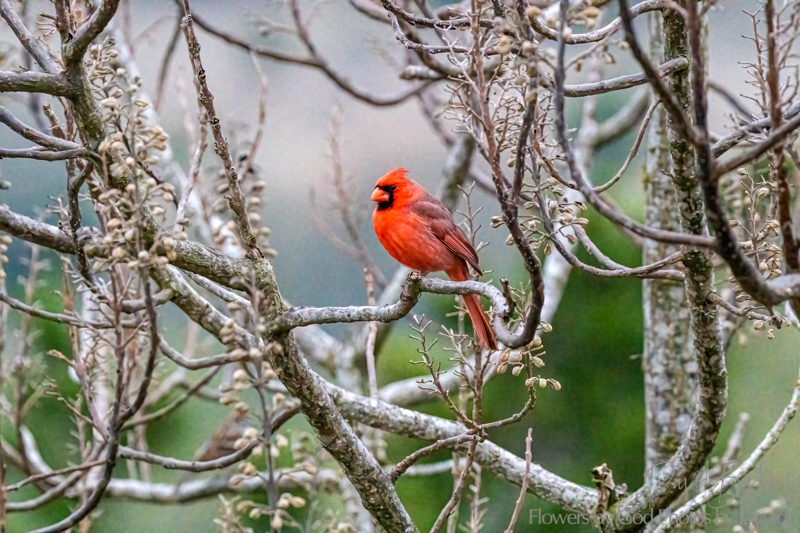
    Cardinal | Fredericksburg, Texas | April 2021

    We’ve been watching The Chosen, a made-for-TV drama about the life and ministry of Jesus of Nazareth. I find it compelling and faithful to the teachings of Jesus. I am deeply moved by the very real human context into which Jesus is placed via the screenwriters. They have done an excellent job. 

    I realize there is a good bit of non-scriptural background and context in the presentation. And I’m aware that some don’t feel it appropriate to extrapolate the things we know of Jesus’ time and place into the accounts of the gospels. But none of the imaginations and fictional filler detracts from the identity of Jesus as the Son of God who came to seek and save the lost. 

    I say all this because there are various approaches to Scripture that will lead us one way or another in our understanding of the Bible and of events such as Noah and the ark. Is the Bible primarily a rule book, designed to give people principles and laws by which to live successfully? Certainly there are those things in Scripture. But I take seriously that the purpose of the Bible is expressed in John 20:31, “these are written so that you may believe that Jesus is the Christ, the Son of God, and that by believing you may have life in his name.”

    The story of Noah provides a lens for us to consider just how this is so. It shows our need for salvation (the intention of man’s heart is evil from his youth. – Genesis 8:21). It shows God’s good will and grace toward man and the world he has made (I will never again curse the ground… – Genesis 8:21). It reveals how appropriate it is for us to worship God, and that he delights in our worship and prayers (Genesis 8:20). And now it lays out the way we live in light of God’s deliverance. 

    In these verses from Genesis 9 we see a command (following God’s rescue of Noah), and promise of continuing love. Then we see a sign given us (the rainbow) to remind us of God’s promise. Then comes a further allowance for our freedom (eating meat, for example), and then the mention of his covenant. 

    Lutheran teaching highlights Law and Gospel as the lens through which we read the Bible. To that we can also add Covenant and Kingdom. Law and Gospel establishes God’s covenant with us. We’ve sinned (Law). And God has redeemed and saved (Gospel). Now we live under Christ in his kingdom (Luther’s Small Catechism, 2nd Article of the Creed). We now live as representatives of God in the world. We live in the gracious rule and reign of Jesus, under his grace and promises, and in ways that bring him honor and glory.

    Let me get real about all this. Noah’s story is a warning to us not to abandon God’s ways lest we fall under his judgment and wrath. It is also a story of faithfulness over the long-haul of life – in times of storm or calm. We have been redeemed. That means something. It should shape our thoughts and lives, our worship and our prayers. 

    Click here or on the podcast player below to listen to this blog post.

  • Psalm 16:11
    You make known to me the path of life;
    in your presence there is fullness of joy;
    at your right hand are pleasures forevermore.

    Psalm 46
    God is our refuge and strength,
    a very present help in trouble.
    Therefore we will not fear though the earth gives way,
    though the mountains be moved into the heart of the sea,
    though its waters roar and foam,
    though the mountains tremble at its swelling. Selah
    There is a river whose streams make glad the city of God,
    the holy habitation of the Most High.
    God is in the midst of her; she shall not be moved;
    God will help her when morning dawns.
    The nations rage, the kingdoms totter;
    he utters his voice, the earth melts.
    The LORD of hosts is with us;
    the God of Jacob is our fortress. Selah
    Come, behold the works of the LORD,
    how he has brought desolations on the earth.
    He makes wars cease to the end of the earth;
    he breaks the bow and shatters the spear;
    he burns the chariots with fire.
    “Be still, and know that I am God.
    I will be exalted among the nations,
    I will be exalted in the earth!”
    The LORD of hosts is with us;
    the God of Jacob is our fortress. Selah

    Psalm 76:1-3
    In Judah God is known;
    his name is great in Israel.
    His abode has been established in Salem,
    his dwelling place in Zion.
    There he broke the flashing arrows,
    the shield, the sword, and the weapons of war. Selah

    Psalm 106:47-48
    Save us, O LORD our God,
    and gather us from among the nations,
    that we may give thanks to your holy name
    and glory in your praise.
    Blessed be the LORD, the God of Israel,
    from everlasting to everlasting!
    And let all the people say, “Amen!”
    Praise the LORD!

    Psalm 136:1-9
    Give thanks to the LORD, for he is good,
    for his steadfast love endures forever.
    Give thanks to the God of gods,
    for his steadfast love endures forever.
    Give thanks to the Lord of lords,
    for his steadfast love endures forever;
    to him who alone does great wonders,
    for his steadfast love endures forever;
    to him who by understanding made the heavens,
    for his steadfast love endures forever;
    to him who spread out the earth above the waters,
    for his steadfast love endures forever;
    to him who made the great lights,
    for his steadfast love endures forever;
    the sun to rule over the day,
    for his steadfast love endures forever;
    the moon and stars to rule over the night,
    for his steadfast love endures forever;

  • Then Noah built an altar to the Lord and took some of every clean animal and some of every clean bird and offered burnt offerings on the altar. – Genesis 8:20

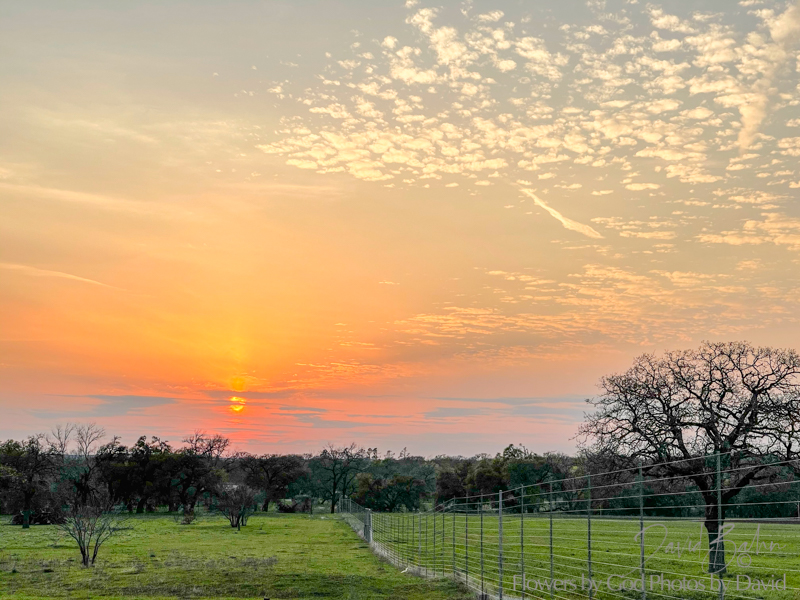
    Hill Country Sunset | Fredericksburg, Texas | April 2021

    Diane thought our first home would be an un-sold cabin in a fishing club development. My friend and I had built the cabin on speculation. And. It. Would. Not. Sell. She has mentioned several times that she thought we’d be living there instead of in a cheap apartment at the seminary I had enrolled in. Hidden Valley, Missouri instead of Springfield, Illinois. Thankfully it did finally sell. And I almost had to write a check to my partner to finish the deal. 

    I was no good as a real estate broker. I barely made ends meet as a builder/spec partner. I was OK as swinging a hammer. I even learned to finish concrete. It was during that time, also that I learned what it was like to work really hard…in a brick factory. Since that time, I’ve dabbled in building projects, and occasionally had to deal with household repairs and maintenance. But I am thankful to have spent more than 40 years serving as a pastor in Lutheran churches in Utah, Colorado, Arkansas, and Texas. I’ve managed to do better at that than the real estate/building trades.

    Noah had been a ship builder. He was quite successful at it too. It was sufficiently well-designed to host his family, and perhaps 7000 animals. It made it through a cataclysmic flood. It managed to come to rest on a mountain. And when it was all finished, Noah became the first post-diluvian altar builder. Maybe the first altar-builder period. This is the first reference in the BIble to an altar being built.

    Noah the ship builder is now an altar builder. There is much intrigue and interest in discovering the final resting place of Noah’s ark. Some have claimed to have discovered its resting place. Most have surmised that it is long decayed. Many don’t even believe it existed in the first place. But I’ve heard no interest in finding Noah’s altar.

    I suspect it’s because since that time, altars have become more commonplace. They’re scattered throughout the world. Unless it is a famous altar, fewer and fewer people seem even to take notice of altars new or old. The world has let far too many things crowd out places of worship. Altars are not all that important to too many it seems. Sad. 

    I know that – as Solomon prays at the dedication of the first Temple – God cannot be contained even in heaven and the highest heaven. He admits that as he prays.

    “But will God indeed dwell with man on the earth? Behold, heaven and the highest heaven cannot contain you, how much less this house that I have built! 19 Yet have regard to the prayer of your servant and to his plea, O Lord my God, listening to the cry and to the prayer that your servant prays before you, 20 that your eyes may be open day and night toward this house, the place where you have promised to set your name, that you may listen to the prayer that your servant offers toward this place. 1 Chronicles 6:18-20

    The altar that Noah built was not to give God a place to live. He is above all and is present everywhere. The purpose of the altar was to give Noah a place to worship God, and witness to God’s worthiness; to give honor to the One who had not only destroyed all human life on the earth, but had saved Noah, his family and the animals aboard the ark. God didn’t need a place to be. Noah needed a place to worship, and a means to honor God outwardly. He needed a reminder of God’s divine majesty, goodness, faithfulness, power, and sovereignty. 

    We do not need to offer sacrifices on our altars today. That’s already been done when Jesus offered himself as the atoning sacrifice for the sins of the whole world. Our altars today provide a place from which we serve the Lord’s Supper and a focal point for our prayers. God’s once-for-all sacrifice of His Son makes our altars a place to find God’s blessings and give him the honor he deserves.

    I like to think of worship as an opportunity to recalibrate my moral and spiritual compass to the True North of God’s character and laws. It provides me with a reminder of who deserves glory and honor and worship. To have a place dedicated to the worship of God allows me to center my thoughts. For although God is present everywhere, he has given specific promise to be present when his people gather in Jesus’ name. And whether that is around a simple altar of hands folded in prayer, or a magnificent cathedral with smells and bells abounding, it’s a good thing to be reminded of God’s faithfulness and that he is worthy of all our praise. 

    Click here, or on the podcast player below to listen to an audio version of this blog post.
  • Then Noah built an altar to the Lord and took some of every clean animal and some of every clean bird and offered burnt offerings on the altar. 21 And when the Lord smelled the pleasing aroma, the Lord said in his heart, “I will never again curse the ground because of man, for the intention of man’s heart is evil from his youth. Neither will I ever again strike down every living creature as I have done. 22 As long as the earth remains, seedtime and harvest, cold and heat, summer and winter, day and night, shall not cease.” – Genesis 8:20-22

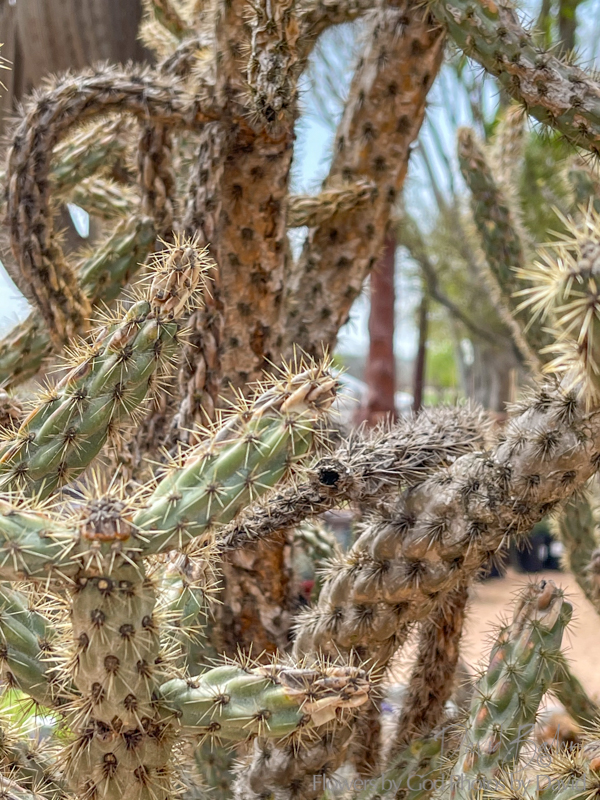
    Cactus Closeup #2 | Fredericksburg, Texas | April 2021

    They’re some of the most dangerous words to utter in the middle of a project. They can cost thousands of dollars. They can delay the completion of the project. They can frustrate the crew and the homeowner. The words? “While you’re at it…” While you’re at it, could you add a window here? While you’re at it, how about we change the layout of this addition. While you’re at it, let’s add some different finishes. You get the drift.

    Those words sound like God’s words here: “…as long as…” But they are way different. For God’s “as long as” implies two very important and far-reaching things. Most important is that things will go on under God’s providential guidance and care until the end he has set. God has not wound up the earth – replete with all its natural laws and consequences – only to let it wind down unattended. God has the whole world in his hand and is actively guiding the course of events from one divine appointment to the next.

    I love Martin Luther’s explanation to the First Article of the Apostle’s Creed. For it not only expresses a belief that God created the heavens and the earth, it also confesses a faith that God continues to care for us and all that exists.

    I believe in God, the Father Almighty, Maker of heaven and earth.

    What does this mean? I believe that God has made me and all creatures; that He has given me my body and soul, eyes, ears, and all my members, my reason and all my senses, and still takes care of them. He also gives me clothing and shoes, food and drink, house and home, spouse and children, land, animals, and all I have. He richly and daily provides me with all that I need to support this body and life. He defends me against all danger and guards and protects me from all evil. All this He does only out of fatherly, divine goodness and mercy, without any merit or worthiness in me. For all this it is my duty to thank and praise, serve and obey Him.

    This is most certainly true. – Martin Luther’s Small Catechism, The Apostle’s Creed, Explanation

    It is one thing – quite reasonable – to believe that God created the world and all that is in it. This didn’t all happen by accident. It is quite another – and an even more blessed thing – to believe that God still preserves us because of “his fatherly divine goodness and mercy, without any merit or worthiness in me.” 

    We are on a pathway of God’s providential guidance, for his purposes, and according to his good and wise plan as long as life goes on. I find comfort knowing that “springtime and harvest, cold and heat, summer and winter, day and night, shall not cease” as long as God determines. There is One Grand Divine Appointment that has been set. It is the Final Judgment and the Last Day. No one will miss it. As long as we are waiting for that Grand Divine Appointment, let’s be alert to the divine appointments he places along life’s way. For these are surely important. They can be defining moments for our good and blessing, and the good and blessing of others. That’s what it means to live out this as long as blessing of God:

    For by grace you have been saved through faith. And this is not your own doing; it is the gift of God, not a result of works, so that no one may boast.10 For we are his workmanship, created in Christ Jesus for good works, which God prepared beforehand, that we should walk in them. – Ephesians 2:8-10

    Click here, or on the podcast player below for an audio version of this blog post.
  • [The LORD said,] “While the earth remains, seedtime and harvest, cold and heat, summer and winter, day and night, shall not cease.” – Genesis 8:22

    Cactus Close-up | Fredericksburg, Texas | April 2021

    I’m still trying to find my rhythm these days. Don’t get me wrong: it’s not a totally bad thing. But there are unusual challenges these early weeks of retirement. Travel is great, but it imposes its own rhythm. Visiting family and friends is wonderful, but those wonderful people can play havoc on someone who needs his space and alone time. This is a season of new rhythms for Diane and me. Maybe we’re imposing our rhythms on our friends and family as well. 

    God has created the world with its own rhythm. Here, God speaks of seedtime and harvest, cold and heat, summer and winter, day and night. These are wonderful gifts of God. Consider how we yearn for this. We take trips to the northeast to see the fall colors. We trek to the Colorado mountains for skiing – or for respite from the summer heat. We look forward to the budding trees and flowers of spring. We make our trip to the beach in summer. Seasons are wonderful blessings.

    Seasons also occur in our lives. We have a season of growing and learning. We struggle with the season of adolescence. We often strive through seasons of earning and family building. The seasons of grand parenting, and retirement bring their own special rhythms. We watch our loved-ones enter the final seasons of their lives knowing we will one day enter that season as well. Thank God for seasons! Thank God we’re not stuck in adolescence! Praise God for the quiet seasons, the peaceful seasons, and – if we take Romans 5 seriously – even the seasons of struggle.

    Take someone out of these rhythms and watch out! Not enough sleep? She may be grumpy. Too much sleep? He may lapse into perpetual lethargy. Never outgrow adolescence? Misery surrounds you and infects the people closest and most loved. Get stuck in childhood and you’ll never have enough toys at any price.

    Seasons also provide new and different opportunities to love God and our neighbor. We can help others succeed during the seasons of high productivity. We can offer great wisdom in the seasons of late adulthood. Youthful exuberance can keep grandparents young. We’re living that reality just now with our grandchildren. 

    God promises that these seasons and rhythms will not cease until the Very End. This is a good reminder for me just now. Whatever challenges I may face are not eternal in nature. Whatever blessings I experience must be enjoyed in the moment. Moreover, I do best when I follow certain rhythms. Morning devotions. Daily hygiene. Weekly worship. Regular exercise. 

    A friend once offered this advice: Withdraw weekly: that’s a call to public worship. Retreat regularly: that’s a reminder that times of solitude with God will renew our souls. Abandon annually: that reminds us that the world does not rest on our shoulders; God has things well in hand. 

    Click here, or on the podcast player below to listen to an audio version of this blog post.

  • Then Noah built an altar to the Lord and took some of every clean animal and some of every clean bird and offered burnt offerings on the altar. 21 And when the Lord smelled the pleasing aroma, the Lord said in his heart, “I will never again curse the ground because of man, for the intention of man’s heart is evil from his youth. Neither will I ever again strike down every living creature as I have done. 22 While the earth remains, seedtime and harvest, cold and heat, summer and winter, day and night, shall not cease.” – Genesis 8:20-22

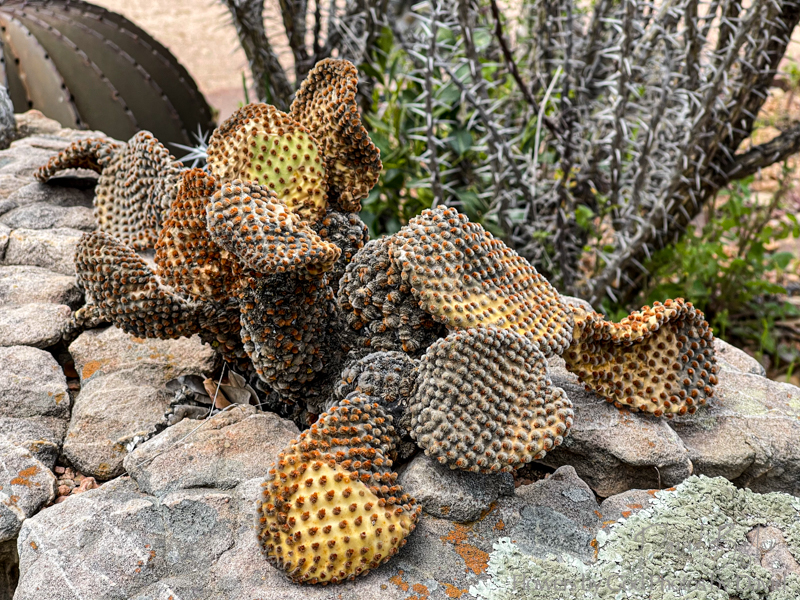
    Cactus After a Freeze #2 | Fredericksburg, Texas | April 2021

    Mr. Tietz was a Lutheran School Principal at my vicarage congregation in Cheyenne, Wyoming. He had a wonderfully quiet manner and very large impact. During the lunch period, with more than 100 children in the cafeteria, he would walk in and begin speaking. In a very low voice. And the cafeteria would quickly become quiet. It was amazing. I tried to learn from him. Try to out-yell a group of junior-highers and you’d better have a bull horn!

    Are you a harsh disciplinarian, or a soft touch? Do you get big and loud to reign in unruly students, or let them run wild? Admittedly there is a time for loud and in-your-face assertiveness. But there is a mystery here: the greater work is done in the quietness of someone’s heart than in the blast of the high-and-mighty voice. 

    God shows this to be true in his response to the worship of Noah and his family. His response to the sinfulness of us human-types is remarkable: “I will never again curse the ground because of man, for the intention of man’s heart is evil from his youth.

    Is God admitting failure in his diluvian wrath, or is something else at play here? Admittedly it appears that God is – upon reflection – becoming a softy. He’s had second thoughts about destroying all living creatures except those on Noah’s ship. But there is another explanation. And it has to do with the difference between whether you want people’s compliance or their hearts.

    God wants our hearts; not just our outward compliance to his laws. Jesus makes this point when he warns us that we can commit adultery simply by looking upon a woman lustfully, or murder by holding hatred for another in our hearts. Sadly, we can be outwardly compliant while inwardly harboring hatred and resentment in our hearts for God. God wants our hearts.

    That is made clear by his assessment that, “the intention of man’s heart is evil from his youth.” This shows God’s tender heart toward us broken and fallen creatures. He could simply determine that his “experiment” of creating man and woman in the condition as he did was a flop. He could decide to start all over from scratch. But he did not. In stead, he reveals a grace and mercy to sinful men and women.

    It’s not just that we can’t help ourselves from sinning (though we cannot). It’s that God has a better plan, and has had so all along. I’ve shared the idea before (from Philip Yancey, I believe) that the Old Testament is a giant object lesson of what doesn’t work. Direct communication with God doesn’t work (Adam and Eve). Having a king doesn’t work (Manasseh). Prophets who speak for God don’t work (Matthew 23:29-31).

    God want’s our hearts, broken and sinful as they may be. For a heart yielded to him in any condition will be healed, redeemed and made new. God has a heart for us. It’s big, merciful, and full of love and grace. And he shows us that in Jesus who died to free our hearts from our sinful ways.

    Click here or on the podcast player below for an audio version of this blog post.