

Today’s readings: Nehemiah 10-12, Psalm 115
Nehemiah 12:27-43 (selected verses)
And they offered great sacrifices that day and rejoiced, for God had made them rejoice with great joy; the women and children also rejoiced. And the joy of Jerusalem was heard far away.
And at the dedication of the wall of Jerusalem they sought the Levites in all their places, to bring them to Jerusalem to celebrate the dedication with gladness, with thanksgivings and with singing, with cymbals, harps, and lyres.
And the priests and the Levites purified themselves, and they purified the people and the gates and the wall.
Then I brought the leaders of Judah up onto the wall and appointed two great choirs that gave thanks. One went to the south on the wall. . . .
The other choir of those who gave thanks went to the north, and I followed them with half of the people. . .
So both choirs of those who gave thanks stood in the house of God. . . .
–Nehemiah 12:27, 30–31a, 38a, 40a, 43
The wall around Jerusalem had been rebuilt—despite threats and ridicule from Sanballat and other detractors. The danger had been real enough that some worked on the wall while others stood ready to defend them.
But now that was behind them. The people had rededicated themselves to faithfulness to God’s covenant. They had heard God’s word, confessed their sins, and wept in repentance.
And now they celebrated.
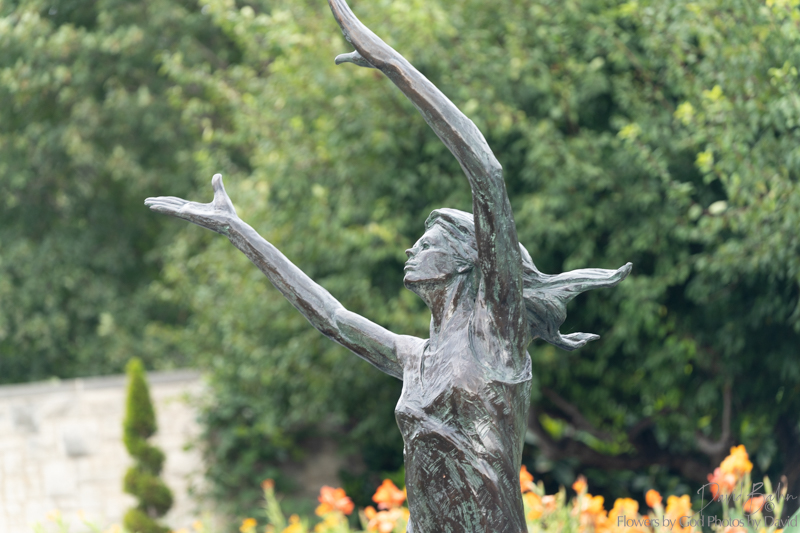
Two great choirs made their way along the wall from opposite directions. Levites and priests joined the procession. There was singing and thanksgiving, cymbals, harps, lyres and trumpets. Nehemiah tells us, “God had made them rejoice with great joy.” Even the women and children joined in, and “the joy of Jerusalem was heard far away.”
Their joy was rooted in something deeper than a rebuilt wall. Israel was rediscovering its identity as God’s chosen people. They remembered the God who had delivered their fathers from slavery in Egypt and brought them into the Promised Land. They had returned after decades of exile. The temple had been rebuilt. Jerusalem’s wall had been restored.
And they knew why they were there. Not because they had been so faithful to God, but because God had remained faithful to them.
Their history was filled with sin and unfaithfulness. They had abandoned God’s covenant and turned to other gods. The temple had been destroyed and its sacred vessels carried away. Yet God had not abandoned them. He had brought them home. He had restored the temple and the city. Their celebration was ultimately a celebration of the mercy and faithfulness of God.
At the funeral of our organist, Van Glynn, it was mentioned that his motto was, “All’s well that ends loud.” Van loved to bring out the zimbelstern—a delightful organ stop that sounds tiny bells—for the last stanza of a hymn. His postludes were often loud and glorious.
So at his funeral the organist hit the tutti button. With one button, essentially all the stops come into play and the organ fills the room with sound. It’s the kind of sound especially fitting for Easter.
If ever there were reason to pull out all the stops, it is the victory of Jesus Christ—our Redeemer, Savior, and Lord. He has conquered sin, Satan, and death for us. And unlike Jerusalem’s rebuilt wall, his victory will never crumble. Our celebration rests not on our faithfulness to him, but on his faithfulness to us.
That was finally the source of Jerusalem’s joy too. God had been merciful. God had restored. God had kept his promises.
One day we will join Nehemiah and all the redeemed in praise before God. Until then, every Sunday—whether or not somebody hits the tutti button—we get to rehearse.
And when that day comes, all really will be well. And I suspect it will end loud.
Follow the Word is a daily Bible reading and devotional ministry of St. John Lutheran Church, Cypress, Texas.


Leave a Reply