

Click here for an audio version of this blog post.
These devotions are part of the Follow the Word Bible reading program at St. John Lutheran Church in Cypress, Texas. This year we are reading through the Scriptures together, listening for how God speaks through his Word day by day. I hope you will join me on this journey.
Today’s readings are 2 Samuel 4, 1 Chronicles 1-2, Psalm 117.
2 Samuel 4:4
Jonathan, the son of Saul, had a son who was crippled in his feet. He was five years old when the news about Saul and Jonathan came from Jezreel, and his nurse took him up and fled, and as she fled in her haste, he fell and became lame. And his name was Mephibosheth.

When I am confronted with chapters like 1 Chronicles 1-2, I really have to buckle down to read through all those names. Most of them carry little meaning for me: Er, Zerah, Jerahmeel, Chelubai? These all stand in Judah’s line, but with very different legacies. Er is remembered for his wickedness, Zerah as the head of a family line, Jerahmeel as a largely forgotten clan ancestor, and Chelubai (Caleb) for faithfulness. Together, they reflect the mix of failure, obscurity, and trust through which God continues his work.
Then there’s Mephibosheth. Somehow I remember his name – Jonathan’s son whose feet were crippled and who is mentioned here in 2 Samuel 4. We will come across him several more times in 2 Samuel. He becomes a noteworthy example of the kindness of David – who remembers and provides for him for years. David is a type of Christ – one who gives us a hint or a picture of certain facets of Christ’s character. He was by no means perfect; in that he does not exhibit the character of Christ.
But David’s care for Mephibosheth is a picture of Christ’s care for the weak and broken, the humble and forgotten. Jesus showed that in his healing, comforting, loving, and encouraging of the least and last.
Even in lists of names we barely recognize, the Lord is quietly at work – carrying forward his purposes through generations that lived, died, and awaited what he would yet do. For God knew their names, and inspired the writers of the Sacred Scriptures to list them for our learning.
That learning is not merely to be an exercise in memorization. Christians are to reflect the character of Christ. We will not be content merely to remember people’s names – a good thing to do, no doubt – we will care for them as we are able, honor and respect, them as a reflection of God’s love for us all.
Next time you come across a list of names in the Bible, look carefully. You may find some people there who are actually important. But make no mistake, those whose names we read and quickly forget are not forgotten by God. Thanks be to God that he calls us by name into his kingdom of grace and life. He knows us, loves us, and has our names written in the book of life.
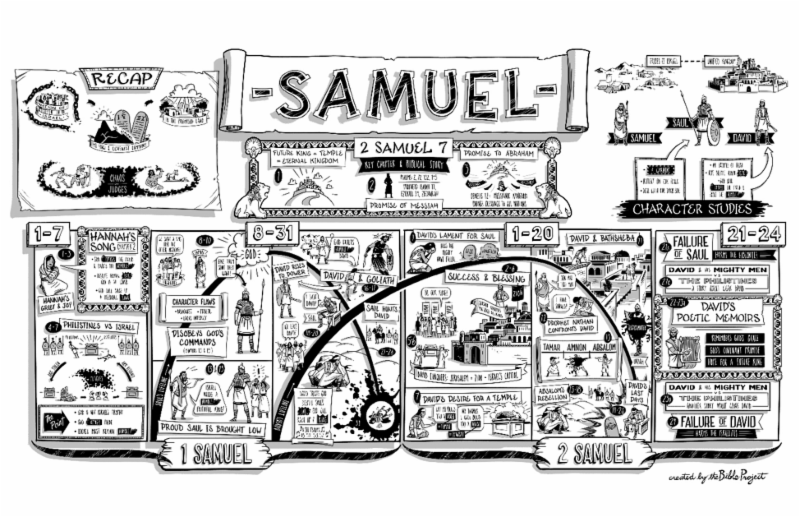
Click on the graphic below to watch the Bible Project video summary of the book of 1 Chronicles (we’ll get to 2 Samuel later this May in our reading program).


Leave a Reply