David Bahn – Reflections

Light from the Word and through the lens

  • And it happened that while Apollos was at Corinth, Paul passed through the inland country and came to Ephesus. There he found some disciples. And he said to them, “Did you receive the Holy Spirit when you believed?” And they said, “No, we have not even heard that there is a Holy Spirit.” And he said, “Into what then were you baptized?” They said, “Into John’s baptism.” And Paul said, “John baptized with the baptism of repentance, telling the people to believe in the one who was to come after him, that is, Jesus.” On hearing this, they were baptized in the name of the Lord Jesus. 6 And when Paul had laid his hands on them, the Holy Spirit came on them, and they began speaking in tongues and prophesying. There were about twelve men in all.

    And he entered the synagogue and for three months spoke boldly, reasoning and persuading them about the kingdom of God. But when some became stubborn and continued in unbelief, speaking evil of the Way before the congregation, he withdrew from them and took the disciples with him, reasoning daily in the hall of Tyrannus. 10 This continued for two years, so that all the residents of Asia heard the word of the Lord, both Jews and Greeks.

    Flowers on Crumbling Balcony | Bucharest, Bulgaria | April 2024

    I bought a “Rolex” watch in Beijing, China many years ago. I paid $5.00 for it. I knew it wasn’t the real thing, even though it looked like the real thing. It never has run. I took a photo of a beautiful flower on the table at dinner on that same trip. It looked real enough to me. And it was real. It just happened to be made of silk.

    The real thing when it comes to baptism is twofold. First it is the plain and simple words by which Jesus instituted baptism, “in the name of the Father and of the Son, and of the Holy Spirit.” Perhaps it goes without saying that those words would be different in each different language. Spanish: “en el nombre del Padre, del Hijo y del Espíritu Santo.” German: “m Namen des Vaters und des Sohnes und des heiligen Geistes.” Greek: “εἰς τὸ ὄνομα τοῦ πατρὸς καὶ τοῦ υἱοῦ καὶ τοῦ ἁγίου πνεύματος.”

    I mention this because there is another aspect of true Christian baptism that bears considering. There are those so-called churches which may use similar words and even baptize people with those words, but whose confession denies the truth of who Jesus really is, or which denies the Trinity as the true expression of God’s majestic nature. The confession of the gathering of believers is of vital importance to true and authentic baptism.

    It would be so good if there was a validating sign showing that a baptism was true and authentic – like there was in Paul’s day. In that case, it was a special outpouring of the Holy Spirit. This was likely speaking in tongues, or some other outward manifestation. It is significant that these are recorded in Acts when the Gospel message breaks new territory. The manifestation seems to be for the sake of the Gospel itself, not to prove the faith of the person being baptized.

    This is an echo of Acts 2:43, “ And awe came upon every soul, and many wonders and signs were being done through the apostles.” These signs and wonders validate the ministry and mission of the Early Church. 

    Today the validation is not in the pastor’s character who baptizes, nor even the name of the church in which one is baptized. (Don’t get me started by saying, “I was baptized Lutheran.” That’s simply not true.) The validity of baptism is found in the Words used and the confession of the Gospel held by the community of believers where one is being baptized.

    Lutherans acknowledge any baptism with water – by pouring, sprinkling, or immersing – in the name of the Father, and of the Son, and of the Holy Spirit. These words, combined with water place us into a community of grace and truth in which God is glorified and sinners are saved. There’s no better validation than that.

  • Acts 19:1-10

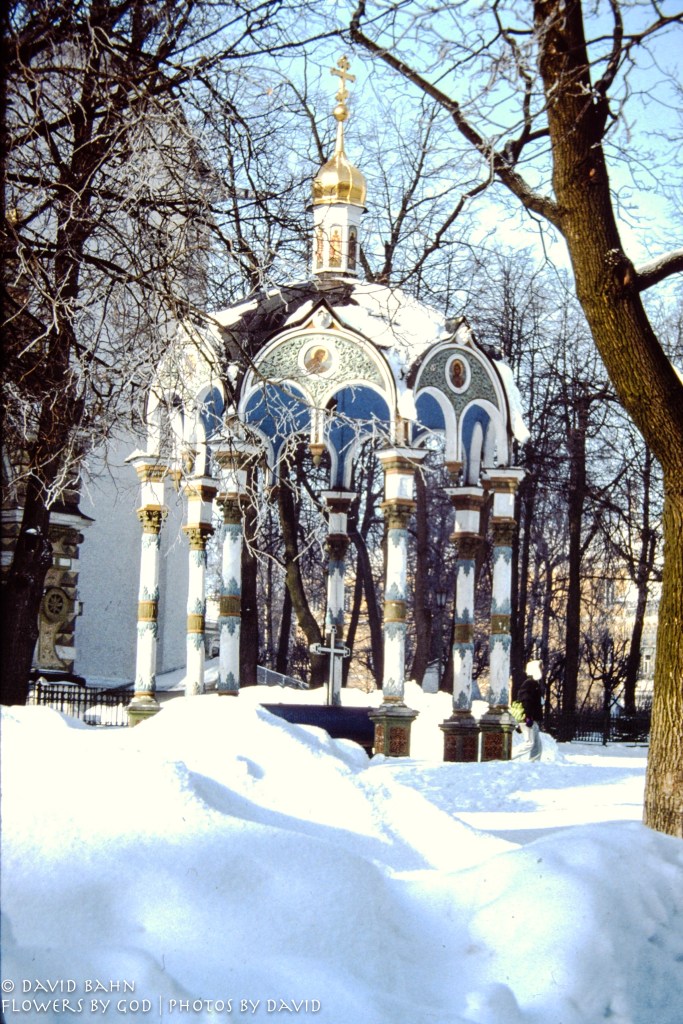
    Zagorsk Monastery Baptistry | Near Moscow, Russia | February 1993

    I recall very few baptisms. But two stick out in my mind. My own baptism in the name of the Father, and of the Son, and of the Holy Ghost,” when I was 8 years old is most important. The second memorable baptism was of our fourth-born son, at the Neonatal ICU. A styrofoam cup. Diane, Stephen, and me. There are others I can call to mind, but I don’t know the names of all whom I have baptized, nor did I keep my own personal record of baptisms as some pastors do.

    But I do know that when someone is baptized into the name of the Father, Son, and Holy Spirit, something very important happens. God’s gifts are sealed to the believing person. God’s name is attached with many Bible promises to an infant who is baptized. Sins are forgiven. We are united with Jesus’ death and resurrection. We are born again by the washing of water with the Word. (cf. Acts 2:38-39; Romans 6:1-6; Ephesians 5:25-26; 1 Peter 3:21)

    In Corinth, some people didn’t even know there was a Holy Spirit. They were baptized into John’s baptism – one of repentance in anticipation of the coming Savior. Jesus had come now, and his command was clear: “Make disciples of all peoples, baptizing them in the name of the Father, and of the Son, and of the Holy Spirit.”

    I have been privileged to baptize many people, and rejoice in the work of God through water and the Word. I pray that those who have been baptized remain faithful to Christ, and enjoy the eternal blessings of God’s mercy and grace, in Jesus’ name, and by the power of the Holy Spirit.

  • Acts 18:18-28

    Woven Fence | Bucharest, Romania | April 2024

    When I received the Call to serve as pastor at St. John, in Cypress, I urgently and prayerfully sought to know the will of God. I loved the people at Holy Cross. Ministry was going well there. But the Call to Cypress was very compelling. There was an obvious need for me at St. John. I was torn and unable to discern what was God’s will in that case.

    So I ended up writing two letters. One said I was staying at Holy Cross. The other said I was accepting the Call to St. John. When I showed the letters to Diane, she confirmed what I had concluded. We were moving to Cypress.

    It wasn’t an easy or lightly-taken decision. I believe I could have stayed at Holy Cross and enjoyed God’s blessings there. But I could really understand Paul’s words to the Ephesians when he said, “I will return to you if God wills.” I didn’t intend to return to Holy Cross per se, but I felt that God had shaped my decision to move to Cypress.

    We are able often to understand what the will of God is when looking back on the past. The pieces come together. We have that aha moment when we see how God has orchestrated life. We see how God’s bigger picture is played out in the little decisions we make as we seek to live out Jesus’ prayer, “Thy will be done.”

    Jesus prayed that prayer under intense circumstances as he faced his coming suffering and death. He taught us all to pray that prayer regularly, as we do in the Lord’s Prayer. We also pray, in that prayer, “Thy kingdom come.” Our best decision-making process will always put those two together: God’s mission and God’s will are a symphony of his love for us and all people.

  • Acts 18:18-28

    After this, Paul stayed many days longer and then took leave of the brothers and set sail for Syria, and with him Priscilla and Aquila. At Cenchreae he had cut his hair, for he was under a vow. 19 And they came to Ephesus, and he left them there, but he himself went into the synagogue and reasoned with the Jews. 20 When they asked him to stay for a longer period, he declined. 21 But on taking leave of them he said, “I will return to you if God wills,” and he set sail from Ephesus.

    22 When he had landed at Caesarea, he went up and greeted the church, and then went down to Antioch. 23 After spending some time there, he departed and went from one place to the next through the region of Galatia and Phrygia, strengthening all the disciples.

    24 Now a Jew named Apollos, a native of Alexandria, came to Ephesus. He was an eloquent man, competent in the Scriptures. 25 He had been instructed in the way of the Lord. And being fervent in spirit, he spoke and taught accurately the things concerning Jesus, though he knew only the baptism of John. 26 He began to speak boldly in the synagogue, but when Priscilla and Aquila heard him, they took him aside and explained to him the way of God more accurately. 27 And when he wished to cross to Achaia, the brothers encouraged him and wrote to the disciples to welcome him. When he arrived, he greatly helped those who through grace had believed, 28 for he powerfully refuted the Jews in public, showing by the Scriptures that the Christ was Jesus.

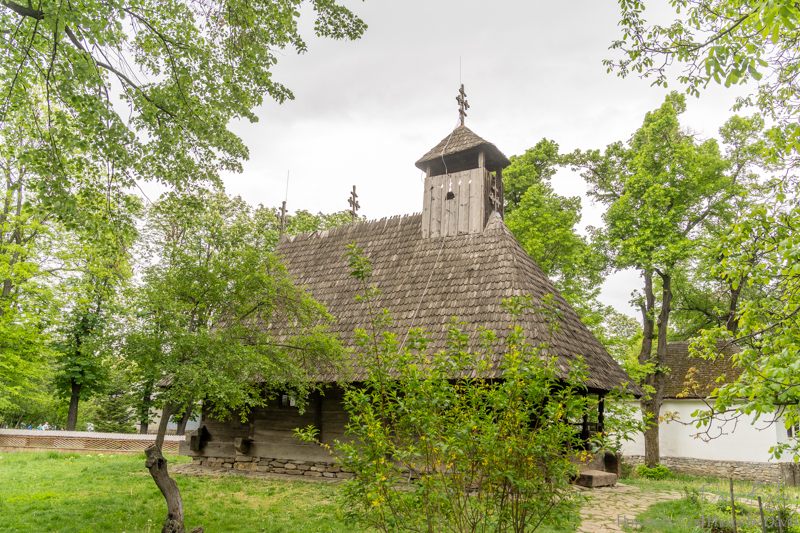
    Church Building in Village Museum | Bucharest, Romania | April 2024

    I’ve fasted two times in my life – at least in any halfway serious sense of the word. Once I was praying for people to come to our special Christmas Eve services at the church I was serving at the time. We had a bountifully-wonderful attendance that evening. The other notable time was on a prayer retreat. I discovered that for me, the fasting itself seemed to yield little spiritual breakthrough. But as I came out of the fast, God opened my mind to new insights that I had not anticipated.

    For purely spiritual reasons I ought to fast more often. This practice is long-standing in the Christian church. Jesus himself fasted for forty days and nights. David fasted and prayed for his newborn child who was ill. Daniel fasted in a manner, eating only vegetables in preparation for serving the king. Richard Foster has written a brief article on fasting that you might find insightful and edifying.

    Paul seems to have been on some sort of fast, and ending it he shaves his head. In other words, for a period of time he must have sought understanding, insight, special help from God, and had made a vow not to cut his hair until the time had passed. Luke simply makes the offhand remark that Paul cut his hair because he had made a vow.

    I don’t believe you or I earn any extra credit for fasting, praying, or any other spiritual discipline. But I do believe that such focused and dedicated practices can sharpen our spiritual vision, and help us keep in mind our need for God, his grace, help, guidance, and favor. It doesn’t earn any of those things, but it would certainly be good that we recognize our need for all of them.

  • Acts 18:12-17

    But when Gallio was proconsul of Achaia, the Jews made a united attack on Paul and brought him before the tribunal, 13 saying, “This man is persuading people to worship God contrary to the law.” 14 But when Paul was about to open his mouth, Gallio said to the Jews, “If it were a matter of wrongdoing or vicious crime, O Jews, I would have reason to accept your complaint. 15 But since it is a matter of questions about words and names and your own law, see to it yourselves. I refuse to be a judge of these things.” 16 And he drove them from the tribunal. 17 And they all seized Sosthenes, the ruler of the synagogue, and beat him in front of the tribunal. But Gallio paid no attention to any of this.

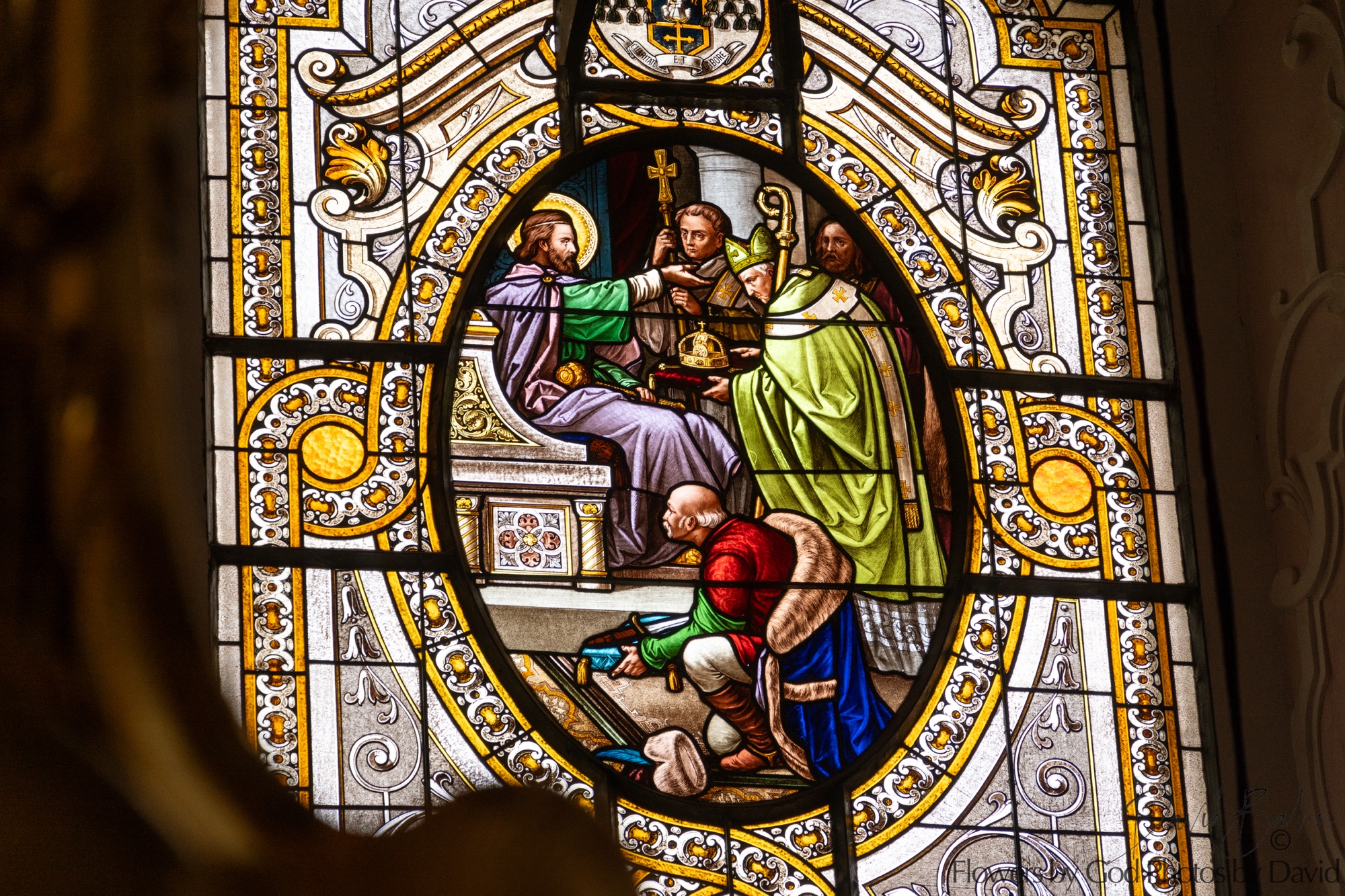
    Stained Glass in the Cathedral of the Assumption | Kalocsa, Hungary | April 2024

    Few people today worry whether we or anyone else are worshiping God according to the law. But this was the concern of the Jews in Paul’s day – in a pagan culture, no less. They accused him saying that he was persuading people to worship God contrary to the law. Aside from the so-called Worship Wars those kinds of accusations seem distant and unimportant.

    Sadly, however, there are those who engage in such arguments even in our own tribe. Questions about contemporary and traditional worship come to mind. In my ministry I’ve always stressed that these are preferences. We can worship God in Spirit and in Truth in a highly liturgical service, or in a very contemporary setting. We can also – sadly – fail the Spirit and Truth test in either mode of worship. The mode carries the message, or it doesn’t. The people engage from the heart or they don’t. The truth is foundational or not.

    There are those who say one mode or another is the only proper manner of worship fall dangerously close to a Roman Catholic understanding of the 16th century (hopefully not taught today!), that the mere saying of the right words is all that matters. It’s called, ex opere operato, a Latin phrase meaning “by the work of the work.” Just say the words. Just do the thing. No one has to engage. They just have to be present.

    Jesus says we should worship God in Spirit and in Truth. I see the Trinity there” God, the Father, the Holy Spirit, and Jesus who is the Truth incarnate. We don’t make our worship acceptable by any means. But when in faith we call upon God, gathering in the name of the Father, Son, and Holy Spirit, and his truth is foundational, the worship we offer and the sacraments we celebrate are truly God-pleasing. He is glorified. We are edified. Thank God for those who serve us in this manner!

  • Acts 18:12-17

    But when Gallio was proconsul of Achaia, the Jews made a united attack on Paul and brought him before the tribunal, 13 saying, “This man is persuading people to worship God contrary to the law.” 14 But when Paul was about to open his mouth, Gallio said to the Jews, “If it were a matter of wrongdoing or vicious crime, O Jews, I would have reason to accept your complaint. 15 But since it is a matter of questions about words and names and your own law, see to it yourselves. I refuse to be a judge of these things.” 16 And he drove them from the tribunal. 17 And they all seized Sosthenes, the ruler of the synagogue, and beat him in front of the tribunal. But Gallio paid no attention to any of this.

    Red Rose | Belgrade, Serbia | April 2024

    Lots of people seem to believe that the truth of God is entirely subjective. Like Gallio. For him, the questions surrounding Paul’s behavior and the charges brought against him were none of his business. It was a matter of their laws, words, and names, not his. They were a non-issue as far as he was concerned.

    We’ve been traveling through eastern Europe these past few days and especially when it comes to Serbia and Croatia, the matters about names and laws are still very much alive. There are reminders everywhere about the war just before the turn of the century. A tower with bomb holes still in it. A hotel gutted and abandoned. Urban decay everywhere you look. Memorials to both survivors of the communist aggressors as well as the Serbian fighters. People here are living with a constant reminder that they must not forget the past. And there is a long and storied past in these parts of the world – dating back century upon century.

    Most of us find it curious but somewhat distant. It’s time to let go, we think. Yes, there have been atrocities and abuses. We should not think it was nothing. And we should guard ourselves from falling prey to the evil designs of evil men.

    Even more important, though, are the truths of God. We have our church buildings, ornate crosses, or Christian decorations at Christmas and Easter. These are reminders of an eternal truth of God’s redemption, grace, and love. They are good – not to be despised. But the greater truth – that is not just our truth – is that God’s love is given to be shared. His truth is the foundation of a life lived in service to one another. His love is the power for our acts of grace and kindness toward others.

    This is true for all people.

  • Acts 18:12-17

    But when Gallio was proconsul of Achaia, the Jews made a united attack on Paul and brought him before the tribunal, 13 saying, “This man is persuading people to worship God contrary to the law.” 14 But when Paul was about to open his mouth, Gallio said to the Jews, “If it were a matter of wrongdoing or vicious crime, O Jews, I would have reason to accept your complaint. 15 But since it is a matter of questions about words and names and your own law, see to it yourselves. I refuse to be a judge of these things.” 16 And he drove them from the tribunal. 17 And they all seized Sosthenes, the ruler of the synagogue, and beat him in front of the tribunal. But Gallio paid no attention to any of this.

    Highest Praise | Belgrade, Serbia | April 2024

    Diane and I are trying to be more mindful. It’s so easy just to lay our phone down without thinking, walk away, and forget where we laid it. No problem, really, when we’re at home, and can use find my phone to locate it. But when we are not mindful of one another, or someone in need of our help, that’s another mater.

    Gallio is in a position to intervene in the treatment of Sosthenes, the synagogue ruler, but he pays no attention. Not my circus. Not my monkeys. That’s clearly his attitude. And the innocent ruler is beaten with none to intervene. Paul will stay some time there, but will eventually leave for Antioch. Nothing more is said of Sosthenes, But I’m reminded of the idea that if no one speaks up, evil goes unpunished and continues on its course.

    Thank God for those who speak up. I’m thinking of Dietrich Bonhoeffer. I’m thinking of Anne Frank. I’m thinking of Peter, Paul, Martin Luther, and others who have not kept quiet. They were mindful of injustice, deceptive promises, and false beliefs. They did not turn away mindlessly.

    They were reflecting the character and nature of God. Jesus said that not one sparrow falls to the ground apart from the Father’s knowledge (cf. Matthew 10:29). And this promise: What is man, that you are mindful of him, or the son of man, that you care for him?” (Hebrews 2:6).

    So is God mindful. So should we be.

  • Please pray these psalms with me on this Lord’s Day

    Psalm 21:13

    Be exalted, O LORD, in your strength!
    We will sing and praise your power.

    Psalm 51:1-13

    Have mercy on me, O God,
    according to your steadfast love;
    according to your abundant mercy
    blot out my transgressions.
    Wash me thoroughly from my iniquity,
    and cleanse me from my sin!
    For I know my transgressions,
    and my sin is ever before me.
    Against you, you only, have I sinned
    and done what is evil in your sight,
    so that you may be justified in your words
    and blameless in your judgment.
    Behold, I was brought forth in iniquity,
    and in sin did my mother conceive me.
    Behold, you delight in truth in the inward being,
    and you teach me wisdom in the secret heart.
    Purge me with hyssop, and I shall be clean;
    wash me, and I shall be whiter than snow.
    Let me hear joy and gladness;
    let the bones that you have broken rejoice.
    Hide your face from my sins,
    and blot out all my iniquities.
    Create in me a clean heart, O God,
    and renew a right spirit within me.
    Cast me not away from your presence,
    and take not your Holy Spirit from me.
    Restore to me the joy of your salvation,
    and uphold me with a willing spirit.
    Then I will teach transgressors your ways,
    and sinners will return to you.

    Psalm 81:1-3

    Sing aloud to God our strength;
    shout for joy to the God of Jacob!
    Raise a song; sound the tambourine,
    the sweet lyre with the harp.
    Blow the trumpet at the new moon,
    at the full moon, on our feast day.

    Psalm 111

    Praise the LORD!
    I will give thanks to the LORD with my whole heart,
    in the company of the upright, in the congregation.
    Great are the works of the LORD,
    studied by all who delight in them.
    Full of splendor and majesty is his work,
    and his righteousness endures forever.
    He has caused his wondrous works to be remembered;
    the LORD is gracious and merciful.
    He provides food for those who fear him;
    he remembers his covenant forever.
    He has shown his people the power of his works,
    in giving them the inheritance of the nations.
    The works of his hands are faithful and just;
    all his precepts are trustworthy;
    they are established forever and ever,
    to be performed with faithfulness and uprightness.
    He sent redemption to his people;
    he has commanded his covenant forever.
    Holy and awesome is his name!
    The fear of the LORD is the beginning of wisdom;
    all those who practice it have a good understanding.
    His praise endures forever!

    Psalm 141:1-3

    LORD, I call upon you; hasten to me!
    Give ear to my voice when I call to you!
    Let my prayer be counted as incense before you,
    and the lifting up of my hands as the evening sacrifice!
    Set a guard, O LORD, over my mouth;
    keep watch over the door of my lips!

    English Standard Version (ESV)
    The Holy Bible, English Standard Version. ESV® Text Edition: 2016.
    Copyright © 2001 by Crossway Bibles, a publishing ministry of Good News Publishers.
  • Acts 18:1-15

    After this, Paul left Athens and went to Corinth.There he met a Jew named Aquila, a native of Pontus, who had recently come from Italy with his wife Priscilla, because Claudius had ordered all Jews to leave Rome. Paul went to see them, and because he was a tentmaker as they were, he stayed and worked with them. Every Sabbath he reasoned in the synagogue, trying to persuade Jews and Greeks.

    When Silas and Timothy came from Macedonia, Paul devoted himself exclusively to preaching, testifying to the Jews that Jesus was the Messiah.But when they opposed Paul and became abusive,he shook out his clothes in protest and said to them, “Your blood be on your own heads! I am innocent of it. From now on I will go to the Gentiles.”

    Then Paul left the synagogue and went next door to the house of Titius Justus, a worshiper of God.Crispus, the synagogue leader, and his entire household believed in the Lord; and many of the Corinthians who heard Paul believed and were baptized.

    One night the Lord spoke to Paul in a vision: “Do not be afraid; keep on speaking, do not be silent. 10 For I am with you, and no one is going to attack and harm you, because I have many people in this city.” 11 So Paul stayed in Corinth for a year and a half, teaching them the word of God.

    12 While Gallio was proconsul of Achaia, the Jews of Corinth made a united attack on Paul and brought him to the place of judgment. 13 “This man,” they charged, “is persuading the people to worship God in ways contrary to the law.”

    14 Just as Paul was about to speak, Gallio said to them, “If you Jews were making a complaint about some misdemeanor or serious crime, it would be reasonable for me to listen to you. 15 But since it involves questions about words and names and your own law—settle the matter yourselves. I will not be a judge of such things.”

    Christ Above All | Bucharest, Romania | April 2024

    “Do you really think that’s enough?” I asked this question to a hospitalized man in Cheynne, Wyoming many years ago. He started to cry. He knew it wasn’t enough. He had lived an exemplary life, was a state leader, and very committed to the wellbeing of many of the people of the state. But I asked the question of him when he had laid out his reasons for going to heaven when he died – something that was soon to happen. He knew he had not done enough to earn God’s favor. He needed God’s grace and mercy. He needed Jesus.

    Fools rush in where angels fear to tread. And sure enough I rushed in to question this man because I was really unaware of just who he was. Had I known, I might not have pushed as I did. I was more brave than I realized.

    I want to draw very few parallels between St. Paul and myself. He functioned in a totally other level of Christian faithfulness than I do. But in this case I wonder whether Paul and I are closer in the our awareness of our need for courage than we both realize.

    I say this because of the ominous warning or encouragement God gives Paul when he’s in Corinth: “Do not be afraid; keep on speaking, do not be silent. For I am with you, and no one is going to attack and harm you, because I have many people in this city.” (Acts 18:9-10)

    If I had received that encouragement , I might have wondered just why God thought I might need it. Paul likely did too. Perhaps he knew that he had many days of hardships and challenges before him.

    You and I would do well to remember this and similar encouragements from God. We may not have to face stonings, beatings, or imprisonments as did Paul. But there will surely come times when we will need to be courageous. Knowing God’s word, and remembering God’s promises, is key to standing against the threats that Satan slings at us – however they may come our way.

  • Acts 18:1-15

    After this, Paul left Athens and went to Corinth.There he met a Jew named Aquila, a native of Pontus, who had recently come from Italy with his wife Priscilla, because Claudius had ordered all Jews to leave Rome. Paul went to see them, and because he was a tentmaker as they were, he stayed and worked with them. Every Sabbath he reasoned in the synagogue, trying to persuade Jews and Greeks.

    When Silas and Timothy came from Macedonia,Paul devoted himself exclusively to preaching, testifying to the Jews that Jesus was the Messiah.But when they opposed Paul and became abusive,he shook out his clothes in protest and said to them, “Your blood be on your own heads! I am innocent of it. From now on I will go to the Gentiles.”

    Then Paul left the synagogue and went next door to the house of Titius Justus, a worshiper of God.Crispus, the synagogue leader, and his entire household believed in the Lord; and many of the Corinthians who heard Paul believed and were baptized.

    One night the Lord spoke to Paul in a vision: “Do not be afraid; keep on speaking, do not be silent. 10 For I am with you, and no one is going to attack and harm you, because I have many people in this city.” 11 So Paul stayed in Corinth for a year and a half, teaching them the word of God.

    12 While Gallio was proconsul of Achaia, the Jews of Corinth made a united attack on Paul and brought him to the place of judgment. 13 “This man,” they charged, “is persuading the people to worship God in ways contrary to the law.”

    14 Just as Paul was about to speak, Gallio said to them, “If you Jews were making a complaint about some misdemeanor or serious crime, it would be reasonable for me to listen to you. 15 But since it involves questions about words and names and your own law—settle the matter yourselves. I will not be a judge of such things.”

    Yellow Rose of Bucharest | April 2024

    I hope to publish some devotional reflections later this week. But here’s a brief thought that comes to mind, triggered from this portion of Acts.

    When it comes to the need for action we are too often actors of convenience or circumstance rather than of conviction. In other words, I’ll help my neighbor if I don’t have anything more pressing or important to me. I’ll get involved if it supersedes an emotional threshold. Otherwise, I’ll pass. That’s how Gallio dealt with the concerns brought before him.

    I was once described as a kid riding in a wagon with Diane. She would hand me things. I would look them over, then throw them aside with a shrug. In other words, if I wasn’t inclined, I wouldn’t be bothered with her concerns.

    But that’s no way to live as a husband. That’s no way to live as a Christian. Just because I don’t want to get involved doesn’t mean I shouldn’t act.

    Where justice is concerned we should act. When we can speak up we should. Sometimes we can intervene. Other times we speak up. Always we can follow God’s call to, “Seek justice, and to love kindness, and to walk humbly with your God.” (Micah 7:8)

    Thank God Jesus did not act under convenience or circumstance, but under the conviction of God’s grace and truth, mercy and love.