David Bahn – Reflections

Light from the Word and through the lens

  • Acts 2:14-21

    But Peter, standing with the eleven, lifted up his voice and addressed them: “Men of Judea and all who dwell in Jerusalem, let this be known to you, and give ear to my words.15 For these people are not drunk, as you suppose, since it is only the third hour of the day. 16 But this is what was uttered through the prophet Joel:

    17 “‘And in the last days it shall be, God declares,
    that I will pour out my Spirit on all flesh,
    and your sons and your daughters shall prophesy,
    and your young men shall see visions,
    and your old men shall dream dreams;
    18 even on my male servants and female servants
    in those days I will pour out my Spirit, and they shall prophesy.
    19 And I will show wonders in the heavens above
    and signs on the earth below,
    blood, and fire, and vapor of smoke;
    20 the sun shall be turned to darkness
    and the moon to blood,
    before the day of the Lord comes, the great and magnificent day.
    21 And it shall come to pass that everyone who calls upon the name of the Lord shall be saved.’

    20130530-9386

    I’ve been at the FiveTwo Wiki Conference this week. This gathering of mostly LCMS Lutherans is focused toward planting sacramental churches, and being a vital part of God’s mission in the world today. Keynote speaker Michael Frost has challenged us to announce and demonstrate the “Reign of God” in the face of the darkness and brokenness that surrounds us. Yesterday he said there are four ways that the reign of God is manifest:

    • Reconciliation between God and between peoples
    • Justice – in particular for the poor and those who have no voice
    • Beauty – as opposed to the squalor of sin, violence, debauchery, and decay
    • Wholeness – health and wellness: a body-mind-spirit redemption

    I’m struck by what he said and just how it relates to Jesus’ death on the cross for the sins of the world. The relationship is not immediately obvious, but it is there, and I am committed to announcing and demonstrating the reality of the reign of God starting in my own neighborhood. It is in that context that the Good News of Jesus may be shared.

    This Pentecost event is a clear expression of the Reign of God by at all four of these signs. Peter takes his stand proclaiming that God has made good on his promise of the Holy Spirit’s work in all people: male and female, young and old, slave and free. That reconciliation has occurred between us and God and between people. Everyone (that’s justice) who calls on the name of the Lord will be saved (that’s wholeness). The beauty of this: it is not wine that is causing this remarkable display. This is the beautiful work of God.

    Peter is yet to get to the real issue behind all these manifestations of the Reign of God. That is Jesus’ sacrificial death and his justifying resurrection. All this turns on Jesus, and as we continue to read the account of Peter’s sermon the people will be brought face-to-face with their duplicity in Jesus’ death. Repentance will be called for and thousands will be converted.

    There may be other signs of God’s reign that need to be explored. But for now it is enough to announce and demonstrate the reality of the reign of God, remembering the closing words of Joel which Peter quotes on this occasion: Everyone who calls on the name of the Lord will be saved. Sometimes that can be almost a throw-away phrase. But it is a powerful and hope-filled promise.  How might we demonstrate that reality and live in that hope today?
  • Acts 2:12-13

    And all were amazed and perplexed, saying to one another, “What does this mean?” 13 But others mocking said, “They are filled with new wine.”

    20130530-9377

    I have a new appreciation for the accusation of the detractors on the occasion of Pentecost. When they say, “They are filled with new wine,” there is a barb here beyond the obvious. The obvious accusation is that the apostles are drunk. Their tongue-speaking is just a drunkard’s babble. But there may well be a subtext here; a razor-sharp cutting remark more against Jesus than meets the eye.

    Luke records Jesus’ parable about putting new wine into old wineskins (Lk 5:36-39). The meaning: Jesus’ teachings are not meant simply to offer a new flavor, but a radically different approach to religion and faith. Rather than centering faith in the rituals of the temple, Jesus said, “Repent, for the Kingdom of God is at hand” (Mark 1:15). This is new wine, and it won’t fit with a temple-centric understanding of faith. Jesus’ ways were about real life and a God-centric faith. While he did not abandon the temple rites, he did say that one day the temple would be torn down.

    But even when the curtain in the temple was torn in two at Jesus’ death, God still reigned over all the earth. Even when Jesus was laid in the tomb, God was on his throne. God’s reign over all is no more or no less at one time or another: Jesus feeding the 5000, or Jesus death on the cross.

    Now, when the kingdom is being manifest by people hearing the Good News, the new wine of the Kingdom is being poured out among those many people who had come expecting to celebrate an Old Testament festival (one of the big three!) and who end up at the birthday party for the Christian Church! New wine indeed! The apostles are filled with the new wine of the Holy Spirit, and he makes all things new.

    Let the detractors say what they will. God is breaking through and doing a new thing. Repent and believe the Good News: the Kingdom of God is at hand. Is there a place in your life where you need the new wine of the Holy Spirit, and Jesus’ presence?


    Acts 2:1-13

    When the day of Pentecost arrived, they were all together in one place. And suddenly there came from heaven a sound like a mighty rushing wind, and it filled the entire house where they were sitting. And divided tongues as of fire appeared to them and rested[a]on each one of them. And they were all filled with the Holy Spirit and began to speak in other tongues as the Spirit gave them utterance.

    Now there were dwelling in Jerusalem Jews, devout men from every nation under heaven. And at this sound the multitude came together, and they were bewildered, because each one was hearing them speak in his own language. And they were amazed and astonished, saying, “Are not all these who are speaking Galileans? And how is it that we hear, each of us in his own native language? Parthians and Medes and Elamites and residents of Mesopotamia, Judea and Cappadocia, Pontus and Asia, 10 Phrygia and Pamphylia, Egypt and the parts of Libya belonging to Cyrene, and visitors from Rome,11 both Jews and proselytes, Cretans and Arabians—we hear them telling in our own tongues the mighty works of God.” 12 And all were amazed and perplexed, saying to one another, “What does this mean?” 13 But others mocking said, “They are filled with new wine.”

  • Acts 1:12-15

    Then they returned to Jerusalem from the mount called Olivet, which is near Jerusalem, a Sabbath day’s journey away. 13 And when they had entered, they went up to the upper room, where they were staying, Peter and John and James and Andrew, Philip and Thomas, Bartholomew and Matthew, James the son of Alphaeus and Simon the Zealot and Judas the son of James. 14 All these with one accord were devoting themselves to prayer, together with the women and Mary the mother of Jesus, and his brothers.

    In those days Peter stood up among the brothers (the company of persons was in all about 120) and said,…

    [The remaining verses of this event may be found below.]

    20130530-9375

    One of the most memorable conferences I have attended was led by Lyle Schaller. In that workshop Schaller hammered home a simple concept that resonated within me and affirmed my tendency toward moving forward and calling for others to follow: “Leaders lead,” he would say – again and again. “Leaders speak first. Leaders frame the question.” To that I would add, Christian leaders lead out of prayer.

    Peter is often cast in a bad light by those who read of his more famous failures. Jesus tells Peter to “get behind him,” and calls him “Satan”(!) when Peter suggests that Jesus didn’t need to die to fulfill his destiny. Peter denies Jesus three times on the night of Jesus’ trial. Later Paul would oppose Peter to his face for his duplicity in dealing with the new Gentile converts because of his fear of the circumcision party. Peter boldly goes where angels fear to tread. But this brash, broken, yet brave man sometimes goes too far.

    On this occasion, however, Peter is well connected with his fellow disciples and with God. The 120 were together in prayer, and out of that time in prayer Peter discerns the Spirit’s leading and urges a course of action. These followers of Jesus were “with one accord devoting themselves to prayer.” I can think of no better foundation for missional leadership that that which is founded on unity and prayer.

    That, of course, supposes that prayer is more than a listing of our needs and desires before God – though it is certainly that in part. Prayer is a conversation with God, steeped in the Word of God, listening to the Holy Spirit’s promptings, testing our conclusions by the word of God, seeking to advance his kingdom in the world. Notice how Peter grounds his leadership in the word of God after their “with one accord” prayer time.

    To spend time in prayer before a major decision or undertaking may seem only proper to some. But too often we can get the cart before the horse, asking God to bless our decisions, rather than asking God to discern his will in our decision-making. As a friend and brother in Christ likes to say, “We need to follow the path that God is blessing, rather than asking God to bless the path we’ve chosen to walk.”

    Are you a leader? If so, pray, and then follow as God leads you to lead.

    Acts 1:12-26

    Then they returned to Jerusalem from the mount called Olivet, which is near Jerusalem, a Sabbath day’s journey away. 13 And when they had entered, they went up to the upper room, where they were staying, Peter and John and James and Andrew, Philip and Thomas, Bartholomew and Matthew, James the son of Alphaeus and Simon the Zealot and Judas the son of James. 14 All these with one accord were devoting themselves to prayer, together with the women and Mary the mother of Jesus, and his brothers.

    15 In those days Peter stood up among the brothers (the company of persons was in all about 120) and said, 16 “Brothers, the Scripture had to be fulfilled, which the Holy Spirit spoke beforehand by the mouth of David concerning Judas, who became a guide to those who arrested Jesus. 17 For he was numbered among us and was allotted his share inthis ministry.” 18 (Now this man acquired a field with the reward of his wickedness, and falling headlong he burst open in the middle and all his bowels gushed out. 19 And it became known to all the inhabitants of Jerusalem, so that the field was called in their own language Akeldama, that is, Field of Blood.) 20 “For it is written in the Book of Psalms,

    “‘May his camp become desolate,
    and let there be no one to dwell in it’;

    and

    “‘Let another take his office.’

    21 So one of the men who have accompanied us during all the time that the Lord Jesus went in and out among us, 22 beginning from the baptism of John until the day when he was taken up from us—one of these men must become with us a witness to his resurrection.” 23 And they put forward two, Joseph called Barsabbas, who was also calledJustus, and Matthias. 24 And they prayed and said, “You, Lord, who know the hearts of all, show which one of these two you have chosen25 to take the place in this ministry and apostleship from which Judas turned aside to go to his own place.” 26 And they cast lots for them, and the lot fell on Matthias, and he was numbered with the eleven apostles.

  • Acts 1:6, 10-11

    So when they had come together, they asked him, “Lord, will you at this time restore the kingdom to Israel?”

    And while they were gazing into heaven as he went, behold, two men stood by them in white robes, 11 and said, “Men of Galilee, why do you stand looking into heaven?

    Antique Rose Emporium - Brenham, Texas

    Rose is Rose, a comic strip by Don Wimmer, features the main character who is mild-mannered, sensitive, kind, and unassuming to a fault. But Rose has a biker babe alter-ego. Biker Rose is larger than life, strong, assertive, and not to be denied. The comic strip is all about perspective: Dealing with Rose, is quite a different experience from Biker Rose. Her world view is dramatically different as well.

    The beginning of Acts features questions from two dramatically distinct perspectives as well. One comes from the perspective of disciples who don’t quite grasp the significance of who they’re dealing with. The other comes from two who seem to have quite a strong grasp of who Jesus is and the reality of his reign.

    When the disciples ask Jesus if it was time for him to restore the kingdom to Israel, they show that they don’t really comprehend either Jesus’ true reign, or their place or ability to comprehend Jesus’ reign. They don’t know what they don’t know, and that’s a very dangerous failure of understanding. Not only do they presume upon God’s prerogative to reveal or hide his next move in the heavenly realms, they dangerously think they can comprehend the spiritual and cosmic dynamics of history.

    How many times do we think we know more than we do, or that we could actually handle the weighty responsibility of knowing what tomorrow will bring!

    On the other hand when the “two men” (angels, most likely) ask the disciples why they are standing there looking up into the air as Jesus ascends into heaven, they betray a heavenly perspective about Jesus’ true identity worth remembering. The disciples were amazed to see Jesus taken up into heaven. I’m with them; I’ve never seen anything like that before. And that’s the answer to the two mens’ question, “Why do you stand looking into heaven?” I have an answer for that question! I’ve never seen anything like that in my life! This is incredible; I am truly amazed. Next question?

    But the angels’ question reveals a perspective just as did the disciples’ question. The disciples didn’t know what they didn’t know. The angels know what the disciples don’t know, and from their perspective the cosmos is getting back to it’s proper balance after 33 years of unbalance and a dramatic absence from the throne at the right hand of God.

    While the disciples had never seen anything like Jesus’ ascension, the angels were just fine with it: Jesus was returning to his proper place as the Son of God would ascend and take his throne. He had left it to redeem the world, laying aside his divine prerogatives and glory. Having finished that work by his death on the cross, he was returning to the place of his proper glory. Perhaps they were a bit incredulous at the disciples’ lack of understanding: We [the angels] were amazed at Jesus’ earthly life and ministry. Now things are returning to their proper balance.

    The question for us now is one of perspective: Do we face life believing we can understand all that happens or everything the future holds? Do we realize that Jesus is on his throne and has the world well in hand? How might those perspectives serve us well today?

    Acts 1:1-11

    In the first book, O Theophilus, I have dealt with all that Jesus began to do and teach, until the day when he was taken up, after hehad given commands through the Holy Spirit to the apostles whom he had chosen. He presented himself alive to them after his suffering by many proofs, appearing to them during forty days and speaking about the kingdom of God.

    And while staying with them he ordered them not to depart from Jerusalem, but to wait for the promise of the Father, which, he said,“you heard from me; for John baptized with water, but you will be baptized with the Holy Spirit not many days from now.”

    So when they had come together, they asked him, “Lord, will you at this time restore the kingdom to Israel?” He said to them, “It is not for you to know times or seasons that the Father has fixed by his own authority. But you will receive power when the Holy Spirit has come upon you, and you will be my witnesses in Jerusalem and in all Judea and Samaria, and to the end of the earth.” And when he had said these things, as they were looking on, he was lifted up, and a cloud took him out of their sight. 10 And while they were gazing into heaven as he went, behold, two men stood by them in white robes, 11 and said, “Men of Galilee, why do you stand looking into heaven? This Jesus, who was taken up from you into heaven, will come in the same way as you saw him go into heaven.”

  • John 21:20-25

    Peter turned and saw the disciple whom Jesus loved following them, the one who also had leaned back against him during the supper and had said, “Lord, who is it that is going to betray you?” 21 When Peter saw him, he said to Jesus, “Lord, what about this man?” 22 Jesus said to him, “If it is my will that he remain until I come, what is that to you? You follow me!” 23 So the saying spread abroad among the brothers[b] that this disciple was not to die; yet Jesus did not say to him that he was not to die, but, “If it is my will that he remain until I come, what is that to you?”

    24 This is the disciple who is bearing witness about these things, and who has written these things, and we know that his testimony is true.

    25 Now there are also many other things that Jesus did. Were every one of them to be written, I suppose that the world itself could not contain the books that would be written.

    Antique Rose Emporium - Brenham, Texas

    Dale Meyer, now president of Concordia Seminary in St. Louis, MO offered a key insight at a church convention several years ago, and it has stuck with me ever since. “We know precious little about God,” he said, “but the little we know is precious.” Amen. Hold that thought; hold it tightly and deeply in your heart.

    When Jesus had finished his earthly ministry, died and risen from the dead, and proven his resurrection to his followers, John leaves us with this testimony: Jesus did many things. Not all of them are written down. But what was written is true, and you have to stop somewhere.

    It is as if John is saying that it’s time to stop writing – not because there is not more to write – but because it’s time to start living and doing what Jesus commanded. He is telling us that we know enough to get to following Jesus; no more needs to be added to the record. The defense rests. The case has been made. It will either convince you or not. But there is enough evidence. The defense has other things to do.

    If, however, we know precious little about God, then our attitude toward him, his acts, and others must be one of humility. We don’t know it all. We know enough to believe and have life in Jesus’ name. We know enough to be sent as witnesses to the work of God. We know enough to be accountable. But we don’t know enough to presume on God or put him in any kind of box. As such our attitude will be one of  humble faithfulness to what we know.

    How will you display your precious knowledge about God to others today?

  • John 20:15-19

    When they had finished breakfast, Jesus said to Simon Peter, “Simon, son of John, do you love me more than these?” He said to him, “Yes, Lord; you know that I love you.” He said to him, “Feed my lambs.” 16 He said to him a second time, “Simon, son of John, do you love me?” He said to him, “Yes, Lord; you know that I love you.” He said to him, “Tend my sheep.” 17 He said to him the third time, “Simon, son of John, do you love me?” Peter was grieved because he said to him the third time, “Do you love me?” and he said to him, “Lord, you know everything; you know that I love you.” Jesus said to him, “Feed my sheep. 18 Truly, truly, I say to you, when you were young, you used to dress yourself and walk wherever you wanted, but when you are old, you will stretch out your hands, and another will dress you and carry you where you do not want to go.” 19 (This he said to show by what kind of death he was to glorify God.) And after saying this he said to him, “Follow me.”

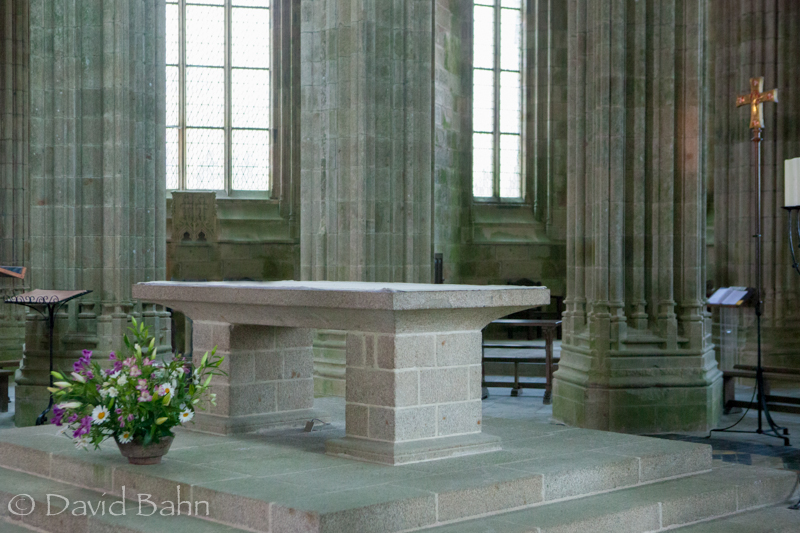
    Mont St. Michel

    I can remember the first time I fell for a girl. I was in second grade. She sat in the desk in front of me. I passed notes to her, telling her I loved her. One day as we were going back to our desks I took and kissed her hand. I think that was the last time we had any interaction; I was too embarrassed and she was not ready for such a show of affection. How foolish of that seven-year-old boy – or if not foolish, simply naive.

    There’s more to love than a kiss on the hand. Jesus knew that, but perhaps Peter did not. So Jesus will ask Peter about his love, “Do you love me…?” three times.

    Many see this encounter between Jesus and Peter as a reinstatement of sorts: Peter being reinstated to his place as an apostle, or even the head of the apostles. He had fallen, denying Jesus three times on that cruel night of Jesus’ trial. Certainly the occasion was brought home by the fact that Jesus asks Peter three times whether he loved him. John even makes a point of the presence of a charcoal fire; mentioned in the whole Bible only here and by John in the account of Peter’s denial of Jesus. The smell alone would bring the memories flooding back. Perhaps this is part of the dynamic of the event.

    At least equally important is the insight about love that Jesus reveals in his questions of Peter and the implication of Peter’s affirmation. Jesus asks, “Do you love me?” When Peter says yes, Jesus tells him, “Feed my sheep.” Love, by Jesus’ reckoning, looks like caring for those whom Jesus loves. If Peter loves Jesus, Peter will give attention to Jesus’ loved-ones. He will feed and tend the flock who follow Jesus. The reference is to the work of a spiritual shepherd – a pastor. Leading, feeding, directing, and protecting the people of God.

    There is, however, more to love even than that, and Jesus shows it here, too. Jesus is willing to ask the tough question. He is willing to probe, not settling for the simple answer to his question of love. He loves Peter enough to get to Peter’s heart. And finally, on the third question, Peter is undone. Love looks for the pain in another’s heart and seeks to heal it.

    Notice, also, that Peter’s love Peter is grieved that Jesus asks a third time. But after the question, Peter’s grief, and his answer, Jesus still turns him toward caring for those whom Jesus loved. Love entrusts precious ones to the care of those who are loved. Jesus will not be present on earth much longer, and must make provision for their care. He sees the blessings that others may experience from Peter and entrusts those loved-ones to Peter. Love is not diminished by its sharing; it is enhanced in its breadth.

    There is an endless supply of love from God. We are called to represent God to a world that is darkened by hatred, cheap imitations of love, and ill will. Peter’s commission is ours: show God’s love to others. How might you experience and express that love today?

  • John 21:1

    After this Jesus revealed himself again to the disciples by the Sea of Tiberias, and he revealed himself in this way.

    Climb to Lily Pad Lake

    The third of the Lord of the Rings movie trilogy, Return of the King, has at least three “endings” – one right after the other. Just when you think all the strings are brought together, and all the answers are resolved, a new scene opens with yet another denouement. To some extent the Gospel of John has two endings: Chapter 20 has Jesus alive and appearing to the disciples and convincing Thomas, together with John’s reasoning for writing his gospel account. Seems like the end, right? Not so fast. Here comes chapter 21. There are further implications to Jesus’ resurrection and the apostles’ developing faith that will be explored: John 21.

    The apostles will go fishing all night, having nothing to show for their efforts. Jesus will appear, directing their expedition to the other side, and a haul of fish that they can’t even get into the boat. Yes, this is Jesus: Son of God, raised from the dead. Reigning over all. When he recognizes Jesus, Peter jumps in the water and swims ashore. They will have breakfast. Then will come quite a conversation between Jesus and Peter.

    But for today we can take this to heart: Jesus is not finished with his work in the world or in our hearts. He will show up in unexpected circumstances and times. He will direct us to old and new endeavors. And he will always call us to himself. Sometimes it will be “the least of these” (cf. Matthew 25:40). Sometimes it will be in worship, and still others in a small gathering as his disciples (Matthew 18:20). But Jesus is not finished with his work in our world or our lives – until he returns on the Great Last Day.

    I wonder where he will show up for you and me today…

    John 21:1-14

    After this Jesus revealed himself again to the disciples by the Sea of Tiberias, and he revealed himself in this way. Simon Peter, Thomas (called the Twin), Nathanael of Cana in Galilee, the sons of Zebedee, and two others of his disciples were together. Simon Peter said to them, “I am going fishing.” They said to him, “We will go with you.” They went out and got into the boat, but that night they caught nothing.

    Just as day was breaking, Jesus stood on the shore; yet the disciples did not know that it was Jesus. Jesus said to them, “Children, do you have any fish?” They answered him, “No.” He said to them, “Cast the net on the right side of the boat, and you will find some.” So they cast it, and now they were not able to haul it in, because of the quantity of fish. That disciple whom Jesus loved therefore said to Peter, “It is the Lord!” When Simon Peter heard that it was the Lord, he put on his outer garment, for he was stripped for work, and threw himself into the sea.The other disciples came in the boat, dragging the net full of fish, for they were not far from the land, but about a hundred yards off.

    When they got out on land, they saw a charcoal fire in place, with fish laid out on it, and bread. 10 Jesus said to them, “Bring some of the fish that you have just caught.” 11 So Simon Peter went aboard and hauled the net ashore, full of large fish, 153 of them. And although there were so many, the net was not torn. 12 Jesus said to them, “Come and have breakfast.” Now none of the disciples dared ask him, “Who are you?” They knew it was the Lord. 13 Jesus came and took the bread and gave it to them, and so with the fish. 14 This was now the third time that Jesus was revealed to the disciples after he was raised from the dead.

  • John 20:26-31

    Eight days later, his disciples were inside again, and Thomas was with them. Although the doors were locked, Jesus came and stood among them and said, “Peace be with you.” 27 Then he said to Thomas, “Put your finger here, and see my hands; and put out your hand, and place it in my side. Do not disbelieve, but believe.” 28 Thomas answered him, “My Lord and my God!” 29 Jesus said to him, “Have you believed because you have seen me? Blessed are those who have not seen and yet have believed.”

    30 Now Jesus did many other signs in the presence of the disciples, which are not written in this book; 31 but these are written so that you may believe that Jesus is the Christ, the Son of God, and that by believing you may have life in his name.

    Volunteer Iris grows along the path.

    A careful reading of Genesis 1:9-13 (the third day of creation) reveals that it is the day of double blessing. Twice during that day, God pronounces it “good.” Clearly the third day after Jesus’ death was a day of double blessing: Jesus rose from the dead. I believe we are living in the “day” (figuratively-speaking) of Jesus’ double blessing; a new third day. It’s a challenge to explain, but bear with me…

    Jesus rose from the dead, the first day of the week – and the most significant “third day” of the Bible, the day of victory over sin and death. He appeared to the disciples in the evening of the first day of the week. Thomas wasn’t present on that first Easter evening. But “eight days later” Jesus appears again, when Thomas is present, offering peace and proof of his resurrection.

    There seems to be fairly widespread agreement that this “eight days later” refers to the following Sunday as the day on which Jesus appeared. My study, however, has not convinced me that such is the case. I may be wrong about the phrase, “after eight days”; but the simplest reading would make this the following Monday. That would be the second day of the week. So where is the third day? It is implied in Jesus’ words: “Blessed are those who have not seen and yet have believed.”  John adds the testimony: “…these are written that you may believe that Jesus is the Christ, the Son of God, and that by believing you may have life in his name.”

    The third “third day” is the era of God’s favor and blessing to all who have faith in Jesus Christ. We live in that era! In Israel today, observant Jews often schedule weddings on Tuesday: the day of double blessing. It might give you a new and different way of looking at Tuesday each week.

    Whether it was Sunday or Monday when Jesus appeared to Thomas, and whether we live in some sort of specifically symbolic “third day” era today, the fact is that Jesus died and rose again. He appeared to his disciples, and Thomas with a greeting of peace. Whatever day it is, we live in the era of God’s blessing, by the Holy Spirit’s gift of faith. It is the day of life in Jesus’ name.

  • John 20:22-23

    And when [Jesus] had said this, he breathed on them and said to them, “Receive the Holy Spirit. 23 If you forgive the sins of any, they are forgiven them; if you withhold forgiveness from any, it is withheld.”

    Pointed Post iii

    The first time I visited a Lutheran worship service any number of things were new to me. Raised in the Baptist church, the liturgical calisthenics weren’t that different; I recall standing for hymns on occasion, and we had a certain rhythm to the service. The challenge of fumbling through the hymnal in three separate places, plus the bulletin was a bit challenging: order of service in the front, the introit and gradual in another location, and hymns – with the numbering starting all over again – in yet another. That actually wasn’t a problem for me; it was just different.

    I loved the creed. As I was exposed to the simple and clear statement of things I had already been taught I said them gladly. I believe in God the Father, maker of heaven and earth…” I challenged the pastor about the “he descended into hell”, and he pointed me to 1 Peter 3:21 as he explained the thought: Good enough for me.

    But there was one part that I really bristled at. When the pastor spoke the absolution, saying, “I forgive you all your sins…” I thought: He can’t do that. Even after I saw these verses from John’s gospel, I struggled with the idea: How can a man [a pastor] forgive my sins? Years later I resolved the issue personally – and hopefully in a helpful manner for others – by emphasizing the rest of the words of the absolution: “…in the name of the Father, and of the Son, and of the Holy Spirit.” Those words convey the reality: God is forgiving the sins. I am simply conveying his forgiveness. I am forgiving in his name. It would be just like if I were to give a gift that someone else bought to someone in the name of the one who bought the gift. It’s not really from me; it’s from the one who bought the gift. Forgiveness isn’t from me, it’s from the one who won it on the cross.

    That may help in the case of the absolution, but the greater issues of faith are more troublesome. That God would forgive sins for the sake of Jesus’ death; that Jesus rose from the dead; that God has revealed himself as One, yet Father, Son, and Holy Spirit: These truths all defy our sensibilities. To embrace them requires faith. And if your faith must align perfectly with reason or experience you have a cheap counterfeit of faith.

    It would be reasonable to conclude that if one tries his or her best that is good enough before God; it is not. It would be reasonable to conclude that God’s love ebbs and flows like the tides – depending on whether things are going well or not – but God’s love is constant. The only way we can anchor our faith is to look beyond our own sensibilities. We must look to the Word of God, and begin shaping our sensibilities by the Word. Rather than putting God’s word to the test to see if it meets our standards, we must embrace his word and let it shape our standards.

    This is a gift of the Holy Spirit who has been poured out on us by God’s grace. What personal sensibility is the Holy Spirit leading you to examine today? Where is God’s word challenging you? Calling you? Correcting you? Claiming you? Comforting you?

    John 20:19-29

    On the evening of that day, the first day of the week, the doors being locked where the disciples were for fear of the Jews, Jesus came and stood among them and said to them, “Peace be with you.” 20 When he had said this, he showed them his hands and his side. Then the disciples were glad when they saw the Lord. 21 Jesus said to them again, “Peace be with you. As the Father has sent me, even so I am sending you.” 22 And when he had said this, he breathed on them and said to them, “Receive the Holy Spirit. 23 If you forgive the sins of any, they are forgiven them; if you withhold forgiveness from any, it is withheld.”

    24 Now Thomas, one of the Twelve, called the Twin, was not with them when Jesus came. 25 So the other disciples told him, “We have seen the Lord.” But he said to them, “Unless I see in his hands the mark of the nails, and place my finger into the mark of the nails, and place my hand into his side, I will never believe.”

    26 Eight days later, his disciples were inside again, and Thomas was with them. Although the doors were locked, Jesus came and stood among them and said, “Peace be with you.” 27 Then he said to Thomas, “Put your finger here, and see my hands; and put out your hand, and place it in my side. Do not disbelieve, but believe.” 28 Thomas answered him, “My Lord and my God!” 29 Jesus said to him, “Have you believed because you have seen me?Blessed are those who have not seen and yet have believed.”

  • John 19:41

    Now in the place where he was crucified there was a garden, and in the garden a new tomb in which no one had yet been laid

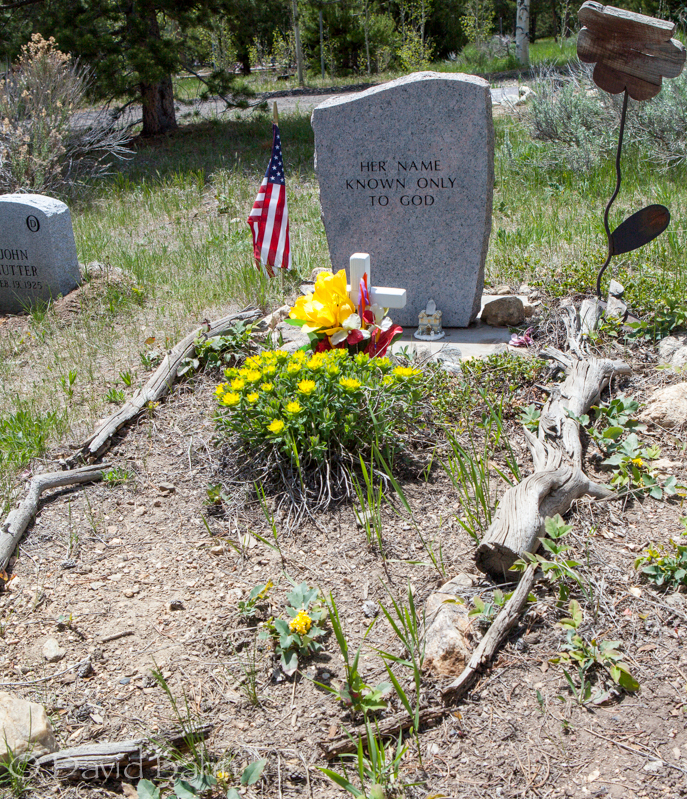
    "HER NAME KNOW ONLY TO GOD"
    “HER NAME KNOW ONLY TO GOD”

    The ending of the Rock Opera Jesus Christ Superstar is sad and evocative. The last song is an instrumental, a recapitulation of several of the themes from the rest of the work. It is titled John 19:41. The music and all that goes with the opera points to a sad, unsuccessful, defeated and dead ideologue. And though there are powerful words and music throughout the work, some of which speak clearly of the sacrifice of Jesus for the sake of the people, Jesus ends up merely in the tomb at the end of the musical.

    We know better. Jesus was laid in a tomb to be sure. He died a shameful death after incredible suffering. He was laid in a borrowed tomb. But John 20 follows John 19. We know Jesus only borrowed the tomb. We know that he rose from the dead; the tomb is now empty. So while we may well embrace the reality of Jesus’ death we do so not without remembering also his resurrection.

    But the borrowed tomb in which Jesus’ body rested is important to us as well. We cannot ignore the context of this verse to be sure. Jesus has died a shameful and painful death. His disciples are scattered. The garden tomb is Jesus’ resting place but for three days. It was Friday, but as the preacher says, “Sunday’s coming!”

    Superstars have their legacy. Graceland still attracts visitors today. Tragic figures from Elvis, to Kurt Cobain, to John Lennon, to Michael Jackson – to name just a few – are listed on Wikipedia: a sad commentary on the fleetingness of fame. But most of those died-too-young superstars testify to death’s cruelty and drugs’ seduction. They may live on in their music in some cases. But their bodies have not abandoned their borrowed tombs.

    Jesus is more than a superstar. He is the Son of God, the Savior of the world. He lives – not just in the stories of his past miracles and tragic death. He lives at the right hand of God interceding for us. He will come again at the End of Time, and every eye will see him, and every knee will bow – in heaven and on earth. And every tongue will confess that Jesus Christ is Lord to the glory of God the Father (cf. Philippians 2:5-11).

    John 19:38-42

    After these things Joseph of Arimathea, who was a disciple of Jesus, but secretly for fear of the Jews, asked Pilate that he might take away the body of Jesus, and Pilate gave him permission. So he came and took away his body.39 Nicodemus also, who earlier had come to Jesus[e] by night, came bringing a mixture of myrrh and aloes, about seventy-five pounds[f] in weight. 40 So they took the body of Jesus and bound it in linen cloths with the spices, as is the burial custom of the Jews. 41 Now in the place where he was crucified there was a garden, and in the garden a new tomb in which no one had yet been laid. 42 So because of the Jewish day of Preparation, since the tomb was close at hand, they laid Jesus there.