David Bahn – Reflections

Light from the Word and through the lens

  • Acts 11:17-18

    If then God gave the same gift to them as he gave to us when we believed in the Lord Jesus Christ,who was I that I could stand in God’s way?” 18 When they heard these things they fell silent. And they glorified God, saying, “Then to the Gentiles also God has granted repentance that leads to life.”

    20130721-7172

    When I was a young boy I gave my sister a gift that I really wanted: I gave her a set of giant checkers. One of the rooms at the motel my parents owned and operated had a tile checkerboard on the floor, and I thought it would be great to be able to play checkers on the floor in that room. I didn’t really think about my sister. Whether she would like the gift wasn’t important. I got her what I wanted and used a line that had been used on me: “It’s the thought that counts.” Truth was, however, the only thought I had was for myself. Sorry, Sis! Today, I am truly sorry.

    The gift of the Holy Spirit is an entirely different gift altogether. Not only is it spiritual in nature, it is entirely appropriate and truly for the sake of those to whom the Spirit is given. But in this case the gift is more than a gift: it is a sign of God’s favor and grace also toward the gentiles. By giving the Holy Spirit to these new believers God was saying not only that he had accepted them, and that they were legitimately part of God’s newly-forming multi-ethnic family, God was saying it publicly. This truly was a bold-face gift: the gift was a sign to the new believers and to the Church. God was indeed reconciling the whole world to himself in Jesus Christ.

    I don’t tend to struggle with people on the basis of their race or ethnicity. But I might struggle with people with piercings and tattoos. I know I should accept them and rejoice whenever the Kingdom of God is manifest in their life. But the message for me is clear: whenever God grants repentance that leads to life to any group of people, it is a cause for joy and celebration. I want to embrace that wholly. How about you?

    Acts 11:1-18

    Now the apostles and the brothers who were throughout Judea heard that the Gentiles also had received the word of God. 2 So when Peter went up to Jerusalem, the circumcision party criticized him, saying, 3 “You went to uncircumcised men and ate with them.” 4 But Peter began and explained it to them in order: 5 “I was in the city of Joppa praying, and in a trance I saw a vision, something like a great sheet descending, being let down from heaven by its four corners, and it came down to me. 6 Looking at it closely, I observed animals and beasts of prey and reptiles and birds of the air. 7 And I heard a voice saying to me, ‘Rise, Peter; kill and eat.’ 8 But I said, ‘By no means, Lord; for nothing common or unclean has ever entered my mouth.’ 9 But the voice answered a second time from heaven, ‘What God has made clean, do not call common.’ 10 This happened three times, and all was drawn up again into heaven. 11 And behold, at that very moment three men arrived at the house in which we were, sent to me from Caesarea. 12 And the Spirit told me to go with them, making no distinction. These six brothers also accompanied me, and we entered the man’s house. 13 And he told us how he had seen the angel stand in his house and say, ‘Send to Joppa and bring Simon who is called Peter; 14 he will declare to you a message by which you will be saved, you and all your household.’ 15 As I began to speak, the Holy Spirit fell on them just as on us at the beginning.16 And I remembered the word of the Lord, how he said, ‘John baptized with water, but you will be baptized with the Holy Spirit.’ 17 If then God gave the same gift to them as he gave to us when we believed in the Lord Jesus Christ,who was I that I could stand in God’s way?” 18 When they heard these things they fell silent. And they glorified God, saying, “Then to the Gentiles also God has granted repentance that leads to life.”

  • Psalm 100

    Make a joyful noise to the Lord, all the earth!
    Serve the Lord with gladness!
    Come into his presence with singing!
    Know that the Lord, he is God!
    It is he who made us, and we are his;
    we are his people, and the sheep of his pasture.
    Enter his gates with thanksgiving,
    and his courts with praise!
    Give thanks to him; bless his name!
    For the Lord is good;
    his steadfast love endures forever,
    and his faithfulness to all generations.

    I have much to be thankful for this month of thanksgiving. My wife and children, grandchildren and all my family, the incredible technology at my disposal, the beauty of creation all around me, the opportunity to serve as pastor of St. John, the leaders and all the people there: all these are things for which I am thankful. God has been gracious to me!

    The calling of the psalmist in this Psalm 100 is to express that thankfulness and praise to God with joyful noise and singing. We will do that this morning at St. John – as will many people around the world in many different congregations, large and small.

    But today I think of the people in the Philippines. Yesterday, Typhoon Haiyan, one of the strongest storms on record, slammed into the Philippines. As of this writing, more than 1,200 people are feared dead. Property damage and destruction of infrastructure are sure to be overwhelming.

    Their songs today will be of lament and yearning. Some will wonder about how God could allow such a terrible thing to happen to this country. Some will conclude that God is not good. Some will turn away from God in the face of this terrible tragedy.

    If the goodness of God is to be seen in these circumstances (and the psalmist urges us to praise God because of his goodness and mercy), it will be seen by the eyes of faith. Many Christians and Christian organizations are already mobilizing to help these people who are in need of the basics of life. Hundreds of thousands of dollars – perhaps millions!- will be sent to help them rebuild.

    We can add Christian love and compassionate help to our praise and joy today as we enter God’s house. That would well accompany our thanksgiving.

  • Acts 10:35-43(44-48)

    So Peter opened his mouth and said: “Truly I understand that God shows no partiality, 35 but in every nation anyone who fears him and does what is right is acceptable to him. 36 As for the word that he sent to Israel, preaching good news of peace through Jesus Christ (he is Lord of all), 37 you yourselves know what happened throughout all Judea, beginning from Galilee after the baptism that John proclaimed: 38 how God anointed Jesus of Nazareth with the Holy Spirit and with power. He went about doing good and healing all who were oppressed by the devil, for God was with him. 39 And we are witnesses of all that he did both in the country of the Jews and in Jerusalem. They put him to death by hanging him on a tree, 40 but God raised him on the third day and made him to appear, 41 not to all the people but to us who had been chosen by God as witnesses, who ate and drank with him after he rose from the dead. 42 And he commanded us to preach to the people and to testify that he is the one appointed by God to be judge of the living and the dead. 43 To him all the prophets bear witness that everyone who believes in him receives forgiveness of sins through his name.”

    The Church at Locuon

    A bill (the Employment Non-Discrimination Act, or ENDA) was passed recently by the US Senate that aims to prevent discrimination against gay and transgender employees. Critics of the bill, however, contend that  ENDA would “lead to a form of reverse discrimination.” Non-discrimination is the number one cultural moral norm in today’s world. More people would know Jesus’ words in Matthew 7, “Judge not, lest you be judged,” than they would know John 3:16. Non-descrimination is a slam dunk in today’s world – with the possible exception of discrimination against those who wish to hold traditional Christian values regarding things like human sexuality or life in the womb.

    But there is one Christian value for which we ought to be known: the desire for people to embrace the grace of God in Jesus Christ. It might not seem as though this is a difficult or uniquely Christian value, for the whole culture seems bent on applying grace to all people – no matter what their story, status, or social standing might be. But in fact, grace is a decidedly Christian concept; it centers in Christ, and is experienced only by faith in Christ.

    A faulty view of grace makes grace either something that I must earn, or an abandonment of all moral absolutes. It seems the latter abuse is the current cultural approach. But true grace centers in Christ and is free to the one receiving it, and infinitely costly to the One who gives it. Someone always has to pay for grace. And in the case of Christian grace, that Someone was God himself. It cost him his Son’s life to pour out his grace without abandoning moral truth or requiring moral payback on our part. He did that for all people. True grace is always tied to Jesus’ death for our sins and resurrection from the grave. It is received by the power of the Holy Spirit, and brings glory to God who gives his Son, his Spirit, and his Salvation to all who believe.

    Perhaps the word, “indiscriminate” is not the best word to use when speaking of God’s grace. It might make one think that there is no sense of appreciation for God’s grace, or that one would be foolish in his or her showing or sharing of grace. But the truth is, as Peter says, “God shows no partiality, but in every nation anyone who fears him and does what is right is acceptable to him.” Perhaps it’s the “fears him and does what is right” that marks the grace of God as unique. But the simple word, “anyone” is a great invitation of grace.

    We don’t earn grace. Nor do we abandon moral norms in order to apply it. But God gives the riches of his kingdom to those who look to Christ, fear him, and do what is right. And when we lose sight of Christ, or wander from the path of doing right, God’s grace receives us back as we turn in repentance back to him.

    In Peter’s day the issue had to do with God’s covenant extending to non-Jewish people: the Gentiles. And to make the point clear, that the Gentiles were also chosen by God to receive his grace, the Holy Spirit is visibly poured out on the Gentile believers while Peter is preaching on this occasion. I’m not certain what group or class of people I might need to recognize as recipients of God’s grace (could it be Republicans or Democrats?!?). But I do know that I am thankful that God’s grace extends to me for Jesus’ sake. How about you?

    Then comes the exclamation point of God’s approval…

    44 While Peter was still saying these things, the Holy Spirit fell on all who heard the word. 45 And the believers from among the circumcised who had come with Peter were amazed, because the gift of the Holy Spirit was poured out even on the Gentiles. 46 For they were hearing them speaking in tongues and extolling God. Then Peter declared,47 “Can anyone withhold water for baptizing these people, who have received the Holy Spirit just as we have?”48 And he commanded them to be baptized in the name of Jesus Christ. Then they asked him to remain for some days.

  • Acts 10:1-16

    At Caesarea there was a man named Cornelius, a centurion of what was known as the Italian Cohort, 2 a devout man who feared God with all his household, gave alms generously to the people, and prayed continually to God.3 About the ninth hour of the day he saw clearly in a vision an angel of God come in and say to him, “Cornelius.”4 And he stared at him in terror and said, “What is it, Lord?” And he said to him, “Your prayers and your alms have ascended as a memorial before God. 5 And now send men to Joppa and bring one Simon who is called Peter. 6 He is lodging with one Simon, a tanner, whose house is by the sea.” 7 When the angel who spoke to him had departed, he called two of his servants and a devout soldier from among those who attended him, 8 and having related everything to them, he sent them to Joppa.

    9 The next day, as they were on their journey and approaching the city, Peter went up on the housetop about the sixth hour to pray. 10 And he became hungry and wanted something to eat, but while they were preparing it, he fell into a trance 11 and saw the heavens opened and something like a great sheet descending, being let down by its four corners upon the earth. 12 In it were all kinds of animals and reptiles and birds of the air. 13 And there came a voice to him: “Rise, Peter; kill and eat.” 14 But Peter said, “By no means, Lord; for I have never eaten anything that is common or unclean.” 15 And the voice came to him again a second time, “What God has made clean, do not call common.” 16 This happened three times, and the thing was taken up at once to heaven.

    We may pray in any place, at any time, but setting aside a specific time and place for prayer is a vital spiritual discipline.
    We may pray in any place, at any time, but setting aside a specific time and place for prayer is a vital spiritual discipline.

    If “the road to hell is paved with good intensions,” then the pathway of God’s favor is paved with prayer. As the message of the Good News of Jesus continues to spread, it is striking how many times new blessings and insights are accompanied or followed by prayer. From  Jesus’ ascension to the first Christian Pentecost, to the healing of the lame man at Bethesda, to this encounter and many others, prayer was the atmosphere in which God moved in significant ways of favor and blessing.

    In the case of Cornelius, an angel assured him that his prayers had been heard, and had him send for Peter – who was praying. In the case of Peter, as he was praying God provided a vision of unclean animals with a message: don’t call anything unclean that God had called clean. God was definitely up to something. He was making an open path of favor toward the non-Jewish people. Jesus died for the sins of the world, and sent his disciples to be witness from Jerusalem, to Judea, to Samaria, and to the ends of the earth. This would take the message of the Gospel beyond the nation of Israel, and would require new encounters with new people.

    Prayer is such a vital part of being part of God’s work because it is an act of humility and dependence. Prayer acknowledges God’s glory and worthiness, as well as relying on his goodness and power. When we pray are less likely to be knocked to the ground and blinded by a light (as Paul experienced on the road to Damascus) in order to receive God’s direction and understand his will.

    A time of prayer is not a time merely to offer a wish-list of blessings to God. It is a time of silence, humility, listening to God’s word, seeking God’s wisdom, and exalting God. It is as much a time of silence before God as it is a time of speaking to God. But it is a means by which the pathway of God’s favor is traveled. Surely there are other means by which we experience God’s favor: good works, living for Jesus’ glory in all we do, seeking justice, and all manner of things in a life of faith. But prayer is a most vital means by which we experience God’s favor, guidance, and help.


  • Acts 9:32-43

    Now as Peter went here and there among them all, he came down also to the saints who lived at Lydda. 33 There he found a man named Aeneas, bedridden for eight years, who was paralyzed. 34 And Peter said to him, “Aeneas, Jesus Christ heals you; rise and make your bed.” And immediately he rose. 35 And all the residents of Lydda and Sharon saw him, and they turned to the Lord.

    36 Now there was in Joppa a disciple named Tabitha, which, translated, means Dorcas. She was full of good works and acts of charity. 37 In those days she became ill and died, and when they had washed her, they laid her in an upper room. 38 Since Lydda was near Joppa, the disciples, hearing that Peter was there, sent two men to him, urging him, “Please come to us without delay.” 39 So Peter rose and went with them. And when he arrived, they took him to the upper room. All the widows stood beside him weeping and showing tunics and other garments that Dorcas made while she was with them. 40 But Peter put them all outside, and knelt down and prayed; and turning to the body he said, “Tabitha, arise.” And she opened her eyes, and when she saw Peter she sat up. 41 And he gave her his hand and raised her up. Then calling the saints and widows, he presented her alive. 42 And it became known throughout all Joppa, and many believed in the Lord. 43 And he stayed in Joppa for many days with one Simon, a tanner.

    20130530-9333

    I happen to have been given a very favorable biblical name. David, in the Bible is described as a man after God’s heart. I would hope for such a description, and am happy to have the same name as the Bible’s David. Aeneas, or Tabitha/Dorcas, however are not as well known. I don’t know anyone named for either of these Bible characters (though someone might). In fact, it would be very much an honor to be named for either. For the one was an example of God’s great, miraculous and powerful work, while the other was an example of godliness, love and good works to be followed. The healing of Aeneas was a catalyst for faith. Dorcas was an example of faith in action, and much loved and respected for it.

    How might we best claim the name “Christian” (which means, Little Christ)? How might we live out our faith or see God’s work in us as an opportunity to bring glory to God or people to faith? We may be relative nobodies. We may have little worldly influence. We may never be named in a book – much less the Bible, the Word of God. But we can enjoy the favor of God in whatever eddy or pool of life we find ourselves. As we do, God can glorify himself in us, and that’s a very good thing.

    Who knows, some day someone may mention us in a book. But the greatest honor is not so much that we’re known as somebody, but that God displays his faithfulness, goodness, grace, truth and love in our lives. That is a rich and delightful honor!

  • Acts 9:31

    So the church throughout all Judea and Galilee and Samaria had peace and was being built up. And walking in the fear of the Lord and in the comfort of the Holy Spirit, it multiplied.

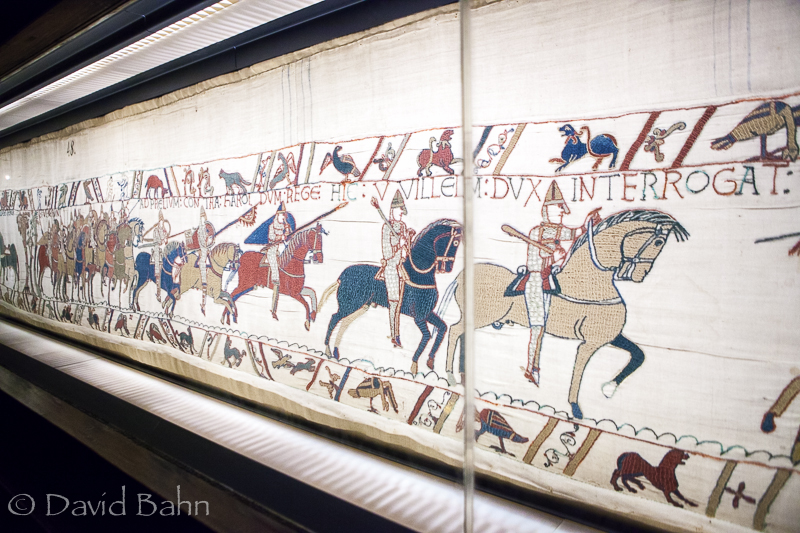
    This Bayeux Tapestry is an embroidered cloth nearly 70 metres (230 ft) long, which depicts the events leading up to the battle of Hastings.
    This Bayeux Tapestry is an embroidered cloth nearly 70 metres (230 ft) long, which depicts the events leading up to the battle of Hastings.

    Diane and I like two distinctly different kinds of movies. We both like mysteries – especially some of those produced by the BBC and shown on public TV such as “Sherlock”. I especially also like strong and intense dramas such as “Captain Philips”, which we recently saw. Then there are the challenges and joys of being grandparents, the blessings of serving as pastor at St. John and Diane’s PLI ministry, not to mention our efforts to begin to know the people in our neighborhood. There is a warp and woof in our individual and shared preferences and experiences. They weave together as the fabric of our lives.

    In the case of the events that unfold as the Early Church begins to take shape and grow, there is a warp and woof as well. The dramatic conversion of Saul gives way to Ananias’ change of heart and willingness to pray for and ultimately baptize Saul. Saul’s conversion is so powerful that he begins to teach in the synagogues that Jesus is the Son of God, the Messiah. This angers the Jews who plot to murder him, which sends Saul to Jerusalem by means of a nighttime escape. When he arrives in Jerusalem the disciples there fear him, not believing that he was truly converted and now a follower of Jesus. Thank God for Barnabas (whose name means, literally, “Son of Encouragement”) who vouches for Saul so that then he preaches and teaches in Jerusalem. This in turn angers the Greek-speaking Jews who also conspire to kill Saul. So they send him back to his home in Tarsus.

    All this is part of the warp and woof of the Early Church’s growth. All this so that the church may walk in the comfort of the Holy Spirit and multiply. The simple life is perhaps more of a myth than reality when it comes to the mission of God. As God brings more and more people into his church and as the church grows and multiplies, it is always in the context of challenge, blessing, difficulty, encouragement, grace, and testing.

    Al this makes me think of how short sighted we can become in the midst of the blessings and challenges of church life today. Some people too easily come to and go from our fellowship. Events of great blessing and challenging times of difficulty too often cloud our vision to the greater work of God. God’s work is done in people’s lives in real time amidst the blessings and challenges of life. Make no mistake about it, however. God is at work, advancing his kingdom. Even as Saul is moving from Damascus, to Jerusalem, to Caesarea, to Tarsus, God is readying the world for the next great chapter of his mission. The church is multiplying, and the warp and woof of life will continue to play out so that more and more people can hear the Good News of Jesus, Son of God, Messiah, and Lord.

    I want to be part of that tapestry of God’s grace and truth. How about you?

    Acts 9:19-31

    For some days he was with the disciples at Damascus. 20 And immediately he proclaimed Jesus in the synagogues, saying, “He is the Son of God.” 21 And all who heard him were amazed and said, “Is not this the man who made havoc in Jerusalem of those who called upon this name? And has he not come here for this purpose, to bring them bound before the chief priests?” 22 But Saul increased all the more in strength, and confounded the Jews who lived in Damascus by proving that Jesus was the Christ.

    23 When many days had passed, the Jews plotted to kill him, 24 but their plot became known to Saul. They were watching the gates day and night in order to kill him, 25 but his disciples took him by night and let him down through an opening in the wall, lowering him in a basket.

    26 And when he had come to Jerusalem, he attempted to join the disciples. And they were all afraid of him, for they did not believe that he was a disciple. 27 But Barnabas took him and brought him to the apostles and declared to them how on the road he had seen the Lord, who spoke to him, and how at Damascus he had preached boldly in the name of Jesus. 28 So he went in and out among them at Jerusalem, preaching boldly in the name of the Lord.29 And he spoke and disputed against the Hellenists. But they were seeking to kill him. 30 And when the brothers learned this, they brought him down to Caesarea and sent him off to Tarsus.

    31 So the church throughout all Judea and Galilee and Samaria had peace and was being built up. And walking in the fear of the Lord and in the comfort of the Holy Spirit, it multiplied.

  • Acts 9:13-16

    But Ananias answered, “Lord, I have heard from many about this man, how much evil he has done to your saints at Jerusalem. 14 And here he has authority from the chief priests to bind all who call on your name.” 15 But the Lord said to him, “Go, for he is a chosen instrument of mine to carry my name before the Gentiles and kings and the children of Israel. 16 For I will show him how much he must suffer for the sake of my name.”

    Red and White Rose

    Many years ago, in a different church and different city and state I had the opportunity to visit a man in order to confront him in regard to a decision he was in the process of making. His wife had alerted me to this and asked that I come talk with him about it. So as I walked into their home, he declared, “I know what you’re here for, and there’s no way that you’re going to change my mind.” In that moment, I knew beyond a doubt that he would change his mind; he was going down. My approach was not to tell him what he could and couldn’t do, but to help him see some implications of his decision I am quite certain he was not aware of. Once that became clear to him, he changed his mind. It was a good Kingdom moment.

    In the case of Saul, however, God had to pull out the big guns. It wasn’t a matter of overcoming bluster, it was a matter of changing the very course of Saul’s life. He was on his way to persecute Christians. He had letters to take people into custody. He was intent on putting down this new upstart g group of religious trouble-makers. But God had other plans.

    God blinded Saul, threw him to the ground, and told him in no uncertain terms: he was hurting himself, and worse yet, he was persecuting Christ himself. Saul thought he was defending God. He had imagined that he was doing the work of God. He was intent on keeping the Kingdom of God strong by his actions. He was a force to contend with. But God was a larger force. And in this moment of confrontation God would change the life of Saul, and insure the growth of the Christian Church in places that only God could orchestrate. A former persecutor would become chief mission officer of the Early Church.

    The conversion of Saul was one necessary part of this plan. But there were other parts to this plan that would need to unfold, and that’s where Ananias comes into the picture. He knew Saul. He knew his reputation. He knew he was dangerous. He had no clue that God would use this man for his purposes to further the cause of Jesus. But such was the plan, and the next work of God would have to be in Ananias’ heart if that plan was to move forward.

    In the end Ananias agrees; he goes to Saul and prays for him to receive his sight. Saul is baptized. A new plan begins to unfold. It makes me wonder…who am I writing off as beyond the reach of God and unsuitable for fulfilling God’s purposes? How might I more fully embrace the mission of God by encouraging those who God chooses and changes? Am I willing to go to those to whom God calls me with grace and prayer?  What’s more, am I certain I’m on the right path when I get large and in charge, rather than seeking God’s guidance in life and ministry? I wonder if any others might need to ask these questions.

    Acts 9:1-18

    But Saul, still breathing threats and murder against the disciples of the Lord, went to the high priest 2 and asked him for letters to the synagogues at Damascus, so that if he found any belonging to the Way, men or women, he might bring them bound to Jerusalem. 3 Now as he went on his way, he approached Damascus, and suddenly a light from heaven shone around him. 4 And falling to the ground he heard a voice saying to him, “Saul, Saul, why are you persecuting me?” 5 And he said, “Who are you, Lord?” And he said, “I am Jesus, whom you are persecuting. 6 But rise and enter the city, and you will be told what you are to do.” 7 The men who were traveling with him stood speechless, hearing the voice but seeing no one. 8 Saul rose from the ground, and although his eyes were opened,he saw nothing. So they led him by the hand and brought him into Damascus. 9 And for three days he was without sight, and neither ate nor drank.

    10 Now there was a disciple at Damascus named Ananias. The Lord said to him in a vision, “Ananias.” And he said,“Here I am, Lord.” 11 And the Lord said to him, “Rise and go to the street called Straight, and at the house of Judas look for a man of Tarsus named Saul, for behold, he is praying, 12 and he has seen in a vision a man named Ananias come in and lay his hands on him so that he might regain his sight.” 13 But Ananias answered, “Lord, I have heard from many about this man, how much evil he has done to your saints at Jerusalem. 14 And here he has authority from the chief priests to bind all who call on your name.” 15 But the Lord said to him, “Go, for he is a chosen instrument of mine to carry my name before the Gentiles and kings and the children of Israel. 16 For I will show him how much he must suffer for the sake of my name.” 17 So Ananias departed and entered the house. And laying his hands on him he said, “Brother Saul, the Lord Jesus who appeared to you on the road by which you came has sent me so that you may regain your sight and be filled with the Holy Spirit.” 18 And immediately something like scales fell from his eyes, and he regained his sight. Then he rose and was baptized; 19 and taking food, he was strengthened.

  • Part of my Sunday morning preparation is to read from the Psalms. On this, the 3rd day of the month it’s Psalms 3; 33; 63; 93; 123. Here are some particularly notable verses from these psalms:

    Psalm 3:5 (So perfect for Daylight Savings Time change Sunday!)
    I lay down and slept;
    I woke again, for the Lord sustained me.

    Psalm 33:1-5; 20-22
    Shout for joy in the Lord, O you righteous!
    Praise befits the upright.

    2 Give thanks to the Lord with the lyre;
    make melody to him with the harp of ten strings!
    3 Sing to him a new song;
    play skillfully on the strings, with loud shouts.

    4 For the word of the Lord is upright,
    and all his work is done in faithfulness.
    5 He loves righteousness and justice;
    the earth is full of the steadfast love of the Lord.

    Our soul waits for the Lord;
    he is our help and our shield.
    21 For our heart is glad in him,
    because we trust in his holy name.
    22 Let your steadfast love, O Lord, be upon us,
    even as we hope in you.

    Psalm 63:3-4
    Because your steadfast love is better than life,
    my lips will praise you.
    4 So I will bless you as long as I live;
    in your name I will lift up my hands.

    Psalm 93:1
    The Lord reigns; he is robed in majesty;
    the Lord is robed; he has put on strength as his belt.

    Psalm 123:1-2
    To you I lift up my eyes,
    O you who are enthroned in the heavens!
    2 Behold, as the eyes of servants
    look to the hand of their master,
    as the eyes of a maidservant
    to the hand of her mistress,
    so our eyes look to the Lord our God,
    till he has mercy upon us.

  • Mike Ruhl, of the Center for U.S. Missions recently wrote an article that I found quite edifying. Here it is for your consideration and edification.

    Heaven on Earth?

    By Michael R. Ruhl


    I remember like it was yesterday.  Shortly after graduation from seminary and starting pastoral ministry at a wonderful church in rural Minnesota, it came to my attention that some Christian churches called themselves FULL GOSPEL churches. That saddened me a great deal because it gave some people the impression that some Christian churches only had an incomplete or deficient (less than FULL) gospel.

    The liberating words of Jesus in John 3:16 – coupled with a clear grasp of the Scriptural teaching that salvation is by grace and through faith in Jesus Christ alone – apart from works of the law – yielded full assurance that the gospel given to me by the Holy Spirit was FULL, clean, clear, sufficient and devoid of any humanistic or ecclesial pollutants or deficiencies. This obvious perceptual division in understanding the essence of the gospel continues to trouble me to this very day. And yet, there remains an important lesson for all of us Missionary Leaders who walk the Missionary Road.

    The biblical understanding of the gospel which I was taught included a concept that can best be described as partially realized salvation. This insight testifies to the fact that our salvation actually begins to unfold (be realized) at our baptism/conversion here on planet earth and in the church – and is made fully perfect in eternity, in heaven. Some theologians describe this as … the tension between the already and the not yet. Post-conversion life in the Christian church provides the opportunity to experience a “foretaste” of the blessings of eternal salvation in this present (realized) lifetime. This is NOT the radical “realized eschatology” of C.H. Dodd. But it IS an affirmation that all the blessings of the gospel can be experienced in our post-conversion lives on earth and in the church, which is the Body of Christ. One thinks of the security and joy of caring, bonded, reconciled and Christ-centered relationships in the church as a “foretaste” of our unending fellowship with the saints in heaven – and even how the sacrament of the Lord’s Supper is a “foretaste” of the Messianic Banquet in heaven (described in the Book of Revelation) – or even how the hymns and music of the church are a “foretaste” of the dynamic praise of saints and angels in heaven directed toward the Christ, the Lamb who was Slain – and even the  intuitive, Spirit-communicated “peace of God which passes all human understanding” (tetelestai – It is finished!Reconciliation with God is fully accomplished through the shed blood of our Lord Jesus Christ by which the Holy Spirit imparts the ‘joy of our salvation.’ That makes life in the Christian church an exciting, fulfilling and incredibly desirable reality – a reality for us to enjoy, and to share.

    Missiologists like Mike Breen (LEADING Missional Communities) take note of the reality that some secular people (unchurched unbelievers) can decline to hear and receive the gospel because their hearing of the gospel is entirely OTHER-WORLDLY [speaking only of heaven]. These same people can be blessed by the Holy Spirit when their hearing of the gospel includes A GOSPEL-CENTERED, SPIRIT-EMPOWERED grasp of how blessed, fulfilling and sanctified their current and earthly lives can be – as they receive Christ as Savior and Lord and enter the full fellowship of the Christian Church.

    Mike Breen writes:

    If Missional Communities are going to be “good news communities” and proclaim the gospel effectively, we need to have a fuller, more robust picture of what the gospel actually is. For example, if we proclaim a gospel that has to do only with forgiveness of sins (which results in heaven), we typically don’t end up with disciples of Jesus.  For people who think the gospel is only about having their sins forgiven so they can go to heaven someday, discipleship is an optional extra-curricular activity. We need to recover a fuller, more biblical picture of the gospel. While it isn’t something less than forgiveness (that’s certainly part of it), it’s a lot more than just forgiveness.

    The gospel that Jesus, John the Baptizer and all the New Testament writers proclaimed was simply the present availability of life in the Kingdom of God to everyone through trusting (saving faith) Jesus. Of course that gospel includes (and is primarily focused) on the forgiveness of sins and the promise of everlasting life in heaven (thanks be to God!) … but is also includes much more than that.

    After John was put in prison, Jesus went into Galilee, proclaiming the good news of God.  “The time has come,” he said.  “The kingdom of God is near.  Repent and believe the good news!” (Mark 1:14).

    Welcome to the ‘healthy tension’ of the Already … and the Not Yet.  What a great gospel God has given to us!  Eternal blessedness in heaven – and also temporal blessedness in our faith-filled earthly lives!

    Te Deum laudamus!  Let us proclaim that gospel with power, passion and persuasion!   Let us multiply the planting of new churches (Gospel Lighthouses) which proclaim the gospel to all the cultures and nations – and which provide a base for living the gospel today!

        
    Rev. Michael Ruhl is the Director of Mission Training for the Center for United States Missions. You may contact him at mike.ruhl@cui.edu.


  • Acts 8:35-39

    Then Philip opened his mouth, and beginning with this Scripture he told him the good news about Jesus. 36 And as they were going along the road they came to some water, and the eunuch said, “See, here is water! What prevents me from being baptized?” 38 And he commanded the chariot to stop, and they both went down into the water, Philip and the eunuch, and he baptized him. 39 And when they came up out of the water, the Spirit of the Lord carried Philip away, and the eunuch saw him no more, and went on his way rejoicing.

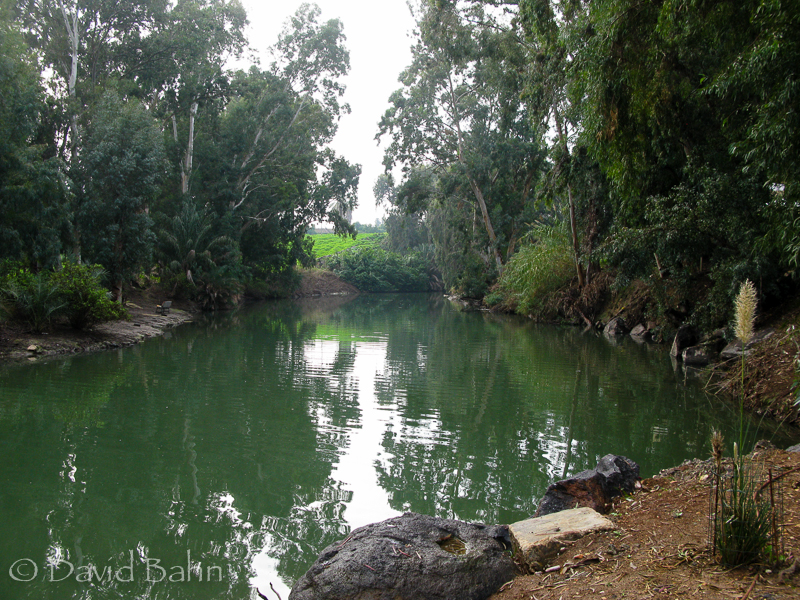
    The Jordan River - the river in which Jesus was baptized
    The Jordan River – the river in which Jesus was baptized

    When a young woman who had been raised in the Mormon religion was converted to Christ, she couldn’t wait to be baptized. It was a joy and blessings she deeply desired. When our youngest son was born and had some complications a few days later, we baptized him in the hospital. As soon as we had done so, it was as if a weight was lifted from our shoulders: we knew certain promises applied to him based on Bible promises.

    The Ethiopian Eunuch saw baptism as a privilege and blessing! Here are some Bible promises that would sustain such a view.

    The Blessings of Baptism


    Ephesians 5:25-27

    Husbands, love your wives, as Christ loved the church and gave himself up for her, 26 that he might sanctify her, having cleansed her by the washing of water with the word, 27 so that he might present the church to himself in splendor, without spot or wrinkle or any such thing, that she might be holy and without blemish.

    Blessing: Cleansing


    Titus 3:5-7

    [God] saved us, not because of works done by us in righteousness, but according to his own mercy, by the washing of regeneration and renewal of the Holy Spirit, 6 whom he poured out on us richly through Jesus Christ our Savior, 7 so that being justified by his grace we might become heirs according to the hope of eternal life.

    Blessing: Rebirth/regeneration


    1 Peter 3:21-22

    Baptism, which corresponds to this, now saves you, not as a removal of dirt from the body but as an appeal to God for a good conscience, through the resurrection of Jesus Christ, 22 who has gone into heaven and is at the right hand of God, with angels, authorities, and powers having been subjected to him.

    Blessing: Salvation/clear conscience


    Romans 6:1-4

    What shall we say then? Are we to continue in sin that grace may abound? 2 By no means! How can we who died to sin still live in it? 3 Do you not know that all of us who have been baptized into Christ Jesus were baptized into his death? 4 We were buried therefore with him by baptism into death, in order that, just as Christ was raised from the dead by the glory of the Father, we too might walk in newness of life.

    Blessing:  Connection with Christ’s death and resurrection; death to sin


    Acts 2:37-39

    Now when they heard this they were cut to the heart, and said to Peter and the rest of the apostles, “Brothers, what shall we do?”

    38 And Peter said to them, “Repent and be baptized every one of you in the name of Jesus Christ for the forgiveness of your sins, and you will receive the gift of the Holy Spirit. 39 For the promise is for you and for your children and for all who are far off, everyone whom the Lord our God calls to himself.”

    Blessing:  Forgiveness of sins; the gift of the Holy Spirit

    Notes:

    • These blessings are given by God as a promise, and received by a person by faith
    • There are no age restrictions to the promises or examples of baptisms that omit the baptism of any age person – old or young.
    • Both Lydia and her household, (Acts and the Philippian jailer and his household, were baptized. This would include several generations of the family: grandchildren, children, grandparents, and parents; this is the meaning of the Greek word, “iokos” which is translated “household.”

    Acts 8:26-40

    Now an angel of the Lord said to Philip, “Rise and go toward the south to the road that goes down from Jerusalem to Gaza.” This is a desert place. 27 And he rose and went. And there was an Ethiopian, a eunuch, a court official of Candace, queen of the Ethiopians, who was in charge of all her treasure. He had come to Jerusalem to worship 28 and was returning, seated in his chariot, and he was reading the prophet Isaiah. 29 And the Spirit said to Philip, “Go over and join this chariot.” 30 So Philip ran to him and heard him reading Isaiah the prophet and asked, “Do you understand what you are reading?” 31 And he said, “How can I, unless someone guides me?” And he invited Philip to come up and sit with him. 32 Now the passage of the Scripture that he was reading was this:

    “Like a sheep he was led to the slaughter
    and like a lamb before its shearer is silent,
    so he opens not his mouth.
    33 In his humiliation justice was denied him.
    Who can describe his generation?
    For his life is taken away from the earth.”

    34 And the eunuch said to Philip, “About whom, I ask you, does the prophet say this, about himself or about someone else?” 35 Then Philip opened his mouth, and beginning with this Scripture he told him the good news about Jesus. 36 And as they were going along the road they came to some water, and the eunuch said, “See, here is water! What prevents me from being baptized?” 38 And he commanded the chariot to stop, and they both went down into the water, Philip and the eunuch, and he baptized him. 39 And when they came up out of the water, the Spirit of the Lord carried Philip away, and the eunuch saw him no more, and went on his way rejoicing. 40 But Philip found himself at Azotus, and as he passed through he preached the gospel to all the towns until he came to Caesarea.