David Bahn – Reflections

Light from the Word and through the lens

  • Acts 19:1-10

    And it happened that while Apollos was at Corinth, Paul passed through the inland country and came to Ephesus. There he found some disciples. 2 And he said to them, “Did you receive the Holy Spirit when you believed?” And they said, “No, we have not even heard that there is a Holy Spirit.” 3 And he said, “Into what then were you baptized?” They said, “Into John’s baptism.” 4 And Paul said, “John baptized with the baptism of repentance, telling the people to believe in the one who was to come after him, that is, Jesus.” 5 On hearing this,they were baptized in the name of the Lord Jesus. 6 And when Paul had laid his hands on them, the Holy Spirit came on them, and they began speaking in tongues and prophesying. 7 There were about twelve men in all.

    8 And he entered the synagogue and for three months spoke boldly, reasoning and persuading them about the kingdom of God. 9 But when some became stubborn and continued in unbelief, speaking evil of the Way before the congregation, he withdrew from them and took the disciples with him, reasoning daily in the hall of Tyrannus. 10 This continued for two years, so that all the residents of Asia heard the word of the Lord, both Jews and Greeks.
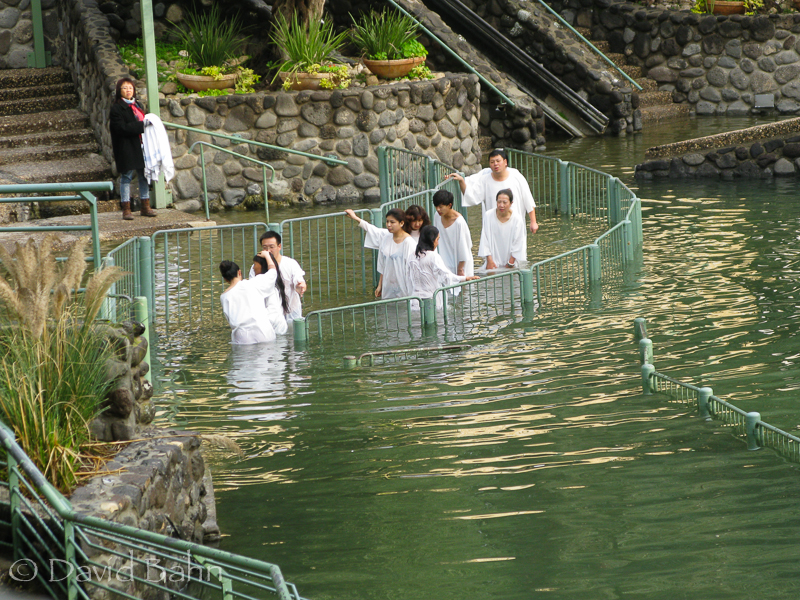
    People being baptized in the Jordan River
    People being baptized in the Jordan River

    In Tolkien’s Lord of the Rings Frodo, Gandalf and the fellowship arrive at the Doors of Durin, gateway to Moria. They are faced with a riddle there, and had to solve it before the doors would open. It was no easy task, but finally Gandalf remembers the Sindarin word for “friend,” pronounces it correctly and the doors magically open. Movies such as National Treasure, or any of the Lost Ark movies have similar episodes. Say something, solve some riddle, do something just right and you are successful. It’s magic!

    There is a great appeal to such magical incantations or secret solutions. If we could just find the right pill to overcome obesity, the right formula for choosing stocks, or the right words to get that raise, life would be so good – so we think. Such is seldom the case, however. There is more to success than a word, pill, or simple formula.

    In the book of Judges (chapter 12), the Gileadites used the literal word “shibboleth,” to out the Ephraimites on one occasion. It was a sort of negative password. Because the Ephraimites could not pronounce the word correctly the Gileadites knew they were impostors.

    While Christian baptism is a vitally important gift of God, it is no shibboleth. There is no certain way it must be done. Even here the question about baptism was not about who did it, where, how, or what mode was used. The issue was more essential: was it a baptism into Jesus? Did the baptism connect the people to the one who was to come? The proof at that time was whether they had received the Holy Spirit when they were baptized.

    Just as in Acts 2, where Peter told the people that with baptism would come the gift of the Holy Spirit, on this occasion the Holy Spirit was given. On this occasion the Holy Spirit was manifested in the new believers by moving them to speak in tongues and prophesy. This event marked the founding of a two-year mission outpost in Corinth, and the continuing message of the Gospel being shared in that part of the world.

    Some might wish to draw certain conclusions about baptism, the work of the Holy Spirit, speaking in tongues, or the role of Apostles in the life and mission of the church. This seems not to be Luke’s purpose, however. He is simply reporting how things unfolded as the Word of the Lord spread and grew. It grows in fits and starts. And it’s messy in the process. Baptism is an essential part of that growth. But it’s never a shibboleth – a secret code or simple formulaic event. It is a means by which God’s grace and blessings come to people, and a blessing to be embraced with thanks and praise to God.

    Baptism is not to be thought of as a magical pill, a ticket-punch, or a must-do-it-just-this-way kind of ceremony. It is a blessing from God and the beginning point of the great adventure of faith and life in the Lord Jesus.

  • John 1:1-18

    In the beginning was the Word, and the Word was with God, and the Word was God. 2 He was in the beginning with God. 3 All things were made through him, and without him was not any thing made that was made. 4 In him was life, and the life was the light of men. 5 The light shines in the darkness, and the darkness has not overcome it.

    6 There was a man sent from God, whose name was John. 7 He came as a witness, to bear witness about the light, that all might believe through him. 8 He was not the light, but came to bear witness about the light.

    9 The true light, which gives light to everyone, was coming into the world. 10 He was in the world, and the world was made through him, yet the world did not know him. 11 He came to his own, and his own people did not receive him. 12 But to all who did receive him, who believed in his name, he gave the right to become children of God, 13 who were born, not of blood nor of the will of the flesh nor of the will of man, but of God.

    14 And the Word became flesh and dwelt among us, and we have seen his glory, glory as of the only Son from the Father, full of grace and truth. 15 (John bore witness about him, and cried out, “This was he of whom I said, ‘He who comes after me ranks before me, because he was before me.’”) 16 For from his fullness we have all received, grace upon grace. 17 For the law was given through Moses; grace and truth came through Jesus Christ. 18 No one has ever seen God; the only God, who is at the Father’s side, he has made him known.

    This image is from the Internet, so it has to be real/true! The truth of God's word is a great comfort to those who recognize our need for grace. The abundance of God's grace is even greater than the water streaming from this fire hose!
    This image is from the Internet, so it has to be real/true! The truth of God’s word is a great comfort to those who recognize our need for grace. The abundance of God’s grace is even greater than the water streaming from this fire hose!

    Here are some of my notes for my message today at St. John Lutheran Church in Cypres, Texas. Christmas Day worship is my very favorite worship service of the year. It’s “one and done.” It’s all about Jesus. And the message of John chapter 1 is profoundly rich. The photo above is a reminder of the abundance of God’s grace (v. 16).

    The incarnation is a profoundly sublime  mystery: God, the Word is eternal, Creator, source of life, and light shining eternally in the darkness. From the Reformation Study Bible:

    This is the climactic assertion of the Prologue. To some of John’s contemporaries, spirit and the divine were utterly opposed to matter and flesh. To others, the gods were thought to visit the earth disguised as human beings (Acts 14:11). But here a chasm is bridged: the eternal Word of God did not merely appear to be a human being, but actually became flesh. He took to Himself a full and genuine human nature.

    This eternal God “became flesh.” From the Abingdon Commentary:

    Although John 1:14 is considered the classic statement of the doctrine of the Incarnation, and it seems so when read in light of other similar passages in the New Testament such as 1 John1:1-4; 4:2-3; 2 John 7; Phil2:5-11; and Heb 2:14-18; it actually says little about the nature of incarnation, but states the fact boldly and briefly. Quite possibly readers supply meaning from these other texts, especially from the passages in the Johannine letters, which emphasize the tangibility of the Revealer

    The incarnation is also a display of extraordinary grace: All (v.7 & 9), Still giving himself even in the face of rejection (v.11), adopting us into his family (v. 12) by his work in our hearts since we couldn’t make that happen on our own (v. 13). The Word dwelt among us. Again from the Reformation Study Bible:

    “Dwelt” means “pitched His tent.” This not only indicates the temporary nature of Jesus’ earthly existence, but does so in a way that recalls ancient Israel’s tabernacle, where God could be found.

    [The words, “full of grace and truth” (v. 14)] correspond to Old Testament terms describing God’s covenant mercy that are often translated “steadfast love and faithfulness” (Gen. 24:27Ps. 25:10Prov. 16:6; cf.Ex. 34:6Ps. 26:3). The Word made flesh fully manifests the gracious covenant-making and covenant-keeping character of God.

    V. 16, Abingdon Commentary, “Of his fullness” picks up on “full of grace and truth” (v. 14, emphasis added). What has occurred in the Incarnation overflows, so to speak, to the benefit of those who follow Jesus. The final phrase (charis anti charitos) is translated “grace upon grace” (NRSV, RSV) … “grace abounding.” [One may well see a] continuity between one grace and another…indicating that every moment of the believer’s life is determined by grace…”

    Better yet, “every moment of the believer’s life flows from grace to grace.” We are enriched by God’s grace from beginning to end. It never runs out. Sin is always trumped by grace.

  • John 1:9-12

    The true light, which gives light to everyone, was coming into the world. 10 He was in the world, and the world was made through him, yet the world did not know him. 11 He came to his own, and his own people did not receive him. 12 But to all who did receive him, who believed in his name, he gave the right to become children of God.

    I’d like to think that everyone who heard the actual message of Jesus would believe it, embrace him in repentance and faith and rejoice in the gift of God. Sadly, that’s not the case. People may well know Jesus – who he really is and what he actually has done for us, yet disbelieve. Sometimes I am challenged in regard to my personal faith: is all this really true?

    But those times are thankfully few and far between. When I do have those moments they are much more about some of the theological realities and fundamental realities of existence and reality itself. But when I consider the Gospel message, and the incredible joy that so many have embraced with the birth of Jesus, I am compelled to that same joy.

    This video of the Air Force Concert Band at the Smithsonian Museum is a wonderful testimony to the joy of the Christmas season. Jesus is the joy of Man’s desiring. When he is present as the fullest and most complete embodiment of grace and truth, there is joy.

  • Acts 18:24-28

    Now a Jew named Apollos, a native of Alexandria, came to Ephesus. He was an eloquent man, competent in the Scriptures. 25 He had been instructed in the way of the Lord. And being fervent in spirit, he spoke and taught accurately the things concerning Jesus, though he knew only the baptism of John. 26 He began to speak boldly in the synagogue, but when Priscilla and Aquila heard him, they took him aside and explained to him the way of God more accurately. 27 And when he wished to cross to Achaia, the brothers encouraged him and wrote to the disciples to welcome him. When he arrived, he greatly helped those who through grace had believed, 28 for he powerfully refuted the Jews in public, showing by the Scriptures that the Christ was Jesus.

    20131222-0266

    Our Christmas Tree has an angel on top of it. Growing up we had a star. It was about 6 inches in diameter, and designed so that a Christmas tree light would protrude through the center. I’ve seen others with a spiked ornament, and  still others with nothing on top of the tree. The idea of the star or angel being on the tree top goes to the Christmas story of angels announcing the birth of the Savior to the shepherds. The star is a reminder of how the magi came from the east, following a star. But the presence or lack of a tree-top ornament as little or no real impact on one’s Christmas celebration. Frankly it doesn’t matter one way or the other.

    When Priscilla and Aquila heard Apollos teaching in Ephesus, they discovered a missing element to his teaching. It was one which was more important than Christmas tree-top ornaments. Apollos knew about Jesus and was a powerful witness to the Gospel message. But Apollos’ understanding about Christian baptism was lacking. The problem was significant enough that Priscilla and Aquila took Apollos aside to instruct him privately about the matter. The instruction must have been well-received, since Apollos is soon sent off to Achaia and shares the Gospel there.

    I am struck by how these new people (Aquila and Priscilla) are used by God to correct a new teacher (Apollos), with little more said than that fact. There seemed to be no controversy. There seems to have been no bitter struggle. There is no mention of going to Jerusalem to consult with the Apostles there. It seems that the simple truth of Jesus’ institution of Baptism was sufficient to direct and correct Apollos along a new path.

    It is also interesting to me that the issue of Christian baptism was significant enough to warrant the conversation. Some speak of open-handed and closed handed doctrines. Some would put baptism into the open-handed category; that is baptism is something we don’t have to agree on in order to be brothers and sisters in Christ. It is clear here, however, that at least some understanding of Christian baptism was necessary. And although we don’t know what was said, it is also clear that Jesus’ institution of baptism into the name of the Father, Son and Holy Spirit (Matthew 28:16-20) is a vital part of the Christian witness.

    When a person is converted and confesses his or her newly-founded faith, the way in which the promises are sealed, and the manner in which the conversion is ratified by God is through baptism. One may say a prayer. One may confess the faith publicly. But in the New Testament, baptism is the seal-the-deal event for the newly converted. We’ve seen it with the jailer at Philippi and his household, Lydia, the Ethiopian eunuch, Paul himself, and the 3000 converts on Pentecost.

    Our Christmas tree may be OK with or without star, or angel. But baptism is more than a tree-top teaching. The reason has little to do with the doctrinal position or a disconnected truth. The reason is that baptism is a gift of God – rich and gracious. It is the means by which the promises of life and salvation are sealed. It is the manner in which the new believer has promises and blessings made more certain. When Apollos learned this, he was an even more powerful tool of God. When we are reminded of the blessings we have received in our baptism, we are ever more confident of God’s love and grace. That is a blessed assurance to be sure.

  • Psalm 22:22-24

    I will tell of your name to my brothers;
        in the midst of the congregation I will praise you:
    23 You who fear the Lord, praise him!
        All you offspring of Jacob, glorify him,
        and stand in awe of him, all you offspring of Israel!
    24 For he has not despised or abhorred
        the affliction of the afflicted,
    and he has not hidden his face from him,
        but has heard, when he cried to him.

    christmas lights

    The portion of Psalm 22 that is above is not unusual nor one you would dismiss as appropriate for Christmas. But taken in context, it would not likely be your first choice. This psalm begins with the haunting words that Jesus quoted when he hung on the cross, “My God, my God, why have you forsaken me?” Those words are more appropriate to Good Friday, not Christmas.

    Yet a more careful reading of the Christmas account, together with just a bit of putting that whole event into context, and you will see how appropriate – if not ironic – this psalm really is. For Jesus forsook his heavenly throne. He went away from his Heavenly Father in order to take on human sin and redeem us lost and condemned creatures. 

    So when Jesus calls out, “…why have you forsaken me,” he’s expressing a truth that he had set in motion 33 years prior to his death. And that’s where Christmas comes in. For the reason for Christmas was so that Jesus could take on human flesh, live the life of perfect faith and love, obedience and humility that we could never live. 

    But Psalm 22 doesn’t end at verse 1. We come to the verses above and see the triumph that Jesus looked forward to even as he hung on the cross. It didn’t make the nail or the wood any less rough and mean. It didn’t take away the shame of suffering as he did. It did, however, remain his hope and confidence in the midst of unthinkable spiritual distress.

    So we fear him and praise him, glorifying him and rejoicing in our salvation. He has heard the cry of his people. He has redeemed us. We are his. We tell of his name in the confidence of his salvation.

    Thank you, Lord Jesus.

  • Acts 18:12-23

    But when Gallio was proconsul of Achaia, the Jews made a united attack on Paul and brought him before the tribunal, 13 saying, “This man is persuading people to worship God contrary to the law.” 14 But when Paul was about to open his mouth, Gallio said to the Jews, “If it were a matter of wrongdoing or vicious crime, O Jews, I would have reason to accept your complaint. 15 But since it is a matter of questions about words and names and your own law, see to it yourselves. I refuse to be a judge of these things.” 16 And he drove them from the tribunal. 17 And they all seized Sosthenes, the ruler of the synagogue, and beat him in front of the tribunal. But Gallio paid no attention to any of this.

    18 After this, Paul stayed many days longer and then took leave of the brothers and set sail for Syria, and with him Priscilla and Aquila. At Cenchreae he had cut his hair, for he was under a vow. 19 And they came to Ephesus, and he left them there, but he himself went into the synagogue and reasoned with the Jews. 20 When they asked him to stay for a longer period, he declined. 21 But on taking leave of them he said, “I will return to you if God wills,” and he set sail from Ephesus.

    22 When he had landed at Caesarea, he went up and greeted the church, and then went down to Antioch. 23 After spending some time there, he departed and went from one place to the next through the region of Galatia and Phrygia, strengthening all the disciples.

    There comes a time when even the most dedicated and seasoned shopper has to power down a bit. Either the money runs out, or the feet give way. So you sit at the Starbucks drinking a peppermint mocha, or hit the movie for a little down time. Such is the rush and crash of Christmas shopping.

    In the pursuit of the Kingdom of God, Paul experiences such a down-time season. He is preempted from speaking before Gallio and the tribunal. He takes a few days before sailing for home. Stopping in Ephesus, he refuses to stay longer there and heads for Jerusalem then Antioch. Antioch was the place the followers of Jesus were first called Christian, and the sending church from which Paul and Barnabas were launched in their missionary journeys. In two sentences Luke tells us that Paul went there, spent time there, then went back out to strengthen the disciples.

    On the one hand there’s not much happening. On the other hand, Paul is being readied for further missionary work. This time of rest is not abandonment. It is preparation. But for the time being, this is a time of rest. The path forward is not yet clear. Paul is not willing to go totally quiet. But it’s clear that he is waiting to move forward. The second missionary journey has come to an end.

    Soon the third journey will begin. In the mean time he waits. He never abandons his purpose. Nor does he let rejection or resistance deter him. But he will not move on toward the next campaign until he is led by God.

    Whether we are in the thick of the fight, the reflection time following a big win or loss, the doldrums of waiting, or the initial stages of preparing for the next big thing, it’s a good thing to keep our calling in mind. That calling might best be summarized by Jesus’ words: Follow me.

  • Acts 18:1-11

    After this Paul left Athens and went to Corinth. 2 And he found a Jew named Aquila, a native of Pontus, recently come from Italy with his wife Priscilla, because Claudius had commanded all the Jews to leave Rome. And he went to see them, 3 and because he was of the same trade he stayed with them and worked, for they were tentmakers by trade. 4 And he reasoned in the synagogue every Sabbath, and tried to persuade Jews and Greeks.

    5 When Silas and Timothy arrived from Macedonia, Paul was occupied with the word, testifying to the Jews that the Christ was Jesus. 6 And when they opposed and reviled him, he shook out his garments and said to them, “Your blood be on your own heads! I am innocent. From now on I will go to the Gentiles.” 7 And he left there and went to the house of a man named Titius Justus, a worshiper of God. His house was next door to the synagogue. 8 Crispus, the ruler of the synagogue, believed in the Lord, together with his entire household. And many of the Corinthians hearing Paul believed and were baptized. 9 And the Lord said to Paul one night in a vision, “Do not be afraid, but go on speaking and do not be silent, 10 for I am with you, and no one will attack you to harm you, for I have many in this city who are my people.” 11 And he stayed a year and six months, teaching the word of God among them.

    20120504-0001

    When my friend Jerry offered me a place to sit that morning in high school, neither he nor I knew what a person of peace was. But in a sense I was one for him. God worked through Jerry in my life to bring me closer to him and to find a path for service in the church. I also provided encouragement and support for him in his walk with Christ. When I invited some men to join me on Wednesday mornings for conversation and prayer, I discovered some persons of peace. We support, encourage, and pray for each other. They are a great blessing to me personally in my ministry.

    A “person of peace” is a term that comes from Jesus’ teaching in Luke 10. Jesus sends out the 72 telling them to go from place to place healing diseases, casting out demons and announcing that the kingdom of God is at hand. When they entered a town they were to look for those who would receive them, and finding those with whom they would have a sense of mutual peace they would enjoy hospitality and a way into the community. If they didn’t discover such a person, they were to shake the dust from their feet and move on.

    Paul certainly followed Jesus’ teaching in this regard in Corinth. First there is Aquila and Priscilla. He stayed with them and they plied their trade together as tent makers. Having met resistance to the message of the Gospel in the synagogue, he shook out his garments and went next door to Tutius Justus – another person of peace. Crispus also provided support and encouragement to Paul. These men and women were gifts of encouragement and comfort to Paul in his missionary work.

    When we find or become a person of peace we are in a blessed place. The pursuit of the Christian life, and the desire that God puts in us to impact others requires support. Sometimes we lose sight of that. Sometimes we need to know we’re not going it alone. That’s where persons of peace stand with us and help us along the way. We may sometimes need to be reminded that we’re not in the battle alone; there are others who belong to God – some of whom we may never see this side of reality. God reminded Paul of that by means of a vision.

    We may need simply to discover that person of peace or learn to recognize such a one when he or she comes along. You might also be that person of peace for someone who is doing God’s work right in your neighborhood.

  • Acts 17:22-34

    So Paul, standing in the midst of the Areopagus, said: “Men of Athens, I perceive that in every way you are very religious. 23 For as I passed along and observed the objects of your worship, I found also an altar with this inscription, ‘To the unknown god.’ What therefore you worship as unknown, this I proclaim to you. 24 The God who made the world and everything in it, being Lord of heaven and earth, does not live in temples made by man, 25 nor is he served by human hands, as though he needed anything, since he himself gives to all mankind life and breath and everything. 26 And he made from one man every nation of mankind to live on all the face of the earth,having determined allotted periods and the boundaries of their dwelling place, 27 that they should seek God, and perhaps feel their way toward him and find him. Yet he is actually not far from each one of us, 28 for

    “‘In him we live and move and have our being’;
    as even some of your own poets have said,
    “‘For we are indeed his offspring.’

    29 Being then God’s offspring, we ought not to think that the divine being is like gold or silver or stone, an image formed by the art and imagination of man. 30 The times of ignorance God overlooked, but now he commands all people everywhere to repent, 31 because he has fixed a day on which he will judge the world in righteousness by a man whom he has appointed; and of this he has given assurance to all by raising him from the dead.”

    32 Now when they heard of the resurrection of the dead, some mocked. But others said, “We will hear you again about this.” 33 So Paul went out from their midst. 34 But some men joined him and believed, among whom also were Dionysius the Areopagite and a woman named Damaris and others with them.

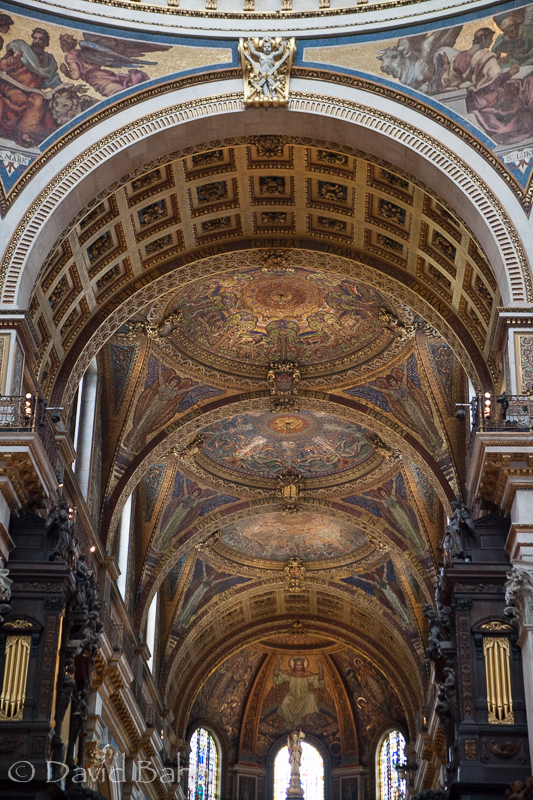
    Interior of St. Paul's Cathedral - London, England
    Interior of St. Paul’s Cathedral – London, England

    A friend of mine was talking about the increasing clarity of mission and vision he was working toward in the church he served. As with most  churches, this was a long and sometimes-difficult and challenging process. But it was coming to pass, and he was seeing the blessings and challenges unfold in the process. It meant that certain ministries were changed, others were challenged, still others were abandoned. His comment: “Well, clarity has consequences.”

    When Paul was speaking to the people on Mars Hill, he spoke about how they were religious people – with an array of gods and idols whom they acknowledged and served. He also reminded them of their own philosophers’ witness to the fact that there is a creator, and that we are his offspring. He remarked about their tribute to “the unknown god” and then proceeded to tell them of this God who had made himself known in Jesus Christ.

    All was going well until the clarity of God’s revelation in Jesus included the message of the resurrection. In this case, clarity had the consequence of pushing some of the people away. Those who were too smart for such fairy tales rejected Paul outright. Others struggled with the idea. When God’s true identity comes into focus, and the fullness of the Gospel message, one is led to that “cut bait or fish” moment. Am I just a religious person, interested in spiritual things? Or am I willing to embrace the fullness of God’s revelation in Jesus Christ: his birth, life, miracles, teachings, death, resurrection and second coming?

    Is that a question you need to ask yourself today?

  • Acts 17:10-12

    The brothers immediately sent Paul and Silas away by night to Berea, and when they arrived they went into the Jewish synagogue. 11 Now these Jews were more noble than those in Thessalonica; they received the word with all eagerness, examining the Scriptures daily to see if these things were so. 12 Many of them therefore believed, with not a few Greek women of high standing as well as men.

    20130625-0170

    P.T. Barnum is reported to have said, “There’s a sucker born every minute.” According to Wikipedia, however, it was probably said by David Hannum, criticizing Barnum and his customers. Some would lay that also at the feet of those who believe the story of Christmas, and Easter, as well as those of Jesus’ miracles and many of his teachings. Atheists.org mocks Christians and Christmas celebrations, putting it in the same category as Santa and the Easter Bunny. Those who reject the truth of God’s word and deny God’s existence or their accountability to him consider those of us to believe in God to be misguided at best if not foolish or deceptive.

    But the greater cause of foolishness is advanced by those who will not examine the word carefully to see what God actually has revealed and what his claims on us actually are. Many will dismiss God because to believe in him would cause a major shift in their priorities and lifestyle. Others will ignore God because it causes them to feel weak and dependent. But a careful examination of the word of God would lead us farther than a mere outward change of lifestyle or priorities. It takes us deeper than an awareness of our dependence on God for daily bread.

    A deep reading of God’s word will reveal that his plan for the world was laid into motion from the before the dawn of time. His word reveals that his intent is for us to experience his goodness and love to the praise of his grace. His delight is to reveal his love in his Son, his power in Jesus’ resurrection, and his grace in the work of the Holy Spirit in the hearts of people.

    The most foolish and misguided thing we can do is to dismiss the claims of God’s people. Second to that is to follow blindly those who have led us previously without examining what they say against the word of God in the Old and New Testaments. What a joy to discover the true message of God as we look to the word and take on the more noble way of humble faith and truth revealed in the Bible.

    What is God saying to you today in his word? Will you embrace that truth and follow his call?

    Acts 17:10-21

    The brothers immediately sent Paul and Silas away by night to Berea, and when they arrived they went into the Jewish synagogue. 11 Now these Jews were more noble than those in Thessalonica; they received the word with all eagerness, examining the Scriptures daily to see if these things were so. 12 Many of them therefore believed, with not a few Greek women of high standing as well as men. 13 But when the Jews from Thessalonica learned that the word of God was proclaimed by Paul at Berea also, they came there too, agitating and stirring up the crowds.14 Then the brothers immediately sent Paul off on his way to the sea, but Silas and Timothy remained there.15 Those who conducted Paul brought him as far as Athens, and after receiving a command for Silas and Timothy to come to him as soon as possible, they departed.

    16 Now while Paul was waiting for them at Athens, his spirit was provoked within him as he saw that the city was full of idols. 17 So he reasoned in the synagogue with the Jews and the devout persons, and in the marketplace every day with those who happened to be there. 18 Some of the Epicurean and Stoic philosophers also conversed with him. And some said, “What does this babbler wish to say?” Others said, “He seems to be a preacher of foreign divinities”—because he was preaching Jesus and the resurrection. 19 And they took him and brought him to the Areopagus, saying, “May we know what this new teaching is that you are presenting? 20 For you bring some strange things to our ears. We wish to know therefore what these things mean.” 21 Now all the Athenians and the foreigners who lived there would spend their time in nothing except telling or hearing something new.

  • Acts 16:25-40

    About midnight Paul and Silas were praying and singing hymns to God, and the prisoners were listening to them,26 and suddenly there was a great earthquake, so that the foundations of the prison were shaken. And immediatelyall the doors were opened, and everyone’s bonds were unfastened. 27 When the jailer woke and saw that the prison doors were open, he drew his sword and was about to kill himself, supposing that the prisoners had escaped. 28 But Paul cried with a loud voice, “Do not harm yourself, for we are all here.” 29 And the jailer called for lights and rushed in, and trembling with fear he fell down before Paul and Silas. 30 Then he brought them out and said, “Sirs,what must I do to be saved?” 31 And they said, “Believe in the Lord Jesus, and you will be saved, you and your household.” 32 And they spoke the word of the Lord to him and to all who were in his house. 33 And he took themthe same hour of the night and washed their wounds; and he was baptized at once, he and all his family. 34 Then he brought them up into his house and set food before them. And he rejoiced along with his entire household that he had believed in God.

    35 But when it was day, the magistrates sent the police, saying, “Let those men go.” 36 And the jailer reported these words to Paul, saying, “The magistrates have sent to let you go. Therefore come out now and go in peace.” 37 But Paul said to them, “They have beaten us publicly, uncondemned, men who are Roman citizens, and have thrown us into prison; and do they now throw us out secretly? No! Let them come themselves and take us out.” 38 The police reported these words to the magistrates, and they were afraid when they heard that they were Roman citizens.39 So they came and apologized to them. And they took them out and asked them to leave the city. 40 So they went out of the prison and visited Lydia. And when they had seen the brothers, they encouraged them and departed.

    20120720-9991

    Previously, when Peter had been imprisoned, God sent an an angel to release him. The escape was so remarkable that those who had been praying for him didn’t even believe at first he was free – though he was standing outside their door (Acts 12:6-19). On this occasion, however, an earthquake  causes the doors to open and bonds to be unfastened. In the case of the previous escape of Peter, the jailers were killed. So naturally when the Philippian jailer sees the doors open he was ready to take his own life – believing that would be less traumatic than answering to his superiors and enduring the grave terror of death at their hands.

    This time, however, the prisoners are all present and accounted for. Paul intervenes and tells the jailer not to take his own life. For some reason he had stayed and convinced the others also to stay in prison rather than try to escape. I’m inclined to believe that Paul knew what had happened to the jailers in the case of Peter’s escape, had considered that a relatively innocent man would lose his life if they escaped, and had determined that there was a greater opportunity for the sake of the gospel if they stayed, rather than escaping. Paul would leverage any opportunity to call people to repent and believe.

    On this occasion the Philippian jailer and his family would be the first to be saved. He and all his family were baptized, and great joy came into their lives. But, as they say on the TV commercials, “Wait…there’s more!” In this case Paul will make a point of their unjust treatment and demand an apology and a personal escort out of the prison. This is not the only time Paul will use his Roman citizenship for the sake of his Gospel mission. But more important than using his citizenship, he uses an act of humility and kindness to advance the Gospel message.

    Working faith in the hearts of others is the work of the Holy Spirit. No one can cause another to believe – no matter how kind or perfectly he or she may share the Good News of Jesus or witness to his work in their life. But God does use people’s acts of kindness, sacrifice, and faithfulness to advance his Kingdom. God uses people to reach people with the Gospel message.

    It’s not likely that you or I will be put into prison for preaching Christ (Lord, have mercy on American Pastor Saeed Abedini who is imprisoned in Iran!). But there may be times when we go the extra mile or give greater grace to others as testimony to the goodness and grace of God. Who knows how God might use that for the sake of the Gospel. Certainly, if we have such an opportunity we would delight be a part of his work in the life of another. That might even make a difference in how we view our personal injustices and difficulties.