David Bahn – Reflections

Light from the Word and through the lens

  • “Brothers, I may say to you with confidence about the patriarch David that he both died and was buried, and his tomb is with us to this day. 30 Being therefore a prophet, and knowing that God had sworn with an oath to him that he would set one of his descendants on his throne, 31 he foresaw and spoke about the resurrection of the Christ, that he was not abandoned to Hades, nor did his flesh see corruption.32 This Jesus God raised up, and of that we all are witnesses. 33 Being therefore exalted at the right hand of God, and having received from the Father the promise of the Holy Spirit, he has poured out this that you yourselves are seeing and hearing.34 For David did not ascend into the heavens, but he himself says,

    “‘The Lord said to my Lord,
    “Sit at my right hand,
    35     until I make your enemies your footstool.”’

    36 Let all the house of Israel therefore know for certain that God has made him both Lord and Christ, this Jesus whom you crucified.” – Acts 2:29-36

    20170429-DSC06307
    This calla lily is from my back yard photo safari. I am intrigued by the pointed petal’s end, and it’s elegant shape. Photo taken April 2017.

    When Ronald Reagan was shot (March 30, 1981), chaos ensued at the White House. Then Secretary of State Alexander Haig, Jr. asserted himself with his comment, “I’m in charge here.” Perhaps in the moment he was the highest ranking person in the room, so technically he would have been in charge at that moment in that confined space. But he was not next in line in the order of authority. That would have been the Vice President, George H.W. Bush. Haig’s comment is seen today as a PR faux pas. It’s even studied and has it’s own website!

    Throughout history many people have taken charge – of fiefdoms, kingdoms, countries, and movements. From Stalin, to Hitler, to Mao, to Kim, Pol Pot, Amin, the list goes on, people have bullied their way onto the world stage. In Jesus’ day the coup was carried off by an unholy alliance between Rome and Jerusalem. High Priests and a Roman governor conspired to undercut God in his proper rule and reign over all things by crucifying the Lord and Christ, Jesus of Nazareth – who is king of all.

    But all their efforts came to nothing when on the third day after his crucifixion Jesus rose from the dead and after 40 days Jesus ascended into heaven. Seated at the right hand of God he is Lord and Christ. He is above all powers, authorities, rulers, kings and all people – from the most faithful, meek, and humble to the hardest, most ruthless, evil and godless dictator. One day the enemies of Christ will be a footstool for his feet. He will be exalted over all in the end.

    That truth, along with the account of Jesus’ life, suffering, death, and resurrection help us to understand what’s happening all around us today. We are each and all under the rule of Christ. Now it is his rule of grace. In his grace, he causes rain to fall on the just and the unjust alike. In his grace he does not smite the sinner every time he sins. In his grace he is working even the most evil events of life to the good of his purpose and blessing of those who love him.

    There is much comfort here, knowing that Jesus rules in the hearts and minds of those who love and believe in him. It is comforting also to know that he desires to have such rule in the heart of every woman and man.

    There will be a day when evil will no longer be allowed to reign over the affairs of man. That will be a welcome day for those who seek the rule and reign of Christ each day. But to get there we must deal with these final words of Peter here: “whom you crucified.” Ugh. That calls for repentance. And to that we will turn – as far as this blog is concerned – on Monday. In the mean time we are all called upon to repent each day, believing Jesus’ promises and embracing his forgiveness. In that repentance and faith we can rejoice that Jesus is in charge here. And well he is.


  • “Men of Israel, hear these words: Jesus of Nazareth, a man attested to you by God with mighty works and wonders and signs that God did through him in your midst, as you yourselves know— 23 this Jesus, delivered up according to the definite plan and foreknowledge of God, you crucified and killed by the hands of lawless men.24 God raised him up, loosing the pangs of death, because it was not possible for him to be held by it. 25 For David says concerning him,

    “‘I saw the Lord always before me,
        for he is at my right hand that I may not be shaken;
    26 therefore my heart was glad, and my tongue rejoiced;
        my flesh also will dwell in hope.
    27 For you will not abandon my soul to Hades,
        or let your Holy One see corruption.
    28 You have made known to me the paths of life;
        you will make me full of gladness with your presence.’ – Acts 2:22-28

    20170429-DSC06332
    Fourth of the backyard photo safari images of these beautiful day lilies | Photo taken April 2017

    What do you think of Jesus? It’s a different question than, “What do you think of God?” Different from, “What do you think of Christ?” When you ask someone what they think of Jesus the issue gets very clear. It becomes personal. It takes on new and deeper dimensions. Answering the question of, “What do you think of Jesus?” requires some clarity and vulnerability.

    Anyone can say, “I believe in God.” That can be a good confession. But it’s not the same as saying, “I believe in Jesus.” It’s not even the same as saying, “I believe in God the Father, Son, and Holy Spirit.” Another good confession and worthy of any confessing Christian. Not to diminish that confession at all, there is still something more pointed, direct, and telling when we say, “I believe in Jesus.”

    I believe in Jesus who is the Son of God – David’s Lord and mine. I believe in Jesus who was crucified, buried and raised from the dead. I believe in Jesus who sits at God’s right hand with his enemies as a footstool under his feet. I believe in Jesus who will come again on the Great Last Day and bring all who are his own into the heavenly realms of joy, life, celebration, and salvation.

    I believe in Jesus who is the outworking of God’s plan from eternity to redeem us lost and condemned people so that we could live under him in his rule and reign forever and ever. I believe in Jesus, and I am happy to take his name on my lips whenever I can: in thanksgiving, praise, prayer, and petition.

  • But Peter, standing with the eleven, lifted up his voice and addressed them: “Men of Judea and all who dwell in Jerusalem, let this be known to you, and give ear to my words. 15 For these people are not drunk, as you suppose, since it is only the third hour of the day. 16 But this is what was uttered through the prophet Joel:

    17 “‘And in the last days it shall be, God declares,
    that I will pour out my Spirit on all flesh,
    and your sons and your daughters shall prophesy,
        and your young men shall see visions,
        and your old men shall dream dreams;
    18 even on my male servants and female servants
        in those days I will pour out my Spirit, and they shall prophesy.
    19 And I will show wonders in the heavens above
        and signs on the earth below,
        blood, and fire, and vapor of smoke;
    20 the sun shall be turned to darkness
        and the moon to blood,
        before the day of the Lord comes, the great and magnificent day.
    21 And it shall come to pass that everyone who calls upon the name of the Lord shall be saved.’

    20170429-DSC06340
    The stamen of this day lily seem to reach toward God in praise. Photo taken in my back yard – April 2017

    For a period of time many years ago, and as our boys were in middle school and junior high, we were members of a country club. It was quite the bargain for a family of 6, with free tennis and swimming, and golf for me and one of our sons who liked the game – all at a cost of $75 per month. That affordable fee structure did not, however, prevent one of the members to make a big deal of being a MOTC (member of the club). If you were, you were something. If not, you had no standing in this particular man’s mind. He would even ask, “MOTC?” When I figured it out, I was happy say that I was. I gained instant credibility.

    But such an attitude has no place in the church. In fact the church is the least likely to be a place where one has to be a MOTC in order to have standing, to receive the gifts of God, or participate in the life of the church – or at least it should be. Paul even makes a point of this, saying, “For consider your calling, brothers: not many of you were wise according to worldly standards, not many were powerful, not many were of noble birth. But God chose what is foolish in the world to shame the wise; God chose what is weak in the world to shame the strong…” (1 Corinthians 1:26-27).

    If anything, it seems you have to be willing to disconnect yourself from any self-recommendations if you are to be part of the body of Christ. This is a self-leveling fellowship; none has a higher rank or right, or a deeper connection with God based on anything they have done or who they are. Jesus’ entire ministry was punctuated regularly with connections to the poor, sinners, prostitutes, and outcasts, bestowing on them his blessing of grace, love, healing, and hope.

    Peter is making this same point when he speaks of the breadth of the Holy Spirit’s work. Young men, old women, sons and daughters, male and female all were promised to receive the outpouring of the Holy Spirit. And then the kicker: “Everyone who calls on the name of the Lord shall be saved.”

    God has no interest in people’s club membership. He doesn’t care if you or I are MOTC’s. He desires that we worry less about our status as members of some club – no matter how good the deal is or important their values are. In the realm of God’s grace and love we all receive the same treatment. And to top it off, we have a message to share with one and all, “Whoever calls on the name of the Lord shall be saved.” What a great blessing to claim!

  • When the day of Pentecost arrived, they were all together in one place. And suddenly there came from heaven a sound like a mighty rushing wind, and it filled the entire house where they were sitting. And divided tongues as of fire appeared to them and rested[a] on each one of them. And they were all filled with the Holy Spirit and began to speak in other tongues as the Spirit gave them utterance.

    Now there were dwelling in Jerusalem Jews, devout men from every nation under heaven. And at this sound the multitude came together, and they were bewildered, because each one was hearing them speak in his own language. And they were amazed and astonished, saying, “Are not all these who are speaking Galileans?And how is it that we hear, each of us in his own native language? Parthians and Medes and Elamites and residents of Mesopotamia, Judea and Cappadocia, Pontus and Asia, 10 Phrygia and Pamphylia, Egypt and the parts of Libya belonging to Cyrene, and visitors from Rome, 11 both Jews and proselytes, Cretans and Arabians—we hear them telling in our own tongues the mighty works of God.” 12 And all were amazed and perplexed, saying to one another, “What does this mean?” 13 But others mocking said, “They are filled with new wine.” – Acts 2:1-13

    20170429-DSC06347
    From my backyard photo safari. Photo taken April 2017

    The issue of speaking in tongues has been an issue with which the church has deal – sometimes in greater degree than others. At this time, it seems to be a non-issue in most churches. On the other hand, however, we have here a bit of controversy about a legitimate expression of the phenomenon. The disciples are praying (again!), waiting for the fulfillment of Jesus’ promises: “You will be baptized with the Holy Spirit not many days from now.”, and “You will receive power when the Holy Spirit comes upon you…” (Acts 1:5, 8).

    Now comes the Holy Spirit – at the hight of one of the Jewish religious holidays. Pentecost would see Jerusalem swell from a population of 50,000 to as many as 300,000 people. People from all over (Parthians, Medes, Elamites, residents of Mesopotamia…) would find themselves there for the festivities. Then comes the outpouring of the Holy Spirit. Dramatically. Decisively. Disturbingly. What does this mean?

    We will hear Peter’s sermon, and see how he connects this event with the prophecies of Joel. That will come to us as we consider the remaining part of this account. For now, however, I am struck with the detractors who, upon seeing this unfold conclude that the disciples were fill with new wine.

    Their comment is meant as dismissive: they are drunk. They are not to be listened to. They are just jabbering. But look at what is actually happening. This is no babbling expression of verbal nonsense. People from all different places are hearing in their own tongues the mighty deeds of God. This is intelligible. This is not mere emotional overflow (sometimes appropriate, but not always edifying). This is God’s word to people he loves in a language they dream in: their heart language. This is not the work of new wine.

    Or is it? Jesus says that you don’t put new wine in old wineskins; new wine goes into new wineskins. And that’s exactly what is happening: the new wine of the Holy Spirit’s presence in the lives of God’s people is taking shape in the new wineskins of the nascent New Testament Church. This is new wine writ large. God is up to something new. Something more. Something remarkable. This is new wine but not to be dismissed.

  •  Then they returned to Jerusalem from the mount called Olivet, which is near Jerusalem, a Sabbath day’s journey away. 13 And when they had entered, they went up to the upper room, where they were staying, Peter and John and James and Andrew, Philip and Thomas, Bartholomew and Matthew, James the son of Alphaeus and Simon the Zealot and Judas the son of James. 14 All these with one accord were devoting themselves to prayer, together with the women and Mary the mother of Jesus, and his brothers.[c]

    15 In those days Peter stood up among the brothers (the company of persons was in all about 120) and said, 16 “Brothers, the Scripture had to be fulfilled, which the Holy Spirit spoke beforehand by the mouth of David concerning Judas, who became a guide to those who arrested Jesus. 17 For he was numbered among us and was allotted his share in this ministry.” 18 (Now this man acquired a field with the reward of his wickedness, and falling headlong he burst open in the middle and all his bowels gushed out. 19 And it became known to all the inhabitants of Jerusalem, so that the field was called in their own language Akeldama, that is, Field of Blood.)20 “For it is written in the Book of Psalms,

    “‘May his camp become desolate,
        and let there be no one to dwell in it’;

    and

    “‘Let another take his office.’

    21 So one of the men who have accompanied us during all the time that the Lord Jesus went in and out among us, 22 beginning from the baptism of John until the day when he was taken up from us—one of these men must become with us a witness to his resurrection.” 23 And they put forward two, Joseph called Barsabbas, who was also called Justus, and Matthias. 24 And they prayed and said, “You, Lord, who know the hearts of all, show which one of these two you have chosen 25 to take the place in this ministry and apostleship from which Judas turned aside to go to his own place.” 26 And they cast lots for them, and the lot fell on Matthias, and he was numbered with the eleven apostles.

    20170429-DSC06341
    Day lily in our back yard | Photo taken April 2017

    I am struck by how prayer bookends the events of this section of Acts. The disciples are gathered in the upper room praying as the scene unfolds. They join in prayer before choosing Matthias to join the eleven as one of the witnesses to the resurrection. The early church were pray-ers. They weren’t trying to make a name for themselves as dedicated pray-ers. They simply prayed. They sought God’s favor, guidance, help, and blessing.

    When we pray – especially together with others – we deepen our relationship within the body of Christ with each other. We acknowledge our need for God’s wisdom, help, guidance and strength. We witness to our humility and willingness to live in alignment with God’s will. When we pray we orient ourselves toward God and seek his presence in our lives.

    I notice also that the orientation toward prayer as well as the specific context of their prayers was based on the Word of God. They acknowledged that God’s revealed will was being worked out – even in Judas’ betrayal and final act of despair. They acknowledged that God’s Word also directed them to find a replacement. Prayer that flows from God’s Word is most certainly well-founded and rightly secured.

    If we are willing to offer our prayers in humility, faith, and from the context of God’s word and will, they will certainly be worthy of anyone’s amen.

  • In my former book, Theophilus, I wrote about all that Jesus began to do and to teach until the day he was taken up to heaven, after giving instructions through the Holy Spirit to the apostles he had chosen. After his suffering, he presented himself to them and gave many convincing proofs that he was alive. He appeared to them over a period of forty days and spoke about the kingdom of God. On one occasion, while he was eating with them, he gave them this command: “Do not leave Jerusalem, but wait for the gift my Father promised, which you have heard me speak about. For John baptized with[a] water, but in a few days you will be baptized with[b] the Holy Spirit.”

    Then they gathered around him and asked him, “Lord, are you at this time going to restore the kingdom to Israel?”

    He said to them: “It is not for you to know the times or dates the Father has set by his own authority. But you will receive power when the Holy Spirit comes on you; and you will be my witnesses in Jerusalem, and in all Judea and Samaria, and to the ends of the earth.”

    After he said this, he was taken up before their very eyes, and a cloud hid him from their sight.

    10 They were looking intently up into the sky as he was going, when suddenly two men dressed in white stood beside them. 11 “Men of Galilee,” they said, “why do you stand here looking into the sky? This same Jesus, who has been taken from you into heaven, will come back in the same way you have seen him go into heaven.” – Acts 1:1-11

    20170401-DSC06237
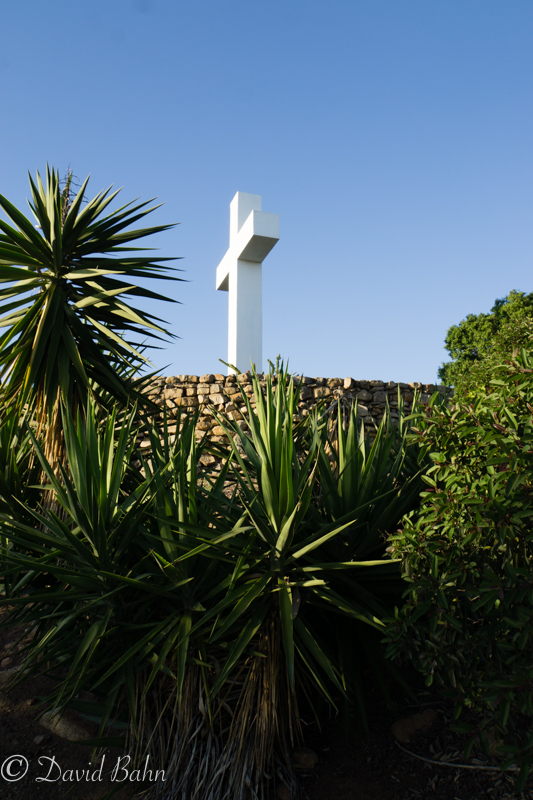
    Cross atop Mount Helix in La Mesa, CA | Photo taken April 2017

    I have been known in my day, and among my peers, as one who asks good questions. Even a college zoology professor said so when I spoke with him about my grade in his class. He actually said, “You ask good questions. You obviously  understand the concepts.” Sadly, however, that’s not all he said, and I ended up failing the course: I just couldn’t keep the details straight. You must keep the details straight in zoology!

    The question in the first part of this encounter between Jesus and his disciples is not a particularly good question. The disciples wonder, now? Is this the time “you are going to restore the kingdom to Israel?” Jesus redirected them, telling them in effect it was above their pay grade to know the times and seasons of such grand sweeps of history and kingdom movements. They were to be part of a great movement of God’s kingdom into the hearts and lives of many people.

    The best question in these few verses is from the angels. They ask the disciples – as they stand gazing into the sky upon Jesus’ ascension – a telling question, for often a question says as much about the questioner as the answer that is sought.

    They ask, “Why do you stand looking up into the sky?” I love this question! And I have an answer: “Because I’ve never seen anything like this before in my life.” It was an amazing moment for the disciples. But for the angels it was the end of a 33 year time of amazement. They had seen the King of the Universe take on human flesh. They had witness the Lord of Life die. They had experienced a vacated heavenly throne for 33 years. That was amazing. That was unusual. The Bible says that there are “things into which angels long to look” (1 Peter 1:12). They had three decades of looking into the mystery of the incarnation. Now – as Jesus ascends into heaven – they see the throne room of the universe as it should be in their minds. This is not abnormal to them. This is as it should be.

    Then they add, “This same Jesus, who has been taken from you into heaven, will come back in the same way you have seen him go into heaven.” The throne room is right, but the world is not right. There is work to be done. And so it goes: Jesus had told them that they would receive power from the Holy Spirit, and would be his witnesses in Jerusalem, Judea, Samaria, and to the ends of the earth. We, today, are the recipients of the blessing of that truth having been played out over the centuries since. We, today, are also recipients of that promise and commission: Jesus’ message is to be declared from our homes, neighborhoods, communities, states, nations, and to the ends of the earth.

    Jesus rules and reigns over all things. It is our responsibility to help people to see that truth, repent of their willful rebellion against his rule and reign, and rejoice in his  goodness and the salvation he has brought to us in the forgiveness of sins, and join us in living under him in his kingdom and serving him in eternal righteousness, innocence, and blessedness, until he comes again on the Great Last Day.

  • Jesus said to them, “This is what I told you while I was still with you: Everything must be fulfilled that is written about me in the Law of Moses, the Prophets and the Psalms.”

    45 Then he opened their minds so they could understand the Scriptures. 46 He told them, “This is what is written: The Messiah will suffer and rise from the dead on the third day, 47 and repentance for the forgiveness of sins will be preached in his name to all nations, beginning at Jerusalem. 48 You are witnesses of these things. 49 I am going to send you what my Father has promised; but stay in the city until you have been clothed with power from on high.”

    50 When he had led them out to the vicinity of Bethany, he lifted up his hands and blessed them. 51 While he was blessing them, he left them and was taken up into heaven. 52 Then they worshiped him and returned to Jerusalem with great joy. 53 And they stayed continually at the temple, praising God. – Luke 24:44-53

    20170331-DSC06173
    Fuchsia flower at The Flower Fields in Carlsbad, CA. Photo taken March 2017

    At physical therapy today one of the nurses encouraged me saying, “Only about a minute and a half.” Knowing that the end of the current physical challenge (some call it physical torture, or physical terrorism, but I won’t go that far) is in sight made the difference for me. I powered through those last 90 seconds. But boy was I relieved when it was over! What a cruel thing it would be, however, if he had only been egging me on, and that “a minute and a half” actually meant nothing at all, or if he was talking to someone else.

    Jesus is promising something far more important than the time remaining in a challenging PT time, and he is speaking to all believers. This is no joke, no false hope, nor is it intended for someone else. His word and promise is three fold.

    First he is reminding us that God’s word can be trusted. When God said, in the beginning, “Let there be light,” there was light. When God speaks it will come to be. God had spoken about Christ. Whatever was promised about him in the whole of the Old Testament must take place. God’s word can be trusted. See a promise? Believe it. Hear a call to repent? Repent and believe. Read a word of encouragement? Trust the One who spoke it. God’s word can be trusted.

    Second we learn that what Jesus did really matters. What he did mattered to the people of his day there in Jerusalem. It matters down through the ages, for beginning from Jerusalem the message of forgiveness of sins through his name has been proclaimed. You and I are the beneficiaries of Jesus’ ministry and the forgiveness of sins he has won for us and all believers.

    We also discover here that the gifts of God are carried along to us and brought to us by the Holy Spirit who Jesus promised would be sent. Those to whom the Holy Spirit comes are clothed with power from on high. We have a strength that goes beyond human endurance or physical strength.

    These truths are simple though profound. And we can be certain of them because God has said so.

    It is noteworthy to me, also, that while the disciples are relishing the good news of Jesus’ resurrection, and continually praising God in the temple this is not the final word on their actions and activities following Jesus’ ascension. Luke ends his gospel account here. But he takes up again with the actions of the disciples in the book of Acts. There will be persecutions, difficulties, controversies, and amazing stories of God’s power and good news at work in the lives of many people – all of whom were no longer in the temple.

    The temple is a good place to rejoice, praise God, and reflect on the truth of his word. But the work of the kingdom will inevitably take us from those beautiful places into a wild and challenging world. As we go, we can rely on the promises of his word, the power of the Holy Spirit, and rule and reign of Christ on high.

  • While they were still talking about this, Jesus himself stood among them and said to them, “Peace be with you.”

    37 They were startled and frightened, thinking they saw a ghost. 38 He said to them, “Why are you troubled, and why do doubts rise in your minds? 39 Look at my hands and my feet. It is I myself! Touch me and see; a ghost does not have flesh and bones, as you see I have.”

    40 When he had said this, he showed them his hands and feet. 41 And while they still did not believe it because of joy and amazement, he asked them, “Do you have anything here to eat?” 42 They gave him a piece of broiled fish, 43 and he took it and ate it in their presence. – Luke 23:36-43

    20170331-DSC06208
    One of the beautiful wild flowers at Anza-Borrego Desert State Park | April 2017.

    Sometimes we need a little extra assurance. We hear the good news: she said, “Yes.” Your boss tells you you’ve got a promotion. The test results come in: All Clear. Your book has been accepted to be published. When I hear news like that I just need a little assurance: You mean it? Is it really true? Did I hear you right? The implications of that bit of good news is so important and far reaching. It’s not just too good to be true. It’s so good that if it is true your life will be changed.

    So it is with Jesus’ resurrection. If it’s really true, everything changes. It’s not too good to be true, but it is so good we really do verify that it is true.

    Sometimes I want to tell folks, “I said it once. I don’t need to say it again.” This was especially true with our children growing up. And the promise of the resurrection of Jesus was taught throughout the Old Testament. He told his disciples that he was going to die, but be raised from the dead on several occasions throughout his ministry. You’d think he had said it enough.

    But the implications of the resurrection are so far reaching, and the stakes are so high that Jesus will once more prove his resurrection and appear to the disciples; showing this time yet another facet of his resurrection. He is real. He is corporal. He is not a figment of their imagination. He wants everyone to have no need for confusion and lingering questions. Jesus is alive. He lives. No doubt about it.

  • They got up and returned at once to Jerusalem. There they found the Eleven and those with them, assembled together 34 and saying, “It is true! The Lord has risen and has appeared to Simon.” 35 Then the two told what had happened on the way, and how Jesus was recognized by them when he broke the bread. – Luke 24:33-35

    20170401-DSC06268
    Sunset over the Pacific Ocean | April 2017

    Things that do not matter:

    • Whether or not George Washington chopped down a cherry tree
    • Whether or not John Henry really took on a steam engine in a tunnel-building contest and won
    • If Davie Crocket “killed himself a bear when he was only three” or never at all
    • That Martin Luther threw an ink well at the devil in his study, hitting the wall (or whether or not that ink spot is renewed by Wartburg caretakers every year to keep the legend going)

    Things that do matter:

    • That there was a George Washington who served as the first president of the United States of America
    • That Martin Luther did hide in the Wartburg castle where he translated the Old Testament into German
    • That Jesus Christ rose from the dead

    I have not been able to confirm a memory of Larry King saying that he would want to know if Jesus Christ really rose from the dead, saying, “That would matter to me.” But this is certainly true: It matters that Jesus Christ rose from the dead. The implications of that event touch today and eternity, and everything between.

    The discovery by the Emmaus road disciples of this truth sent them back into a dispirited and confused group of Jesus’ followers with the news that changed their present emotional state, future plans, and foundational religious and spiritual understanding. They could be happy now, rather than demoralized. Their whole future opened up before them: new and with ever-expanding opportunities. The foundations for their relationship with God, interactions with each other and focus toward those outside their fellowship were completely rebuilt.

    Life sprang new for them – with all its glorious possibilities, hopes, dreams, and joys. There would come challenges, great disappointments, and setbacks of many kinds, for one thing did not change: they still lived in a fallen world. But their view into the future was gloriously-reborn. Hope now ruled the day.

    Jesus’ resurrection is foundational to all we believe about God, how we worship him, and the hope we hold for the future. I am going to try to keep that in mind today.

  • When he was at the table with them, he took bread, gave thanks, broke it and began to give it to them. 31 Then their eyes were opened and they recognized him,and he disappeared from their sight. 32 They asked each other, “Were not our hearts burning within us while he talked with us on the road and opened the Scriptures to us?” – Luke 24:30-32

    20160924-Kleb-Woods-9976
    German New Testament and Psalms | Photo taken at Kleb Woods, September 2016

    I have had the privilege of sitting at the feet of several remarkably-gifted teachers through the years, who have opened up the Scriptures to me. Two in particular had a way of contextualizing the truth of God’s word in such a way that new insights, understandings, and possibilities began to emerge. My world got larger through their input. In fact so much of what they did was to reorient my perspective on the same truths that I have held sacred for decades. They really said nothing new, per se, but they helped me to see new ways to connect the truth of God’s word with life and ministry.

    One of these is Rev. Robert Newton, serving now as District President of the California/Nevada/Hawaii District of the LCMS. Robert was a year or two ahead of me at the seminary, served as a missionary in the Philippines and has always had a special place in my heart. He presented some great missional insights at a Texas District Convention several years ago which greatly helped shape my missional understanding and approach. I have seen him work in other contexts as well in ways that enlighten and deepen Christian truth.

    Mike Breen provided me with similar re-contextualizing ideas and insights at both a PLI conference and through his 3dm learning community experience. I said of him to a staff member before we attended the learning community that “he draws from a deep well.” In other words he has a deep reservoir of understanding, knowledge, and experience which inform his teaching. Her reaction – as soon as he began teaching us that day was to say, “I see what you mean about drawing from a deep well!”

    These are but two of the Scripture Openers who have enriched my understanding of God, mission, and life over the years. They did for me what Jesus did for the Emmaus road disciples. Jesus spoke with them about God, faith, hope, life, salvation – all centered in his own life, ministry, death, and resurrection. That did not close things in for them. They began to see the truths that have been waiting their fulfillment for centuries. He helped them to see new possibilities of purpose, identity, meaning, and hope that had been part of the longing of God’s people since the time of Abraham – and even before.

    Some people think of tying all of our religious hopes to Jesus alone as limiting and exclusivistic, narrow, and closed-minded. But embracing Jesus’ teachings, truth, and theology as the singular and exclusive point of truth is like discovering the North Star: It allows you to navigate all over the globe. It gives you a solid basis from which to embrace every thought, idea, and perspective without losing your way.

    When Jesus opens up the Scriptures they come alive. When that happens life springs anew, hope rises, and purpose abounds. That is the abundant life which Jesus came to bring us all, and it is a gift well worth exploring.