David Bahn – Reflections

Light from the Word and through the lens

  • Cain spoke to Abel his brother. And when they were in the field, Cain rose up against his brother Abel and killed him. Then the Lord said to Cain, “Where is Abel your brother?” He said, “I do not know; am I my brother’s keeper?” 10 And the Lord said, “What have you done? The voice of your brother’s blood is crying to me from the ground. – Genesis 4:8-10
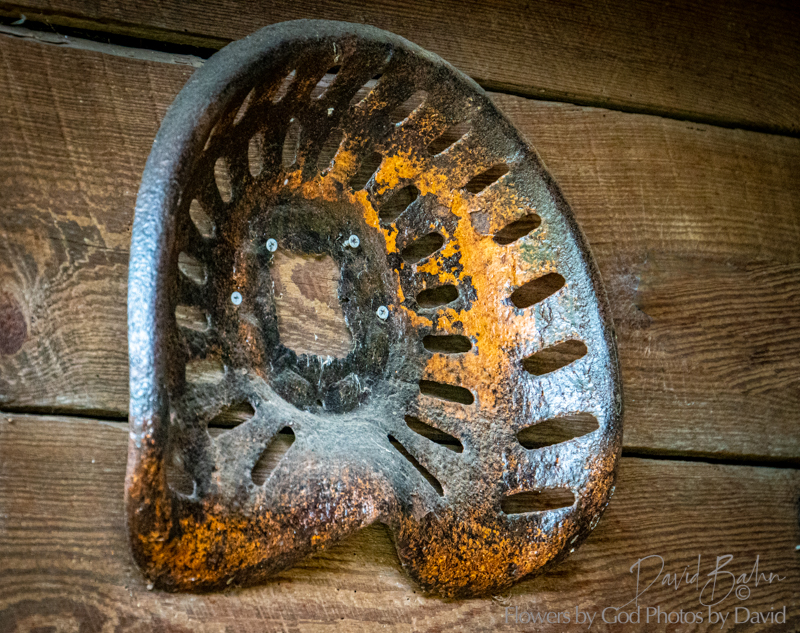
    Tractor Seat | Kleb Woods | February 2021

    How are you with blood? Does it gross you out? Do you watch when they poke your arm as you give blood? Or do you cringe and close your eyes as they draw blood for medical tests? Some people are very squeamish around even the thought of blood. Others take it in stride. 

    We have here the first mention of blood in the Bible. God hears the voice of Abel’s blood as it cries to God from the ground. The ground has opened up to receive Abel’s blood from the hand of Cain. Justice, retribution, and lament rise from this silent witness of evil’s doing. The writer of the book of Hebrews speaks of it this way:

    You have come to…Jesus, the mediator of a new covenant, and to the sprinkled blood that speaks a better word than the blood of Abel (Hebrews 12:22, 24). 

    Charles Spurgeon, the noted 19th century British preacher and evangelist, speaks of how Jesus’ blood is better than Abel’s, and identifies how this is so in four ways:

    1. In the first place, JESUS BLOOD SPEAKS BETTER THINGS IN GENERAL.
    2. Now we will enter the very heart of our text, while we remember that THE BLOOD OF JESUS SPEAKS BETTER THINGS TO GOD than the blood of Abel did. 
    3. Furthermore, JESUS BLOOD SPEAKS BETTER THINGS TO US IN OUR OWN HEARTS than the blood of Abel.
    4. Two or three words to close with. JESUS BLOOD, EVEN IN MY TEXT, SPEAKS BETTER THINGS THAN THAT OF ABEL.

    He develops each thought in the prosaic speech common to that era, and makes clear that the blood of Abel had some impact, and that its speech was a cry of and for righteous. But the blood of Jesus answers that cry and provides a righteousness that Abel called for. 

    This should certainly ring true in our hearts. My heart is broken over those who refuse and reject the idea of Jesus shedding his blood for me and for them. It is sad beyond measure that Jesus’ blood would be spilt and that anyone would despise that precious life-giving blood. It is sad that people I know reject out of hand the idea of God’s existence. Thus, this witness of Jesus’ blood is of no meaning to them – or so they think. But my heart delights in the message of Jesus’ blood: Shed for us all for the remission of sins. 

    Not only so, but Jesus’ blood speaks to God himself, and offers to God an atonement that balances the scales for all time and for all people. Jesus didn’t only live in a way that his good outweighed his bad. Nor did he merely never sin. He never did sin, and then willingly went to the cross to die for our sins. His blood speaks peace to God, justice and righteousness are established because Jesus was willing to die for us. And Jesus kept perfect faith in God during it all. 

    That is most remarkable to me: Jesus kept the faith even as he was forsaken by his Father in heaven. This speaks volumes to God. Abraham, the father of faith, believed in God and it was reckoned to him as righteousness. Jesus – who needed no reckoning, for he was purely and perfectly righteous from the core of his being – believed in God in the face of injustice and abandonment. His perfect faith, life and sacrifice reckons us righteous. Jesus’ blood speaks peace between God and man. Jesus’ blood speaks mercy to God. Jesus’ blood speaks perfect holiness. This speaks to me deeply. And I want to listen carefully to what he says in every aspect of his life and teaching.

    Click here to listen to this blogpost. Or click the link below to listen on Spotify…

    Cain spoke to Abel his brother. And when they were in the field, Cain rose up against his brother Abel and killed him. Then the Lord said to Cain, “Where is Abel your brother?” He said, “I do not know; am I my brother’s keeper?” 10 And the Lord said, “What have you done? The voice of your brother’s blood is crying to me from the ground. 11 And now you are cursed from the ground, which has opened its mouth to receive your brother’s blood from your hand. 12 When you work the ground, it shall no longer yield to you its strength. You shall be a fugitive and a wanderer on the earth.” 13 Cain said to the Lord, “My punishment is greater than I can bear. 14 Behold, you have driven me today away from the ground, and from your face I shall be hidden. I shall be a fugitive and a wanderer on the earth, and whoever finds me will kill me.” 15 Then the Lord said to him, “Not so! If anyone kills Cain, vengeance shall be taken on him sevenfold.” And the Lord put a mark on Cain, lest any who found him should attack him. 16 Then Cain went away from the presence of the Lord and settled in the land of Nod, east of Eden. – Genesis 4:8-16

  • The Lord said to Cain, “Where is Abel your brother?” He said, “I do not know; am I my brother’s keeper?” 10 And the Lord said, “What have you done? The voice of your brother’s blood is crying to me from the ground. – Genesis 4:9-10

    Two Tiny Flowers | Kleb Woods | February 2021

    Several years ago, I did a wedding for a fellow pastor. I didn’t know the couple but I was willing to help him out since he was not able to do it. Most often couples will provide an honorarium to the officiant for a wedding. This couple either did not think to do so, or they gave it to the church or other pastor. Whatever the case, I did not receive an honorarium. I’m not really upset about this. I bring it up, however, to illustrate an important point. When I am wronged (even in such a minor matter) I wish for recompense. Let’s just not talk about all the times I may have shortchanged someone else – unintentionally of course!

    I most often think of Karma in the informal sense. I don’t really believe in it, even the idea, necessarily, that “What goes around comes around.” And I certainly don’t subscribe to the Hindu belief that the sum of a person’s actions in this and previous states of existence decides one’s fate in future existences. But sometimes I do long for the bread I’ve cast on the water to return to me; that the good I do to others will be repaid me.

    But what about vengeance? On the one hand, I’m not inclined toward vengeance. I figure God will even things out in the end. And if someone has taken undue advantage of me he will bear the consequences – either naturally, or by God’s hand. In fact God promises as much: “Vengeance is mine. I will repay,” says the Lord (Deuteronomy 32:35; Romans 12:17-19).

    In the case of Cain’s sin, vengeance will come – although it will be always within the limits that God imposes. God even warns against anyone who would kill Cain, promising a seven-fold vengeance upon the one who would take that action. As Luther is famously to have said, “The devil is always God’s devil.” So too is every form of evil. It’s nearly impossible to fathom how God could allow a sin such as murder to be perpetrated by one human upon another, but Jesus is clear, God’s eye is on the sparrow. Surely he has every step of Satan in view. Furthermore, what appears to us as mere chance is not chance at all. “The lot is cast into the lap, but its every decision is from the Lord” (Proverbs 16:33). And while we may think that men and women of power control the world’s events, we must recall: “The king’s heart is in the hand of the LORD, like the rivers of water; He turns it wherever He wishes” (Psalm 21:1).

    As God directs the course of human life, we can seek his providential care and protection. And if the scales are not balanced this side of eternity – in our opinion – they will one day be seen to have been completely unbalanced in our favor by the blood of Jesus. He is “the mediator of a new covenant,” and the one who’s “sprinkled blood speaks a better word than the blood of Abel” (Hebrews 12:24). For Jesus’ blood speaks grace, mercy, forgiveness, and salvation. And any one of those is far better than karma could ever be.

    Click here to listen to this podcast, or click the link below to listen on Spotify.

    The Lord said to Cain, “Where is Abel your brother?” He said, “I do not know; am I my brother’s keeper?” 10 And the Lord said, “What have you done? The voice of your brother’s blood is crying to me from the ground. 11 And now you are cursed from the ground, which has opened its mouth to receive your brother’s blood from your hand. 12 When you work the ground, it shall no longer yield to you its strength. You shall be a fugitive and a wanderer on the earth.” 13 Cain said to the Lord, “My punishment is greater than I can bear. 14 Behold, you have driven me today away from the ground, and from your face I shall be hidden. I shall be a fugitive and a wanderer on the earth, and whoever finds me will kill me.” 15 Then the Lord said to him, “Not so! If anyone kills Cain, vengeance shall be taken on him sevenfold.” And the Lord put a mark on Cain, lest any who found him should attack him. 16 Then Cain went away from the presence of the Lord and settled in the land of Nod, east of Eden. – Genesis 4:8-16

  • Cain spoke to Abel his brother. And when they were in the field, Cain rose up against his brother Abel and killed him. Then the Lord said to Cain, “Where is Abel your brother?” He said, “I do not know; am I my brother’s keeper?”  – Genesis 4:8-9

    Tangled Vines | Kleb Woods | February 2021

    How do you answer this question? Are you your sister’s or brother’s keeper? Be careful, for you might fall into a trap unwittingly laid by Cain when God asked him about his brother. Rather than admitting his evil act, Cain tries to hold God in abeyance. How sadly silly and foolishly futile! God knew. He was inviting Cain to confess his sin, just as he had done with Adam and Eve after the Fall. But Cain was living out the legacy of Adam and Eve’s sin.

    Murder was the centerpiece of sin’s sad impact on the first family. But murder was not the first. It was preceded by Cain’s resentment toward God for God’s rejection of his offering. It was followed by his  unwillingness to confess his sin and seek God’s mercy and help in redeeming the situation he had caused. And it was confirmed by his arrogant denial of his proper relationship to his brother.

    Cain was not his brother’s keeper. God had not intended that. Nor does he intend that today. But he was his brother’s brother. And God intends that for us today. We don’t need to keep our brother or sister – except in severe cases of urgent need. But we are to honor and respect each other as brothers and sisters in our families, and possibly even more so our brothers and sisters in Christ. 

    Keeping implies taking undue responsibility. It means taking responsibility for someone’s actions – which is not ours to take. It usurps the rightful consequences or benefits of another’s actions. It undercuts the responsibility that others’ rightly have in any situation in which they exercise their will. It removes the freedom that another human should rightly have to deliberate, decide and do in any given situation. 

    But if I am my sister’s or my brother’s brother, I am responsible to her. I’m responsible to be truthful with him. I’m responsible to be gracious to him. I’m responsible to listen, speak, share, support, and even to ask for these considerations from her. I’m not keeping my sister or brother. I am relating to them in respectful consideration, love, and humility. 

    Jesus is the perfect example of this. He was willing to let Judas betray him – sad as that was for him and evil as it was on Judas’ part. Yet he was dedicated to his brother apostles – even to Peter who came back to Jesus in repentance in the end. He asked Peter, “Do you love me?” three times. He deeply desired Peter’s love. He also loved Peter and showed that in every encounter. 

    What a wonder and a blessing to be sisters and brothers of Jesus and to each other. Whatever mess we may have made of things, he stands ready to restore and sustain us when we come to him in the humility and confidence of true brotherhood. 

    Or click here to listen to this blog post. 

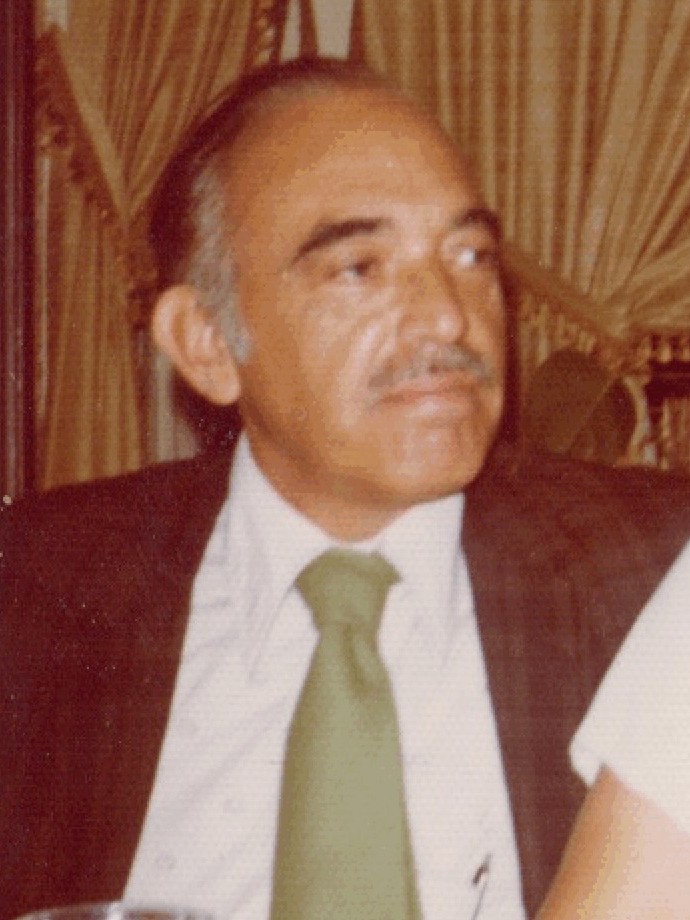
    Today would have been my father’s 100th birthday. He was a kind and gentle man, one of integrity and faith. He died 36 years ago. I wish I could visit with him today.  

    Cain spoke to Abel his brother. And when they were in the field, Cain rose up against his brother Abel and killed him. Then the Lord said to Cain, “Where is Abel your brother?” He said, “I do not know; am I my brother’s keeper?” 10 And the Lord said, “What have you done? The voice of your brother’s blood is crying to me from the ground. 11 And now you are cursed from the ground, which has opened its mouth to receive your brother’s blood from your hand. 12 When you work the ground, it shall no longer yield to you its strength. You shall be a fugitive and a wanderer on the earth.” 13 Cain said to the Lord, “My punishment is greater than I can bear. 14 Behold, you have driven me today away from the ground, and from your face I shall be hidden. I shall be a fugitive and a wanderer on the earth, and whoever finds me will kill me.” 15 Then the Lord said to him, “Not so! If anyone kills Cain, vengeance shall be taken on him sevenfold.” And the Lord put a mark on Cain, lest any who found him should attack him. 16 Then Cain went away from the presence of the Lord and settled in the land of Nod, east of Eden. – Genesis 4:8-16
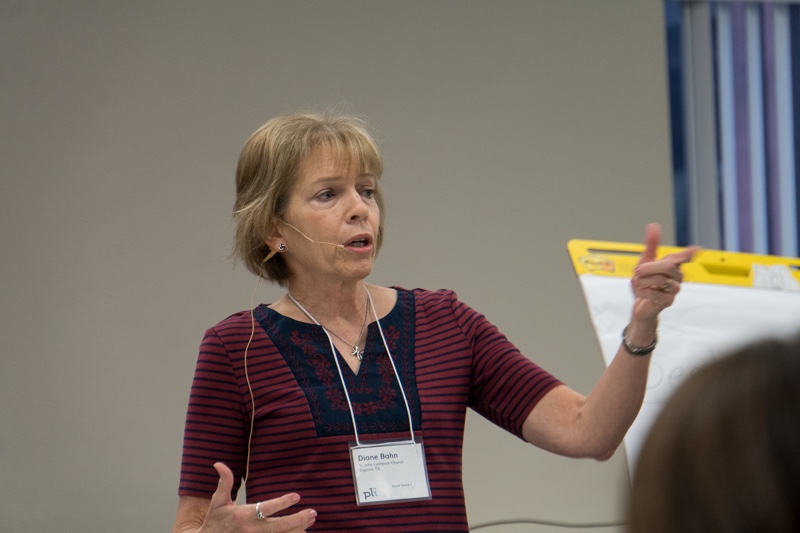
  • Diane retires from serving PLI at the end of this month (3/31/21). She has served there for 15 years, most recently as Leadership Essentials Team Leader. Her final immersion is this week at Resurrection Lutheran Church in Spring, and we celebrated her last night at a banquet in her honor. This letter, below, is my tribute to her. I’m thankful for her in so many ways, and I look forward to our continuing mission partnership in the years to come. Enjoy the letter!

    Dear Diane,

    WOW! The day has finally come, and what a blessing it is to have traveled here with you! When we celebrated my 25 year ministry anniversary, I gave you a model sailboat to remind you of your partnership in my ministry. I hope you consider me also to have been your partner in your ministry with PLI. I’ve been proud of you from the get-go, and seen first hand how dedicated you are to PLI’s mission.

    Whether it was as my partner in the inaugural class of 1999, or your work with the PIPs, or as leader of the Partner Ministry, or now as Leadership Essentials Content and Coaching Leader: you have dedicated yourself to faithful, diligent service to the cause. That’s all very nice, and very much who you are: dedicated, faithful, conscientious, and diligent.

    But that doesn’t really describe the impact you’ve had. How many times have I asked, “Who is he?,” and you’ve told me, “He was in the 2002 entry class. I got to know his wife through the partners program. They serve in so-and-so…” Or you’ll say, “Don’t you remember, we met them in Fort Collins. He and his wife were visiting that one time, and we talked to them during a break.” Or, “I got to know her through my beta huddle.” You connect with people. You have a heart for people. You love people. You bless people. You bless me! Thank you!

    I used to joke, “I’m Diane Bahn’s husband.” Well it wasn’t really a joke, it was a new identity I discovered when you began to have leadership responsibilities in PLI. Many more people knew you in that manner than knew me – even though we both presented at the various immersions and conferences. But you poured yourself into the lives of those people. You have a merciful and listening ear. You have an open heart. And you have a heart for God.

    We’ve been partners in God’s mission from day one. And PLI has given you the opportunity to impact people for the sake of the mission in so many ways. You have engaged new faces and new places from the US to the Philippines, to Kenya and soon, hopefully Tanzania. You meet church leaders and they become your friends! And when you post something about our friend who was battling COVID, church leaders from around the world reached out to you offering their prayers. You recognized that not only as a complement, but as evidence of God’s work in our hearts.

    You’ve engendered new hope and new courage in women and men. Sometimes by sharing our vulnerability, other times by asking a simple question, “Do you think you may be angry with God?” Most often by listening or by coaching, or by teaching. And what great pictures we have with newly-discovered brothers and sisters in Christ – both at home and around the world. We’re part of a wonderful family of God, and I know you deeply love them and they love you.

    Maybe you will have in mind a breakthrough moment, or perhaps several you can point to. The long pause after a thoughtful question. The couple coming to us after sharing some vulnerability in our “Broken Together” marriage. The moment when someone said, “I just realize I do have influence!” Or maybe when someone showed up in the literal and spiritual sense. You certainly do have the celebration part down. The post-immersion meals with toast-after-toast (Thanks, Jock and Gail, for that tradition!). The hugs and high-fives at the end of a SWAT presentation. The tears of joy at the Take Away/Leave Behind celebrations. The resolute awareness in the Stop/Start exercise when people recognize this is a defining moment.

    But the piece de la resistance has to be the confetti when Jen Hein was named to step into your role. So now we can celebrate you, and God’s work in and through you. I know you give God all the glory for his work in and through you. So do we. And we thank God for giving us you. We love you. I love you! God loves you. We celebrate you, Diane Bahn! Woo Hoo!
    Dave

  • Now Adam knew Eve his wife, and she conceived and bore Cain, saying, “I have gotten a man with the help of the Lord.” And again, she bore his brother Abel. Now Abel was a keeper of sheep, and Cain a worker of the ground. In the course of time Cain brought to the Lord an offering of the fruit of the ground, and Abel also brought of the firstborn of his flock and of their fat portions. And the Lord had regard for Abel and his offering, but for Cain and his offering he had no regard. So Cain was very angry, and his face fell. The Lord said to Cain, “Why are you angry, and why has your face fallen? If you do well, will you not be accepted? And if you do not do well, sin is crouching at the door. Its desire is contrary to you, but you must rule over it.” – Genesis 4:1-7

    Moss Covered Tree Roots | Kleb Woods | March 2021

    Many of us have gotten used to it. The masks (or lack of them). The social distancing. The limited seating. The dire warnings. The constant news. This virus pandemic has worn very thin. It tempts us to let down our guard. I, for one, am all too ready to ignore the warnings and get on with my life. I’ve been vaccinated. I’m good to go.

    Then a friend dies from the virus. Another dies. Then another. Still another is still recovering after 2 months in the hospital. This is no little thing. This virus is here for a while longer. It’s not giving up easily. It’s always crouching at the door. Ready to strike. Relentless.

    What about sin? I’ve been baptized. I believe in Jesus. I have the Holy Spirit. I’m sanctified, or at least I’m being sanctified. Maybe I’m done with sin. Maybe I can just go about my business. Surely this isn’t something I’ll have to battle the rest of my life. This is certainly going to get better. 

    But sin is all too much like the COVID virus. It’s not easily set aside. In fact, as long as we live on this side of eternity sin will cling. And even though we’ve been redeemed it still lurks. Even though we are saints, we are also still sinners. Even though we win battles against temptation, we also give in all too often. 

    The Bible’s witness to this is clear. We are saint and sinner. Both. And we live with that tension.

    For the desires of the flesh are against the Spirit, and the desires of the Spirit are against the flesh, for these are opposed to each other, to keep you from doing the things you want to do.  – Galatians 5:17

    As it is written: “None is righteous, no, not one; – Romans 3:10

    If we say we have no sin, we deceive ourselves, and the truth is not in us. – 1 John 1:8

    Therefore, if anyone is in Christ, he is a new creation. The old has passed away; behold, the new has come. – 2 Corinthians 5:17

    Cain was warned about the crouching menace that sin posed. Though we’ve not killed our brother, we must hear God’s warning ourselves. And take it to heart. 

    Therefore, since we are surrounded by so great a cloud of witnesses, let us also lay aside every weight, and sin which clings so closely, and let us run with endurance the race that is set before us, – Hebrews 12:1

    Thank God the Seed of the Woman has come. Thank God that when we confess our sins, God forgives us. Thank God that there is now therefore no condemnation for those who are in Christ Jesus. Thank God for the abiding presence of the Holy Spirit who keeps us in the faith and leads us again and again to Jesus and his cross. 

    May he also lead us to walk the paths of righteousness for his name’s sake. To honor him, and to be careful, lest this crouching menace have its way with us.

    You may listen to this on my David Bahn Reflections podcast.

    https://anchor.fm/david-bahn/episodes/Crouching-Menace-esqon6

  • Now Adam knew Eve his wife, and she conceived and bore Cain, saying, “I have gotten a man with the help of the Lord.” And again, she bore his brother Abel. Now Abel was a keeper of sheep, and Cain a worker of the ground. In the course of time Cain brought to the Lord an offering of the fruit of the ground, and Abel also brought of the firstborn of his flock and of their fat portions. And the Lord had regard for Abel and his offering, but for Cain and his offering he had no regard. So Cain was very angry, and his face fell. The Lord said to Cain, “Why are you angry, and why has your face fallen? If you do well, will you not be accepted? And if you do not do well, sin is crouching at the door. Its desire is contrary to you, but you must rule over it.” – Genesis 4:1-7

    Two Trees as One | Kleb Woods | March 2021

    Maybe you’ve gone through the worship wars. Most people think those wars started in the 1980s when contemporary Christian music began to be used in public worship services. Starting in the Charismatic movement, and leaking over into evangelical and even some Roman Catholic churches, these new forms of worship created quite a stir among the faithful. Some said that the old ways of worship with organs, chanting, smells and bells, was outdated and no longer meaningful. Others said those time tested liturgies and traditions are the only way of true worship. 

    This is nothing new. Jesus encountered the woman at the well in Samaria who brought up a worship war of her day. Jerusalem or on the mountain near Sychar? At Jacob’s well, or at the Temple? Even her question is predated by many centuries. For Cain and Abel had the first worship war. They each brought their offering to the Lord. God accepted Abel’s offering, but rejected Cain’s gifts. 

    The writer to the Hebrews tells us that this was not a matter of whether the gifts were from the soil or from the livestock. The issue was – and always is – one of faith (Hebrews 11:4). He got this from Jesus:

    “Woman, believe me, the hour is coming when neither on this mountain nor in Jerusalem will you worship the Father. 22 You worship what you do not know; we worship what we know, for salvation is from the Jews. 23 But the hour is coming, and is now here, when the true worshipers will worship the Father in spirit and truth, for the Father is seeking such people to worship him. 24 God is spirit, and those who worship him must worship in spirit and truth.” – John 4:21-24.

    Cain and Abel took the worship wars to war’s extreme. Cain took the war of envy, resentment, and self-righteousness to its ultimate end: death. 

    We must never make war over worship. There may be times we must speak up and offer even a strong objection. When Jesus’ name is missing, or used falsely, we must stand fast for faithfulness. When people make a mockery of true worship practices of any kind – contemporary or ancient – we must defend the truth. When people saunter nonchalantly into the presence of God, pretending that worship is a little thing, we must urge  reverent propriety, perhaps even fear and trembling. 

    But whatever form, and whichever gift is given, in faithful love for God, let us worship our God who has given us all we have, has redeemed us by his Son, and who has poured out his Holy Spirit so that we may hold to the true faith and invite others to join us and the angels in heaven in hymns of praise.

    Click the link below, give a listen, and let me know if you like the podcast format.

    https://anchor.fm/david-bahn

  • Now Adam knew Eve his wife, and she conceived and bore Cain, saying, “I have gotten a man with the help of the Lord.” And again, she bore his brother Abel. Now Abel was a keeper of sheep, and Cain a worker of the ground. In the course of time Cain brought to the Lord an offering of the fruit of the ground, and Abel also brought of the firstborn of his flock and of their fat portions. And the Lord had regard for Abel and his offering, but for Cain and his offering he had no regard. So Cain was very angry, and his face fell. The Lord said to Cain, “Why are you angry, and why has your face fallen? If you do well, will you not be accepted? And if you do not do well, sin is crouching at the door. Its desire is contrary to you, but you must rule over it.” – Genesis 4:1-7

    Green Signs of Hope | Kleb Woods | March 2021

    We were in the family sedan, driving past Arena Park in Cape Girardeau, Missouri. It was a warm summer night, so the windows were open, and I heard an exciting sound. Stock car races were being held at the park! “Can we go Dad? Please!” My mom and dad had surely planned this; I see it now. “Well, I guess so,” he replied. We slowed to turn into the entrance to the park. But then he said, “Oh, I guess not. You’re not allowed to go to the stock car races this summer, remember?” My mom nodded in agreement. My sister wasn’t too sad. I was really disappointed.

    But it was true. I had gotten into trouble, and the punishment included being banned from such things as stock car races that summer. My mom and dad had not forgotten. They would not let this pass. I was to learn a lesson. I’m not sure how long it took, but I do recall the lesson. 

    Adam and Eve are about to learn a lesson as well. They are apparently making their way quite nicely following the fall and banishment from the Garden. And now they will have children. Cain and then Abel are born. At Cain’s birth Eve expresses faith in one of two ways. The ESV translation has, “I have gotten a man with the help of the LORD.” The original is a bit more challenging: “I have gotten a man, the LORD.”

    If we choose the former translation we see Eve acknowledging God’s help in bringing a child into the world. If we go with the latter, we could understand Eve to be expecting that this child would be the One who would crush the head of the Serpent. Either way Eve expresses a faith relationship with God. 

    God had commanded them to be fruitful and multiply. They are beginning that process. But God had also said that the woman would bring forth children in pain. And I believe this refers to both the physical pain of childbirth and the pain the children bring to their parents.

    In this case her heart, and Adam’s, must surely have been broken in the varied and dissimilar ways these two young men brought their offerings to the Lord. They would feel the pain of God’s displeasure toward Cain’s offering. They would feel the pain of Cain’s resentment of Abel, and of God. 

    The consequences of sin are inescapable. Sometimes they are direct and immediate. Often they are systemic and indirect. Always they plague us. We may try to deny them. We may seek to outweigh them by our good deeds. We may be only broken and caught in a spiral of grief over them. We may try to wriggle out of them, sidestep and bypass them. To no avail. As long as we live in this fallen world sin’s consequences will stalk us. 

    But even so, the Lord does receive those who come to him in faith. He holds out hope of grace, and will sustain us with his mercy. And as surely as sin’s consequences plague us, the Holy Spirit bolsters us and carries us through. And we can live here and now in God’s grace and forever in his eternal favor. For Jesus has born the full consequences of our sin, redeeming us and promising eternal and abundant life. 

  • Then the Lord God said, “Behold, the man has become like one of us in knowing good and evil. Now, lest he reach out his hand and take also of the tree of life and eat, and live forever—” 23 therefore the Lord God sent him out from the garden of Eden to work the ground from which he was taken. 24 He drove out the man, and at the east of the garden of Eden he placed the cherubim and a flaming sword that turned every way to guard the way to the tree of life. – Genesis 3:22-24

    Little Cypress Creek Reserve Tree – Final | Cypress, Texas | February 2021

    Maybe you’ve heard the term Tough Love. Tough love is the this is going to hurt me more than it hurts you moments of parenthood. Some may take the tough part too far, but true tough love is not just tough. It’s loving as well. It’s the interventions we make – big and small – when we “bring up the bottom” to prevent someone from hitting the true bottom: death.

    In this case, however, the tough love of God actually brings about death. At the end of the account of Adam and Eve’s fall into sin, and God’s judgment on them for their disobedience, there comes this startling action. God bans them from the Garden and posts a flaming sword to prevent them from entering back into the Garden and taking from the tree of life. They would not live forever. 

    This might appear harsh. Pure judgment. No obvious love here. Just tough. Just just. No grace. God is always true to his word. And he had said that if they ate of the forbidden fruit they would surely die. Now he is keeping his word. If they were unable to get to the tree of life, they would die. It would be only a matter of time. If you’re in doubt about this, skip ahead to chapter five. An ominous refrain runs through the chapter: “and then he died.” Ugh. Death is at the door. There will be no escape.

    So how is this loving? Consider the state of their brokenness. Shame has overtaken them. Their marital relationship is now strained with cross-purposes of husband’s and wife’s warring desires. Childbirth will be painful. Work will be sweaty. Their sons will war with each other and one will kill the other.

    They are not inclined to go to God. They’ve tasted what it’s like to decide for themselves between good and evil. It will be very difficult not to become smug and self-righteous. Estranged from God. At war with each other. Facing challenges at every turn. Imagine an eternity in this fallen estate. Not just 125 years. Not 250. Methuselah’s 969 years is only the beginning (cf. Genesis 5:26). Eternity lasts a long time – especially in a fallen state. 

    This is tough love on God’s part. He won’t subject them to that. But remember the promise to Eve. Her seed will crush the head of the serpent. Recall God’s gift of better clothes than fig leaves, and think of the robe of righteousness we believers wear.

    This is harsh, but truly loving because God has a better plan for our eternity. It’s secured in Jesus. It’s stored up for all who believe. And it’s far better than the very best this life and world can ever offer. 

  • Psalm 14:1-3

    The fool says in his heart, “There is no God.”
    They are corrupt, they do abominable deeds;
    there is none who does good.
    The LORD looks down from heaven on the children of man,
    to see if there are any who understand,
    who seek after God.

    Psalm 44:1-3

    O God, we have heard with our ears,
    our fathers have told us,
    what deeds you performed in their days,
    in the days of old:
    you with your own hand drove out the nations,
    but them you planted;
    you afflicted the peoples,
    but them you set free;
    for not by their own sword did they win the land,
    nor did their own arm save them,
    but your right hand and your arm,
    and the light of your face,
    for you delighted in them.

    Psalm 74:12-17

    God my King is from of old,
    working salvation in the midst of the earth.
    You divided the sea by your might;
    you broke the heads of the sea monsters on the waters.
    You crushed the heads of Leviathan;
    you gave him as food for the creatures of the wilderness.
    You split open springs and brooks;
    you dried up ever-flowing streams.
    Yours is the day, yours also the night;
    you have established the heavenly lights and the sun.
    You have fixed all the boundaries of the earth;
    you have made summer and winter.

    Psalm 104:1-4

    Bless the LORD, O my soul!
    O LORD my God, you are very great!
    You are clothed with splendor and majesty,
    covering yourself with light as with a garment,
    stretching out the heavens like a tent.
    He lays the beams of his chambers on the waters;
    he makes the clouds his chariot;
    he rides on the wings of the wind;
    he makes his messengers winds,
    his ministers a flaming fire.

    Psalm 134

    Come, bless the LORD, all you servants of the LORD,
    who stand by night in the house of the LORD!
    Lift up your hands to the holy place
    and bless the LORD!
    May the LORD bless you from Zion,
    he who made heaven and earth!

  • The man called his wife’s name Eve, because she was the mother of all living. 21 And the Lord God made for Adam and for his wife garments of skins and clothed them. – Genesis 3:20-21

    Little Cypress Creek Preserve Tree #4 | Cypress, Texas | February 2021

    “You should have been at that concert. It was awesome. The sound was amazing. Their sound board was four feet long!” My buddy was talking about his experience at a Blood, Sweat, and Tears concert way back in my college days. Sir Winston Churchill is said to have coined the term in his famous “I have nothing to offer but blood, toil, tears and sweat” speech in 1940, when he warned the British people of the hardships to come in fighting WWII. 

    But the concept of blood, sweat and tears does not originate with Churchill. It dates back to the dawn of time when God spoke to Adam and Eve about the consequences of their sin. There would be tears. The woman would bear children in painful childbirth. There will be sweat. The man will eat bread by the sweat of his brow. But where is the blood?

    The biblical concept of blood is rich in meaning. “There is life in the blood,” says God (Leviticus 17:11). Only by the shedding of blood is there forgiveness (Hebrews 9:22). Even here, as God banishes Adam and Eve from the garden there is blood. For God will clothe Adam and Eve in garments of skin. This is far better than fig leaves. And it required a sacrifice. It required the shedding of blood.

    Some have been repulsed by the graphic nature of Mel Gibson’s The Passion of the Christ. It is a gory and graphic film that portrays the brutal treatment of Jesus head on. Some have called it anti-semitic. Some have gone so far as to say that Jesus’ most important work was not to suffer and die, but to teach love, peace, and mercy. 

    In truth, however, in the death of Jesus we have a perfect picture of love, peace, grace, and mercy – against the backdrop of justice, righteousness, holiness, and judgment. If Genesis 3 teaches us anything, it teaches us that there are grave consequences to sin. Sin kills. In this case, sin will necessitate the first recorded sacrifice.

    But this won’t be the last sacrifice. Nor the best. All this points to Jesus, the lamb of God who takes away the sin of the world. How did he do this? By shedding his blood. And at the End of All Things, the Lamb Who Was Slain will begin his reign over all. Every knee will bow to him who offered himself as the atoning sacrifice for the sins of the world. And we will join Adam and Eve and all who receive the gift of salvation in eternal praise of him who calls us into account, and clothes us with the righteousness of Christ. 

    He will wipe away every tear from our eyes. We will toil no more. And we will have washed our robes and made them white in the blood of the Lamb (cf. Revelation 7:14).

    To the woman he said,

    “I will surely multiply your pain in childbearing;
    in pain you shall bring forth children.
    Your desire shall be contrary to your husband,
    but he shall rule over you.”

    17 And to Adam he said,

    “Because you have listened to the voice of your wife
    and have eaten of the tree
    of which I commanded you,
    ‘You shall not eat of it,’
    cursed is the ground because of you;
    in pain you shall eat of it all the days of your life;
    18 thorns and thistles it shall bring forth for you;
    and you shall eat the plants of the field.
    19 By the sweat of your face
    you shall eat bread,
    till you return to the ground,
    for out of it you were taken;
    for you are dust,
    and to dust you shall return.”

    20 The man called his wife’s name Eve, because she was the mother of all living. 21 And the Lord God made for Adam and for his wife garments of skins and clothed them. – Genesis 3:16-21