In 1968 Jerry Snell opened a door in the hallway outside our first hour chemistry class. He invited me into what I discovered was a darkroom. Soon I was on the school newspaper and annual staff as a photographer. Later I learned that Jerry was a Lutheran who was planning to become a pastor. A few years later I was not only a Lutheran, but I was heading off to seminary to become a Lutheran pastor, too. Jerry followed a year later and served as a pastor in Missouri until his untimely heart attack and death. I thank God for Jerry and enjoy photography still today – not to mention rejoicing in having served as a Lutheran pastor in congregations in Utah, Colorado, Arkansas and Texas. I’ve retired now and serve part time as a Congregational Support Specialist for the Texas District of the LCMS. I also provide coaching and leadership training through various PLI cohorts and with individual congregations and organizations.
David Bahn is a follower of Jesus Christ, husband to Diane, father and grandfather. He is an avid amateur photographer. His photo website is “Flowers by God Photos by David” He also publishes a devotional blog DavidBahn-Reflections.com.
He and Diane live in Cypress Texas and enjoy visiting their grandchildren who live in the United States and Germany.
He graduated from Concordia Theological Seminary in 1979, and earned a Doctor of Ministry degree from Fuller Theological Seminary in 1991.
Diane, his wife, is now retired from PLI (PLIleadership.org). They have offered presentations on Marriage and Ministry Partnership, Leadership, Changing Your Congregation’s Culture, and Missional Living. They look are working with PLI International training pastors and wives of the ELVD Diocese of the Lutheran Church of Tanzania.
David’s personal mission statement is “Leading people to realize Jesus’ calling and plans for their lives.”
For your personal meditation and edification on this Lord’s Day
Psalm 27:1, 4
The Lord is my light and my salvation; whom shall I fear? The Lord is the stronghold of my life; of whom shall I be afraid?
One thing have I asked of the Lord, that will I seek after: that I may dwell in the house of the Lord all the days of my life, to gaze upon the beauty of the Lord and to inquire in his temple.
Psalm 57:1-3
Be merciful to me, O God, be merciful to me, for in you my soul takes refuge; in the shadow of your wings I will take refuge, till the storms of destruction pass by. 2 I cry out to God Most High, to God who fulfills his purpose for me. 3 He will send from heaven and save me; he will put to shame him who tramples on me. Selah God will send out his steadfast love and his faithfulness!
Psalm 87:1-3
On the holy mount stands the city he founded; 2 the Lordloves the gates of Zion more than all the dwelling places of Jacob. 3 Glorious things of you are spoken, O city of God. Selah
Psalm 117
Praise the Lord, all nations! Extol him, all peoples! 2 For great is his steadfast love toward us, and the faithfulness of the Lordendures forever. Praise the Lord!
Psalm 147:1-5, 10-11
Praise the Lord! For it is good to sing praises to our God; for it is pleasant,[a]and a song of praise is fitting. 2 The Lordbuilds up Jerusalem; he gathers the outcasts of Israel. 3 He heals the brokenhearted and binds up their wounds. 4 He determines the number of the stars; he gives to all of them their names. 5 Great is our Lord, and abundant in power; his understanding is beyond measure.
10 His delight is not in the strength of the horse, nor his pleasure in the legs of a man, 11 but the Lord takes pleasure in those who fear him, in those who hope in his steadfast love.
After Lot left, the Lord said to Abram, “Look north, south, east, and west of where you are. 15 I will give all the land you see to you and to your descendants for an indefinite period of time. 16 I will also give you as many descendants as the dust of the earth. If anyone could count the dust of the earth, then he could also count your descendants. 17 Go! Walk back and forth across the entire land because I will give it to you.” 18 So Abram moved his tents and went to live by the oak trees belonging to Mamre at Hebron. There he built an altar for the Lord. – Genesis 13:14-18
Great Smoky Mountains – Aptly Named! | April 2021
God tells Abram to do it. Nehemiah did it. David urged it. Jesus did it at least once. And Yogi Berra once commented on it: You can see a lot just by observing. The question is, “What will you see?”
I took a tour years ago of a large church in another state. The pastor showed me the remarkable and extensive facilities. He spoke of remodeling and renovation processes as well as future plans for expansion – including purchase of a public school building across the street from the church. It was amazing and inspiring.
As we were touring I noticed a stack of printed sheet packets. They were the minutes from a recent voters meeting so I took one. I was curious about how they chronicled their efforts and plans. Sitting in my airplane seat on the way home I took out the voters meeting minutes. And was I in for a surprise! Amid all the regular reports of various boards and committees was a paragraph(!) on whether to spend $400 on repairs to a boiler used to heat the building.
I don’t deny that being a question worth considering – even in sunny warm climes. But I’m not sure it’s worth a paragraph in the minutes – much less a (10 minute?) conversation in a voters meeting. There was scant little in the minutes about future renovation plans, ministry outreach programs, or evangelistic goals. You can see a lot just by observing!
To be fair the pastor was leading this church in a robust outreach mission. They were a great blessing in their community. His willingness to take me under his wing at that time was commendable. I was very new in ministry then, and needed to learn to see the “fields that are white for harvest” (cf. John 4:35).
God told Abram to survey the land because he had given it to him. It would be his. He would raise a family there. Their descendants would be as numerous as the dust of the earth. Take it all in. Don’t lose sight of what is I’ve promised you. Don’t ignore that promise. Don’t fail to plan for what I have in store for you.
This is a good reminder for us as well. That means we need to look to the promises of God for eternal life. That makes the book of Revelation so valuable. Not as a book about freaky visions and mysterious symbols. But as a book of promises: God’s ultimate victory. A city splendid in every way being let down from the heavens. The desire of God for all people to experience his gracious presence. The glory rightfully due to Jesus fully given.
Those things put into perspective all that we face on this earth. Keeping them in mind as we face temptation, tribulation, suffering, or discouragement will serve us well. For the day of God’s promises in Jesus will arrive. We don’t want to spend our time ignoring the needs and blessings of this life. Neither do we want to ignore the promises of God for the life of the world to come. Take a good look at those promises as you navigate the here and now.
Click here or on the podcast player below for an audio version of this blog post.
After Lot had gone, the Lord said to Abram, “Look as far as you can see in every direction—north and south, east and west.15 I am giving all this land, as far as you can see, to you and your descendants as a permanent possession.16 And I will give you so many descendants that, like the dust of the earth, they cannot be counted! 17Go and walk through the land in every direction, for I am giving it to you.”
18 So Abram moved his camp to Hebron and settled near the oak grove belonging to Mamre. There he built another altar to the Lord. – Genesis 13:14-18
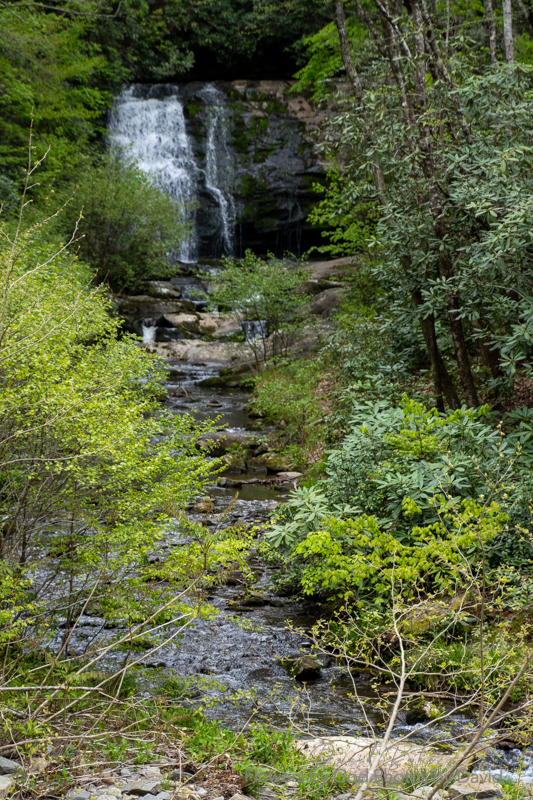
Waterfall | Smoky Mountain National Park | April 2021
“So you and God wasn’t enough.” These words from my Christian counselor sunk deeply into my heart. I was recounting an experience in which I felt overlooked and unappreciated. It seemed to me that I had gifts to give that were neither recognized nor utilized at that time. A fellow pastor was in the spotlight. I was in the shadows.
My counselor’s words brought an unexpected challenge to my self-pity and envy. They were needed as well. For there are plenty of times when a less-qualified person gets the promotion, the less-gifted musician gets the limelight, or the person who just happens to be standing there gets the call. Or she knows someone who reaches across all the other candidates to make her choice. Sometimes we’re left standing alone.
Abram and Lot split and Abram carries on. He’s not exactly alone. He has family, servants, and herdsmen. But this moment seems stark to me. After setting out from Ur, passing through this same area, and on into Egypt with Lot and his entourage, he now watches as Lot and his clan leave for the Jordan Valley. He will chart his own course. So will Abram. And I find the manner in which Abram does so to be instructive.
He does so, first of all, under the reminder of God’s gracious promise. God had chosen Abram, promised him many descendants, and a land as his future legacy. Now God repeats the promises: Land and descendants.
God also tells Abram to walk through the land. Take a look! There’ is much here for you to enjoy. God is generous, and gracious. Abram is to take count of that. It’s not something to be dismissed or forgotten.
In response Abram builds an altar to the Lord – a second one. This will be a place of worship and prayer. Abram recognizes God’s proper place and gives testimony to all of the presence of God and the propriety of worship and prayer.
For us, these same lessons apply. God has made gracious and generous promises to us. He has promised us eternal life in a new heaven and new earth. Jesus promises that when we pray in his name, God answers. He has done all this before we’ve done anything to gain his consideration. God truly is worthy of our worship, and ready to hear and answer our prayers. These gifts – and the evidence of his faithfulness – are worthy of our remembering, recounting, and deeply-thankful regard.
Click here or on the podcast player below for an audio version of this blog post.
Abram said to Lot, “Let’s not allow this conflict to come between us or our herdsmen. After all, we are close relatives!9 The whole countryside is open to you. Take your choice of any section of the land you want, and we will separate. If you want the land to the left, then I’ll take the land on the right. If you prefer the land on the right, then I’ll go to the left.”
10 Lot took a long look at the fertile plains of the Jordan Valley in the direction of Zoar. The whole area was well watered everywhere, like the garden of the Lord or the beautiful land of Egypt. (This was before the Lord destroyed Sodom and Gomorrah.) 11 Lot chose for himself the whole Jordan Valley to the east of them. He went there with his flocks and servants and parted company with his uncle Abram.12 So Abram settled in the land of Canaan, and Lot moved his tents to a place near Sodom and settled among the cities of the plain.13 But the people of this area were extremely wicked and constantly sinned against the Lord. – Genesis 13:8-13
Lavender Daisy | Smoky Mountain National Park | April 2021
Have you ever played the “One Divides, the Other Chooses” game? It’s not a game, really, but a means by which squabbles and claims of unfairness can be prevented. My mom would use that on my sister and me in our younger days. If I got to divide, I’d try to do it in such a way that the smaller piece actually looked more appealing than the larger one. I don’t think it worked very well.
Abram uses that tactic with Lot when it becomes clear that they would have to separate. He offered the division: right or left, this area or that. Then he asked Lot to choose. I don’t know if he was strategic in asking at the moment that the land that Lot chose appeared to be more desirable, or not. I don’t know whether Lot knew about the wickedness of Sodom and Gomorrah or not. But the choice was Lot’s. And Lot chose the Jordan valley. In all appearances the better choice; the more desirable location.
There is some foreshadowing here. Moses tells us that Sodom and Gomorra have not yet been destroyed by the Lord. But everything else about the land of the Jordan valley appears lush and green, desirable and attractive. This isn’t the case of the forbidden fruit in the garden: Good for food, pleasing to the eye, and desirable for wisdom (cf. Genesis 3). But it might serve as a reminder to look beyond the outward appearances when making life choices.
I’m thinking of everything from the car you buy to the home you live in. From the job you take to the church you attend. If you look only on the outward appearances you will be in danger of choosing the fools gold of the world’s false riches.
If you’re reading this account of Abram and Lot for the first time, you don’t know exactly what it means that Sodom and Gomorrah will be destroyed – apart from the fact that this is somehow related to the fact that they are described as extremely wicked and constantly sinning against the Lord. Did Abram know this? Was lot aware of it? Was the allure of the glitz of the ancient near-eastern equivalent of Sin City so powerful that Lot couldn’t resist? Might this be a time for him to pray, “Lead me not into temptation” rather than seeking out a place where temptation lurked nearby?
Diane and I walked through a casino once. Bells, lights, money pouring into the slot machines, dice being thrown on the table, the roulette pill clattering, conversations abuzz… I was fascinated. Diane was repulsed. Better her reaction than mine. And I’m thankful for it. For while I’m not the gambling sort, the lure of glitz and glamor can distract me. Lot may not have chosen his land based on that appeal. But in any case, he will need to be rescued by his Uncle Abe.
Meanwhile Abram journeys on. In faith. Willing to trust God with his future. Perhaps this is a moment of resolute humility after his debacle with Pharaoh and Sarai. Perhaps it’s a renewed conviction of God’s goodness. In any case, he offers the choice and will live within God’s protection and provision…for a time.
Click here, or on the podcast player below for an audio version of this blog post.
So Abram went up from Egypt, he and his wife and all that he had, and Lot with him, into the Negeb.
2 Now Abram was very rich in livestock, in silver, and in gold.3 And he journeyed on from the Negeb as far as Bethel to the place where his tent had been at the beginning, between Bethel and Ai,4 to the place where he had made an altar at the first. And there Abram called upon the name of the Lord.5 And Lot, who went with Abram, also had flocks and herds and tents,6 so that the land could not support both of them dwelling together; for their possessions were so great that they could not dwell together,7 and there was strife between the herdsmen of Abram’s livestock and the herdsmen of Lot’s livestock. At that time the Canaanites and the Perizzites were dwelling in the land.
8 Then Abram said to Lot, “Let there be no strife between you and me, and between your herdsmen and my herdsmen, for we are kinsmen.9 Is not the whole land before you? Separate yourself from me. If you take the left hand, then I will go to the right, or if you take the right hand, then I will go to the left.” – Genesis 13:1-9
Three Blossoms with Another in Waiting | Smoky Mountain National Park | April 2021
We were on our way to Cheyenne, Wyoming in 1977. Diane was 7 months pregnant. We had all of our worldly possessions in a U-Haul trailer, and were driving our 1972 Chevrolet Belair with a two-speed automatic transmission – not so affectionately known as a Power Slide transmission. Slide being the operative term. And did it slide. More and more. I felt the transmission slip as we sped along I-80, and as it slipped the knot in my stomach grew tighter and tighter. I had a wife and unborn baby to care for. We were in the middle of Iowa corn fields. It was not my happy place.
A kind passerby stopped and took us to the nearby town. We spent the night in an old hotel and ended up buying a new car(!) the next day. Several things had to come together for that to happen. We needed money to do so. That involved a call to the bank. We needed someone to co-sign our loan. That meant a call to my dad. We needed a willing seller. The local car dealer provided the car. We needed some knowledge of whether to repair or replace our car. The dealer’s expertise and my knowledge of cars sourced that for us. Diane’s physical health was important for us and our unborn son. Sleep and nourishment provided that. And we needed peace of heart throughout the process. We turned to God in prayer for that. All five capitals came into play during this experience: financial, relational, physical, intellectual, and spiritual.
All of these resources allow us to live, move, and breathe throughout our days. All of them are important. Many times we get them upside down, placing financial capital at the top of our list of important resources. Financial capital, however, is the least important. Spiritual resources are most important. Abram realizes this, and his life is defined by his relationship with God and his willingness to follow where God leads him.
In this case, we can easily see three capitals at play. He has much wealth and many possessions: That’s financial capital. He also has a relationship with Lot, his nephew, and his and Lot’s herdsmen have (broken) relationships with each other. And right in the middle of all this Abram calls on the name of the Lord. He grounds himself in his spiritual resources: God’s blessings, worship, and prayer – all by faith. There is surely some degree of intelligence and physical wellbeing that are at play here. But they are more unmentioned – even though surely factors.
The question for us today is whether we value the spiritual and relational resources God has entrusted to us. Do we see them and use them to honor and serve him? Do we apply our intellect to further God’s kingdom among us? Do we take good care of our bodies so that we can serve God well? Are our financial resources well-invested toward kingdom purposes?
All of these are gifts from God. All of them are for our good, our neighbor’s blessing and properly used for God’s honor. Abram was a man of great wealth. But he was rich in spiritual and relational, intellectual and physical resources too. All will be brought to bear as Abram, Lot, Sarai, and others invest themselves in God’s grand story of redemption and blessing.
Click here or on the podcast player below to listen to an audio version of this blog post.
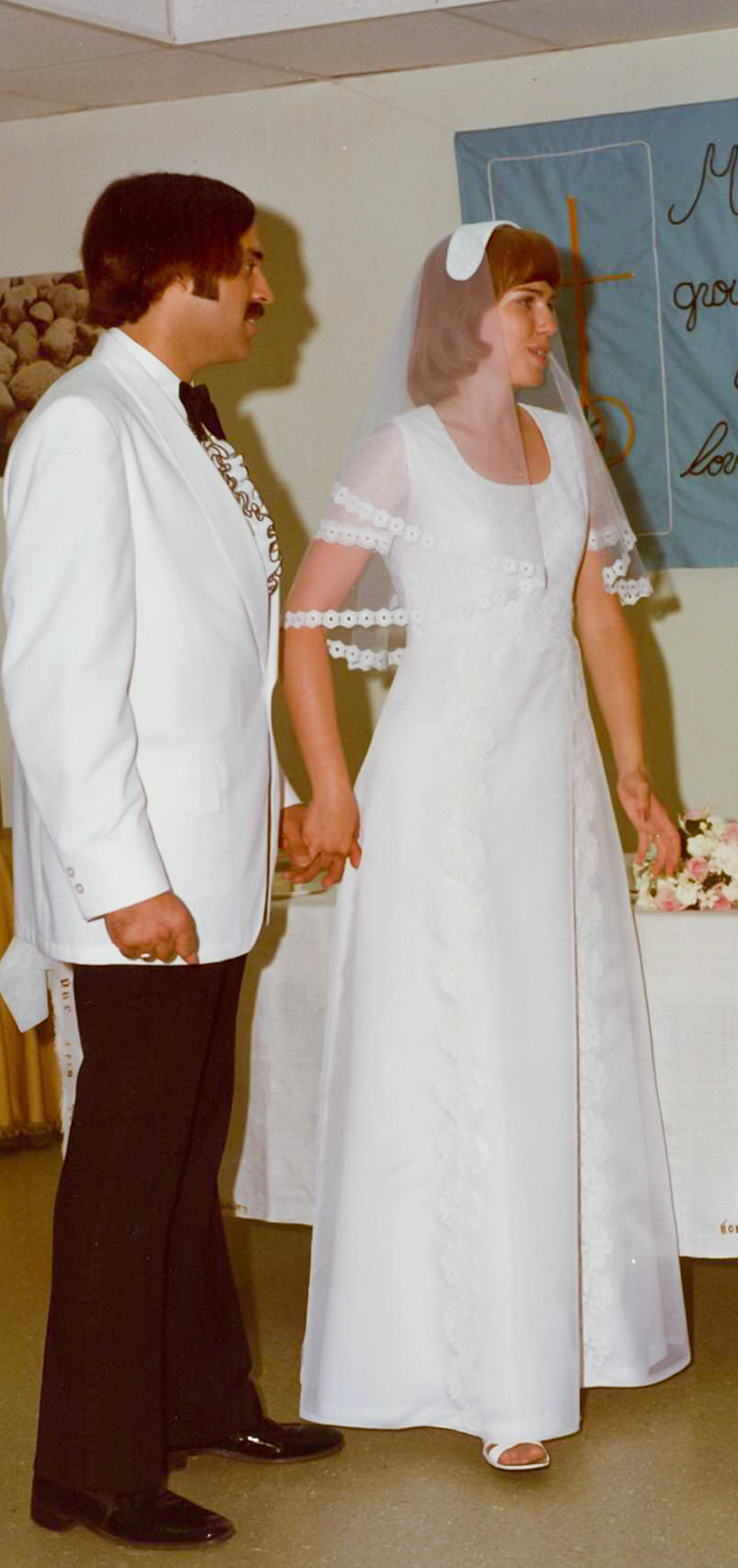
A Personal Note: Today is our 46th wedding anniversary. I thank God for Diane, a faithful woman of godly character. What an adventure we’ve been on for these years. I love you Diane!
Dave & Diane | Lutheran Chapel of Hope, Cape Girardeau, MO | June 21, 1975
So Abram went up from Egypt, he and his wife and all that he had, and Lot with him, into the Negeb.
2 Now Abram was very rich in livestock, in silver, and in gold.3 And he journeyed on from the Negeb as far as Bethel to the place where his tent had been at the beginning, between Bethel and Ai,4 to the place where he had made an altar at the first. And there Abram called upon the name of the Lord.5 And Lot, who went with Abram, also had flocks and herds and tents,6 so that the land could not support both of them dwelling together; for their possessions were so great that they could not dwell together,7 and there was strife between the herdsmen of Abram’s livestock and the herdsmen of Lot’s livestock. At that time the Canaanites and the Perizzites were dwelling in the land.
8 Then Abram said to Lot, “Let there be no strife between you and me, and between your herdsmen and my herdsmen, for we are kinsmen.9 Is not the whole land before you? Separate yourself from me. If you take the left hand, then I will go to the right, or if you take the right hand, then I will go to the left.” 10 And Lot lifted up his eyes and saw that the Jordan Valley was well watered everywhere like the garden of the Lord, like the land of Egypt, in the direction of Zoar. (This was before the Lord destroyed Sodom and Gomorrah.)11 So Lot chose for himself all the Jordan Valley, and Lot journeyed east. Thus they separated from each other.12 Abram settled in the land of Canaan, while Lot settled among the cities of the valley and moved his tent as far as Sodom.13 Now the men of Sodom were wicked, great sinners against the Lord. – Genesis 13:1-13
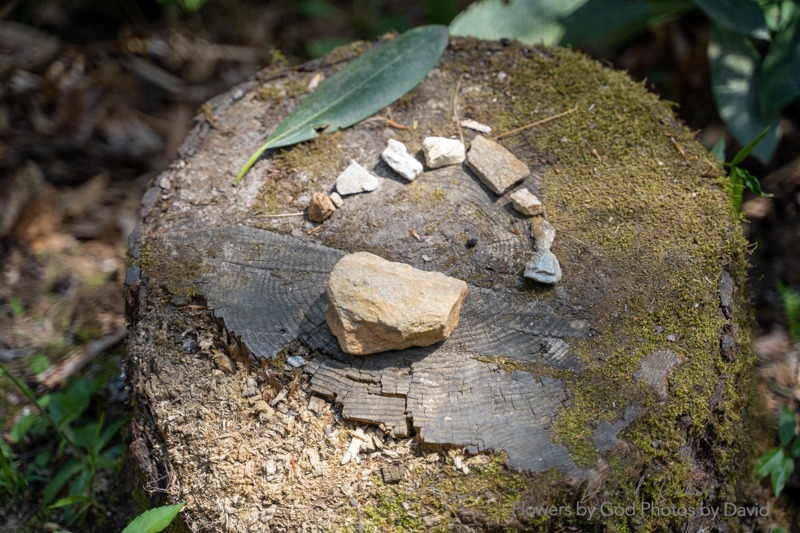
Message on a Stump | Smoky Mountain National Park | April 2021
A riddle: What is greater than God, More evil than the devil, The poor have it, The rich need it, And if you eat it, you’ll die? According to The Internet, 80% of kindergarteners answer this riddle correctly. The key is the first part of the question. Nothing is greater than God.
A question: What does Abram have that Lot needs, but may not even realize he needs? I’ll suggest either perspective or faith. Perhaps it is the perspective of faith. I don’t want to conjecture too much, but it seems clear that Lot had a good degree of financial wealth. Their possessions were so extensive that they could not live in the same area. Their possessions would consume all the resources of a single area of land.
They both had plenty. But Abram takes the lead and offers Lot the choice: This area or that? Left or right? Lot looks over the land, sees that the land of the Jordan was rich and fertile, and he chose that land. Abram journeys on, and settles in the land of Canaan.
Then comes the kicker: This is before the Lord had destroyed Sodom and Gomorrah. And, “the men of Sodom were wicked, great sinners against the Lord.” Ugh. Ominous foreshadowing here.
I’ve recently been working through the transition from the work of full time ministry to retirement, and now to a nascent potential encore career. I’ve also begun reading the book, The Uncommon Guide to Retirement, which deals with some of the issues I’ve faced. Most recently, Ric Edelman, a noted financial advisor has shared some keen observations about retirement on his radio program/podcast.
Both of these have pointed out that financial resources – though an important consideration – are but one of several considerations in making this transition. Much of what drives their concern is the fact that we are living longer. And people who retire today are living 25 or 30 years or more past retirement. Is this, then a 25 year vacation? Is there something more to this?
This is where the perspective of faith comes in. For by faith we recognize God’s part in our lives. We are not our own. We are his. And if we embrace the perspective of faith, issues of finance will take a second place to issues of relationships, spiritual wellbeing, and even our physical health. Abram has made a choice that signals an appreciation for these other concerns of life. They apply not only to people working through their retirement years, but to those who are making their way through the building years of life and every one in between.
Click here or on the podcast player below to listen to an audio version of this blog post.
For your personal edification and meditation on this Lord’s Day
Psalm 20:1-2 May the LORD answer you in the day of trouble! May the name of the God of Jacob protect you! May he send you help from the sanctuary and give you support from Zion!
Psalm 50:14-15 Offer to God a sacrifice of thanksgiving, and perform your vows to the Most High, and call upon me in the day of trouble; I will deliver you, and you shall glorify me.”
Psalm 80:1-3 Give ear, O Shepherd of Israel, you who lead Joseph like a flock. You who are enthroned upon the cherubim, shine forth. Before Ephraim and Benjamin and Manasseh, stir up your might and come to save us! Restore us, O God; let your face shine, that we may be saved!
Psalm 110 (One of the Messianic Psalms, speaking of Jesus who was to come 1000 years after King David, who wrote this Psalm) The LORD says to my Lord: “Sit at my right hand, until I make your enemies your footstool.” The LORD sends forth from Zion your mighty scepter. Rule in the midst of your enemies! Your people will offer themselves freely on the day of your power, in holy garments; from the womb of the morning, the dew of your youth will be yours. The LORD has sworn and will not change his mind, “You are a priest forever after the order of Melchizedek.” The Lord is at your right hand; he will shatter kings on the day of his wrath. He will execute judgment among the nations, filling them with corpses; he will shatter chiefs over the wide earth. He will drink from the brook by the way; therefore he will lift up his head.
Psalm 140:6-8 I say to the LORD, You are my God; give ear to the voice of my pleas for mercy, O LORD! O LORD, my Lord, the strength of my salvation, you have covered my head in the day of battle. Grant not, O LORD, the desires of the wicked; do not further their evil plot, or they will be exalted! Selah
Now there was a famine in the land; so Abram went down to Egypt to live there for a time, because the famine was severe in the land.11 It came about, when he was approaching Egypt, that he said to his wife Sarai, “See now, I know that you are a beautiful woman;12 and when the Egyptians see you, they will say, ‘This is his wife’; and they will kill me, but they will let you live.13 Please say that you are my sister so that it may go well for me because of you, and that <sup class="footnote" style="font-size: 0.625em; line-height: normal; position: relative; vertical-align: text-top; top: auto; display: inline;" data-fn="#fen-NASB-312j" data-link="[j]”>[j]I may live on account of you.” – Genesis 12:10-13
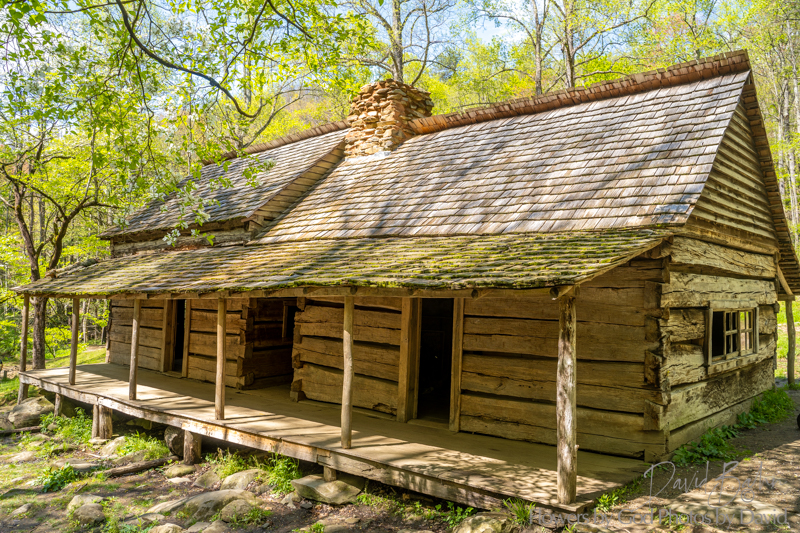
Historic Cabin | Smoky Mountain National Park | April 2021
Yes, I’m quoting from the musical Camelot again… This time, however, the reference is brief and filled with false bravado. Lancelot presents himself as the most godly man he knows. See below for the full lyrics. They’re priceless.
Several years ago in a couple’s Bible study, we heard of an encounter between a dangerous dragon and a chivalrous knight, who was protecting his damsel in distress. As he set off to slay the dragon, the damsel says something like, “No! Don’t use that sword. Take this poison. It will work so much better.” It struck pretty deeply in my heart: Being told how to rescue someone in distress might not be the most affirming experience – to put it mildly.
Contrast that, however, to this foolish idea of Abram. He tells Sarai to pass herself off as his sister to save his own skin. Seems he didn’t really care about Sarai’s welfare. Seems he didn’t really even have a long-range plan. If ever there was a time for the damsel to tell the knight what to do, and how to keep them safe, that would have been the time. Sarai doesn’t say anything. We have no idea what she thought. And Abram’s plans end up failing. Except Pharaoh does send them away – apparently safely – when the encounter is ended.
In a time of rampant blame-sharing, this doesn’t seem that unusual. Why did you do that Sarai? Abram told me to.
Does this remind you of anything?
To Eve in the Garden: What is this you have done? The serpent tempted me and I ate the fruit.
What is this that you have done, Adam? The woman you gave me gave me the fruit and I ate it.
Us in our day:
I can’t be held responsible for these poor financial decisions. I’ve never been taught about how to handle money.
I’m sorry you’re upset with me. I hope you get over it soon.
I can’t help it if I got the job by being more cunning than you.
What if we all just took responsibility for our own actions? What if we owned up to our failures and simply said, “I was wrong. I’m sorry. Please forgive me.” Such is the currency of God’s reign and rule. Truth and grace. Sin and contrition. Confession and forgiveness. Repentance and life.
We’re not told specifically that Abram or Sarai – or Pharaoh for that matter – ever repented. But the story does go on, and Abram will have other opportunities to blame or to take responsibility. Thankfully God is gracious and allows even sinners who blame others to come to repentance. And faith. And salvation. And life.
It all started from the foundation of eternity when God determined to redeem a world that had not yet been made, but would be taken captive by sin. But it all comes to fruition when we take responsibility for our own actions and seek God’s mercy. Given in Jesus. Sustained by the Holy Spirit.
Click here or on the podcast player below to listen to an audio version of this blog post.
The soul of a knight should be a thing remarkable, His heart and his mind as pure as morning dew. With a will and a self-restraint That’s the envy of ev’ry saint He could easily work a miracle or two. To love and desire he ought to be unsparkable, The ways of the flesh should offer no allure. But where in the world Is there in the world A man so untouched and pure? (C’est moi!)
C’est moi! C’est moi, I blush to disclose. I’m far too noble to lie. That man in whom These qualities bloom, C’est moi, c’est moi, ’tis I. I’ve never strayed From all I believe; I’m blessed with an iron will. Had I been made The partner of Eve, We’d be in Eden still. C’est moi! C’est moi! The angels have chose To fight their battles below, And here I stand, as pure as a pray’r, Incredibly clean, with virtue to spare, The godliest man I know! C’est moi!
When Abram entered Egypt, the Egyptians saw that the woman was very beautiful.15 And when the princes of Pharaoh saw her, they praised her to Pharaoh. And the woman was taken into Pharaoh’s house.16 And for her sake he dealt well with Abram; and he had sheep, oxen, male donkeys, male servants, female servants, female donkeys, and camels.
17 But the Lord afflicted Pharaoh and his house with great plagues because of Sarai, Abram’s wife.18 So Pharaoh called Abram and said, “What is this you have done to me? Why did you not tell me that she was your wife?19 Why did you say, ‘She is my sister,’ so that I took her for my wife? Now then, here is your wife; take her, and go.” 20 And Pharaoh gave men orders concerning him, and they sent him away with his wife and all that he had. – Genesis 12:14-20
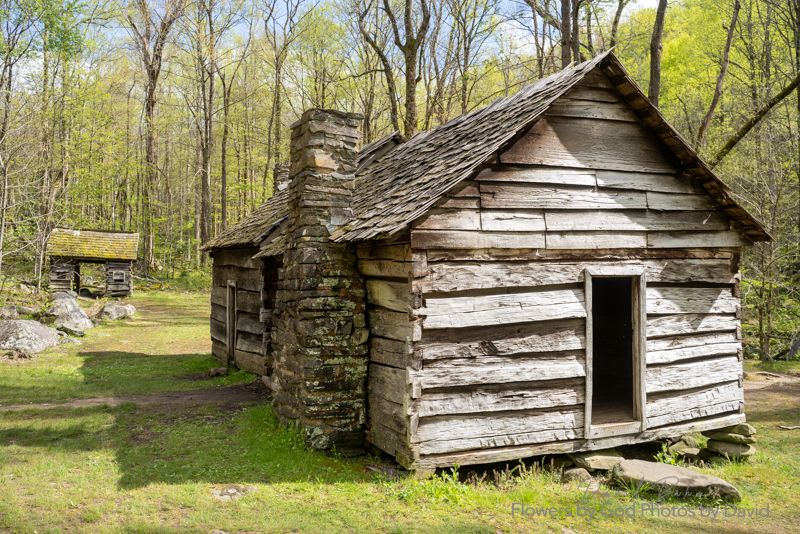
Historic Cabin | Roaring Fork Motor Nature Trail, Smoky Mountain National Park | April 2021
I’m a Camelot fan. From quoting Lancelot, “If I’d been made the partner of Eve, we’d be in Eden still!” [NOT!], to Arthur’s, If Ever I would leave you, to the title song, Camelot: I love the music. That might be related to the fact that I had the cassette tape many years ago and played it many times as I drove from Vernal, Utah to Rangely, Colorado – a 50 mile trip – serving that dual parish. It was my first call. When I think of this event in the life of Pharaoh, Sarai, and Abram, I thought of this one:
I wonder what the king is doing tonight? What merriment is the king pursuing tonight? The candles at the court, they never burned as bright. I wonder what the king is up to tonight? How goes the final hour As he sees the bridal bower Being regally and legally prepared? Well, I’ll tell you what the king is doing tonight: He’s scared! He’s scared!
Arthur realizes that Guinevere is a formidable woman. He may be king, and she may be the woman of his dreams, but he is king and must never show fear. Not to mention that he has some competition for Guinevere’s heart. So as he prepares for their wedding night he is afraid.
Pharaoh was not preparing for his wedding, but surely he was afraid as he and his whole household were experiencing the visitation of God’s wrath because of his and Sarai’s improper relationship. It seems that it was not so much a matter of being found out. Pharaoh does as Pharaoh pleases. It’s good to be king, after all. You answer to no one. Except to One. And the One True God will require an answer. From all of us.
So whether it is fear in the face of an upcoming wedding or the onset of illness that Pharaoh experiences: fear intrudes into all our lives. Whether we are king or vassal, boss or new hire, hero or rescued, we will all one day give an account to God.
This isn’t only about justice – which it certainly is. It’s not merely about proper acknowledgement of the One to whom we will all give an account – that day will come. But in the here and now – before that final Day of Accounting – it’s about God’s desire that we repent and embrace his reign and rule in faith and love. God doesn’t wipe out Abram, Sarai, and Pharaoh. He doesn’t abandon them in their folly. He brings illness to bring them to repentance.
Outwardly Pharaoh seems to repent. At least he brings an end to his relationship with Sarai. Abram and Sarai are outed and will continue their sojourn according to God’s calling and his good will. Whether that amounts to true repentance we’ll leave for God to determine.
We, however, can determine whether or not we will repent from the heart and seek God’s reign and rule in our lives. If we think this is a matter of surrender under duress, we might experience only part of his true reign and rule. For God’s purposes in calling and leading Abram and Sarai are profound and far-reaching. They will have a child of the promise. They will experience a miraculous birth. They will become the parents of the child of promise. And from that child will come – ultimately the 12 tribes of Israel. And from the tribe of Judah will come the Savior of the World.
God isn’t interested in mere outward compliance and solely fear-based surrender. God’s desire is for our faith. And Abram is the father of that faith. So whether from grave consequences, an encounter with soul-shaking need for mercy, a new glimpse of God’s glory, or a life-long experience of God’s grace, God deeply desires our hearts of fear, love, and faith. Jesus is the embodiment of that and the source of the grace needed so that we may fear, love, and trust in the One True King.
Click here or on the podcast player below to listen to an audio version of this blog post.
At that time a severe famine struck the land of Canaan, forcing Abram to go down to Egypt, where he lived as a foreigner.11 As he was approaching the border of Egypt, Abram said to his wife, Sarai, “Look, you are a very beautiful woman.12 When the Egyptians see you, they will say, ‘This is his wife. Let’s kill him; then we can have her!’13 So please tell them you are my sister. Then they will spare my life and treat me well because of their interest in you.”
17 But the Lord sent terrible plagues upon Pharaoh and his household because of Sarai, Abram’s wife. – Genesis 12:10-13, 17
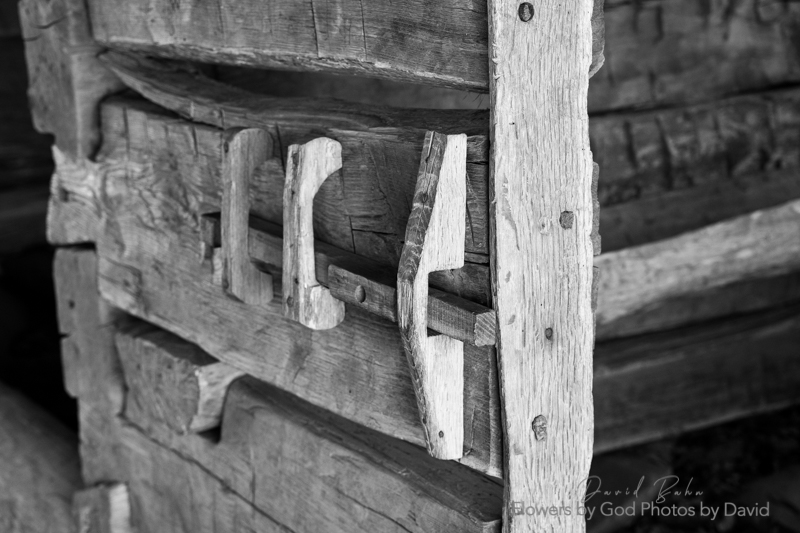
Low Tech Security | Smoky Mountain National Park | April 2021
My dad, many years ago, suffered from panic attacks. At first he thought it was a heart attack. Then possibly a stroke. Then he would hyperventilate. The solution? Carry around a paper bag and when he felt light-headed, he would lie down and breathe into the bag until the oxygen levels got readjusted. That was helpful. But he also discovered a Bible passage that he clung to: “Perfect love casteth out fear.” (1 John 4:18) He would repeat this when the waves of fear would overwhelm him. He made no bones about it. In fact, he would tell people both about the fear and the Bible verse. What a great example of humble dependence on God he was!
Too often fear paralyzes us in different ways. Even the man of great faith – Abram – had his moments of misplaced fear. He was afraid for his life so he bartered his wife in exchange for his safety and security! And he ultimately paid for it. Pharaoh finds out about his duplicity. Abram will be outed. That’s because God will not let this stand. He will intervene. He will cause grief in Pharaoh’s household. All because of Abram’s misplaced and self-serving fear.
There are other Bible verses worth considering regarding fear:
The fear of the Lord is the beginning of knowledge; Fools despise wisdom and instruction. – Proverbs 1:7 [ESV]
The fear of the Lord is the beginning of wisdom, And the knowledge of the Holy One is understanding. – Proverbs 9:10 [ESV]
So the church throughout all Judea and Galilee and Samaria had peace and was being built up. And walking in the fear of the Lord and in the comfort of the Holy Spirit, it multiplied. – Acts 9:31 [ESV]
If you address as Father the One who impartially judges according to each one’s work, conduct yourselves in fear during the time of your stay on earth. – 1 Peter 1:17 [NASB]
But self-serving fear is so powerful! It can derail our obedient faith. It can thwart our proper place in God’s reign and rule. It can short-circuit prayer and an even greater reliance on God.
A colleague told a story of an encounter he had on the foreign mission field. When one member of the church was discovered to have embezzled some funds from the church, a fellow church member exclaimed, “Don’t you fear God!” The fear of the Lord can reign us in from gross sin. Better is faith and love. But sometimes fear must do its work.
Thankfully we need not only fear God, but love and trust in him above all things as well. Jesus is the perfect example of that and our source of courage to face down the challenges. And our source of forgiveness when we fail to do so.
Click here or on the podcast player below to listen to an audio version of this blog post.



 David Bahn - Reflections