In 1968 Jerry Snell opened a door in the hallway outside our first hour chemistry class. He invited me into what I discovered was a darkroom. Soon I was on the school newspaper and annual staff as a photographer. Later I learned that Jerry was a Lutheran who was planning to become a pastor. A few years later I was not only a Lutheran, but I was heading off to seminary to become a Lutheran pastor, too. Jerry followed a year later and served as a pastor in Missouri until his untimely heart attack and death. I thank God for Jerry and enjoy photography still today – not to mention rejoicing in having served as a Lutheran pastor in congregations in Utah, Colorado, Arkansas and Texas. I’ve retired now and serve part time as a Congregational Support Specialist for the Texas District of the LCMS. I also provide coaching and leadership training through various PLI cohorts and with individual congregations and organizations.
David Bahn is a follower of Jesus Christ, husband to Diane, father and grandfather. He is an avid amateur photographer. His photo website is “Flowers by God Photos by David” He also publishes a devotional blog DavidBahn-Reflections.com.
He and Diane live in Cypress Texas and enjoy visiting their grandchildren who live in the United States and Germany.
He graduated from Concordia Theological Seminary in 1979, and earned a Doctor of Ministry degree from Fuller Theological Seminary in 1991.
Diane, his wife, is now retired from PLI (PLIleadership.org). They have offered presentations on Marriage and Ministry Partnership, Leadership, Changing Your Congregation’s Culture, and Missional Living. They look are working with PLI International training pastors and wives of the ELVD Diocese of the Lutheran Church of Tanzania.
David’s personal mission statement is “Leading people to realize Jesus’ calling and plans for their lives.”
Click here for an audio version of this blog post.
As the people were in expectation, and all were questioning in their hearts concerning John, whether he might be the Christ,16 John answered them all, saying, “I baptize you with water, but he who is mightier than I is coming, the strap of whose sandals I am not worthy to untie. He will baptize you with the Holy Spirit and fire.17 His winnowing fork is in his hand, to clear his threshing floor and to gather the wheat into his barn, but the chaff he will burn with unquenchable fire.”
18 So with many other exhortations he preached good news to the people.19 But Herod the tetrarch, who had been reproved by him for Herodias, his brother’s wife, and for all the evil things that Herod had done,20 added this to them all, that he locked up John in prison.– Luke 3:15-20[ESV]
“Treat your brothers like you treat your soccer opponents, and your soccer opponents like you treat your brothers!” I had just witnessed an all-too-polite sidestep by one of my sons when his opponent had charged his way. He wasn’t bigger than my son. He was just more intense and focused on the goal. When it came to the treatment of his brothers, however, it was quite another story. All brothers fight as young men, and our sons were certainly no exception. He held his ground with them. Not so much on the soccer field.
When it comes to standing up to Satan, I fear that we may be much the same in our efforts to resist. Sometimes Satan’s evil intent is very well hidden and seductive. As I like to say, It wasn’t some half-rotten piece of maggot-infested fruit on the ground that Satan used to tempt Eve. It was pleasing to the eye, desirable for wisdom, and good for food. When those temptations come along we may give in much easier if we are prone to trust people. But even then we certainly must have some idea of the danger. We have been warned after all.
Having said that there are times when we know it’s just plane wrong. And our defenses finally give way not only because we’re fallen creatures. They give way because the devil is relentless in his pursuit of our souls. Jesus says that he comes to steal, kill, and destroy. And he’s committed to greed, conquest, and annihilation.
Herod is using Satan’s playbook. He will not give up. Not content with having Herodias as his wife, he will lock up John in prison, and ultimately have John beheaded in a foolish satan-inspired promise to Herodias’ daughter (cf, Matthew 14:1-12). Not only is Herod using Satan’s playbook, he’s serving as Satan’s shill. Satan is using Herod, and he will be the worse for it.
Josephus says that Herod, “feared lest the great influence John had over the people might put it in his power and inclination to raise a rebellion; for they seemed ready to do anything he should advise.” Whatever the reason – coopted by Satan, serving as his pawn, captured by fear – Herod will not give up. Even more so Satan. We must stand up to him. May God give us his Spirit of courage, strength, wisdom, and discernment. For the stakes are much higher than any soccer match or brother-to-brother combat.
Click here for an audio version of this blog post.
As the people were in expectation, and all were questioning in their hearts concerning John, whether he might be the Christ,16 John answered them all, saying, “I baptize you with water, but he who is mightier than I is coming, the strap of whose sandals I am not worthy to untie. He will baptize you with the Holy Spirit and fire.17 His winnowing fork is in his hand, to clear his threshing floor and to gather the wheat into his barn, but the chaff he will burn with unquenchable fire.”
18 So with many other exhortations he preached good news to the people.– Luke 3:15-18 [ESV]
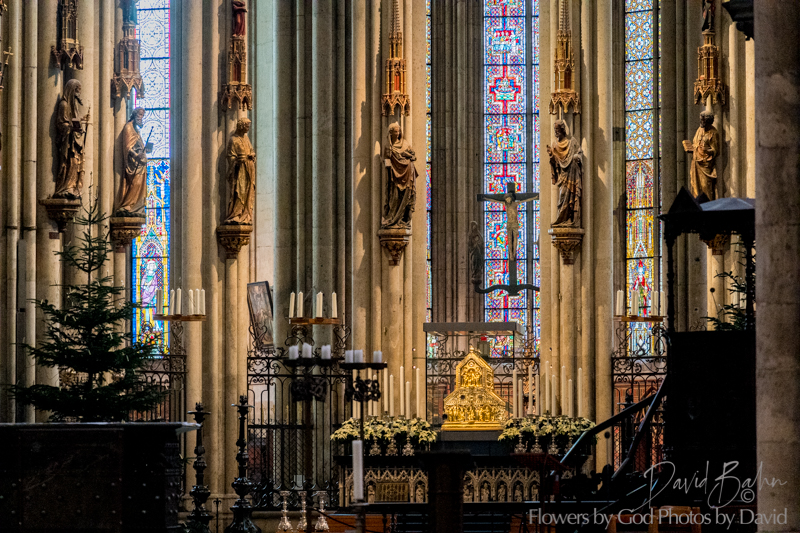
Stained Glass | Basilica of St. Ursula, Cologne, Germany | December 2021
I worked for 7 months at a brick factory. Whenever I think of the Israelites in Egypt being enslaved as brick makers, my heart goes out to them. It is very difficult work. Very. Difficult. Work. Did I say…? Sorry, but it was. One job that was a bit easier was that of sorting bricks as they came off the conveyer belt. Some would go into a jig to be bundled into bales of 500 bricks – steel straps holding them together. The others would go onto a pallet of 500. Stacked in tiers of 50 in a 3X10 & 2X10 alternating layout. Those were not without blemish and would have to be subjected to extra treatment. Some brick bats didn’t even make it to the conveyer belt. They were used as land fill.
The choice in brick culling was relatively easy. The choice in judging for salvation and damnation is a bit more far-reaching, and much too difficult for most people to make. People draw differing conclusions as to how that judgment is made. And while we may easily judge whether or not we would want to be best buddies with someone, we might be a bit more cautious about assigning someone to their eternal destiny. At least I don’t think I’d be very good at it – either way.
In the book, The Shack, Mack (the main character) is put into the judge’s seat and made to judge God and the human race. He is really there for a lesson, and made to realize that God chose to experience the full weight of justice so that all might be saved. That’s what Jesus did for us.
I would rather that there was no need for judgement; that we all behaved properly and were exempt from judgment and surely hell. There are at least two things wrong with that idea. First of all, that’s not the way things truly are. Evil has invaded the world and the human race. People do deplorably-despicable things. And, secondly, we know that and have made that judgment ourselves.
So now comes Jesus. Winnowing forks and unquenchable fire imagery conjures thoughts of judgment. But what of wheat barns? Judgment isn’t just for the evil ones. It’s not all about God giving us justice against those who wrong us. It’s also about being saved, and finding an eternal home in God’s storehouse of life and love. Jesus’ first appearance would challenge the religious self-righteous (judgmental) ones. His second appearing will bring his own into that place of eternal safekeeping – free from every threat to body, heart, and soul. That’s why Luke calls John’s preaching good news. Jesus is coming to save. To judge and separate the chaff to be sure. But most of all to save.
I know of no other judge than Jesus who I would wish to judge me and all people. He knows our frame. He has walked among us. He knows God’s heart. He has come from the Father. I trust his winnowing fork. I yearn for his wheat barn.
Click here for an audio version of this blog post.
As the people were in expectation, and all were questioning in their hearts concerning John, whether he might be the Christ,16 John answered them all, saying, “I baptize you with water, but he who is mightier than I is coming, the strap of whose sandals I am not worthy to untie. He will baptize you with the Holy Spirit and fire.17 His winnowing fork is in his hand, to clear his threshing floor and to gather the wheat into his barn, but the chaff he will burn with unquenchable fire.”
18 So with many other exhortations he preached good news to the people.19 But Herod the tetrarch, who had been reproved by him for Herodias, his brother’s wife, and for all the evil things that Herod had done,20 added this to them all, that he locked up John in prison.
21 Now when all the people were baptized, and when Jesus also had been baptized and was praying, the heavens were opened,22 and the Holy Spirit descended on him in bodily form, like a dove; and a voice came from heaven, “You are my beloved Son; with you I am well pleased.” – Luke 3:15-22 [ESV]
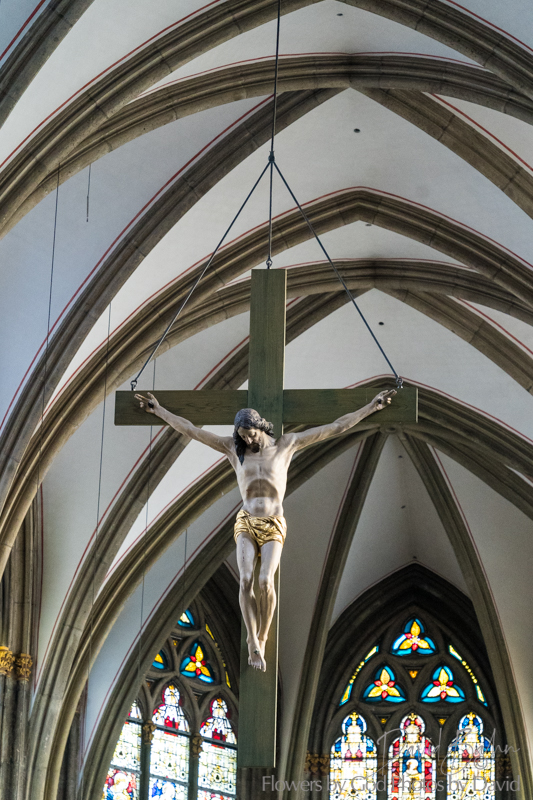
Crucifix | Basilica of St. Ursula, Cologne, Germany | December 2021
We were playing a game with friends involving guessing words based on on-word clues. The word to be guessed was “goat.” My wife offered the clue, “Biles.” She was referring to Simone Biles, the world-class gymnast who is considered to be the Greatest Of All Time (G.O.A.T.) in her sport. She even sported the GOAT logo on her uniform. Not everyone thought it was as good a clue as we did. Moreover there are debates within sports about who is the GOAT: Jordan or Chamberlin? Woods or Nicklaus? Mays or Ruth? Actors? Scientists? Preachers? Say what?!?! Preachers???
When people ask whether John is the Christ – based no doubt on his firebrand preaching and call to repentance – he quickly denies that he is the Christ. In fact he points to another far greater one than he. He points to THE Greatest Of All Time: Jesus. And he is quite clear about this. John claims that he is not worthy to untie the sandals of the coming One “who is mightier than I.” John is quoted in the fourth Gospel: John bore witness about [Christ], and cried out, “This was he of whom I said, ‘He who comes after me ranks before me, because he was before me.’” – John 1:15. There is much to unpack there!
But when Jesus makes his appearance he does little to trumpet is greatness. He requires no special treatment. He has no logo sown onto his tunic. He requests no special treatment, not even excusing himself from being baptized. This is the continuation of a remarkable journey. Jesus has come from the highest glory with the Father and the Holy Spirit. He has laid aside that glory, abandoned his heavenly throne, abandoned the worship of angels, and taken on human flesh. He became a baby. Unfathomable! Now he will step into the muddy waters of the Jordan River along with all the other members of the Brood of Vipers gang as though he needed to repent! This just isn’t right. Not very “GOATish.”
But this reveals a side of greatness that is seldom seen and often overlooked entirely. Jesus greatness is rooted in his love for his people. It is expressed in his searching for and seeking the lost. It is seen in his willingness to be baptized – identifying with those he came to save. And now it is witnessed to by John.
John’s witness is nothing to sneeze at. Jesus speaks of John this way: “I can guarantee this truth: Of all the people ever born, no one is greater than John the Baptizer” (Matthew 11:11, GNT). He will die because of his unwavering commitment to God’s ways. But he is not the greatest of all time. There is only One who fits that category. And it is our great privilege to believe in him and to witness to his greatness whenever we can.
Click here for an audio version of this blog post.
As the people were in expectation, and all were questioning in their hearts concerning John, whether he might be the Christ,16 John answered them all, saying, “I baptize you with water, but he who is mightier than I is coming, the strap of whose sandals I am not worthy to untie. He will baptize you with the Holy Spirit and fire.17 His winnowing fork is in his hand, to clear his threshing floor and to gather the wheat into his barn, but the chaff he will burn with unquenchable fire.”
18 So with many other exhortations he preached good news to the people.19 But Herod the tetrarch, who had been reproved by him for Herodias, his brother’s wife, and for all the evil things that Herod had done,20 added this to them all, that he locked up John in prison.
21 Now when all the people were baptized, and when Jesus also had been baptized and was praying, the heavens were opened,22 and the Holy Spirit descended on him in bodily form, like a dove; and a voice came from heaven, “You are my beloved Son; with you I am well pleased.” – Luke 3:15-22 [ESV]
Crucifix | Basilica of St. Ursula, Cologne, Germany | December 2021
Some months before Diane and I got married, the young girl in whose parents house Diane lived asked, “Can you wait for your wedding?” I suspect she had heard people say, “I can hardly wait” for Christmas, a birthday, or some other event. So she put the question in an odd way. Diane had no choice. And knowing human tendencies, she might have been quite able to wait. In fact, she had no choice. Neither did I. And while we could hardly wait there was an even greater expectation in Jesus’ day. The people were anxiously looking for the Messiah.
On that day more than 46 years ago, I would not have settled for anyone other than Diane. And she for me. We wanted each other. And when she walked down the aisle I was delighted…even though the shoes that I had rented to go with my tux were killing my feet! She was definitely worth the wait!
So here’s John the Baptizer, calling people to repentance. And there was revival in the land. People were coming out to him – to the Jordan River – a journey of maybe 50 miles – depending on what route you take. There is a lot of excitement. Anticipation. Hope. Fervor. The Holy Spirit was at work. But so was the sinful flesh.
People must have been coming for the wrong reason. After all, John calls them a brood of vipers. But one thing they were set on was to correctly attach their hopes to the true Messiah. So they questioned in their hearts whether or not he was the Christ. Should they put their hopes in John?
In a word, “no.” John was not the Christ, the Messiah. No, they should not put their hopes in him. But we should definitely not chide them for their anxious anticipation, nor their inner yearnings for this one to be The One. Nor should we be too down on them for attaching false hopes to the appearance, ministry, and reign and rule of the Messiah – the coming King. We do this too.
As wonderful as my beloved wife may be, she is not my Savior. Nor am I – by a long shot. We may help each other along the way, and keep each other pointed toward our true Savior. We may be good for each other. We may even have proper hopes for the blessings we each bring to the other. But we are neither one’s messiah.
Some people will tout one political candidate over another as the savior of America, freedom, Democracy, or peace in our time. Others may yearn for the superstar doctor to attend to them when they’re ill. Still others long for a financial partner who will bail them out or solve all their retirement woes. Those may or may not be false hopes.
But we must be clear: Jesus, the Son of Mary, the Son of God is the True Messiah. He alone saves. Whoever points us to him is a great blessing and one to be appreciated. I hope I do this for you. But I’m not your Savior. Most all of you know that. All of you should.
One more thing…let’s be clear on our expectations. We too easily settle for too little from our God. We too often underestimate our needs and God’s goodness and gifts. Let’s expect great things from God – truly great things. And let’s wait for him, whether we’re trying to conquer worry, loneliness, grief, illness, disappointment, or any sin that besets us. He’s not only worth the wait. He’s the only one who will fulfill the truly greatest of expectations.
For your personal meditation and reflection on this Lord’s Day.
Psalm 30:4-5
Sing praises to the Lord, O you his saints, and give thanks to his holy name. 5 For his anger is but for a moment, and his favor is for a lifetime. Weeping may tarry for the night, but joy comes with the morning.
Psalm 60:4-5
You have set up a banner for those who fear you, that they may flee to it from the bow. Selah 5 That your beloved ones may be delivered, give salvation by your right hand and answer us!
Psalm 90:10-17
The years of our life are seventy, or even by reason of strength eighty; yet their span is but toil and trouble; they are soon gone, and we fly away. 11 Who considers the power of your anger, and your wrath according to the fear of you?
12 So teach us to number our days that we may get a heart of wisdom. 13 Return, O Lord! How long? Have pity on your servants! 14 Satisfy us in the morning with your steadfast love, that we may rejoice and be glad all our days. 15 Make us glad for as many days as you have afflicted us, and for as many years as we have seen evil. 16 Let your work be shown to your servants, and your glorious power to their children. 17 Let the favor of the Lord our God be upon us, and establish the work of our hands upon us; yes, establish the work of our hands!
Psalm 120:1-2
In my distress I called to the Lord, and he answered me. 2 Deliver me, O Lord, from lying lips, from a deceitful tongue.
Psalm 150
Praise the Lord! Praise God in his sanctuary; praise him in his mighty heavens![a] 2 Praise him for his mighty deeds; praise him according to his excellent greatness!
3 Praise him with trumpet sound; praise him with lute and harp! 4 Praise him with tambourine and dance; praise him with strings and pipe! 5 Praise him with sounding cymbals; praise him with loud clashing cymbals! 6 Let everything that has breath praise the Lord! Praise the Lord!
For your personal meditation and reflection on this Lord’s Day.
Psalm 30:4-5
Sing praises to the Lord, O you his saints, and give thanks to his holy name. 5 For his anger is but for a moment, and his favor is for a lifetime. Weeping may tarry for the night, but joy comes with the morning.
Psalm 60:4-5
You have set up a banner for those who fear you, that they may flee to it from the bow. Selah 5 That your beloved ones may be delivered, give salvation by your right hand and answer us!
Psalm 90:10-17
The years of our life are seventy, or even by reason of strength eighty; yet their span is but toil and trouble; they are soon gone, and we fly away. 11 Who considers the power of your anger, and your wrath according to the fear of you?
12 So teach us to number our days that we may get a heart of wisdom. 13 Return, O Lord! How long? Have pity on your servants! 14 Satisfy us in the morning with your steadfast love, that we may rejoice and be glad all our days. 15 Make us glad for as many days as you have afflicted us, and for as many years as we have seen evil. 16 Let your work be shown to your servants, and your glorious power to their children. 17 Let the favor of the Lord our God be upon us, and establish the work of our hands upon us; yes, establish the work of our hands!
Psalm 30:4-5
Sing praises to the Lord, O you his saints, and give thanks to his holy name. 5 For his anger is but for a moment, and his favor is for a lifetime. Weeping may tarry for the night, but joy comes with the morning.
Psalm 60:4-5
You have set up a banner for those who fear you, that they may flee to it from the bow. Selah 5 That your beloved ones may be delivered, give salvation by your right hand and answer us!
Psalm 90:10-17
O God, do not keep silence; do not hold your peace or be still, O God!
Psalm 113:1-3
Praise theLord! Praise, Oservants of theLord, praise the name of theLord!
2 Blessed be the name of theLord from this time forth and forevermore! 3 From the rising of the sun to its setting, the name of theLordisto be praised!
Psalm 143:10-17
The years of our life are seventy, or even by reason of strength eighty; yet their span[c]is but toil and trouble; they are soon gone, and we fly away. 11 Who considers the power of your anger, and your wrath according to the fear of you?
12 So teach us to number our days that we may get a heart of wisdom. 13 Return, O Lord! How long? Have pity on your servants! 14 Satisfy us in the morning with your steadfast love, that we may rejoice and be glad all our days. 15 Make us glad for as many days as you have afflicted us, and for as many years as we have seen evil. 16 Let your work be shown to your servants, and your glorious power to their children. 17 Let the favor[d]of the Lord our God be upon us, and establish the work of our hands upon us; yes, establish the work of our hands!
Psalm 120:1-2
In my distress I called to the Lord, and he answered me. 2 Deliver me, O Lord, from lying lips, from a deceitful tongue.
Psalm 150
Praise the Lord! Praise God in his sanctuary; praise him in his mighty heavens![a] 2 Praise him for his mighty deeds; praise him according to his excellent greatness!
3 Praise him with trumpet sound; praise him with lute and harp! 4 Praise him with tambourine and dance; praise him with strings and pipe! 5 Praise him with sounding cymbals; praise him with loud clashing cymbals! 6 Let everything that has breath praise the Lord! Praise the Lord!
Click here for an audio version of this blog post.
When the crowds came to John for baptism, he said, “You brood of snakes! Who warned you to flee the coming wrath? 8 Prove by the way you live that you have repented of your sins and turned to God. Don’t just say to each other, ‘We’re safe, for we are descendants of Abraham.’ That means nothing, for I tell you, God can create children of Abraham from these very stones.9 Even now the ax of God’s judgment is poised, ready to sever the roots of the trees. Yes, every tree that does not produce good fruit will be chopped down and thrown into the fire.”
10 The crowds asked, “What should we do?”
11 John replied, “If you have two shirts, give one to the poor. If you have food, share it with those who are hungry.”
12 Even corrupt tax collectors came to be baptized and asked, “Teacher, what should we do?”
13 He replied, “Collect no more taxes than the government requires.”
14 “What should we do?” asked some soldiers.
John replied, “Don’t extort money or make false accusations. And be content with your pay.”
Shadows and Steps | Koblenz, Germany | December 2021
Apology in advance. Please don’t let this stop you from reading on…]
Maybe you’ve heard the slightly irreverent joke about the plane that was nearly about to crash land. People were yelling and screaming. Some were trying to call their loved ones. Others were paralyzed in fright. Someone finally said, “We’re all gonna die! Someone do something religious!” So one man got up and took up an offering. I guess that’s a religious thing to do.
I’ve been intrigued ever since it was pointed out to me that John the Baptizer doesn’t tell anyone in the crowd coming to him to do something religious. He doesn’t tell them to go make an offering. He doesn’t tell them to go to the priest and offer a prayer. He does’t tell them to get back to going to worship. All these are good things. Jesus will occasionally tell people to do such things. All of them are appropriate. But none of those were the problem he addresses.
Rather, he tells them to share their goods and possessions. He says that they should be content with their pay. He directs them to do the right thing by collecting no more tax than is actually due. (Tax collectors were doubly hated in those days because they not only worked for the Roman government, but took as much extra that they could get away with and kept that extra for themselves.) These are the real-life applications of the reign and rule of God in one’s life. Worship: to be sure. Prayer: it’s a must. Offerings: it’s commanded (Psalm 96:8). But John realizes that outward acts of righteousness can cover unbelieving hearts.
The most important righteousness anyone can have is the righteousness of faith before God. That is God’s gift for the sake of Jesus. It’s through faith, and by God’s grace that we are counted righteous. Works of the law never provide that foundational and essential righteousness that avails before God.
But that doesn’t mean that good works are to be rejected or despised. One way to think of it is to think of doing our good works as we leave the cross (forgiven, redeemed, and saved). We don’t do them to get to the cross. Another way to do these good things is to do them for the sake of our neighbor, not to get closer to God.
Yet another way to think of this is to realize that there are two kinds of righteousness. The most important of these two kinds is the first, an alien righteousness. It comes from Jesus and is God’s gracious gift, received by faith alone (see above). It is visible only to God, but witnessed to by the way we live. This is the second kind of righteousness. How I live gives testimony to God’s righteousness in me. In fact it’s not truly possible apart from God’s work in me. I’ve pasted below some of Martin Luther’s writings on this subject.
The devil will attack us in both ways. He will try to lead us away from faith in Jesus and therefore to abandon the righteousness of Christ that saves. He will also tempt us to behave poorly toward others. Whether it’s motivated by or an appeal to selfishness, fear, anger, lust, or greed, Satan delights to lead us to disobey God and harm our neighbor.
I’m a big fan of prayer, worship, giving, and all manner of godly religious practices. That’s good. But the true evidence of that is the way I treat my neighbor. I hope that as you and I have any interactions they will testify to God’s work in my heart and the presence of Jesus’ righteousness – through faith, by grace.
Two Kinds of Righteousness
By The Reverend Father Martin Luther
Brethren, “have this mind among yourselves, which you have in Christ Jesus, who, though he was in the form of god, did not count equality with God a thing to be grasped” [Phil. 2:5-6]
[1] There are two kinds of Christian righteousness, just as man’s sin is of two kinds. The first is alien righteousness, that is the righteousness of another, instilled from without. This is the righteousness of Christ by which he justifies though faith, as it is written in I Cor. 1:30: “whom God made our wisdom, our righteousness and sanctification and redemption.” In John 11:25-26, Christ himself states: “I am the resurrection and the life; he who believes in me…..shall never die.” Later he adds in John 14:6, “I am the way, and the truth, and the life.” This righteousness, then, is given to men in baptism and whenever they are truly repentant. Therefore a man can with confidence boast in Christ and say: “Mine are Christ’s living, doing, and speaking, his suffering and dying, mine as much as if I had lived, done, spoken, suffered, and died as he did.” Just as a bridegroom possesses all that is his bride’s and she all that is his—for the two have all things in common because they are one flesh[Gen. 2:24]—so Christ and the church are one spirit [Eph. 5:29-32]. Thus the blessed God and Father of mercies has, according to Peter, granted to us very great and precious gifts in Christ [II Pet. 1:4]. Paul writes in II Cor. 1:3; “Blessed be the God and father of our Lord Jesus Christ, the Father of mercies and God of all comfort, who has blessed us in Christ with every spiritual blessing in the heavenly places.”
[2] This inexpressible grace and blessing was long ago promised to Abraham in Gen. 12:3; “And in thy seed (that is in Christ) shall all the nations of the earth be blessed.” Isaiah 9:6 says, “For to us a child is born, to us a son is given.” “To us,” it says, because he is entirely ours with all his benefits if we believe in him, as we read in Rom. 8:32, “He who did not spare his own Son but gave him up for us all, will he not also give us all things with him?” Therefore everything which Christ has is ours, graciously bestowed on us unworthy men out of God’s sheer mercy, although we have rather deserved wrath and condemnation, and hell also. Even Christ himself, therefore, who says he came to do the most sacred will of his Father [John 6:38], became obedient to him; and whatever he did, he did it for us and desired it to be ours, saying, “I am among you as one who serves” [Luke 22:27]. He also states, “This is my body, which is given for you” [Luke 22:19]. Isaiah 43:24 says, “You have burdened me with your sins, you have wearied me with your iniquities.”
[3] Through faith in Christ, therefore, Christ’s righteousness becomes our righteousness and all that he has becomes ours; rather, he himself becomes ours. Therefore the Apostle calls it “the righteousness of God” in Rom. 1:17; For in the gospel “the righteousness of God is revealed…; as it is written, “The righteous shall live by his faith.” Finally, in the same epistle, chapter 3:28, such a faith is called “the righteousness of God”: “We hold that a man is justified by faith.” This is an infinite righteousness, and one that swallows up all sins in a moment, for it is impossible that sin should exist in Christ. On the contrary, he who trusts in Christ exists in Christ; he is one with Christ, having the same righteousness as he. It is therefore impossible that sin should remain in him. This righteousness is primary; it is the basis, the cause, the source of all our own actual righteousness. For this is the righteousness given in place of the original righteousness lost in Adam. It accomplishes the same as that original righteousness would have accomplished; rather, it accomplishes more.
[4] It is in this sense that we are to understand the prayer in Psalm 30: “in thee, O Lord, do I seek refuge; let me never be put to shame; in thy righteousness deliver me!” It does not say “in my” but “in thy righteousness,” that is, in the righteousness of Christ my God which becomes ours through faith and by the grace and mercy of god. In many passages of the Psalter, faith is called “the work of the Lord,” “confession,” “power of God,” “mercy,” “truth,” “righteousness.” All these are names for faith in Christ, rather, for the righteousness which is in Christ. The Apostle therefore dares to say in Gal. 2:20, “It is no longer I who live, but Christ who lives in me.” He further states in Eph. 3:14-17: “I bow my knee before the Father . . . that . . . he may grant . . . that Christ may dwell in your hearts through faith.”
[5] Therefore this alien righteousness, instilled in us without our works by grace alone—while the Father, to be sure, inwardly draws us to Christ—is set opposite original sin, likewise alien, which we acquire without our works by birth alone. Christ daily drives out the old Adam more and more in accordance with the extent to which faith and knowledge of Christ grow. For alien righteousness is not instilled all at once, but it begins, makes progress, and is finally perfected at the end through death.
[6] The second kind of righteousness is our proper righteousness, not because we alone work it, but because we work with that first and alien righteousness. This is that manner of life spent profitably in good works, in the first place, in slaying the flesh and crucifying the desires with respect to the self, of which we read in Gal. 5:24, “And those who belong to Christ Jesus have crucified the flesh with its passions and desires.” In the second place, this righteousness consists in love to one’s neighbor, and in the third place, in meekness and fear towards God. The Apostle is full of references to these, as is all the rest of Scripture. He briefly summarizes everything, however, in Titus 2:12, “ In this world let us live soberly (pertaining to crucifying one’s own flesh), justly (referring to one’s neighbor), and devoutly (relating to God).”
Click here for an audio version of this blog post.
In the fifteenth year of the reign of Tiberius Caesar, Pontius Pilate being governor of Judea, and Herod being tetrarch of Galilee, and his brother Philip tetrarch of the region of Ituraea and Trachonitis, and Lysanias tetrarch of Abilene,2 during the high priesthood of Annas and Caiaphas, the word of God came to John the son of Zechariah in the wilderness.3 And he went into all the region around the Jordan, proclaiming a baptism of repentance for the forgiveness of sins. 4 As it is written in the book of the words of Isaiah the prophet,
“The voice of one crying in the wilderness: ‘Prepare the way of the Lord, make his paths straight. 5 Every valley shall be filled, and every mountain and hill shall be made low, and the crooked shall become straight, and the rough places shall become level ways, 6 and all flesh shall see the salvation of God.’”– Luke 3:1-6 [ESV]
Ehrenbreitstein Fortress | Koblenz, Germany | December 2021
Four hundred years! That’s how long God was silent between the Old Testament prophet Malachi and John the Baptizer. I can’t imagine it. That is like the time between the Pilgrims landed at Plymouth Rock and today. No word from God. No new call. Silence.
How do you deal with silence? It is one of the spiritual disciplines we learned about at a recent church conference. Imagine that! Telling a bunch of preachers that silence is a good thing! David Johnson and John Busacker have written the book Gasping for Breathin which he unpacks this – among many other things. In it he tells of a scene in the Tom Hanks movie about Mr. Rogers.
In one of the most powerful scenes in the movie…Mister Rogers (Tom Hanks) asks an investigative journalist (Matthew Rhys) to take a minute and think about all the people who loved him into being. Just one minute of silence.
The entire restaurant in which they are sitting falls silent, and the movie screen becomes completely still. No background noise. No musical score. Complete silence. Halfway through, Tom Hanks slowly shifts his gaze from the journalist to the viewers in the theater. To me. That’s when I became completely aware of the uniqueness of that moment. Complete silence. In a movie theater. For an entire sixty seconds.
Mister Rogers apparently did that again on the occasion of his acceptance of the Lifetime Achievement Award from the National Academy of Television Arts and Sciences. He asked the assembled group of soap opera stars and talk show hosts to pause for ten seconds of silence to remember all the people who helped them become who they are. “I’ll watch the time,” he told them. And in ten seconds time, snickers turned into quiet tears as people in the hall thought about impactful people.
I’m not sure silence in the days before Jesus yielded that same result. It was a much longer and more uncomfortable time. No king. No prophet. No word from God. But it did offer them some time to reflect on God’s promises. Perhaps they became even more aware of God’s promises, yearning even more for his presence and his word in their time. Certainly they yearned for the Savior!
Their time is almost up. Jesus has come. John is preparing the way. The Word has become flesh. Now we live in that same silence – for 2000 years. But the difference is that we have God’s word in the Bible very clearly delineated. Very accessible. Very precious.
Next time you sit down to open up your Bible, why not take a minute (or 10 or 30) of silence. Think about all the people who invested in you and made you who you are today. Think about God’s precious word and the promises and truths that shape your faith. And thank God for them all. For although God may be silent, he has spoken clearly in his word, and is always up to something – no matter how long it’s been since you listened for him.
Click here for an audio version of this blog post.
[John] went into all the region around the Jordan, proclaiming a baptism of repentance for the forgiveness of sins. 4 As it is written in the book of the words of Isaiah the prophet,
“The voice of one crying in the wilderness: ‘Prepare the way of the Lord, make his paths straight. 5 Every valley shall be filled, and every mountain and hill shall be made low, and the crooked shall become straight, and the rough places shall become level ways, 6 and all flesh shall see the salvation of God.’”
7 He said therefore to the crowds that came out to be baptized by him, “You brood of vipers! Who warned you to flee from the wrath to come? 8 Bear fruits in keeping with repentance. And do not begin to say to yourselves, ‘We have Abraham as our father.’ For I tell you, God is able from these stones to raise up children for Abraham.9 Even now the axe is laid to the root of the trees. Every tree therefore that does not bear good fruit is cut down and thrown into the fire.” – Luke 3:3-9 [ESV]
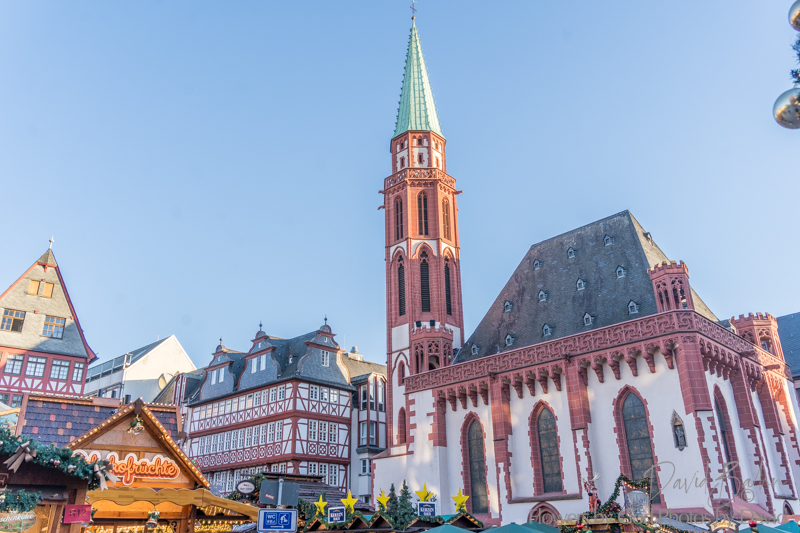
Christmas Market & Church-II | Frankfurt, Germany | December 2021
It was an impressive scene. Our relatively little church had produced a major Christmas cantata. We borrowed costumes from a large local church that put on semi-professional productions. We encouraged all sorts of people to participate. We enlisted musicians, actors, tech crew members, ushers, and publicists. And it was a wonderful night. Still firmly in my memory is the scene in which the wise men come to visit the child Jesus.
Here the cantata production diverged from the facts, but not the underlying realities. There were three (though the Bible does not specify the number) kings (and the magi were not kings). Magi often validated the selection of kings, but they were not kings. And Jesus was most likely 2 years old by the time the magi visited. Having said all that, here is the scene.
Three men dressed in royal robes, crowns and long trains walked in with their gifts and knelt at the manger. One of the king’s trains was at least 30 feet long. Royal red. Gold trim. Velvet. Magnificent! And he bowed at the manger in which the baby Jesus had been laid.
I know that powerful people, be they kings, princess, presidents, or prime ministers are no more important than beggars, factory workers, blue collar workers, or common laborers. But seeing that “king” kneel before Jesus was a powerful moment. King of kings Jesus truly was!
John is the one sent by God to raise the valleys and lower the mountains. He exalts the lowly and brings down those in high places. Jesus is the great leveler. No one has an exclusive hold on his grace and love.
Sometimes we need to be taken down a notch or two. We may be too puffed-up for our own good, and certainly for the good of others. Other times we may need a word of grace, hope, encouragement, and affirmation. Jesus provides that. Whether it is the form of Jesus calling the Jews whitewashed tombs, or telling Zacchaeus he must go to his house (even before Zacchaeus repented!), that’s what Jesus does. And John is paving the way for Jesus’ ministry. He did that so that people would see the salvation of God. And we see that best on the level ground at the foot of Jesus’ cross.
Click here for an audio version of this blog post.
[John] went into all the region around the Jordan, proclaiming a baptism of repentance for the forgiveness of sins. 4 As it is written in the book of the words of Isaiah the prophet,
“The voice of one crying in the wilderness: ‘Prepare the way of the Lord, make his paths straight. 5 Every valley shall be filled, and every mountain and hill shall be made low, and the crooked shall become straight, and the rough places shall become level ways, 6 and all flesh shall see the salvation of God.’”
7 He said therefore to the crowds that came out to be baptized by him, “You brood of vipers! Who warned you to flee from the wrath to come? 8 Bear fruits in keeping with repentance. And do not begin to say to yourselves, ‘We have Abraham as our father.’ For I tell you, God is able from these stones to raise up children for Abraham.9 Even now the axe is laid to the root of the trees. Every tree therefore that does not bear good fruit is cut down and thrown into the fire.” – Luke 3:3-9 [ESV]
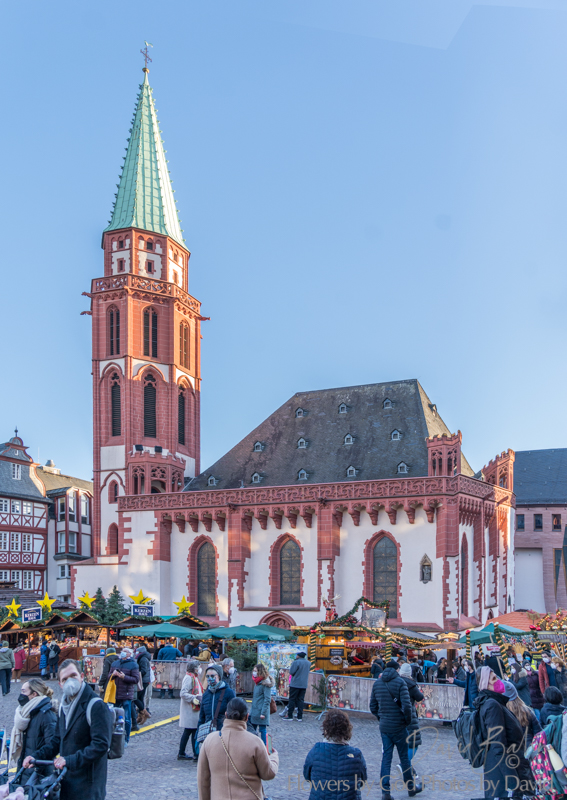
Christmas Market & Church | Frankfurt, Germany | December 2021
I very vividly remember my baptism. I was eight years old, and quite serious aboutmy faith in Jesus. In my church, you “became a Christian” when you were baptized. It was a conscious and intentional action. I was strongly influenced by my first-grade teacher, who was also the Sunday school superintendent for the elementary department. It was a very large church with as many as 900 in Sunday school on a given Sunday.
But the primary influence to my faith was my parents. I cannot remember a time that I did not believe in Jesus. He was part of my life. And before I really knew how to express it, I believed in Jesus. My baptism was outward proof – in my mind – that I was a Christian. But somehow I knew it wasn’t just something I was doing. I would not learn the fullness of that reality until years later.
Apparently baptism was a big deal for John and the people of his day. Although there is not an explicit command in the Old Testament that people ought to be baptized, it is clear that this practice was widely followed by the Jews of John’s day. Houses of that time had ceremonial mikvahs in which they would wash to attain spiritual purity. Jesus speaks of this in Mark 7 where he talks about how the Pharisees washed their hands, pots, and even their dining couches in an effort to become pure.
But John’s baptism is different from those ceremonial washings. Luke clearly tells us that this baptism was one of repentance for the forgiveness of sins. And, in this context there is far-reaching significance. For baptism of gentiles was the acceptable means by which they would become a God-Fearer (as near to a Jew as one could be apart from tracing one’s blood line to Abraham). But the Jews come to be baptized, and for a Jew to submit to baptism was to say something like, “I’m as bad as a heathen Gentile.”
Or it could be something even more. It could be that they wished to embrace the blessings of baptism: the forgiveness of sins. It’s difficult to separate the two. Some would say that baptism is the outward sign of having been forgiven. But what use is that? Baptism must have been seen as a means by which forgiveness was sealed to them. It must have been something desirable.
As such this hints at Christian baptism. In Christian baptism, God puts his name on us. We are baptized not into a concept, but into a relationship with our God, Father, Son, and Holy Spirit. We are buried with Christ into his death in baptism, and connected also with his resurrection from the dead (cf. Romans 6). We are clothed with Christ in baptism (cf. Galatians 3). We are saved by means of faith and baptism brings all those blessings to us (cf. 1 Peter 3).
Baptism was a big deal for the Jews of John’s day. God was moving people to a right relationship with himself. It is a big deal today as well, for the blessings of Jesus await us in these waters. And we who have been baptized do well to listen to John. Remembering our baptism daily in repentance we must also “bear fruits in keeping with repentance.” It’s that big a deal.



 David Bahn - Reflections