

Click here for an audio version of this blog post.
These devotions are part of the Follow the Word Bible reading program at St. John Lutheran Church in Cypress, Texas. This year we are reading through the Scriptures together, listening for how God speaks through his Word day by day. I hope you will join me on this journey.
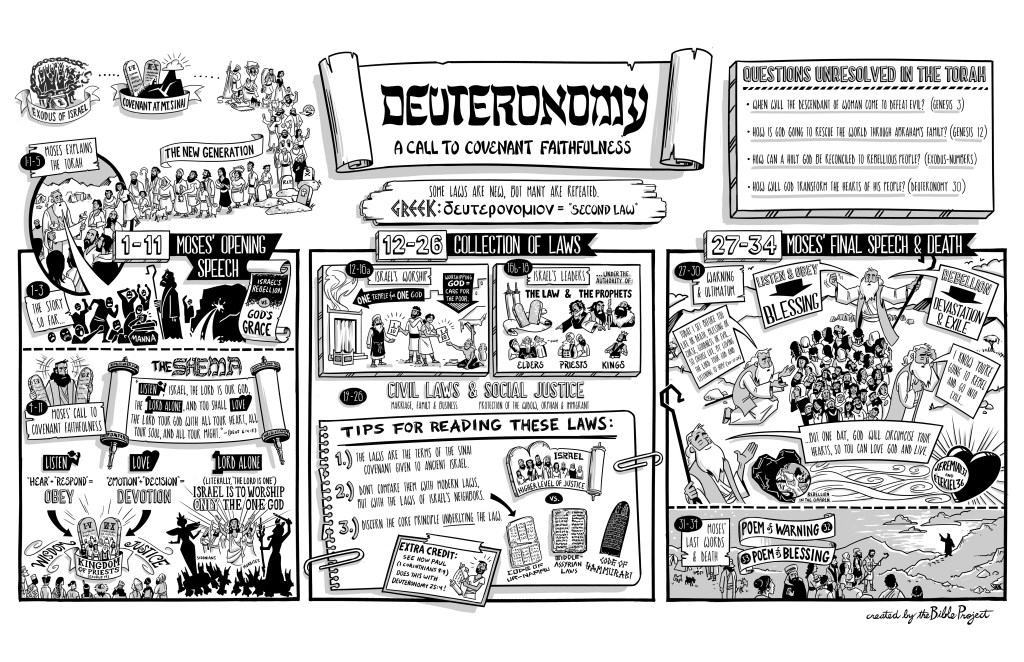
Today’s readings are Deuteronomy 22-24, Psalm 85.
Deuteronomy 24:17-22
“You shall not pervert the justice due to the sojourner or to the fatherless, or take a widow’s garment in pledge, 18 but you shall remember that you were a slave in Egypt and the Lord your God redeemed you from there; therefore I command you to do this.
19 “When you reap your harvest in your field and forget a sheaf in the field, you shall not go back to get it. It shall be for the sojourner, the fatherless, and the widow, that the Lord your God may bless you in all the work of your hands. 20 When you beat your olive trees, you shall not go over them again. It shall be for the sojourner, the fatherless, and the widow. 21 When you gather the grapes of your vineyard, you shall not strip it afterward. It shall be for the sojourner, the fatherless, and the widow. 22 You shall remember that you were a slave in the land of Egypt; therefore I command you to do this.

There are some wildly different rules and laws in these chapters. They range all the way from men wearing women’s clothing, to two kinds of grain in the same furrow, to the way a man is to treat his wife, and the manner in which restitution and repayment is to be required. Some of them seem tender: the way one is to treat a bird’s nest in any tree or on the ground, with young ones or eggs and the mother sitting on the young or on the eggs (22:6). Some of them seem curious, like the prohibition against wearing cloth of wool and linen mixed together (22:11).
These laws show how God’s people are to live out justice, holiness, and love for neighbor in the ordinary, everyday details of life. And that becomes more obvious as we look closer to see that some deal with the manner in which the love for neighbor is to be expressed. They deal with returning lost property (22:1–4), building a parapet on a roof for safety (22:8), caring for the vulnerable (widows, sojourners, the poor) (24:17–22), fair wages paid promptly (24:14–15).
Some of them deal with protecting the weak and vulnerable: women in marriage laws, the poor through gleaning laws, debtors through limits on collateral, hired workers through just treatment. Deuteronomy 22–24 may seem like a collection of disconnected rules, but together they paint a picture of what life with God looks like in practice. These laws take the command to love God and love neighbor and press it into everyday situations – how we treat others, how we handle property, how we exercise power, and how we care for the vulnerable. God is not only giving laws; he is forming a people whose daily lives reflect his justice, mercy, and holiness.
That becomes most clear in the admonition: “You shall remember that you were a slave in the land of Egypt; therefore I command you to do this” (24:22). That memory – and the call to show mercy, justice for the weak, and care for others – shaped Jesus’ ministry far more than concerns about what kinds of cloth may be worn together or the tassels on the corners of garments. He quotes Hosea 6:6: “I desire mercy, and not sacrifice,” pointing us to a righteousness of the heart and calling us to treat others with dignity.
This matters more than technical adherence to legalistic rules. This – more than any outward clothing or ritual observance – should mark us as followers of Jesus and heirs of his salvation.
 David Bahn - Reflections
Leave a comment