

Click here for an audio version of this blog post.
These devotions are part of the Follow the Word Bible reading program at St. John Lutheran Church in Cypress, Texas. This year we are reading through the Scriptures together, listening for how God speaks through his Word day by day. I hope you will join me on this journey.
Today’s readings are Deuteronomy 19-21, Psalm 84.
Deuteronomy 19:15-21
“A single witness shall not suffice against a person for any crime or for any wrong in connection with any offense that he has committed. Only on the evidence of two witnesses or of three witnesses shall a charge be established. 16 If a malicious witness arises to accuse a person of wrongdoing, 17 then both parties to the dispute shall appear before the Lord, before the priests and the judges who are in office in those days. 18 The judges shall inquire diligently, and if the witness is a false witness and has accused his brother falsely, 19 then you shall do to him as he had meant to do to his brother. So you shall purge the evil from your midst. 20 And the rest shall hear and fear, and shall never again commit any such evil among you. 21 Your eye shall not pity. It shall be life for life, eye for eye, tooth for tooth, hand for hand, foot for foot.

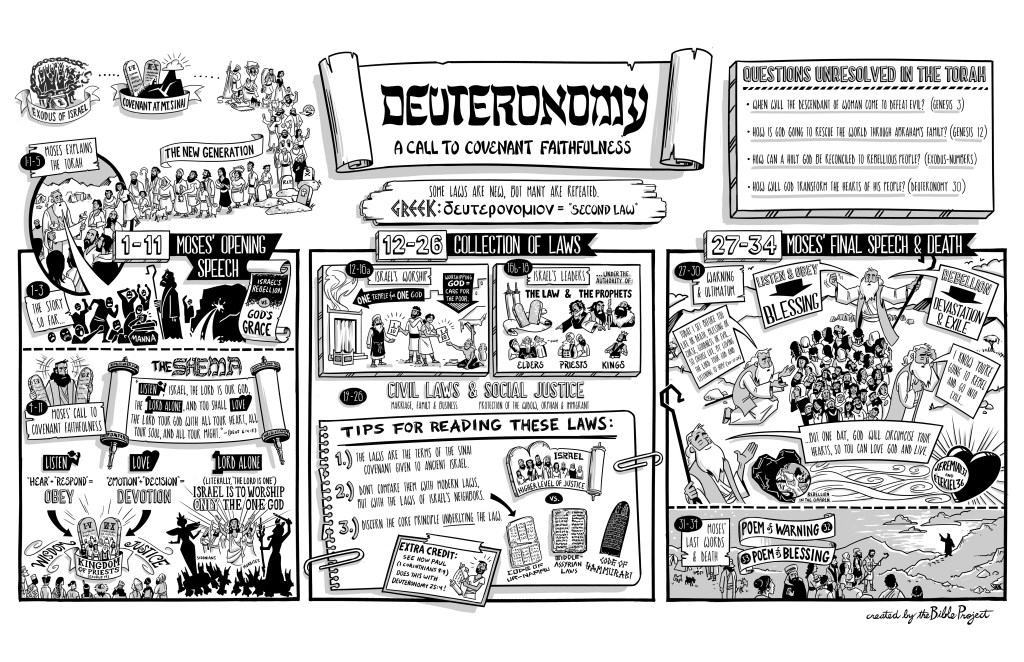
In Deuteronomy 19–21, God’s law meets real life. These are not abstract commands, but concrete situations—questions about justice, responsibility, life, and death. Again and again, the pattern is the same: When this happens… here is what you are to do. God is shaping his people to live faithfully not just in principle, but in the complicated realities of everyday life. Moses is laying out a system of justice designed in such a way that, even when every possible situation is not addressed, there is a guiding principle for how God’s people are to act.
The scales of justice are meant to be balanced. When someone suffers loss, there is to be a just and measured restoration. In that light, the familiar phrase “eye for eye, tooth for tooth” sounds very different. Rather than a harsh or vengeful demand, it reflects a principle of fairness—justice that is proportionate and evenhanded. Years ago I heard it as a stern quid pro quo; here it reads more like a safeguard against excess, ensuring that justice neither overreaches nor falls short.
By the time Jesus came, however, these case laws had been so refined and expanded that the spirit of the Law was often obscured. People became more concerned with the details of Sabbath observance than with the purpose of the Sabbath—and failed to recognize the Lord of the Sabbath standing in their midst.
True justice amounts to more than keeping the scales balanced. When Jesus was asked, “Who is my neighbor?” or was told, “Tell my brother to divide the inheritance with me,” he did not simply apply the law—he called people deeper. At times he said, “Go and do likewise.” At other times, “Neither do I condemn you; go, and sin no more.” Jesus does not discard the Law, but fulfills it, revealing its true goal: faithful love and gracious compassion.
This is what pastors seek as they serve God’s people. We wrestle with real situations and real lives, asking: What does faithfulness look like here? In pastoral circles, this is often called casuistry—the careful application of God’s Word to specific and sometimes difficult circumstances. But it is not only about getting the answer right; it is about leading people to Jesus, the source of true justice, mercy, and love.
God’s justice is finally and fully revealed in Jesus Christ, and it is received by faith. So next time we are looking for justice, let our starting point be the justice and mercy Jesus provides, and let grace and truth guide our judgements.
 David Bahn - Reflections
Leave a comment