

Click here for an audio version of this blog post.
These devotions are part of the Follow the Word Bible reading program at St. John Lutheran Church in Cypress, Texas. This year we are reading through the Scriptures together, listening for how God speaks through his Word day by day. I hope you will join me on this journey.
Today’s readings are Leviticus 13-15, Psalm 61.
Leviticus 14:54-57; 15:31
This is the law for any case of leprous disease: for an itch, 55 for leprous disease in a garment or in a house, 56 and for a swelling or an eruption or a spot, 57 to show when it is unclean and when it is clean. This is the law for leprous disease.
15:31 “Thus you shall keep the people of Israel separate from their uncleanness, lest they die in their uncleanness by defiling my tabernacle that is in their midst.”

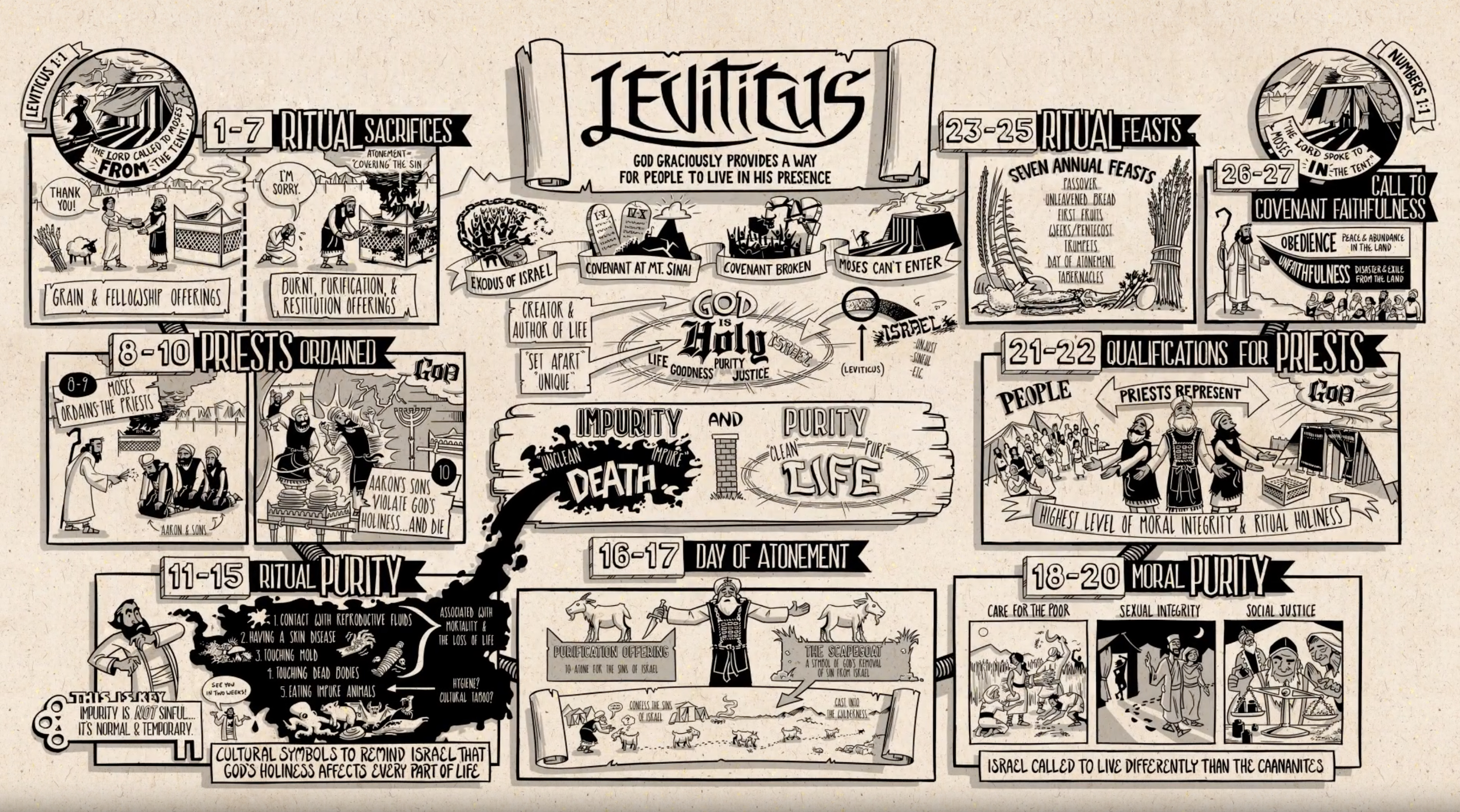
The chart below is helpful in regard to these readings – as is the video itself which explains the significant difference between ritual purity and moral purity. These chapters are not the most exciting of the Bible. We might be tempted to ignore them out of hand. But there are important things to glean from every page of God’s word, so we don’t just skip over them.
In this case, the lengthy explanations of how to deal with skin disorders and diseases and then bodily fluid discharges describe things that happen to all of us. They are not sinful in and of themselves. It is not a sin to get leprosy. Nor is it a sin to have different colored hairs growing out of a wound on the body. The same is true of men’s and women’s bodily fluids. They don’t render us morally impure.
These issues highlight the impact of God’s holiness on every part of life. He is concerned not only about moral behavior, but cultural, social, and physical issues as well. He is completely other pure, and wholy so. The rules may seem arbitrary, but just because they seem arbitrary doesn’t mean they can be ignored. After all, what may seem arbitrary to us, might just be that we don’t really know the full story. And just as a three-year-old has no right to demand that his parents to explain why he can’t play in the street, we might ought to have the humility to accept the things of God we don’t understand. That’s what faith is afterall. It is the evidence of things not seen the assurance of things hoped for.
These chapters show us a God who cares even about skin diseases and bodily discharges — the ordinary, physical realities of human life. He is that holy. Nothing is outside His concern. And then Jesus comes. He does not recoil from lepers; He touches them and makes them clean. He does not merely address skin disease; He bears our sin. He dies not for ritual impurity but for moral guilt — and rises from the dead to make us truly clean.
So we do not skip these pages. They remind us who God is — the God of our salvation: holy, gracious, merciful, and pure.
 David Bahn - Reflections
Leave a comment