

Click here for an audio version of this blog post.
These devotions are part of the Follow the Word Bible reading program at St. John Lutheran Church in Cypress, Texas. This year we are reading through the Scriptures together, listening for how God speaks through his Word day by day. I hope you will join me on this journey.
Today’s readings are Leviticus 1-3; Psalm 57.
Leviticus 1:1-2
The Lord called Moses and spoke to him from the tent of meeting, saying, 2 “Speak to the people of Israel and say to them, When any one of you brings an offering to the Lord, you shall bring your offering of livestock from the herd or from the flock.

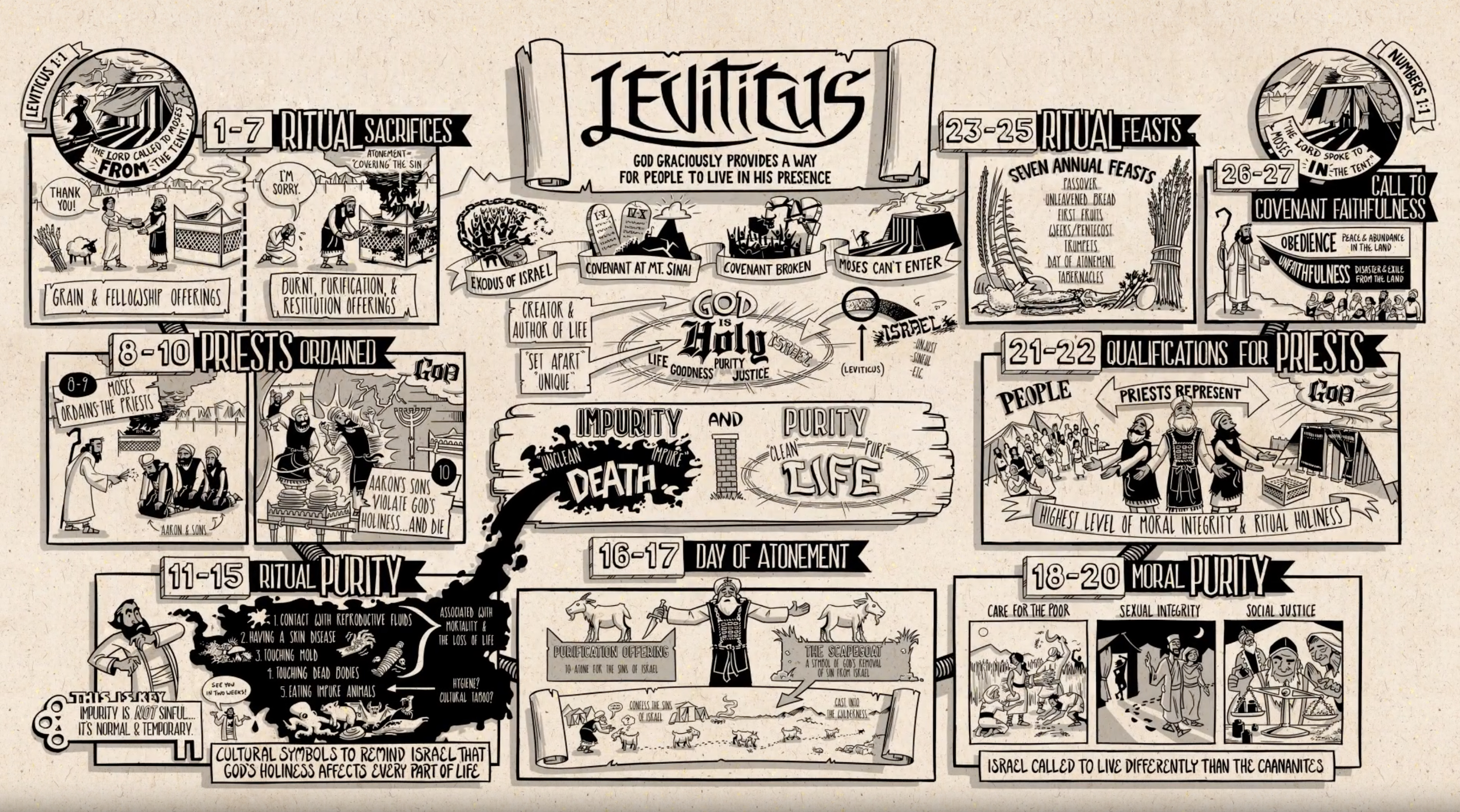
From Matthew Henry’s Commentary: God ordained divers kinds of oblations and sacrifices, to assure his people of the forgiveness of their offenses, if they offered them in true faith and obedience. Also he appointed the priests and Levites, their apparel, offices, conduct, and portion. He showed what feasts they should observe, and at what times. He declared by these sacrifices and ceremonies, that the reward of sin is death, and that without the blood of Christ, the innocent Lamb of God, there can be no forgiveness of sins.
Your experience reading or listening to Leviticus may be a bit like mine. I must be intentional about reading all the various descriptions of the different offerings about which God tells Moses to instruct the people. Perhaps you want to tune out after the burnt offerings from the flock (1:17). If you do, you’ll miss the instructions for the grain offerings of firstfruits and of peace. And we’ve only just begun.
The Bible Project video (link below) is a helpful overview of all these offerings and of the book itself. It makes a significant observation. God speaks to Moses from the tent in Leviticus 1. In Numbers 1, God speaks to Moses in the tent. Leviticus lays out how Israel can enter into relationship with God. Numbers shows that the relationship has been established. Moses is no longer outside the tent of God’s presence, but he is with God.
All the sacrifices of Leviticus are a foreshadowing of the ultimate sacrifice of Jesus. Think of the events of Jesus’ ministry and life that are foreshadowed here: Jesus and his disciples walk through the field and the disciples take grains of wheat and eat them (grain offering). Jesus takes bread without yeast and tells them, “This is my body” (the perfect grain offering). Jesus’ arms are stretched out on the cross (the ultimate offering and shedding of blood for the forgiveness of sins).
The Old Testament is a prelude to the New Testament and the New is commentary on the Old. And Jesus is the center of it all. Here in Leviticus we get a glimpse of what sin brings: death, and of what is necessary to restore the broken relationship that sin causes: sacrifice. And Jesus is the Lamb of God – better than a scapegoat, more complete than any Old Testament ritual or sacrifice. He ushers us into the very presence of God.
 David Bahn - Reflections
Leave a comment