
Click here for an audio version of this podcast
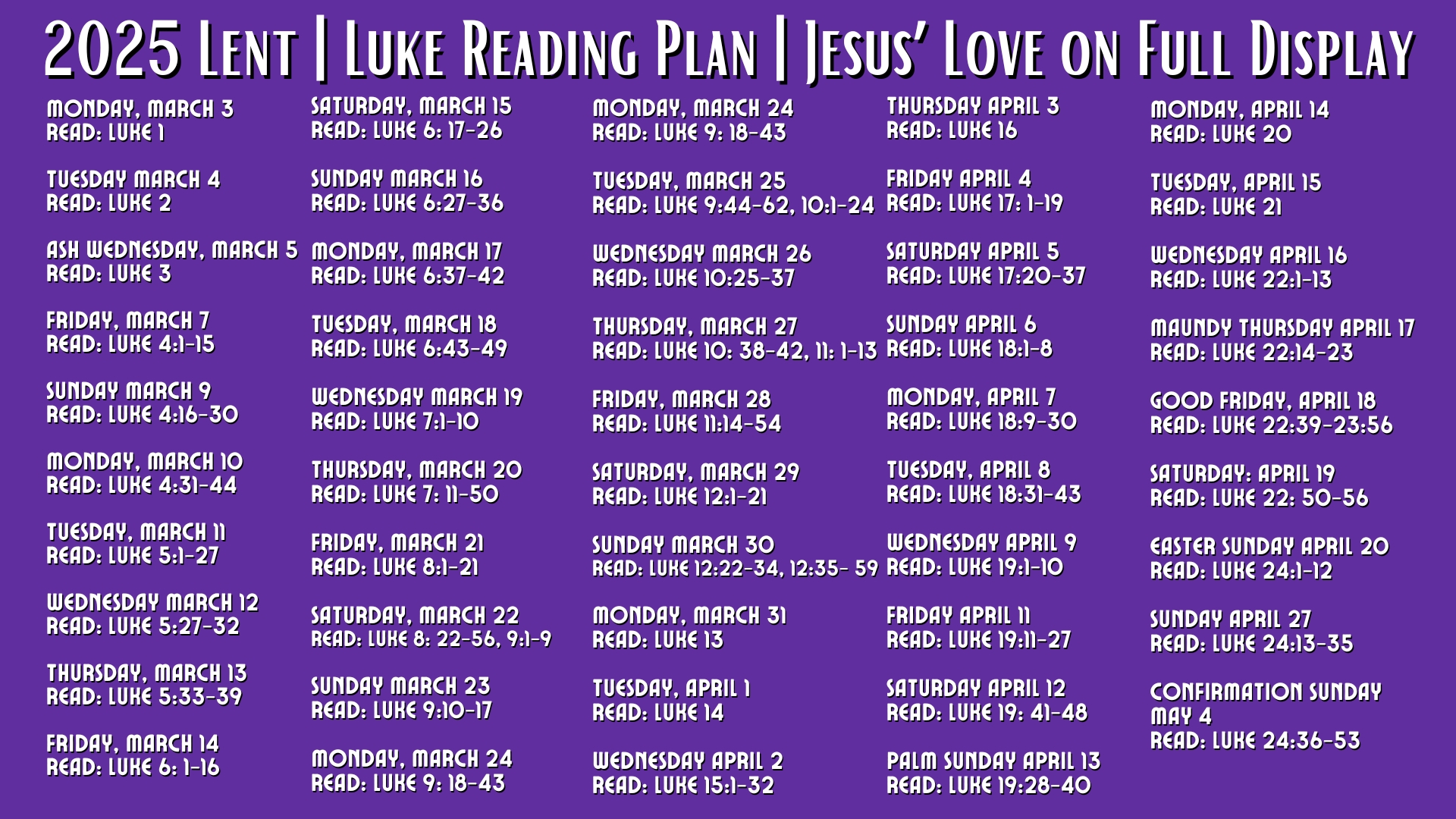
I am using St. John’s Luke Lent Reading Plan for these devotions.
Luke 15:1-2, 11-32
Now the tax collectors and sinners were all drawing near to hear him. 2 And the Pharisees and the scribes grumbled, saying, “This man receives sinners and eats with them.”
11 And he said, “There was a man who had two sons. 12 And the younger of them said to his father, ‘Father, give me the share of property that is coming to me.’ And he divided his property between them.13 Not many days later, the younger son gathered all he had and took a journey into a far country, and there he squandered his property in reckless living.14 And when he had spent everything, a severe famine arose in that country, and he began to be in need. 15 So he went and hired himself out to one of the citizens of that country, who sent him into his fields to feed pigs. 16 And he was longing to be fed with the pods that the pigs ate, and no one gave him anything.
17 “But when he came to himself, he said, ‘How many of my father’s hired servants have more than enough bread, but I perish here with hunger! 18 I will arise and go to my father, and I will say to him, “Father, I have sinned against heaven and before you. 19 I am no longer worthy to be called your son. Treat me as one of your hired servants.”’ 20 And he arose and came to his father. But while he was still a long way off, his father saw him and felt compassion, and ran and embraced him and kissed him.21 And the son said to him, ‘Father, I have sinned against heaven and before you. I am no longer worthy to be called your son.’ 22 But the father said to his servants, ‘Bring quickly the best robe, and put it on him, and put a ring on his hand, and shoes on his feet. 23 And bring the fattened calf and kill it, and let us eat and celebrate. 24 For this my son was dead, and is alive again; he was lost, and is found.’ And they began to celebrate.
25 “Now his older son was in the field, and as he came and drew near to the house, he heard music and dancing. 26 And he called one of the servants and asked what these things meant.27 And he said to him, ‘Your brother has come, and your father has killed the fattened calf, because he has received him back safe and sound.’ 28 But he was angry and refused to go in. His father came out and entreated him,29 but he answered his father, ‘Look, these many years I have served you, and I never disobeyed your command, yet you never gave me a young goat, that I might celebrate with my friends. 30 But when this son of yours came, who has devoured your property with prostitutes, you killed the fattened calf for him!’ 31 And he said to him, ‘Son, you are always with me, and all that is mine is yours. 32 It was fitting to celebrate and be glad, for this your brother was dead, and is alive; he was lost, and is found.’”
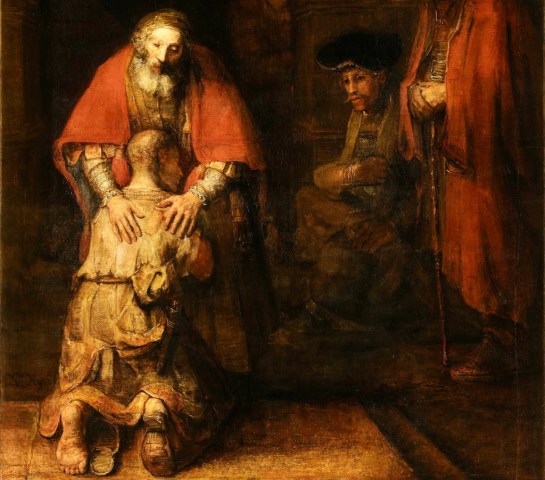
There is a classic outline used by traveling evangelistic revivalists. It’s simple and really does get at the flow of this parable:
The Prodigal
- His Madness
- His Sadness
- His Gladness
A close look at this parable reveals that those three attributes apply to all three of the main characters in the parable. Each one in turn is mad, sad, and glad – although the older son is only invited into the gladness, and we don’t see if he joins in the revelry.
I will be preaching at St. John today, so I don’t want to steal my own thunder, but I can give you a peek into what I will share this morning at 11 and this evening at 7.
The younger son is mad (in the sense of insanity) because he is willing to tell his dad to drop dead, leave his home of plenty and trade that all in for a life of wanton debauchery. He is sad because the money runs out, the friends desert him, and there comes a famine. He is glad when he returns home and his father receives him with open arms and celebrates his return with a great big party.
The father is likewise mad, giving away all that money to his irresponsible son. He’s sad because his son is gone, and because his older son won’t join the party when the younger son returns. He was glad when he did return.
The older son was mad (in the sense of ire and bitterness) because his younger brother was being so well treated – something he thought he really deserved. His is sad because he had never been celebrated as his younger brother was now being. Will he be glad? Will he realize there is joy to be experienced and shared?
This parable is one of a trio in the Lost and Found chapter. The lost and found sheep, one of 100. The lost and found coin, one of 10. The lost and found son, one of two. But there is a refrain at the end of the first two parables. This third one describes this truth: “There is joy before the angels of God over one sinner who repents.”
Will we join the celebration? Will we return to God if we are far off? Will we come in if we’re standing aloof in bitterness and anger? Every gathering of God’s people is to be a foretaste of the joy to come, a celebration of God’s grace and joy in the fellowship of the redeemed. Don’t be mad or sad. Be glad and rejoice in God’s grace every day.
 David Bahn - Reflections
Leave a comment