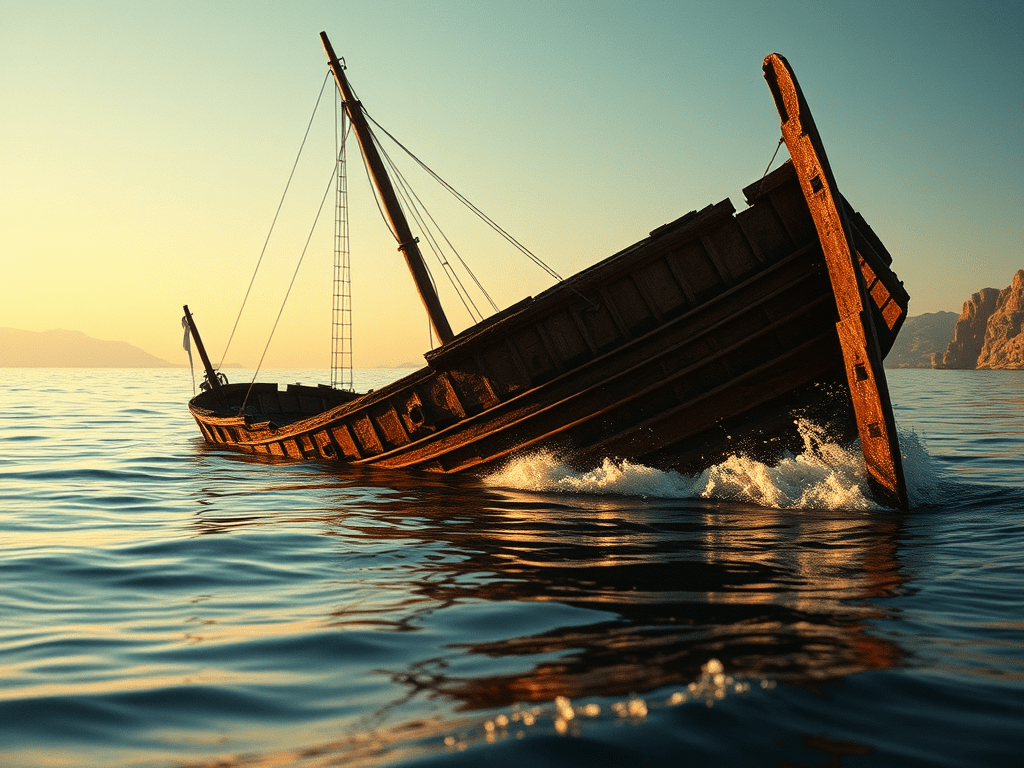

After we were brought safely through, we then learned that the island was called Malta. 2 The native people showed us unusual kindness, for they kindled a fire and welcomed us all, because it had begun to rain and was cold. 3 When Paul had gathered a bundle of sticks and put them on the fire, a viper came out because of the heat and fastened on his hand. 4 When the native people saw the creature hanging from his hand, they said to one another, “No doubt this man is a murderer. Though he has escaped from the sea, Justice has not allowed him to live.” 5 He, however, shook off the creature into the fire and suffered no harm. 6 They were waiting for him to swell up or suddenly fall down dead. But when they had waited a long time and saw no misfortune come to him, they changed their minds and said that he was a god.
7 Now in the neighborhood of that place were lands belonging to the chief man of the island, named Publius, who received us and entertained us hospitably for three days. 8 It happened that the father of Publius lay sick with fever and dysentery. And Paul visited him and prayed, and putting his hands on him, healed him. 9 And when this had taken place, the rest of the people on the island who had diseases also came and were cured. 10 They also honored us greatly, and when we were about to sail, they put on board whatever we needed.
11 After three months we set sail in a ship that had wintered in the island, a ship of Alexandria, with the twin gods as a figurehead. 12 Putting in at Syracuse, we stayed there for three days. 13 And from there we made a circuit and arrived at Rhegium. And after one day a south wind sprang up, and on the second day we came to Puteoli. 14 There we found brothers and were invited to stay with them for seven days. And so we came to Rome. 15 And the brothers there, when they heard about us, came as far as the Forum of Appius and Three Taverns to meet us. On seeing them, Paul thanked God and took courage. 16 And when we came into Rome, Paul was allowed to stay by himself, with the soldier who guarded him.
The door in the hall outside my first period chemistry class opened, and Jerry (I didn’t really know his name at the time) poked his head out. “Want to come in and sit down?” I was on crutches, so having a place to sit while we waited for class to begin sounded good to me. So I crutched across the hall and sat down – in a photography darkroom. Not only a love for photography was kindled, but a deep friendship as well, and what would become a push toward the Lutheran Church and ultimately to becoming a pastor. That was a divine appointment. That little ripple in time blossomed into a tsunami of life-change.
The power had gone out so my date and Jerry and his date went to the basement of the Lutheran Campus Center to finish boiling the crawdads we had gathered for the first and only crawdad supper to be held there. This was several years later. I remained up stairs peeling the crawdads (we didn’t know how you are supposed to do this crawdad supper thing). In walked a young woman who was a biology major. Unlike everyone else around the kitchen, she was not put off by the prospect of shelling crawdads. It wasn’t love at first sight, but there was a spark in that moment that grew into a flame that would not go out. Diane and I were married three years later. Another divine appointment.
Divine appointments. Defining moments. Pivotal encounters. Kairos moments. We all have them. Some we do not recognize, until maybe later. But these life-changing moments do in fact change our lives.
I think of that when I read of Paul’s encounter with Publius. I’m not sure it changed Paul’s life, but it certainly might have. I’m not sure it changed Publius’ life. But it likely did. After all, Luke records his name. He would be known by whoever read Luke’s account as a man who helped Paul along the way. Publius’ father certainly had a divine appointment. He was healed by God through Paul.
And what about Paul? While he seems to be the one who was encountered, I can imagine how this encounter may have had ripples beyond the moments there on Malta. I can imagine how Publius’ kindness and provision for Paul’s continued journey made a great difference in how Paul was treated on the final leg of his travels to Rome. Maybe even in the way the soldier guarded Paul while he was under house arrest there.
These God moments come at God’s pleasure. We may, sadly, sometimes miss them. But we should never pass up the opportunity to do good, offer kindness, or receive help when we are in need. Who knows how the spark might ignite into a flame? Who knows how far the ripples will spread? If God has set the appointment, surely we must not limit its impact.
 David Bahn - Reflections
Leave a comment