Acts 10:1-16
At Caesarea there was a man named Cornelius, a centurion of what was known as the Italian Cohort, 2 a devout man who feared God with all his household, gave alms generously to the people, and prayed continually to God.3 About the ninth hour of the day he saw clearly in a vision an angel of God come in and say to him, “Cornelius.”4 And he stared at him in terror and said, “What is it, Lord?” And he said to him, “Your prayers and your alms have ascended as a memorial before God. 5 And now send men to Joppa and bring one Simon who is called Peter. 6 He is lodging with one Simon, a tanner, whose house is by the sea.” 7 When the angel who spoke to him had departed, he called two of his servants and a devout soldier from among those who attended him, 8 and having related everything to them, he sent them to Joppa.
9 The next day, as they were on their journey and approaching the city, Peter went up on the housetop about the sixth hour to pray. 10 And he became hungry and wanted something to eat, but while they were preparing it, he fell into a trance 11 and saw the heavens opened and something like a great sheet descending, being let down by its four corners upon the earth. 12 In it were all kinds of animals and reptiles and birds of the air. 13 And there came a voice to him: “Rise, Peter; kill and eat.” 14 But Peter said, “By no means, Lord; for I have never eaten anything that is common or unclean.” 15 And the voice came to him again a second time, “What God has made clean, do not call common.” 16 This happened three times, and the thing was taken up at once to heaven.
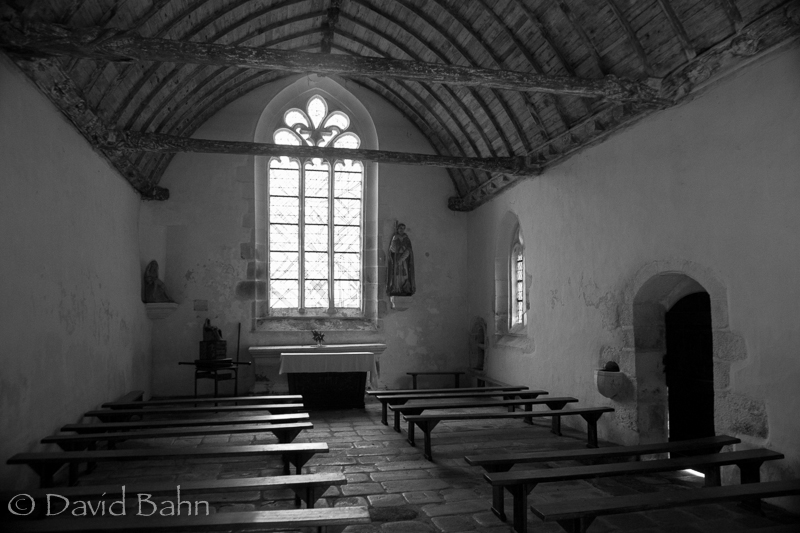
If “the road to hell is paved with good intensions,” then the pathway of God’s favor is paved with prayer. As the message of the Good News of Jesus continues to spread, it is striking how many times new blessings and insights are accompanied or followed by prayer. From Jesus’ ascension to the first Christian Pentecost, to the healing of the lame man at Bethesda, to this encounter and many others, prayer was the atmosphere in which God moved in significant ways of favor and blessing.
In the case of Cornelius, an angel assured him that his prayers had been heard, and had him send for Peter – who was praying. In the case of Peter, as he was praying God provided a vision of unclean animals with a message: don’t call anything unclean that God had called clean. God was definitely up to something. He was making an open path of favor toward the non-Jewish people. Jesus died for the sins of the world, and sent his disciples to be witness from Jerusalem, to Judea, to Samaria, and to the ends of the earth. This would take the message of the Gospel beyond the nation of Israel, and would require new encounters with new people.
Prayer is such a vital part of being part of God’s work because it is an act of humility and dependence. Prayer acknowledges God’s glory and worthiness, as well as relying on his goodness and power. When we pray are less likely to be knocked to the ground and blinded by a light (as Paul experienced on the road to Damascus) in order to receive God’s direction and understand his will.
A time of prayer is not a time merely to offer a wish-list of blessings to God. It is a time of silence, humility, listening to God’s word, seeking God’s wisdom, and exalting God. It is as much a time of silence before God as it is a time of speaking to God. But it is a means by which the pathway of God’s favor is traveled. Surely there are other means by which we experience God’s favor: good works, living for Jesus’ glory in all we do, seeking justice, and all manner of things in a life of faith. But prayer is a most vital means by which we experience God’s favor, guidance, and help.
 David Bahn - Reflections
Leave a comment